
Nothing stalls a bench sander faster than a belt that tears mid-stroke or glazes over after two passes on a piece of walnut. The 6 x 48 format is the backbone of most stationary belt sanders, but the difference between a belt that chews through material and one that just burns the work can only be found in the grain bond, backing weight, and joint construction — not the price tag.
I’m Rikta — the co-founder and writer behind Gadgets Feed. I’ve combed through hundreds of abrasive spec sheets and owner reviews to isolate which 6 x 48 belts actually hold a sharp cut under heat and pressure, and which are better left on the shelf. (And Homer 🐱 supervised the unboxing from a warm dust pile, unimpressed by the grit levels.)
Whether you need coarse stripping on mild steel, fine finishing on hardwood, or a mix-pack that covers the whole job, the right belt reduces downtime and improves surface consistency. This guide breaks down the best 6 x 48 sanding belt options by real-world performance, bond type, and grit range.
How To Choose The Best 6 x 48 Sanding Belt
Selecting the right 6 x 48 belt means matching the abrasive grain, backing, and grit to your material and tool power. A mismatched belt wastes time, dulls quickly, or overheats the workpiece.
Abrasive Grain: Aluminum Oxide vs. Zirconia Alumina
Aluminum oxide is the standard all-rounder for wood, paint removal, and non-ferrous metals — it fractures during use to expose fresh cutting edges, but it wears faster under high pressure. Zirconia alumina is a self-sharpening premium grain that excels on ferrous metals and hard woods when run with adequate down-force; it costs more but lasts significantly longer in aggressive grinding.
Backing Weight and Bond Type
X-weight cloth backing is the toughest option for a 6 x 48 belt, resisting tearing under load and heat buildup. Resin-over-resin bonding adds moisture resistance and prevents the grain from shedding prematurely. Open-coat construction spaces the abrasive particles further apart, which reduces clogging when sanding softwoods, paint, or resinous materials.
Joint Construction and Tracking
A belt’s joint — the seam where the ends meet — determines how smoothly the belt runs. Butt joints with bi-directional tape create a near-invisible seam that minimizes the “thump” felt on the workpiece. Lap joints are stronger but can leave a noticeable ripple on finished surfaces if not precision-ground.
Quick Comparison
On smaller screens, swipe sideways to see the full table.
| Model | Category | Best For | Key Spec | Amazon |
|---|---|---|---|---|
| POWERTEC 110530 | Premium | High-volume wood & metal sanding | X-weight cloth, resin-on-resin bond | Amazon |
| Taokyid 9-Pack | Multi-Pack | Heavy stock removal in coarse grits | 3 each of 40/60/80 grits | Amazon |
| makiwork 10-Pack | Versatile | Broad grit range across wood/metal | 2 each of 80/120/150/240/400 grits | Amazon |
| POWERTEC 464806Z-3 | Specialty | Ferrous metal & hard wood grinding | Zirconia alumina, 60 grit | Amazon |
| SHUTTLE GENIUS 6-Pack | Assortment | Stripping & finishing on wood | 40 to 400 grit, anti-clog stearate | Amazon |
| Zivisk 5-Pack | Entry-Level | General woodworking & metal polishing | Resin emery cloth, 5 grits included | Amazon |
| abrasticle 3-Pack | Specialty | Oscillating edge sander on wood/glass | Open coat, anti-loading resin | Amazon |
In‑Depth Reviews
1. POWERTEC 6 x 48 Inch Sanding Belts, 10PK, 80 Grit (110530)

The POWERTEC 110530 delivers exactly what a 6 x 48 belt should: consistent cut, stable tracking, and endurance across repeated sessions. The X-weight cloth backing resists tearing when working metal edges, and the resin-on-resin bond holds the open-coat aluminum oxide grain firmly even as the belt heats up during extended passes on steel or hardwood.
In real shop use, a single 80-grit belt from this 10-pack lasted through several weeks of daily grinding on mild steel tubing and angle iron without losing its edge. The seam is crafted to run flat — no thumping or wandering that would ruin a finished face. Users report dependable performance on both bench grinders and oscillating sanders from Ryobi and Jet.
Keep in mind that this is a single-grit pack (80 grit), so you’ll need to order additional grits if your workflow spans coarse removal and fine finishing. But for a shop that burns through 80 grit as the default workhorse, this is the most reliable bulk option in the category.
Why it’s great
- X-weight cloth backing withstands heat and heavy loads without tearing.
- Seam is flush and flat, producing smooth tracking with no belt thump.
- 10-pack provides strong value per belt for high-volume shops.
Good to know
- Single grit per pack — you must buy multiple packs for a full range.
- Aluminum oxide grain, not ideal for extended ferrous grinding compared to zirconia.
2. Taokyid 9-Pack 6×48 Sanding Belts, 40/60/80 Grits
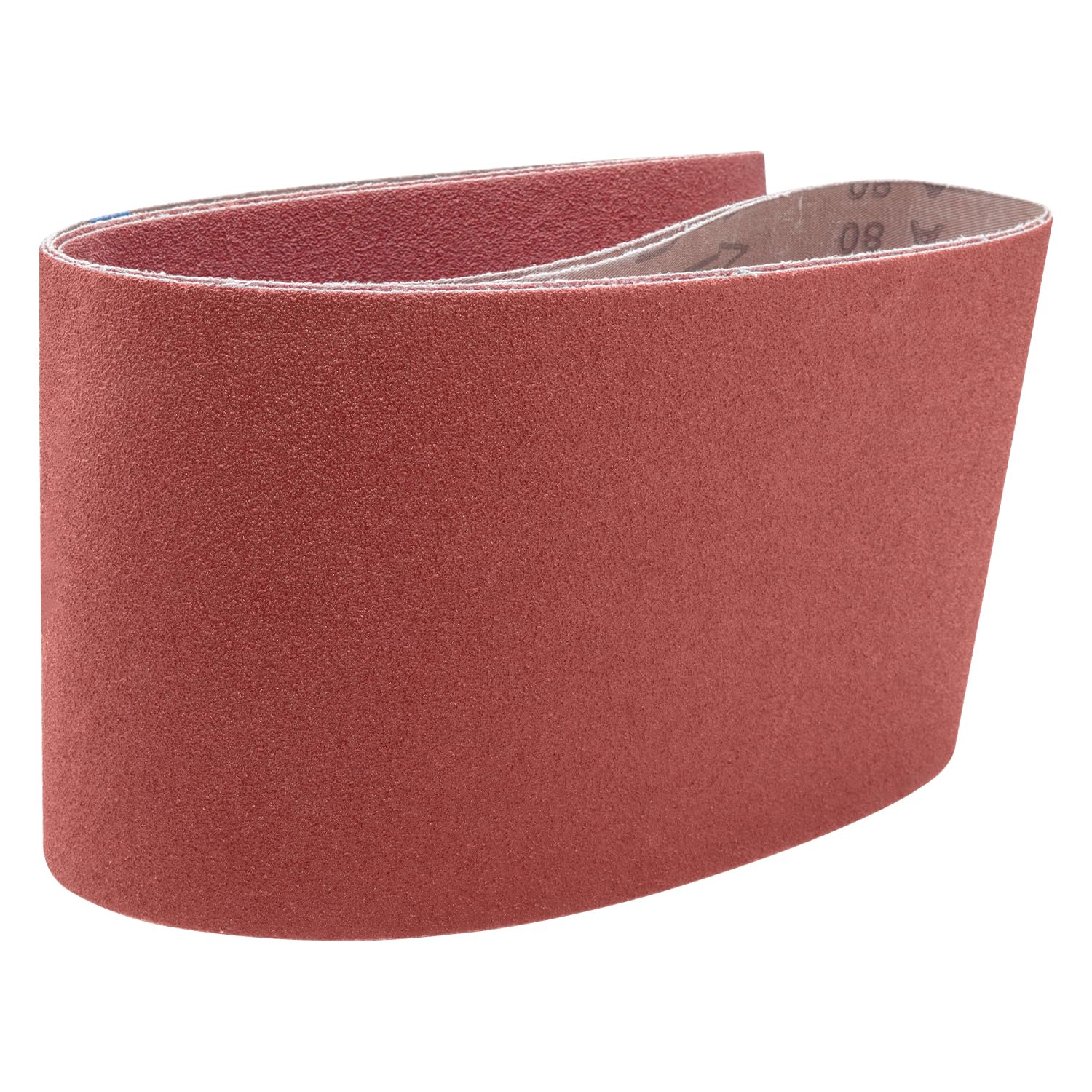
If your sander spends most of its life on heavy stock removal — shaping hardwood, stripping paint, or knocking down welds — the Taokyid 9-pack delivers three belts each in 40, 60, and 80 grit, precisely the coarse end of the spectrum where aggressive cut matters most. The aluminum oxide grain on X-weight cloth backing holds up under pressure, and the flat joint design keeps the belt from jumping during passes.
Users report that one 40-grit belt can power through an entire job of removing deteriorated polyurethane from wood without tearing or clogging. The grit does lose some initial sharpness after a few minutes of heavy use, but the belts remain tough and continue cutting in a dulled state rather than glazing over completely — a trait that keeps them useful longer.
The packaging can be tight, making it slightly tricky to separate individual belts without bending them. If your work demands fine finishing grits (above 120), this pack won’t cover that — but for shops that prioritize volume material removal on a budget, this assortment is hard to beat.
Why it’s great
- Three each of 40, 60, and 80 grit — perfect for aggressive sanding and shaping.
- X-weight cloth backing prevents tearing under heavy load.
- Seam is flat and firm, reducing belt chatter during operation.
Good to know
- Grit dulls faster than premium zirconia options under continuous high pressure.
- No fine grits included — you’ll need a separate pack for finishing passes.
3. makiwork 10-Pack 6 x 48 Inch Sanding Belts, 80/120/150/240/400 Grits

The makiwork 10-pack is the most balanced grit assortment in this line-up, offering two belts each of 80, 120, 150, 240, and 400 grit. This range lets you move from medium stripping through to fine finishing without switching to a separate pack — a genuine time-saver when working on furniture, aluminum, or fiberglass projects that require multiple sanding stages.
The belts use premium aluminum oxide particles bonded to X-weight cloth backing, and the two-way tape joint is notably smooth — users report no noticeable bump or ripple on finished surfaces. The resin bond resists heat buildup, keeping the belt from delaminating during sustained runs on harder materials. Owners have run these on Jet oscillating edge sanders and bench models with consistent tracking.
The 80 grit belts are your main removal tool, while the 240 and 400 grit belts handle final passes before finishing. If your work rarely needs the finer range, you may find yourself burning through the coarse belts faster. But for a single-buy solution that covers most of the grit spectrum, this 10-pack delivers exceptional flexibility.
Why it’s great
- Five grits with two belts each — covers stripping through finishing in one purchase.
- Two-way tape joint minimizes surface ripple for consistent results.
- X-weight cloth backing with resin bond resists heat delamination.
Good to know
- Only two coarse belts (80 grit) — heavy users may need extra coarse packs.
- Aluminum oxide grain, not optimized for high-pressure stainless work.
4. POWERTEC 6 x 48 Inch Zirconia Sanding Belts, 3PK, 60 Grit (464806Z-3)
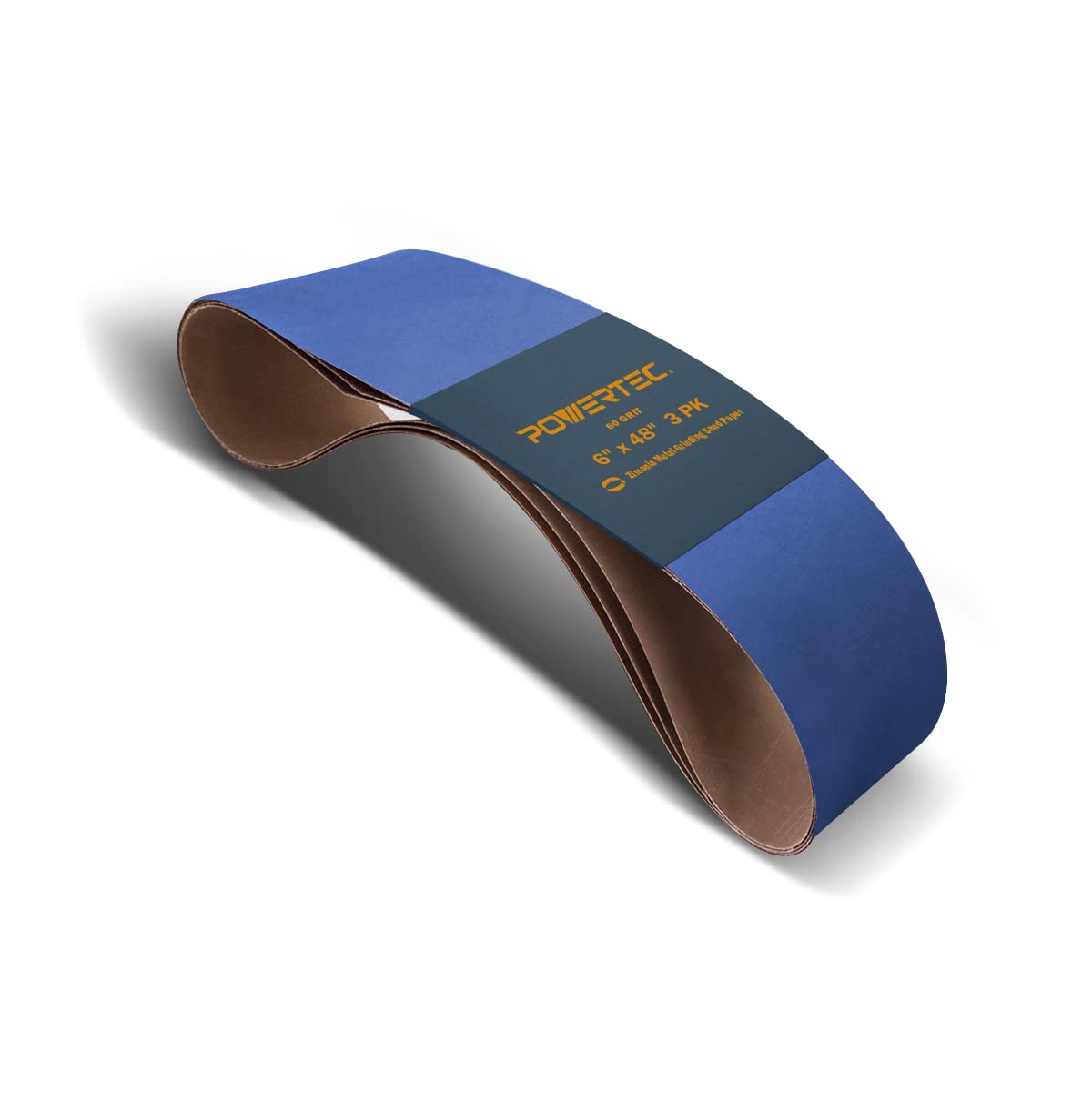
When the task calls for grinding ferrous metals — A2 tool steel, cold-rolled pipe, hot-rolled square tube — or shaping extremely hard wood stock, the POWERTEC zirconia belts are the right tool for the job. The zirconia alumina grain is self-sharpening: under high pressure, the particles fracture to expose fresh cutting edges rather than dulling into a polished surface that burns the workpiece.
Users running these belts on a 1 HP DIY grinder report that the 60-grit belt handles mild steel tubing and angle iron without stalling or slipping, and that the same belt continues cutting metal edges long after aluminum oxide belts would have glazed over. The resin-bonded construction resists heat, and the Y-weight backing (slightly lighter than X-weight) still holds up under consistent pressure without tearing.
The 3-pack is a modest quantity given the premium price, and these belts are best reserved for aggressive metalwork or hard-wood shaping rather than everyday wood sanding where aluminum oxide is more cost-effective. If you regularly grind steel or sharpen knives on a bench sander, the longevity of these belts offsets the higher per-belt cost.
Why it’s great
- Zirconia grain self-sharpens under pressure, lasting far longer on metal than aluminum oxide.
- Resin bond handles high heat without delamination during sustained grinding.
- Excellent edge retention for knife sharpening and tool steel deburring.
Good to know
- Only 3 belts per pack — lower quantity compared to multi-packs.
- Single grit (60) — you must buy separate packs for finer grit finishing.
5. SHUTTLE GENIUS 6×48 Sanding Belt, 40/80/120/150/240/400 Grits, 6 Pack

The SHUTTLE GENIUS 6-pack spans from 40 grit (aggressive stripping) all the way to 400 grit (fine finishing), making it a compact starter set for a woodworker who needs a single belt in each major category. The open-coat aluminum oxide grain with anti-clog stearate resists loading when sanding softwoods, paint, or resinous materials — a practical advantage when working on pine cabinets or reclaimed lumber.
The bi-directional tape joint is precision-engineered to reduce heat buildup and keep the belt running smoothly. Users report good fit on standard 6 x 48 bench sanders, and the variety allows you to move from rough material removal through to a smooth pre-finish surface without stopping to reorder. The 40-grit belt handles heavy shaping, while the 400-grit belt preps for oil or varnish.
A minority of users note that the belts can shed some abrasive grit early in their life, and the lap joint is slightly thicker than a butt joint, which may cause a mild bump during passes on very flat surfaces. For general workshop use across wood and non-ferrous metals, this assortment offers enough range to handle most jobs in one purchase.
Why it’s great
- One belt each of six grits from 40 to 400 — covers nearly every sanding stage.
- Anti-clog stearate coating reduces loading on softwoods and painted surfaces.
- Bi-directional tape joint minimizes heat buildup during operation.
Good to know
- Some early shedding of abrasive material reported by users.
- Lap joint is thicker than butt-joint designs, producing a slight bump on flat passes.
6. Zivisk 6 Inch x 48 Inch Sanding Belts, 5-Pack Assorted Grits

The Zivisk 5-pack is the entry-level workhorse for woodworking and light metal polishing. It includes one belt each in 60, 80, 120, 240, and 320 grit — a balanced range that covers everything from initial stock removal to pre-finish smoothing. The aluminum oxide grain is bonded to resin emery cloth that resists moisture and heat, keeping the belt intact during moderate sanding sessions.
Buyers consistently report that the belts perform as well as more expensive options in everyday use, fitting standard 6 x 48 sanders without tracking issues. The 60 and 80 grit belts handle shaping on pine and poplar, while the 240 and 320 grit belts are fine enough for final passes before applying a clear coat. The price per belt is low enough that you won’t hesitate to swap grits mid-project.
The resin emery cloth backing is durable for its price tier, but these belts are not built for extended high-pressure grinding on metal. Heavy users may wear through the coarse grits relatively fast. For a hobbyist or general contractor who needs a reliable multi-grit set without a big upfront investment, the Zivisk pack delivers solid value.
Why it’s great
- Five useful grits (60-320) in one pack for a minimal investment.
- Resin emery cloth handles moisture and moderate heat well.
- Positive owner feedback on fit and performance across multiple sander brands.
Good to know
- Coarse grit belts wear faster under high pressure on metal.
- Backing is not X-weight cloth — less suited for continuous heavy loads.
7. abrasticle 3 Pcs 6 x 89 Inch Assorted Aluminum Oxide Sanding Belt, 80/120/240 Grit

The abrasticle 3-pack targets users of oscillating edge sanders and longer-format machines — the 6 x 89 inch size is a different standard than the more common 6 x 48, so double-check your sander’s belt length before purchasing. The belts are built with open-coat aluminum oxide grain and an anti-loading resin additive that resists clogging when sanding softer materials like pine, plastic, or glass.
Users running these on Jet oscillating edge sanders report a perfect fit and solid performance across wood, aluminum, and stone. The 80 grit belt handles quick material removal, the 120 grit smooths the surface, and the 240 grit preps for finishing. The belts are also washable and antistatic, which helps reduce dust buildup on the workpiece and prolongs belt life between cleanings.
The 3-pack is a small quantity, and the 89-inch length limits compatibility to longer-belt sanders — it will not fit standard 6 x 48 bench models. If your machine accepts this format, the abrasticle belts offer durable, clog-resistant performance for mixed-material edge sanding at a very reasonable per-belt cost.
Why it’s great
- Open-coat design with anti-loading resin reduces clogging on softwoods and plastics.
- Antistatic and washable — belts stay cleaner and last longer between swaps.
- Three grits cover removal, smoothing, and pre-finish passes.
Good to know
- 6 x 89 inch size — only fits longer-belt machines, not standard 6 x 48 models.
- Only 3 belts per pack, limiting quantity for high-volume work.
FAQ
What is the difference between aluminum oxide and zirconia abrasives in a 6 x 48 belt?
My sander takes 6 x 48 inch belts. Will a 6 x 89 inch belt work on my machine?
What does X-weight cloth backing mean for belt durability?
Final Thoughts: The Verdict
For most users, the best 6 x 48 sanding belt option is the 6 x 48 sanding belt from POWERTEC (110530) because its X-weight backing and resin-on-resin bond deliver consistent tracking and long wear across both wood and metal, backed by a 10-pack quantity that keeps your shop running. If you prefer a single-pack grit range without buying multiple boxes, grab the makiwork 10-pack for its smooth two-way joint and broad 80-to-400 grit coverage. And for aggressive grinding on ferrous metals where standard aluminum oxide glazes over, nothing beats the self-sharpening POWERTEC zirconia 3-pack.