
A 60/40 tin-lead solder alloy is the standard for copper foil stained glass work because the higher tin content drops the melting range and extends the liquidus stage, giving you those extra seconds to sculpt a smooth, shiny bead before it sets. The wrong solder will fight you—either freezing too fast, leaving a dull crust, or refusing to flow into tight foil joints. That is exactly why picking the right spool is not a trivial supply run; it is a material decision that dictates the final finish of every panel you build.
I’m Min — the co-founder and writer behind Gadgets Feed. For this guide, I analyzed dozens of verified customer reports across multiple spool batches, cross-referenced alloy purity claims, and isolated the real performance patterns that separate craft-grade 60/40 solder from the disappointing stuff that leaves you fighting your iron all afternoon.
Every recommendation here is based on hours of research into melt behavior, residue levels, and seam consistency so you can find the 60/40 solder for stained glass that delivers smooth, professional lines on every panel.
How To Choose The Best 60/40 Solder For Stained Glass
The right 60/40 solder is defined by three things: the purity of the alloy, the wire diameter that matches your iron tip, and the consistency of the spool from start to finish. Below are the critical factors that separate a smooth-flowing, bright-finish solder from a frustrating one that leaves pitted seams and excessive residue.
Alloy Purity and Virgin Metal Content
Impurities in the solder alloy create a sticky oxide layer that shows up as dull, grey seams and more dross on your iron tip. The best 60/40 solders use high-purity virgin tin and lead, which ensures the melt stays bright and flows freely. Recycled or scrap-content alloys often contain contaminants that raise the melting point unpredictably, making it harder to maintain a consistent bead.
Wire Diameter and Feed Rate
The standard 1/8-inch (3 mm) diameter is the sweet spot for stained glass work. It feeds enough material to build a seam without requiring constant reloading, yet it is thin enough to control easily on tight curves and corners. Thinner wire (like 1/16-inch) forces you to feed too often, slowing your rhythm, while thicker wire can surge and produce blobby beads that are difficult to smooth.
Liquidus Range and Working Time
60/40 has a melting range of roughly 361° to 374°F, which gives a wider liquidus window than 50/50. That extra time in the liquid state is critical for pulling the solder along a copper foil seam with the iron tip and for achieving the rounded, uniform bead that signals professional craftsmanship. A solder that goes from solid to liquid too quickly forces you to move faster than your hand can comfortably manage.
Quick Comparison
On smaller screens, swipe sideways to see the full table.
| Model | Category | Best For | Key Spec | Amazon |
|---|---|---|---|---|
| ANOSON 60/40 | Mid-Range | All-around stained glass projects | 1/8″ (3mm) dia, 1 lb spool | Amazon |
| AIM Artist Pure 60/40 | Mid-Range | Beginner-friendly smooth flow | 3mm dia, 454g spool | Amazon |
| Avril 60/40 | Premium | Consistent professional seams | 1/8″ dia, Made in USA | Amazon |
| Amerway 60/40 | Premium | Large panels and wide seams | 1 lb spool, solid core | Amazon |
| Mastercraft 60/40 | Premium | Extended liquidus stage | 1 lb spool, 1/8″ dia | Amazon |
| Studio Pro 60/40 | Mid-Range | Repair and small projects | 1 lb spool, 14.4 oz | Amazon |
In‑Depth Reviews
1. ANOSON 60/40 Solder Stained Glass

The ANOSON 60/40 spool hits the ideal balance of flow, finish, and value. Users consistently report that it melts smoothly at slightly lower iron temperatures than other budget-tier options, which reduces the risk of overheating your copper foil and damaging the glass. The alloy leaves minimal cloudy residue, polishing up to a bright, mirror-like surface that stained glass artists demand.
This solder is soft and flexible on the spool, making it easy to unwind and feed without kinking. Multiple verified reviews confirm it produces a clean bead with good adhesion to the foil. While one user noted it may be too soft for large outdoor panels exposed to direct sun and thermal expansion, it performs excellently on decorative windows, suncatchers, and other indoor pieces.
The 1/8-inch diameter feeds a consistent amount of material per pass, letting you maintain a steady rhythm without stopping to reload every few inches. For the price, the combination of high-purity melt behavior and a full 1-pound spool makes this the most practical starting point for any stained glass project.
Why it’s great
- Flows beautifully at moderate iron temperatures
- Minimal residue, polishes to a bright shine
- Great value for a full 1-pound spool
Good to know
- May be too soft for large outdoor panels under direct sun
- Packaging design may vary between old and new spools
2. AIM Artist Pure 60/40 Stained Glass Solder
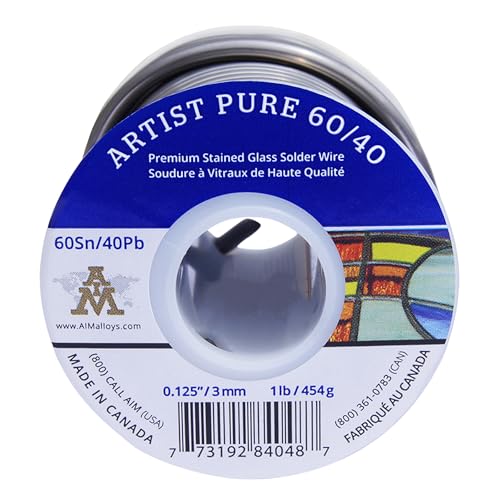
The AIM Artist Pure 60/40 is formulated specifically for stained glass work, using high-purity virgin metals that produce a remarkably consistent melt. With a melting range of 361°–374°F, it stays in the liquidus stage long enough for both beginners and experienced glass artists to pull a smooth, round bead along a copper foil line without rushing.
Users highlight how forgiving this solder is for newcomers — it does not tarnish or oxidize as quickly as some competitors, and it holds its shine even when the seam is reheated during touch-up passes. The 454-gram spool is compact and easy to store, and the 3 mm wire diameter feeds smoothly through gloved hands without jamming or snapping.
Several experienced reviewers who build 3D glass sculptures have stuck with AIM for years because the melt is repeatable batch after batch. The only downside is the lead content requires proper ventilation and gloves, which is standard for any 60/40 alloy. For a widely trusted brand with strong technical support, this is a reliable choice.
Why it’s great
- Very forgiving for beginners due to long liquidus stage
- Consistent batch-to-batch quality from virgin metals
- Holds shine during remelting for cleanup passes
Good to know
- Requires good ventilation and gloves due to lead content
- Spool is slightly smaller than some 1 lb competitors
3. Avril 60/40 Premium Solder for Stained Glass

Avril has earned a loyal following among stained glass artists who prioritize consistency above all else. Users who have been buying this same spool for five to ten years report that it flows exceptionally well and cleans up to a bright, polished finish every time. The 60/40 ratio produces a noticeably better “bump” on solder joints compared to 50/50, which is key for achieving the raised, rounded seam that signals fine craftsmanship.
Several experienced reviewers mention that they have tried other brands in a pinch only to return to Avril because the melt behavior is simply more predictable. The wire is made in the USA from high-purity metals, and the 1/8-inch diameter is the perfect middle ground for both detailed work and long panel seams. It does not splatter or leave gritty residue on the iron tip.
While the spool is priced at a slight premium over entry-level options, the reliability across multiple projects reduces the frustration of wasted time cleaning up poor joints. For artists who sell their work and cannot afford inconsistent results, Avril is a sound investment in a smooth workflow.
Why it’s great
- Exceptional flow and clean-up, trusted by long-time users
- Superior bead height compared to 50/50 alloys
- Made in USA with high-purity metals
Good to know
- Premium price point compared to budget spools
- Spool dimensions are large; requires storage space
4. Amerway 60/40 Solid Core Solder for Stained Glass
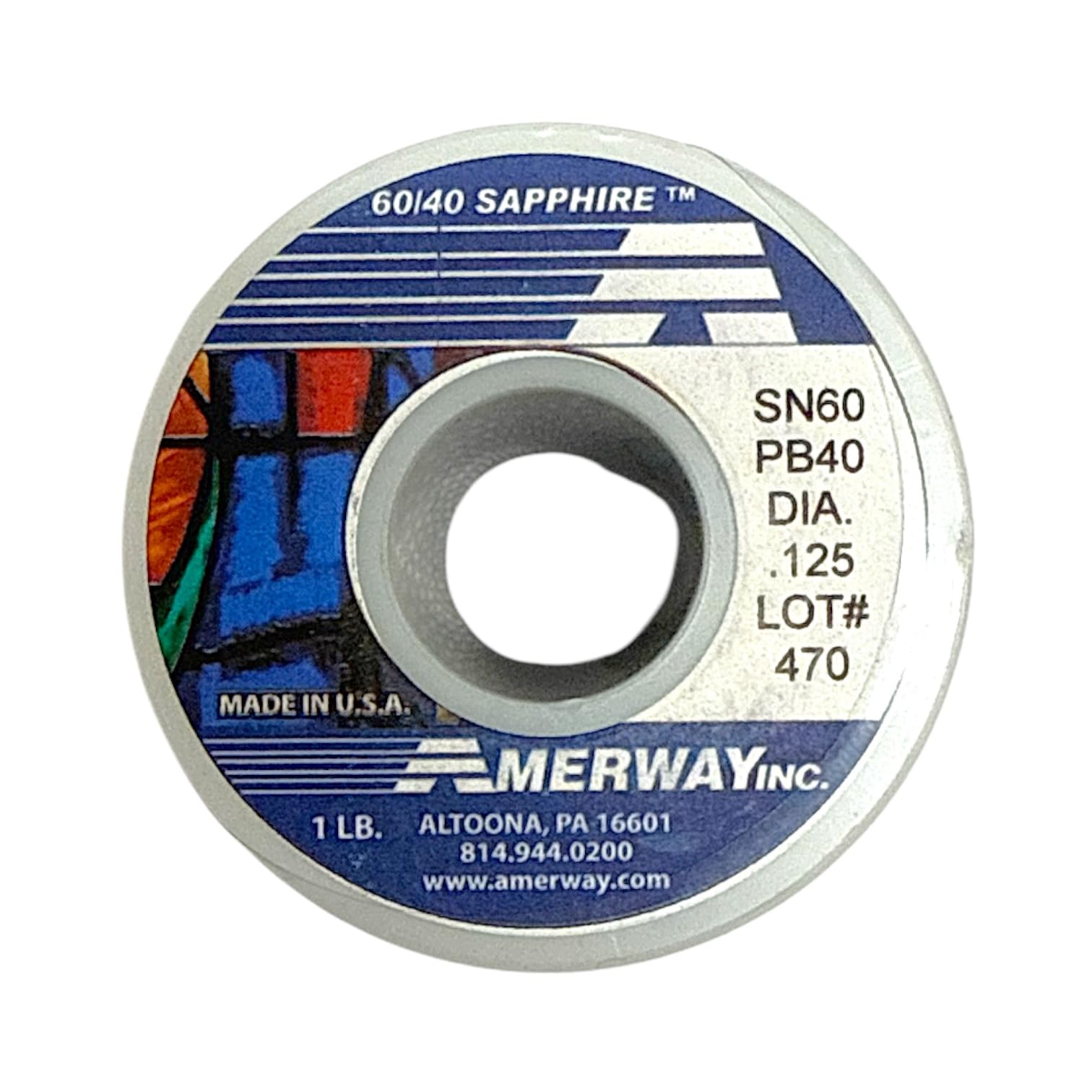
Its solid core construction means there is no flux core to burn off prematurely, which is ideal for copper foil work where you apply flux separately and want full control over the melt. Users confirm it melts easily and smooths out without fighting the iron.
One reviewer built a six-foot-tall stained glass panel using this spool and praised its ability to maintain a consistent bead across such a large surface. The 1/8-inch diameter is well-suited for both wide seams on large panels and finer work on small decorative pieces. The spool is heavy at 1.55 pounds including packaging, so you get a generous amount of usable wire.
Some users note that the shipping can occasionally be delayed when sold through third-party sellers, but the product itself has remained unchanged for years. If you prefer a no-flux-core alloy and want a proven workhorse for large-scale stained glass projects, this spool delivers exactly what it promises.
Why it’s great
- Solid core gives full flux control for copper foil
- Proven on very large panels (6 ft tall)
- Generous spool weight for the price
Good to know
- Shipping times can vary with third-party sellers
- No flux core means you must apply flux separately
5. Mastercraft 60/40 Solder

Mastercraft specifically designs its 60/40 blend to stay in the liquid stage longer than standard alloys, giving you that critical extra time to draw a smooth, even bead across the seam. The wider pasty phase is narrow, which means the solder transitions cleanly from liquid to solid without a gummy intermediate state that can leave rough patches.
Users working on stained glass projects confirm that the 1/8-inch diameter is thick enough to feed a heavy bead on wide copper foil lines without constant reloading. The spool is compact at just 2.25 x 2 x 2 inches, making it easy to store alongside your iron and flux. Several buyers note that it blends well with other 60/40 solders if you need to mix spools mid-project.
One area where opinions diverge is wire thickness consistency — a single reviewer reported the solder arrived slightly thinner than expected. However, the overwhelming majority of stained glass users find it performs reliably and produces a professional-looking finish. If you tend to work slowly and need extra working time, this is a strong candidate.
Why it’s great
- Longer liquid stage for careful bead shaping
- Compact spool size for easy storage
- Narrow pasty phase for clean solidification
Good to know
- Wire diameter consistency may vary slightly
- Higher price compared to budget alternatives
6. Studio Pro 60/40 Tin/Lead Solder

The Studio Pro 60/40 solder is a straightforward, no-frills spool that focuses on the basics: a low melting point and a clean round bead. It is manufactured by Diamond Tech International, a company well-known in the stained glass supply world, and the alloy is consistently pure enough to produce smooth seams without excessive smoke or residue.
Users who repair stained glass shades and small decorative panels appreciate that this solder flows readily at moderate iron temperatures, reducing the risk of cracking older glass pieces during repair work. The 1-pound spool is lightweight at 14.4 ounces, which can be a minor point if you expect a full pound of net wire, but the actual usable amount is still sufficient for multiple small-to-medium projects.
Some buyers wish it were available in a smaller diameter for extremely fine detail work, but the 1/8-inch thickness works well for standard 3/16-inch and 1/4-inch copper foil tape. If you need a reliable, affordable spool for shade repair or occasional hobby projects, this one delivers consistent results without any surprises.
Why it’s great
- Low melting point protects fragile glass during repairs
- Produces a clean round bead with minimal residue
- Trusted manufacturer in the stained glass industry
Good to know
- Spool weight is 14.4 oz, slightly less than a full pound
- No smaller diameter option for ultra-fine detail work
FAQ
Can I use 60/40 solder on lead came instead of copper foil?
Do I need to use flux with 60/40 solid core solder for stained glass?
Why does my 60/40 solder look dull and grey after cooling?
Final Thoughts: The Verdict
For most users, the 60/40 solder for stained glass winner is the ANOSON 60/40 because it combines smooth flow, minimal residue, and a full 1-pound spool at a fair price without compromising the bead finish. If you want the longest working time for sculpting meticulous seams, grab the Mastercraft 60/40. And for large-scale panels where every inch of bead must be consistent, nothing beats the Amerway 60/40 Solid Core.