
Facing a tight pin tucked behind a deep bunker lip demands a club that can launch the ball high and stop it dead. A dedicated 60-degree lob wedge isn’t just a high-lofted club—it’s a surgical tool for scoring inside 90 yards, where precision trumps power. The right grind, bounce angle, and groove design determine whether you execute a soft flop or watch the ball roll past the cup.
I’m Min — the co-founder and writer behind Gadgets Feed. I’ve logged more hours than I care to count parsing CNC milling patterns, bounce configurations, and groove volume specs across every major wedge release to find the short-game weapons that actually deliver on their spin and control promises.
The wrong pick can leave you fighting thin shots, digging into the turf, or watching the face glare under the sun. This guide breaks down the top contenders on the market for the best 60 degree golf wedge, focusing on the specifications and real-world performance that separate a tournament-ready club from a frustrating mistake.
How To Choose The Best 60 Degree Golf Wedge
The 60-degree wedge is the ultimate scoring tool for short game finesse, but picking the wrong one means fighting the club instead of the course. Three technical specs define performance: the bounce angle, the sole grind shape, and how the grooves are cut. Ignoring any one of them is a shortcut to inconsistent contact.
Bounce Angle and Sole Grind
Bounce is the angle between the leading edge and the lowest point of the sole. Higher bounce (10-14°) prevents digging in soft sand or lush rough, acting like a skid plate. Lower bounce (4-8°) suits firm turf, tight lies, and players who manipulate the face open. The grind—material removed from the sole—determines how freely the club glides through the turf. A heel-and-toe relief grind (C-grind) is best for open-faced flop shots, while a full sole grind (S-grind) suits square-faced pitches.
Groove Geometry and Face Milling
Maximizing spin in a 60-degree wedge requires deep, sharp grooves that cut through debris and channel moisture. Look for CNC milled grooves with tighter spacing—modern wedges like the Cleveland RTX 6 and Cobra SNAKEBITE use computer-controlled cutting to produce edges a human hand can’t replicate. Laser-etched micro-grooves between the main lines add surface roughness for extra friction on partial swings. Wet-weather spin performance is a key differentiator between entry-level and premium models.
Quick Comparison
On smaller screens, swipe sideways to see the full table.
| Model | Category | Best For | Key Spec | Amazon |
|---|---|---|---|---|
| Cleveland RTX 6 Zipcore | Mid-Range | All-around spin consistency | HydraZip face milling | Amazon |
| TaylorMade Milled Grind | Mid-Range | Precision control from square face | CNC milled sole | Amazon |
| TaylorMade Hi-Toe 3 | Premium | Open-face flop shots | 66mm toe height | Amazon |
| Callaway Opus | Premium | All-around spin and forgiveness | Spin Gen Face | Amazon |
| Cobra SNAKEBITE | Premium | Wet-condition spin | CNC milled grooves | Amazon |
| Mizuno Pro T1 | Premium | Tour-level feel and feedback | Grain Flow Forged HD | Amazon |
| Yamato Left Handed | Budget | Left-handed value purchase | Full-face grooves | Amazon |
In‑Depth Reviews
1. Cleveland Golf RTX 6 Zipcore Wedge

The RTX 6 Zipcore earns the top spot because Cleveland directly solved the spin-versus-durability trade-off. The HydraZip face uses a dynamic blast and laser-milled line system that creates measurable surface roughness, delivering consistent spin numbers whether you’re hitting from a wet fairway or a tight fringe lie. The ZipCore low-density core has been expanded by up to 95% over the previous generation, shifting the center of gravity exactly behind the strike zone while increasing MOI by 20% for added forgiveness on off-center hits.
On the course, the 60-degree mid-bounce (10°) version walks the line between versatility and forgiveness. The UltiZip grooves are sharper, deeper, and more tightly spaced than the TourZip design, allowing the wedge to channel more debris per swing. Players report a soft, responsive feel at impact and noticeably more grab on partial shots. The Tour Satin finish reduces glare at address, a small detail that matters when setting up for a high-pressure flop.
This is the wedge to buy if you want a single club that performs reliably from the sand, the rough, and the fairway. It doesn’t demand a specific swing type—the 10° bounce and mid-level grind suit the widest range of conditions.
Why it’s great
- HydraZip milling delivers predictable spin in wet and dry conditions
- Expanded ZipCore boosts forgiveness on mishits near the toe
- UltiZip grooves pack more edge contact per square inch
Good to know
- Matte face finish shows wear patterns over heavy use
- Not available in a high-bounce (12°+) configuration for soft sand
2. TaylorMade Golf Milled Grind Wedge

TaylorMade’s Milled Grind wedge earns its reputation through the precision of its sole. The CNC milling process produces tolerance levels a human grinder cannot match, ensuring every club in the lineup interacts with the turf identically. Mass positioning higher in the club head raises the center of gravity, which drops launch angle slightly while increasing spin rates—exactly what a 60-degree wedge needs to hold a green.
The 60° version features a classic full sole with constant trailing edge relief and a tour-proven 4-way camber. This design works best when the face is kept square to the target, making it a go-to for standard pitch shots and full swings from the fairway. The machine-milled face and grooves provide consistent ball engagement, and players report immediate improvement in proximity to the pin from inside 75 yards.
Where this wedge shines is repeatability. If you prioritize consistency in your strike pattern and want a club that feels the same every time you lay it behind the ball, the Milled Grind delivers. It’s less suited for players who frequently open the face for flop shots, as the full sole can drag on soft turf in that orientation.
Why it’s great
- CNC milled sole guarantees exact turf interaction every swing
- Higher CG produces controllable launch and high spin
- 4-way camber works flawlessly on square-faced pitches
Good to know
- Classic sole relief limits open-face versatility
- Chrome finish can produce glare in bright sun
3. TaylorMade Hi-Toe 3 Wedge

The Hi-Toe 3 is engineered specifically for the player who frequently opens the club face to hit high, soft-landing shots. The taller toe area measures 66mm, raising the CG to promote a lower launch angle with higher spin—the opposite of what most wedges do. Full-length scoring lines extend to the top of the face, meaning even when the face is rotated open on a flop shot, the ball still contacts a groove.
The 60° version with 13° of high bounce is built for soft sand and lush rough. The toe weight pad shifts the CG closer to the center of the face, and the raised raw micro-ribs between the full grooves add texture that bites into the cover on partial swings. Players note the club feels slightly heavier than a standard blade, which can be an asset for tempo control on delicate shots.
If your short game relies on creative trajectories and open-faced strikes, the Hi-Toe 3 is the correct tool. The multiple sole options (standard, low, high bounce) allow fitting to specific turf conditions. The copper finish eliminates glare, a subtle advantage when the sun is low.
Why it’s great
- Full-length scoring lines maintain spin on open-faced shots
- High bounce (13°) prevents digging in soft conditions
- Micro-ribs between grooves improve friction on partial swings
Good to know
- Heavier swing weight may require adjustment period
- Copper finish can show patina wear over time
4. Callaway Golf Opus Wedge

Callaway’s Opus wedge represents a full rethinking of their wedge line, built around the Spin Gen Face Technology that combines three separate spin elements into one face. The result is a 60-degree wedge that produces high RPMs even on partial swings, with a forgiveness profile that masks slight mis-hits. The 10° bounce angle splits the difference between playability from the fairway and sand.
The shape and profile were refined with input from tour players, resulting in a compact head that sits low and square at address. The black finish cuts glare effectively, and the sole features subtle relief that allows the leading edge to sit flush with the turf on open shots. Players report the wedge performs equally well on 80-yard pitches and delicate greenside chips, with consistent launch across both distances.
The Opus is a choice for the golfer who wants a single wedge that covers multiple shot types without demanding a specific technique. It lacks the extreme specialization of the Hi-Toe 3 but compensates with broader utility. The grip size of 4 1/4 inches suits players who prefer a slightly thicker feel in their hands.
Why it’s great
- Spin Gen Face produces high RPMs on full and partial swings
- Tour-refined shape sits square and inspires confidence
- Black finish eliminates glare completely
Good to know
- Limited grind options compared to dedicated grind lines
- Not ideal for players requiring high bounce (12°+)
5. Cobra SNAKEBITE Black Wedge

The SNAKEBITE wedge is defined by its groove technology. The CNC milled grooves produce sharper edges and larger volume than stamped alternatives, and the updated face milling pattern delivers 50% more spin in wet conditions compared to the previous generation. For golfers who play in morning dew or unpredictable weather, this spec alone justifies consideration.
The 60° version includes full-face grooves, ensuring maximum edge contact on open-faced shots. Three grind options are available: Versatile (with toe, heel, and trailing edge relief), Classic (progressive sole width), and WideLow (wide sole with reduced bounce). The Versatile grind at 8° bounce is the most adaptable for players who vary between square and open face positions. The KBS Hi-Rev 2.0 shaft and Lamkin Crossline corded grip come standard, adding tactile feedback in humid conditions.
This is a specialist tool for spin-dependent players. The combination of CNC milling and aggressive groove geometry produces tour-level RPMs, but it can accelerate ball cover wear, especially with softer urethane models. The black PVD finish looks sharp but shows bag chatter quickly.
Why it’s great
- 50% more spin in wet conditions over previous model
- Three grind options let you match turf conditions
- Corded grip prevents slipping in high humidity
Good to know
- Aggressive grooves can accelerate ball cover wear
- Black PVD finish shows bag chatter readily
6. Mizuno Pro T1 Wedges

Mizuno’s Pro T1 wedge is a one-piece Grain Flow Forged HD head made from 1025E Pure Select mild carbon steel at their Hiroshima facility, the same forge that has produced Mizuno irons since 1968. This process produces a density and feel that players who prioritize feedback at impact can’t find in cast alternatives. The Harmonic Impact Technology fine-tunes head geometry for ideal sound and vibration transfer.
The Quad Cut groove system uses milled narrow/deep grooves for stronger lofts and wide/shallow grooves for higher lofts, optimizing the 60° version for maximum spin on partial shots. Hydroflow micro-grooves are laser-etched to channel moisture away, maintaining spin in wet conditions. The 12° bounce with a V grind suits players who manipulate the face open without digging. The Golf Pride MCC Teams grip provides a firm connection point.
This is the wedge for the golfer who treats feel as a performance metric. The black ion finish looks premium but is cosmetic—wear patterns appear quickly, which some players consider patina. The cost reflects the Japanese forging process and tour-level groove engineering.
Why it’s great
- Grain Flow Forged HD delivers unmatched impact feedback
- Quad Cut grooves optimize spin for each specific loft
- Hydroflow micro-grooves improve wet-weather performance
Good to know
- Black ion finish can fade and wear with use
- Premium price reflects forged construction and tour-level QC
7. Yamato Left Handed Golf Wedges
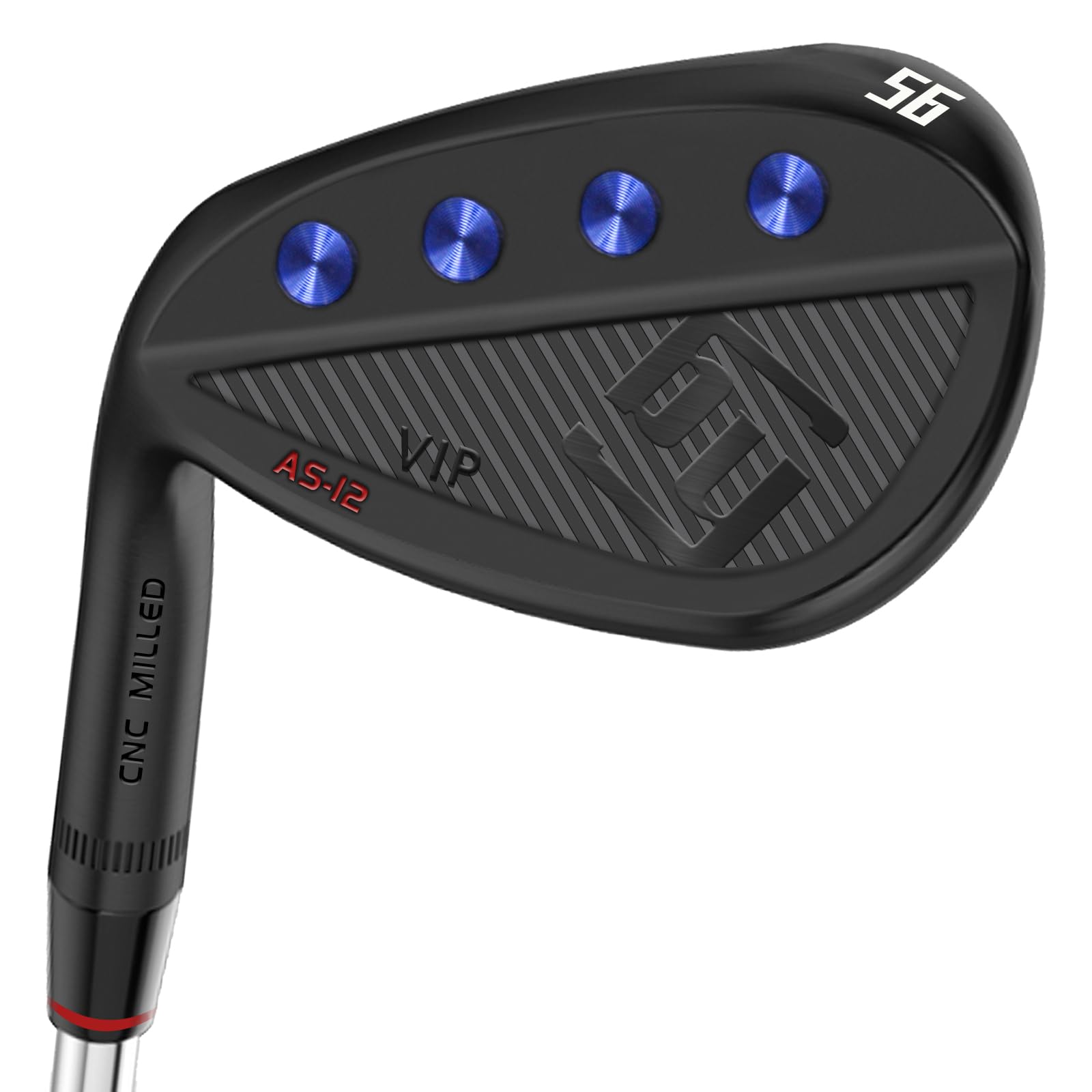
The Yamato wedge is a dedicated left-handed option that punches above its price bracket, offering full-face grooves that extend across the entire striking surface. This design gives lefty players the ability to generate spin on open-faced shots at a fraction of the cost of major-brand options. The aggressive groove pattern produces measurable bite on urethane-covered balls, though the stainless steel head lacks the CNC tolerances of premium wedges.
On the course, the Yamato performs best on greenside chips and bunker shots from 10 to 40 yards. The leading edge features relief to prevent digging, and several users report improved ball control and proximity after adjusting to the head weight. The synthetic rubber grip is standard size, suitable for most hand sizes. The 72° loft option is a niche standout for extreme flop shots.
The trade-off is in groove longevity. The deep grooves can shave covers off softer range balls, and the overall construction doesn’t match the durability of forged options. For the budget-conscious left-handed golfer who needs a functional lob wedge without breaking the bank, the Yamato delivers real utility.
Why it’s great
- Full-face grooves provide spin on open-faced strikes
- Leading edge relief reduces digging on full swings
- Available in 72° loft for extreme flop scenarios
Good to know
- Aggressive grooves can accelerate ball cover wear
- Not forged; lacks the feel of premium carbon steel wedges
FAQ
What bounce angle should I choose for a 60 degree wedge?
Why do some 60 degree wedges have full face grooves?
Is a 60 degree wedge only for high handicap players?
Final Thoughts: The Verdict
For most users, the best 60 degree golf wedge winner is the Cleveland RTX 6 Zipcore because its HydraZip face and expanded ZipCore deliver consistent spin and forgiveness across varying lies without demanding a specific swing style. If you want a wedge that shines on open-faced flop shots, grab the TaylorMade Hi-Toe 3 with its 66mm toe and full-length scoring lines. And for premium feel and tour-level feedback, nothing beats the Mizuno Pro T1 with its Grain Flow Forged HD construction.