
Our readers keep the lights on and my morning glass full of iced black tea. As an Amazon Associate, I earn from qualifying purchases.
Specs are compiled from manufacturer listings and verified buyer reviews and can change over time — please confirm the key details on the product page before buying.
You grab a trash bag, load it up, and halfway to the curb, the bottom gives way. That mess is avoidable when you know what separates a bag that holds from one that rips. This guide breaks down the strongest picks so you get the right thickness, size, and build for your heavy loads.
I’m Min — the founder and writer behind Gadgets Feed. This guide is built by comparing the manufacturers’ published specifications and the patterns across verified customer reviews, so you get each pick’s real strengths and trade-offs instead of marketing spin.
For construction debris, yard waste, or bulk recycling, the right 60 gallon trash bags save you time and cleanup.
Quick Picks
- Plasticplace Contractor Trash Bags (55-60 Gallon, 6.0 Mil) — Contractor Grade
- Ultrasac Heavy Duty 55 Gallon Contractor Bags (3 Mil, 40 Count) — Best Value
- Ox Plastics 60 Gallon Trash Can Liners (3 Mil, 25 Count) — Versatile Pick
- Veska 55-60 Gallon Trash Bags (Clear, 150 Count) — Bulk Clear
How To Choose The Best 60 Gallon Trash Bags
A 60-gallon bag holds a lot of waste, and picking the wrong one means leaks, rips, or a bag that doesn’t fit your can. Here are the key specs that matter.
Mil Thickness — The Strength Decoder
The thickness of a trash bag is measured in mils (one mil is one-thousandth of an inch). That spec tells you how much abuse the bag can take. A 1.5-mil bag is fine for regular kitchen waste, but for a 60-gallon bag, you want at least 3 mils for yard work or general heavy use — so it won’t tear when you load wet leaves or branches. For construction debris with sharp edges like drywall or metal, look for 6 mils — that is the difference between a bag that tears and one that survives a full load of demolition rubble.
Bag Dimensions — Fit Is Everything
Two bags can both be labeled “60 gallon” but have very different measurements. A bag that is 36″ x 58″ sits taller in a square can, while a 41″ x 55″ bag is wider at the top. Measure your can’s height and circumference before buying. A bag that is too short leaves the rim exposed, and one that is too wide can bunch up and fold over, creating gaps that let leaks escape.
Material Type — Clear vs. Black
Black bags hide the contents and resist UV light (ultraviolet light from the sun that degrades plastic), making them ideal for outdoor trash and construction debris. Clear bags are required for recycling in many municipalities because workers can quickly see what is inside. Nylon or polyethylene blends (plastics that stretch more) offer extra flexibility but are generally less rigid than pure LDPE bags (low-density polyethylene, a stretchy, tough plastic), which are the standard for contractor-grade strength.
Bottom Seal — Flat vs. Gusseted
A flat bottom seal lets the bag stand upright on its own, which is helpful when you are loading it with heavy debris. Gusseted bags (bags with folded-in sides that expand when filled) may not sit flat. Flat-seal bags are also easier to pack into a can without folding, so consider your can’s shape — square cans love flat bottoms, round cans work well with either.
Quick Comparison
On smaller screens, swipe sideways to see the full table.
| Model | Best For | Thickness | Dimensions | Count | Amazon |
|---|---|---|---|---|---|
| Plasticplace Contractor | Construction & Demolition | 6.0 Mil | 36″ x 58″ | 25 | Amazon |
| Ultrasac Heavy Duty | General Yard & Heavy Use | 3 Mil | 38″ x 58″ | 40 | Amazon |
| Ox Plastics 3mil | Storage & Mixed Debris | 3 Mil | 41″ x 55″ | 25 | Amazon |
| Veska Clear Bulk | Recycling & Light Waste | Not specified | 55-60 gal fit | 150 | Amazon |
In‑Depth Reviews
1. Plasticplace Contractor Trash Bags (55-60 Gallon, 6.0 Mil)
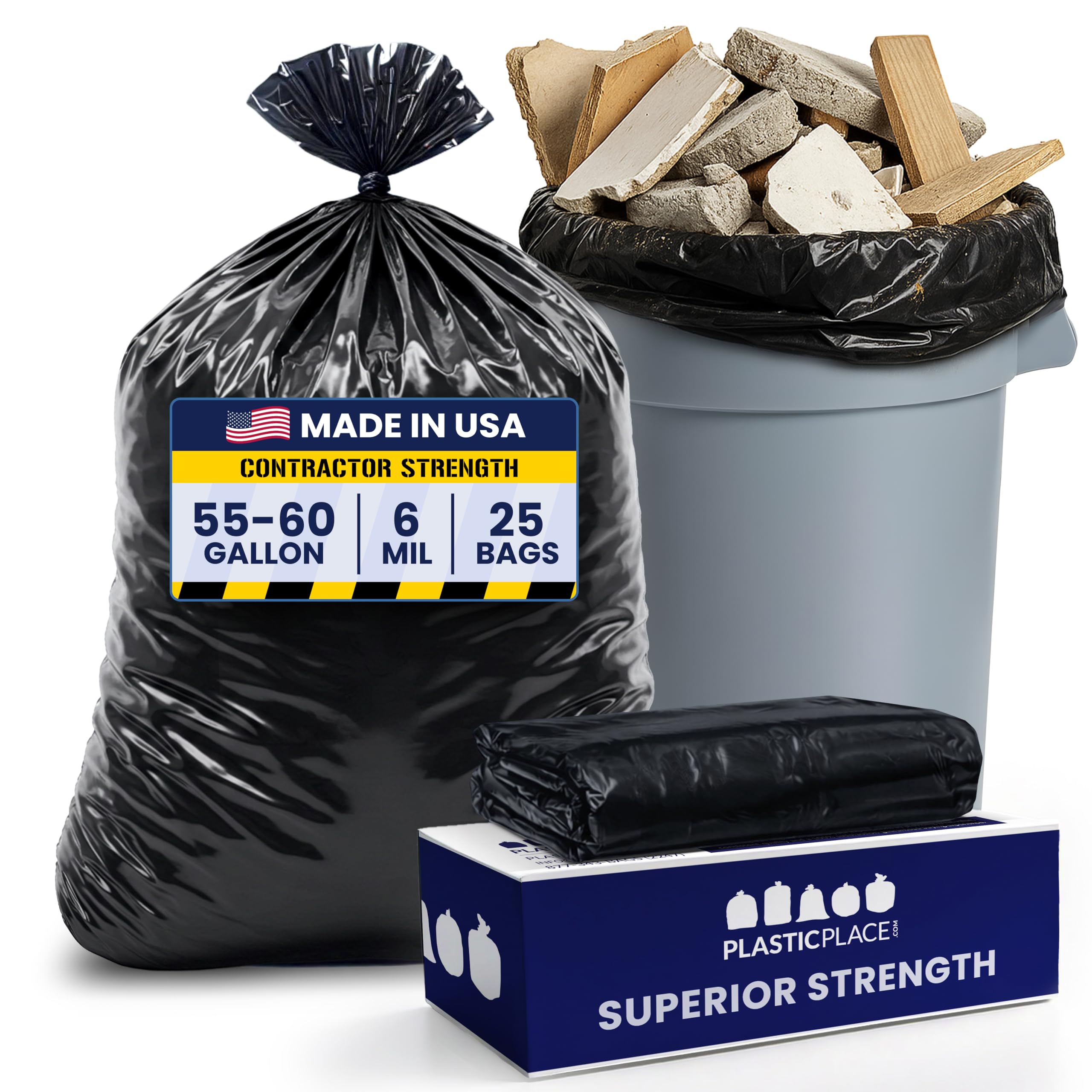
This bag swallows demolition waste — bricks, broken glass, metal scraps — without a tear, thanks to a 6.0 Mil thickness.
You get a bag that handles the nastiest job-site junk because the 6.0 Mil gauge is built for it — that is six thousandths of an inch of plastic, so sharp items stay inside. The 36″ x 58″ dimensions mean it sits tall in a standard can, leaving extra room for sharp branches or construction debris. The 25-count box weighs 20.9 pounds, and the flat bottom seal lets it stand upright on its own while you load it.
The maker claims these are puncture and tear resistant against rough items. Reviewers confirm the strength holds up: one reviewer noted these bags easily handle 75–100 lbs of construction debris. Compared to the Ultrasac, these are 6.0 Mil versus 3 Mil, so if you routinely haul jagged drywall or steel studs, this is the clear choice. One reviewer did report receiving 19 bags instead of 20 and noted 3 had bottom seal gaps causing minor leaks, so check each bag before use.
For yard work or lighter loads, these may be overkill — and tying off a 6.0 Mil bag is tough; you will likely need a zip tie. But if your job involves broken concrete or rough framing, this is the strongest option in the lineup. Anyone who hauls only leaves or recycling should skip these — the extra thickness adds unnecessary cost and tying difficulty.
What Holds Up
- 6.0 Mil thickness is the highest in this guide
- Flat bottom seal lets bag stand open on its own
- Handles 75–100 lbs of debris without failing
What to Watch For
- Very hard to tie in a knot; zip tie recommended
- Small chance of seal gaps — inspect before use
- Overkill for light household or yard waste
Reach for this when: You need to haul heavy construction debris, bricks, or jagged metal and cannot afford a split bag.
Look elsewhere if: You only need bags for weekly trash or leaves — the extra thickness adds unnecessary cost and tying difficulty.
2. Ultrasac Heavy Duty 55 Gallon Contractor Bags (3 Mil, 40 Count)
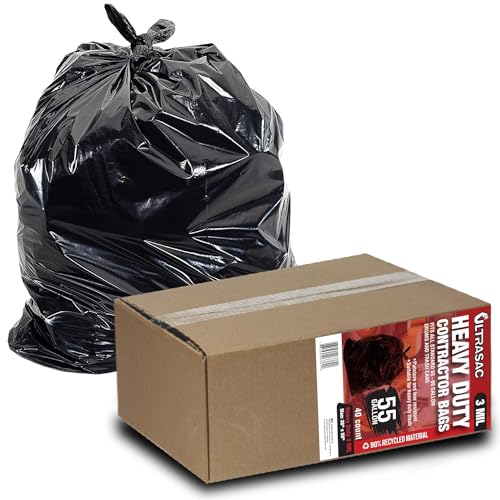
You get 40 bags per box with a 3 Mil thickness that balances strength and cost for most heavy uses.
This bag hits the balance for yard waste, seasonal branches, or contractor-grade cleanup. The 38″ x 58″ dimensions give it a slightly wider opening than the Plasticplace bag, and buyers report it “fits 50 gal square bin snugly,” so you get a tight fit on standard cans. The manufacturer states these are made from at least 90% recycled material, which is a nice environmental bonus.
Where the Ultrasac falls short compared to the Plasticplace is thickness: at 3 Mil versus 6.0 Mil, it handles heavy yard waste and branches well, but sharp drywall or metal may cause punctures. Reviewers praise its “thickness is amazing for this price” and note it withstands “lots of leaves and branches” with no problem. A few buyers mention a strong, unpleasant smell from the plastic, so storing it outside or in a garage may be wise.
It does not have tie handles, and one review points out the bags have “no tie handles” as a minor inconvenience. The 40-count box gives you more coverage than most contractor packs, but the 3 Mil limit means it is not for demolition. If you regularly handle sharp metal or drywall, pick the 6.0 Mil Plasticplace instead.
Why It Works
- 40 bags per box gives you more coverage than most contractor packs
- 3 Mil thickness handles leaves, branches, and general debris
- Made from 90% recycled materials
Where It Falters
- 3 Mil versus 6.0 Mil on the Plasticplace — not for sharp metal or demolition
- Some owners mention a strong plastic smell
- No tie handles; bags must be knotted or tied with a twist tie
Best for: Heavy yard cleanup, leaf bagging, and contractors who need a reliable bag without the premium cost of 6 Mil.
skip it if: You are hauling jagged construction debris or broken glass — step up to the Plasticplace 6.0 Mil.
3. Ox Plastics 60 Gallon Trash Can Liners (3 Mil, 25 Count)
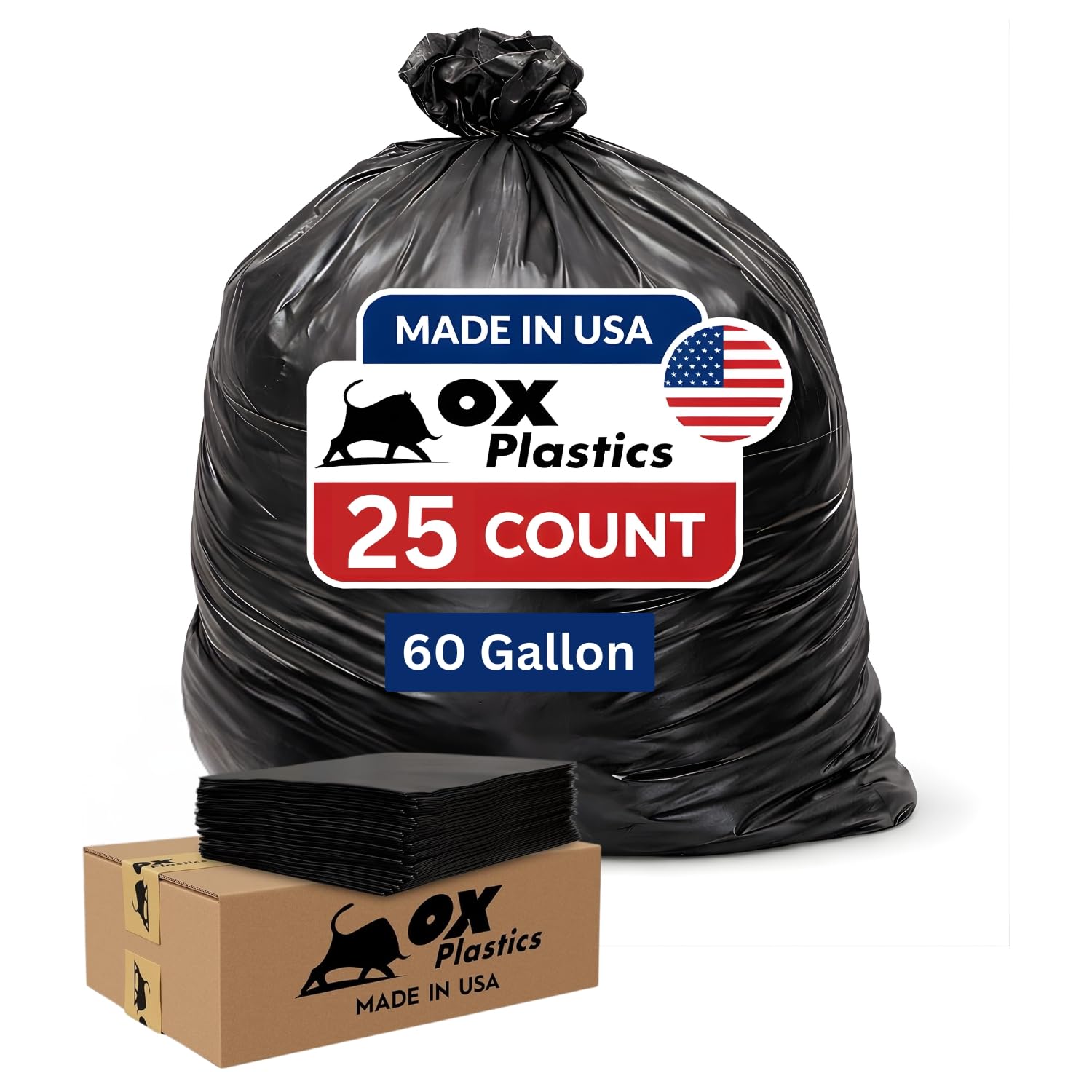
At 41″ x 55″ versus the Plasticplace’s 36″ x 58″, this bag gives you a bigger opening for bulky items like lumber or pool covers.
The Ox Plastics bag stands out for its dimensions — the 41-inch top width makes it the widest in this guide. Customers note these are “very thick, durable, nearly puncture-proof 60-gallon bags,” and the 3 Mil material holds up well against workshop refuse like scrap metal and wood. At 8.5 pounds for the 25-count box, it is a fraction of the weight of the Plasticplace box (20.9 pounds), so it is easier to carry.
The trade-off is shape: one review points out that while the top is 41″ wide, the bottom is only about 22″ wide, so it is not a uniform rectangle. This tapered design can cause the bag to sit loosely inside a square can. However, for uses like covering pool equipment or storing large items, the extra top width is a real advantage. Some reviewers mention the bag is so thick it is hard to tie closed, requiring a zip tie.
It is a strong mid-range option that gives you more width than the Ultrasac or Plasticplace, making it ideal for odd-shaped debris that needs a wider opening. The 25-bag count is lower than the Ultrsac’s 40. A buyer who needs a bag for a standard square recycling bin may prefer the Ultrsac’s uniform fit, while someone covering a bulky item will appreciate this wide mouth.
Standout Features
- 41″ wide top opening — biggest in this guide for bulky loads
- 3 Mil thickness gives good puncture resistance
- Rolls up compactly for storage or emergency kits
Things to Note
- Tapered shape (22″ bottom) may not fit square cans evenly
- Hard to tie closed due to thickness; zip tie recommended
- Only 25 bags per box
Grab these when: You need a wide-mouth bag for bulky yard waste, pool covers, or odd-shaped materials that need the extra opening.
Pass if: You want a uniform rectangular liner for a square can — the tapered shape may leave gaps.
4. Veska 55-60 Gallon Trash Bags (Clear, 150 Count)
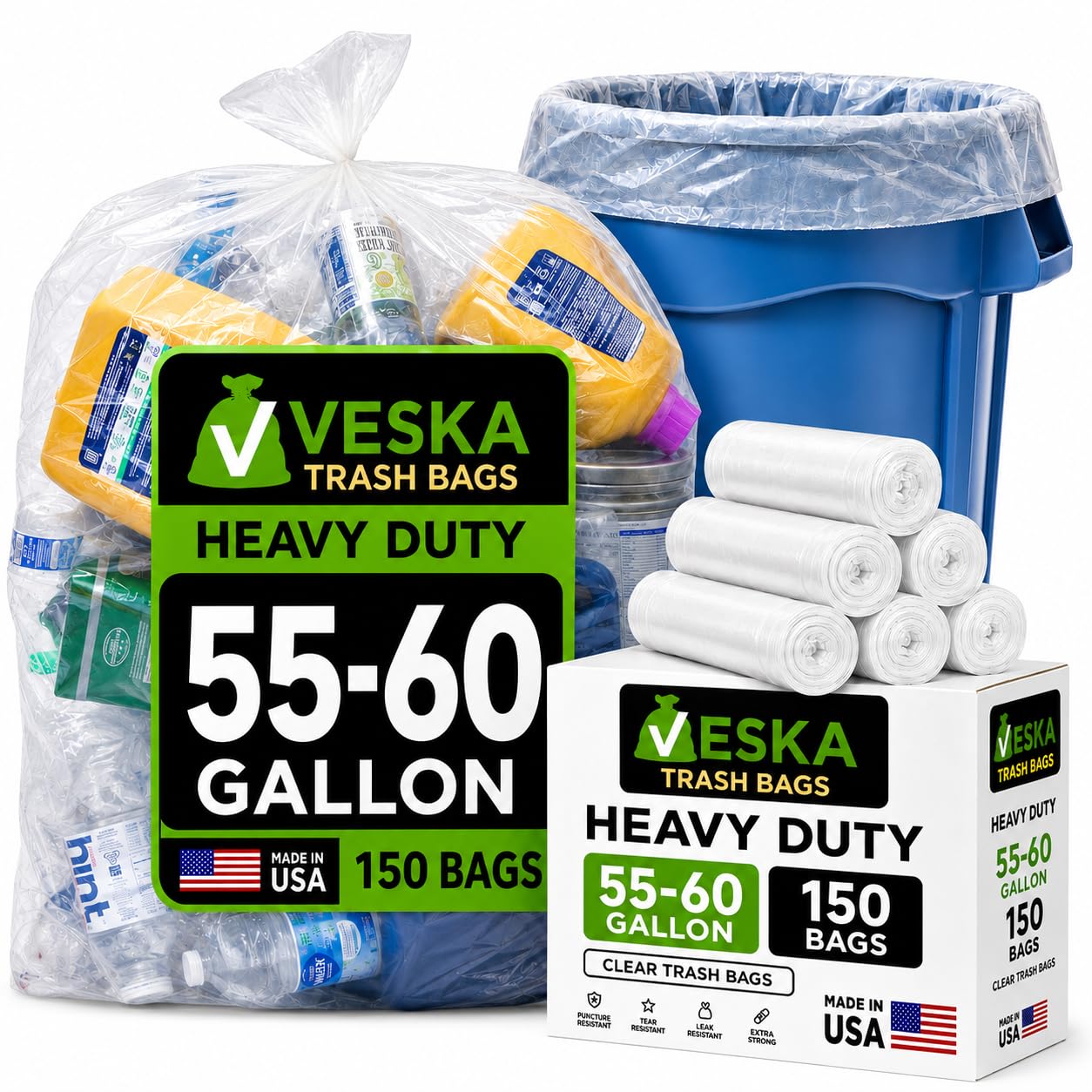
You get 150 clear bags in one box versus the Plasticplace’s 25 for high-volume recycling and light duty.
If you need a huge supply of bags for recycling or yard waste without worrying about contractor-grade abuse, the Veska clear bags deliver in volume. The clear design helps you quickly identify contents, which is required for many municipal recycling programs. Buyers call them “great clear bags” that are “large enough to fit 55 gallon drums.”
The catch: these bags are much thinner than the top picks. Reviewers point out they are “not good with woody vines, branches, thorney plants” because the plastic is “too thin.” There is no mil thickness published in the specs, but the buyer feedback suggests it is significantly lighter than the 3 Mil bags. For loose leaves, paper recycling, or general clean trash, they work fine. For any sharp or heavy debris, you will get tears.
Veska says the bags are made from nylon, polyethylene, and polypropylene (a mix of plastics that makes them flexible but less puncture-resistant than a pure LDPE contractor bag). The box itself is noted as low-quality, but that does not affect the bags inside. This is purely a value play for high-volume, low-abuse use. A buyer hauling yard debris should pick the Ultrsac; a homeowner with endless recycling needs will appreciate the 150 count.
The Upside
- 150 bags — far more than any other pick in this guide
- Clear design makes sorting and recycling easier
- Flexible material is easy to open and handle
The Downside
- Thinner plastic — not suitable for branches, sharp items, or heavy loads
- No official mil thickness listed, making strength an unknown
- Box packaging is flimsy
Best for: Recycling, loose leaves, and paper waste where you need a mountain of bags without a budget blowout.
Not for: Construction debris, sharp yard clippings, or any load that would stress thin plastic.
Understanding the Specs
Mil Thickness
This is the single most important number on a trash bag label. One mil equals one-thousandth of an inch. A 1-2 mil bag is for everyday light kitchen use. For 60-gallon bags, 3 mil is the minimum for reliable heavy-duty work (yard waste, general debris), while 6 mil is for true construction and demolition loads with sharp objects. The thickness directly affects puncture and tear resistance — thicker bags handle more abuse but cost more and are harder to tie closed.
Bag Dimensions
Two bags can both claim 60 gallons but have very different shapes. You will see two numbers: width and height (e.g., 36″ x 58″). A wider bag (41″) gives you more room to fit bulky items at the top. A taller bag (58″) gives you extra length to fold over the rim or tie closed. Measure your can’s height and circumference. A bag that is too short will not cover the rim, and one that is too wide may bunch and create gaps for leaks.
FAQ
What does “60 gallon” actually mean for a trash bag?
How thick should a 60-gallon trash bag be for yard waste?
Are clear or black trash bags better for 60-gallon cans?
Can I use a 55-gallon bag in a 60-gallon can?
How do I tie a thick 6 Mil trash bag closed?
Why do some bags have a strong plastic smell?
What is the difference between a flat bottom seal and a gusseted bag?
Are expensive contractor bags worth the extra cost?
How many 60-gallon bags come in a standard box?
Can a 60-gallon bag be used for emergency storage?
Final Thoughts
Across the board, the best 60 gallon trash bags is the Plasticplace Contractor 6.0 Mil because it delivers class-leading strength for demolition and heavy construction debris. If you want a reliable bag for yard work without paying for 6 Mil, grab the Ultrasac Heavy Duty 3 Mil (40 Count). And for high-volume recycling or light waste where you need a bulk supply, the Veska Clear 150 Count fits the bill.
How We Picked
We do not accept paid placement, and we did not hands-on test every unit. Instead, we match each pick to a real buyer and use-case by comparing the manufacturers’ published specifications against the patterns in verified customer reviews — so you get each pick’s real strengths and trade-offs instead of marketing copy.
Sources & Methodology
Specifications: manufacturer listings and product documentation. Review insights: verified customer reviews, as of July 2026. Pricing: not shown on this page (it changes often); check the current price via the retailer link.
As an Amazon Associate, Gadgets Feed earns from qualifying purchases. This does not affect which products we feature.
Product prices and availability are accurate as of the date/time indicated and are subject to change. Any price and availability information displayed on Amazon at the time of purchase will apply to the purchase of this product. As an Amazon Associate I earn from qualifying purchases.
CERTAIN CONTENT THAT APPEARS ON THIS SITE COMES FROM AMAZON. THIS CONTENT IS PROVIDED "AS IS" AND IS SUBJECT TO CHANGE OR REMOVAL AT ANY TIME.
Amazon and the Amazon logo are trademarks of Amazon.com, Inc. or its affiliates.