
Our readers keep the lights on and my morning glass full of iced black tea. As an Amazon Associate, I earn from qualifying purchases.
Specs are compiled from manufacturer listings and verified buyer reviews and can change over time — please confirm the key details on the product page before buying.
A 60 pound weighted vest sounds like a simple hunk of fabric and metal, but the difference between a great session and a frustrating one depends on how that weight sits on your shoulders. A vest that shifts, chafes, or clatters with every step ruins focus, slows you down, and makes you cut sets short. The right one locks in place, distributes the load evenly across your torso, and disappears into your movement so you can push your pull-ups, box jumps, and ruck runs without thinking about the gear.
I’m Min — the founder and writer behind Gadgets Feed. This guide is built by comparing the manufacturers’ published specifications and the patterns across verified customer reviews, so you get each pick’s real strengths and trade-offs instead of marketing spin.
Choosing the right 60 pound weighted vest depends on how it fits, how the weight is packed, and whether the materials handle daily abuse — if you need a tactical vest for high-intensity training or a short-body design for full-range mobility.
Our Picks at a Glance

How To Choose The Best 60 Pound Weighted Vest
A heavy weighted vest is a long-term training tool. Picking the right one from the start saves you money and frustration. Focus on how the weight loads, how the vest fits your body, and what material survives your training style.
Weight Adjustment System
You want to scale the load smoothly over time. Vests with individual weight packs let you start at 20 lb and work up to 60 lb without buying a second vest. Look for clear weight increments and fine-tuning, not just big jumps between 30 lb and 60 lb.
Weight Material
The filling inside the vest determines balance and noise. Iron sand bags (fine metallic grit sealed in fabric pouches) mold slightly to your body and stay quiet during movement. Solid steel plates feel dense and compact but may clink together if not packed tightly. Both work well, but iron sand tends to feel less jarring during running and dynamic moves.
Fit and Comfort
A vest that bounces is unusable at 60 lb. Adjustable hip belts and wide Velcro straps lock the load to your torso. Short-body vests (roughly 11 inches from the collarbone down) give you full hip flexion for squats and sit-ups. Breathable, not-too-thick shoulder padding prevents heat buildup and chafing on long sessions.
Quick Comparison
| Model | Best For | Weight System | Weight Material | Closure | Amazon |
|---|---|---|---|---|---|
| RUNmax Pro★ Best Overall | Comfort & Durability | Removable packs | — | Hook & Loop | Amazon |
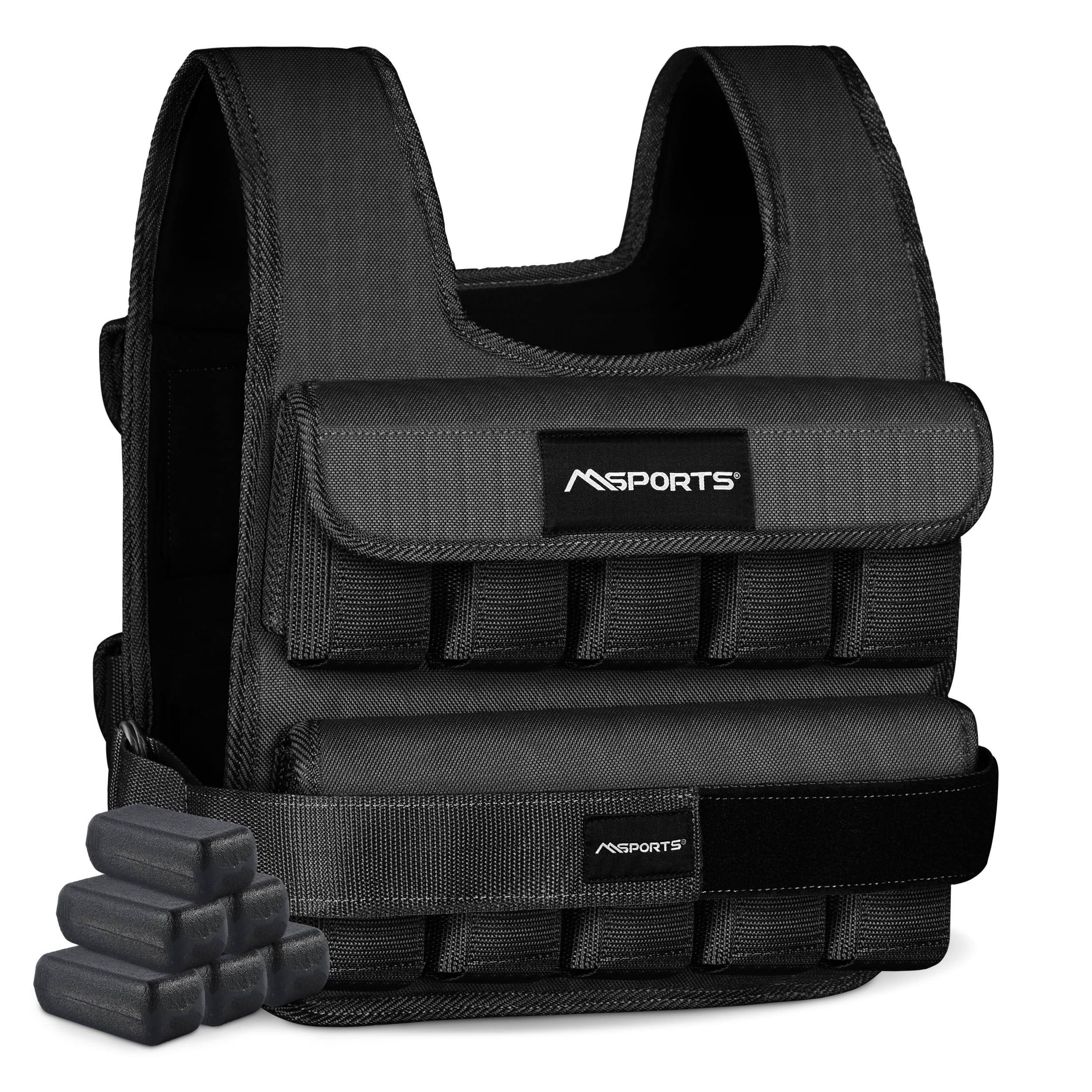
| MSPORTS PremiumBest Value | Value & Versatility | Removable 11–65 lb packs | Cast Iron / Iron Sand | Double Ring | Amazon |
| Liveet Adjustable | Heavy Duty Training | 20 removable 3 lb bags | Iron Sand | Hook & Loop | Amazon |
| ZELUS Weighted Vest | Visibility & Endurance | Adjustable iron sandbags | Iron Sand | Hook & Loop | Amazon |
| MiR Short Vest | Mobility & Range of Motion | Removable 3 lb solid iron bars | Solid Iron | Zipper | Amazon |
| BeatBoost Set | Full Body Conditioning | 0.625 lb steel bars | Solid Steel | Hook & Loop | Amazon |
In‑Depth Reviews
1. RUNmax Pro Weighted Vest
Our pick — over 4.5★ from 6,000+ verified ratings; the strongest balance of quality and price.
The RUNmax Pro disappears under load, letting you focus entirely on the rep.
This vest puts its 60 lb capacity into a neoprene body that stays flexible even during explosive movement. The hook-and-loop closure (a wide Velcro-style strap system) lets you cinch it tight with one pull — if a vest wiggles at 60 lb, it ruins your run. Front and back pockets create equal weight distribution, so you avoid the off-balance lean that some rear-heavy vests cause.
Buyers report the shoulder pads make a difference during long ruck marches, and the tear-resistant nylon shell holds up to daily abuse without fraying. The vest supports a full range of arm motion, which helps during push-ups and pull-ups where a bulky vest would restrict elbows. At 60 lb, this vest has a 2.0x weight gap versus the MiR Short Vest’s 30 lb item weight, giving you a much heavier loaded feel from the start.
One catch: the rough neoprene texture can grab onto thin polyester workout shirts. Owners mention the fit works best when you layer it over a thicker cotton tee or a rash guard. The lifetime warranty covers any workout damage.
What Locks It In
- Neoprene material flexes with movement without sagging
- Equal front/back weight distribution avoids back strain
- Lifetime warranty included for wear and tear
What To Watch
- Neoprene can create friction on thin workout shirts
- No solid steel plate option if you prefer firmer weight
Reach for this if: you want a pliable, high-capacity vest that stays put during running and calisthenics, backed by a lifetime guarantee.
Look elsewhere if: you prefer the density and slim profile of solid iron or steel plate vests.
2. MSPORTS Weighted Vest Premium
The MSPORTS scales from 11 lb to 65 lb, covering a decade of strength gains in one vest.
This vest uses a double-ring closure (two sturdy rings you pull to tighten, similar to a duffel bag cinch) combined with wide Velcro straps and an adjustable hip belt. The result is a bounce-free fit that stays locked during running and high-intensity interval drills. The removable weight packs let you start light and add resistance gradually. Note the “Size: 22 lb” in the spec — that seems to be the starting configuration, while the system itself supports up to 65 lb of removable packs.
The cast iron and polyester materials in the weight packs keep the vest low-profile. Buyers who use this for CrossFit and outdoor sprints report the vest does not slide up during burpees or sprawls. The included digital e-book workout guide helps you structure your first sessions. Compared to the RUNmax Pro, the MSPORTS has a 2.7x larger adjustment range from 22 lb to 65 lb, making it more future-proof if you plan to keep your vest for years of progressive overload.
The trade-off: the double-ring system takes a second to get used to versus a simple hook-and-loop strap. Some customers note it loosens slightly during long runs unless you cinch it extra tight first.
Why It Works
- Massive 11-65 lb range suits beginners and advanced athletes
- Wide Velcro straps plus hip belt for a secure, bounce-free fit
- Free full-body workout guide included with purchase
Minor Annoyances
- Double-ring closure has a learning curve for quick tightening
- Odor-free polyester may not breathe as well as mesh
Best for progressive trainers: this vest grows with your strength from 11 lb to 65 lb so you only buy once.
skip it if: you prefer the convenience of single-pull hook-and-loop straps over a double-ring cinch.
3. Liveet Adjustable Weighted Vest
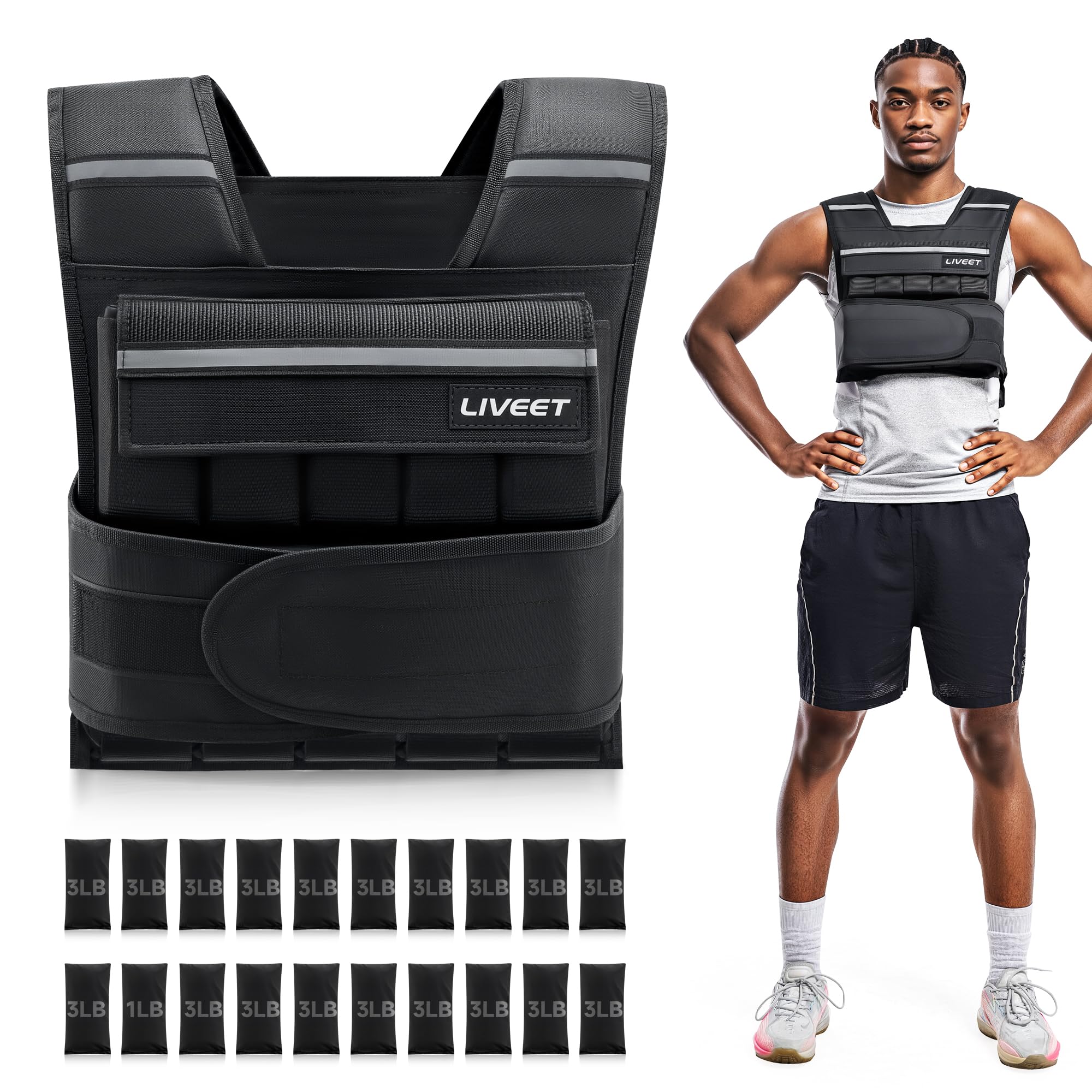
Twenty individual 3 lb iron sand bags let you dial in your load with surgical precision.
Unlike vests with only 4 or 6 weight packs, the Liveet gives you 20 separate 3 lb bags. You can fine-tune your total load in 3 lb increments — handy for tactical athletes who need a specific weight for a ruck competition. The 600D Oxford fabric (a dense woven polyester used in military gear) resists tearing from friction against barbells and concrete floors during drills.
The hook-and-loop waist strap lets you micro-adjust the fit so the vest does not bounce during box jumps or sled pushes. Reviewers point out the foam padding on the shoulders does not trap heat, which matters in summer sessions. Reflective strips on the front and back give you 360° visibility if you train early in the morning or after sunset. The iron sand bags stay stable inside their pockets, so you get no sloshing or shifting during explosive movement.
One thing to consider: the 20 small bags take longer to swap in and out than a vest with fewer, larger packs. If you change weight between every set, the process slows you down. But if you set a weight and keep it for the full session, the granular control is a genuine advantage over the MSPORTS’s larger packs.
Granular Setup
- 20 individual 3 lb iron sand bags for precise weight tuning
- 600D Oxford fabric resists tears from high-intensity friction
- Reflective strips for visibility during early or late training
Slower Swaps
- Many small bags make weight changes between sets tedious
- No included carrying case for the spare weight bags
Choose this for: tactical drills, rucking, or powerlifting where you need exact weight in 3 lb steps and a vest that survives ground contact.
Pass if: you plan to adjust the load mid-workout and want a faster swapping system.
4. ZELUS Weighted Vest
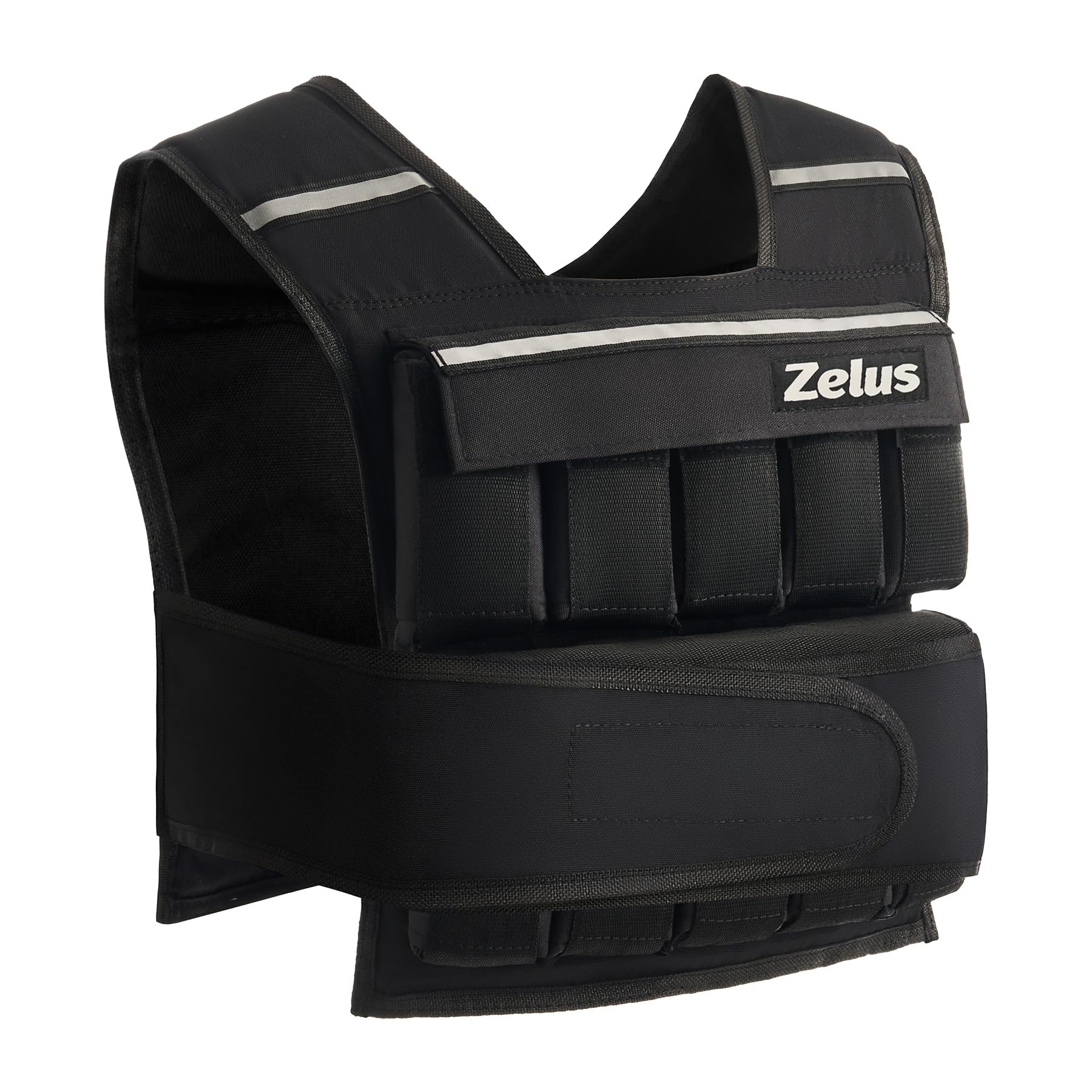
The ZELUS wraps you in high-visibility strips so you stay seen from dawn to dusk.
This vest puts reflective strips on the front, shoulders, and back — a serious upgrade over designs with only a single strip on the back. If you run or walk your dog at 5 a.m., that 360° visibility helps drivers spot you earlier. The adjustable iron sandbag system lets you scale the 60 lb capacity smoothly, and the foam padded shoulder straps reduce pressure on your collarbone during long cardio sessions.
The reinforced nylon fabric (nylon treated with an extra wear-resistant coating) holds up to repeated friction from barbells, kettlebells, and gym flooring. Shoppers say using this vest for cycling and kickboxing, suggesting the weight stays evenly distributed during lateral movement. The hook-and-loop fasteners are long enough to fit both lean and bulkier builds, so one size fits most body types.
One limitation: the foam padding, comfortable at first, can compress over time with heavy use. Buyers who train 5-6 days a week at maximum load mention it flattens after several months. The vest is not the most breathable option for hot weather, but the trade-off is the durable nylon shell that resists wear.
Safety First
- Multi-directional reflective strips on front, shoulders, and back
- Foam padded straps for comfortable weight distribution
- Reinforced nylon fabric resists fraying and wear
Consider This
- Foam padding compresses with very frequent heavy use
- Limited breathability for hot and humid training conditions
Ideal for outdoor athletes: the reflective coverage is class-leading for runners and walkers who train in low light.
Not for daily max-load grinders: the foam padding may flatten over time under 60 lb daily use.
5. MiR Short Weighted Vest

The MiR cuts off at 11 inches so your hips have full freedom during squats and sit-ups.
Most weighted vests extend down your torso and bunch up when you squat or crunch. The MiR short body design stops at 11 inches from your collarbone, leaving your hips completely unencumbered for a full range of motion. The solid iron weights (each bar weighs 3 lb) sit in cross-stitched nylon pockets that hold them tight, so you get zero clatter or shifting during dynamic movement.
The 1200 denier nylon (a heavy-duty nylon with twice the weave density of standard 600D) makes this the most durable vest in the lineup. Buyers who do tactical training and drag the vest across concrete floors report the fabric survives without ripping. The zipper closure adds security over hook-and-loop systems — zippers do not lose tension over time. Bottom straps let you cinch the vest snug regardless of your shape. Note: the item weight listed is 30 lb, which is the style designation, while the vest supports up to 60 lb of removable 3 lb bars.
One honest trade-off: the short cut means the weight sits higher on your body, which can feel top-heavy until you get used to it. Some buyers who run long distances prefer a longer vest that distributes weight lower. But for mobility-focused training, the short design is a genuine advantage over the RUNmax Pro.
Why It Leads
- 11-inch short body allows full hip flexion for squats and sit-ups
- Solid iron bars provide dense, noiseless weight that lasts a lifetime
- 1200D nylon is the most durable material in this lineup
Consider This
- Short cut feels top-heavy if you are used to longer vests
- Zipper closure may not be as fast to adjust mid-session as Velcro
Made for mobility athletes: calisthenics, yoga, or weightlifting where unrestricted hip movement is non-negotiable.
Skip if: you prefer a longer vest that distributes weight lower on your torso for running balance.
6. BeatBoost Weighted Vest Set

The BeatBoost gives you a vest plus wrist and ankle weights for complete body conditioning.
This set goes beyond just the torso: you get a weighted vest, wrist weights, ankle weights, shoulder pads, and essential accessories in one bundle. You can run vest-only days then add wrist and ankle weight for full-body resistance without buying extra gear. The steel plates are adjustable in precise increments — each steel bar weighs 0.625 lb, so you can fine-tune your total load more exactly than with 3 lb bars. The vest is available in single options (20 lb, 30 lb, 40 lb) or full training sets (20 lb through 60 lb).
Breathable fabric and anti-slip particles on the wrist and ankle weights help prevent sliding during movement. Adjustable straps reduce bouncing and shifting, and reinforced stitching handles high-intensity sessions from strength training to CrossFit. Buyers who use the kit for endurance workouts say the wrist and ankle weights add noticeable intensity without impeding movement. The solid steel plates feel denser than iron sand, so the overall profile stays slimmer at the same weight.
One catch: the higher upfront cost compared to a standalone vest. If you already own wrist and ankle weights, you are paying for extras you may not need. The steel bars can clink together during fast movement if not packed tightly, though most buyers report the vest keeps them secure.
Full Package
- Complete set with vest, wrist weights, and ankle weights for total body training
- Precise 0.625 lb steel bars for exact load adjustment
- Anti-slip particles on limb weights prevent sliding during movement
Consider This
- Premium price for the full kit if you only want a vest
- Steel plates can produce some audible clinking during fast movement
Grab this for comprehensive training: if you want to outfit your whole body with one purchase and prefer steel’s slim profile over bulky iron sand.
pass on it if: you already own wrist and ankle weights and want a standalone vest only.
Understanding the Specs
Removable Weight System
This feature makes your vest usable for years. Vests with individual weight packs let you start at 20 lb and add 5-10 lb over time without buying a second vest. Look for systems where each pack slides in and out easily — some use zippered compartments, others use open pockets with Velcro flaps. The weight of each pack (typically 1–3 lb) determines how precisely you can adjust your load. If you need specific weights for competition prep, smaller individual packs give you finer control.
Weight Material and Profile
The material filling the vest changes how it feels during movement. Iron sand (fine metallic grit sealed in fabric bags) molds to your body shape and stays quiet, making it ideal for running and dynamic drills. Solid steel or iron plates keep a lower profile and feel firmer, but can clink together during fast movement. Both materials are durable, but solid plates win on slimness while iron sand wins on comfort during high-impact movement. The vest’s external fabric (measured in denier, like 600D or 1200D) determines abrasion resistance — higher denier numbers mean tougher material that survives concrete contact.
Closure Type and Fit
Three closure types dominate: hook-and-loop (Velcro-style), double-ring cinch, and zipper. Hook-and-loop is the most common and fastest to adjust mid-session. Double-ring systems give a more solid lock but take slightly longer to loosen or tighten. Zippers offer the most permanent hold and never wear out like Velcro, but cannot be adjusted in small increments. An adjustable hip belt is actually more important than the main closure — it stops the vest from riding up during squats, burpees, and running. A vest at 60 lb without a hip belt will shift and bounce.
Fit and Mobility Design
Vests come in two main body lengths. Standard-length vests extend down over the hips and distribute weight across more surface area, which feels balanced for walking and running. Short-body vests (roughly 11 inches from the collarbone) stop at the bottom of the rib cage and free up the hip joints completely. The short design is preferred for calisthenics, weightlifting, yoga, and sit-ups where you need full hip flexion. Shoulder padding should be breathable foam rather than thick neoprene to avoid heat buildup during long sessions. Wide, adjustable shoulder straps prevent the vest from sliding forward when the load is heavy.
FAQ
Will a 60 lb weighted vest fit a shorter person or a woman?
What is the difference between iron sand and steel plate weights in a vest?
How tight should a 60 lb weighted vest be during training?
Can you run with a 60 lb weighted vest?
How do I clean and maintain a weighted vest?
What exercises should I avoid with a 60 lb weighted vest?
Is a zipper closure better than Velcro on a weighted vest?
How long does a weighted vest last with regular training?
What should I wear under a 60 lb weighted vest to prevent chafing?
Can I use a 60 lb vest for tactical or military-style training?
Final Thoughts: The Verdict
For most athletes, the best 60 pound weighted vest is the RUNmax Pro because its neoprene build, equal front-and-back weight distribution, and lifetime warranty make it the most balanced pick for running, calisthenics, and daily strength training. If you want the widest weight range to grow into, grab the MSPORTS Premium. And for class-leading mobility during squats and sit-ups, the short-body MiR Short Vest is your pick.
How We Picked
We do not accept paid placement. Every pick is matched to a real buyer and a real use-case; we do not hands-on test units.
Sources & Methodology
Specifications: manufacturer listings and product documentation. Review insights: verified customer reviews, as of July 2026. Pricing: not shown on this page (it changes often); check the current price via the retailer link.
As an Amazon Associate, Gadgets Feed earns from qualifying purchases. This does not affect which products we feature.