
Our readers keep the lights on and my morning glass full of iced black tea. As an Amazon Associate, I earn from qualifying purchases.
Specs are compiled from manufacturer listings and verified buyer reviews and can change over time — please confirm the key details on the product page before buying.
A 60-watt guitar amp sits right in the balance: loud enough to keep up with a drummer at a small gig but still small enough for your bedroom or rehearsal space. The problem is that many beginner amps sound thin when you crank them, and many “loud” amps are too heavy to carry. This guide finds the amps that actually give you clear tone and usable volume without the hassle.
I’m Min — the founder and writer behind Gadgets Feed. This guide is built by comparing the manufacturers’ published specifications and the patterns across verified customer reviews, so you get each pick’s real strengths and trade-offs instead of marketing spin.
Whether you jam at home, record direct to your computer, or step on stage at a local bar, you need a reliable workhorse. Here is a no-nonsense look at the best 60 watt guitar amp options on the market today.
Our Picks at a Glance

How To Choose The Best 60 Watt Guitar Amp
Choosing a 60-watt amp is about more than just loudness. You need to think about the type of sound you want, where you will use it, and how much extra gear — like pedals and recording boxes — you want to carry.
Solid State vs. Digital Modeling
The biggest choice you face is between a traditional solid-state amp and a modern digital modeling amp. Solid-state amps (like the Pyle or Orange picks below) use straightforward analog circuitry (electronic parts that do not use a computer chip), giving you a simpler control panel and a very reliable, no-nonsense tone. Digital modeling amps (like the Line 6 Spider V 60 MKII) use a computer chip to simulate dozens or even hundreds of different famous amps, cabinets (the box that holds the speaker), and effects all in one box, letting you switch from a vintage Fender clean to a modern high-gain distortion with a single knob turn.
Speaker Size: The 10-inch vs. 12-inch Question
The physical size of the speaker inside the amp cabinet changes the sound you hear. A 10-inch speaker, like the one in the LyxPro 60 Watt, tends to be punchier and more focused, which some players prefer for practice. A 12-inch speaker, like in the Fender Champion II 50 and Orange Crush 60, moves more air, giving you a bigger, fuller low-end thump and more headroom (the clean space before the sound starts to break up) before it distorts. For gigging, a 12-inch speaker is almost always the better choice.
Built-in Effects and Connectivity (Pedals vs. All-in-One)
Many modern 60-watt amps come loaded with built-in delay, reverb, chorus, and overdrive, which can save you hundreds of dollars on individual pedals. Look for a headphone jack for silent practice — standard on nearly every pick here — and an aux input for jamming along with backing tracks. If you plan to record, a USB audio interface (a built-in port that sends your guitar’s sound directly to a computer) like the one on the Fender Mustang LT50 lets you plug straight into your computer and capture your playing without needing a separate microphone or audio interface box.
Quick Comparison
| Model | Best For | Speaker Size | Weight | Built-in Effects | Amazon |
|---|---|---|---|---|---|
| Pyle Pro PVAMP60★ Best Overall | Entry-level price, high wattage | — | 17.5 Pounds | Digital delay, overdrive | $128.91Amazon |
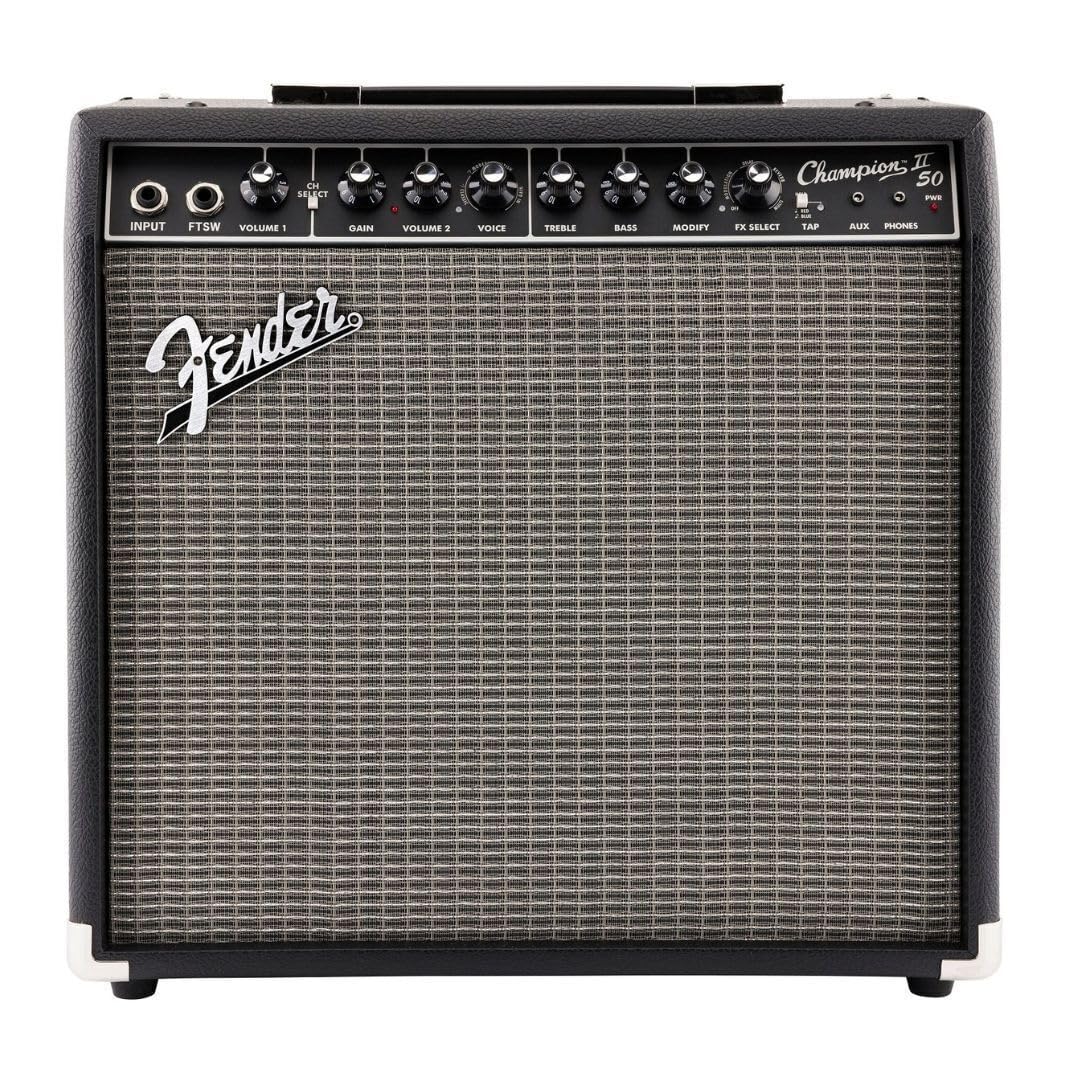
| Fender Champion II 50Also Great | Classic Fender clean tones + versatility | 12 inches | 22.95 lbs | Reverb, delay, chorus, tremolo, Vibratone | $249.99Amazon |
| Line 6 Spider V 60 MKII | Infinite tones via digital modeling | — | 26.2 lbs (11.9 kg) | 200+ amp/cab models, effects, looper | $449.99Amazon |
| Fender Mustang LT50 | USB recording + preset versatility | — | 23.5 Pounds | 30 presets, 25 effects | $249.99$289.99Amazon |
| Orange Crush 60 | Rich, thick analog tone | 12 inches | 48 Pounds | Digital reverb (spring, hall, plate) | $599.00Amazon |
| LyxPro 60 Watt | Budget stage amp with mic input | 10 inches | 26.4 lbs | Digital delay, drive (gain) | $159.99Amazon |
In‑Depth Reviews
1. Pyle Pro PVAMP60
Our pick — over 4★ from 650+ verified ratings; the strongest balance of quality and price.
The no-frills 60-watt giant that gives you the most power for your dollar.
The Pyle Pro PVAMP60 is a simple, high-wattage solid-state amp that undercuts almost every other option in price while offering more raw power. At 17.5 pounds, it is also the lightest amp on this list — the Fender Mustang LT50 weighs 23.5 pounds, making it the easiest to carry to a friend’s house. It features two channels, a gain control for overdrive, a 3-band EQ for treble, mid-range, and bass, and a 1/4-inch headphone jack for silent rehearsing.
One buyer described it perfectly: “It definitely packs a lot of power despite it being short in size.” The frequency response goes from 20Hz to 15kHz, and it has a USB connector for connecting to a computer (though it is not a full recording interface like the Mustang LT50). It is a traditional open-back cabinet design, which gives the sound a more airy, spacious feel compared to a closed-back cab.
The biggest catch is that there are no pre-programmed presets or fancy modeling features. You get clean, overdrive, digital delay, and the EQ — that is it. It also has a known tendency to hum if used with a very high-impedance guitar source, though customers note this is virtually gone with standard passive pickups. For a pure, high-value practice and jam amp, though, it is tough to top.
Why It Wins on Value
- Very lightweight at 17.5 pounds — easiest to transport
- Includes digital delay and overdrive on top of 60 watts
- Open-back design for an airy, spacious sound
What’s Missing
- No preset sounds or modeling features
- Can produce hum with very high-impedance guitar pickups
Ideal for: the absolute budget-conscious beginner who wants maximum volume and minimal cost, or a second amp to keep at a rehearsal space.
Not for you if: you want one box to replace a pedalboard — this is a pure, straight-ahead amplifier.
2. Fender Champion II 50
The reliable stage companion that delivers Fender’s legendary clean tones with a 12-inch punch.
The biggest advantage here is the 12-inch Fender Special Design speaker inside a 7-ply MDF cabinet (a dense wood composite that resists rattling). You get a strong, articulate sound with plenty of headroom — the clean space before distortion kicks in — so each note stays clear even at higher volumes. With 50 watts of power, you can handle band practice and small gigs without pushing the amp too hard.
The two-channel design gives you a clean channel and a separate channel with multiple amp voicings (different tonal characters), ranging from famous Fender cleans to British and modern distortion. Built-in effects include reverb, delay/echo, chorus, tremolo, and Vibratone, all controllable with a dedicated TAP tempo button that matches the effect speed to your song. An 1/8th-inch aux input lets you play along with tracks, and the headphone output keeps practice silent. You also get a rear USB port and the option to add a 2-button footswitch — part number 0071359000 — for hands-free channel and effects switching.
Buyers report the amp modeling settings are accurate and sturdy, and that the clean channel is “great.” The catch is that at 50 watts this is still a bit much for a pure bedroom practice amp — it shines when you can actually open it up with a drummer or in a small venue.
Key Strengths
- 12-inch speaker delivers big, full low-end tone
- Multiple amp voicings from clean Fender to modern distortion
- TAP tempo for syncing effects to a song’s beat
Before You Buy
- 50 watts may be too loud for quiet apartment practice
- Footswitch sold separately
Reach for it if: you want a versatile stage-ready combo with classic Fender cleans and a sturdy 12-inch speaker that works for rehearsals and small gigs.
Think twice if: your primary use is quiet bedroom practice at low volumes — consider a smaller wattage model.
3. Line 6 Spider V 60 MKII

The digital toolbox that stuffs over 200 amp and effects models into one portable box.
The Spider V 60 MKII is built around Line 6’s digital modeling engine (a computer chip that recreates the sound of real amps and effects), which gives you access to over 200 amplifier, cabinet, and effects models — so you can dial up anything from a vintage British Plexi to a modern high-gain metal machine at the twist of a knob. It includes a built-in wireless receiver that works with Line 6 Relay transmitters, freeing you from the guitar cable during practice or performance.
Beyond the sheer variety of sounds, this amp includes practical tools: a tuner, a metronome, jam-along drum loops, and a 60-second looper for building parts on the fly. According to the manufacturer, the new Classic Speaker mode gives a more organic, amp-like feel and sound, addressing a common criticism of older modeling amps. A reviewer noted it is “great for home practice” and that the aux port delivers “clear backing tracks.” Another buyer called it perfect for a “50-person backyard gig.” At about 26.2 pounds (11.9 kg), it is lighter than the Orange Crush 60 and easy to move.
The trade-off is that the controls can get deep. While the presets sound excellent, building your own custom tones requires time with the knobs or the remote app. The preset knob can also be fiddly for accessing drums and metronome functions.
What Stands Out
- 200+ amp/cab/effects models for unlimited sound-shaping
- Built-in wireless receiver for cable-free playing
- Includes looper, drum loops, and metronome
Considerations
- Tone-tweaking via knobs can be complex
- Foot pedal for live switching is not included
Grab this for: the guitarist who wants endless tonal variety — from vintage to modern — with built-in jamming tools like a looper and drum machine, all in a light, portable package.
Pass if you: prefer the simplicity of a classic analog control panel with a fixed set of knobs.
4. Fender Mustang LT50

The practice amp and recording interface in one, loaded with 30 presets and 25 effects.
The Mustang LT50 is a direct bridge between playing and recording. It features an integrated USB audio interface — a built-in port that lets you plug your guitar straight into a computer and record into any standard recording software without needing a separate, expensive audio box. This is a feature the more traditional Orange Crush 60 lacks, making the LT50 uniquely suited for home studio work.
With 30 preloaded presets covering a wide range of music and 25 onboard effects that include multiple types of distortion, overdrive, compression, modulation, reverb, delay, and octave effects, you have a massive library of sounds ready to go. An included 2-Year Limited Warranty from Fender covers defects in materials and workmanship. Weighing 23.5 pounds, it is a light load — and it is more compact than the Fender Champion II 50 at 16.5 inches deep compared to 19.8 inches which makes it easier to fit on a desk or beside a bed.
A buyer review confirmed it is a “powerful upgrade from LT25; very loud for outdoor use or small gigs,” but noted it is “not ideal for quiet practice.” The preset sounds are a major selling point, with one user saying they “eliminate setup guesswork.”
Built-in recording: the USB audio interface lets you capture your playing directly to a computer with no extra gear.
Volume alert: like many 50-watt amps, it is better suited for a rehearsal space or small gig than silent bedtime playing.
Best for: home recordists and intermediate players who want Fender reliability, a ton of presets, and an all-in-one recording solution.
Look elsewhere if: you need a 12-inch speaker for the biggest possible low-end tone — the LT50 uses a smaller internal speaker.
5. Orange Crush 60
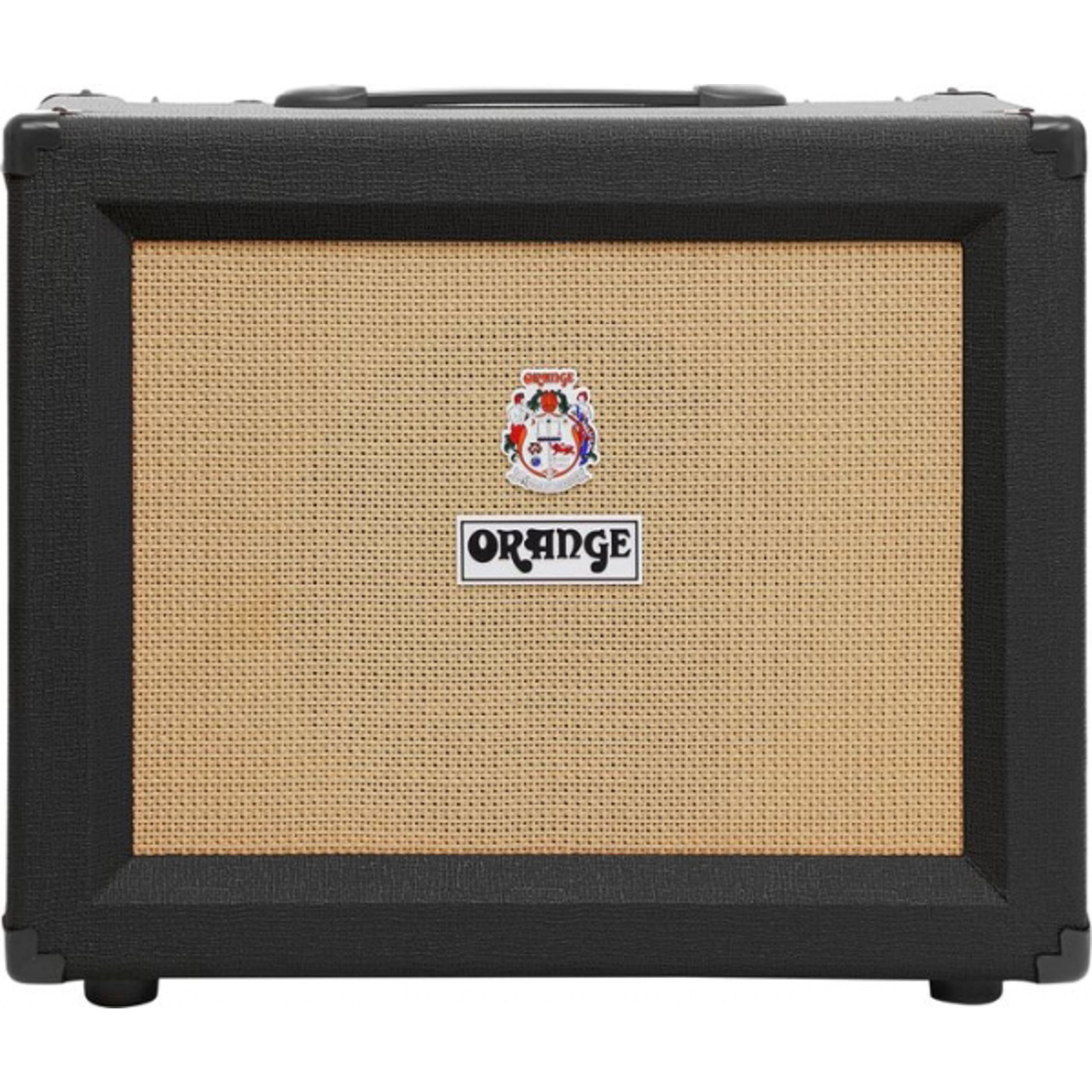
The thickest, richest analog solid-state tone in a 60-watt package, famous for its punch and feel.
The Orange Crush 60 is the analog purist’s dream. It is a solid-state amplifier based on Orange’s prestigious Rockerverb tube amp range, but with a clean channel featuring a two-stage, two-band EQ (equalizer) design that delivers that thick, spongy Orange character. The other channel is the dirty channel, which gets you into that famous Orange “crunch” territory that cuts through a mix.
This is not a modeling amp with hundreds of presets. The Crush 60 offers a simple, direct control set with two channels and an inbuilt digital reverb that provides natural-sounding spring, hall, or plate reverb settings (different types of echo ambience). Buyers using Fender American Standard Strats and Ibanez guitars report “great sound throughout low end and high end with responsive mids.” One reviewer even compared its sound quality favorably to their old 120-watt tube head and 412 cabinet rig, noting the thickness was “comparable.” It is a workhorse built for years of service, with a high-quality fit and finish.
The obvious catch is its weight — moving 48 pounds to rehearsals is a workout. It is also the most expensive option here, reflecting its premium build and analog design.
The Real Appeal
- Rich, punchy analog tone that rivals tube amps in sound quality
- Professional-grade spring, hall, and plate reverb built in
- Two-band EQ on clean channel for precise tonal shaping
Honest Trade-offs
- At 48 pounds, it is the heaviest amp on this list
- No modeling presets or USB recording interface
Choose this for: the player who values thick, uncompromising analog tone and classic Orange crunch above all else, and has the back to carry it.
Skip this if: you need portability for frequent gigs or want the vast tonal options of a digital modeling amp.
6. LyxPro 60 Watt Electric Guitar Amplifier

The affordable combo that packs a 10-inch speaker and a microphone input for under.
The LyxPro 60 Watt is built for the player on a budget who still needs stage-ready features. It has a 10-inch 4-ohm speaker that delivers solid treble and bass, and its master volume control lets you go from intimate solo play to what the manufacturer describes as “thunderous live concert output.” The key differentiator here is the integrated 1/4-inch microphone input with its own adjustable volume knob — meaning a singer/guitarist can plug a mic directly into the amp without needing a separate PA system for small gigs or street performances.
For tone shaping, you get a Boost on/off switch, variable distortion from the Gain knob, a digital delay with Time and Repeat controls, and a standard three-band EQ for treble, middle, and bass. A headphone jack provides private listening, and a line out port lets you connect to larger external speakers or a mixing console. Owners mention the “clean channel is clear, crisp, very loud with great reverb,” though the overdrive channel is noticeably quieter than the clean — a common trait for solid-state amps that some fix by adding a pedal like a Boss DS-1.
The main risk is build quality. Multiple buyers reported receiving units with loose knobs or internal speakers sliding around, so ordering from a retailer with a good return policy is wise. At 26.4 pounds, it is light enough for one-handed carries.
What You Get
- Built-in microphone input with separate volume control
- Line out for connecting to larger PA systems
- Digital delay and three-band EQ for versatile tone
What to Watch For
- Overdrive channel is quieter than the clean channel
- Report of build quality inconsistencies on some units
Grab it for: singer-songwriters starting to play small, intimate gigs who need one box for voice and guitar without spending on a separate PA.
Think twice if: you need a loud, built-in overdrive for rock — plan on buying a dedicated distortion pedal.
Understanding the Specs
Speaker Size (10-inch vs 12-inch)
The speaker cone is the engine of your amp’s sound. A 10-inch speaker, like in the LyxPro, tends to be punchier and more focused, making it excellent for practice and genres where note clarity is king. A 12-inch speaker, like those in the Fender Champion II 50 and Orange Crush 60, moves more air and delivers a significantly bigger low-end, making it the default choice for guitarists who play with a drummer or need fat, full chords.
Digital Modeling vs Solid State
Digital modeling amplifiers (like the Line 6 Spider V 60 MKII) use a computer chip to create digital simulations of dozens of different amplifiers, cabinets, and effects. You essentially get a whole rack of gear in one box. Solid-state amplifiers (like the Pyle or Orange Crush 60) use traditional analog electronic circuits. They are simpler, more reliable, and often have a more immediate, “live” feel when you turn the knobs — there is no digital processing delay.
FAQ
Is a 60-watt guitar amp loud enough for live gigs?
Can I use a 60-watt amp for quiet bedroom practice?
What is the difference between 50 watts and 60 watts?
Will a 60-watt modeling amp sound good without pedals?
Can I plug headphones into any 60-watt guitar amp?
What does “open back” vs “closed back” mean for an amp cabinet?
Do I need a separate audio interface to record a 60-watt amp?
Why is a 12-inch speaker better than a 10-inch speaker?
Final Thoughts: The Verdict
For most buyers, the best 60 watt guitar amp overall is the Fender Champion II 50 because it combines a stage-ready 12-inch speaker, iconic Fender cleans, and versatile built-in effects at a mid-range price. If you want infinite tonal variety with built-in drum loops and a looper, grab the Line 6 Spider V 60 MKII. And for the thickest analog solid-state tone on a budget, the standout is the Orange Crush 60.
How We Picked
We do not accept paid placement. Every pick is matched to a real buyer and a real use-case; we do not hands-on test units.
Sources & Methodology
Specifications: manufacturer listings and product documentation. Review insights: verified customer reviews, as of July 2026. Pricing: not shown on this page (it changes often); check the current price via the retailer link.
As an Amazon Associate, Gadgets Feed earns from qualifying purchases. This does not affect which products we feature.
Related Guides
Product prices and availability are accurate as of the date/time indicated and are subject to change. Any price and availability information displayed on Amazon at the time of purchase will apply to the purchase of this product. As an Amazon Associate I earn from qualifying purchases.
CERTAIN CONTENT THAT APPEARS ON THIS SITE COMES FROM AMAZON. THIS CONTENT IS PROVIDED "AS IS" AND IS SUBJECT TO CHANGE OR REMOVAL AT ANY TIME.
Amazon and the Amazon logo are trademarks of Amazon.com, Inc. or its affiliates.