
Our readers keep the lights on and my morning glass full of iced black tea. As an Amazon Associate, I earn from qualifying purchases.
Specs are compiled from manufacturer listings and verified buyer reviews and can change over time — please confirm the key details on the product page before buying.
The single biggest worry with a 60V ebike isn’t top speed — it’s whether you’ll make it home before the gauge hits empty. A battery that looks great on paper can sag under load or lose range after a few hundred charge cycles. This guide cuts through the spec-sheet confusion to show you which 60V packs deliver real range, hold up over a season of hard riding, and what to check before you buy.
I’m Min — the founder and writer behind Gadgets Feed. This guide is built by comparing the manufacturers’ published specifications and the patterns across verified customer reviews, so you get each pick’s real strengths and trade-offs instead of marketing spin.
The real-world data from owners who put hundreds of miles on each battery tells a clearer story than any ad, so you can confidently choose the right 60v ebike battery for your commute, trail rides, or daily errands.
Our Picks at a Glance
How To Choose The Best 60V Ebike Battery
Getting it wrong means paying for capacity you don’t need or running out of power miles from home. Focus on these three things first.
Capacity vs. Real-World Range
The key spec is amp-hours (Ah), which tells you how much energy the battery holds. A higher Ah number gives you more range, but actual miles depend on rider weight, terrain, throttle use, and wind. A 25Ah pack might claim 100 miles on the spec sheet, but a heavier rider on hills in full-throttle mode will see less.
Cell Quality and Cycle Life
The cells inside the battery determine how many charge cycles it lasts before capacity fades. Grade-A cells from reliable manufacturers typically last 800 to 1,000 full charge cycles before dropping to 80% of their original capacity. Cheaper cells degrade faster, meaning a bargain battery could need replacing much sooner. Look for specifics about cell brand or cycle-life claims.
Physical Fit and Security
A 60V battery is heavy and large. Before buying, measure your bike’s battery compartment against the battery’s exact dimensions. Most packs include a lock to deter theft, and a removable battery lets you carry it inside to charge — a major convenience if you don’t have an outdoor outlet. Check that the discharge connector type (often XT60) matches your bike’s controller.
Quick Comparison
In‑Depth Reviews
1. UPP LG-Cell 52V 25Ah Battery Pack
The UL-certified upgrade from a 48V system that adds real range and acceleration.
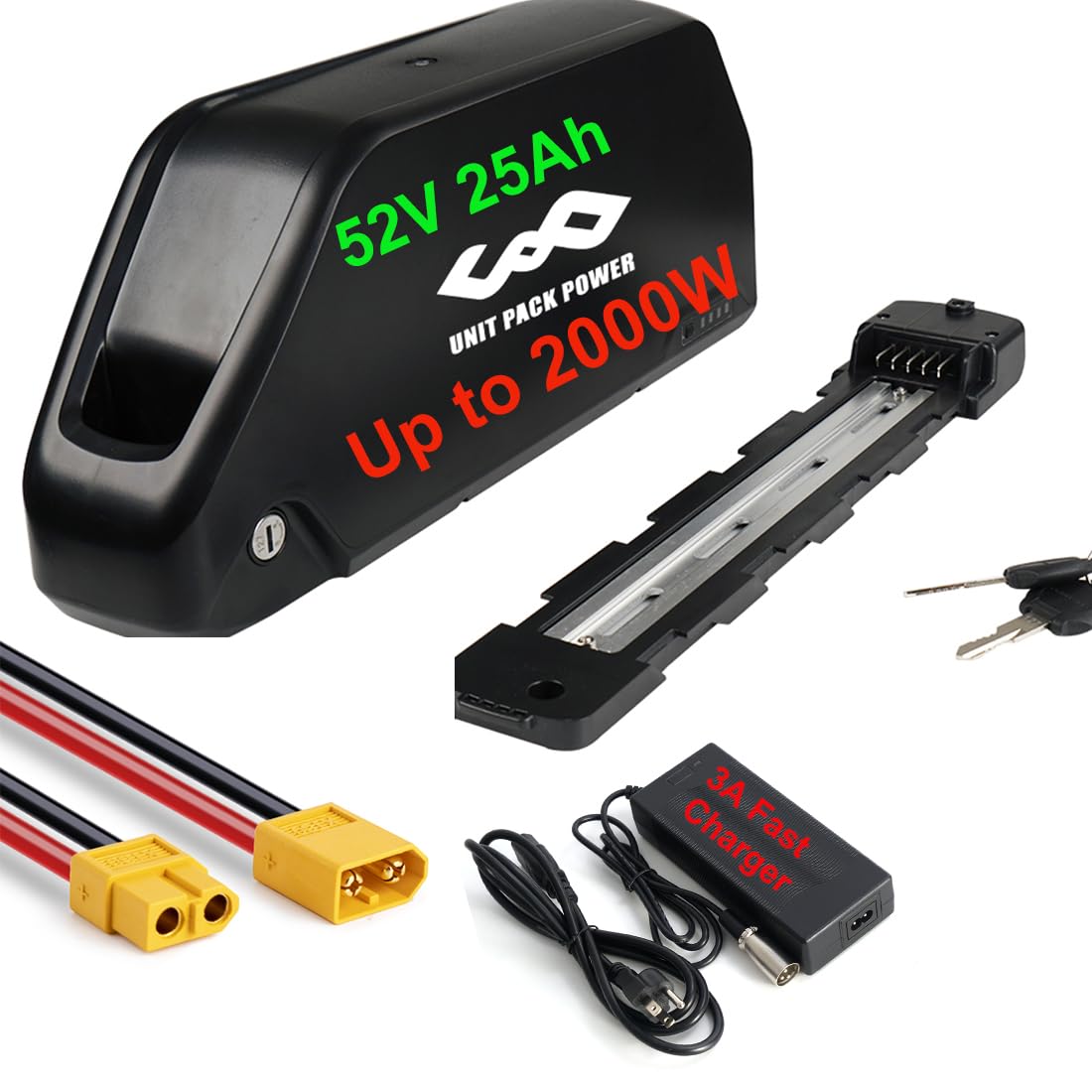
Strictly speaking, this is a 52V pack, but it fits 48V and 52V controllers and is a direct competitor to 60V systems for riders looking for more power than a stock 48V battery offers. It uses Grade-A cells that the maker says maintain at least 80% capacity after 800 cycles, with a total lifespan of up to 1,000 charge cycles and an estimated 5-year life. One buyer who added it as a second battery on a 52V system reported a 20-mile range extension, while another swapped out their 48V 22.5Ah pack on a Freego F2 Pro and called it “the perfect upgrade” for both range and speed.
The pack includes an anti-theft lock, an LED power indicator, a power switch to reduce parasitic drain, anti-vibration pads, and a 5-pin discharge base pre-installed with an XT60 connector. A couple of owners noted minor QC hiccups — a piece of Styrofoam stuck in a charging port — but all reported the issue was resolved quickly by customer service. The UL2271 certification adds a layer of safety confidence. At 52V and 25Ah, this is a thoughtful upgrade if your bike can accept the 368 x 96 x 150mm size.
The value call: Backed by a 1-year warranty and a responsive support team, this UL-certified pack is a safe, well-reviewed upgrade for 48V and 52V systems. It is not a true 60V battery, so skip it if your controller demands exactly 60V.
Grab this for: Riders with a 48V or 52V bike who want a UL-certified, long-cycle-life battery with a proven customer-service record and real-world range gains.
Pass if: Your build absolutely requires a native 60V nominal voltage — this pack runs at 52V and works best on compatible systems.
2. Lanshanchu 60V 25AH Battery (Peak 6000W Bike)
The high-capacity pack that one owner rode for 1,400 miles without a major issue.
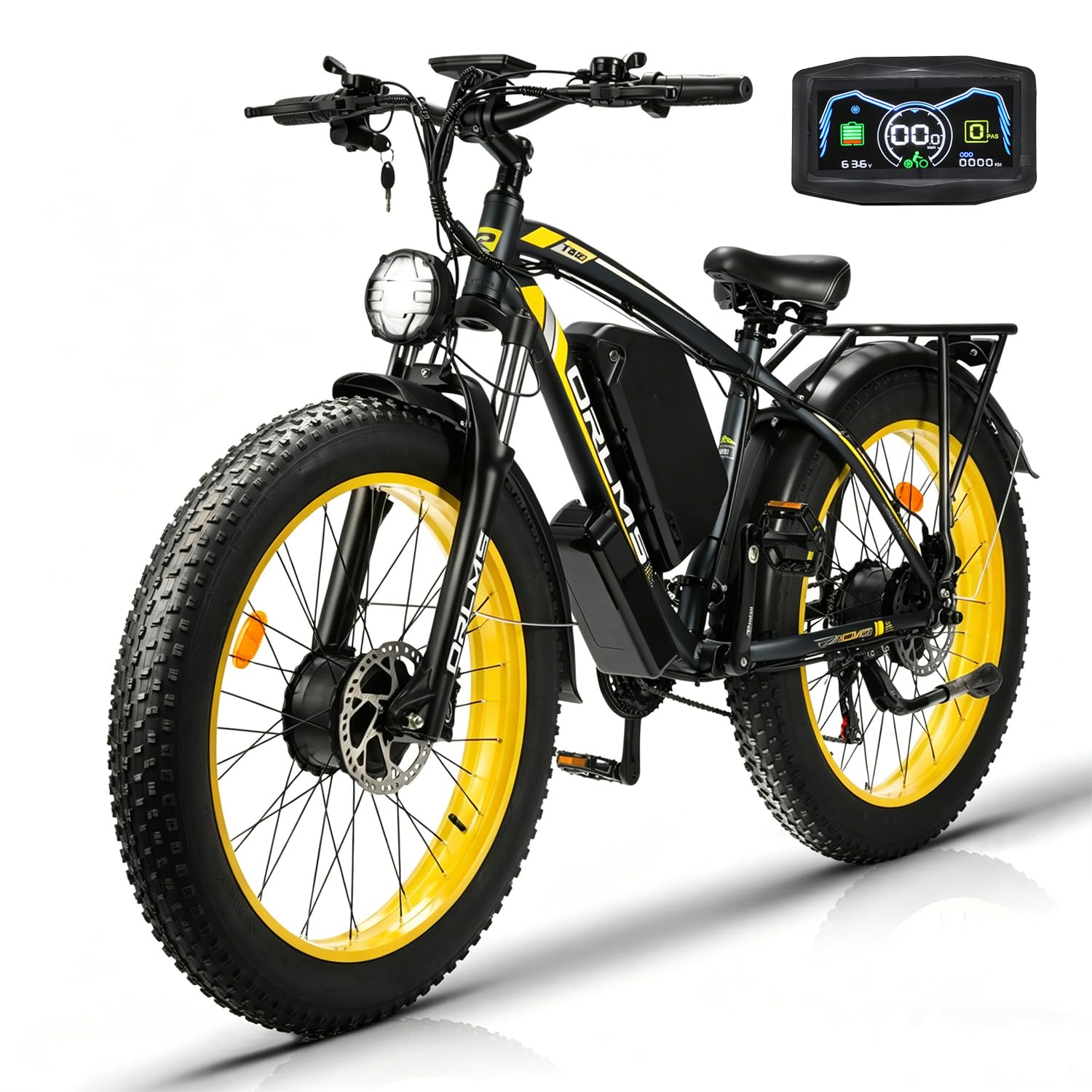
The standout feature here is raw energy storage — a detachable 60V 25Ah waterproof battery that powers a bike with 6000W peak dual motors. A built-in battery management system (BMS) protects against overcharging, overcurrent, and short circuits, and the maker claims up to 2,000 charge cycles. Owners back up the build-quality story: the bike’s overall construction is what buyers praise most, and one rider logged 1,400 miles over seven to eight months as a daily commuter covering ten miles each way. A real-world check from a 250-pound rider found 20 miles of all-electric range and a verified 35 mph top speed, which is honest compared to inflated claims on some competitors.
The catch, as buyers report, is that the battery’s capacity fades noticeably after heavy use — the same long-term owner noted voltage dropping from a full 54.6V to 53.2V after 1,000 miles, with faster drain under high throttle. Assembly instructions are sparse, though online videos fill the gap. For the range it delivers and the one-year warranty backing it, this is the best-balanced 60V pack for riders who want real miles without stepping into a higher price tier.
The endurance edge: With a 25Ah capacity and a long cycle-life claim, this battery is built for riders who cover serious ground daily. The trade-off is gradual voltage drop after many miles — treat the 2000-cycle number as a best-case, not a guarantee.
Reach for this if: You commute ten-plus miles each way and want a pack that pairs high capacity with strong build quality at a mid-range price.
Look elsewhere if: You expect full 100-mile range at full throttle at 250+ pounds — realistic range is shorter, and the battery does degrade.
3. PUJH / KJXebike 60V 1200Wh Dual-Motor Ebike Battery
The high-output pack built for dual-motor power and 110Nm of torque.
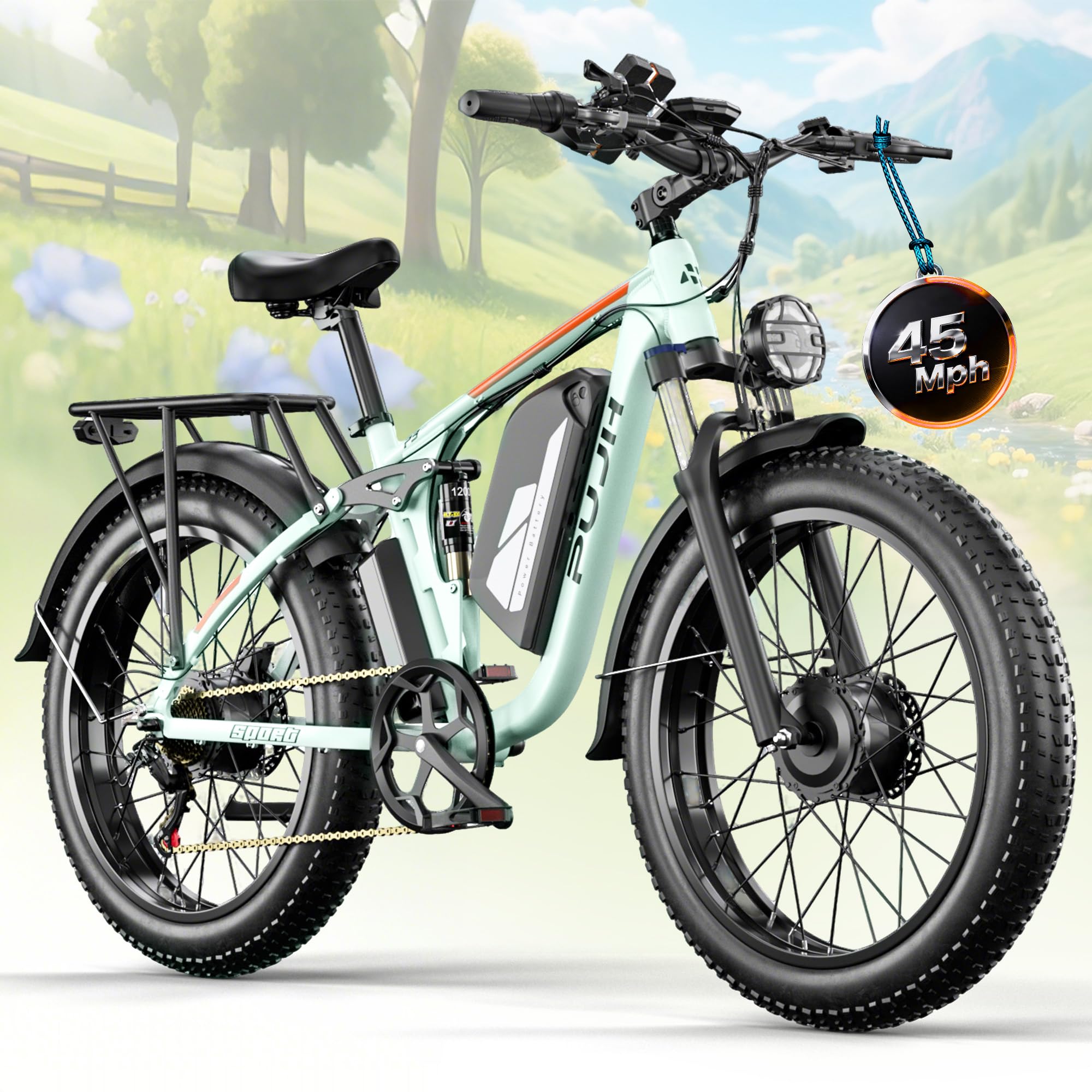
This battery comes as part of a complete dual-motor ebike, but the 60V lithium-ion pack itself is worth a close look if you are building or upgrading a high-power rig. It is lockable and removable, so you can take it inside to charge, and the bike it powers claims a range of 35–110 miles per charge. The bike’s overall performance is what owners highlight most, with one 200-pound rider hitting 36 mph on a single motor and 42 mph with both motors engaged — that kind of draw demands a battery that can sustain high discharge without sagging.
The downside is that speed satisfaction is mixed: some owners find it very fast, others report it does not deliver the extra acceleration they expected. The battery drains quickly in dual-motor mode, and the bike arrives 90% pre-assembled. A separate buyer reported a top-speed lock issue that the company did not resolve, so check the firmware and support responsiveness before committing. For raw power in a 60V platform, this pack delivers, but treat the range claims as optimistic under heavy throttle.
What powers it
- Lockable, removable 60V pack — charge at home or work
- Supports dual motors up to 6000W peak
- Real-world speed: 36 mph single motor, 42 mph dual (200-lb rider)
The honest limits
- Range drops fast in dual-motor mode
- Mixed feedback on top speed — some units locked at 15 mph
- Customer support responsiveness is inconsistent
Best for: Riders who are building a high-torque dual-motor build and need a 60V pack that can handle peak draw without cutting out.
Think twice if: You want predictable speed right from the start — some units arrive with a speed cap that the seller may not help you fix.
Understanding the Specs
Amp-Hours (Ah) and Watt-Hours (Wh)
Amp-hours tell you how much energy the battery holds — think of it as the size of the fuel tank. A 25Ah battery stores more energy than a 20Ah one, so you get more miles. Watt-hours (Volts x Amp-hours) is another way to compare capacity across different voltages. A 60V 20Ah pack equals 1,200 watt-hours (Wh), which is the same total energy as a 48V 25Ah pack. Use Wh when comparing batteries of different voltages.
Charge Cycles and Degradation
A charge cycle is one full drain and recharge. Quality Grade-A cells typically last 800 to 1,000 cycles before dropping to 80% of original capacity. After that, you will notice shorter range. A higher cycle-life claim (like 2,000 cycles) is a best-case lab number — real-world use, especially at high throttle and in extreme temperatures, will shorten it. Treat cycle life as a relative guide, not an exact promise.
BMS and Cell Grade
The battery management system (BMS) is a small circuit board inside the pack that prevents overcharging, overheating, overcurrent, and short circuits. A quality BMS is essential for safety and pack longevity. Grade-A cells are cells that passed tighter manufacturing tolerances and hold their capacity longer — they are worth paying extra for. Cheaper cells (Grade-B or unbranded) fade faster and may swell or fail earlier.
Physical Fit and Connectors
60V batteries are large and heavy. Measure your bike’s battery compartment against the pack’s exact length, width, and height before buying. Most use an XT60 or XT90 connector for the high-current discharge cable. Check your bike’s controller connector type — if they differ, you will need an adapter. A lockable, removable battery lets you charge indoors, which is both convenient and more secure.
FAQ
Can I use a 60V battery on a 48V ebike?
What is the real range I can expect from a 60V 25Ah battery?
How long does a 60V ebike battery last before it needs replacing?
Is a removable battery worth the extra cost?
What does UL2271 certification mean for an ebike battery?
Can I charge a 60V battery with a standard 48V charger?
What is the difference between 60V and 52V batteries?
How do I know if a 60V battery fits my bike?
What does the BMS protect against?
Final Thoughts: The Verdict
Across the board, the best 60v ebike battery is the Lanshanchu 60V 25Ah because it combines high capacity with a detachable design, a solid BMS, and proven real-world endurance from owners who have put over a thousand miles on it. If you need raw dual-motor power and are comfortable with a slightly rougher support experience, the PUJH 60V 1200Wh pack delivers the torque. And for riders on 48V/52V systems who want a UL-certified safety upgrade with excellent customer service, the UPP LG-Cell 52V 25Ah is a reliable and well-reviewed choice.
How We Picked
We do not accept paid placement. Every pick is matched to a real buyer and a real use-case; we do not hands-on test units.
Sources & Methodology
Specifications: manufacturer listings and product documentation. Review insights: verified customer reviews, as of July 2026. Pricing: not shown on this page (it changes often); check the current price via the retailer link.
As an Amazon Associate, Gadgets Feed earns from qualifying purchases. This does not affect which products we feature.