
Curved TVs create an immersive viewing experience that wraps the picture around your peripheral vision, a design choice that directly combats the corner-darkness and depth-flattening issues common in large flat panels. But the market has shifted: true curved 65-inch displays are now rare, with most modern “curved” models actually being flat screens with subtle edge bending or marketing terminology. Finding a genuine 65-inch curved TV requires navigating panel technology, viewing angle constraints, and the rise of superior alternatives like QD-OLED and Mini-LED that deliver comparable immersion without the physical curve.
I’m Min — the co-founder and writer behind Gadgets Feed. I’ve spent countless hours sifting through panel specifications, local dimming zone counts, HDR peak brightness measurements, and refresh rate data to separate the genuinely immersive curved TVs from the flat-screened pretenders.
This guide digs into the nine best options available today, covering everything from pure OLED blacks to Mini-LED brightness monsters, to help you find the best 65 inch curved tv that delivers real depth and peripheral engagement without sacrificing modern gaming features or picture quality.
How To Choose The Best 65 Inch Curved TV
When the curved TV craze peaked around 2015–2017, manufacturers like Samsung, LG, and Sony pushed aggressively curved 65-inch panels that physically bent inward. Today, almost no major brand sells a genuinely curved 65-inch TV — the market has shifted to flat screens with wider viewing angles, better local dimming, and higher refresh rates that achieve the same peripheral wrap effect without the curvature. If you are determined to find a true curved 65-inch model, your options will be limited to older stock, used markets, or niche Chinese brands. For everyone else, the best modern alternative is a flat 65-inch TV with superior contrast, anti-glare coating, and a wide color gamut that tricks the eye into perceiving depth and immersion.
Panel Technology: OLED vs Mini-LED vs QLED
OLED delivers per-pixel lighting with infinite contrast and true blacks, which creates a natural sense of depth that mimics a curved viewing experience. The Sony BRAVIA 8 and LG G5 OLED evo are prime examples — their self-lit pixels produce such deep blacks that the image floats forward, giving a curved-like sensation. Mini-LED, found in the Hisense U7 series and TCL T7, uses thousands of tiny LEDs for high brightness and dense local dimming zones (up to 3000 zones in the U7). QLED, like the Samsung The Frame, offers vibrant color but relies on edge-lit or full-array backlights, so it cannot match OLED’s black-level immersion unless combined with Mini-LED.
Refresh Rate and Gaming Features
A 144Hz or 165Hz native refresh rate eliminates motion blur during fast sports or competitive gaming, which is critical when the screen is large and close to your face — common with curved setups. The TCL T7 features a 144Hz panel with 288Hz VRR, while the Hisense U7S and U7F hit 165Hz native with VRR up to 330Hz. Lower-end models like the LG G5 cap at 120Hz, which is still excellent for most console gaming. If you primarily game on PC at high frame rates, prioritize one of the 165Hz models. For PS5 or Xbox Series X, 120Hz with HDMI 2.1 is sufficient.
Viewing Angle and Anti-Glare
A curved screen concentrates the picture toward the center seat, which means side viewing can suffer from color shift and brightness falloff. On modern flat panels, wide-viewing-angle technology and anti-glare coatings are critical substitutes. The Sony BRAVIA 9 has X-Wide Angle and X-Anti Reflection for excellent off-angle performance. The Samsung The Frame uses a matte, glare-free QLED finish that works well in bright rooms. The Hisense U7 series includes a dual-layer anti-reflection treatment that handles overhead lights and sunny windows impressively well. For any 65-inch TV that aims to deliver curved-like immersion, these features matter more than the physical bend of the screen.
Quick Comparison
On smaller screens, swipe sideways to see the full table.
| Model | Category | Best For | Key Spec | Amazon |
|---|---|---|---|---|
| Sony BRAVIA 8 OLED | OLED | Cinematic immersion & PS5 gaming | Full self-lit OLED, 120Hz, XR Contrast Booster 15 | Amazon |
| Samsung OLED S90H | OLED | Bright-room OLED with glare-free finish | OLED HDR+, 165Hz, NQ4 AI Gen3 | Amazon |
| LG G5 OLED evo | OLED | Bright-room OLED with zero gap wall mount | OLED evo, 120Hz, Alpha 11 Gen2, 2000+ nits | Amazon |
| Sony BRAVIA 9 Mini-LED | Mini-LED | Brightest Sony with X-Wide Angle | Mini-LED, 120Hz, XR Backlight Master Drive | Amazon |
| Hisense U7 Mini-LED (Google TV) | Mini-LED | Premium gaming at high refresh rate | Mini-LED, 165Hz native, up to 3000 dimming zones | Amazon |
| Hisense U7 Mini-LED (Fire TV) | Mini-LED | Premium gaming with Alexa/Fire TV ecosystem | Mini-LED, 165Hz native, up to 3000 dimming zones | Amazon |
| Samsung The Frame QLED | QLED | Art mode with glare-free matte finish | QLED, 144Hz, Pantone Validated, matte screen | Amazon |
| Samsung M80H Mini-LED | Mini-LED | Mid-range balance of AI features & price | Mini-LED, 144Hz, NQ4 AI Gen2 | Amazon |
| TCL T7 Series QLED | QLED | Budget-friendly entry with 144Hz gaming | QLED, 144Hz, MEMC, AIPQ Pro Processor | Amazon |
In‑Depth Reviews
1. Sony BRAVIA 8 OLED (K-65XR80)

The Sony BRAVIA 8 delivers the deepest blacks and most natural HDR of any TV on this list, thanks to over 8 million self-lit OLED pixels that achieve pixel-level precision. With XR Contrast Booster 15, this set hits peak brightness levels that rival high-end Mini-LED models — a rare feat for OLED — while maintaining the infinite contrast that makes dark scenes truly immersive. The XR Processor upscales HD content to near-4K quality better than any competitor, and Sony’s exclusive PS5 features (Auto HDR Tone Mapping, Auto Genre Picture Mode) make it the definitive companion for PlayStation gamers.
The Acoustic Surface Audio+ technology vibrates the entire screen to produce sound from the image itself, creating a one-to-one audio-visual experience that enhances the sense of depth. Dolby Vision, IMAX Enhanced, and DTS:X support cover every major HDR format. The Google TV interface is snappy after initial setup, though some users report occasional sound dropout on apps — a common Sony software quirk that usually resolves with firmware updates. Ethernet is strongly recommended for stable 4K 120Hz streaming.
For the buyer who wants the closest thing to a curved viewing experience without a physical curve, the BRAVIA 8’s OLED depth and contrast create the illusion of the picture floating forward, wrapping around your vision naturally. It requires a dark room to fully shine — reflections and ambient light degrade the OLED magic. At 65 inches, it is heavy and needs a sturdy mount or stand, but the payoff in cinematic immersion is unmatched in this price bracket.
Why it’s great
- Perfect blacks and infinite contrast create palpable depth
- XR Contrast Booster 15 delivers exceptional OLED brightness
- Exclusive PS5 features and Dolby Vision/Atmos support
- Acoustic Surface Audio+ produces sound from the screen itself
Good to know
- Needs a dark room; reflections are noticeable in bright conditions
- Heavy at 65 inches — requires two-person installation
- Google TV can have intermittent sound dropout on apps
- No built-in stand included in some regions
2. Samsung OLED S90H (65S90H)
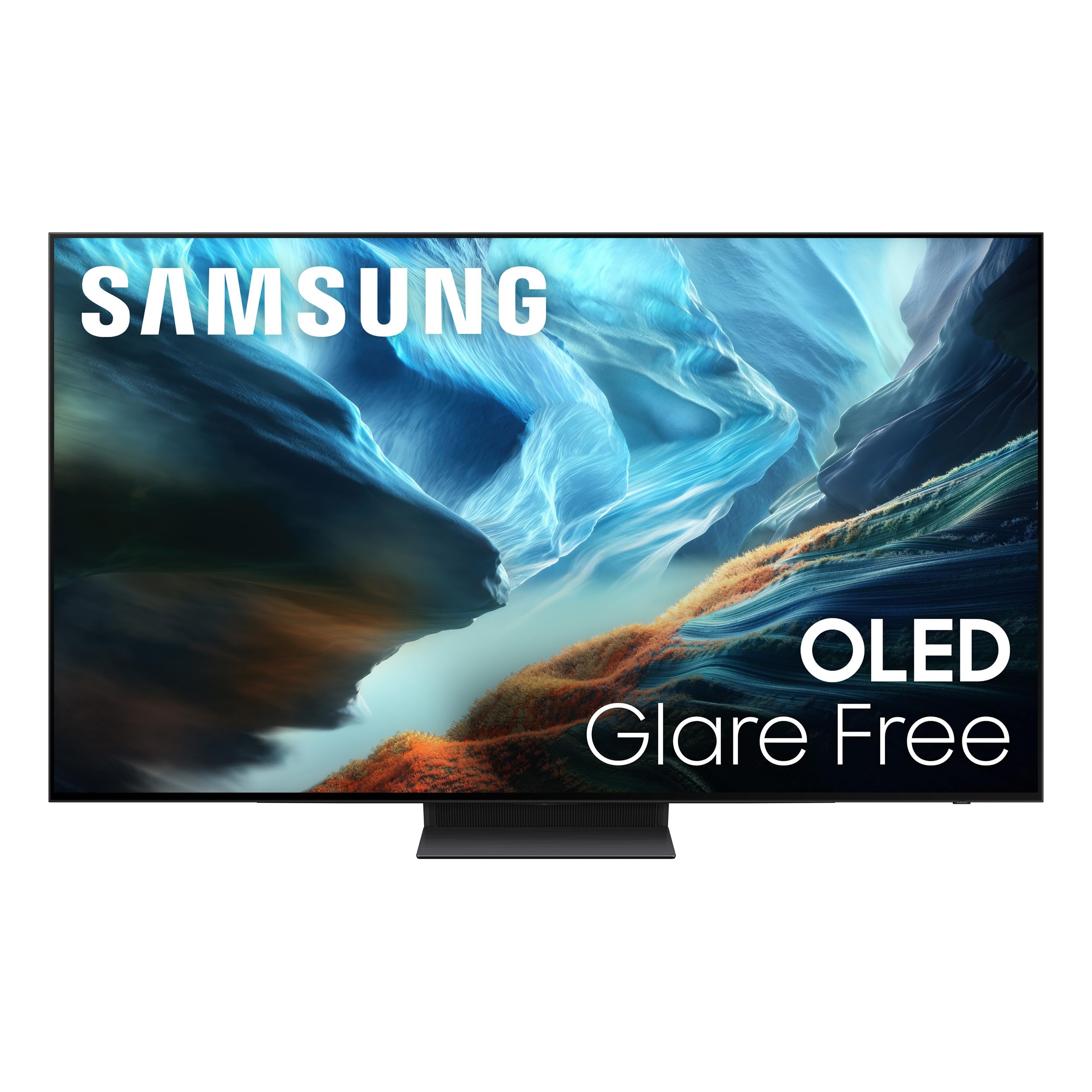
The Samsung S90H is one of the few OLEDs that fuses infinite black levels with aggressive anti-glare technology. Its Glare Free layer diffuses overhead lighting and window reflections far better than traditional glossy OLED panels, making it viable for rooms where you cannot completely control ambient light. The NQ4 AI Gen3 processor, with 128 neural networks, performs 4K AI Upscaling Pro and AI Motion Enhancer Pro — the latter being especially useful for smoothing fast-moving sports and racing games without introducing the soap-opera effect.
Motion Xcelerator 165Hz with NVIDIA G-Sync and AMD FreeSync Premium Pro support makes this a top-tier gaming OLED. The 165Hz panel handles PC gaming at ultra-high frame rates with zero tearing, and the HDMI 2.1 ports support all the VRR goodness. The built-in eARC works seamlessly with soundbars, and the Tizen OS (Samsung Vision AI) offers a clean interface with thousands of free Samsung TV Plus channels. The remote includes a solar cell on the back, reducing battery dependency.
The S90H’s OLED HDR+ brightness is significantly higher than the previous generation, though it still cannot match the 2000+ nit peak of the LG G5. If you frequently watch in a bright living room with large windows, this is the best OLED choice because of the glare-free finish. The stand is wide and stable, but the TV ships with a wall-mounting adapter that makes flush mounting easy. Note that the 2026 model removed the One Connect box, so all HDMI ports are on the back — plan for cable management.
Why it’s great
- OLED blacks with best-in-class anti-glare coating
- 165Hz gaming with G-Sync/FreeSync Premium Pro
- NQ4 AI Gen3 upscaling and motion enhancement
- Solar-powered remote reduces battery waste
Good to know
- Peak brightness lags behind LG G5 by about 500 nits
- No One Connect box — HDMI ports are behind the panel
- Tizen OS can feel bloated with AI feature prompts
- Built-in speakers adequate but benefit from a soundbar
3. LG G5 OLED evo (OLED65G5WUA)

The LG G5 OLED evo is the brightest OLED on this list, hitting peak brightness figures around 2000+ nits in real-world HDR scenarios — thanks to Brightness Booster Max technology that magnifies each self-lit pixel. This brightness, combined with Perfect Black and Perfect Color on over 8.3 million self-lit pixels, delivers the ultimate HDR experience for 65-inch viewing. The Alpha 11 AI Gen2 processor provides AI Super Upscaling that rivals Sony’s XR, and the WOW Orchestra feature integrates with LG soundbars for synchronized audio immersion.
Gaming performance is superb: 0.1ms response time, 120Hz refresh rate, NVIDIA G-Sync, AMD FreeSync Premium Pro, and VRR support via four HDMI 2.1 inputs. The Game Dashboard puts all gaming settings — FPS, VRR, HDR — in one overlay. The One Wall Design mounts flush to the wall with virtually no gap, and the included wall bracket simplifies installation. webOS is smooth, responsive, and promises up to 5 years of software updates.
Buyers should be aware that the G5 does not include a stand in the box — it is designed for wall mounting. If you need a stand, purchase the LG floor stand or third-party option. The remote lacks backlit buttons, which is an odd oversight for a premium TV. The OLED G5 also has minor gamma flicker on frame-rate drops and judder on low-FPS content, but these are edge cases. For home theater enthusiasts who want the brightest OLED possible with zero-gap wall design, the G5 is the definitive choice.
Why it’s great
- 2000+ nits peak brightness — brightest OLED in class
- Zero-gap wall mount included, flush design
- Four HDMI 2.1 inputs, G-Sync/FreeSync, 0.1ms response
- WOW Orchestra syncs own soundbar for immersive audio
Good to know
- No stand included — wall mount only out of the box
- Remote lacks backlit buttons
- Gamma flicker on frame-rate drops and some judder
- Only 120Hz, not 144Hz or 165Hz
4. Sony BRAVIA 9 Mini-LED (K-65XR90)

The Sony BRAVIA 9 is Sony’s brightest-ever 4K TV, using thousands of Mini-LEDs controlled by XR Backlight Master Drive for authentic, punchy HDR that easily handles bright living rooms. X-Wide Angle technology maintains color accuracy and brightness from extreme side angles, effectively solving the primary problem of Mini-LED: off-axis contrast loss. X-Anti Reflection cuts glare better than any OLED on this list except the Samsung S90H, making this the best option for sun-drenched spaces.
The XR Processor delivers the industry’s best 4K upscaling — older HD movies and YouTube content look remarkably sharp. Studio Calibrated modes for Netflix, Prime Video, and Sony Pictures Core ensure creator-accurate color out of the box. PS5 integration is seamless with Auto HDR Tone Mapping and Game Menu overlay. The built-in speakers are among the best for a flat TV, with decent bass and clear dialogue — you may not immediately need a soundbar.
At 65 inches, the BRAVIA 9 is deep (13.38 inches with stand) and heavy, so check your TV stand depth before buying. Some units have had early-failure issues (unresponsive or dead panel within the first week), which appears to be a QC issue in the 2024 production run — Amazon’s return policy mitigates this risk. The Google TV interface can be slow during initial boot. For sheer brightness, wide viewing angles, and anti-glare performance, the BRAVIA 9 is the Mini-LED king, though OLED purists may miss true black levels.
Why it’s great
- Extremely bright Mini-LED, handles sunny rooms with ease
- X-Wide Angle maintains color and contrast from the sides
- Best-in-class 4K upscaling from Sony’s XR Processor
- Excellent built-in speakers reduce need for soundbar
Good to know
- Deep stand requires generous TV furniture
- Some QC reports of early panel failure in this model
- Google OS can be sluggish at startup
- Not true OLED blacks for dark-room purists
5. Hisense U7 Mini-LED (65U7SG, Google TV)
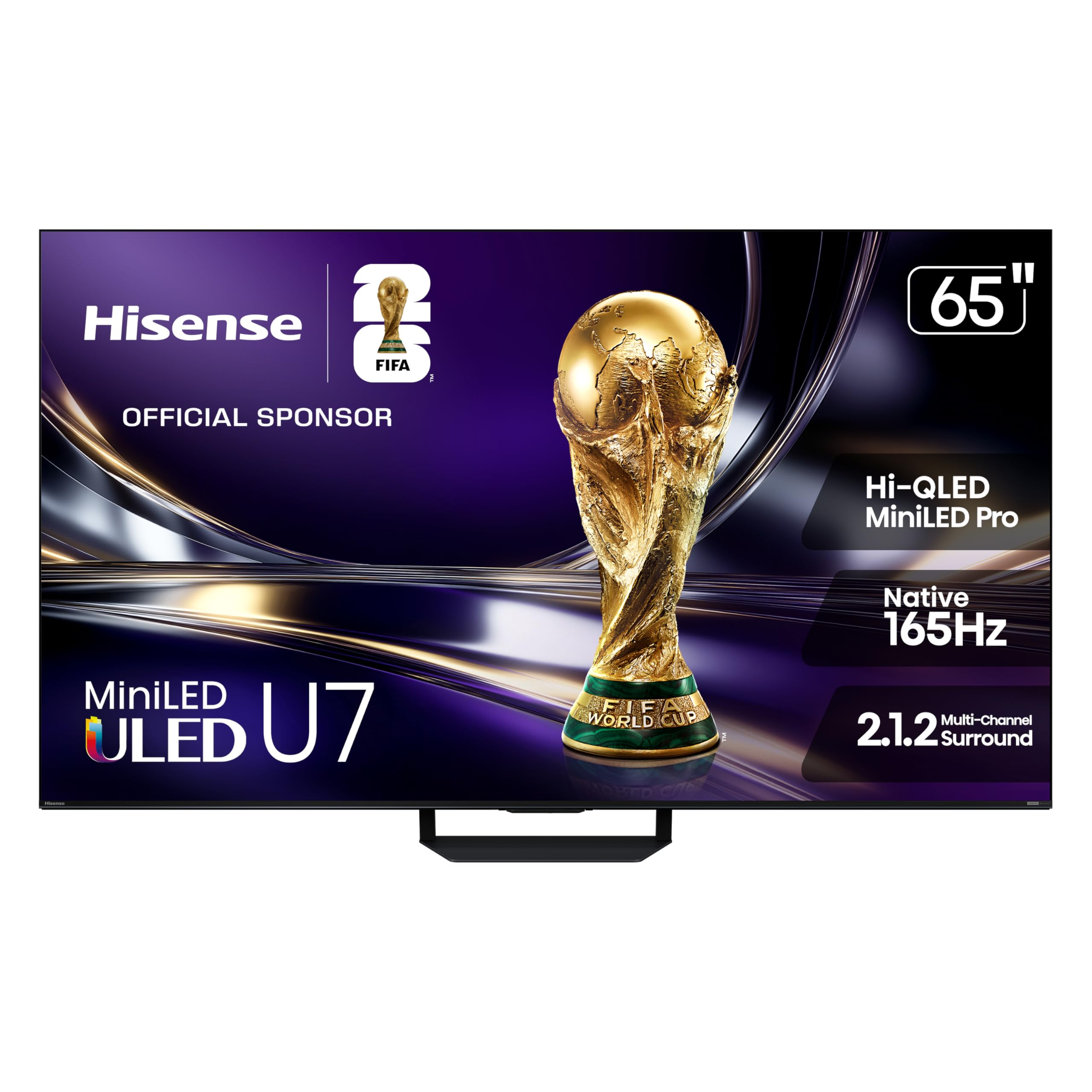
The Hisense U7 Mini-LED (Google TV version) is the standout value proposition in the 65-inch space, delivering native 165Hz refresh rate — the highest on this list — along with up to 3000 local dimming zones and up to 3000 nits peak brightness. That combination of refresh rate and dimming zone count is unheard of at this price point. Hi-QLED MiniLED Pro technology produces vibrant, Pantone-validated colors, and the dual-layer anti-reflection coating handles harsh overhead lights and sunny windows better than many TVs costing twice as much.
The Hi-View AI Engine Pro constantly analyzes each scene to adjust color, contrast, and detail in real time, ensuring SDR content looks punchy and HDR content looks explosive. The Google TV interface is fast and intuitive, with built-in Chromecast and Apple AirPlay 2 support. Gaming-wise, the 165Hz panel with 330 VRR eliminates tearing, and the Game Bar overlay lets you monitor FPS, VRR, and HDR stats without leaving the game.
The 2.1.2 multi-channel surround system, tuned by Devialet, offers the best built-in sound of any TV in this price tier — you may skip a soundbar for casual use. However, the U7S does exhibit minor light leakage (blooming) in very dark scenes, especially around white subtitles on black backgrounds. The remote is backlit, but the TV’s software can occasionally lag when switching HDMI inputs. For the price, you get 90% of the flagship Mini-LED experience at a fraction of the cost.
Why it’s great
- Native 165Hz refresh rate — class leader for gaming
- Up to 3000 dimming zones and 3000 nits peak brightness
- Effective anti-glare coating for bright rooms
- Excellent built-in sound tuned by Devialet (2.1.2)
Good to know
- Minor blooming/light leakage in dark scenes
- Software can feel sluggish when changing HDMI inputs
- No Dolby Vision IQ equivalent for gaming HDR
- Glossy screen may still show reflections from direct sunlight
6. Hisense U7 Mini-LED (65U7SF, Fire TV)
The Hisense U7SF is functionally identical to the Google TV version above — same Mini-LED backlight, same 165Hz native panel, same 3000-zone dimming — but runs Amazon’s Fire TV platform with built-in Alexa+. The Fire TV interface offers smart recommendations, watchlists, and voice control via Alexa, which can be more intuitive if you are already in the Amazon ecosystem. The 2.1.2 Devialet-tuned sound is identical and excellent for a flat TV.
The Hi-QLED color and Pantone validation ensure accurate reproduction of skin tones, grass textures, and cinematic color palettes. The AI Smooth Motion with Motion Rate 660 keeps fast-paced sports and action movies crisp, while the Game Booster 330 pushes VRR up to 330Hz for the smoothest possible gaming experience. The anti-reflection layer is the same dual-layer design as the Google TV variant, performing well in moderately bright rooms.
Some users have reported light leakage in the corners of the panel, particularly noticeable in a completely dark room. The Fire TV platform can feel heavy on ads and Amazon promotional content, which some buyers dislike. The remote is backlit and premium-feeling, but the price dropped shortly after launch, which may frustrate early adopters. If you prefer Alexa over Google Assistant or want tighter integration with Amazon smart home devices, this is the version to choose; otherwise, the Google TV version offers a cleaner, ad-lite experience.
Why it’s great
- Identical Mini-LED performance to Google TV version
- Seamless Alexa integration for smart home users
- Fire TV platform with smart recommendations
- 165Hz native with 330Hz VRR for gaming
Good to know
- Fire TV interface has heavy advertising and promotions
- Corner light leakage visible in fully dark rooms
- Price dropped shortly after launch
- Built-in speakers are good but not soundbar-level
7. Samsung The Frame QLED (QN65LS03HEFXZA)
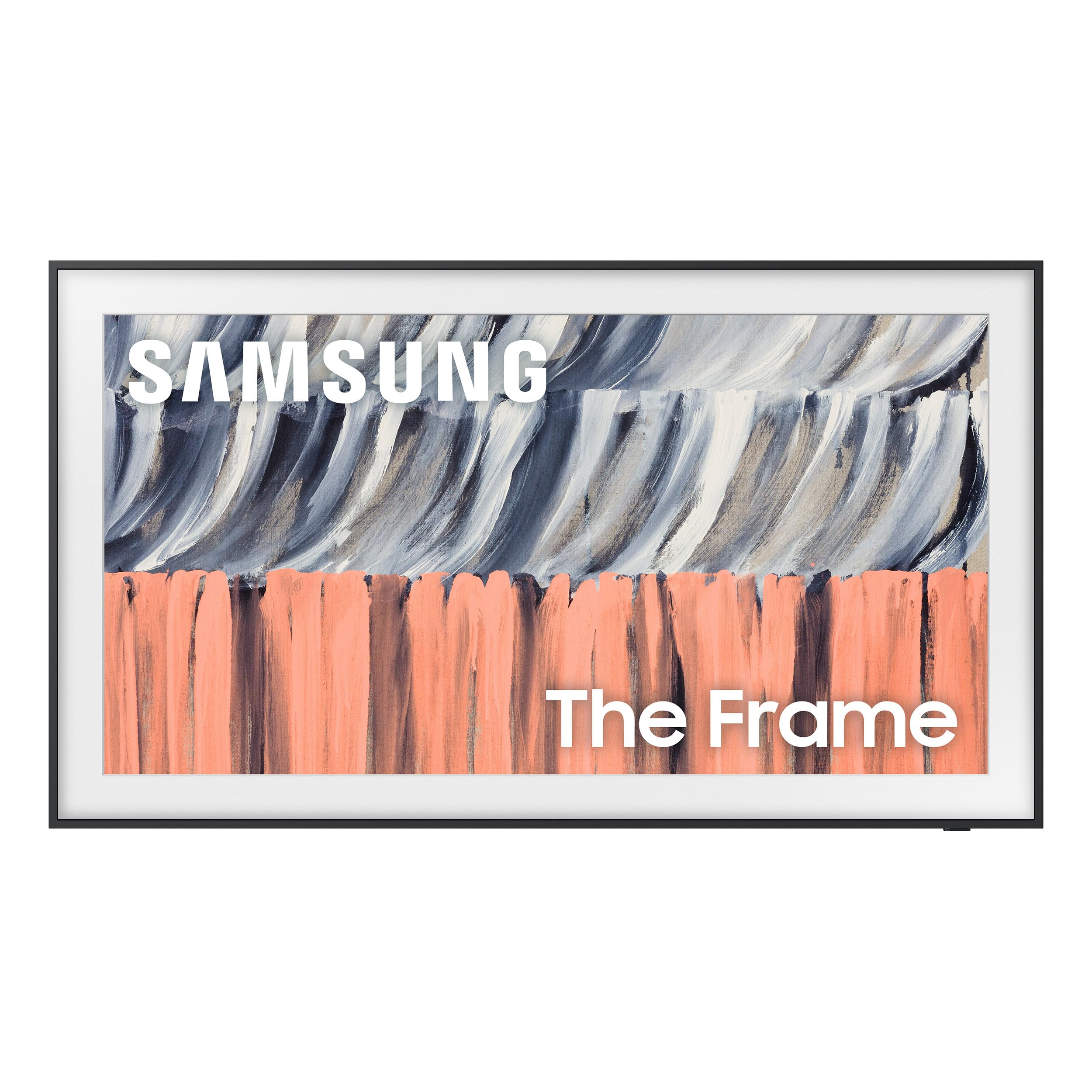
The Samsung The Frame is not a performance-first TV — it is a design-first TV. Its matte, glare-free QLED panel mimics the texture and finish of canvas art, virtually eliminating reflections even with bright overhead lights or sun. When mounted flush with the Slim Fit Wall Mount (included), the gap between the TV and the wall is minimal, creating the illusion of a framed painting. Art Mode displays over 5,000 artworks from global museums; the motion sensor activates the screen only when someone is in the room.
Pantone-validated Artful Color ensures that the art mode looks genuinely museum-like, and the interchangeable magnetic bezels allow you to match the frame to your room decor. Under the hood, the 2026 model still delivers: 4K QLED, 144Hz refresh rate with DLG 240Hz mode, and Motion Xcelerator 144Hz for smooth gaming. The NQ4 AI Gen3 processor (same as S90H) upscales content well, and Auto HDR Remastering improves non-HDR content.
The trade-offs are significant: built-in 20W speakers lack bass and sound tinny — an external soundbar is essential. The Art Store requires a subscription to access most pieces, and you cannot upload your own images without using the SmartThings app, which some users find clunky. The remote is basic and disappointing for a premium-priced TV. Also, the 2026 model removed the One Connect box, so cables must be managed directly to the panel. If you value aesthetics and want a TV that disappears into your decor, The Frame is unmatched, but picture quality and audio enthusiasts should look elsewhere.
Why it’s great
- Matte, glare-free finish that mimics canvas art
- Flush wall mount included, minimal gap
- Interchangeable magnetic bezels for decor matching
- Pantone-validated color for accurate art reproduction
Good to know
- Built-in speakers (20W) are weak and need a soundbar
- Art Store requires a subscription for most artworks
- No One Connect box — cables mount directly to panel
- Remote feels cheap and basic for the price
8. Samsung M80H Mini-LED (65M80H)
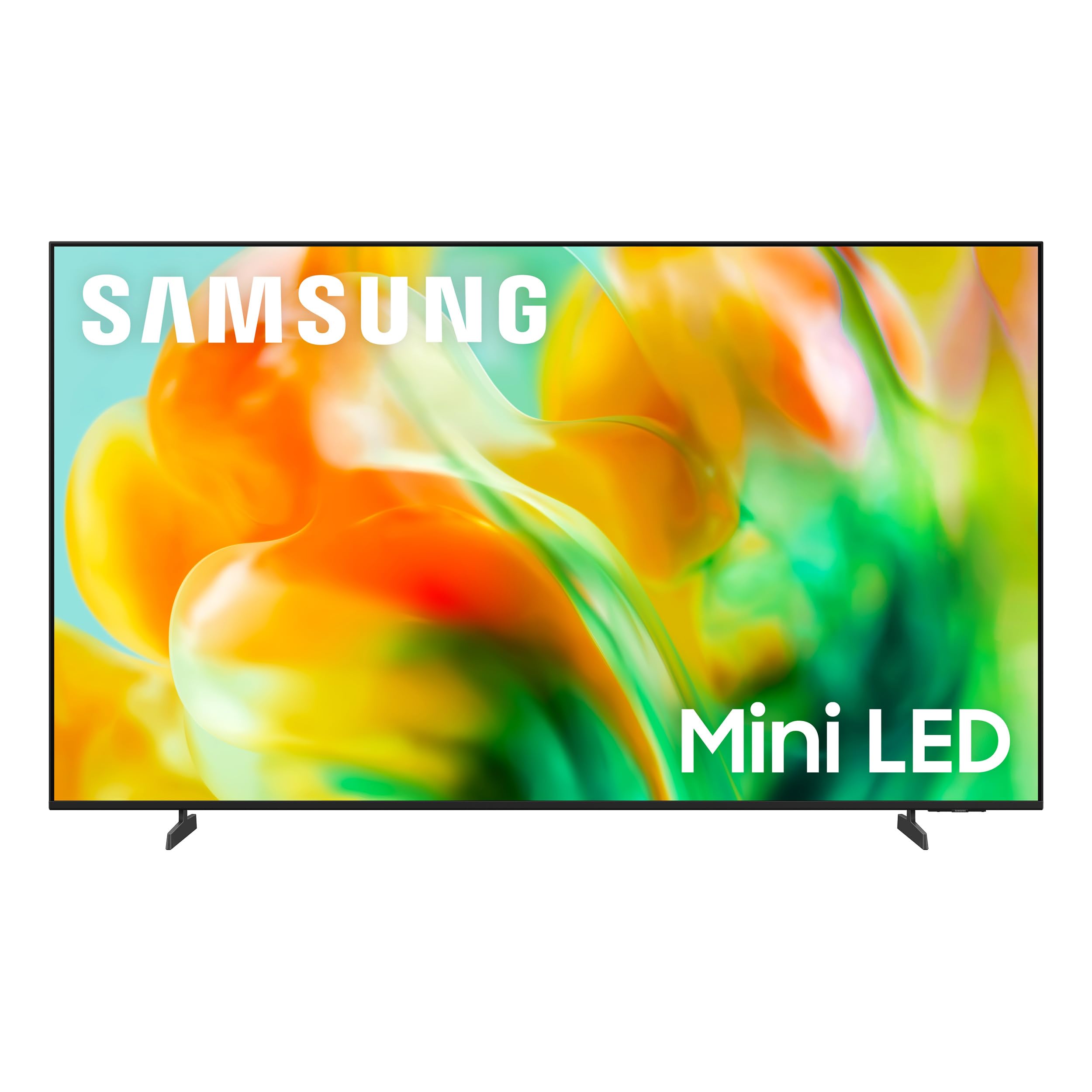
The Samsung M80H Series represents the middle ground in Samsung’s 2026 lineup, combining Mini-LED backlighting with the NQ4 AI Gen2 processor for solid HDR performance and AI upscaling. Its Pure Spectrum Color technology delivers a billion true-to-life colors, and the Mini-LED panel provides punchy brightness that handles moderately bright rooms well. The Motion Xcelerator 144Hz ensures smooth sports and gaming, and the built-in Alexa means smart home controls are always a voice command away.
Auto HDR Remastering intelligently upscales SDR content to look closer to HDR, which is useful for older TV shows and streaming content that lacks native HDR. The design is clean and minimal, with slim bezels that look modern on a stand or mounted. Connectivity includes Wi-Fi 5, Bluetooth 5.3, and four HDMI inputs (with one eARC). The interface is Samsung’s Vision AI (powered by Tizen), which offers AI Mode that automatically adjusts picture and sound based on the content being watched.
The M80H is not the brightest Mini-LED on the market — it lacks the 3000-nit peak of the Hisense U7 or Sony BRAVIA 9. In very bright rooms with direct sunlight, it can struggle with glare. The local dimming zones are fewer than in higher-end Mini-LED sets, so blooming around bright objects is more noticeable in dark scenes. For buyers who want a capable, all-around mid-range TV with Samsung reliability, smart features, and 144Hz gaming, the M80H is a fair choice, but enthusiasts may find it leaves them wanting more.
Why it’s great
- Mini-LED backlight with solid HDR performance
- 144Hz Motion Xcelerator for smooth gaming/sports
- Built-in Alexa and Samsung Vision AI features
- Clean, slim design suitable for any room
Good to know
- Less peak brightness than high-end Mini-LED rivals
- Fewer local dimming zones; visible blooming in dark scenes
- Wi-Fi 5 instead of Wi-Fi 6E
- Built-in speakers are average for the category
9. TCL T7 Series QLED (65T7)

The TCL T7 Series is the most affordable 65-inch model in this guide, yet it punches well above its entry-level price. It features a 4K QLED panel with a native 144Hz refresh rate — a spec usually reserved for premium sets — and a 288Hz variable gaming refresh rate that handles PC and console gaming with minimal tearing. The AIPQ Pro Processor optimizes color, contrast, and clarity in real time, and Motion Rate 480 with MEMC frame insertion keeps fast sports and action movies remarkably blur-free.
Three HDMI 2.1 inputs with eARC allow you to connect multiple modern gaming consoles, and the Google TV interface is snappy and clean. The FullView 360 metal bezel-less design gives it a premium look that belies the budget price. DLG (Dual Line Gaming) mode pushes the effective refresh rate even higher for competitive titles. Customer reviews highlight the picture quality as “stunning” for the price, with particular praise for gaming performance and 4K disc playback.
The compromise is in HDR peak brightness: the T7 cannot compete with Mini-LED or OLED models in bright rooms or HDR highlights. The QLED color volume is good but not class-leading. The built-in speakers are adequate but lack bass. Some users have reported issues with the TV not waking properly from power save when connected to a PC — a firmware quirk that requires cable re-seating. If you are on a tight budget but demand 144Hz gaming and QLED color, the TCL T7 is the best value play in the 65-inch curved TV conversation.
Why it’s great
- 144Hz native refresh at a budget price
- QLED color for vibrant, lifelike images
- Bezel-less design looks more expensive than it is
- Google TV interface is clean and responsive
Good to know
- Lower HDR peak brightness than Mini-LED rivals
- Built-in speakers lack bass depth
- PC sleep/wake issues have been reported
- Wi-Fi 5, no Wi-Fi 6E support
FAQ
Why are true curved 65-inch TVs so hard to find in 2025?
Can I use a standard universal mount for a 65-inch curved TV?
What is the ideal seating distance for a 65-inch curved TV?
Will a curved TV reduce eye strain during long viewing sessions?
Which HDMI 2.1 features matter most for gaming on a 65-inch TV?
Final Thoughts: The Verdict
For most users, the best 65 inch curved tv you can buy today is the Sony BRAVIA 8 OLED because its infinite contrast and pixel-level precision create the deepest sense of depth and immersion without a physical curve. If you want the brightest OLED possible with zero-gap wall mounting, grab the LG G5 OLED evo. And for premium gaming on a budget, nothing beats the Hisense U7 Mini-LED, which delivers 165Hz native refresh and 3000-zone dimming at a mid-range price.