
A fast-moving soccer ball, a quarterback threading a needle, a puck caroming off the boards — sports live and die in the micro-moments between frames. If your 65-inch screen blurs that action into a muddy smear, you are paying for a size you cannot actually see. The best 65-inch TVs for sports watching are not just big; they are engineered to preserve detail at 120 frames per second or higher, with motion handling, brightness, and anti-glare technology that turn a chaotic play into a crystal-clear sequence.
I’m Min — the co-founder and writer behind Gadgets Feed. I have spent countless hours dissecting panel technologies, refresh-rate specifications, and real-world motion performance to separate the televisions that genuinely deliver from those that just look good on a spec sheet.
After analyzing the latest Mini-LED, QD-OLED, and OLED evo panels across the to range, this guide cuts through the marketing noise to recommend the best 65 inch tv for sports watching that money can buy right now.
How To Choose The Best 65 Inch TV For Sports Watching
Choosing a TV for live sports locks you into a different set of priorities than movie watching. The typical living room is bright, the camera pans fast, and the broadcast signal is often variable quality. You need a panel that handles all three without compromise.
Refresh Rate and Motion Handling
A standard 60Hz television refreshes the image 60 times per second. That is fine for dramas, but a sweeping soccer pitch or a fast-break basketball play will show visible judder and motion blur. A native 120Hz or 144Hz panel doubles or more than doubles the frame rate, producing significantly smoother pans. Look for native refresh rate in the spec list — not “effective” or “motion rate” numbers that manufacturers inflate. For sports, native 120Hz is the baseline; 144Hz is the clear winner for cutting-edge fluidity.
Panel Technology: Mini-LED vs OLED
Mini-LED backlighting with full-array local dimming delivers high brightness, excellent contrast, and is far more resistant to burn-in from persistent static elements like score bugs. OLED offers deeper blacks and per-pixel illumination, making fast-moving players pop against dark backgrounds, but it is dimmer in bright rooms and susceptible to permanent image retention if a sports ticker sits for hours. For a sunny living room, Mini-LED is the pragmatic choice. For a dedicated home theater, OLED is unmatched.
Brightness and Anti-Glare Performance
Day games and afternoon kickoffs flood the room with ambient light. A sports TV needs sustained brightness above 800 nits and a specialized anti-glare or wide-angle layer. Look for terms like “anti-reflective coating,” “wide viewing angle,” or “glare-free screen” in the product specs. The brightest Mini-LED panels can hit 2000-3000 nits peak, which crushes ambient light reflections and gives you a vivid picture regardless of the sun’s position.
Quick Comparison
On smaller screens, swipe sideways to see the full table.
| Model | Category | Best For | Key Spec | Amazon |
|---|---|---|---|---|
| Hisense 65″ U7 | Mini-LED | Bright Room Sports | Native 165Hz / Anti-Reflection | Amazon |
| Samsung S90F OLED | QD-OLED | Best Contrast & Color | 144Hz / 128 Neural Net AI | Amazon |
| Sony BRAVIA 7 | Mini-LED | Best Upscaling | XR Processor / 120Hz | Amazon |
| TCL QM8K | Mini-LED | High Brightness Gaming | 288Hz VRR / Anti-Glare | Amazon |
| LG OLED G5 | OLED | Ultimate Picture Quality | Brightness Booster Max / 120Hz | Amazon |
| LG OLED C5 | OLED | Premium Value OLED | α9 AI Gen7 / 120Hz | Amazon |
| TCL QM8L | Mini-LED | Highest Peak Brightness | 6000 Nits / 144Hz | Amazon |
| Toshiba Z670R | Mini-LED | Value with Full Arrays | Native 144Hz / REGZA Engine | Amazon |
| Sony BRAVIA 5 | Mini-LED | Mid-Range Sony Quality | XR Processor / 120Hz | Amazon |
| iFFALCON 65U85 | Mini-LED | Entry-Level Performance | 144Hz / 7000:1 Contrast | Amazon |
In‑Depth Reviews
1. Hisense 65″ U7 Mini-LED ULED (65U7SG)
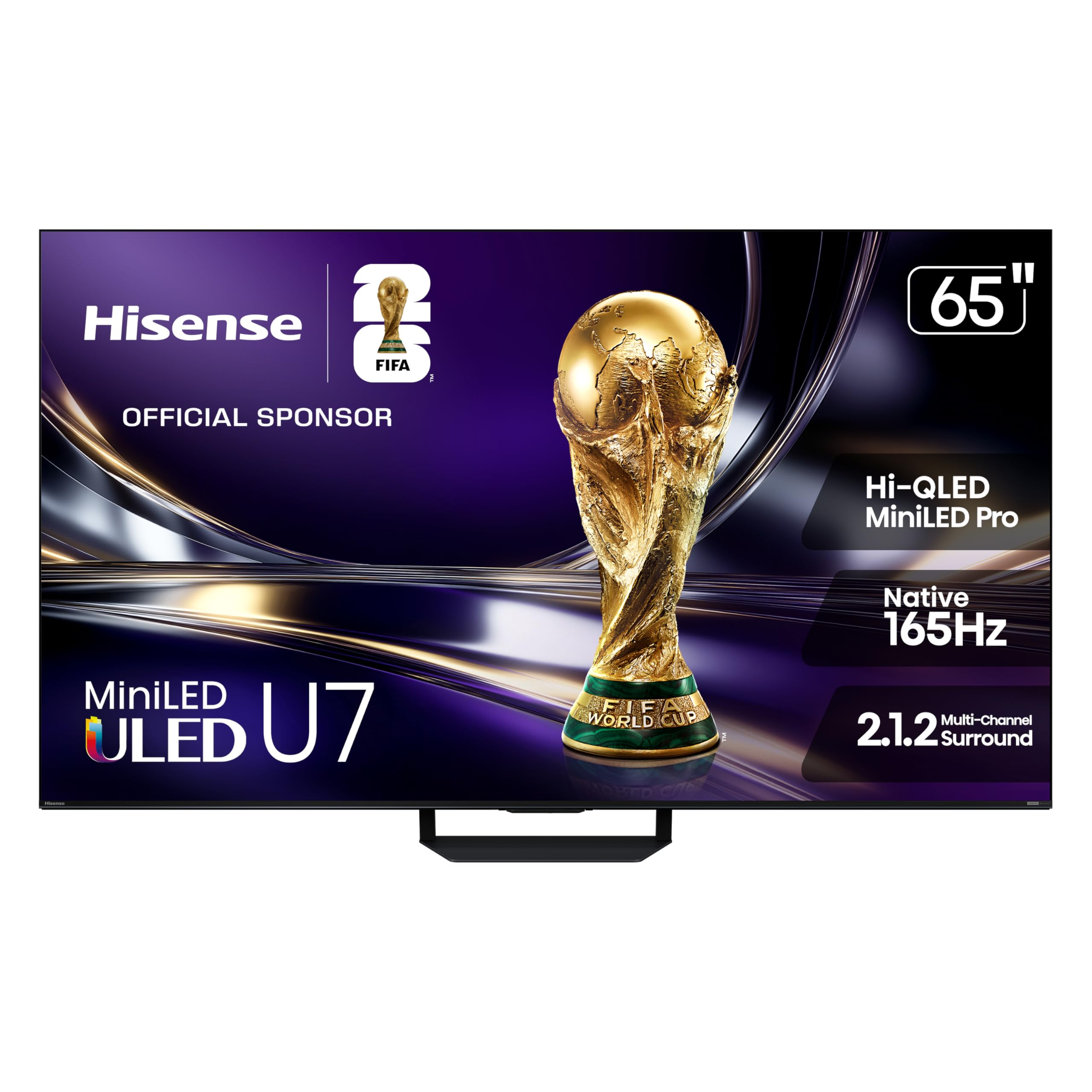
The Hisense U7 is the rare television that delivers premium-tier motion clarity without requiring a premium-tier budget. Its native 165Hz refresh rate is the highest among all the panels in this roundup, which directly translates to the smoothest possible rendering of fast-paced sports. From a 4K soccer stream to a 1080p broadcast, the Hi-View AI Engine Pro analyzes every scene in real-time and adjusts color, contrast, and detail — you do not see the processing, you simply see the ball stay in perfect focus during diagonal crosses.
Where the U7 truly separates itself from the pack is its dedicated anti-reflection and glare-free layer. Afternoon football games with sunlight pouring through windows do not wash out the picture; the dual-layer screen treatment preserves shadow detail and black levels that most TVs in this bracket lose entirely. With up to 3000 local dimming zones and a peak brightness of 3000 nits, the U7 punches well above its weight in bright-room performance — an area where OLED panels typically struggle.
The integrated 2.1.2 channel audio system with Dolby Atmos is surprisingly competent for built-in speakers, but the real value is the VRR that scales up to 330Hz for those who also game. The Google TV interface is snappy, though it can feel cluttered. If you watch sports in a room with variable lighting, the U7 is the most versatile and future-proof option at this size.
Why it’s great
- Industry-leading native 165Hz refresh rate eliminates motion blur
- Anti-glare coating keeps picture crisp in bright rooms
- 3000-zone local dimming and 3000-nit peak brightness for HDR sports
Good to know
- Google TV interface can feel cluttered with ads
- Built-in sound is decent but a soundbar is recommended for full immersion
2. Samsung 65″ OLED S90F (2025)

The Samsung S90F is a QD-OLED panel, which means it combines the per-pixel perfect blacks of OLED with the enhanced brightness and color volume of quantum dots. For sports, this translates into an image where the green of the pitch is almost hyper-real and the white of a home jersey does not bloom into the surrounding dark areas. The NQ4 AI Gen3 processor, powered by 128 neural networks, specifically targets motion smoothing for fast-moving balls and text — a feature Samsung calls “Keep Your Eye on the Ball” mode.
At 4K 144Hz with VRR, the S90F handles frame drops and variable broadcast feeds without introducing judder. The trade-off is that QD-OLED panels are inherently less bright than Mini-LED competitors in sustained daylight viewing. If your living room is a sun-drenched space, you may notice reflections and a slight reduction in peak highlights during the brightest HDR scenes. In a controlled-light room, however, this is easily the most beautiful picture of any TV on this list for watching live sports.
The built-in audio is decent but not class-leading, and the minimalist remote (which lacks backlighting) is a frequent point of frustration. Gamers will appreciate the 144Hz support and low input lag. If you prioritize contrast and color fidelity above raw brightness and you watch most sports in the evening or in a dim room, the S90F is a genuine reference-grade choice.
Why it’s great
- QD-OLED produces unmatched color volume and perfect blacks
- AI motion processing specifically tuned for sports balls and fast text
- Native 144Hz with VRR for tear-free gaming and sports
Good to know
- Not as bright as Mini-LED in sun-drenched rooms
- Remote is minimalist and not backlit; on-screen controls can be unintuitive
3. Sony 65″ BRAVIA 7 Mini LED (K-65XR70)

Sony’s BRAVIA 7 is a Mini-LED television that earns its premium price primarily through the XR Processor’s AI-driven upscaling. Many sports broadcasts are still delivered in 1080p or even 720p, and the BRAVIA 7’s cognitive intelligence reconstructs lost detail more naturally than any other television in this comparison. The XR Backlight Master Drive controls thousands of Mini-LED zones to deliver high contrast without the haloing that plagues lesser Mini-LED sets.
With a native 120Hz panel and XR Motion Clarity technology, fast-moving sports content is rendered without the soap-opera effect that plagues poorly implemented motion smoothing. Sony’s approach is to insert clear frames rather than interpolated ones, preserving the natural film-like motion while reducing blur. The Acoustic Multi-Audio system uses actuators behind the screen to make sound appear to come from the correct part of the picture, which is a tangible benefit when you are trying to hear the quarterback’s cadence.
The BRAVIA 7 is built around a Google TV interface that is responsive and well-organized. The downsides are a narrow optimal viewing angle — roughly 30 degrees before contrast degrades — and a reflective screen finish that can be distracting if lights are directly behind you. For the buyer who values pristine upscaling of lower-resolution broadcasts above all else, the BRAVIA 7 is the clear leader.
Why it’s great
- Best-in-class upscaling of 1080p/720p sports broadcasts
- XR Motion Clarity eliminates blur without soap-opera artifacts
- Acoustic Multi-Audio anchors sound to on-screen action
Good to know
- Narrow viewing angle (~30 degrees) before contrast drops
- Screen is reflective; not ideal with lights behind the viewer
4. TCL 65″ QM8K Series (65QM8K)
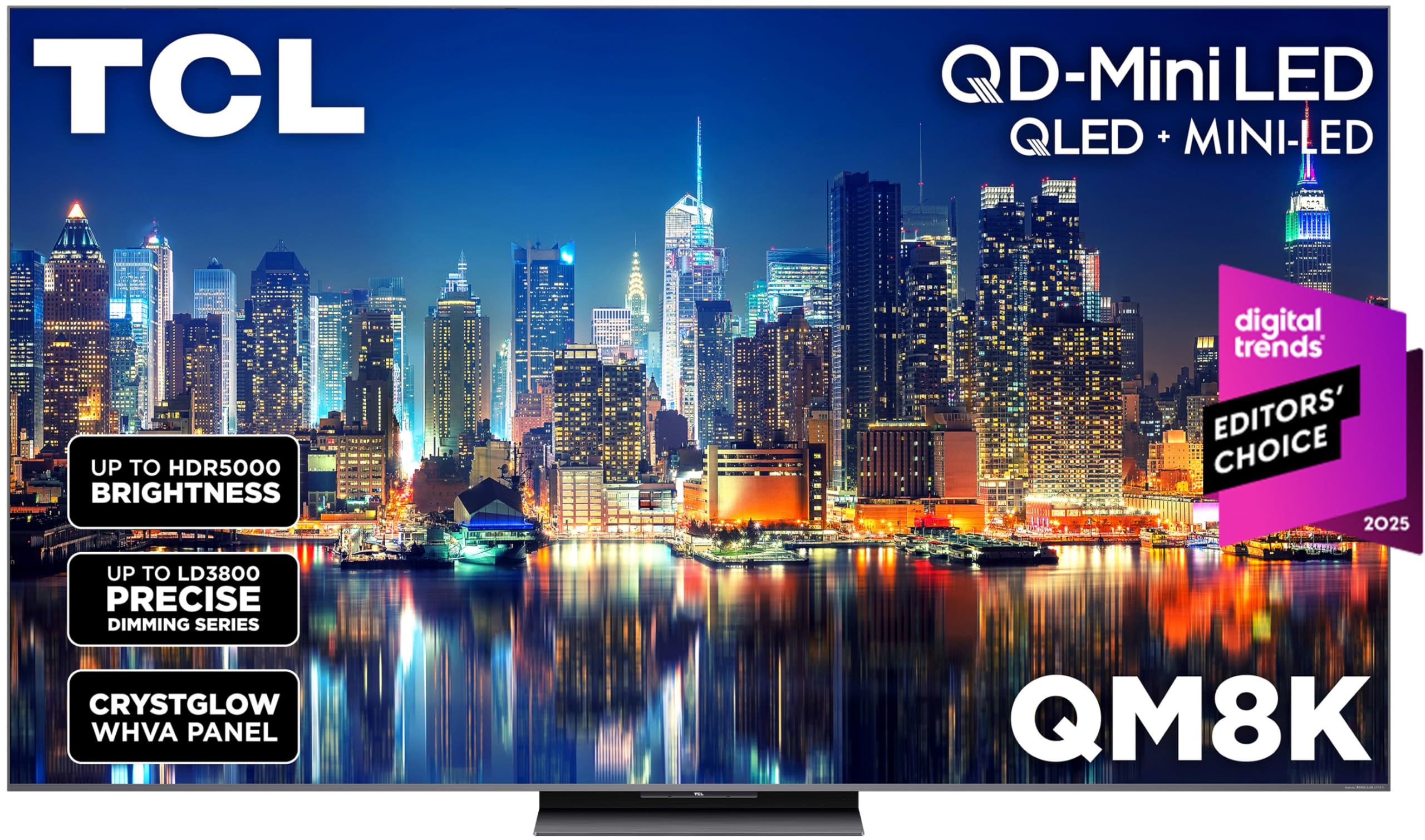
The TCL QM8K sits at the intersection of high brightness, high refresh rate, and aggressive pricing. The QD-Mini LED panel combined with the TCL Halo Control System delivers genuinely impressive brightness that easily overpowers ambient light, making it a top contender for living rooms with large windows. The CrystGlow WHVA panel includes an anti-reflective coating that is remarkably effective at scattering overhead light before it reaches your eyes.
The Game Accelerator 288 feature enables VRR up to 288Hz at lower resolutions, but even at 4K 144Hz the panel handles sports motion with minimal ghosting. The 120Hz-144Hz variable refresh rate covers the full range of broadcast and streaming sports content. TCL’s implementation of Google TV is snappy, and the backlit premium voice remote is a welcome upgrade from the cheap plastic remotes that plague this price bracket.
Where the QM8K stumbles slightly is in the audio department: the built-in speakers lack bass depth and can sound thin during loud stadium audio. A soundbar is essentially mandatory for the full experience. Additionally, some users have reported Hulu app performance glitches and occasional audio/video sync issues that required external streaming devices. For raw brightness, motion performance, and value, however, the QM8K is extremely difficult to beat.
Why it’s great
- Extremely high brightness outperforms many mid-range OLEDs in bright rooms
- Anti-reflective WHVA panel handles glare effectively
- 144Hz native with 288Hz VRR for future-proof gaming and sports
Good to know
- Built-in audio is thin and lacks bass; soundbar recommended
- Occasional app-specific performance issues reported
5. LG 65″ OLED evo G5 (OLED65G5WUA)

The LG G5 is the pinnacle of OLED engineering for 2025. The Brightness Booster Max technology pushes the G5’s peak luminance past 2000 nits — a number that was unthinkable for OLED just a few years ago — which means it can now compete with Mini-LED in moderately bright rooms while retaining OLED’s defining strength: perfect blacks with zero blooming around score tickers and on-screen graphics. For sports viewers who cannot stand the halo effect around bright objects on dark backgrounds, the G5 is a revelation.
The α11 AI Processor Gen2 handles AI Super Upscaling and AI Director Processing to adapt the picture to the specific genre of content. Sports mode on the G5 intelligently boosts color saturation for grass and uniforms while leaving skin tones natural. The 120Hz native refresh rate with 0.1ms response time ensures there is virtually no motion blur, even during the fastest cuts in hockey or basketball. Four HDMI 2.1 inputs with full 48Gbps bandwidth mean you can connect every next-gen console and a soundbar without compromise.
The G5’s One Wall Design is engineered for a flush wall mount with virtually no gap — but the television ships without a stand, so you must purchase a VESA mount separately. The webOS interface is polished and includes over 350 free LG channels, though it also features ads. For the buyer who demands the absolute best picture quality available and has the budget to match, the G5 sets a new high-water mark for sports viewing.
Why it’s great
- Over 2000 nits peak brightness with perfect OLED blacks and zero blooming
- 0.1ms response time and 120Hz native for unparalleled motion clarity
- Four full-bandwidth HDMI 2.1 ports for maximum connectivity
Good to know
- Does not include a stand; wall mount required (VESA)
- Premium price places it at the top of the budget range
6. LG 65″ OLED evo C5 (OLED65C5PUA)

The LG C5 is the most accessible entry point into genuine OLED performance for sports, and it does not compromise on the features that matter. The α9 AI Processor Gen7 delivers AI Picture Pro and AI Super Upscaling that cleanly handles streaming bitrates and live broadcasts. Dolby Vision and Dolby Atmos support are standard, and the Filmmaker Mode is available for purists, but the Game Optimizer dashboard is what makes the C5 exceptional for sports-plus-gaming households.
With four HDMI 2.1 ports, NVIDIA G-SYNC, AMD FreeSync Premium, and VRR, the C5 supports every variable refresh technology currently available. The 120Hz panel is smooth, and OLED’s inherent per-pixel response time means there is no ghosting or smearing on fast-moving content. The Brightness Booster technology helps the C5 reach a respectable luminance, but it cannot match the G5 or the brightest Mini-LED sets in direct sunlight.
The bundled package here includes a 26-month extended protection plan, two HDMI cables, a wall mount, and a surge adapter — real practical value. The downside is the notoriously difficult stand assembly (require multiple people and careful alignment). If you want OLED’s unmatched contrast for sports without paying for the G5’s extreme brightness and wall-mount design, the C5 is the smartest mid-range OLED investment.
Why it’s great
- OLED perfect blacks with no blooming during score bug displays
- Full suite of VRR technologies for tear-free gaming and sports
- Bundled with extended protection, mount, cables, and surge adapter
Good to know
- Brightness is adequate but not class-leading in bright rooms
- Stand assembly is notoriously difficult; wall mount is simpler
7. TCL 65″ QM8L Series (65QM8L)
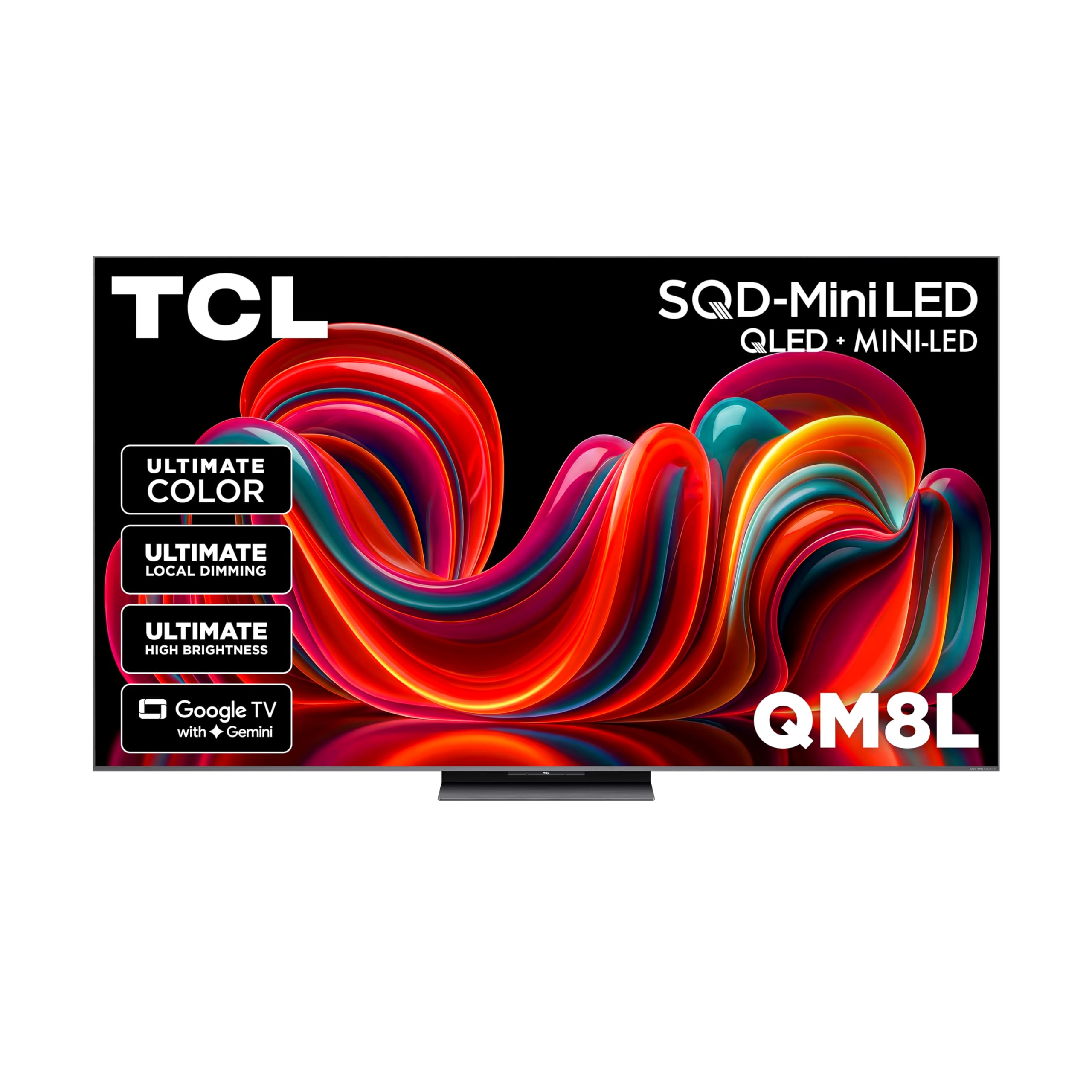
The TCL QM8L is an absolute light cannon. With up to 6000 nits of peak brightness and over 4000 discrete local dimming zones, this television exists to crush ambient light in a way no OLED can touch. For sports fans who watch in a bright, sunlit living room, the QM8L’s SQD-Mini LED panel combined with the TCL Ultra Color Filter (using 5-nanometer quantum dot particles) produces a picture that remains vivid and punchy regardless of how much light is in the room.
The 144Hz native refresh rate and Game Accelerator 288 VRR ensure motion is handled smoothly, but the real differentiator here is the Audio by Bang & Olufsen. The built-in speaker system is genuinely better than most TV audio — it delivers clear dialogue and present bass without needing an external soundbar for daily sports watching. Google Gemini Interactive AI provides conversational voice control that actually understands context, which is rare in smart TV platforms.
At this price, you are paying for the brightness ceiling and the audio partnership. The panel’s high static contrast ratio of 7000:1 ensures that even at extreme brightness, blacks remain deep. The trade-off is that the QM8L is a thick television compared to OLED competitors, and the backlit remote, while premium, cannot fix the occasional Google TV OS glitch. For the buyer who prioritizes all-day brightness and hates soundbars, the QM8L is a uniquely compelling package.
Why it’s great
- 6000-nit peak brightness is the highest in this roundup
- Bang & Olufsen audio is genuinely good enough to skip a soundbar
- 4000+ dimming zones with 7000:1 static contrast for deep blacks
Good to know
- Thicker chassis compared to OLED competitors
- Google TV OS can have minor glitches
8. Toshiba 65″ Z670R Mini-LED (65Z670R)
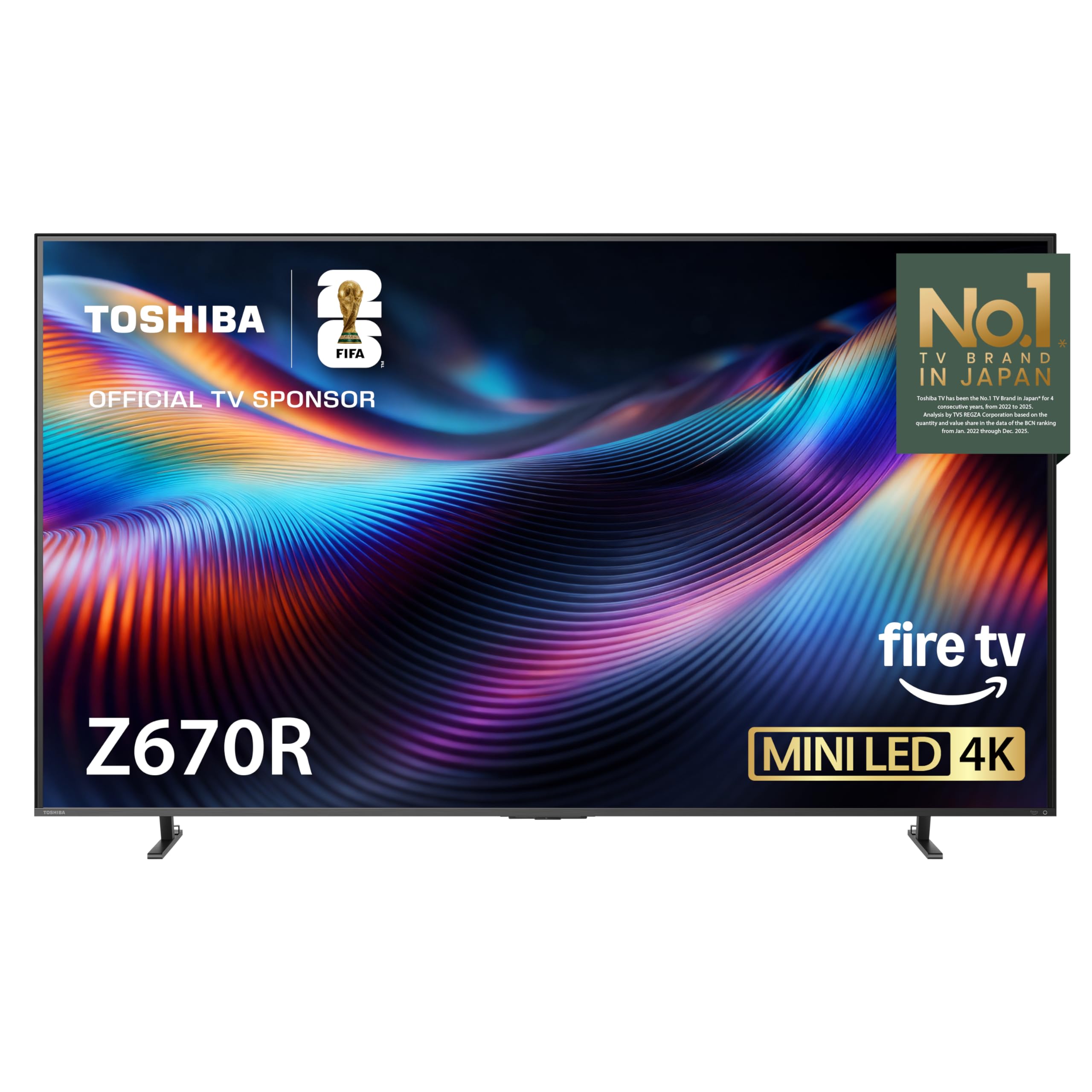
The Toshiba Z670R proves that Mini-LED with full-array local dimming does not require a flagship budget. This 2026 model pairs a native 144Hz panel with the REGZA Engine ZRi Gen3 — an AI processor fine-tuned by Toshiba’s engineers in Japan — that optimizes clarity and contrast on a per-scene basis. For sports, this means the REGZA Engine can detect fast motion and adjust the backlight scanning to reduce perceived blur without introducing the soap-opera effect.
The QLED color layer delivers over a billion shades, and the Total HDR Solution Pro supports Dolby Vision IQ, HDR10+, and HDR10+ Adaptive. The AI Light Sensor Pro automatically adjusts brightness and color balance to match your room’s lighting, which is a practical feature for viewers who watch games at different times of day. The Dolby Atmos sound system with REGZA Power Audio Pro includes a bass woofer that provides more low-end presence than most TVs at this level.
Fire TV with Alexa built-in is the operating system — it is fast, it integrates live channels on the home screen, and Alexa can check sports scores directly. The main compromise is that the Z670R’s brightness, while good, does not reach the extreme levels of the TCL QM8L or the Hisense U7. It is, however, significantly more affordable, making it the strongest value proposition for budget-conscious sports fans who still demand a 144Hz panel.
Why it’s great
- Native 144Hz panel with AI-driven motion optimization
- Fire TV with Alexa can check sports scores hands-free
- Integrated bass woofer provides surprising low-end audio depth
Good to know
- Peak brightness is good but not extreme for very bright rooms
- Build quality feels slightly less premium than Sony alternatives
9. Sony BRAVIA 5 65″ Mini LED (K-65XR50)

The Sony BRAVIA 5 is the more accessible sibling to the BRAVIA 7, sharing the same core XR Processor AI technology but with a simpler Mini-LED backlight system. The XR Triluminos Pro delivers billions of accurate colors, and the XR Clear Image upscaling ensures that even compressed sports streams look sharp. The 120Hz native panel with XR Motion Clarity handles fast pans with the same blur-free, artifact-free performance that Sony is known for.
Where the BRAVIA 5 differentiates itself is in its exclusive PlayStation 5 integration — Auto HDR Tone Mapping and Auto Genre Picture Mode optimize picture quality when a PS5 is connected. For sports fans who also game, this seamless console integration is a genuine workflow benefit. The Google TV interface is clean and responsive, and the inclusion of Sony Pictures CORE with five free movie credits adds value for movie nights between games.
The compromises are notable: only two of the four HDMI ports support HDMI 2.1 bandwidth, which limits the number of next-gen devices you can connect at full 4K 120Hz. The built-in sound is decent but not immersive, and the television lacks the anti-glare sophistication of higher-tier Mini-LED panels. For the buyer who values Sony’s processing and PS5 ecosystem above peak brightness or multi-gaming-rig setups, the BRAVIA 5 is a solid mid-range Sony entry.
Why it’s great
- XR Processor AI delivers excellent upscaling of lower-resolution sports
- Exclusive PS5 features for seamless console integration
- Studio-calibrated picture modes for Netflix and Prime Video
Good to know
- Only 2 of 4 HDMI ports support full 4K 120Hz
- Built-in audio is decent but a soundbar improves it significantly
10. iFFALCON 65″ 4K MiniLED (65U85)
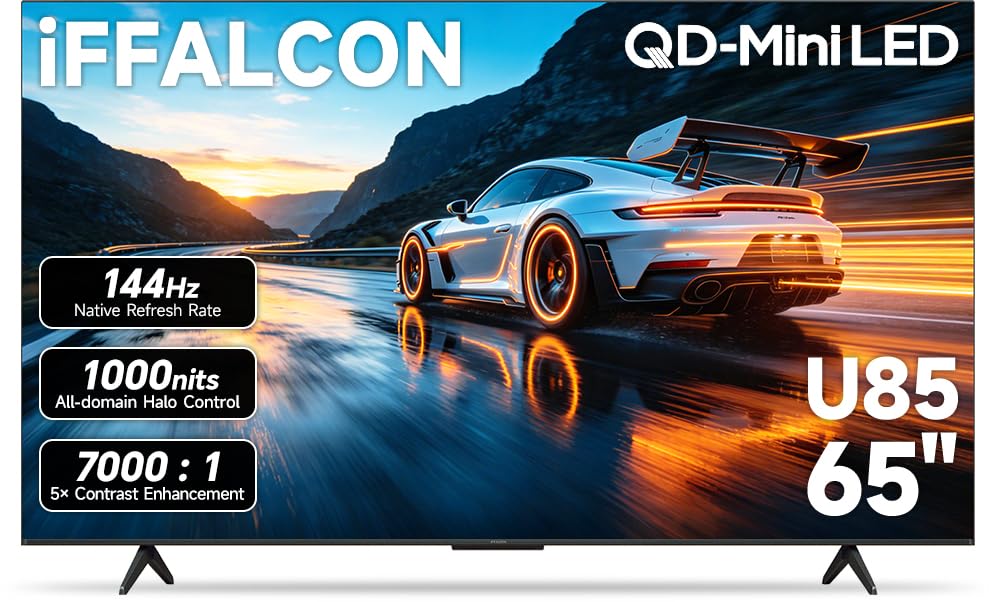
The iFFALCON 65U85 is the value champion for sports viewers who need a 144Hz panel and four HDMI 2.1 ports but cannot stretch to the mid-range tier. The Mini-LED backlight with local dimming and a 7000:1 contrast ratio delivers surprisingly good black levels for an entry-level panel, and the 1000 nits of peak brightness is sufficient for most living rooms. The 144Hz VRR (up to 288Hz) with FreeSync Premium Pro ensures that both live sports and gaming look smooth.
The built-in 50W audio system (2x15W tweeters plus a 20W woofer) with Dolby Atmos and DTS Virtual:X is genuinely impressive for this price point — you can actually hear bass during a stadium roar without an external soundbar. Google TV with far-field voice control and AirPlay 2 support covers all the major streaming platforms. The television also includes hotel mode, an IR blaster, and IP control, which is unusual for a consumer TV and makes it viable for commercial installs.
The compromises are typical for entry-level Mini-LED: the panel is slightly thicker than premium competitors, and some units have reported flickering issues that required returns. The Google TV interface, while responsive, can feel laggy after extended use compared to flagship processors. For the budget-constrained buyer who refuses to compromise on refresh rate and HDMI 2.1 ports, the iFFALCON 65U85 delivers ridiculous value at a cost that undercuts everything else in this roundup.
Why it’s great
- Native 144Hz with VRR and FreeSync Premium Pro at a budget price
- Four full HDMI 2.1 ports for multi-device setups
- 50W built-in audio with dedicated woofer and Dolby Atmos
Good to know
- Panel is thicker than premium competitors
- Some units have reported flickering issues; warranty is important
FAQ
Why should I choose Mini-LED over OLED for sports in a bright room?
What is the minimum native refresh rate I should accept for watching live sports?
Does Dolby Vision IQ matter for sports content?
Do I need a soundbar if the TV claims to have Dolby Atmos speakers?
Final Thoughts: The Verdict
For most users, the 65 inch tv for sports watching winner is the Hisense 65″ U7 because it combines the highest native refresh rate in this roundup (165Hz) with a dedicated anti-glare layer and 3000-nit peak brightness at a price that undercuts the premium tier. If you want the best contrast and color for evening sports in a dim room, grab the Samsung S90F. And for budget-conscious buyers who refuse to compromise on refresh rate and HDMI 2.1 ports, nothing beats the iFFALCON 65U85.