
A 65-inch screen is the new living-room standard, but landing one with genuine picture-depth — Mini-LED dimming, high peak brightness, and a panel that handles fast motion without smearing — while staying under a grand requires knowing exactly which specs to prioritize and which marketing terms to ignore. The difference between a great TV and a mediocre one at this size and price point comes down to local dimming precision, color volume, and how the smart platform handles your daily streaming habits.
I’m Min — the co-founder and writer behind Gadgets Feed. I’ve spent countless hours analyzing display technologies, comparing HDR formats, and cross-referencing real-world brightness measurements across dozens of 65-inch models to isolate the units that deliver genuine performance without pushing past the four-figure ceiling.
Whether you need a Mini-LED panel with deep black levels for movie nights or a 144Hz native gaming screen for fluid console play, this guide highlights the models that earn their spot among the 65 inch tv under 1000 market through measurable picture quality, reliable smart features, and thoughtful build quality.
How To Choose The Best 65 Inch TV Under $1000
Selecting a 65-inch TV at this price range means balancing backlight technology, panel type, and smart ecosystem. The most impactful spec is local dimming — specifically how many zones are used to control black levels. Non-dimmed LED panels produce grayish blacks in dark scenes, while Mini-LED sets with hundreds of zones can approach OLED-like contrast without the burn-in risk. Peak brightness (measured in nits) determines how well HDR content pops; look for at least 600 nits for a meaningful Dolby Vision experience.
Refresh Rate and Motion Handling
A native 120Hz or 144Hz panel delivers noticeably smoother motion for sports, action films, and console gaming compared to the standard 60Hz found on budget-tier TVs. VRR (Variable Refresh Rate) and ALLM (Auto Low Latency Mode) are critical for PlayStation 5 and Xbox Series X users — they eliminate screen tearing and reduce input lag to around 5–10ms. If gaming is a primary use case, prioritize these features over raw brightness.
Smart Platform and Connectivity
The built-in operating system — whether Roku, Fire TV, Google TV, or Samsung Tizen — dictates app availability, update frequency, and overall interface responsiveness. Roku remains the fastest and least cluttered, while Fire TV offers deep Alexa integration. Ensure the TV has at least two HDMI 2.1 ports if you plan to connect modern consoles; HDMI 2.1 supports 4K at 120/144Hz, eARC for high-quality soundbars, and VRR. Wi-Fi 6 support is a bonus for streaming 4K content without buffering.
Quick Comparison
On smaller screens, swipe sideways to see the full table.
| Model | Category | Best For | Key Spec | Amazon |
|---|---|---|---|---|
| TCL QM7K (65QM7K) | Mini-LED QLED | Premium picture & gaming | Up to 2500 dimming zones | Amazon |
| Samsung Neo QLED QN70F | Neo QLED Mini-LED | AI upscaling & color | NQ4 AI Gen2 processor | Amazon |
| Amazon Ember Mini-LED Series | Mini-LED QLED | Fire TV ecosystem & HDR | 1400 nits peak brightness | Amazon |
| Toshiba Z670R | Mini-LED | All-around gaming & movies | Native 144Hz panel | Amazon |
| Sony BRAVIA 2 II (K-65S20M2) | LED | PS5 & motion handling | 4K Processor X1 + PS5 features | Amazon |
| Hisense U6 Series (65U65QF) | Mini-LED QLED | Bright rooms & value | 1000 nits / 600 dimming zones | Amazon |
| Samsung M70H (65M70H) | Mini-LED | Sports & Samsung ecosystem | Motion Xcelerator 120Hz | Amazon |
| Roku Plus Series (Mini-LED) | Mini-LED QLED | Roku fans & Dolby Vision | Mini-LED with Dolby Vision | Amazon |
| Panasonic W70 Series (65W70BP) | LED | Fire TV & simple setup | HDR10+ with MEMC | Amazon |
| Roku Select Series (QLED) | QLED | Budget-friendly QLED | 4K QLED + HDR10 | Amazon |
| VIZIO V-Series (65″) | LED | Entry-level smart TV | IQ Active 4K processor | Amazon |
In‑Depth Reviews
1. TCL 65-Inch QM7K Series (65QM7K, 2025 Model)
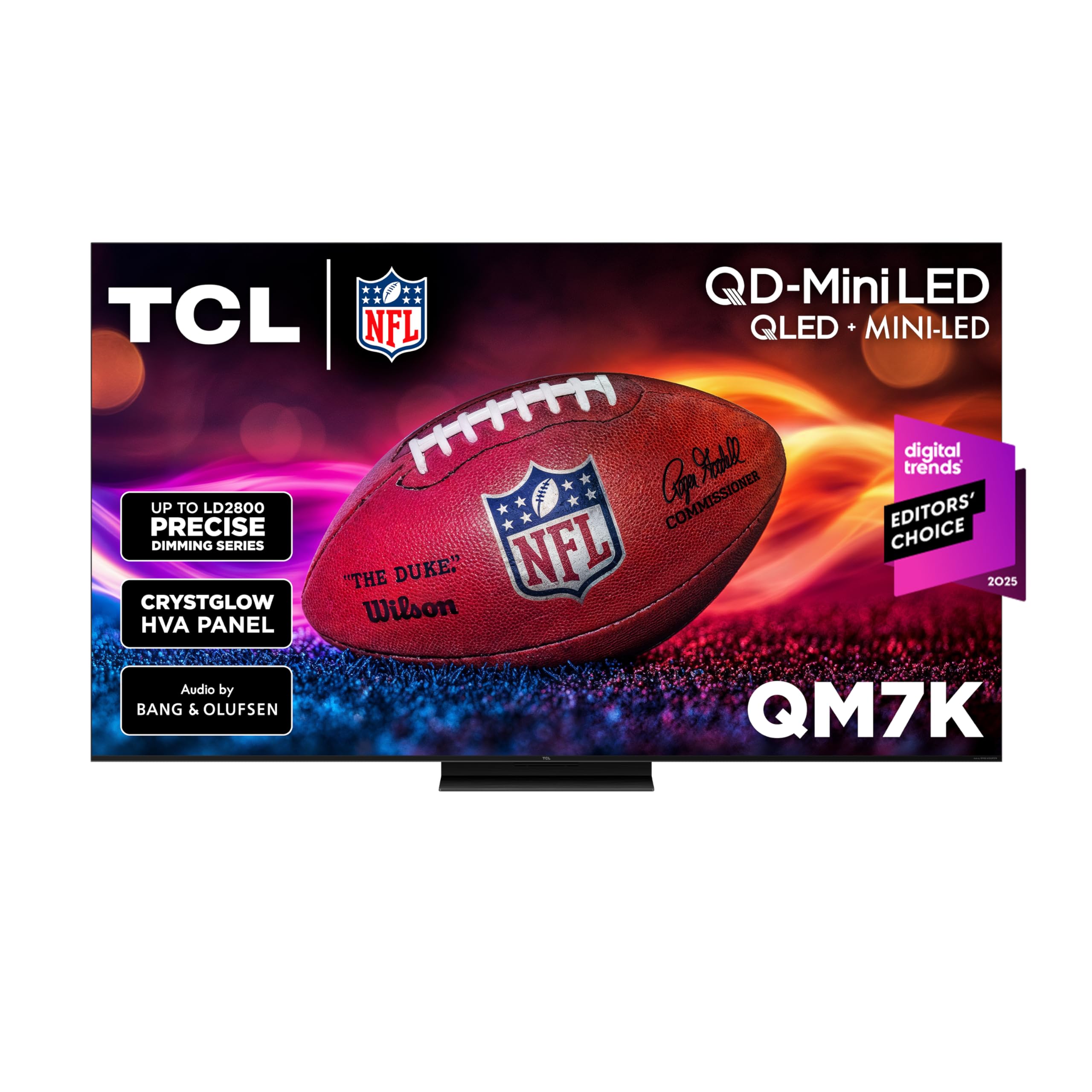
The TCL QM7K sets the benchmark in this price bracket with its QD-Mini LED panel paired to the Halo Control System — up to 2500 local dimming zones deliver black levels that rival entry-level OLEDs, with peak brightness high enough to make Dolby Vision HDR content genuinely pop. The CrystGlow HVA panel’s anti-reflective coating keeps dark scenes watchable even in a bright living room, a rare feature at this price.
Gamers benefit from a native 144Hz panel with 288Hz VRR support, AMD FreeSync Premium Pro, and HDMI 2.1 ports that enable 4K 144Hz on both Xbox Series X and PC. Input lag measures around 5ms in Game Mode, and the inclusion of Auto Low Latency Mode means the TV switches automatically when a console is detected. The Onkyo-tuned 2.1-channel audio system with Dolby Atmos provides fuller sound than most built-in TV speakers, though a dedicated soundbar still elevates the experience.
The Google TV interface is responsive, supports Apple AirPlay and Google Cast, and the voice remote offers hands-free Alexa and Google Assistant control. The only compromises are a lightweight plastic remote and the need to disable motion smoothing for purists. For buyers seeking the best combination of contrast, gaming features, and HDR performance under the four-figure ceiling, the QM7K is the clear winner.
Why it’s great
- Exceptional black levels and contrast from dense dimming array
- Native 144Hz panel with low input lag and FreeSync Premium Pro
- Strong anti-glare coating works well in bright rooms
Good to know
- Built-in audio is decent but benefits from an external soundbar
- Remote feels basic compared to the TV’s premium build
2. Samsung 65-Inch Neo QLED QN70F (2025 Model)

Samsung’s QN70F leverages the NQ4 AI Gen2 processor, which uses 20 neural networks to upscale HD and SDR content to near-4K HDR quality. The Quantum Matrix Technology with Mini-LEDs provides precise backlight control, producing deep blacks and bright highlights with minimal blooming — a hallmark of Samsung’s Neo QLED line. Peak brightness is strong enough for HDR10+ content to look punchy without washing out shadow details.
The Motion Xcelerator 144Hz feature ensures smooth motion for sports and tear-free gameplay, with HDMI 2.1 support for 4K 144Hz VRR. Samsung Vision AI optimizes picture settings based on ambient light and content type, while the built-in Tizen platform offers access to Samsung TV Plus with thousands of free channels. The slim wall-mountable design and Alexa built-in add convenience for smart home setups.
Where the QN70F shines is color volume — the Neo QLED panel reproduces over a billion shades, and the AI processing ensures even compressed streaming content retains detail. The audio system includes Object Tracking Sound+ for a wider soundstage than typical TV speakers. The main limitation is the absence of Dolby Vision support; Samsung relies on HDR10+ Adaptive, which fewer streaming services support natively. If you prioritize color accuracy, upscaling, and Samsung’s ecosystem, the QN70F delivers premium performance.
Why it’s great
- Excellent AI upscaling brings lower-resolution content to life
- Vibrant, accurate colors with wide color volume
- Slim design and solid wall-mount aesthetics
Good to know
- No Dolby Vision support limits HDR compatibility with some services
- On-screen menu and remote may feel complex to some users
3. Amazon Ember 65-Inch Mini-LED Series (Newest Model)
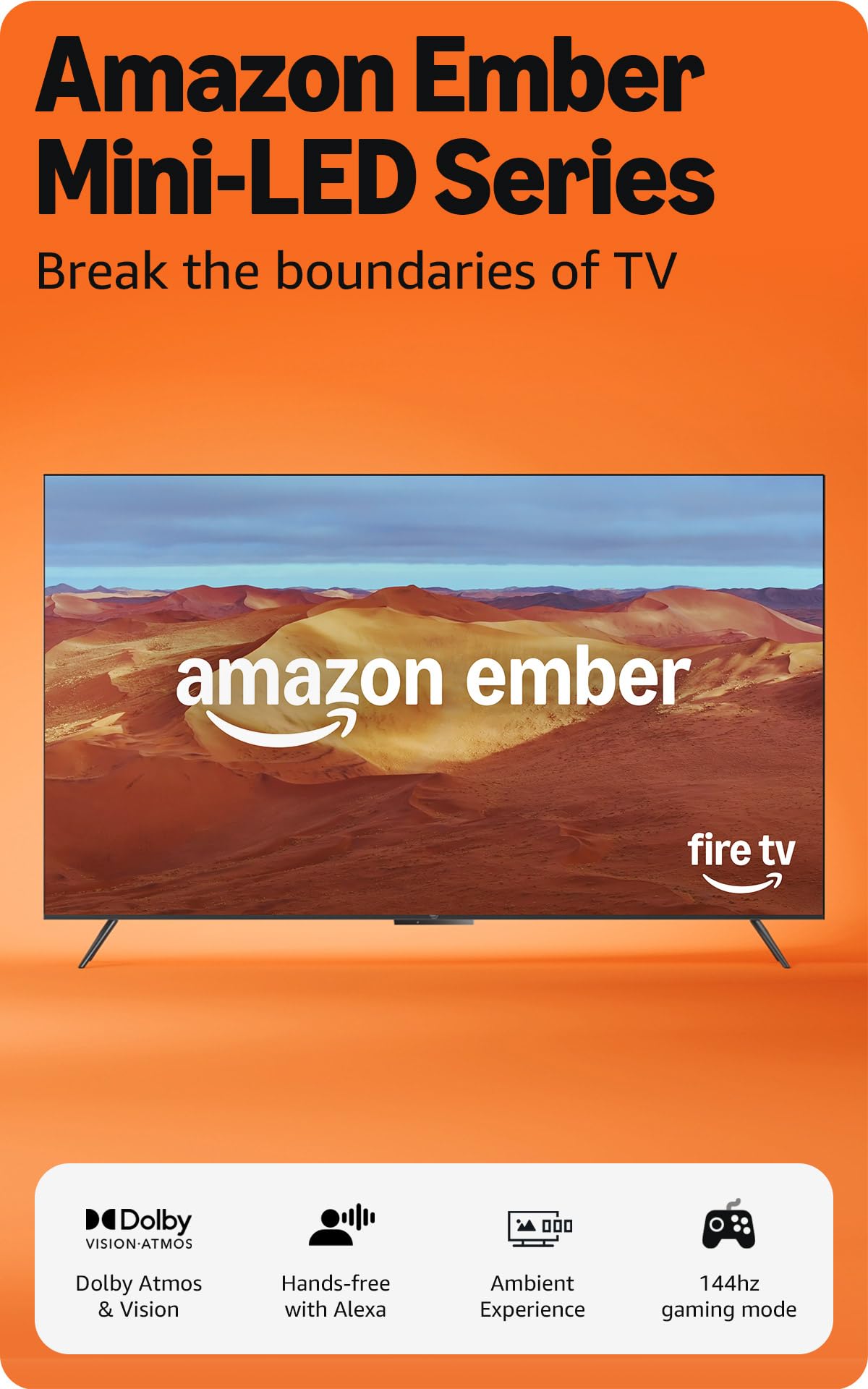
Amazon’s Ember Mini-LED Series is a powerhouse for HDR enthusiasts, reaching up to 1400 nits peak brightness with 512 local dimming zones. The QLED Mini-LED panel and Dolby Vision IQ support deliver over a billion colors with impressive contrast — shadow details remain visible without crushing blacks, and specular highlights in movies like Blade Runner 2049 are breathtaking. The Ambient Experience with Omnisense sensors wakes the TV when you enter the room and displays artwork, blending seamlessly into a living space.
The Fire TV platform has been redesigned for the 2026 release, offering a cleaner interface with faster navigation and Alexa+ for natural voice queries. Gaming performance is anchored by a 144Hz panel with AMD FreeSync Premium Pro certification, ensuring tear-free gameplay at up to 4K 144Hz over HDMI 2.1. The 2.1 Dolby Atmos audio system with built-in subwoofer provides room-filling sound that surpasses most competitors, though purists will still want a soundbar for critical listening.
The main trade-off is that the Fire TV interface includes Amazon ads on the home screen, which some users find intrusive. Additionally, a small number of reports mention occasional software reboots. However, the combination of peak brightness, dimming zone count, and gaming features at this price point makes the Ember a compelling choice for Prime-heavy households and gamers alike.
Why it’s great
- Extremely bright panel (1400 nits) ideal for HDR content
- Impressive black levels and contrast from 512 dimming zones
- Strong Dolby Atmos sound with built-in subwoofer
Good to know
- Fire TV home screen includes Amazon ads
- A few users report occasional software glitches
4. Toshiba 65-Inch Z670R Series (65Z670R, 2026 Model)
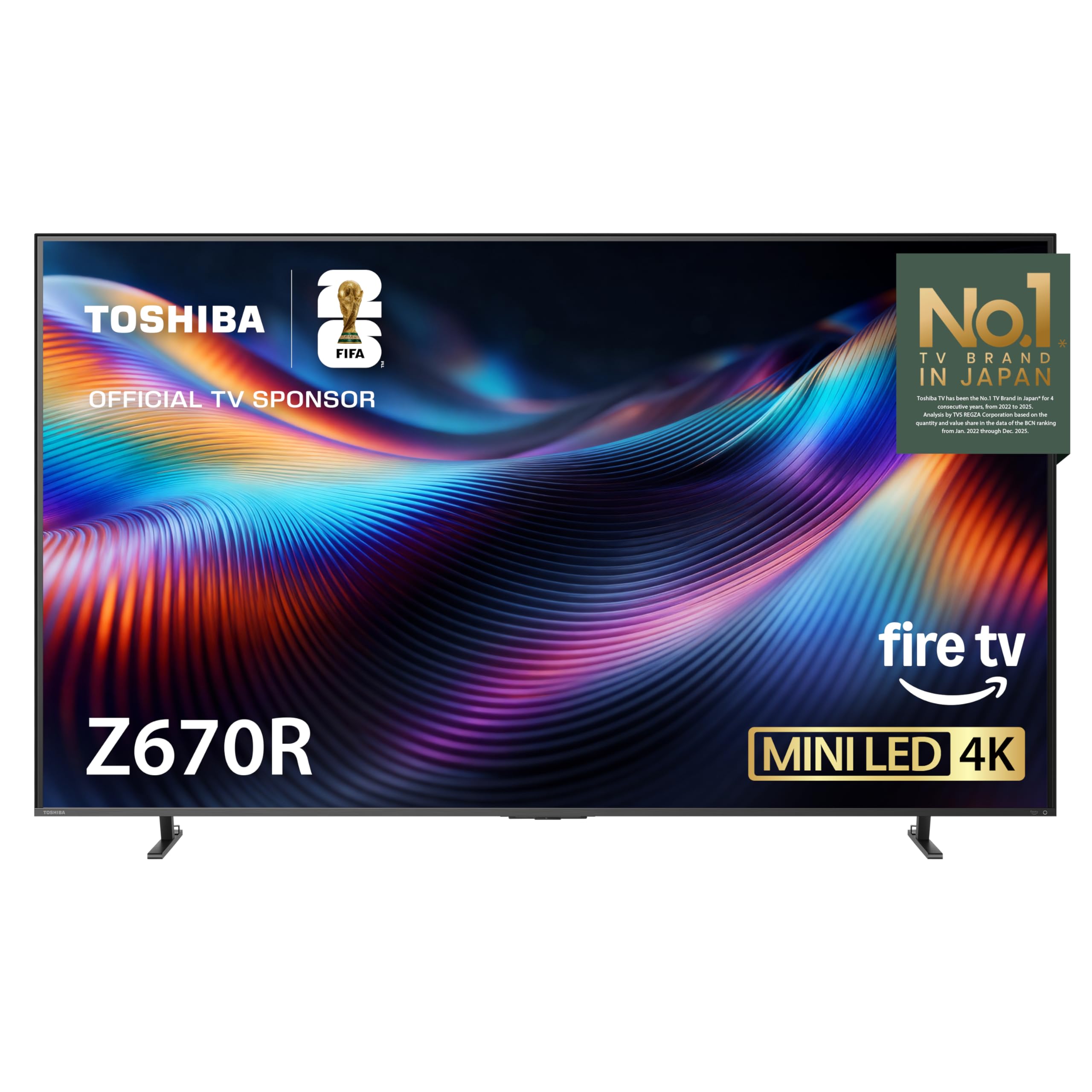
The Toshiba Z670R re-enters the premium-value conversation with a Mini-LED panel driven by the REGZA Engine ZRi Gen3, an AI processor fine-tuned by Toshiba engineers in Japan. It delivers full-array local dimming with deep blacks and bright highlights, coupled with QLED color that produces over a billion shades. The native 144Hz panel with AMD FreeSync Premium and VRR 144Hz ensures smooth motion for fast-paced gaming and sports, and the Dolby Vision IQ and HDR10+ Adaptive support covers the full HDR landscape.
The Fire TV interface is responsive and Alexa built-in allows for hands-free control. The REGZA Power Audio Pro system with a bass woofer provides surprisingly robust sound — deep bass for explosions and clear dialogue for vocals — reducing the immediate need for a soundbar. The AI Light Sensor Pro adjusts brightness automatically based on room lighting, reducing eye strain during late-night viewing.
Priced aggressively for its feature set, the Z670R offers 144Hz gaming, wide HDR support, and respectable built-in audio that outclasses many competitors. The design is minimalist with a Japanese-influenced aesthetic, and the included metal stand feels sturdy. The main consideration is that Toshiba’s smart TV ecosystem, while functional, does not receive updates as frequently as Roku or Google TV. For the performance per dollar, it is a standout in this category.
Why it’s great
- Excellent value with Mini-LED, 144Hz, and Dolby Vision IQ support
- Impressive built-in audio with dedicated bass woofer
- AI Light Sensor Pro optimizes brightness for room conditions
Good to know
- Smart platform updates may be slower than Roku or Google TV
- Bluetooth version 5.0, not the latest 5.3
5. Sony BRAVIA 2 II 65-Inch (K-65S20M2)

Sony’s BRAVIA 2 II is purpose-built for PlayStation 5 integration, offering exclusive features like Auto HDR Tone Mapping and Auto Genre Picture Mode that optimize HDR and low-latency settings automatically when a PS5 is connected. The 4K Processor X1 delivers natural, lifelike colors with X1-powered upscaling that brings HD content close to 4K clarity, while Motionflow XR keeps fast action blur-free — crucial for racing games and action movies.
The 60Hz panel may deter gamers seeking 120Hz+ refresh rates, but Sony’s motion interpolation is among the best in the industry, making 60fps content look smoother than on competitors. The Google TV interface provides access to all major streaming apps, and support for Apple AirPlay 2 and Google Cast ensures easy content sharing from mobile devices. The included Sony Pictures CORE app offers a selection of free movies.
Audio is handled by a two-speaker system with DTS:X support, providing clear dialogue and adequate volume for a medium-sized room. The Eco Dashboard consolidates energy settings. The biggest limitation is the 60Hz panel, which caps gaming fluidity, and the LED backlight lacks the local dimming sophistication of Mini-LED competitors. However, for PS5 owners who value seamless console integration and Sony’s signal processing, the BRAVIA 2 II is a focused, reliable choice.
Why it’s great
- Deep PS5 integration with exclusive HDR and genre modes
- Excellent upscaling and motion handling from Processor X1
- Clean Google TV interface with wide app support
Good to know
- 60Hz panel limits high-refresh-rate gaming
- Standard LED backlight, not Mini-LED
6. Hisense 65-Inch U6 Series (65U65QF, 2025 Model)
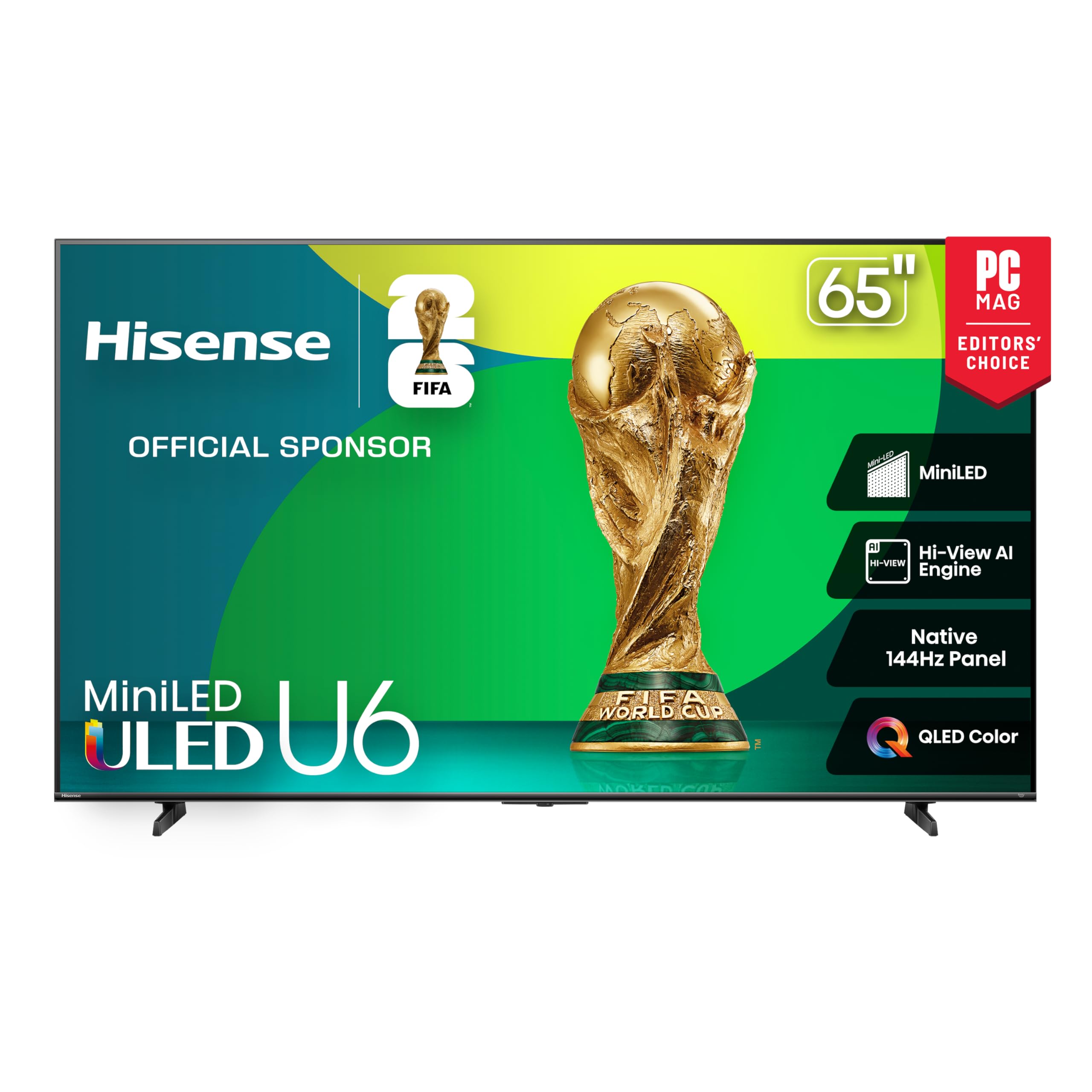
Hisense packs serious brightness into the U6 Series with up to 1000 nits peak output and up to 600 local dimming zones — figures that typically belong to TVs costing significantly more. The Mini-LED QLED panel produces vivid colors and high contrast, making HDR10+ and Dolby Vision IQ content look dynamic even in sunlit rooms. The Hi-View AI Engine analyzes content in real-time to boost sharpness, color, and sound based on the scene.
Gamers will appreciate the native 144Hz panel with Game Mode Pro, AMD FreeSync Premium, and a VRR range of 48Hz to 144Hz for tear-free gameplay. The built-in subwoofer delivers deeper bass than typical TV speakers, and Dolby Atmos adds a sense of height to the soundstage. The Fire TV platform with Alexa built-in provides quick access to streaming apps and smart home controls.
Two of the four HDMI ports are HDMI 2.1 with 144Hz support, which covers next-gen consoles and PC gaming. The main drawbacks are that the U6’s factory calibration can oversaturate colors in certain presets, and the viewing angle is narrower than VA-panel competitors. However, for buyers who prioritize raw brightness and dimming performance at a mid-range price, the U6 Series offers compelling specs that punch well above its tier.
Why it’s great
- High 1000 nits peak brightness excels in bright rooms
- Native 144Hz panel with FreeSync Premium for smooth gaming
- Built-in subwoofer enhances audio depth
Good to know
- Colors may need calibration out of the box
- Narrower viewing angles compared to premium VA panels
7. Samsung 65-Inch M70H Series (65M70H, 2026 Model)
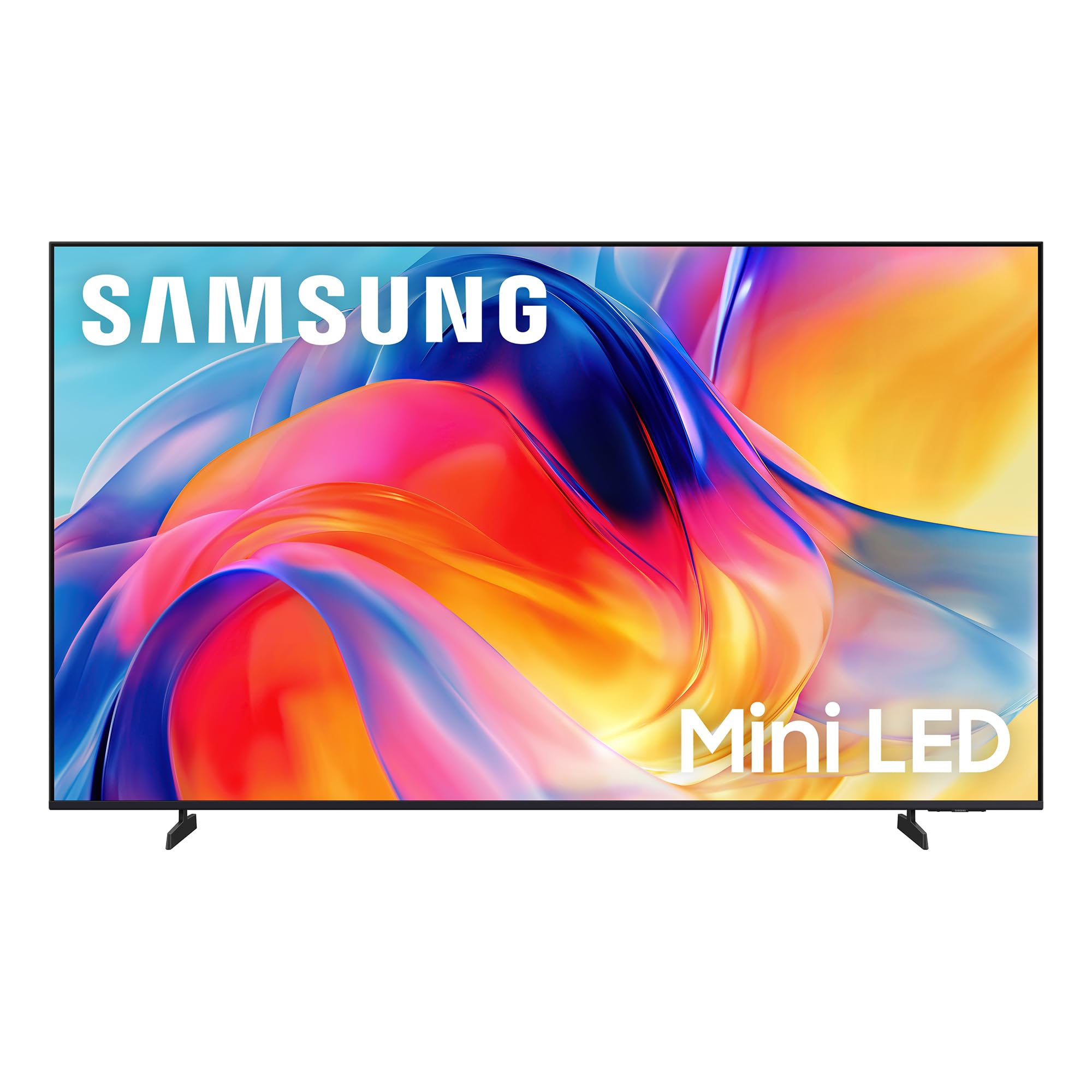
The Samsung M70H pairs Mini-LED backlighting with the Pure Spectrum Color engine to produce one billion true-to-life shades, with decent contrast for a TV at this price. The Mini-LED HDR technology lifts highlights above traditional HDR displays, and the Supreme Mini-LED Dimming system manages brightness zones to preserve shadow detail. Color Booster enhances saturation in sports — Soccer Mode is a specific feature that improves clarity and grass vibrancy for football fans.
Motion Xcelerator with DLG 120Hz provides smooth motion for sports and fast-paced content, though the panel’s native refresh is 60Hz (DLG stands for Dynamic Liquid Crystal, which doubles the effective refresh rate to 120Hz with some resolution trade-off). The Samsung Gaming Hub aggregates cloud gaming services and console input, making it easy to switch between GeForce Now and Xbox Game Pass. Samsung TV Plus offers 2,700+ free channels without a subscription.
The most contentious aspect of the M70H is its remote and interface — the small remote lacks traditional HDMI switching buttons, and the interface pushes Samsung’s own content aggressively. Users report that the TV sometimes forgets the last HDMI input and defaults to Pluto TV. The picture quality after manual calibration is strong, but the out-of-box experience requires patience. For Samsung loyalists who value color volume and the Gaming Hub, the M70H is a capable Mini-LED entry.
Why it’s great
- Vibrant, accurate colors with Pure Spectrum engine
- Strong Mini-LED contrast and HDR brightness
- Extensive free content via Samsung TV Plus
Good to know
- Remote lacks HDMI input switching; interface can be frustrating
- Panel is native 60Hz, not true 120Hz
8. Roku Plus Series 65-Inch (Mini-LED, 2024 Model)
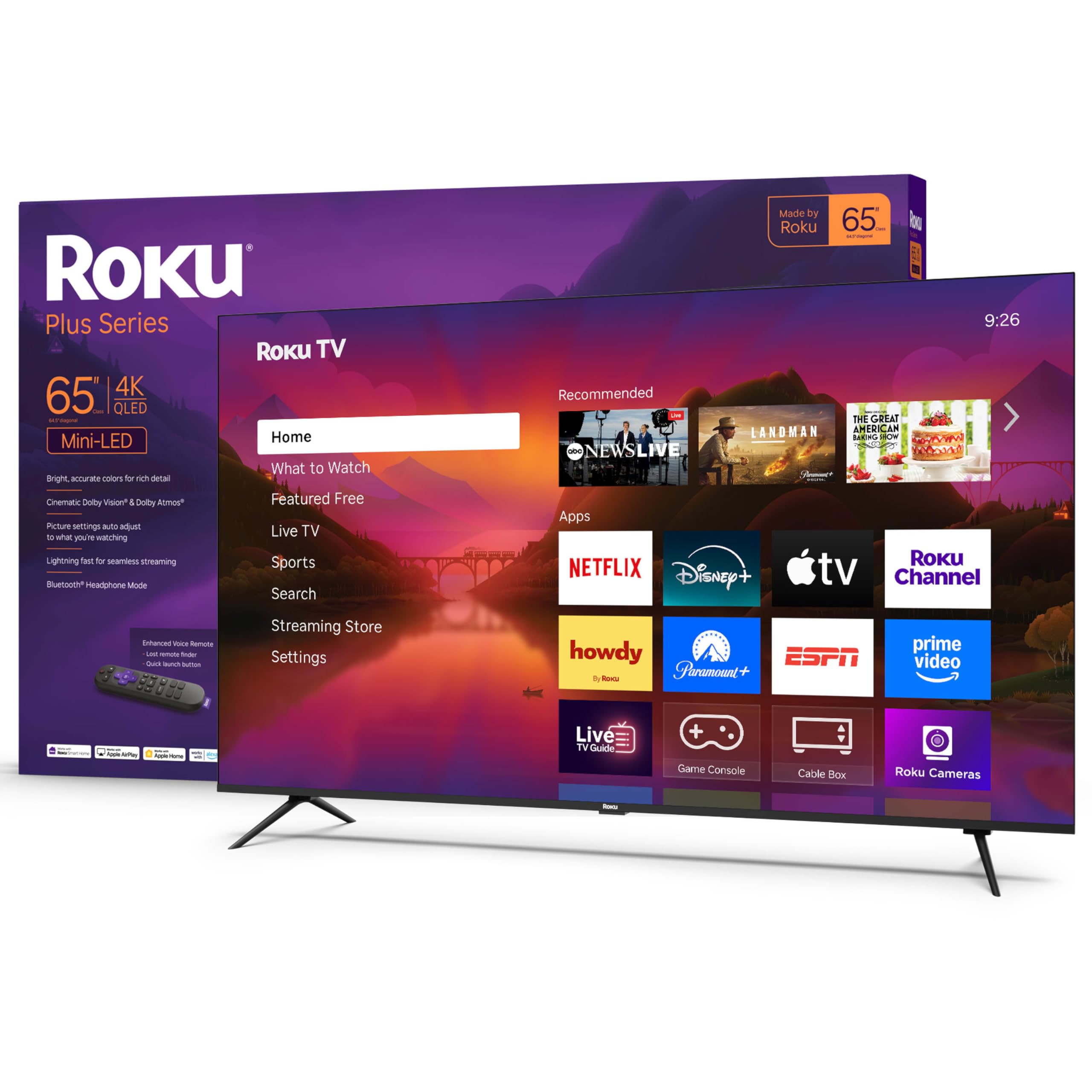
Roku’s Plus Series combines a Mini-LED backlight with QLED color and Dolby Vision support, delivering deep blacks and vibrant highlights that rival more expensive sets. The Roku Smart Picture Max AI engine cleans up incoming signals and optimizes color and sharpness scene-by-scene, resulting in consistent image quality across different content sources. The 4K QLED panel with Dolby Vision creates striking color and vivid highlights in HDR content.
The built-in audio system is a highlight — Dolby Atmos with a dedicated subwoofer provides clear dialogue and a wide soundstage with surprising bass depth. Bluetooth Headphone Mode allows private listening via wireless headphones, a convenient feature for late-night viewing. The Roku interface is widely praised for its simplicity, speed, and lack of bloat. The Enhanced Voice Remote includes lost remote finder and voice search across thousands of apps.
With metal feet, a frameless design, and VRR support for gaming, the Plus Series feels more premium than its price suggests. The main area where it lags behind higher-tier competitors is in peak brightness — it doesn’t reach the 1000+ nit levels of the Hisense or Amazon Ember — so it’s better suited for rooms with controlled lighting. For buyers who value the cleanest smart platform and solid all-around performance, the Roku Plus Series is an excellent mid-range choice.
Why it’s great
- Fast, intuitive Roku interface with no bloatware
- Strong Dolby Atmos audio with integrated subwoofer
- Good contrast from Mini-LED backlight with Dolby Vision
Good to know
- Peak brightness is lower than top-tier Mini-LED competitors
- Settings menu is basic, lacking fine-grained calibration options
9. Panasonic W70 Series 65-Inch (65W70BP, 2025 Model)

Panasonic brings its brand reliability to the W70 Series, featuring an LCD panel with HDR10+ support and a 4K Studio Color Engine that processes HDR content with MEMC (Motion Estimation, Motion Compensation) to smooth fast motion. The Fire TV built-in platform with Alexa voice control offers easy access to streaming services and smart home integration, while the included Voice Remote allows hands-free channel switching and app launch.
The TV includes four HDMI ports, one of which is HDMI 2.1, making it suitable for connecting a single next-gen console. Bluetooth support allows pairing wireless headphones for private listening. The chassis features sturdy metal stands, and the overall build quality feels solid. Picture quality is good for a standard LED set — blacks are decent but not Mini-LED deep, and peak brightness is sufficient for indoor use without direct sunlight.
The main compromises are the 60Hz panel, which limits gaming smoothness, and some user reports of the Fire TV interface being slower than dedicated streaming devices. The processor in the W70 can feel sluggish when navigating apps or switching inputs. For buyers who trust the Panasonic brand and need a straightforward 4K TV with Fire TV smarts at a competitive price, the W70 delivers reliable performance without the advanced imaging features of Mini-LED competitors.
Why it’s great
- Trusted Panasonic build quality with metal stand construction
- Fire TV platform with Alexa and HDMI 2.1 support
- HDR10+ and MEMC for smoother motion handling
Good to know
- 60Hz only — not ideal for high-refresh-rate gaming
- Smart interface can feel sluggish during navigation
10. Roku Select Series 65-Inch (QLED, 2026 Model)
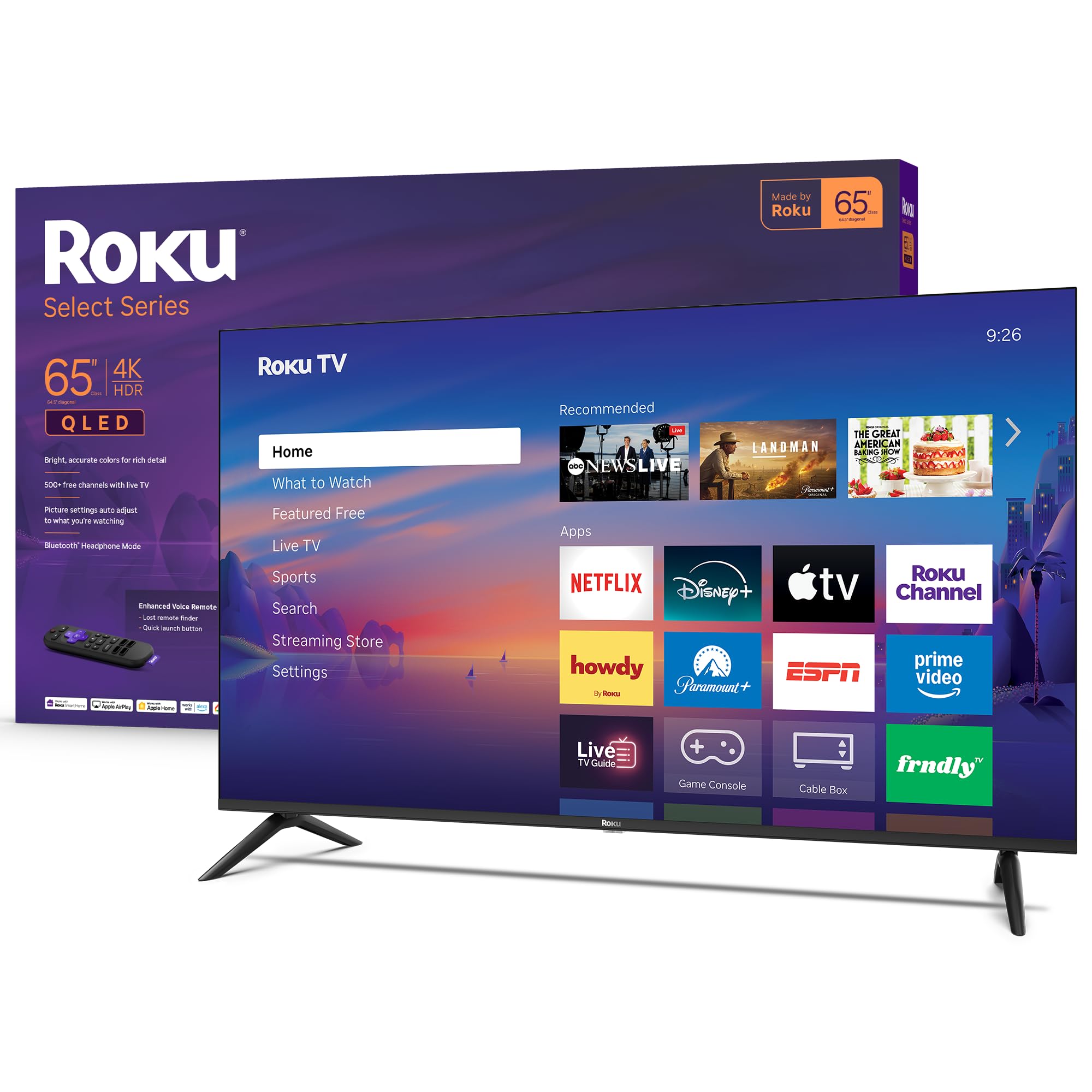
Roku’s Select Series brings QLED color and 4K resolution to a budget-friendly price point, making it an entry-level gateway to better picture quality than standard LED sets. The QLED screen and HDR10 support produce brighter, more accurate colors than similarly priced non-QLED alternatives, and the Roku Smart Picture system automatically optimizes the picture mode based on incoming content — handling SDR, HDR, and live TV signals differently.
The biggest advantage is the Roku OS, which remains the fastest and easiest smart platform to navigate. Apps launch in under two seconds, the home screen is customizable, and automatic updates ensure new apps are available without delays. The Enhanced Voice Remote supports voice search and lost remote finder. Bluetooth Headphone Mode allows private listening from the couch without disturbing others — a feature often missing from budget-tier TVs.
With a Direct LED backlight (not Mini-LED), black levels are decent but not deep — you’ll see some backlight blooming in dark scenes. The 60Hz panel and lack of VRR make it less suited for competitive gaming. However, for streaming content, live sports, and casual viewing, the Select Series delivers a reliable, user-friendly experience at a price that leaves room for a soundbar upgrade. It is the best option for buyers who prioritize software experience over hardware specs.
Why it’s great
- Fastest, most intuitive smart TV interface available
- QLED panel provides good color for the price
- Bluetooth Headphone Mode is rare at this price
Good to know
- Direct LED backlight limits black level depth
- 60Hz panel without VRR — not for competitive gaming
11. VIZIO 65-Inch V-Series (UHD LED HDR)

VIZIO’s V-Series is an entry-level 4K TV that focuses on delivering the essentials at a low entry point. The IQ Active 4K HDR Processor provides basic upscaling and picture processing, and Active Pixel Tuning makes pixel-level brightness adjustments for improved contrast. The V-Gaming Engine automatically enables Auto Game Mode to reduce input lag when a console is detected, making it surprisingly responsive for its class.
SmartCast provides access to major streaming apps like Netflix, Disney+, and YouTube, plus VIZIO’s WatchFree+ free streaming channels. Chromecast built-in and Apple AirPlay allow easy content sharing from mobile devices. The design is standard VIZIO — a black plastic chassis with simple feet — and the included remote is functional though basic.
The audio is the weak point here, with many users reporting thin sound that lacks bass and has inconsistent volume levels. A soundbar is almost mandatory for an enjoyable experience. The LED backlight is not local dimmed, so black levels in dark rooms appear gray. For the absolute lowest cost of entry into 65-inch 4K territory and for buyers who already own a soundbar and watch mostly in well-lit rooms, the V-Series works as a secondary or guest room TV. It does not compete with the Mini-LED sets above for picture quality, but it serves its role as the most affordable option.
Why it’s great
- Lowest price point for a 65-inch 4K smart TV
- Auto Game Mode provides decent responsiveness for casual gaming
- Built-in Chromecast and Apple AirPlay for easy casting
Good to know
- Weak built-in audio requires an external soundbar
- No local dimming — blacks appear gray in dark scenes
- Plastic build and basic remote feel cheap
FAQ
Is a 60Hz panel enough for watching movies and sports?
What is the difference between QLED and Mini-LED in this price range?
Does Dolby Vision IQ make a noticeable difference on a 65-inch TV?
Final Thoughts: The Verdict
For most users, the 65 inch tv under 1000 winner is the TCL 65-Inch QM7K because it combines up to 2500 Mini-LED dimming zones, a native 144Hz panel, and strong HDR performance at a price that undercuts many competitors. If you want best-in-class AI upscaling and Samsung’s vibrant Neo QLED color processing, grab the Samsung Neo QLED QN70F. And for budget-conscious buyers who refuse to compromise on smart platform fluidity and QLED color, the Roku Select Series is the smartest entry point into 65-inch 4K.