
The right 65% keyboard shrinks your desk footprint without sacrificing the arrow keys or dedicated escape key — but choosing the wrong one leaves you with rattly stabilizers, a hollow ping, and a battery that dies mid-session. This size hits the sweet spot between the cramped 60% layout and a full TKL, but the internal construction, switch quality, and wireless performance vary wildly across the sub-seventy-dollar bracket.
I’m Min — the co-founder and writer behind Gadgets Feed. After spending hundreds of hours analyzing sound-dampening foam layers, battery capacities, polling rates, and plate flex patterns across the current 65% keyboard market, I’ve separated the boards that genuinely thock from the ones that just look good in product photos.
This guide breaks down seven top contenders to help you pick the precise best 65 mechanical keyboard for your desk, your switch preference, and your wireless needs — without getting lost in marketing fluff.
How To Choose The Best 65 Mechanical Keyboard
A 65% keyboard keeps the arrow cluster and a few navigation keys while cutting the function row and numpad. The decisions that matter most are the mounting structure, the switch compatibility, the wireless protocol, and the sound dampening inside the case — not just the brand name on the front.
Gasket Mount vs Tray Mount: The Sound and Feel Difference
Gasket mount keyboards suspend the plate between silicone or poron strips, creating a bouncier, more uniform keystroke with a deeper bottom-out sound. Tray mount boards screw the plate directly into the case, which often produces a harsher, more metallic ping. Almost every enthusiast-oriented 65% board under review uses some form of gasket mounting with multiple layers of foam to kill unwanted resonance.
Battery Capacity and Wireless Latency
A 4000mAh battery can last several weeks with RGB off, while an 8000mAh pack nearly doubles that — but battery size adds weight. More important is the wireless chipset: Bluetooth 5.1 offers good range with slight latency, whereas a dedicated 2.4GHz dongle at 1000Hz polling rate delivers near-wired responsiveness for gaming. Boards that lack a 2.4GHz option are best suited for typing and office work rather than fast-paced FPS titles.
Hot-Swap Compatibility and Plate Flex
Full-key hot-swap support for both 3-pin and 5-pin switches lets you experiment with different tactile or linear options without soldering. The plate material matters too: a polycarbonate or FR4 flex-cut plate softens the bottom-out and deepens the sound, while a steel or aluminum plate adds rigidity but can feel harsh. Look for a board with at least poron foam layers and a PET sound enhancement pad if you want a creamy, thocky acoustic profile straight out of the box.
Quick Comparison
On smaller screens, swipe sideways to see the full table.
| Model | Category | Best For | Key Spec | Amazon |
|---|---|---|---|---|
| EPOMAKER x Aula F65 | Wireless | Thocky typing out of box | 4000mAh battery | Amazon |
| HyperX Alloy Origins 65 | Wired | Competitive gaming | 5052 aluminum frame | Amazon |
| Keychron K6 | Wireless | Multi-device office work | Bluetooth 5.1 / 4000mAh | Amazon |
| YUNZII AL66 | Wireless | Aluminum build with knob | 5000mAh battery | Amazon |
| YUNZII AL65 | Wireless | Full VIA customization | 8000mAh battery | Amazon |
| Razer BlackWidow V4 Mini | Wireless | Gaming with low-latency | 200hr battery / HyperSpeed | Amazon |
| IQUNIX Magi65 | Low Profile | Ultra-slim desk setup | 0.43in height / 300hr | Amazon |
In‑Depth Reviews
1. EPOMAKER x Aula F65

The F65 delivers the most satisfying thocky sound profile at its price point thanks to a five-layer dampening stack — two poron foams, an IXPE switch pad, a PET sound enhancement pad, and a bottom silicone pad — paired with a flex-cut polycarbonate plate. The Reaper switches come pre-lubed from the factory, producing a creamy bottom-out that enthusiasts often spend hours modding to achieve.
Tri-mode connectivity (Bluetooth, 2.4GHz, USB-C) with a 4000mAh battery means you can go weeks between charges with moderate RGB use. The 1000Hz polling rate over the 2.4GHz dongle keeps latency low enough for all but the most demanding competitive gaming, while the south-facing LEDs ensure compatibility with Cherry-profile keycap sets if you decide to swap the stock caps later.
Hot-swap sockets support both 3-pin and 5-pin switches, giving you a clear upgrade path when you want to experiment with different tactility. The only trade-off is the lack of a function row and volume knob, but the 67-key layout retains dedicated arrows and a full set of navigation functions through FN layers.
Why it’s great
- Five-layer dampening produces deep thock with zero ping
- Flex-cut PC plate softens bottom-out for long typing sessions
- 4000mAh battery delivers extended wireless uptime
- Full hot-swap support for 3 or 5-pin switches
Good to know
- No dedicated function row or volume knob
- Keycap legends may show minor print imperfections
2. YUNZII AL65
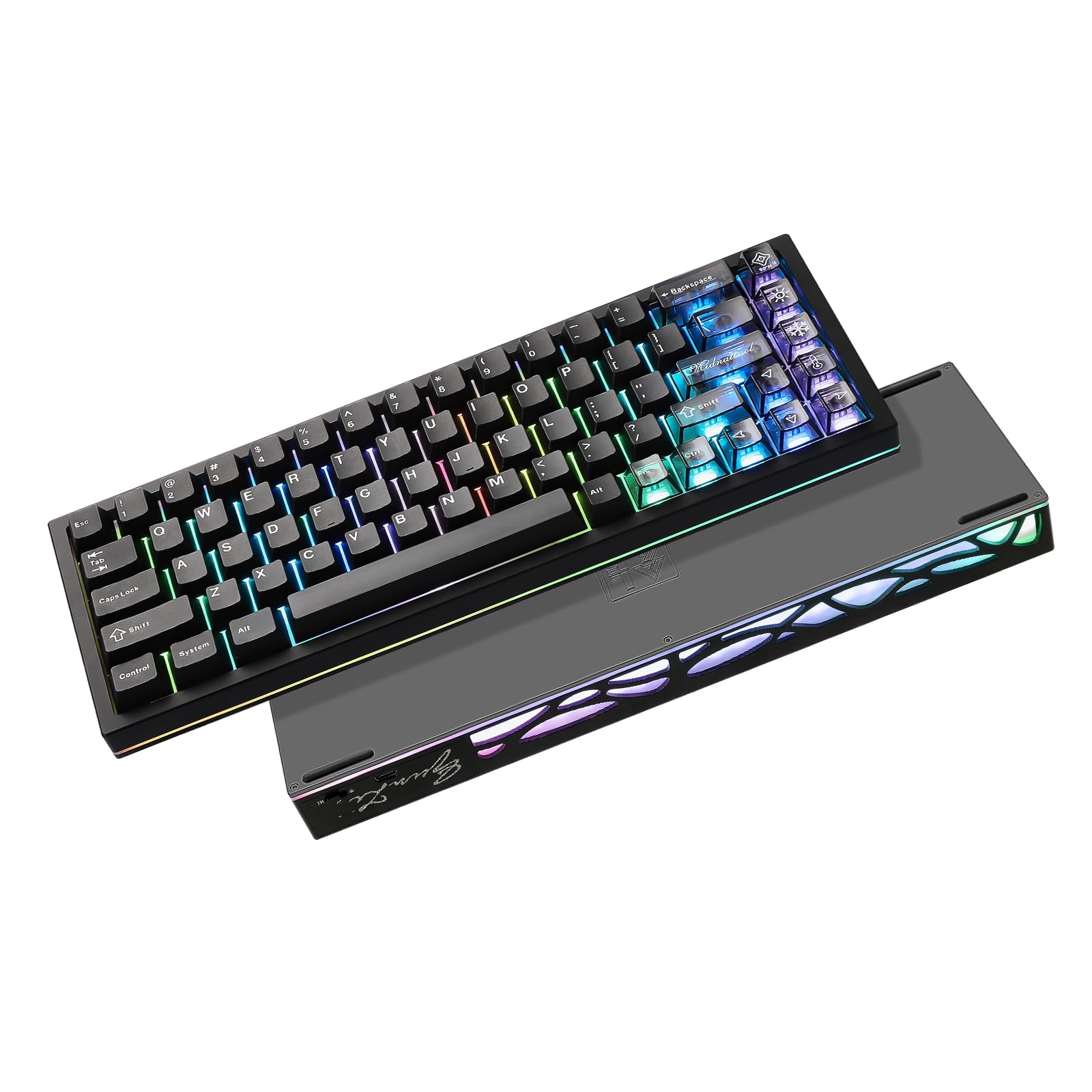
The YUNZII AL65 stands apart with a CNC-anodized aluminum chassis and a hollow side-cut design that lets 360-degree RGB glow through — a visual trick rarely seen at this price tier. The gasket-mounted FR4 plate combined with five layers of sound-dampening foam produces a clean, creamy acoustic signature with no stabilizer rattle, even before any manual modification.
The biggest differentiator here is the 8000mAh battery, the largest in this roundup, which can power weeks of mixed-use typing with the RGB on. The board supports QMK and VIA software for full key remapping, macro creation, and per-key RGB customization — no proprietary buggy app required. The 1000Hz polling rate over 2.4GHz keeps it competitive for gaming.
Hot-swap sockets accept both 3-pin and 5-pin switches, and the included transparent PC keycaps let you show off the south-facing RGB. The Milk V2 linear switches are pre-lubed, though some users may find them slightly light for heavier typing styles.
Why it’s great
- 8000mAh battery is class-leading for wireless 65% boards
- Full VIA/QMK compatibility for deep customization
- CNC aluminum build with hollow side RGB design
- Five-layer foam stack eliminates case ping
Good to know
- Hex screws require special tool for disassembly
- Included transparent keycaps feel thin compared to doubleshot PBT
3. YUNZII AL66

The AL66 brings a full aluminum CNC body and a multi-function rotary knob into the 65% form factor at a price that undercuts most metal-cased competitors. The knob cycles through RGB mode, brightness, and volume control with a 3-second press, offering physical control that the EPOMAKER F65 lacks entirely. The gasket-mounted polycarbonate plate with poron sandwich foam and PET sound pads produces a solid creamy sound with minimal metallic ring.
The 5000mAh battery sits between the 4000mAh and 8000mAh offerings, providing strong uptime for mixed wireless use. Tri-mode connectivity covers Bluetooth, 2.4GHz, and USB-C, though the 2.4GHz dongle may benefit from a USB 2.0 port to avoid occasional lag. The pre-lubed Milk linear switches feel smooth and consistent, and the hot-swap PCB supports both 3-pin and 5-pin options for future experimentation.
Build quality feels dense and premium — the board weighs enough to stay planted during intense typing sessions. However, there is no adjustable typing angle, so the fixed incline may not suit all wrist positions without an external rest.
Why it’s great
- CNC aluminum case at a mid-range price point
- Volume knob adds tactile physical control
- 5000mAh battery offers strong wireless endurance
- Pre-lubed switches and stabilizers reduce friction out of box
Good to know
- Typing angle is fixed with no adjustable feet
- Stock keycaps feel mediocre compared to aftermarket PBT sets
4. Razer BlackWidow V4 Mini HyperSpeed

Razer’s BlackWidow V4 Mini packs the company’s HyperSpeed 2.4GHz wireless technology, which delivers sub-1ms latency that matches wired gaming keyboards — a meaningful advantage for competitive players who cannot tolerate Bluetooth’s inherent lag. The 200-hour battery life (with the brightest RGB effects turned off) means you charge this board less than once a month under normal usage, and the full charge cycle takes under five hours.
The hot-swap PCB accepts both 3-pin and 5-pin switches, a rare feature for a mainstream gaming brand. The pre-loaded Razer Orange tactile switches are quieter than clicky alternatives while still offering noticeable bump feedback, and the phantom pudding keycaps maximize RGB light bleed for a vivid desk glow. The 5052 aluminum top case adds rigidity without making the board excessively heavy for a compact form factor.
The main compromises are the Razer Synapse software, which some users find bloated compared to VIA, and the cramped F-key layout that requires FN-layer combos to reach function keys. The stabilizers benefit from factory lubrication but may still develop rattle over time on a few units.
Why it’s great
- HyperSpeed wireless offers true gaming-grade latency
- 200-hour battery life is exceptional for RGB gaming boards
- Hot-swap PCB supports both 3-pin and 5-pin switches
- Phantom pudding keycaps maximize RGB brightness
Good to know
- Razer Synapse software is required for advanced customization
- F-key row is only accessible through FN-layer combos
5. IQUNIX Magi65 Low Profile
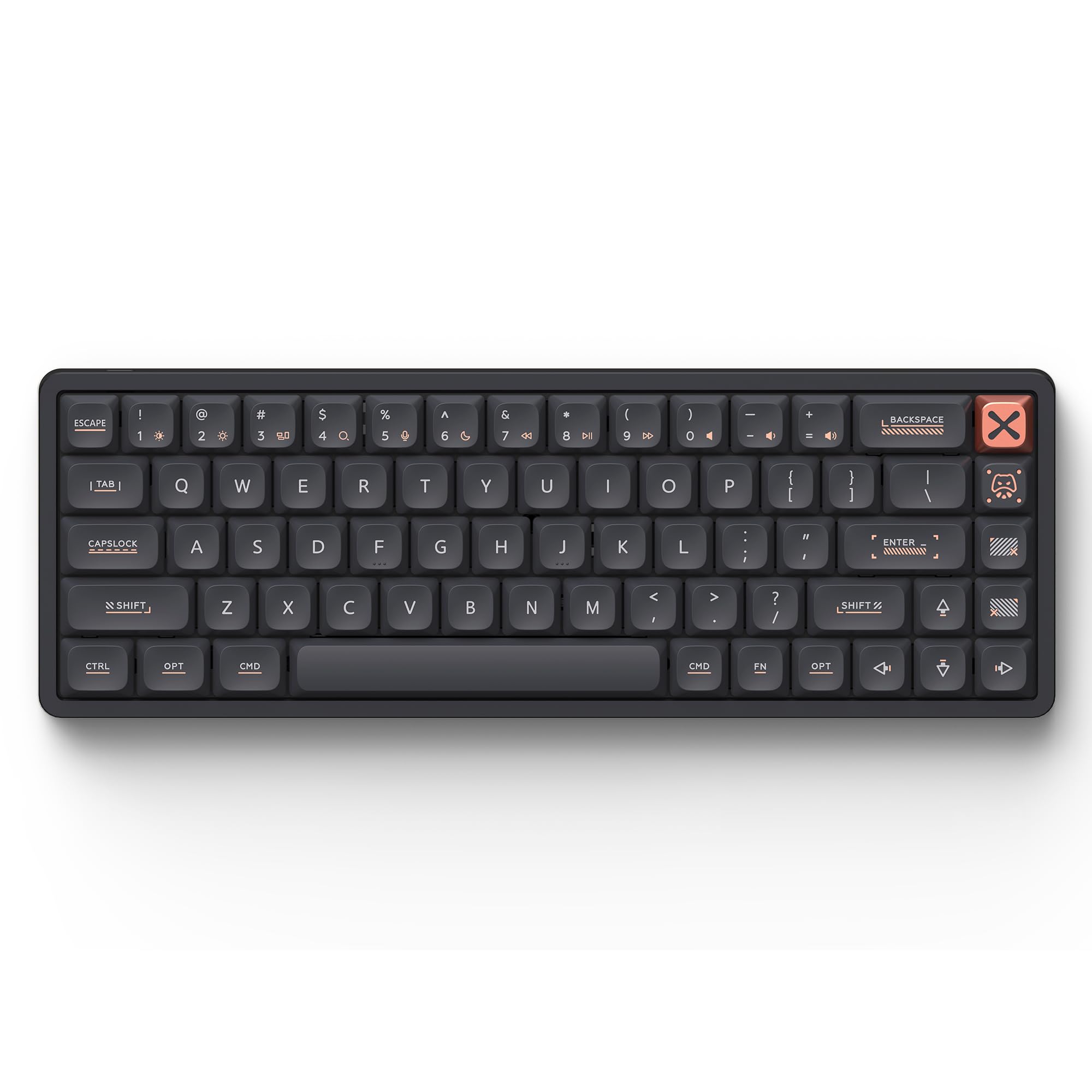
The Magi65 is the thinnest board in this comparison at just 0.43 inches, achieved through a low-profile CNC aluminum chassis and an innovative Le-tray mount that absorbs shock without adding height. The pre-lubed Gold Red linear switches actuate between 30gf and 50gf, making each keystroke feel light and precise — ideal for typists who want to minimize finger fatigue over long work sessions.
Battery endurance reaches up to 300 hours with the RGB disabled, the highest figure among the wireless options here, paired with a 3000mAh cell that balances weight and runtime. Tri-mode connectivity covers Bluetooth, 2.4GHz, and USB-C with a 1000Hz polling rate on the dongle, and VIA software support lets you remap keys and set macros without installing a separate app. The included carrying case and extra aluminum keycaps add perceived value for on-the-go users.
The six-layer foam stack and FR4 plate produce a creamy, quiet sound signature that works well in open offices. However, the low-profile design means you cannot swap in standard-height keycaps, and some units have reported stabilizer imbalance on the spacebar that may require a simple tape mod.
Why it’s great
- Ultra-slim 0.43-inch profile reduces wrist strain
- 300-hour battery life with RGB off is best-in-class
- VIA software support for custom key mapping
- Includes carrying case and extra themed keycaps
Good to know
- Low-profile switches limit keycap compatibility
- Some units may need tape mod for spacebar stabilizer
6. HyperX Alloy Origins 65

The Alloy Origins 65 prioritizes raw build integrity with a full 5052 aluminum frame and a compact footprint that leaves maximum room for mouse movement on cluttered desks. The linear Red switches are buttery smooth and relatively quiet, making the board suitable for shared spaces where loud clicky switches would be disruptive. USB-C connectivity ensures easy swapping between PC and console setups, with native compatibility for PlayStation and Xbox systems.
The doubleshot PBT keycaps resist shine and wear far better than ABS alternatives, maintaining a clean texture over years of use. RGB brightness is exceptional — the LEDs pump out vivid, true-to-spectrum colors that look especially striking when paired with pudding-style keycap upgrades. The three adjustable feet let you fine-tune the typing angle between two positions.
The trade-offs are significant: the board is not hot-swappable, so switch changes require desoldering, and the plate-mounted stabilizers exhibit noticeable rattle that benefits from a band-aid mod. The NGENUITY software is also notoriously unstable, with users reporting crashes that wipe custom lighting profiles. The lack of wireless connectivity limits this board to desktop use only.
Why it’s great
- Full aluminum frame feels premium and rigid
- Doubleshot PBT keycaps resist shine for years
- Exceptionally bright RGB with 5 brightness levels
- USB-C connection simplifies cable management
Good to know
- Not hot-swappable — switches require desoldering
- Stabilizers have noticeable lateral play out of box
- NGENUITY software crashes frequently
7. Keychron K6

The Keychron K6 remains a staple in the 65% market because of its proven Bluetooth 5.1 reliability and multi-device pairing — it can switch between up to three connected devices (phone, tablet, PC) with a single key press. The K Pro Brown switches deliver tactile bump feedback that suits typists who want confirmation on every keystroke without the noise of clicky switches. The 4000mAh battery provides up to 200 hours of use with the backlight off, enough for weeks of office work.
Included keycaps for both macOS and Windows layouts, plus a dedicated Mac function row overlay, make this the most complete out-of-box solution for Mac users who need seamless modifier key mapping. The inclined bottom frame and two-level adjustable feet provide multiple ergonomic angles. NKRO over wired mode ensures every keypress registers during fast typing, while 6KRO over Bluetooth handles everyday workloads without ghosting.
The K6 lacks a 2.4GHz wireless option, so Bluetooth is the only wireless path — this introduces a noticeable \u201820-second login delay\u2019 when waking from sleep and prevents BIOS access on boot. The plastic case does not match the acoustic dampening of gasket-mounted alternatives; the sound profile is functional but less refined than the EPOMAKER or YUNZII boards.
Why it’s great
- Reliable Bluetooth 5.1 with 3-device multi-pairing
- Mac and Windows keycaps included in box
- 4000mAh battery lasts weeks with backlight off
- K Pro Brown switches offer tactile feedback for typing
Good to know
- No 2.4GHz wireless — Bluetooth only for wireless use
- Plastic case produces less refined acoustic profile
- Backlight button easily bumped, requiring many presses to reset
FAQ
What is the difference between 60% and 65% keyboard layouts?
Can I use any mechanical switch in a hot-swap 65% keyboard?
Do I need QMK or VIA software for a 65% keyboard?
Final Thoughts: The Verdict
For most users, the best 65 mechanical keyboard winner is the EPOMAKER x Aula F65 because it delivers the deepest thocky sound profile, full hot-swap support, and reliable tri-mode wireless with a 4000mAh battery at a price that undercuts most competitors. If you want a full aluminum chassis with VIA customization and an 8000mAh battery, grab the YUNZII AL65. And for a gaming-focused 65% board with true low-latency HyperSpeed wireless and industry-leading 200-hour battery life, nothing beats the Razer BlackWidow V4 Mini.