
Settling on the right graphics card often feels like deciphering a dense spec sheet where every number matters. You are balancing resolution targets, frame rate expectations, and the increasingly heavy demands of real-time ray tracing. A mismatched GPU can leave you turning down settings months after purchase, while the right one delivers years of high-fidelity gaming.
I’m Min — the co-founder and writer behind Gadgets Feed. I spend my hours dissecting GPU architecture, comparing memory bandwidth figures, and evaluating how different card designs handle thermal loads to help you find the option that makes the most sense for your build.
This buying guide is built around solid research, real customer feedback, and direct spec analysis to deliver the definitive take on a 6670 video card that actually meets your gaming or creative needs without overpaying for features you will not use.
How To Choose The Best 6670 Video Card
Selecting a GPU in this performance tier means understanding where the real bottlenecks are for your specific use case. You are not just buying raw clock speed — you are buying memory bandwidth, thermal headroom, and feature set support. These five factors will help you narrow down the field.
VRAM Capacity and Memory Type
For 1440p high-settings gaming with ray tracing enabled, 12GB is rapidly becoming the baseline, while 16GB offers stronger future-proofing for texture-heavy titles and workstation loads. GDDR6X delivers higher bandwidth than standard GDDR6, and GDDR7 pushes that even further with faster data rates and improved power efficiency. Check the memory interface width too — a 192-bit bus is common, but 256-bit provides more headroom for memory-intensive workloads.
Cooling Solution and Card Size
A triple-fan design with a large heatsink will keep temperatures lower and allow the card to sustain its boost clock longer under load. However, these cards often measure over 12 inches long and occupy 2.5 to 3 slots. Measure your case clearance before buying. Compact dual-fan options exist for small form factor builds, but they may run warmer or louder under sustained gaming sessions.
Ray Tracing and Upscaling Technology
NVIDIA’s DLSS 3 and DLSS 4 offer significant frame rate boosts in supported titles by using AI to generate additional frames. The 40-series cards support DLSS 3 with Frame Generation, while the newer 50-series adds DLSS 4 with Multi Frame Generation for even larger gains. If you play ray-traced titles regularly, the architecture generation matters more than raw clock speed alone.
Power Supply Requirements
Most cards in this bracket recommend a 650W to 750W power supply. Pay attention to the required PCIe power connectors — some newer cards use a single 12VHPWR connector, while others use two or three 8-pin connectors. Check your PSU’s available cables and total wattage to avoid instability or the need for a separate upgrade.
PCIe Generation and Interface
All modern GPUs in this tier use PCIe 4.0 x16, which provides plenty of bandwidth for current games. PCIe 5.0 cards are backward compatible with older slots, but you will not see a meaningful difference in gaming performance. The interface matters more for users running multiple GPUs for compute workloads or needing maximum bandwidth for creative software.
Quick Comparison
On smaller screens, swipe sideways to see the full table.
| Model | Category | Best For | Key Spec | Amazon |
|---|---|---|---|---|
| MSI RTX 5070 12G Gaming Trio OC | Premium | High-end 1440p / Entry 4K | 12GB GDDR7 / 2625 MHz Boost | Amazon |
| ASUS Prime RTX 5070 OC | Premium | SFF-Ready Builds / 1440p | 12GB GDDR7 / SFF-Ready / Dual BIOS | Amazon |
| ZOTAC RTX 4070 Super Twin Edge | Mid-Range | 1440p High FPS / Compact | 12GB GDDR6X / 2475 MHz Boost | Amazon |
| PNY RTX 4070 Super Verto OC | Mid-Range | 1440p Gaming / ITX Builds | 12GB GDDR6X / 2490 MHz Boost / 2-Slot | Amazon |
| Gigabyte RTX 4070 Windforce OC | Mid-Range | 1440p Ultra / Power Efficiency | 12GB GDDR6X / 2490 MHz Boost | Amazon |
| MSI RTX 4070 Ventus 3X OC | Mid-Range | Budget 1440p / Quiet Operation | 12GB GDDR6X / 2520 MHz Boost / 200W TDP | Amazon |
| PNY RTX 5070 Ti Epic-X ARGB | Premium | Ultrawide 3440×1440 / Workstation | 16GB GDDR7 / 2640 MHz Boost / PCIe 5.0 | Amazon |
| MSI RTX 5070 Ti Gaming Trio OC White | Premium | White Theme Builds / High-End Gaming | 16GB GDDR7 / 2580 MHz Boost / TRI FROZR 4 | Amazon |
| ZOTAC RTX 4070 Ti Trinity OC | Premium | High-End 1440p / GPU Support Bracket | 12GB GDDR6X / 2625 MHz Boost / RGB | Amazon |
| Gigabyte RTX 4070 Ti Super Windforce | Premium | 4K Entry / 256-bit Memory Bus | 16GB GDDR6X / 2625 MHz Boost / 256-bit | Amazon |
| ASUS TUF RTX 4070 Ti Super OG OC | Premium | 4K Gaming / Maximum Airflow | 16GB GDDR6X / 2670 MHz Boost / TUF Build | Amazon |
In‑Depth Reviews
1. MSI RTX 5070 12G Gaming Trio OC

The MSI RTX 5070 Gaming Trio OC lands firmly as the best balanced pick in this lineup. It pairs the new NVIDIA Blackwell architecture and DLSS 4 with a TRI FROZR 4 thermal design that uses seven-blade Stormforce fans and a nickel-plated copper baseplate. The 2625 MHz boost clock out of the box gives you substantial overclocking headroom without touching voltage settings.
Real-world 1440p performance is excellent — reviewers report smooth high-settings gameplay across demanding titles, with the triple-fan cooler remaining nearly silent even during extended sessions. The card runs cool enough that you can push for higher refresh rates without worrying about thermal throttling. The 12GB GDDR7 memory over a 192-bit bus provides ample bandwidth for today’s most texture-heavy games.
Installation is straightforward with no reported clearance issues for standard mid-tower cases. The build quality feels premium, with a rigid backplate and robust PCB that resists sag. A single 16-pin power connector keeps cable management clean. This card hits the sweet spot for anyone wanting modern features without jumping to the highest price tier.
Why it’s great
- DLSS 4 and Blackwell architecture for future-proofed gaming
- Exceptional thermal performance with quiet triple-fan cooling
- Strong overclocking potential with premium PCB components
Good to know
- Requires a 650W PSU minimum with a 12VHPWR connector
- 12GB VRAM may feel limited for 4K ultra texture packs
2. PNY RTX 5070 Ti Epic-X ARGB OC
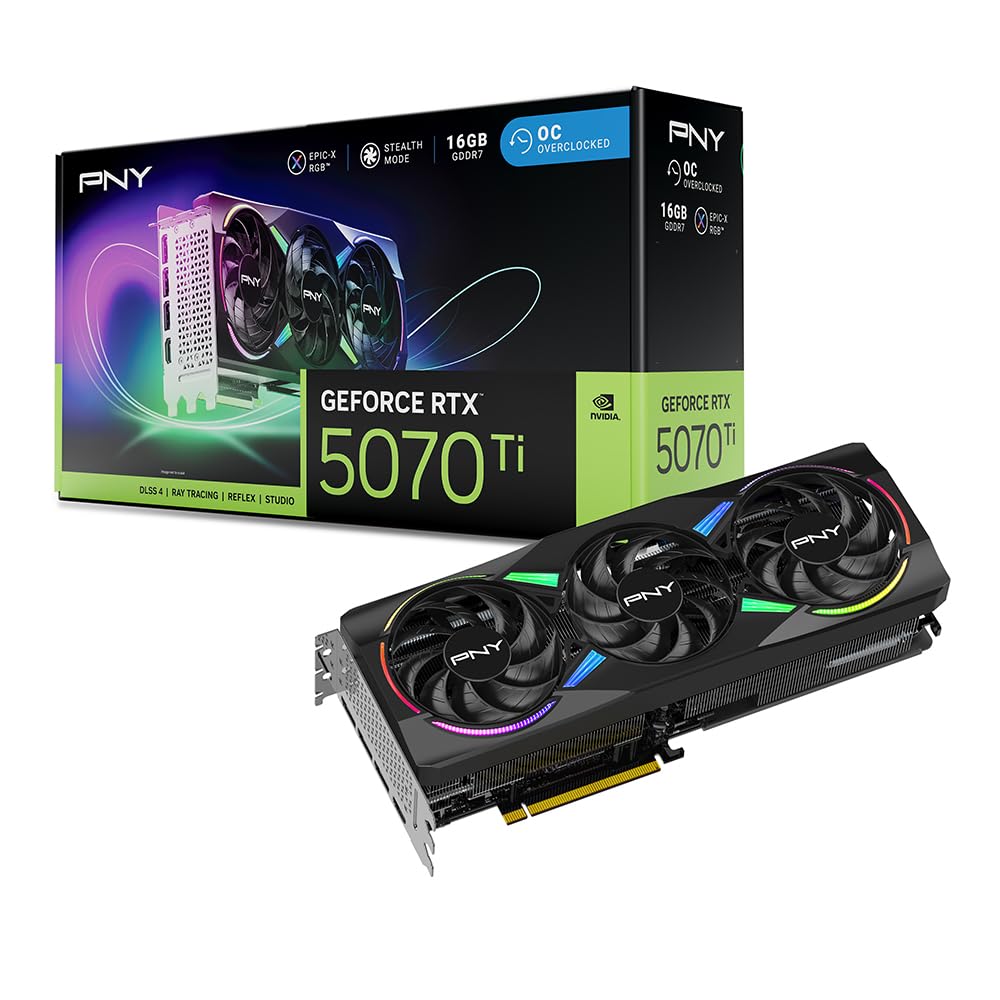
The PNY RTX 5070 Ti Epic-X ARGB OC delivers genuine high-end performance with 16GB of GDDR7 memory across a full 256-bit bus. The boost clock reaches 2640 MHz, and the triple-fan cooler with a substantial heatsink keeps temperatures well in check even under prolonged 100% load. Reviewers report no coil whine and quiet fan operation, which is rare for a card in this performance class.
At 3440×1440 ultrawide resolution, this card demolishes max settings with DLSS 4 and Multi Frame Generation enabled, easily clearing 100 FPS in the latest titles. The 16GB VRAM buffer provides enough headroom for heavy ray-traced scenes and texture mods. For workstation use, local LLM inference and GPU-accelerated rendering benefit directly from the larger memory pool and higher bandwidth.
The card is large — about 12 inches long and 3 slots thick — so measure your case before buying. The ARGB lighting is bright and customizable, and the build quality feels robust with minimal PCB sag thanks to the metal backplate. Power draw maxes out around 300W, requiring a 750W PSU with three 8-pin connectors or a 12VHPWR adapter.
Why it’s great
- 16GB GDDR7 on a 256-bit bus provides exceptional memory bandwidth
- Runs cool and quiet at full load with no coil whine
- Excellent for both high-end gaming and GPU compute workloads
Good to know
- Large triple-slot card may not fit in smaller cases
- High power draw requires a robust PSU with multiple connectors
3. ASUS Prime RTX 5070 OC Edition

The ASUS Prime RTX 5070 OC Edition is specifically designed to fit SFF-Ready enclosures while delivering full Blackwell architecture performance. The 2.5-slot design with axial-tech fans and a phase-change GPU thermal pad keeps the card running efficiently in tighter spaces. The dual BIOS feature lets you switch between performance and quiet modes without software.
Performance at 1440p is strong — the 12GB GDDR7 memory handles high-settings gaming with ray tracing enabled, and DLSS 4 provides noticeable frame rate boosts in supported titles. The card supports PCIe 5.0, giving it full bandwidth on the latest motherboards while remaining backward compatible with PCIe 4.0. The 8K output capability ensures long-term relevance for high-resolution displays.
Installation is straightforward for a standard mid-tower, but the 12-inch length may be tight in some compact cases — always measure your GPU clearance. A 750W PSU is recommended. Reviewers note the card runs quietly even under load, with no major noise spikes. This is an excellent choice if you are building a smaller system and want current-gen features.
Why it’s great
- SFF-Ready design fits compact builds without sacrificing performance
- Dual BIOS allows switching between performance and quiet modes
- PCIe 5.0 support for maximum bandwidth with newer motherboards
Good to know
- 12-inch length still requires careful case selection for SFF builds
- 12GB VRAM may limit 4K ultra settings in future titles
4. MSI RTX 5070 Ti Gaming Trio OC White

The MSI RTX 5070 Ti Gaming Trio OC White stands out as the best option for all-white themed PC builds, combining 16GB of GDDR7 memory with the TRI FROZR 4 thermal system. The boost clock hits 2580 MHz, and the Stormforce fans with claw-textured blades move significant airflow while staying quiet. The nickel-plated copper baseplate efficiently captures heat from both the GPU die and memory modules.
Performance at 1440p and entry-level 4K is outstanding — the 256-bit memory bus provides enough bandwidth to feed the GPU in demanding ray-traced scenes. DLSS 4 with Multi Frame Generation pushes frame rates significantly higher in supported titles. The white aesthetic is consistent across the shroud, backplate, and subtle RGB accents, making it a clean fit for white-themed builds.
Installation is typical for a large triple-fan card — you will need clearance for the length and width. Some initial setup reports mention needing a driver install and BIOS update to get display output working, but once running, the card performs flawlessly. The power draw is reasonable for its class, and the cooler keeps temperatures well below 70°C even under sustained gaming loads.
Why it’s great
- All-white design is perfect for themed builds without performance compromise
- 16GB GDDR7 over a 256-bit bus provides excellent memory bandwidth
- Advanced TRI FROZR 4 cooling keeps noise levels low under load
Good to know
- Initial setup may require driver installation and BIOS updates
- Premium pricing reflects the white aesthetic and high-end specs
5. ZOTAC RTX 4070 Super Twin Edge

The ZOTAC RTX 4070 Super Twin Edge delivers excellent 1440p performance in a compact form factor that fits most SFF cases. The 2475 MHz boost clock and 12GB of GDDR6X memory over a 192-bit bus handle high-settings gaming with ease, and DLSS 3 provides solid frame generation in supported titles. The IceStorm 2.0 cooling system with two 90mm fans and FREEZE Fan Stop keeps noise levels down during lighter workloads.
Real-world performance is impressive — reviewers report 80-240 FPS at 1440p max settings depending on the title, making this card a strong contender for high-refresh-rate monitors. The Spectra RGB lighting adds visual flair without being overbearing. The compact 9.2-inch length means it fits comfortably in most cases without bumping into drive cages or front fans.
Power efficiency is a highlight — the card draws less power than the 4070 Ti while providing comparable performance in many scenarios. The metal backplate provides structural rigidity and helps with passive heat dissipation. The included 12VHPWR adapter requires two 8-pin connections. This is a smart pick if you prioritize frame rate at 1440p over 4K ambition.
Why it’s great
- Compact 9.2-inch design fits smaller cases and SFF builds
- Excellent 1440p performance with DLSS 3 support
- Power-efficient operation keeps heat and noise low
Good to know
- 12GB VRAM may limit performance in future high-end titles
- Dual-fan cooler runs audible under sustained full load
6. PNY RTX 4070 Super Verto OC Dual Fan

The PNY RTX 4070 Super Verto OC Dual Fan offers a refreshingly compact 2-slot design that fits comfortably in mini ITX cases. The 2490 MHz boost clock and 7168 CUDA cores provide generous performance for 1440p gaming, and the 12GB GDDR6X memory delivers up to 504 GB/s of bandwidth. The dual-fan cooler keeps the card running around 56°C under load at just 50% fan speed.
Gaming performance is strong — reviewers report around 120 FPS at 1440p max settings in demanding titles with DLSS 3 enabled. The card is a massive upgrade from previous generation models like the RTX 3070, offering significant gains in both raw performance and power efficiency. The 220W power draw means it works well with lower-wattage PSUs, and the compact size makes installation easy in cramped spaces.
The build quality is solid for a dual-fan card, with a metal backplate and a clean aesthetic. The deep-set 16-pin power connector requires about 1.5 inches of clearance, so check your side panel clearance. This card is an ideal choice for anyone building a small form factor system that still wants current-gen performance without the bulk of a triple-fan cooler.
Why it’s great
- True 2-slot design fits in compact ITX cases
- Low 220W power draw works with smaller PSUs
- Excellent thermal performance with quiet operation
Good to know
- Deep-set power connector needs careful cable routing
- Dual-fan cooler has less thermal headroom than triple-fan designs
7. Gigabyte RTX 4070 Windforce OC 12G
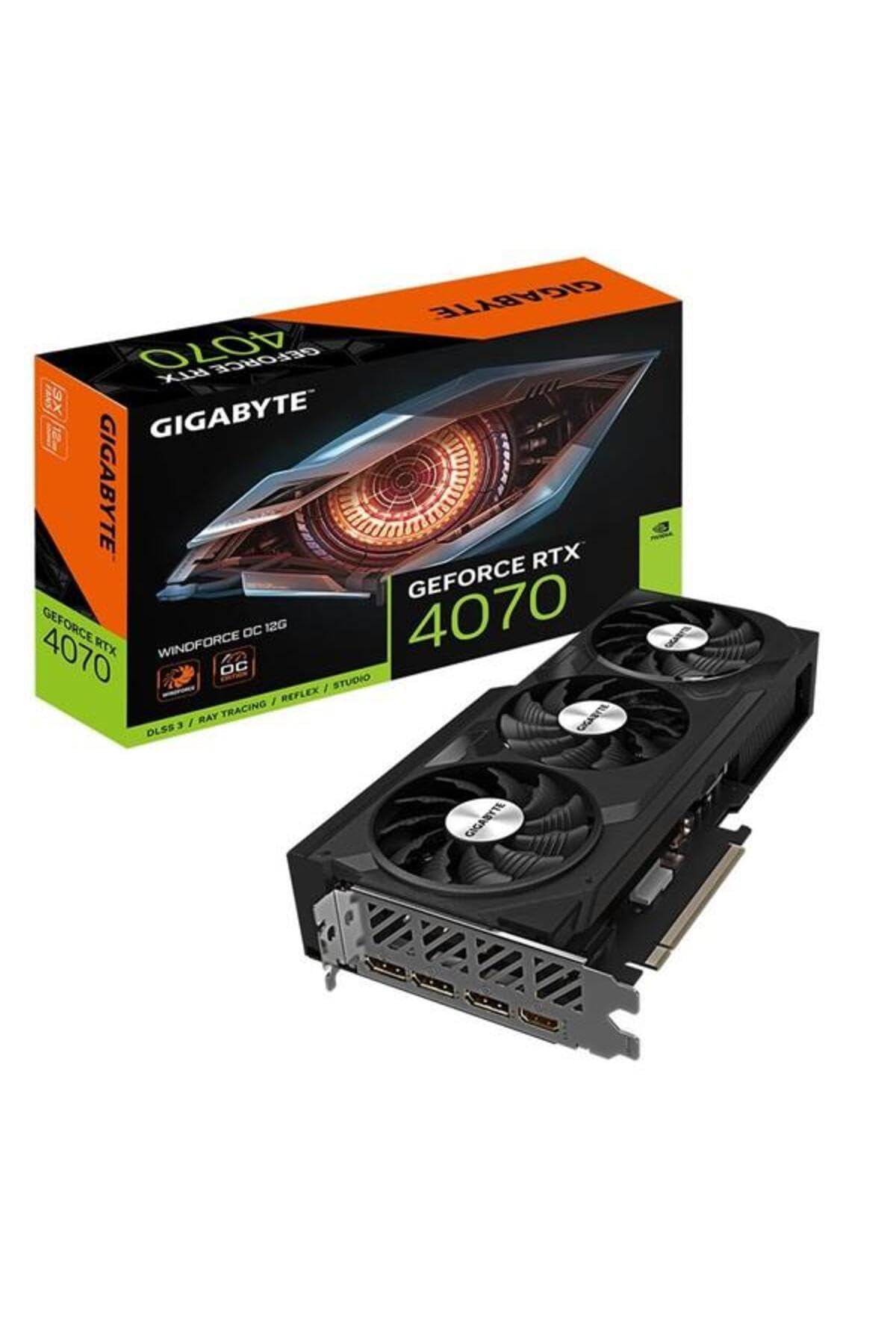
The Gigabyte RTX 4070 Windforce OC is a solid mid-range pick that balances performance, power efficiency, and price. The 2490 MHz boost clock and 12GB of GDDR6X memory provide excellent 1440p gaming performance, with reviewers reporting 100-140 FPS at max settings in most titles. The triple 80mm Windforce fans with alternate spinning and graphene nano lubricant maintain quiet operation even under load.
Power efficiency is a standout feature — the card uses significantly less power than previous generation equivalents, making it a great drop-in upgrade for systems with 550W to 650W PSUs. The compact 10.28-inch length fits comfortably in most cases, and the metal backplate provides structural support. DLSS 3 with Frame Generation provides noticeable performance uplift in supported titles.
Thermal performance is excellent, with average temperatures in the 55-60°C range under gaming load. The card measures 2.5 slots thick, so it is manageable in most standard builds. I/O includes three DisplayPort 1.4a ports and one HDMI 2.1a output, supporting up to 8K resolution. This is a reliable and well-rounded card for anyone looking to max out 1440p gaming.
Why it’s great
- Excellent power efficiency with low operating temperatures
- Triple-fan Windforce cooling runs quietly under load
- Compact size fits most cases without clearance issues
Good to know
- 12GB VRAM may not be enough for 4K ultra ray tracing
- No RGB lighting for users wanting aesthetic features
8. MSI RTX 4070 Ventus 3X 12G OC

The MSI RTX 4070 Ventus 3X 12G OC delivers strong 1440p performance with an impressively low 200W TDP, making it one of the most power-efficient cards in its class. The 2520 MHz extreme clock is backed by Torx Fan 4.0 technology, and the triple-fan cooler keeps temperatures well under 60°C at stock settings.
Gaming performance is excellent for 1440p high-refresh setups — reviewers report stable frame rates with DLSS 3 and ray tracing enabled. The 12GB GDDR6X memory is sufficient for current titles at high settings, and the single 8-pin power connector makes it an easy drop-in upgrade for older systems. The card runs extremely quietly, with fans rarely exceeding 30% speed during gaming.
The design is clean and understated with no RGB lighting, which suits users who prefer a stealthy build. The 12.1-inch length fits in most mid-tower cases, though it may be tight in smaller enclosures. The lack of RGB keeps the cost down, and the build quality feels solid for a mid-range card. This is a smart choice for performance-focused builders who prioritize efficiency and quiet operation.
Why it’s great
- Excellent power efficiency at 200W TDP with undervolt potential
- Runs cool and nearly silent under gaming loads
- Single 8-pin power connector simplifies installation
Good to know
- No RGB lighting for users wanting customizable aesthetics
- 12.1-inch length may not fit all smaller cases
9. ZOTAC RTX 4070 Ti Trinity OC

The ZOTAC RTX 4070 Ti Trinity OC pushes performance higher with a 2625 MHz boost clock and the full Ada Lovelace architecture. The IceStorm 2.0 cooling system uses three 90mm fans with FREEZE Fan Stop technology, keeping the card quiet during lighter use. The Spectra 2.0 ARGB lighting adds visual customization, and the included GPU support stand prevents PCB sag over time.
Gaming performance at 1440p is outstanding — reviewers report over 120 FPS in competitive titles at max settings and around 100 FPS in ray-traced heavy games like Cyberpunk 2077. The 12GB GDDR6X memory provides enough bandwidth for current titles, and DLSS 3 with Frame Generation provides solid uplift. The card runs at a peak of 72°C under load, with fans remaining quiet throughout.
The large 12.1-inch length and triple-fan setup require a case with good clearance. The 12VHPWR connector is a bit fragile, so using the included support bracket and avoiding sharp cable bends is important. Power draw is higher than the standard 4070 at around 285W, so a 750W PSU is recommended. This card offers a solid step up in performance for demanding 1440p gamers.
Why it’s great
- High boost clock provides strong performance uplift over base 4070
- Included GPU support stand prevents PCB sag in large cases
- Spectra 2.0 ARGB lighting allows customizable aesthetics
Good to know
- 12VHPWR connector is fragile and requires careful cable routing
- Large card may not fit in compact or SFF cases
10. Gigabyte RTX 4070 Ti Super Windforce OC

The Gigabyte RTX 4070 Ti Super Windforce OC brings 16GB of GDDR6X memory across a full 256-bit memory bus, providing enough bandwidth for 4K gaming with DLSS 3.5 enabled. The 2625 MHz boost clock leverages 4th generation Tensor Cores and 3rd generation RT Cores for significant performance gains in ray-traced titles. The Windforce cooling system with three fans keeps temperatures well managed.
At 1440p, this card is overkill for most titles, providing extremely high frame rates at max settings. At 4K, it handles demanding games well with DLSS set to Quality or Balanced mode. The 16GB VRAM is a meaningful step up from 12GB models, providing more headroom for texture-heavy mods and high-resolution texture packs. The card measures 10.28 inches long, fitting in most standard cases.
Power draw is around 285W, requiring a 700W PSU. The build quality is solid with a metal backplate and a clean aesthetic. Reviewers report flawless performance over extended use periods with no stability issues. This card is an excellent choice for users who want to step into 4K gaming without jumping to the top price tier, and the higher memory capacity ensures it stays relevant longer.
Why it’s great
- 16GB GDDR6X on a 256-bit bus provides excellent memory bandwidth
- Capable of 4K gaming with DLSS 3.5 enabled
- Compact 10.28-inch length fits most standard cases
Good to know
- Limited availability at reasonable pricing in some regions
- Requires a 700W PSU to handle peak power draw
11. ASUS TUF RTX 4070 Ti Super OG OC

The ASUS TUF Gaming RTX 4070 Ti Super OG OC Edition sits at the top of this lineup with the highest boost clock at 2670 MHz and 16GB of GDDR6X memory. The axial-tech fans are scaled up to deliver 23 percent more airflow than standard designs, and the card uses a phase-change GPU thermal pad for optimal heat transfer. The TUF build quality means military-grade components and a rigid metal backplate.
Performance at 4K with ray tracing is genuinely impressive — reviewers report smooth gameplay in Cyberpunk 2077 with ray tracing overdrive enabled. The 16GB VRAM buffer provides enough memory for the largest texture packs and the most demanding creative workloads. Temperatures stay remarkably low, remaining under 60°C even under sustained loads, which is excellent for a card at this performance level.
The card weighs 3.5 pounds and measures over 12 inches long, so it requires a sturdy case with proper support. The build quality is exceptional, with a thick backplate that resists sag effectively. Power draw is higher than the standard 4070 Ti Super, requiring a 750W PSU. This card is the definitive choice for users who want maximum 4K performance with the proven reliability of the TUF series.
Why it’s great
- Highest boost clock in the lineup at 2670 MHz for maximum performance
- Superior axial-tech fans deliver 23 percent more airflow
- Runs under 60°C under sustained 4K gaming loads
Good to know
- Heavy 3.5-pound card requires adequate case support
- High power draw requires a 750W PSU with sufficient connectors
FAQ
Is 12GB of VRAM enough for 1440p gaming in 2024?
What is the difference between DLSS 3 and DLSS 4?
Will a PCIe 5.0 GPU work in a PCIe 4.0 motherboard?
How do I know if my power supply can handle a new graphics card?
Is the ZOTAC RTX 4070 Twin Edge good for small form factor builds?
Final Thoughts: The Verdict
For most users, the 6670 video card winner is the MSI RTX 5070 Gaming Trio OC because it balances Blackwell architecture, DLSS 4, and excellent cooling at a reasonable position in the market. If you want the highest memory capacity and bandwidth for demanding workloads, grab the PNY RTX 5070 Ti Epic-X ARGB. And for compact SFF builds, nothing beats the ASUS Prime RTX 5070 OC Edition.