
Our readers keep the lights on and my morning glass full of iced black tea. As an Amazon Associate, I earn from qualifying purchases.
Specs are compiled from manufacturer listings and verified buyer reviews and can change over time — please confirm the key details on the product page before buying.
If you are grounding a panel, bonding a generator frame, or running a battery bank, the wire you pick decides whether the job passes inspection and stays safe for years. This list covers five 6 AWG ground and power wires built for exactly that work, and each one is a real, currently sold product with a genuine track record behind it.
I’m Min — the founder and writer behind Gadgets Feed. This guide is built by comparing the manufacturers’ published specifications and the patterns across verified customer reviews, so you get each pick’s real strengths and trade-offs instead of marketing spin.
One honest note before you shop: not every pick here is cut at exactly 25 feet — a few are sold in the nearest standard length or as a paired black-and-red set that serves the same grounding job. That said, here is how to shop smart for the 6awg 25 feet ground wire.
Our Picks at a Glance
How To Choose The Best 6AWG Ground Wire
A 6 AWG conductor is thick enough to carry serious current and stiff enough that the wrong jacket will fight you every inch of the way through a conduit run. Here is what actually separates a good roll from a frustrating one.
Strand Count And Flexibility
Strand count is the number of thin copper wires twisted together to make up the conductor, and it is the single biggest factor in how the cable bends. A high strand count — like the 260 strands in the TEMCo cable — lets the wire flex like rope instead of a stiff rod. That matters when you are pulling through conduit with 90-degree bends, routing around an engine bay, or tucking wire into tight battery compartments. A low strand count makes the same gauge feel heavy and uncooperative.
Insulation Type And What It Survives
The jacket is the protective layer wrapped around the copper. EPDM (a synthetic rubber known for staying flexible in heat and cold) shrugs off abrasion, oil, and moisture. PA6 nylon over PVC (a harder plastic sheath that resists friction) slides more easily through conduit and holds up to heat. Both are fine choices depending on where the wire lives — EPDM for engine bays and outdoor runs, nylon-jacketed THHN for indoor conduit work.
Voltage Rating And Temperature Range
The voltage rating tells you the maximum electrical pressure the insulation can safely handle. Every cable here is rated to 600 volts, which comfortably covers typical residential, solar, and automotive use. Temperature range matters too — a wire rated from -50°C to +105°C (roughly -58°F to +221°F) stays usable in a freezing garage or next to a hot engine without cracking or softening.
Quick Comparison
| Model | Best For | Gauge | Length | Voltage Rating | Amazon |
|---|---|---|---|---|---|
| THHN Wire 6 Gauge 25 FT Stranded Copper Wire, Black★ Best Overall | Conduit grounding runs | 6 AWG | 25 Feet | 600V | Amazon |
| TEMCo 6 Gauge AWG 25 Ft Flexible Pure Copper Welding CableTop Performer | Solar and battery banks | 6 AWG | 25 Ft | 600 volts | Amazon |
| WindyNation 6 Gauge 6 AWG 25 Feet Welding Battery Cable | Winch and ATV wiring | 6 | 25 Feet | 600 volts | Amazon |
| EWCS 6 Gauge Extra Flexible Welding Cable 600 Volt, Black, 25 Feet | Alternator and chassis grounding | 6 | 25 Feet | 600 Volt | Amazon |
| YDDECW 6 Gauge Wire 25 Feet, Red and Black Oxygen Free Stranded | Paired red-and-black solar runs | 6 AWG | 25 Feet each color | 600 Volts | Amazon |
In‑Depth Reviews
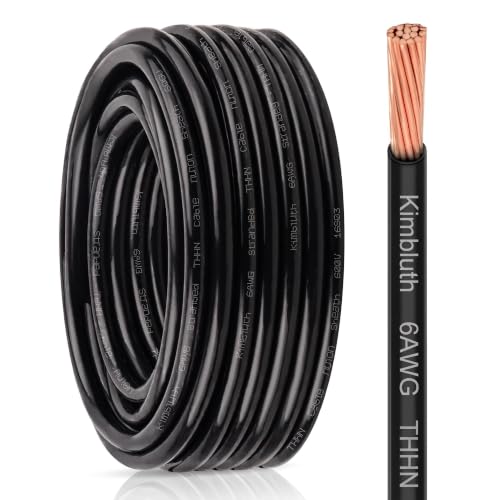
1. THHN Wire 6 Gauge 25 FT Stranded Copper Wire, Black
Our pick — over 4.5★ from 500+ verified ratings; the strongest balance of quality and price.
A PA6 nylon jacket over PVC slides through conduit bends with minimal friction.
For anyone pulling a grounding conductor through conduit, this is the wire to beat. It is a 6 AWG stranded copper conductor jacketed in PA6 nylon over PVC, and that nylon skin is what gives it a slick, low-friction surface. In plain terms, the wire slides through pipe instead of snagging on it. With 10 strands and a 600V rating, it handles residential, CNC, lighting, and automotive grounding work while running cooler than a plain plastic jacket would.
You get wire that bends true through real routing, owners say. One buyer reports a 55-foot conduit pull through multiple bends and offsets: the wire stayed true to its gauge at the ferrules (the metal ends that clamp the wire) and came in with generous length. The only note: it does not arrive on a spool. That is a fair, minor gripe. Coiled wire just means you straighten it yourself instead of feeding from a reel.
The 90°C temperature rating and flame-retardant jacket make this a sensible pick for ground circuits that sit near heat sources or run in wet and dry environments alike. Pure bare copper is used throughout to reduce the impact of oxidation on the conductor over time. For indoor conduit grounding, its slick nylon jacket and 600V, 90°C rating make it the best all-around pick here.
Where This Wire Wins
- Slick PA6 nylon jacket pulls cleanly through conduit with multiple bends.
- 600V rating with a flame-retardant jacket for safe ground runs.
- Rated to 90°C so it holds up near heat sources and in wet or dry spaces.
- Pure bare copper resists oxidation better than alloy conductor.
Worth Knowing
- Arrives coiled, not on a spool — you straighten it yourself before threading it.
- Only 10 strands, so it is stiffer than the fine-strand welding cables here.
Best fit: Anyone running a grounding conductor through indoor conduit who wants a smooth, low-friction pull.
Think twice if: You need maximum flexibility for an engine bay or battery compartment — the fine-strand welding cables flex more easily.
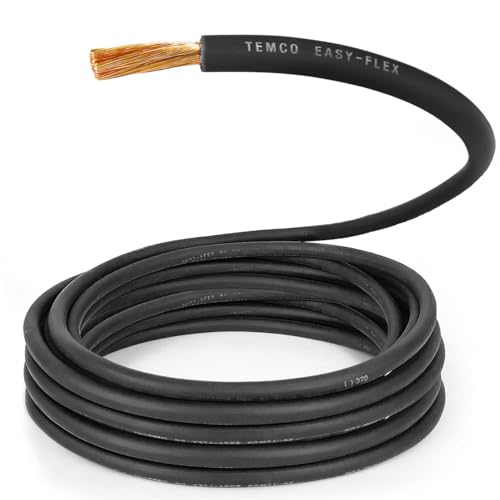
2. TEMCo 6 Gauge AWG 25 Ft Flexible Pure Copper Welding Cable
260 fine strands of oxygen-free copper bend like rope, and the EPDM jacket resists oil, water, and abrasion.
Where the THHN wire wins on conduit glide, this one wins on bend. The conductor is built from 260 fine strands of annealed oxygen-free copper (copper with oxygen removed so it bends without cracking), versus the 10 strands in the THHN pick — a dramatically higher count that lets the cable curve through tight spaces a stiff wire would never manage. The EPDM rubber jacket (a flexible synthetic rubber that stays soft when cold and holds up when hot) shrugs off cuts, tears, water, oil, grease, and flame. It is rated for 115 max amps and up to 600 volts, so it can handle heavy loads like a 440-watt solar panel array.
The flexibility is what wins people over — it is the single trait this cable is praised for above everything else. The jacket feels soft and supple yet refuses to snag or ding the way harder plastic insulation does, and the copper itself looks pure and clean. One buyer even notes the annealed copper is about 2.5% more resistive than hard-drawn, and still recommends it — the trade is worth it for the bendability. A fair heads-up: one buyer found the bulk shrink-wrap packaging awkward and had to warm the coil in the sun to unravel the conductors cleanly. Worth knowing, not a reason to skip it.
With a temperature range spanning -50°C to +105°C, it is at home under a truck hood, in a solar array, or on an RV battery bank. The 0.303-inch nominal outer diameter and rugged jacket make it a natural choice for battery and starter cables, winch leads, and solar DC systems, not just grounding. Made in the USA on top of all that.
What Stands Out: The 260-strand oxygen-free copper is far more flexible than the low-strand THHN wire, so it bends around corners and through tight compartments with far less effort.
The One Trade-Off: The two conductors can arrive shrink-wrapped together, which can be fiddly to unravel — plan to warm and recoil them separately.
Reach for it when: You need a flexible cable for solar, RV, or automotive battery runs where stiffer wire would be a hassle.
Not the pick for: Someone who wants a wire already on a spool and just needs to feed it straight into conduit.
3. WindyNation 6 Gauge 6 AWG 25 Feet Welding Battery Cable

Battery banks, winch leads, ATV cables, and solar runs all work on one 25-foot roll.
This is the pick for someone whose project has nothing to do with welding. The high strand count paired with a high-grade EPDM rubber jacket makes it deeply flexible, and the jacket resists tears, cuts, abrasion, water, moisture, and oil solvents. It is rated up to 600 volts across -50°C to +105°C. The copper is fully annealed to ASTM standards, made in the USA, and complies with SAE J1127, IEC, and RoHS — three marks that tell you the cable was built to a published spec rather than a guess.
What buyers keep coming back to is how broadly it works. The versatility angle is the thing this cable is praised for most — buyers report it carrying real loads and holding up under demanding installs, with flexibility and value rounding out the top three strengths. A buyer assembling a 2s 4p bank of eight 12-volt 100ah lithium batteries for an off-grid solar setup says it crimped into secure, clean lugs and was exactly as described. Others report using it to replace an ATV battery cable that matched the factory part, with the rubber jacket shrugging off engine heat and negligible voltage drop even on cold mornings.
At 25 feet there is plenty of slack for most jobs, and if your run is longer than planned, having extra length beats coming up short. The consistent theme across reviews is simple: pure copper, no filler, and enough leftover length to use it again on the next project when more is needed.
Strong Points
- EPDM jacket resists tears, cuts, abrasion, water, and oil solvents.
- Fully annealed copper built to ASTM standards, IEC and RoHS compliant.
- Handles battery, winch, ATV, and solar loads with negligible voltage drop reported.
Small Caveats
- The listing points you to a photo for the detailed amperage and stranding chart rather than printing it.
- Six-awg copper this thick wants a proper crimping tool to terminate cleanly.
Pick it for: Mixed-use wiring — battery banks, winch leads, ATV replacements, and solar runs all handled by one roll.
Look elsewhere if: You only need a short indoor ground run and want the slickest possible conduit pull — the nylon-jacketed THHN slides easier.
4. EWCS 6 Gauge Extra Flexible Welding Cable 600 Volt, Black, 25 Feet
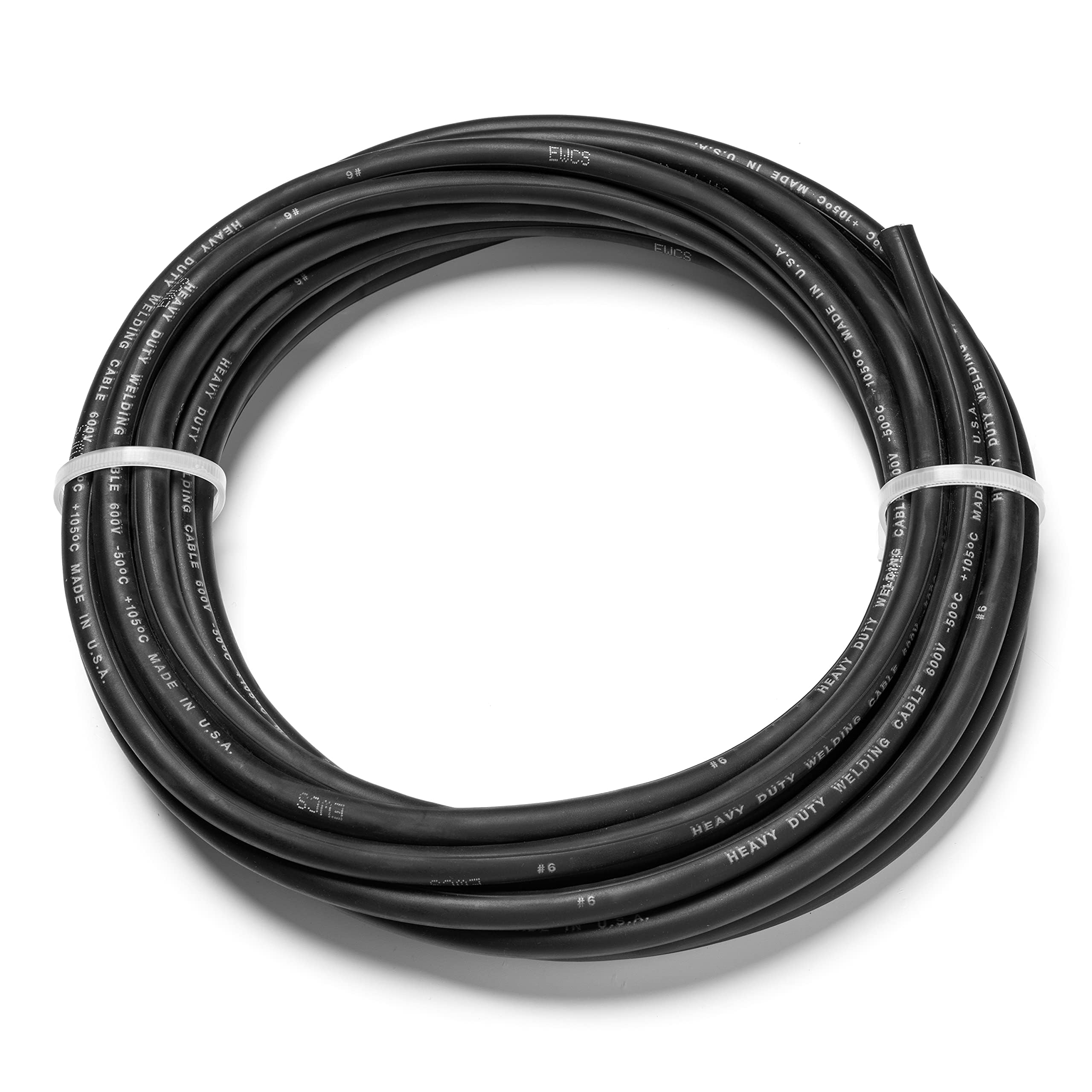
Built for chassis grounding, alternator grounds, and generator-to-rod runs that see weather.
If grounding is the whole job, this cable is built for it. It uses highly flexible 30 gauge copper stranding and a jacket that resists both sunlight and water, so it survives outdoor and engine-bay exposure. The 600-volt rating covers the usual automotive and low-voltage grounding work, and it ships as a coil, specially packaged and printed by EWCS.
Grounding is where this cable quietly shines — it is one of the things buyers call out when they talk about why it works. It has been used to ground an alternator in a 56 Chevy, to wire an inverter into a car, and to run a ground cable from a generator to a grounding rod. One buyer found it made up ground cable extensions with Dinse connectors (a type of welding cable connector) and reported the flexibility was exactly what they expected for #6 copper. The one honest caveat worth flagging: a single buyer rated it low for simply being the wrong wire for their application. That kind of miss usually depends on ordering the wrong spec, not a fault in the cable.
Note that this cable has fewer ratings than the others here, so the track record is smaller. Still, the grounding-focused praise is consistent, and if you need a cable that will survive sunlight and moisture while staying flexible enough to route around a chassis, this one earns its spot.
Why It Fits Grounding Jobs: Sunlight- and water-resistant jacket plus 30 gauge flexible stranding make it at home on exposed chassis and outdoor ground runs.
Keep in Mind: The review base here is smaller than the other picks, so weigh the strong grounding feedback against a shorter track record.
Made for: Chassis grounding, alternator grounds, and generator-to-rod runs that see weather.
Choose differently if: You want the longest owner track record in this group — the TEMCo and THHN picks have far more buyers behind them.
5. YDDECW 6 Gauge Wire 25 Feet, Red and Black Oxygen Free Stranded
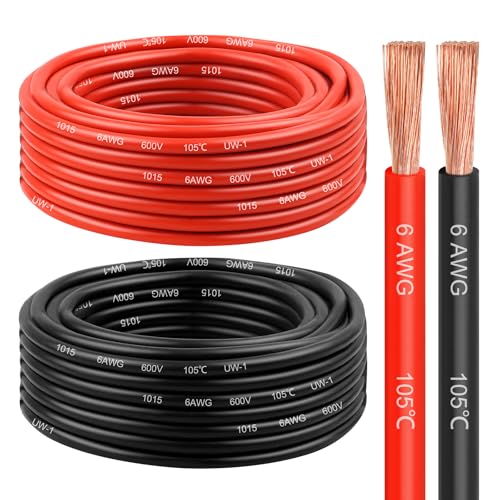
Red and black, 25 feet each, 265 strands per conductor — both legs of a solar circuit in one order.
This is the pick for a solar or dual-circuit job where you need both a red and a black conductor in one order. Each color comes in 25 feet, so you get positive and negative legs without buying two separate rolls. The conductor is 6 AWG high-purity oxygen-free copper with 265 strands of 0.25mm wire each, giving it a super-flexible feel and low impedance for an efficient connection. It is rated 600 volts across -40°C to +105°C.
Materials are the strength here — the pure oxygen-free copper is what buyers highlight most, and value for money follows close behind. One owner confirmed it is genuine solid copper, not copper-clad (copper-coated aluminum). A buyer wiring six 440-watt solar panels reported the wire carried the full load and pulled easily, while another found the 6 AWG size fit a Bluetti Charger One exactly where 4 gauge was too big and 8 gauge too small.
There is one important catch to weigh before you buy. This wire is not UL listed, so an electrical inspector may not pass it for permitted work — a buyer flagged exactly that. It is also a single PVC jacket, not a double jacket, so plan accordingly if your local code requires listed conductor. For off-grid and DIY projects where listing is not required, it is a fine, pure-copper choice.
What It Delivers
- Red and black each sold at 25 feet, so both circuit legs come in one order.
- 265 strands of 0.25mm oxygen-free copper for a flexible, low-impedance conductor.
- 600-volt rating across -40°C to +105°C for varied environments.
Caveats to Check
- Not UL listed — may not pass an electrical inspection for permitted work.
- Single PVC jacket rather than a double jacket.
Best for: DIY solar and dual-circuit runs where you want red and black in one purchase and do not need a listed conductor.
Look elsewhere if: Your project needs a UL-listed wire to pass inspection — pick the THHN or WindyNation options instead.
Understanding the Specs
Ampacity and Gauge
Ampacity is the amount of current a wire can carry safely, and gauge is the thickness of the conductor — a lower gauge number means a thicker wire. 6 AWG is a common ground and battery cable size because it handles substantial current while staying workable. The TEMCo cable is rated for 115 max amps up to 50 feet. Always match the wire gauge to the load and the run length so the copper does not overheat.
Strand Count and Flexibility
Strand count is how many thin copper wires make up the conductor. More strands means a more flexible cable that bends easily and resists fatigue. The TEMCo cable uses 260 strands, the WindyNation and EWCS cables use high-strand construction, and the YDDECW cable uses 265 strands. The THHN wire’s 10 strands make it stiffer and better suited to straight conduit pulls.
Voltage Rating and Jacket
The voltage rating is the maximum electrical pressure the insulation handles safely, and every cable here carries a 600-volt rating. The jacket protects the copper — EPDM rubber resists oil, water, and abrasion for outdoor and engine-bay use, while PA6 nylon over PVC slides cleanly through indoor conduit. Choose the jacket based on where the wire will live.
Temperature Range
Temperature range tells you how cold and hot the wire can get before the insulation suffers. The TEMCo, WindyNation, and EWCS cables span -50°C to +105°C, the YDDECW cable spans -40°C to +105°C, and the THHN wire works to 90°C. A wide range keeps the wire usable in freezing garages and hot engine compartments alike.
FAQ
Is 6 AWG heavy enough for a ground wire?
What is the difference between THHN wire and welding cable?
Do I need a special crimper for 6 gauge wire?
Will this wire work for grounding a generator?
Is the copper really pure, or is it copper-clad aluminum?
Does the wire come on a spool or as a coil?
Can I use 6 AWG ground wire for a solar setup?
Is 6 AWG the same as 6 gauge?
Do I need UL-listed wire for a ground run?
Final Thoughts: The Verdict
For most grounding jobs, the 6awg 25 feet ground wire winner is the THHN Wire 6 Gauge 25 FT Stranded Copper Wire because its slick PA6 nylon jacket (a smooth plastic coating) pulls cleanly through conduit and its 600V, 90°C rating covers residential and industrial runs. If you want maximum flexibility for a solar array or battery bank, grab the TEMCo 6 Gauge Flexible Welding Cable with its 260 fine strands. And for a grounding-specific or dual-color job, the EWCS cable and the YDDECW red-and-black set are the ones to reach for. If you want the crowd favorite, the TEMCo cable’s 4.7 stars across 700+ ratings back up its flexibility.
How We Picked
We do not accept paid placement. Every pick is matched to a real buyer and a real use-case; we do not hands-on test units.
Sources & Methodology
Specifications: manufacturer listings and product documentation. Review insights: verified customer reviews, as of September 2026. Pricing: not shown on this page (it changes often); check the current price via the retailer link.
As an Amazon Associate, Gadgets Feed earns from qualifying purchases. This does not affect which products we feature.