
Upgrading your factory 6×8 speakers is the single most effective way to transform your daily commute from a dull drone into a genuinely engaging audio experience. These oval-shaped speakers are the standard fit for countless Ford F-150s, F-250s, Explorers, Mustangs, and select Toyota/Lexus models, yet most drivers tolerate cracked cones and paper-thin magnets for years without realizing how much detail they are missing.
I’m Min — the co-founder and writer behind Gadgets Feed. After spending dozens of hours cross-referencing sensitivity ratings, frequency response curves, and real-owner installation feedback, I’ve separated the true performance upgrades from the mediocre shelf-fillers in the 6×8 speaker market.
The right set of best 6×8 speakers can bring vocal clarity, tight bass, and fatigue-free treble to your truck or SUV without forcing you to cut new holes or upgrade your entire amplifier.
How To Choose The Best 6X8 Speakers
Choosing the right 6×8 speaker comes down to understanding your vehicle’s available power, your tolerance for installation work, and the kind of sound signature you actually enjoy — not just the biggest peak-power number on the box.
Match The Sensitivity To Your Power Source
A speaker’s sensitivity rating, measured in decibels at 1 watt and 1 meter (dB @ 1W/1M), tells you how loud it will play with minimal power. If you are keeping a factory head unit that outputs roughly 15 to 22 watts per channel, look for a sensitivity of 91 dB or higher. Lower sensitivity speakers will sound anemic without an external amplifier, no matter how many watts their peak rating claims.
Understand The Real Power Numbers
Ignore the peak wattage figure printed in large font on the box. The number that matters is the RMS (continuous) power handling — the amount of clean power the speaker can handle all day. For most stock systems, an RMS rating between 40 and 80 watts is more than sufficient. Going much higher only adds weight without benefit unless you pair the speakers with a dedicated amplifier.
Cone Material Dictates The Bass Character
The woofer cone and surround material directly shape the low-end response. Polypropylene cones with butyl rubber surrounds, like those used by Rockford Fosgate and KICKER, resist heat and humidity better than paper cones and produce a tighter, more controlled bass. Mica-reinforced IMPP cones (found on Pioneer G-Series) offer a lighter, more efficient design that works well with lower power. Graphite-injected cones (Cerwin-Vega) add stiffness for higher output without distortion.
Quick Comparison
On smaller screens, swipe sideways to see the full table.
| Model | Category | Best For | Key Spec | Amazon |
|---|---|---|---|---|
| JBL Club 864F | Premium | Balanced sound with silk-dome highs | 93 dB sensitivity / 3 ohm | Amazon |
| Rockford Fosgate P1683 | Premium | High output with FlexFit basket | 65W RMS / PEI tweeter | Amazon |
| KICKER KS-Series 51KSC6804 | Premium | Concert-like volume with minimal protrusion | Neodymium silk-dome tweeter | Amazon |
| Pioneer A-Series TS-A6881F | Mid-Range | Broad frequency range and 4-way detail | 30 Hz – 32 kHz response | Amazon |
| CERWIN-VEGA! HED H7683 | Mid-Range | Loudness and clarity with bass boost | 60W RMS / Graphite cone | Amazon |
| KICKER DSC680 | Entry-Level | Simple OEM replacement with clean highs | 45 – 20,000 Hz response | Amazon |
| Pioneer G-Series TS-G6820S | Value | Efficient stock replacement on a budget | 92 dB sensitivity / 4 ohm | Amazon |
In‑Depth Reviews
1. JBL Club 864F

The JBL Club 864F stands out for its silk dome tweeter, which avoids the harshness typical of cheaper PEI or mylar domes, and its patented Plus One cone architecture that delivers noticeably more cone surface area than comparable 6×8 speakers. This design directly translates into higher sensitivity — rated at 93 dB — meaning it produces strong, clean output even when driven by a factory radio. The 3-ohm nominal impedance also lets it draw slightly more current from stock head units than a standard 4-ohm speaker, boosting real-world volume without requiring an amp.
The woofer is built around an acoustically dampened polypropylene cone that resists the heat and UV exposure common in door environments. Owners report that vocals and midrange detail are distinctly separated from the bass, and the edge-driven tweeter design keeps the top end smooth across all volume levels. The frequency response of 65 Hz to 20 kHz is honest — it does not claim sub-bass extension it cannot deliver, but the bass it does produce is punchy and well-defined.
Installation is straightforward for most trucks and SUVs, though some F-150 owners noted that the included foam gasket helps seal the mounting surface. The primary trade-off is that the 3-ohm load may not be ideal for every aftermarket amplifier, so double-check your amp’s stable impedance range before pairing. For a clean, fatigue-free upgrade that rewards both stock and modest external amplification, the Club 864F is a class-leading choice.
Why it’s great
- Silk dome tweeter delivers smooth, non-fatiguing highs even at high volume
- Plus One cone increases effective surface area for better low-end output
- 93 dB sensitivity ensures loud, clear playback from low-power sources
Good to know
- 3-ohm impedance may not be compatible with all aftermarket amplifiers
- Does not include mounting adapter brackets for all vehicles
2. Rockford Fosgate P1683 Punch

The Rockford Fosgate P1683 Punch is a 3-way coaxial that combines a mineral-filled polypropylene woofer, a dedicated midrange driver, and a PEI dome tweeter into a single robust package. The FlexFit basket design uses slotted mounting holes instead of fixed positions, which makes alignment with factory screw holes much easier — a genuine convenience for DIY installers working in tight door cavities. The butyl rubber surround is durable and maintains its compliance in extreme temperatures, preserving bass response over years of use.
With 65 watts RMS and 130 watts max power handling, the P1683 is happiest when fed by an aftermarket head unit or a small amplifier. Owners consistently praise the clarity of cymbals and vocals, noting that the built-in crossover does a good job of keeping the tweeter from being overwhelmed by lower frequencies. The bass output is described as punchy and accurate for a 6×8 form factor, though it cannot replace a dedicated subwoofer for deep low-end extension.
Installation is a strong point here — the included OEM adapter plate and the FlexFit slots mean most Ford and GM truck owners can complete the swap in under 30 minutes without cutting or drilling. Some users reported that the mounting holes still required small washers for a perfect fit on certain model years. If you want a speaker that leans into loud, clear, and reliable performance with minimal installation headache, the Punch P1683 is a proven workhorse.
Why it’s great
- FlexFit basket with slotted holes simplifies alignment during installation
- Mineral-filled polypropylene cone with butyl rubber surround for long-term durability
- 3-way design provides dedicated midrange driver for fuller vocal presence
Good to know
- May require small washers for perfect screw alignment on some vehicles
- Bass is punchy but not deep; a subwoofer is still needed for low-end thump
3. KICKER KS-Series 51KSC6804
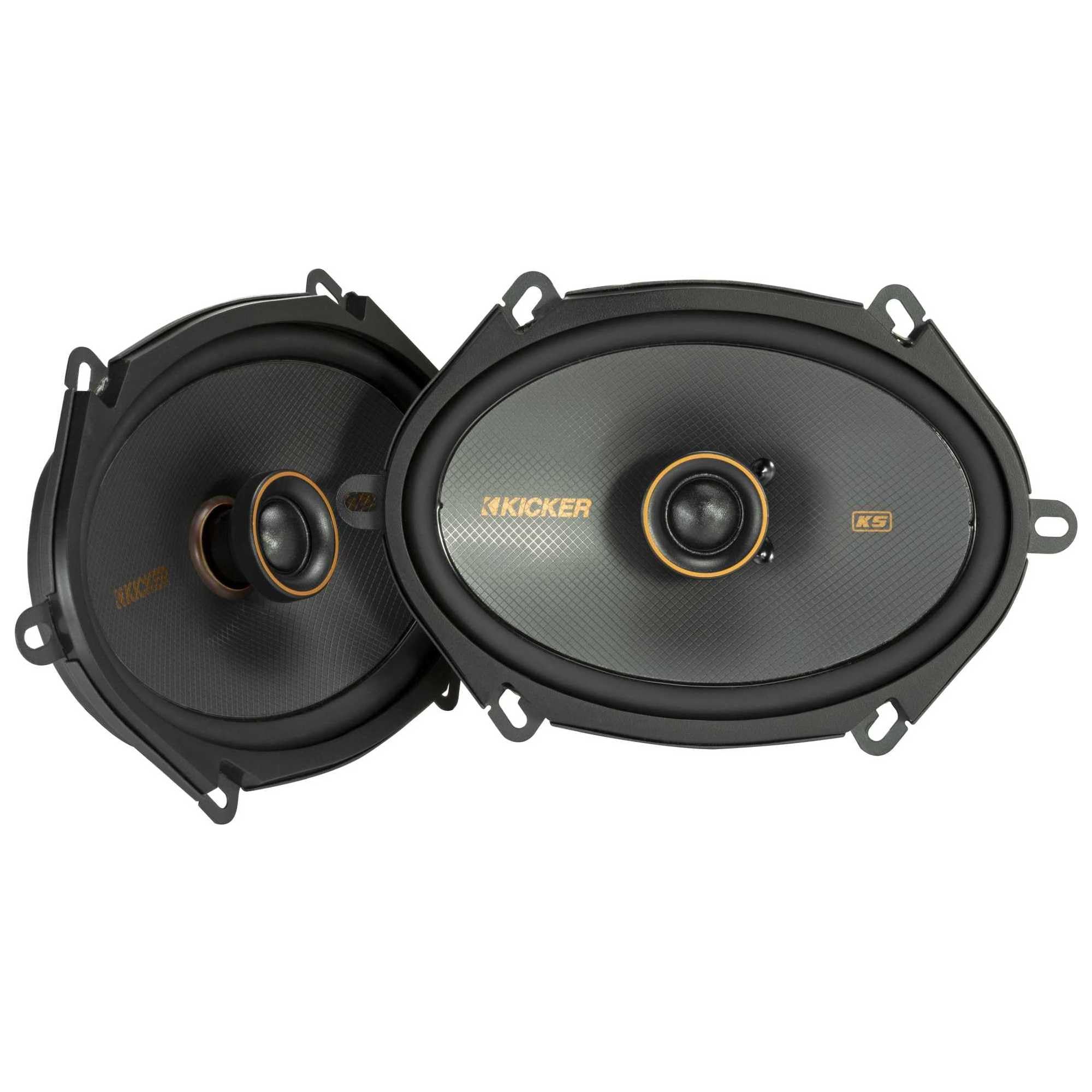
The KICKER KS-Series 51KSC6804 represents the top of the brand’s coaxial lineup, featuring a redesigned polypropylene woofer with a tough rubber surround and a neodymium silk-dome tweeter that protrudes minimally from the basket surface. This low-profile tweeter design is a deliberate engineering choice — it prevents interference with factory grilles and door panels, making the KS-Series compatible with a wider range of vehicles than many competitors. The internally dampened cone reduces midrange resonance, delivering cleaner vocals at high volume.
Power handling is robust, and the KS woofers are engineered to handle concert-like output without distorting. Owners report that the sound signature is balanced and warm, with the silk-dome tweeter providing detail without the metallic bite common to titanium or PEI domes. The frequency response extends to 21 kHz, which gives ample headroom for high-resolution audio sources. Many users driving Jeeps, GM trucks, and Subarus noted that the KS-Series produced surprising bass depth for the 6×8 size, especially when mounted in sealed door cavities.
Installation is aided by the included mounting brackets and tinned wire leads, but some vehicles — like the 2025 Subaru Crosstrek — required drilling a new hole for a perfect fit. The KS-Series also ships with two 100µF capacitors, which are intended for use only when no external crossover or amplifier is present. If you are building a premium system and want a speaker that combines fitment flexibility with high-end sound, the 51KSC6804 is a compelling investment.
Why it’s great
- Neodymium silk-dome tweeter provides smooth highs with minimal protrusion
- Internally dampened polypropylene cone reduces midrange distortion
- Includes versatile mounting brackets for GM, Mopar, Toyota, and Subaru
Good to know
- Some vehicles may require drilling a new mounting hole for the tweeter
- Included capacitors may confuse DIY installers; not needed with an amp or DSP
4. Pioneer A-Series TS-A6881F

The Pioneer A-Series TS-A6881F uses a 4-way configuration — separate woofer, midrange, and dual tweeters — to cover an exceptionally wide frequency range from 30 Hz to 32 kHz. This extended high-frequency response is designed to pair well with modern hi-res audio files, though the practical benefit for most listeners is simply cleaner, more defined treble and upper-midrange detail. The 80-watt RMS power handling gives it headroom for aftermarket amplifiers, while the 90 dB sensitivity keeps it usable with factory radios.
Real-world feedback from F-150 and Tacoma owners is consistently positive, describing the TS-A6881F as a noticeable step up from factory sound with improved bass presence and vocal clarity. The multi-driver layout does a good job of separating instruments, reducing the congested feel that single-woofer designs can produce at higher volumes. The woven-glass-fiber woofer cone is another differentiator — it is stiffer than paper or basic polypropylene, which helps control cone breakup at high output levels.
The main consideration is that the 4-way design adds physical depth to the speaker, which can cause clearance issues in some shallow door panels. Checking your mounting depth before purchasing is recommended. For the price, the TS-A6881F delivers a frequency response and power handling combination that punches well above its cost tier, making it a strong mid-range contender for anyone seeking broad-spectrum detail.
Why it’s great
- 4-way design with separate drivers for expanded frequency separation
- 30 Hz – 32 kHz frequency response covers sub-bass to hi-res treble
- Woven glass-fiber cone resists flex and distortion at high power
Good to know
- Deeper mounting profile may not fit all factory door panels without shimming
- 4-way crossover complexity can make pinpoint tweeter placement tricky
5. CERWIN-VEGA! HED H7683

Cerwin-Vega has a long-standing reputation for high-output home and car audio, and the HED H7683 brings that same philosophy to the 6×8 format. The graphite-injected polypropylene cone is noticeably stiff, which allows the speaker to handle the 360-watt peak power rating without audible distortion. The 1.0-inch balanced PEI dome tweeter delivers crisp, extended highs, and the stamped steel vented frame helps dissipate heat during prolonged listening sessions.
Owner reports confirm that these speakers shine when driven with adequate power — a 50-watt-per-channel head unit is the realistic minimum to unlock their potential. Users who paired the H7683 with a subwoofer noted that the midrange clarity and vocal presence improved dramatically, while those running them full-range without a sub found the bass punchy but limited by the 6×8 chassis size. The 60-watt RMS rating is honest and matches well with common entry-level amplifiers.
Installation is straightforward for most Ford trucks, where the H7683 fits as a direct OEM replacement without adapters. The graphite cone and rubber surround are well-suited to the temperature swings inside a vehicle door. The catch is that under-powering these speakers — running them on a basic radio with less than 20 watts per channel — will leave them sounding thin and uninspired. For drivers who have a modest amp and want a speaker that rewards power with output, the H7683 is a strong, affordable choice.
Why it’s great
- Graphite-injected cone provides high rigidity for clean output at high volume
- Vented stamped steel frame improves thermal management during long trips
- 60W RMS power handling is honest and matches common entry-level amplifiers
Good to know
- Requires at least 50W per channel to deliver full dynamic range
- 6×8 chassis limits low-bass extension compared to 6×9 alternatives
6. KICKER DSC680

The KICKER DSC680 is a no-frills 2-way coaxial designed specifically as an upgrade over tired factory speakers. With a sensitivity of 90 dB and a frequency response from 45 Hz to 20 kHz, it is tuned to produce clear highs and a balanced midrange without overwhelming a stock head unit. The 200-watt peak power handling is secondary here — the real value is in how much cleaner your music sounds compared to the paper-cone originals that came with most 1980s through 2010s trucks and SUVs.
Owner feedback is consistently positive from Ford F-350, F-150, and classic truck owners who simply want a drop-in replacement that works. The DSC680’s bass output is described as smooth rather than punchy, which makes sense given its design priority on clarity over thump. Several users noted that pairing these speakers with even a small bass subwoofer creates a well-rounded system where the DSC680 handles the mids and highs cleanly. The build quality is typical KICKER — reliable terminals, decent surround material, and a frame that resists corrosion.
Installation is quick, and the speakers fit the standard 6×8 opening with no modifications required in most applications. The DSC680 does not include mounting adapters or wiring harnesses, so you may need to purchase those separately depending on your vehicle. If your goal is to replace blown, crackling, or distorted factory speakers with something that sounds clean and trusted without spending beyond a modest budget, the DSC680 is a solid, dependable choice.
Why it’s great
- Tuned for clean midrange and treble, ideal for direct OEM replacement
- KICKER reliability with corrosion-resistant terminals and frame
- 90 dB sensitivity works well with factory radio power levels
Good to know
- Bass output is smooth but not deep; a subwoofer is recommended for low end
- No mounting adapters or wiring harnesses included in the package
7. Pioneer G-Series TS-G6820S

The Pioneer G-Series TS-G6820S is a 2-way coaxial built around a mica-reinforced IMPP (injection-molded polypropylene) cone and a 30mm PET hard dome tweeter. The mica reinforcement adds stiffness to the cone without adding much weight, which helps the speaker achieve an excellent 92 dB sensitivity rating. This means the TS-G6820S produces noticeably louder output from a factory radio than many competing entry-level speakers, giving you clean, usable volume without distortion even at higher listening levels.
The frequency response covers 72 Hz to 14 kHz, which is narrower than some competitors but honest — Pioneer prioritized efficiency and clarity over claiming frequencies the speaker cannot reproduce with authority. Owners report that the sound is balanced and smooth, with the PET tweeter providing detail without piercing harshness. The 250-watt peak and 40-watt RMS ratings are appropriate for a stock-replacement role, and the lightweight cone helps the speaker respond quickly to transient signals like snare hits and vocal consonants.
Installation is a highlight: the TS-G6820S fits perfectly into the factory locations of popular vehicles like the 2014 F-150 and 2003 Tacoma, and the included mounting screws and 1-year warranty add peace of mind. The main trade-off is that the low-end roll-off begins around 72 Hz, so sub-bass content is absent. For listeners who want a budget-friendly, high-efficiency upgrade that makes their everyday music clearer and louder without adding complexity, the G-Series is a smart entry point.
Why it’s great
- 92 dB sensitivity produces strong volume from low-power factory head units
- Lightweight mica-reinforced IMPP cone provides fast transient response
- Direct fit for many popular Ford and Toyota models with included hardware
Good to know
- Frequency response tops out at 14 kHz, limiting extreme high-frequency air
- Low-end drops off around 72 Hz; not suitable for sub-bass reproduction
FAQ
Can I install 6×8 speakers in a vehicle that originally had 5×7 or 6×9 speakers?
Do I need an external amplifier to get good sound from my 6×8 speakers?
What is the difference between 2-way, 3-way, and 4-way 6×8 speakers?
Will higher wattage 6×8 speakers sound louder with my stock radio?
Final Thoughts: The Verdict
For most users, the best 6×8 speakers winner is the JBL Club 864F because it combines an edge-driven silk dome tweeter with a 93 dB sensitivity rating and the extended cone area of its Plus One design, delivering balanced, fatigue-free sound that works beautifully with both factory and amplified systems. If you want a 3-way speaker with a flexible mounting system and proven durability, grab the Rockford Fosgate P1683 Punch. And for the most seamless factory replacement with minimal installation fuss and excellent efficiency, nothing beats the Pioneer G-Series TS-G6820S.