
Our readers keep the lights on and my morning glass full of iced black tea. As an Amazon Associate, I earn from qualifying purchases.
Specs are compiled from manufacturer listings and verified buyer reviews and can change over time — please confirm the key details on the product page before buying.
The 7 iron is your go-to for approach shots, punch-outs, and chipping around the green. But buying a single one is a minefield of confusing specs: lofts, lies, bounce angles, and flex ratings that can make or break your swing. This guide helps you find a 7 iron that matches your swing, grip, and skill level.
I’m Min — the founder and writer behind Gadgets Feed. This guide is built by comparing the manufacturers’ published specifications and the patterns across verified customer reviews, so you get each pick’s real strengths and trade-offs instead of marketing spin.
Whether you’re a beginner learning grip mechanics or a seasoned player hunting for a reliable backup, I’ve analyzed the data on the 7 iron golf club market to highlight the models that truly deliver on their promises.
Our Picks at a Glance

How To Choose The Best 7 Iron Golf Club
Buying a single 7 iron is about filling a specific need — and that need determines which specs you should care about. Are you practicing your grip? Then a training grip model wins. Are you replacing one club in your set and want it to match your existing irons? Then you need to match the shaft flex and head type. Here’s what to prioritize.
Match the shaft to your swing speed
Your shaft flex — whether stiff or regular — controls how the club loads and releases through impact. A stiff flex suits faster, more aggressive swings, while a regular flex can help moderate swing speeds launch the ball higher. If you’re unsure, look at what flex your other clubs use and match it for consistency.
Pay attention to the bounce and lie angles
The bounce angle governs how the club glides through turf — a higher bounce (like 6 degrees) prevents digging on soft ground, while a lower bounce (2 degrees) suits firmer lies and players who sweep the ball. The lie angle affects direction: if it’s off for your height and posture, you’ll see pulls or pushes.
Quick Comparison
| Model | Best For | Loft | Shaft Flex | Weight | Amazon |
|---|---|---|---|---|---|
| MAZEL Individual Iron★ Best Overall | Quality & beginners | 23° (4 iron) | Stiff | 15.2 oz | Amazon |
| LAZRUS LAZ2 #7Top Performer | Improved ball-striking | — | Regular | 16 oz | Amazon |
| MAZEL 7 Iron Training | Grip practice | — | Stiff | 0.48 kg | Amazon |
| MAZEL WM-X1/2 | Driving irons | — | Stiff | — | Amazon |
| XINGGM XM-01 #7 | Value & control | 33° | Stiff | 0.48 kg | Amazon |
| COOLO #7 Graphite | Joint-friendly play | 33° | Regular | 14 oz | Amazon |
In-Depth Reviews
1. MAZEL Golf Individual Iron
Our pick — 4.5★ from 300+ verified ratings; the strongest balance of quality and price.
A stiff-flex workhorse that flies low and far for beginners.
The MAZEL Individual Iron stands out for its low center of gravity — the back cavity design (a hollowed-out back) positions weight low to help you launch the ball easily and boost ball speed off the tee. The CNC-milled grooves (precisely cut channels on the face) provide consistent spin and control, which owners mention translates to shots that fly low and far. The 15.2-ounce weight and stiff flex suit players with faster swing speeds.
Quality is consistently praised — owners say the club looks sharp even after several rounds and feels durable. The 63-degree lie angle (the angle between the shaft and the ground when the club is soled) is notably upright — a 4% more upright angle than the WM-X1/2 model’s 60.5 degrees — which helps players who tend to hit pulls. Customers note little sting on the hands, making it a forgiving club for newer players.
As owners put it: “Looks very sharp even after a few rounds of play, durable, little sting on the hands but very forgiving as well.”
Beginner’s Best Friend: the grip comfort and forgiveness make it a great starter club, and the value is hard to argue with at this level.
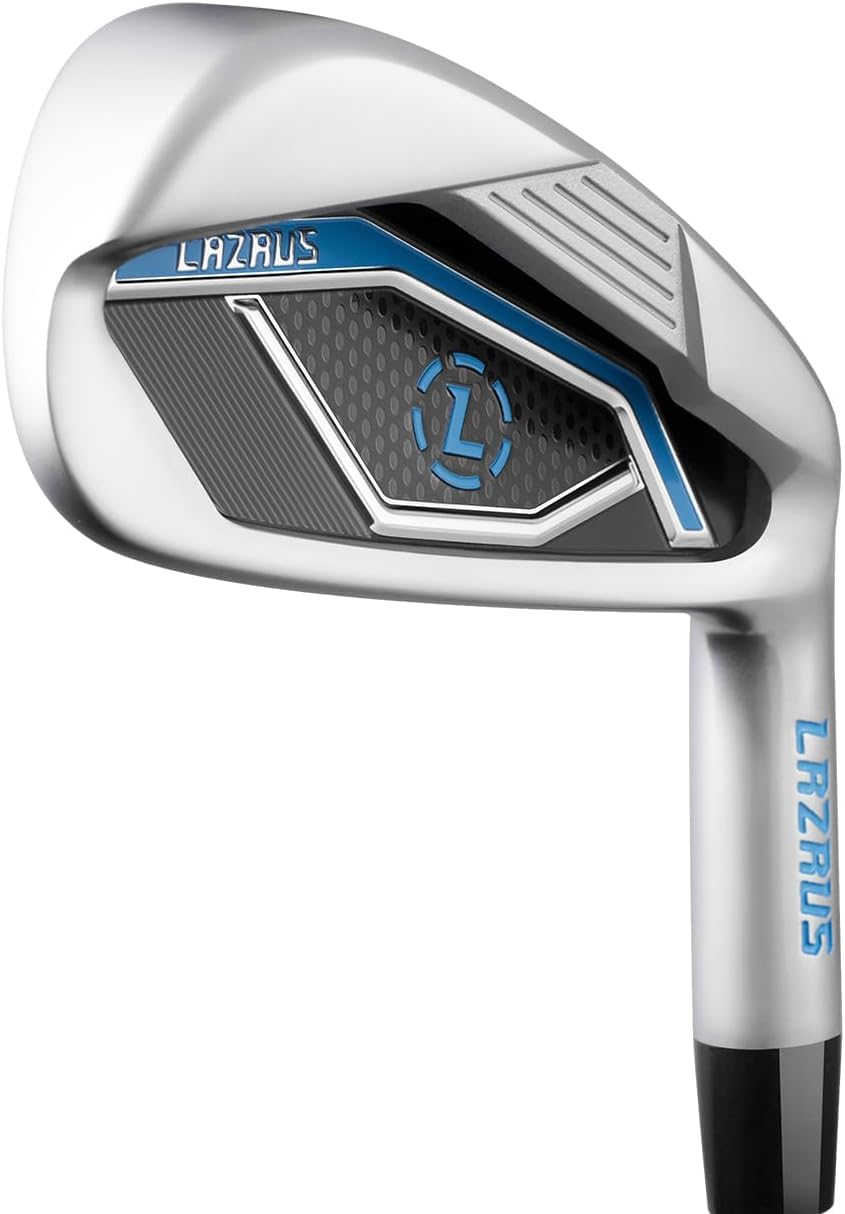
2. LAZRUS LAZ2 Premium #7 Iron
The cavity-back head forgives off-center hits, boosting confidence on every swing.
The LAZRUS LAZ2 is built for player development — the cavity-back head (a hollowed-out back that shifts weight to the perimeter) delivers clean, solid hits even when you catch the ball off-center. This forgiveness prevents a bad lie from derailing your round. The regular flex shaft and 16-ounce weight give the club a traditional, solid feel that rivals clubs from much bigger brands.
Unlike the MAZEL Individual Iron’s stiff flex, the LAZRUS regular shaft suits players with moderate swing speeds who want help launching the ball. The distinct feature here is the regular midsize grip — slightly thicker than standard, which can feel more secure for players with larger hands or those who prefer a lighter grip pressure. Buyers report more consistent contact and gained distance with this 7 iron.
Forgiveness First
- Clean, solid hits even off-center thanks to cavity-back design
- Midsize grip feels secure and reduces grip pressure
- Durable finishes that look sleek and last
Honest Trade-Offs
- Grips can dirty your hands — black rubber leaves residue
- Shaft feels stiffer in practice than the regular flex rating suggests
Reach for this if: you’re an intermediate player looking for a forgiving single iron that supports both learning and advanced play.
Think twice if: you’re sensitive to grip texture — the rubber face that aids control also attracts ball residue that’s hard to clean with a metal brush.
3. MAZEL 7 Iron Golf Club with Training Grip

The ergonomic training grip corrects hand placement before you swing.
The defining feature of this MAZEL 7 iron is its upgraded ergonomic training grip — a 9.5-inch grip that guides proper hand and finger placement. It’s the same concept pros like Scottie Scheffler use in practice sessions to check grip and club path. The 62.5-degree lie angle and blade head (a traditional, less-forgiving head shape) make this a focused practice tool rather than a game-day club.
What sets this apart from the XINGGM #7 is the training grip — it’s designed to build muscle memory, not just hit shots. The lower center of gravity promotes a higher ball trajectory, while the beveled trailing edge helps the club glide through turf with less friction. For beginners, this is a dedicated tool to groove a correct grip before stepping onto the course.
Practice Session Essential: if your grip is the weak link in your swing, this club is worth its weight for the hand-placement feedback alone.
skip it if: you want a full-performance 7 iron for scoring — the grip is on the small side and other grip trainers are more comfortable for larger hands.
4. MAZEL WM-X1/2 Individual Golf Iron

The 2-degree bounce suits players who sweep the ball cleanly off firm turf.
The WM-X1/2 has a 2-degree bounce angle — a 3.0x lower bounce than the MAZEL training 7 iron’s 6 degrees. This means the leading edge sits closer to the ground at address, making it ideal for players with a sweeping swing who don’t take deep divots. It’s why the 2 iron here is described as one golfer’s favorite club after nine years of playing — the forgiveness is tremendous on this low-bounce design.
The rubber grip delivers good hand feel with non-slip and shock-absorption properties. The stiff flex and cavity-back head provide a stable, consistent feel. Just note that the price tag lands this in the mid-range tier, and the quality can vary — some buyers get a great club, others note it’s a mix. If you’re a seasoned golfer who prefers irons over hybrids, this is the one to reach for.
For the Purist: low bounce and a small club face call for a seasoned golfer who knows exactly what they want from a driving iron.
5. COOLO Graphite Shaft #7 Iron

The 14-ounce featherweight that spares your elbows and wrists.
The COOLO’s whole pitch is joint relief — the graphite shaft (a lighter, more flexible material than steel) acts as a natural shock absorber at impact. At 14 ounces, it’s the lightest club in this lineup, which helps you generate more club head speed and hit longer. The graphite shaft’s shock absorption cuts elbow and wrist strain, a key win for golfers with tendonitis.
Graphite also produces more spin and feels more consistent than steel — you can feel where the club head is through the swing. The 33-degree loft and regular flex make it easy to launch. The cavity-back head and standard rubber grip round out a package that feels great to swing. Reviewers point out the head shows no marks even after about 100 range hits, so durability is on point.
Best for the Aching Golfer: the shock-absorbing graphite shaft is the top pick when joint pain limits your game.
Worth noting: the standard grip may feel small if you prefer a larger hold — some owners swap it out for a slightly bigger grip.
6. XINGGM XM-01 #7 Iron
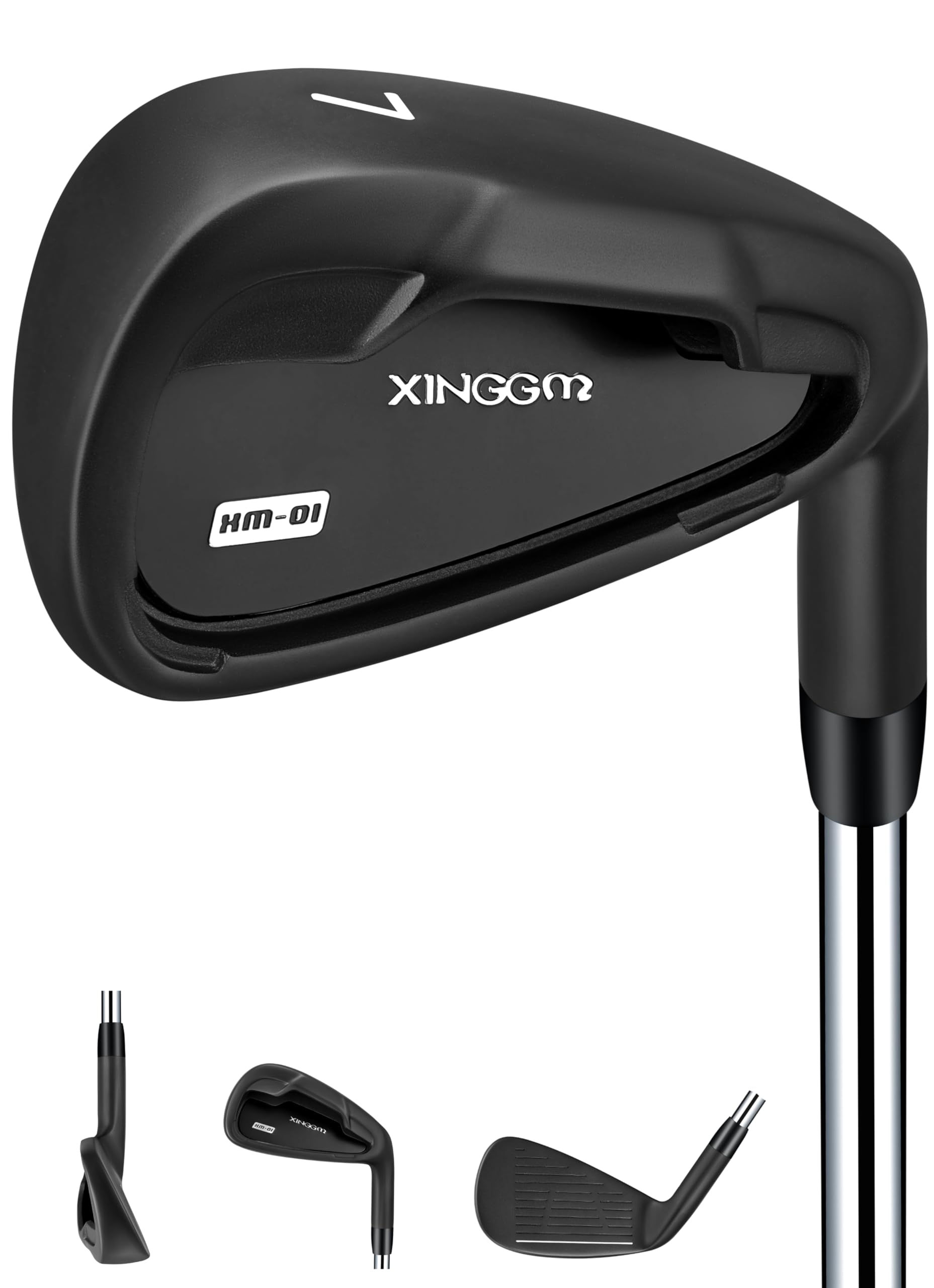
A 33-degree loft workhorse that replaces your 3 wood.
The XINGGM XM-01 is a classic 33-degree loft 7 iron built for control. The CNC milled grooves (precisely cut channels on the face) give you consistent contact, while the concave back design with a broad sole boost forgiveness. The QPQ technology (a durability-enhancing treatment process) guarantees the club maintains peak performance through practice and play. At 0.48 kg, it’s got a substantial, solid feel.
This is the club for players who want distance and accuracy — one buyer reports replacing their 3 wood with this iron entirely. The stiff flex suits faster swing speeds, and the synthetic rubber grip provides a secure hold. The low center of gravity minimizes turf interaction, reducing the risk of digging on your swing.
Distance Play: stiff flex and a responsive face make this a strong option for mid-handicappers wanting to shape shots.
Keep in mind: packaging can be basic, and quality is “mid level” per some buyers — inspect it on arrival.
Understanding the Specs
Bounce Angle
This is the angle between the leading edge of the club and the ground when it sits at address. A higher bounce (6 degrees) prevents the club from digging into soft turf — great for players who take divots. A lower bounce (2 degrees) suits firm ground and sweeping swings. The MAZEL training 7 iron uses 6 degrees while the WM-X1/2 uses 2 degrees, so they’re built for very different swings.
Lie Angle
This is the angle between the shaft and the ground when the club is soled flat. It affects the direction of your shots — an upright lie (like 63 degrees) helps prevent pulls, while a flatter lie (60.5 degrees) suits taller players or those with a flatter swing plane. A mismatched lie angle is a common cause of consistent left or right misses.
FAQ
What loft should a 7 iron have?
Does a stiff or regular flex 7 iron suit my swing better?
Is a training grip 7 iron worth it for beginners?
What is the difference between steel and graphite shafts for a 7 iron?
What does a cavity back do for a 7 iron?
What is the ideal bounce angle for a 7 iron?
Can I buy just one 7 iron to add to my existing set?
About how much should I expect to pay for a quality single 7 iron?
Does a 7 iron work well for chipping around the green?
Is the lie angle important for a beginner?
Final Thoughts: The Verdict
For most golfers, the strongest all-around 7 iron golf club is the LAZRUS LAZ2 because its forgiving cavity-back design and quality construction consistently deliver cleaner contact. If you need a grip-training aid to fix your fundamentals, reach for the MAZEL training 7 iron. And if joint pain is holding you back, the COOLO graphite model is the one to grab for shock-absorbing comfort.
How We Picked
We do not accept paid placement. Every pick is matched to a real buyer and a real use-case; we do not hands-on test units.
Sources & Methodology
Specifications: manufacturer listings and product documentation. Review insights: verified customer reviews, as of August 2026. Pricing: not shown on this page (it changes often); check the current price via the retailer link.
As an Amazon Associate, Gadgets Feed earns from qualifying purchases. This does not affect which products we feature.