
Our readers keep the lights on and my morning glass full of iced black tea. As an Amazon Associate, I earn from qualifying purchases.
Specs are compiled from manufacturer listings and verified buyer reviews and can change over time — please confirm the key details on the product page before buying.
Carrying 70 lb on your back puts real stress on your shoulders and spine, so the padding, weight distribution, and how easily you can swap weights matter as much as the max capacity. Some vests come fixed at 70 lb, while others are adjustable models you can load up to or beyond that weight — the adjustable ones are often the smarter buy because you can start lighter and grow into the load.
I’m Min — the founder and writer behind Gadgets Feed. This guide is built by comparing the manufacturers’ published specifications and the patterns across verified customer reviews, so you get each pick’s real strengths and trade-offs instead of marketing spin.
You will see which adjustable heavy-duty vests handle serious rucking and strength work without chafing or shifting, and which premium options justify their higher price tags. 70 lb weight vest shopping depends on load adjustability, shoulder comfort, and build durability.
Our Picks at a Glance

How To Choose The Best 70 Lb Weight Vest
Before you commit to a heavy vest, think about how you will actually use it. A vest built for rucking has different needs than one for push-ups or pull-ups, and the right choice depends on your training style and how much weight you plan to carry.
Weight Capacity vs. Adjustability
A vest that maxes out at 70 lbs is great, but one that adjusts from a lighter starting point gives you room to progress. Look for vests that let you add or remove weight in small increments, so you can ease into the load instead of jumping straight to the heavy end. This matters most for beginners or those returning from a break.
Weight Distribution and Padding
At 70 lbs, the load sits on your shoulders and compresses your torso. Choose thick shoulder padding and even front-to-back weight distribution to prevent digging. Proper padding extends training time without pain, while poor balance forces constant mid-workout adjustments.
Material and Durability
Heavy loads stress the stitching and closures. Look for reinforced stitching, heavy-duty buckles, and materials like 1000D nylon that can handle daily wear. Pay attention to the closure type — hook-and-loop Velcro is fast to adjust, while buckles can feel more secure at very heavy loads.
Quick Comparison
| Model | Best For | Max Capacity | Weight Type | Shoulder Padding | Amazon |
|---|---|---|---|---|---|
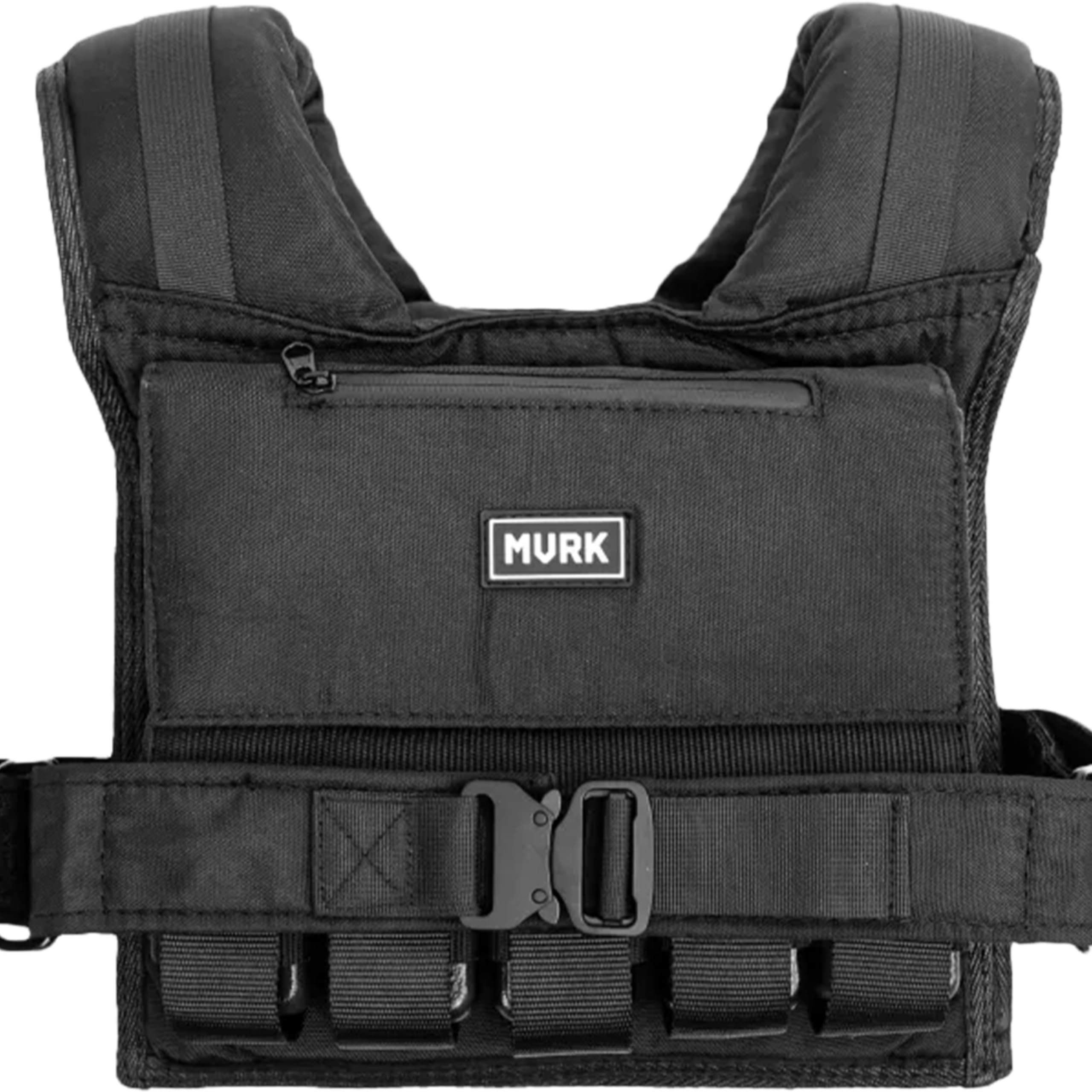
| MVRK Weighted Vest★ Best Overall | No-bounce strength training | 45 lbs | 20 Iron Blocks | Padded | Amazon |
| RUNmax Adjustable VestBest Value | Budget progressive loading | 40 lbs (Shoulder Pads) | Sand Bags | Optional Pads | Amazon |
| CAP Adjustable Vest | High-capacity progressive training | 70 lbs | Iron Ore Packets | Padded | Amazon |
| HANZO (BDRX) Vest | Rucking and calisthenics | 45 lbs | 2.2 lb Iron Bars | Double Padded | Amazon |
| ONETWOFIT Vest | Night runs and rucking | 50 lbs | 16 Cast Iron Blocks | 1.2″ Ultra Thick | Amazon |
| miR Air Flow Vest | Machine-washable training | 60 lbs | 3 lb Solid Iron Blocks | Padded | Amazon |
| Kensui EZ-VEST PRO V2 | Advanced plate loading | 150 lbs | 2″ Weight Plates | 6 mm Padding | Amazon |
In‑Depth Reviews
1. MVRK Weighted Vest (45lbs)
Our pick — over 4.5★ from 600+ verified ratings; the strongest balance of quality and price.
The no-bounce favorite that stays locked to your torso through explosive moves.
The defining feature here is weight distribution — it is the most-discussed aspect by far, and for good reason. The 45 lb vest distributes load with 10 iron blocks in the front and 10 in the back, each weighing approximately 2.18 lbs, so the weight feels balanced rather than pulling you forward. This even spread is what makes it comfortable for everything from squats to pull-ups.
A standout detail is the front pocket, which owners use to hold their phone during workouts. The reinforced stitching at stress points and heavy-duty buckles are built to handle the maximum load, and the sweat-resistant materials hold up through long rucking sessions. Unlike the CAP vest which uses iron ore packets, this one uses solid 2.18 lb iron blocks that you can dial in precisely, though owners note it takes some effort to adjust the weight.
What Wins Owners Over
- 2.18 lb iron blocks (20 total) for precise load tuning
- Front pocket holds a phone during workouts
- Reinforced stitching holds up under heavy loads
Things To Know
- Adjusting the weights takes some effort
- Minor shoulder rub can occur during explosive moves
- No loading guide included, so progression is DIY
Reach for it if: you want a balanced, no-bounce vest for calisthenics and rucking that feels secure from the first wear.
Look elsewhere if: you need a 70 lb max capacity — this one tops out at 45 lbs, so you would outgrow it.
2. RUNmax Adjustable Weighted Vest (40 lbs with Shoulder Pads)
The adjustable sandbag vest that lets you fine-tune in 4 lb steps.
Quality and value are the two things owners praise most here, which makes sense for a vest that scales from a light warm-up load up to 40 lbs. The 4 lb increments are the standout feature — a 71-year-old user reported starting at 40 lbs, cutting down to 20 lbs, and then progressing back up to 32 lbs and beyond as they adapted. That fine control is rare at this level.
The shoulder pads are the catch, and the reviews are split on them. Some users say the extra padding is mandatory for heavy loads, while others note the straps still lack padding even with the option installed. One owner switched from a 30 lb competitor vest and found the closure and straps much better, but noted the vest runs shorter than expected — ending mid-abdomen at 5’11”. If you plan to carry heavy, choose the padded version and keep your expectations realistic about how much cushioning you get.
Owner Consensus: a durable, comfortable workhorse with precise 4 lb adjustability — bring the shoulder pads for heavy loads.
Honest Fit Note: comfort reviews are genuinely split, so your experience depends on your torso shape and load.
Best for: budget-minded buyers who want incremental progression and don’t need a 70 lb ceiling.
Not for: taller users who want full torso coverage or those planning heavy loads without pad support.
3. CAP Adjustable Weighted Vest (70 lbs)
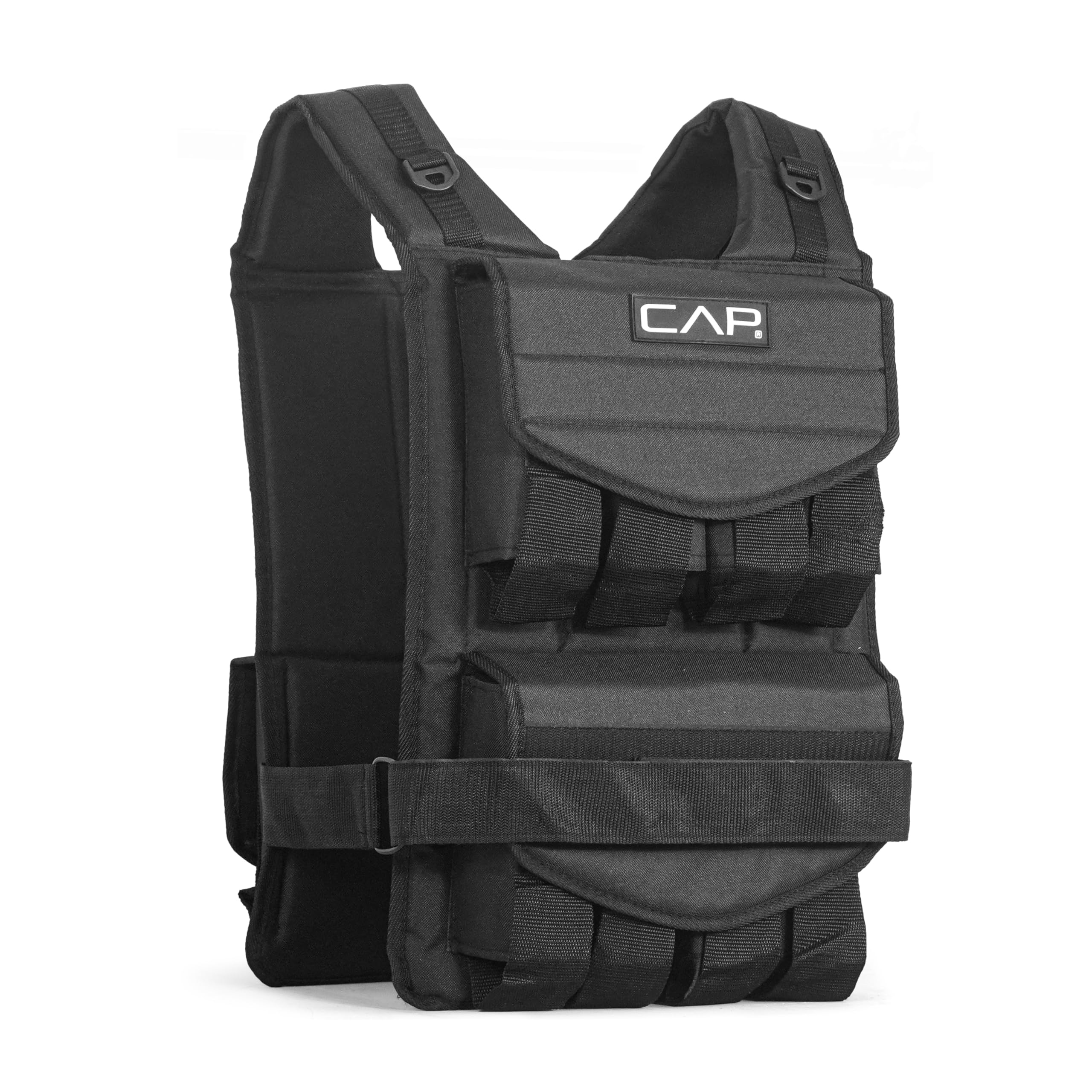
The only true 70 lb adjustable vest here, built for progressive heavy training.
This is the one vest that hits the exact 70 lb mark from the data, and it does so with 4 lb iron ore packets that let you scale from a light 4 lbs all the way up. The 12 pockets give you plenty of slots to distribute the load evenly, and the adjustable waist belt plus padded shoulders aim to keep it stable during high-intensity work. At 31.75 kg it is the heavier of the adjustable options, which reflects the iron ore filling.
Owners are divided on durability. While many praise the even weight distribution and comfortable fit for long sessions, a recurring theme is that the vest can begin to rip under normal use, and the small pockets are time-consuming to load. It is also bulkier in the front, which limits range of motion on push-ups — a point raised even by owners who like the vest overall. Compare this to the Kensui EZ-VEST below, which uses weight plates you likely already own and avoids pockets entirely.
Why It’s Popular
- 4 lb iron ore packets for fine-tuned progression from 4–70 lbs
- Reflective stripes improve visibility in low light
- 12 pockets spread the load evenly front and back
Watch Out For
- Durability is the top negative — some units rip under normal use
- Front bulk can limit push-up range of motion
- Small weight pockets are slow to load and unload
Choose this if: you specifically need to reach 70 lbs and want iron-ore packet adjustability rather than fixed blocks.
Think twice if: you plan heavy daily rucking where long-term durability is your top priority.
4. HANZO (BDRX) Weighted Vest (25–65 lbs)
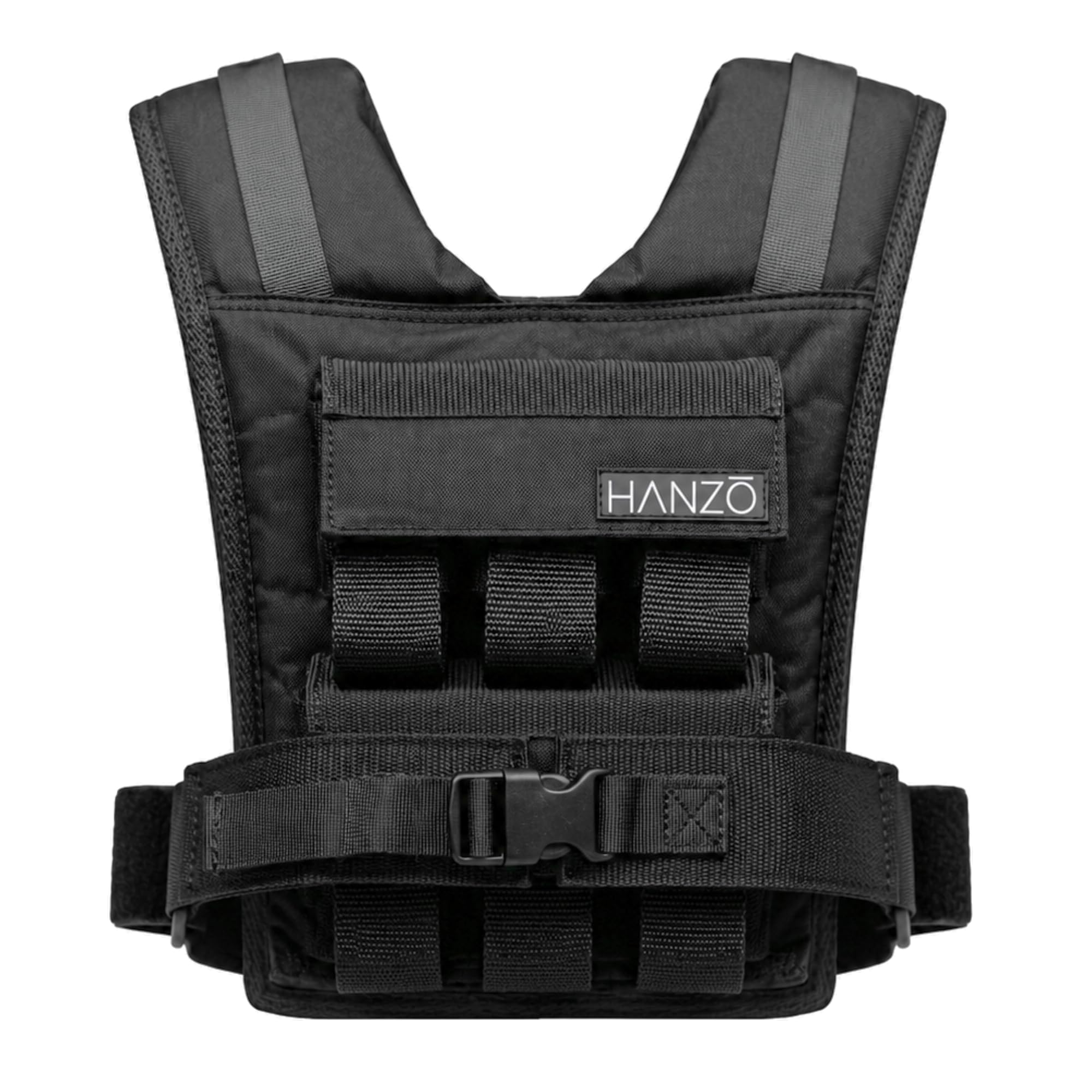
The rucking favorite with double-padded shoulders that shrug off heavy loads.
Quality edges out every other aspect in the reviews, and the build backs it up — 1000D Oxford nylon with heavy-duty stitching is the kind of material that survives daily abuse. The 2.2 lb iron bars (20 total) slide into adjustable front, back, and side placements, so you can shift the load to suit each workout. Owners who ruck with it report no sliding and no chafing, thanks to the double-padded shoulders and balanced profile.
It is a more compact option than the CAP vest, with a snug fit that owners describe as moving with the body rather than against it. One owner pushing a stroller with two toddlers found it great for low-impact walking, while a daily treadmill user paired it with ankle and wrist weights. The 65 lb model adds a third weight row compared to the 45 lb version’s two rows, giving you more load placement options as you progress. If you want the feel of a premium vest without the plate-loading complexity, this is the one.
Built For: rucking and bodyweight strength work where a secure, non-slip fit is everything.
The Trade-off: the 45 lb model tops out well below 70 lbs, so heavy lifters will want the 65 lb version.
Reach for it if: you prioritize build quality and a snug fit for rucking or calisthenics over max capacity.
skip it if: you need a 70 lb ceiling — this caps at 65 lbs in its heaviest config.
5. ONETWOFIT Weighted Vest (2–50 lbs)
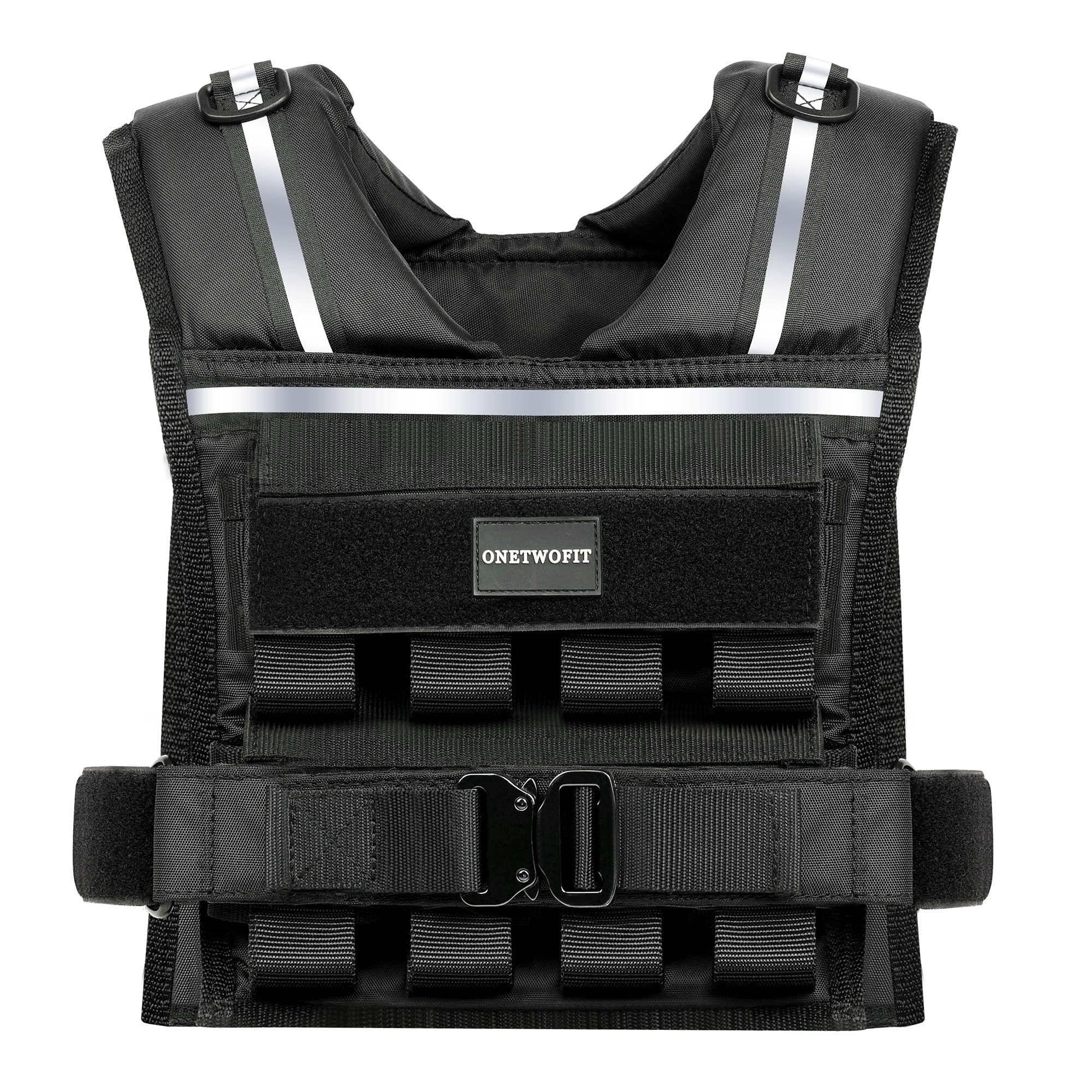
The 2 lb-stepped cast iron vest with the thickest shoulder padding on this list.
The 1.2 inch ultra-thick shoulder padding is the headline spec here — it uses a 0.4 inch foam layer, far thicker than the typical 0.1 inch you find on most vests. That padding directly addresses the biggest complaint with heavy vests: shoulder strain. The 16 cast iron blocks are detachable, waterproof, and anti-rust, and they load in 2 lb increments so you can fine-tune your resistance more precisely than the MVRK’s 2.18 lb blocks.
The 1000D nylon shell wicks sweat and feels breathable, and the front-and-back reflective strips make night runs safer — one 5’8″, 225 lb owner specifically praised the reflective striping for evening sessions. The metal tactical buckle is stronger than plastic alternatives, and the adjustable waistbelt keeps everything snug. Owners note the bare vest weighs 2.1 lbs on its own, and that it stays put even at heavier loads, though the vest does run warm like most weighted options.
Standout Features
- 1.2″ shoulder padding with 0.4″ foam prevents digging
- 2 lb increments give the finest load control here
- Reflective strips and removable logo for night safety
Considerations
- Runs warm during extended sessions
- Velcro is strong but can feel excessive
- Caps at 50 lbs — below the 70 lb target
Best for: night ruckers and runners who want thick padding and precise 2 lb load steps.
Not ideal for: lifters who need more than 50 lbs of resistance.
6. miR Air Flow Weighted Vest (20–60 lbs)

The washable, high-riding coat that keeps your arms and core free.
This vest is a different animal: the Air Flow model measures only 11 inches from your collarbone, so it sits high and short. That short profile gives you full range of arm and torso movement, which owners say is ideal for pull-ups, dips, shadow boxing, and back extensions — moves where a longer vest gets in the way. The clam shell design lets you adjust solid 3 lb iron blocks to tune balance.
The machine-washable denim-hybrid material is the standout feature — you remove the weights, throw it in the washer, and tumble dry low. Owners praise the even weight distribution and comfortable fit, with one able to wear a hydration pack over it without issues. The trade-off is that this material is designed for light to medium workouts; the manufacturer itself notes heavy sessions will cause slight cosmetic wear. The Velcro strap stitching is the recurring weak point, and the vest’s 19 slots (9 front, 10 back) take 3 lb increments, so it is chunkier steps than the ONETWOFIT’s 2 lb blocks.
Owner Take: “60 lb vest is super heavy, weight is well distributed” — the high-riding fit and solid iron blocks win people over.
Know Before Buying: denim-hybrid material suits light-to-medium work; push hard and you will see cosmetic wear.
Reach for it if: you want a washable, high-riding vest that keeps your torso free for bodyweight moves.
Look elsewhere if: you train heavy and rough daily — the Velcro stitching and denim material demand care.
7. Kensui EZ-VEST PRO V2 (150 lb Capacity)
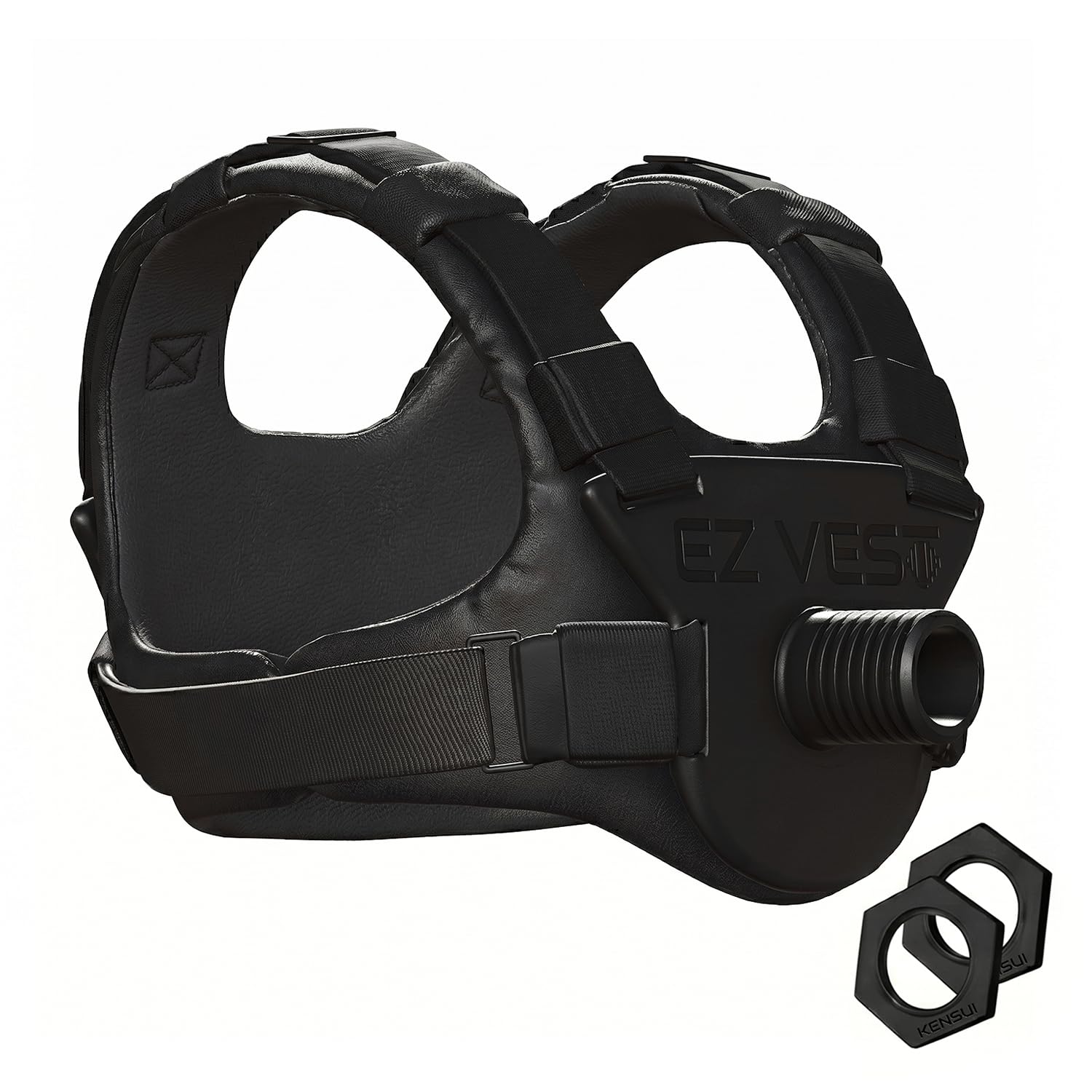
The plate-loaded beast for lifters who already own Olympic plates.
Instead of iron blocks or sand packets, this vest loads real 2″ Olympic weight plates onto a fiberglass frame with a 9.5 cm sleeve span. The 6 mm padding and air mesh lining keep it comfortable, and the Velcro fastening holds it secure.
The honest catch is compatibility. Buyers report that while the vest is comfortable and well-built, it cannot handle larger plates — a 45 lb iron plate put too much stress on the plate holder and cracked it after six months of use. Others note the pegs only fit 2″ plates, not the 1″ standard plates (an adapter is sold separately), and that loading 150 lbs on the pegs is unrealistic. It is a great concept for advanced lifters who own smaller plates, but treat the 150 lb spec as theoretical, not practical.
Why Advanced Lifters Like It
- Uses 2″ Olympic plates you already own
- 150 lb max capacity — the biggest ceiling here
- Short harness-to-strap distance keeps it from feeling loose
The Real Limits
- Large 45 lb plates can crack the plate holder
- Only fits 2″ plates; 1″ adapter sold separately
- Real-world capacity is well below the 150 lb spec
Best for: experienced lifters with Olympic plates who want a secure vest for loaded pull-ups and dips.
Not for: beginners or anyone planning to load 45 lb plates — keep to smaller plates.
Understanding the Specs
Weight Capacity and Load Type
Max capacity tells you the ceiling, but the load type tells you how you get there. Iron blocks give you solid, long-lasting weight that you add or remove individually. Sand packets are lighter to handle but can leak if the bags tear. Plate-loaded vests reuse your gym plates but add bulk and require compatible plate sizes. Consider if you need fine 2 lb steps or are fine with chunkier 3–4 lb increments.
Shoulder Padding and Distribution
Heavy loads concentrate on your shoulders, so padding thickness directly affects comfort. Look for vests with thick foam padding (0.4 inch or more) and even front-to-back distribution. A balanced vest stays put; an unbalanced one shifts and digs. For loads of 40 lbs or more, prioritize substantial shoulder padding over thin straps.
FAQ
Can a 70 lb weight vest actually be worn for running?
What is the difference between iron blocks and sand packets in a weighted vest?
How should a weighted vest fit to avoid shoulder pain?
Is a plate-loaded vest like the Kensui EZ-VEST better than a block vest?
Can I machine wash a weighted vest?
How long does a heavy weighted vest last with daily use?
What weight should I start with if I am new to weighted vests?
Why does a weighted vest need reflective stripes?
Final Thoughts: The Verdict
For most people, the 70 lb weight vest winner is the CAP Adjustable Vest because it is the one that genuinely hits the 70 lb mark with 4 lb progressive steps. If you want a balanced no-bounce build for calisthenics and rucking, grab the MVRK Vest. And for advanced lifters who own Olympic plates, the Kensui EZ-VEST is the one to reach for — just keep your plates on the smaller side.
How We Picked
We do not accept paid placement. Every pick is matched to a real buyer and a real use-case; we do not hands-on test units.
Sources & Methodology
Specifications: manufacturer listings and product documentation. Review insights: verified customer reviews, as of August 2026. Pricing: not shown on this page (it changes often); check the current price via the retailer link.
As an Amazon Associate, Gadgets Feed earns from qualifying purchases. This does not affect which products we feature.