
A 75-inch OLED TV is the single biggest visual upgrade you can make to a living room, but that massive canvas of self-lit pixels also puts every lighting flaw in the room on display. The gap between a great OLED and a frustrating one for a bright room often comes down to one decisive spec: the anti-glare coating. With premium OLEDs now reaching 165Hz refresh rates and exceeding 2,000 nits peak brightness, the buying decision is no longer about whether OLED beats LCD—it’s about picking the specific OLED tier built for your actual room conditions.
I’m Min — the co-founder and writer behind Gadgets Feed. I’ve spent countless hours dissecting the latest processor generations, brightness boosters, and glare-reduction technologies across twelve 2023-2026 model year OLEDs to find the best 75 Inch OLED TV for different lighting environments and use cases.
What follows is an intense, spec-first breakdown that isolates the concrete differences between standard OLED evo panels, MLA-equipped gallery models, and Samsung’s glare-free matte OLEDs so you can buy the right 75 inch oled tv for your home without overpaying for features you don’t need.
How To Choose The Best 75 Inch OLED TV
Buying an OLED this size demands you look past the brand name and focus on three specific factors: the panel’s peak brightness and anti-glare treatment, the processor’s upscaling strength for non-4K content, and the exact gaming feature set including HDMI 2.1 port count and VRR range. A standard glossy OLED that looks incredible in a dark home theater can feel dim and reflective in a sunlit living room, while a matte-finish OLED might sacrifice some perceived black-level depth to kill reflections. There is no universal “best”—only the right match for your room.
Glare, Brightness, and Room Lighting
The single most common regret among large OLED buyers is underestimating how glossy panels behave in bright rooms. LG’s standard C-series uses a glossy finish that delivers maximum perceived contrast in darkness but acts like a mirror with windows or lamps. Samsung’s S95F and S90H models use a matte anti-glare coating that scatters ambient light, preserving black levels even with direct sunlight. LG’s G-series with Micro Lens Array (MLA) boosts brightness (up to 70% brighter per LG’s ratings) to overcome reflections without a matte coating. For a living room with uncontrolled lighting, prioritize an MLA-equipped G-series or a Samsung glare-free model.
Processor and Upscaling Reality
All 4K OLEDs look stunning with native 4K HDR content, but most of what you watch—cable TV, YouTube, older streaming shows—is 1080p or lower. LG’s α11 AI Gen2 and Gen3 processors and Samsung’s NQ4 AI Gen3 (128 neural networks) use deep learning to reconstruct detail in lower-resolution sources. Sony’s XR Processor (found in the BRAVIA 8 and A80L) has historically been the benchmark for motion handling and upscaling, often producing cleaner edges and fewer artifacts on sub-4K content than the competition. If you watch a lot of standard-definition or 1080p content, Sony’s processing advantage justifies the premium.
Gaming Performance: Refresh Rate and VRR
Console gamers should check for HDMI 2.1 bandwidth and VRR support. The LG C4 and C6H offer up to 144Hz and 165Hz respectively with full G-Sync and FreeSync Premium support across all four HDMI ports. Samsung’s S95F hits 165Hz VRR with a single HDMI 2.1 port, while Sony’s BRAVIA 8 is capped at 120Hz but adds Auto HDR Tone Mapping for PS5—a feature that dynamically adjusts HDR metadata, which no other brand matches for Sony’s console. PC gamers with NVIDIA GPUs should prioritize LG or Samsung for native G-Sync compatibility. Competitive esports players benefit from anything above 120Hz; casual players will be fine at 120Hz.
Quick Comparison
On smaller screens, swipe sideways to see the full table.
| Model | Category | Best For | Key Spec | Amazon |
|---|---|---|---|---|
| LG C4 77″ | OLED evo | Best Overall Value | 4x HDMI 2.1, 144Hz | Amazon |
| Samsung S90F 77″ | OLED | AI Upscaling | NQ4 AI Gen3, 128 Neural Nets | Amazon |
| Sony BRAVIA 8 77″ | OLED | PS5 Gaming | XR Processor, 120Hz | Amazon |
| Samsung Frame Pro 75″ | Neo QLED | Art Display | Matte Screen, One Connect | Amazon |
| Sony A80L 77″ | OLED | Cinematic Processing | XR OLED Contrast Pro | Amazon |
| LG G3 83″ | OLED evo | Bright Room Gallery | MLA, 70% Brighter | Amazon |
| Samsung S95F 77″ | OLED | Glare-Free Bright Room | Matte Anti-Glare, 165Hz | Amazon |
| LG C6H 83″ | OLED evo AI | Premium Gaming | α11 Gen3, 165Hz VRR | Amazon |
| LG C6H 83″ (Bundle 2) | OLED evo AI | Gaming Bundle | α11 Gen3, 165Hz VRR | Amazon |
| LG G5 83″ | OLED evo | Ultimate Brightness | Brightness Booster Ultimate | Amazon |
| Samsung S90H 83″ | OLED | Large Screen AI | OLED HDR+, Glare Free | Amazon |
| Samsung S95F 83″ | OLED | Extra-Large Glare Free | Matte Anti-Glare, 83″ | Amazon |
| LG G5 97″ | OLED evo | Cinema-Scale | 97″, α11 Gen2, 120Hz | Amazon |
In‑Depth Reviews
1. LG C4 77″ OLED evo

The 77-inch LG C4 represents the precision-cut sweet spot of the current OLED evo lineup. Its α9 Gen7 processor delivers AI Super Upscaling that reconstructs 1080p broadcasts with noticeably sharper edges than last year’s C3, and the 144Hz refresh rate with 0.1ms response time eliminates motion blur entirely during fast camera pans in sports and action films. The four HDMI 2.1 ports mean you can connect a PS5, Xbox Series X, PC, and soundbar simultaneously without an external switcher—a genuine convenience that only LG and Samsung offer at this level.
The glossy panel produces reference-level blacks in a dim room, with Dolby Vision and Dolby Atmos both handled natively. Brightness Booster technology helps the C4 hit around 800-900 nits in HDR peak highlights, which is adequate for controlled lighting but not enough to overcome direct window glare. The webOS Re:New program guarantees five years of feature updates, and the Magic Remote’s pointer function remains the fastest way to navigate streaming tiers.
Gamers will appreciate the Game Dashboard overlay that adjusts VRR, response time, and black stabilizer on the fly without backing out of the game. The C4 supports both NVIDIA G-Sync and AMD FreeSync Premium, covering the full spectrum of PC and console hardware. Input latency at 120Hz is imperceptible, making this OLED a legitimate competitive display for esports.
Why it’s great
- Four full-bandwidth HDMI 2.1 ports for multi-device setups
- 144Hz VRR with G-Sync and FreeSync Premium
- Five-year webOS Re:New software commitment
Good to know
- Glossy screen reflects ambient light; not ideal for bright rooms
- Peak HDR brightness falls short of MLA-equipped G-series panels
- WebOS interface can feel cluttered with suggested content
2. Samsung S90F 77″ OLED
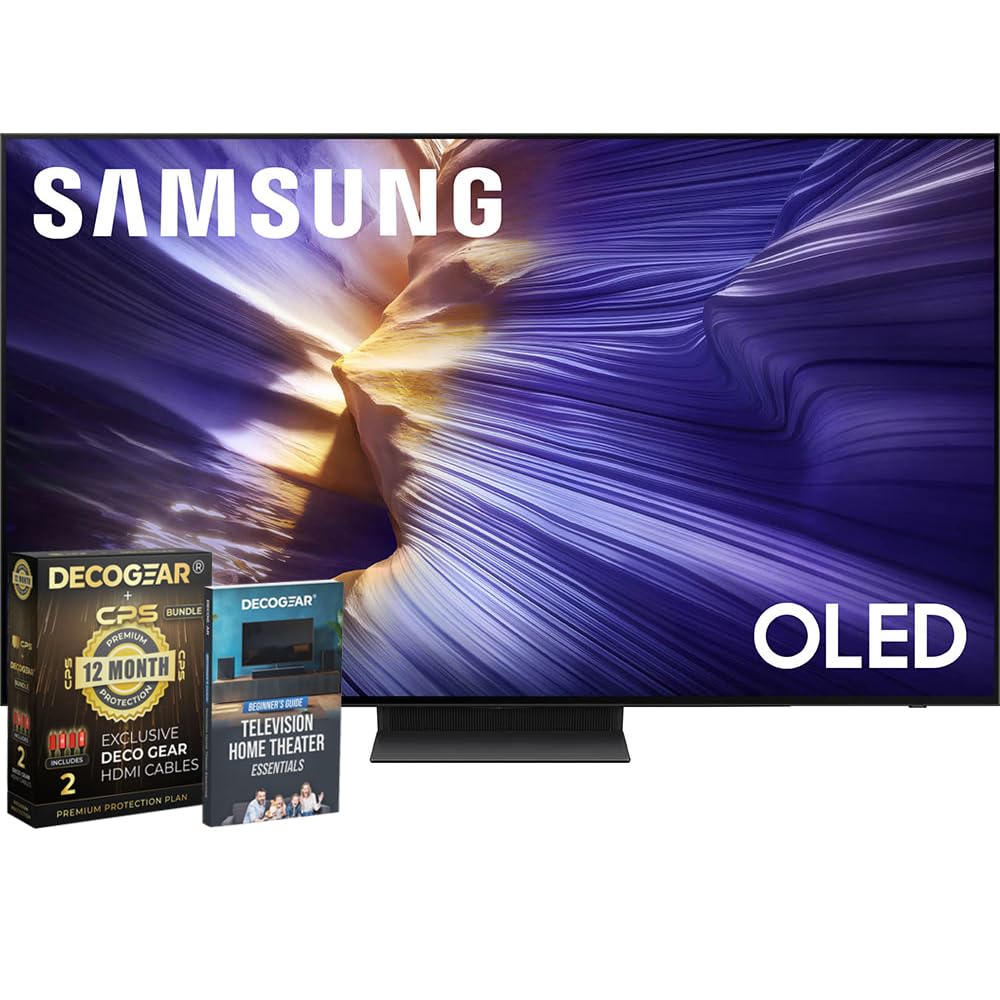
The 77-inch S90F is Samsung’s mid-range OLED that packs the NQ4 AI Gen3 processor—the same 128-neural-network silicon found in the flagship S95F—into a more accessible chassis without the matte anti-glare coating. This processor does heavy lifting for upscaling: 1080p SDR content emerges with noticeably cleaner edges and less noise than the previous-gen NQ4 AI. OLED HDR+ boosts brightness to deliver punchy highlights that approach 1,000 nits, making HDR content look vibrant even in rooms with some ambient light.
The Motion Xcelerator 144Hz keeps fast-paced sports and racing games fluid, though only one HDMI port supports the full 144Hz VRR bandwidth. The SolarCell remote charges via ambient light, eliminating disposable batteries. Setup is straightforward with the included Deco Gear HDMI 2.0 cables and home theater guidebook, though you’ll want to upgrade to HDMI 2.1 cables for 4K/144Hz PC gaming.
Color accuracy is Pantone Validated, meaning skin tones and natural landscapes avoid the oversaturation that plagues some QLED panels. Samsung’s Tizen OS runs snappier than previous generations but still includes unavoidable promotional tiles on the home screen. The lack of Dolby Vision support means HDR10+ is the primary high-dynamic-range format—a non-issue if your streaming ecosystem is Prime Video or YouTube, but a gap if you rely on Apple TV 4K or Disney+ in Dolby Vision.
Why it’s great
- Flagship NQ4 AI Gen3 processor at a mid-range price
- Pantone Validated color for accurate skin tones and landscapes
- SolarCell remote and bundled accessories reduce initial costs
Good to know
- Only one HDMI 2.1 port supports full 144Hz
- No Dolby Vision support; HDR10+ only
- Standard glossy screen; not ideal for bright rooms
3. Sony BRAVIA 8 77″ OLED

The BRAVIA 8 sits above Sony’s A80L in the 2024 lineup, replacing it with the newer XR Processor that powers XR Contrast Booster 15 and XR Triluminos Pro. The result is the best black-level detail of any OLED on this list—shadows in dark scenes retain texture without crushing into black blobs. The 77-inch size uses over 8 million self-lit pixels, and the XR OLED Motion interpolation handles 24fps film content without the soap-opera effect that plagues lesser processing.
PS5 integration is the headline feature: Auto HDR Tone Mapping reads the PS5’s HDR metadata and adjusts the TV’s tone curve dynamically, eliminating the need to manually configure HDR brightness sliders. Auto Genre Picture Mode detects when a game launches and switches to Game Mode, then reverts to Cinema Mode for streaming. The Game Menu overlays all gaming settings—VRR status, crosshair overlays, screen size adjustment—in a single dashboard without leaving the game.
The built-in sound from Acoustic Surface Audio+ is genuinely usable, vibrating the OLED panel itself to produce dialogue that appears to come from the on-screen actors’ mouths. Dolby Atmos and DTS:X pass-through work correctly via eARC. The XR processor upscales 1080p content with fewer artifacts than LG’s α9 Gen7, making old cable TV and YouTube videos look surprisingly clean. The 120Hz refresh rate is sufficient for most AAA games, but competitive PC gamers may miss the 144Hz+ options from LG and Samsung.
Why it’s great
- Exclusive PS5 Auto HDR Tone Mapping for optimized gaming
- Best-in-class upscaling for sub-4K content
- Acoustic Surface Audio+ delivers screen-based dialogue
Good to know
- Limited to 120Hz refresh rate; no 144Hz or 165Hz
- Only two HDMI 2.1 ports (one eARC)
- Glossy panel; requires controlled lighting for best contrast
4. Samsung Frame Pro 75″
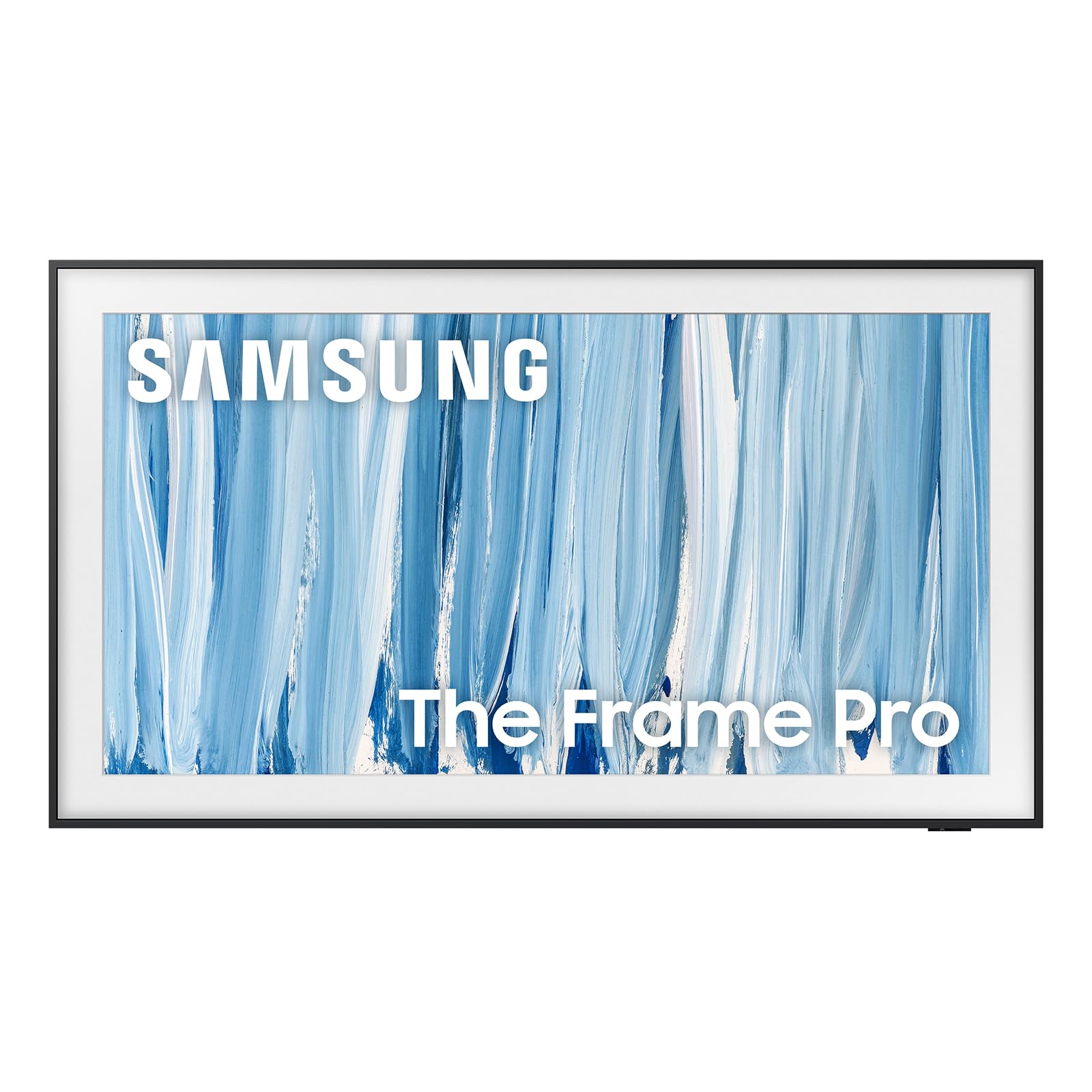
The Frame Pro 75 is a Neo QLED panel—not self-lit OLED—but earns its place in this guide because it solves the biggest OLED pain point: glare. The Glare Free matte screen scatters ambient light so effectively that even direct sunlight from a window produces no visible reflections, making it the best large-format display for bright living rooms with open floor plans. The Wireless One Connect box hides all HDMI and power cabling in a separate hub, leaving only a single invisible data cable running to the TV.
Art Mode is the defining feature: the TV displays over 5,000 artworks from global museums with adaptive brightness and motion sensors that wake the screen when someone enters the room. The Pantone Validated ArtfulColor calibration ensures paintings look realistic rather than oversaturated. Customizable magnetic bezels let you match the frame to your wall color, creating the illusion of a hanging canvas rather than a television.
Mini-LED backlighting delivers over 1,000 nits of peak brightness—more than any standard OLED—while maintaining deep blacks through local dimming. The 120Hz refresh rate handles sports and gaming smoothly, and Vision AI features scan the room’s lighting to adjust picture settings automatically. The trade-off: mini-LED black levels, while excellent, still show slight blooming around bright subtitles in dark scenes compared to OLED’s pixel-level off.
Why it’s great
- Zero visible glare in direct sunlight; best bright-room display
- Wireless One Connect eliminates cable clutter
- Art Mode with Pantone calibration replaces wall art
Good to know
- Neo QLED, not self-lit OLED; minimal blooming in dark scenes
- Art Store requires subscription beyond included trial
- Tizen interface has cluttered promotional content
5. Sony A80L 77″ OLED

The A80L is a 2023 model that remains competitive because Sony’s Cognitive Processor XR still outclasses newer processors from LG and Samsung in one critical area: natural motion handling. Where LG and Samsung’s motion interpolation can create artifacts around moving objects, the XR processor analyzes individual objects and adjusts clarity without introducing the soap-opera effect. Blacks are deep and detailed, and the XR OLED Contrast Pro boosts peak highlights to around 800 nits—enough for HDR impact in a dark room.
PlayStation 5 integration mirrors the BRAVIA 8: Auto HDR Tone Mapping and Auto Genre Picture Mode work seamlessly, and the Game Menu consolidates all gaming settings. The A80L includes five movie credits for BRAVIA CORE and a 12-month subscription to Sony’s streaming service, which streams at higher bitrates than Netflix or Disney+. The Google TV interface is cleaner than webOS or Tizen, with fewer promotional rows and better third-party app support.
The Acoustic Surface Audio+ system vibrates the screen to produce convincing center-channel dialogue, eliminating the need for a separate soundbar in small rooms. However, the A80L is the dimmest OLED on this list—its HDR peak brightness struggles against any window light, and the glossy panel reflects every lamp and window. This is a dark-room-only display that delivers reference picture quality only when the lights are off.
Why it’s great
- Best-in-class motion handling for 24fps film and sports
- Acoustic Surface Audio+ produces clear on-screen dialogue
- BRAVIA CORE includes high-bitrate movie credits
Good to know
- Lowest peak HDR brightness; loses contrast in bright rooms
- Glossy panel reflects all ambient light
- Bluetooth 4.2 is outdated for wireless audio peripherals
6. LG G3 83″ OLED evo

The 83-inch G3 is the largest gallery-series OLED from LG, featuring Micro Lens Array (MLA) technology that delivers up to 70% more brightness than a standard C-series panel. In real-world terms, this translates to sustained HDR highlights exceeding 1,300 nits—bright enough to overcome moderate ambient light and eliminate the washed-out look that plagues standard OLEDs in daylit rooms. The α9 Gen6 processor handles upscaling and motion interpolation competently, though it trails Sony’s XR in handling 24fps content.
The One Wall Design mounts flush against the wall with zero gap, and the Always Ready feature displays art, weather, or photos when idle—transforming the TV into a gallery piece. The 83-inch size means you get the full cinematic immersion without needing a projector, and the 120Hz refresh rate with G-Sync and FreeSync Premium covers all console and PC gaming needs. The included wall bracket saves the cost of a separate mount.
The glossy panel still reflects some ambient light despite the brightness boost, so a room with direct sunlight on the screen will still show reflections. The G3 does not include a tabletop stand—you must wall-mount or purchase the stand separately. webOS 23 is responsive but continues to push LG Channels and content recommendations on the home screen. The five-year panel warranty provides peace of mind for a display at this size.
Why it’s great
- MLA technology delivers 1,300+ nits; best bright-room OLED
- Flush wall mount design with zero gap
- Five-year panel warranty for premium protection
Good to know
- No tabletop stand included; wall mount only
- Glossy screen still shows reflections despite brightness
- webOS 23 has cluttered home screen recommendations
7. Samsung S95F 77″ OLED

The 77-inch S95F is Samsung’s brightest 2025 OLED, using a new panel material that achieves higher luminance than the S90F while adding the Glare Free matte coating that kills reflections entirely. In bright rooms with windows or overhead lights, the S95F maintains deep blacks and punchy highlights that glossy OLEDs lose entirely. The NQ4 AI Gen3 processor powers 4K AI Upscaling Pro and Auto HDR Remastering, which transforms SDR content into HDR-like dynamic range with convincing highlight detail.
The 165Hz refresh rate with VRR covers the highest-end PC gaming demands, and the Motion Xcelerator 164Hz preserves smooth motion during fast camera movements. HDR Pro delivers peak brightness around 1,200 nits, combining the matte coating’s reflection elimination with enough raw luminance to make HDR highlights pop even in daylight. The OLED HDR+ engine analyzes each scene and tone-maps dynamically, revealing shadow detail that would be crushed on lesser panels.
The thin profile and slim bezel make the S95F visually unobtrusive when wall-mounted. Samsung’s Tizen OS is faster than previous versions but still shows unavoidable Samsung Plus ads on the home screen. The SolarCell remote is rechargeable via USB-C or ambient light. Dolby Vision is absent, confining HDR to HDR10+ and standard HDR10—a limitation if your primary streaming sources rely on Dolby Vision metadata.
Why it’s great
- Matte anti-glare coating eliminates reflections in bright rooms
- 165Hz VRR for competitive PC gaming
- Auto HDR Remastering improves SDR content dynamically
Good to know
- No Dolby Vision support; HDR10+ only
- Tizen OS home screen shows unavoidable advertisements
- Only one HDMI 2.1 port supports full 165Hz
8. LG C6H 83″ OLED evo AI
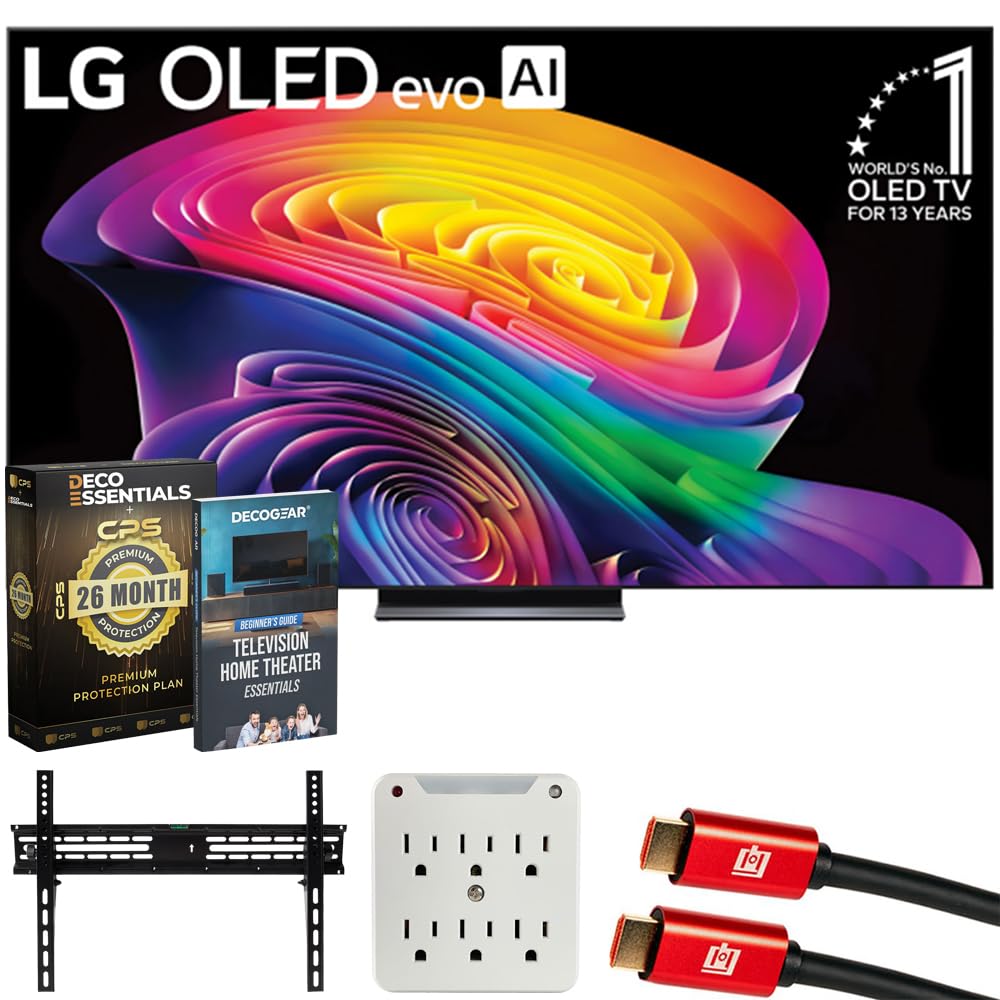
The 83-inch C6H is LG’s 2026 C-series evolution, powered by the α11 AI Processor Gen3 that enables intelligent scene optimization and Dual AI Engine processing. The panel delivers Hyper-Radiant Colors and Perfect Black with Brightness Booster Pro, achieving higher sustained brightness than the C4 while maintaining OLED’s infinite contrast ratio. The 165Hz VRR support with G-Sync and FreeSync Premium covers the entire gaming spectrum from console to high-refresh PC.
The bundled package includes a wall mount, two HDMI cables, a surge adapter, and a 26-month protection plan—practical additions that reduce the total ownership cost. Dolby Vision and Dolby Atmos are both supported natively, and FILMMAKER MODE preserves director intent for film purists. The webOS 25 interface introduces Quick Cards that group apps by category, reducing navigation time compared to previous webOS iterations.
This 83-inch class is genuinely massive—measuring over 72 inches wide, it requires a large wall or deep entertainment center. The glossy panel still reflects ambient light; the Brightness Booster Pro helps but cannot eliminate reflections like Samsung’s matte coating. The bundled surge adapter is rated at 750 joules, adequate for basic protection but not for areas with frequent electrical storms.
Why it’s great
- Latest α11 Gen3 processor with Dual AI Engine
- 165Hz VRR with full G-Sync and FreeSync Premium
- Comprehensive bundle: mount, cables, protection plan
Good to know
- Glossy screen; Brightness Booster Pro helps but doesn’t eliminate reflections
- 83-inch size requires substantial wall space
- Bundled surge adapter is entry-level (750 joules)
9. LG C6H 83″ OLED evo AI (Bundle 2)
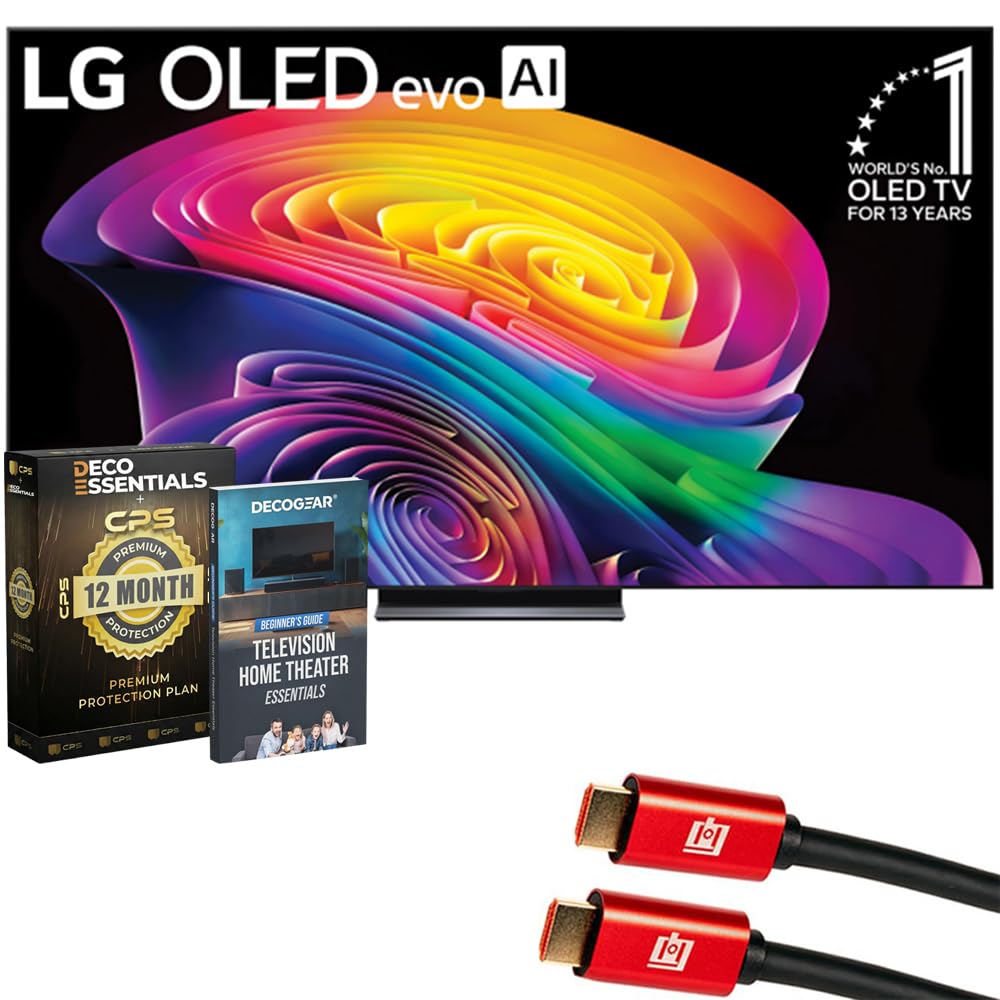
This identical C6H panel ships with a different bundle that trades the wall mount and surge adapter for a 1-year extended protection plan and the same Deco Gear HDMI cables and home theater guide. The core TV performance is identical to the previous C6H listing: α11 Gen3 processing, 165Hz VRR, Hyper-Radiant Colors, and full Dolby Vision/Atmos support. The decision between the two bundles comes down to whether you need a physical wall mount or prefer lower upfront accessory cost.
The 83-inch size delivers the same immersive presence—perfect for dedicated home theaters where the glossy panel’s reflections can be controlled. The α11 Gen3 processor’s Dual AI Engine optimizes both picture and audio simultaneously, adjusting EQ and surround processing based on the content type. The Magic Remote’s pointer function and voice search via Alexa built-in make navigation fast, though the remote lacks backlit buttons for dark rooms.
Brightness Booster Pro lifts HDR highlights to around 1,000 nits, which is competitive with Samsung’s S90F but falls short of MLA-equipped panels. The 1-year protection plan covers parts and labor for the first year beyond the manufacturer warranty, but the 26-month plan in the other bundle offers better value for the same TV price. The bundled HDMI 2.0 cables are sufficient for 60Hz gaming but must be replaced for 120Hz+ VRR.
Why it’s great
- Same α11 Gen3 processing as the premium C6H bundle
- 165Hz VRR covers all console and PC gaming scenarios
- Dolby Vision/Atmos support for cinema-grade HDR
Good to know
- No wall mount included in this bundle
- 1-year extended protection is shorter than the 26-month option
- Bundled HDMI 2.0 cables limit 4K/120Hz performance
10. LG G5 83″ OLED evo
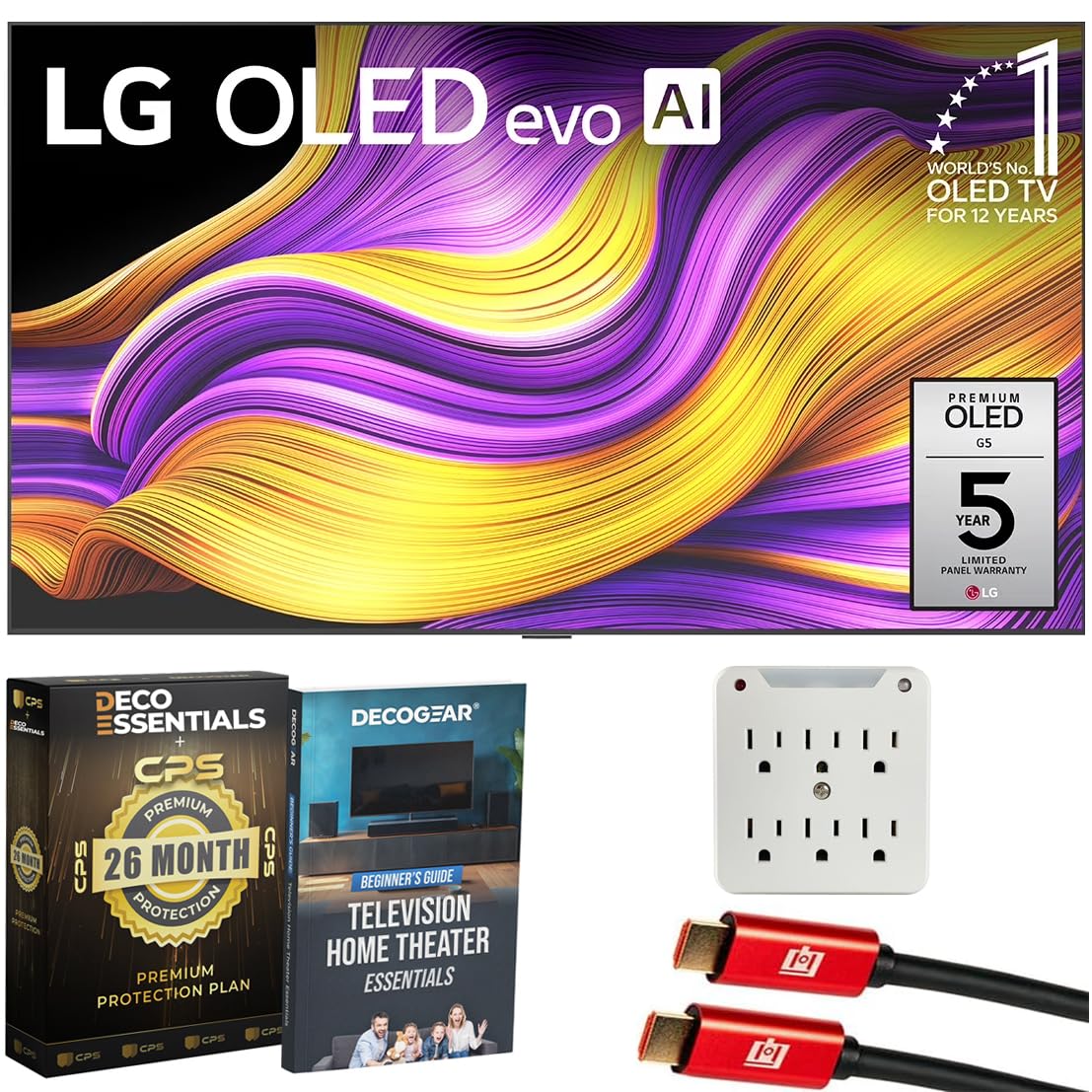
The 83-inch G5 is LG’s 2025 gallery-series flagship, featuring Brightness Booster Ultimate that delivers up to 45% brighter images than the G3. In practical terms, this means sustained HDR peaks exceeding 1,500 nits—bright enough to be genuinely watchable in sun-drenched rooms without sacrificing OLED black levels. The One Wall Design includes a flush mount that leaves no gap, and the Always Ready art mode displays photos and paintings at gallery-quality brightness.
The α11 AI Processor Gen2 powers AI Picture Pro and AI Super Upscaling, reconstructing 1080p content with impressive sharpness. The 165Hz refresh rate with G-Sync and FreeSync Premium supports the full range of gaming hardware. The bundle adds a 26-month protection plan, surge adapter, and HDMI cables—practical additions for a display at this price point. webOS 25 with Quick Cards and LG Channels provides 350+ free channels without subscription.
The 83-inch size demands significant wall real estate and professional installation—this TV weighs over 90 pounds without the mount. The glossy panel, despite its extreme brightness, still shows reflections in direct sunlight; the brightness compensates by overwhelming reflections rather than eliminating them. The tabletop stand is sold separately, so wall mounting is the default expectation. The five-year panel warranty covers OLED burn-in and defects.
Why it’s great
- Brightness Booster Ultimate achieves 1,500+ nits HDR peaks
- One Wall Design with flush mount and gallery-worthy art mode
- Five-year panel warranty and 26-month extended protection
Good to know
- No tabletop stand included; wall mount only
- Extreme weight (90+ lbs) requires professional installation
- Glossy panel still shows reflections despite high brightness
11. Samsung S90H 83″ OLED
The 83-inch S90H is Samsung’s 2026 large-format OLED, combining the NQ4 AI Gen3 processor with OLED HDR+ and Glare Free technology in a non-matte configuration. The processor’s 128 neural networks handle 4K AI Upscaling Pro, AI Motion Enhancer Pro for sports, and Auto HDR Remastering that transforms SDR content into HDR-like quality. The Motion Xcelerator 165Hz with G-Sync and FreeSync Premium Pro covers competitive gaming needs across all platforms.
The 83-inch size provides the largest OLED canvas in Samsung’s lineup outside the S95F, making it ideal for home theater enthusiasts who want a single display for both bright daytime viewing and dark-room movie nights. The OLED HDR+ engine boosts brightness and contrast dynamically per scene, revealing details in shadows and highlights that standard HDR processing misses. Connectivity includes Ethernet, HDMI, USB, and Wi-Fi 6E support.
The S90H lacks the matte anti-glare coating of the S95F, so it still reflects ambient light on the glossy screen. The 120Hz refresh rate cap appears conservative compared to the 165Hz of the C6H and S95F, but it covers all console gaming and most PC gaming adequately. Samsung’s One Design language keeps the bezel thin and the profile low-profile when wall-mounted.
Why it’s great
- 83-inch OLED with NQ4 AI Gen3 processor and 165Hz VRR
- Auto HDR Remastering upgrades SDR content to HDR quality
- AI Motion Enhancer Pro reduces blur in sports and action
Good to know
- No matte anti-glare coating; glossy panel reflects light
- Capped at 120Hz for most content despite 165Hz support
- No Dolby Vision; HDR10+ only
12. Samsung S95F 83″ OLED

The 83-inch S95F extends Samsung’s flagship glare-free OLED to the largest size available, combining the matte anti-glare coating that eliminates reflections with the brightest OLED panel Samsung has produced. The NQ4 AI Gen3 processor powers 4K AI Upscaling Pro, Auto HDR Remastering, and AI Motion Enhancer Pro, ensuring that everything from 1080p cable to 4K HDR games looks crisp and vibrant. The 165Hz VRR support covers the most demanding PC gaming scenarios.
The matte coating is the defining feature at this size—an 83-inch glossy panel in a bright room produces severe reflections that ruin dark scenes, but the S95F’s coating scatters incoming light so effectively that blacks remain black even with windows behind the viewer. HDR Pro delivers peak brightness around 1,200 nits, and the OLED HDR+ engine dynamically tone-maps each scene for optimal contrast. The thin profile and slim bezel make the 83-inch panel appear almost borderless when wall-mounted.
Samsung’s Tizen OS handles streaming and smart features competently but includes Samsung TV Plus ads on the home screen. The Dolby Vision omission persists—all HDR content must use HDR10+ or standard HDR10. The SolarCell remote eliminates battery waste but lacks a finder feature. The massive 83-inch panel requires two people for unboxing and a sturdy wall mount rated for over 100 pounds.
Why it’s great
- Largest glare-free OLED with matte anti-glare coating
- 165Hz VRR with G-Sync and FreeSync Premium Pro
- HDR Pro with dynamic tone mapping for superior contrast
Good to know
- No Dolby Vision support; HDR10+ only
- Requires professional installation due to size and weight
- Tizen OS home screen shows unavoidable advertisements
13. LG G5 97″ OLED evo

The 97-inch G5 is the largest OLED television available for consumer purchase, using LG’s Brightness Booster Max technology to produce over 2,000 nits of peak HDR brightness—enough to rival premium projectors while maintaining OLED’s infinite contrast ratio. The α11 Gen2 processor powers AI Super Upscaling that reconstructs 1080p content with convincing detail at this massive scale, and the AI Director Processing optimizes picture settings per scene based on cinematic color grading. The UL Discomfort Glare Free certification ensures the screen remains watchable in rooms with lighting.
This display is a true cinema replacement: 97 inches diagonal, over 200 pounds, requiring professional installation and a wall rated to support the weight. The One Wall Design mounts flush against the wall with virtually no gap, and when idle, the Always Ready feature displays art at gallery brightness. Dolby Vision, Dolby Atmos, and FILMMAKER MODE are all supported, and the 120Hz refresh rate with G-Sync and FreeSync Premium covers console gaming.
The 97-inch size is impractical for most homes—it demands a dedicated theater room with controlled lighting to justify the cost. The glossy panel, while extremely bright, still shows reflections in direct sunlight; the Brightness Booster Max compensates by making highlights sufficiently intense to overcome minor reflections. The included wall bracket does not include a tabletop stand; this TV is designed exclusively for wall mounting. The five-year panel warranty protects against burn-in and defects.
Why it’s great
- 97-inch OLED replaces projector setups with true black levels
- 2,000+ nits peak HDR brightness; brightest OLED available
- α11 Gen2 processor with AI Director Processing and Dolby Vision/Atmos
Good to know
- Impractical size for most homes; requires professional installation
- Glossy panel still reflects light despite extreme brightness
- No tabletop stand; wall-mount only and requires structural support
FAQ
Does a matte anti-glare OLED ruin black levels compared to a glossy panel?
Is the 83-inch C6H worth the upgrade over the 77-inch C4 for gaming?
How much does Dolby Vision vs. HDR10+ matter for a 75-inch OLED?
Final Thoughts: The Verdict
For most users, the 75 inch oled tv winner is the LG C4 77″ because it balances four HDMI 2.1 ports, 144Hz VRR, Dolby Vision, and competitive brightness into the best value package. If you want a matte screen that kills reflections in a bright living room, grab the Samsung S95F 77″. And for cinema-scale home theater with uncompromising black levels, nothing beats the LG G5 97″.