
Our readers keep the lights on and my morning glass full of iced black tea. As an Amazon Associate, I earn from qualifying purchases.
Specs are compiled from manufacturer listings and verified buyer reviews and can change over time — please confirm the key details on the product page before buying.
A 75-inch screen is the kind of upgrade that changes movie night, game day, and Sunday football from a small ritual into an event. The catch is that at this size, a bad panel is brutally obvious, and a confusing smart system turns a relaxing evening into a frustrating one. This guide cuts through the marketing to find the sets that deliver a genuinely crisp, colorful picture and a smooth everyday experience without blowing your budget.
I’m Min — the founder and writer behind Gadgets Feed. This guide is built by comparing the manufacturers’ published specifications and the patterns across verified customer reviews, so you get each pick’s real strengths and trade-offs instead of marketing spin.
You want a TV that looks great in daylight, switches apps without stalling, and sets up in minutes—not a spec sheet puzzle. Matching the panel tech to your room and viewing habits is what separates a good buy from a regret. Here is your shortcut to the 75 inch tv under $500 that fits your living room, not the other way around.
Our Picks at a Glance
How To Choose The Best 75 Inch TV Under $500
At this screen size and price, the panel technology and the operating system decide everything about your happiness with the purchase. Ignore the brand name on the box for a second and look at what is actually powering the picture.
Match the Panel to Your Room’s Light
The biggest differentiator you’ll notice daily is the backlight tech. A Mini-LED panel uses tiny lights behind the screen to control brightness and black levels far more precisely than a standard LED. If your room is bright during the day, this is the feature that stops colors from washing out. Standard LED sets still look good, but they need dimmer rooms to show their best work.
Look Past the Resolution to the Processor
All picks here are 4K (3840 x 2160 pixels), but the processor inside each one does the real work. It upscales—converts a 1080p signal to near-4K sharpness—so cable TV and older shows don’t look soft on a 75-inch screen. A stronger processor with dedicated upscaling smooths edges, keeping faces and text crisp even when the source is low-resolution.
Quick Comparison
| Model | Best For | Display Tech | Refresh Rate | Smart Platform | Amazon |
|---|---|---|---|---|---|
| Samsung U8000H★ Best Overall | Everyday 4K value | Crystal UHD LED | 60Hz | Samsung Tizen | Amazon |
| INSIGNIA F50Best Value | Big-screen bargain hunting | Direct LED | 60Hz | Fire TV | Amazon |
| TOSHIBA M450 | Color-rich QLED picture | QLED | 60Hz | Fire TV | Amazon |
| Samsung M70H | Bright-room contrast | Mini-LED | 120Hz | Samsung Tizen | Amazon |
| Hisense E6 | Cinematic HDR with Alexa | Hi-QLED | 120Hz | Fire TV | Amazon |
In-Depth Reviews
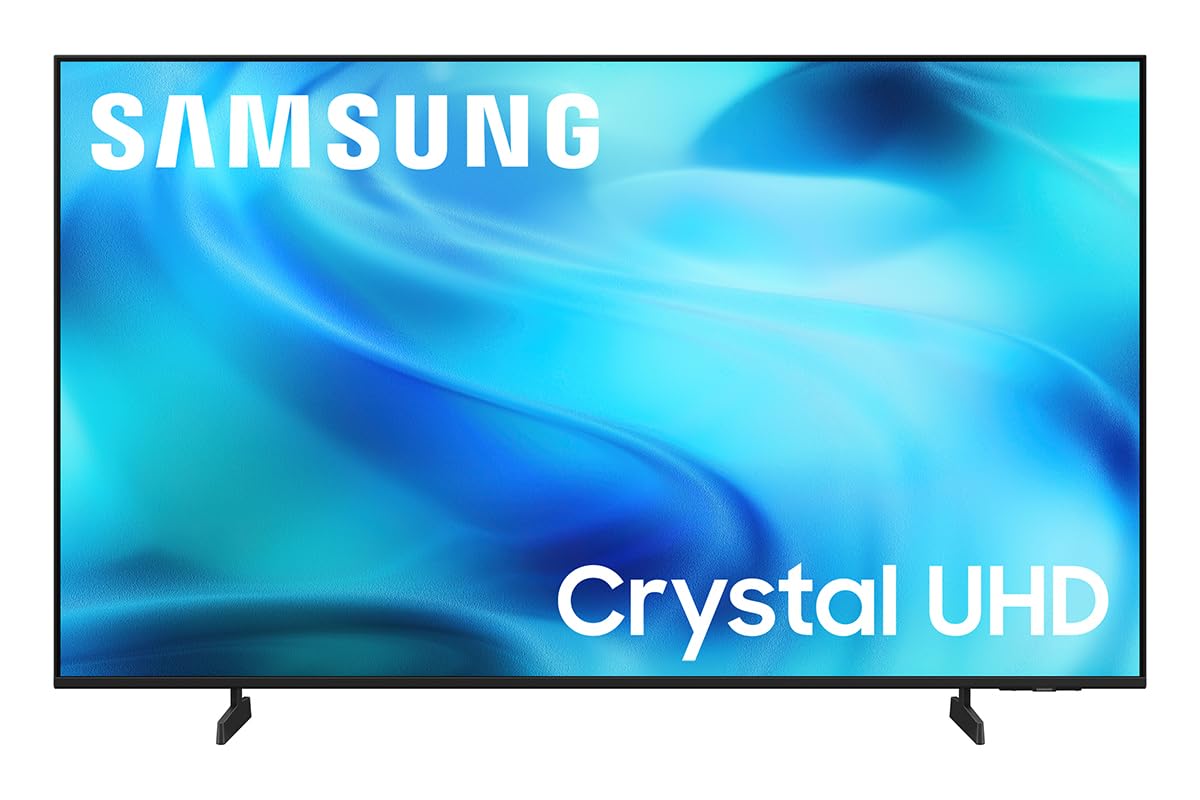
1. Samsung 75-Inch Class U8000H Series Crystal UHD
Our pick — over 4★ from 850+ verified ratings; the strongest balance of quality and price.
The balanced all-rounder that upgrades your old cable and streaming into sharp, vibrant 4K.
The Samsung U8000H nails the core promise of a big-screen upgrade: a picture that makes everything you watch feel new. The Crystal Processor is the star here, enhancing colors and sharpening details so that sports, movies, and games look crisp and lively. It pairs that with Motion Xcelerator, which estimates and adjusts frame transitions in real time, so fast-moving action on the pitch or in a racing game stays smooth and clear at up to 4K 60Hz.
The real joy of this set is how it feeds you content for free. Samsung TV Plus bundles 2,700+ free streaming options, including 750+ ad-supported channels for news, sports, and movies, with no subscription push. Owners consistently praise the crisp, vibrant 4K picture, easy setup, and slim-bezel design that looks pricier than it is.
Not every owner is thrilled. Buyers report the Tizen operating system (Samsung’s smart-TV platform) can feel laggy when navigating menus. Also, this model has only 2 HDMI inputs—so if you connect a soundbar, a streaming stick, and a game console, you will run out of ports. Switching inputs means going through the home screen, not pressing a dedicated remote button, which adds a small daily step if you change sources often.
Picture Power
- Crystal Processor boosts color and detail for vibrant 4K viewing
- Motion Xcelerator keeps sports and gaming smooth up to 4K 60Hz
- Color Booster makes reds and blues pop with intensity
- Built-in Alexa adds voice control convenience
Real Trade-offs
- The remote feels cheap and has no direct input button
- Bright daylight viewing washes out reds, best in dimmer rooms
- Only 2 HDMI inputs limits your connected devices
The smart pick: This is the safe, crowd-pleasing choice if you want a reliable big 4K screen with great color for movies and sports in a controlled-light room.
Heads up: If your living room is flooded with sunlight all afternoon, look at a Mini-LED option that handles brightness better.
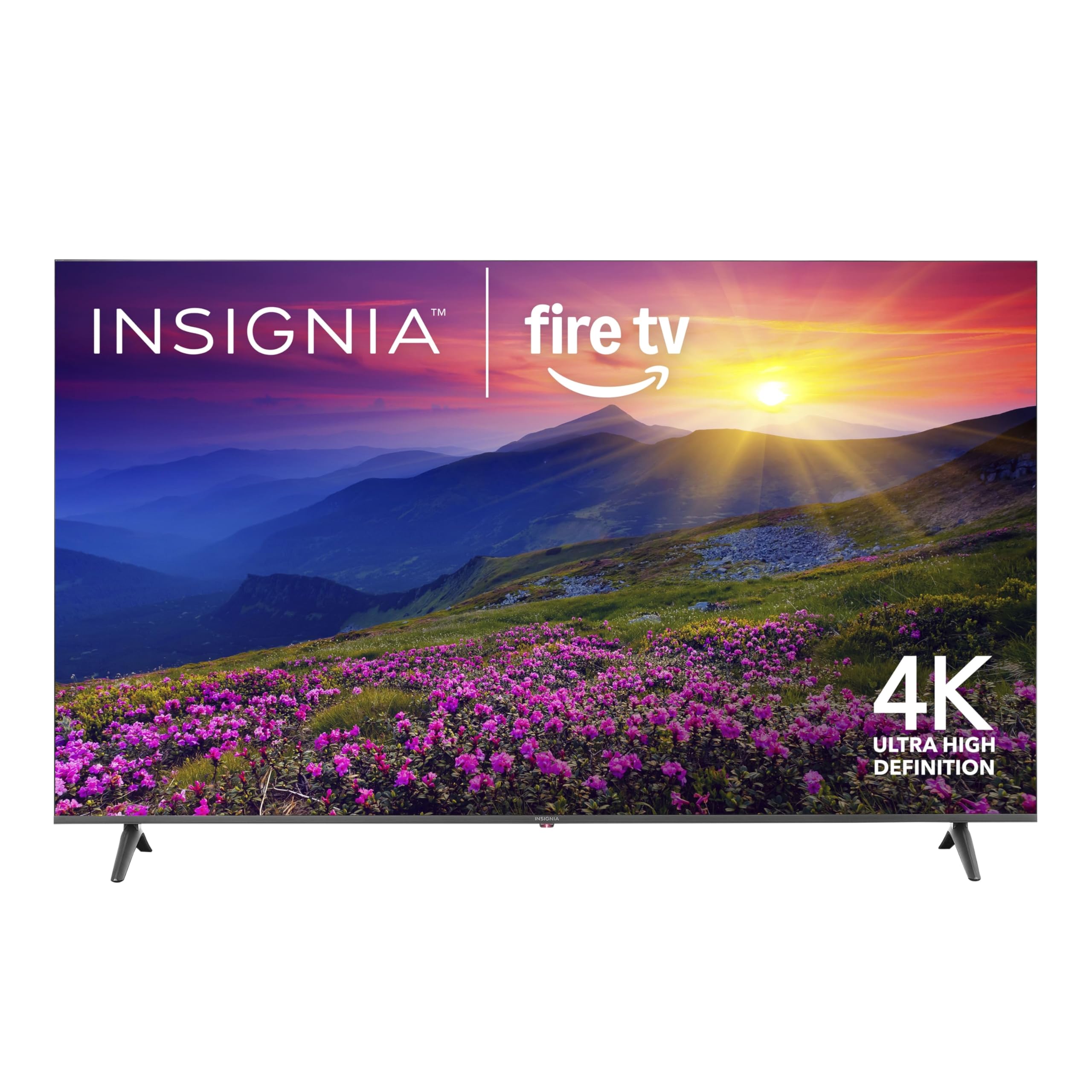
2. INSIGNIA 75″ Class F50 Series LED 4K UHD Smart Fire TV
The entry point to a massive screen, leaning hard on Alexa to find your shows.
The INSIGNIA F50 is the definition of a budget-friendly giant. It delivers 4K Ultra HD at 2160p resolution, which gives you four times the detail of Full HD, along with HDR10 to widen the color range from brightest whites to deepest blacks. The panel uses Direct LED backlighting for a uniformly bright screen with better color accuracy than you might expect at this level.
What really sets this TV apart is the Fire TV brain. With the Alexa Voice Remote, you press and hold the voice button to search across apps, switch inputs, or launch content without typing. Fire TV aggregates over 1 million movies and episodes from Prime Video, Netflix, Hulu, HBO Max, YouTube, and Apple TV+.
Set against the Samsung above, the INSIGNIA offers more physical flexibility with 3 HDMI ports, a headphone jack, and even composite AV jacks for older gear. Owner feedback is split: some call the picture “great for this price range,” while others report frustrating defects. A couple of units have arrived with a busted screen, which makes a careful unboxing and an immediate test run essential advice for this one. The consensus is clear though: for pure square-footage per dollar, not much else competes.
Alexa-Connected
- 4K picture with HDR10 for a wide range of color and contrast
- 3 HDMI ports plus composite AV jacks for older devices
- VESA 400 x 300 pattern makes wall mounting simple
Important to Know
- Quality control is mixed, with occasional units arriving damaged
- A few owners found the picture underwhelming for their taste
- Limited early reviews make long-term reliability a gamble
Reach for this if: You want the biggest possible screen for the least money and you’re already happy living inside the Alexa ecosystem.
Look elsewhere if: You can’t risk a potentially flawed panel and want the reassurance of a more established track record.
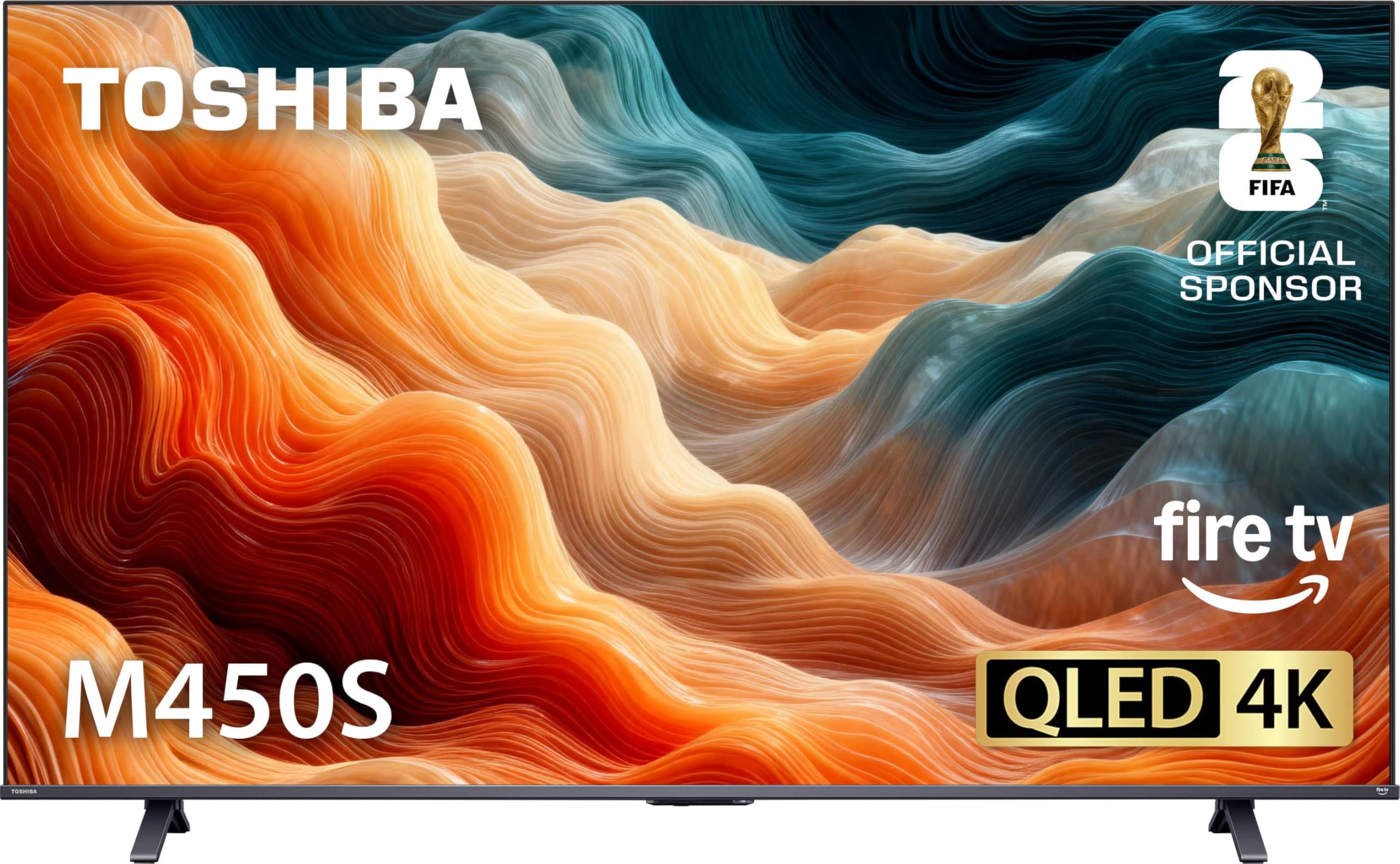
3. TOSHIBA 75″ Class M450 Series QLED 4K UHD Smart Fire TV
QLED color depth and a Japanese-designed aesthetic that turns your wall into a gallery.
The TOSHIBA M450 steps up the picture game with a QLED panel, which uses quantum dot technology to deliver rich, lifelike color across every scene. This is the middle-ground tech that makes subtle tones and bold highlights look more realistic than a standard LED screen can manage. It’s powered by the REGZA Engine ZR, which Toshiba says is fine-tuned by their picture experts to deliver images that look true to how we see the world.
For movie lovers, the combination of Dolby Vision HDR imaging and Dolby Atmos sound is the big draw here. Dolby Vision adds scene-by-scene brightness and contrast adjustments, which HDR10+ Adaptive complements by adjusting to changing light in your room. The dual clear direct speakers also promise a more balanced sound than you typically get from a flat TV.
The experience isn’t without its quirks. Sound quality divides owners, and some report a sluggish Fire TV interface with 4K stuttering on YouTube TV that drops to 1080p. Also, despite what some listing photos suggest, this model doesn’t include analog inputs or a headphone jack, which matters if you plan to connect legacy audio gear. But the picture quality gets consistent praise as crisp and colorful, with setup described as smooth, making this a strong choice for buyers who prioritize visual fidelity.
Visual Feast
- QLED tech delivers rich, lifelike color in every scene
- Dolby Vision and HDR10+ Adaptive handle changing room light
- Game Mode supports ALLM, VRR, and eARC for console players
The Compromises
- No analog inputs or headphone jack despite what photos show
- Fire TV interface can feel sluggish and stutter in 4K apps
- Wide legs on the stand need a larger TV cabinet
Best for: Cinephiles and gamers who want Dolby Vision and a panel that makes colors pop, without jumping to premium pricing.
Worth noting: The lack of legacy audio ports means you’ll need HDMI for anything you connect to it.
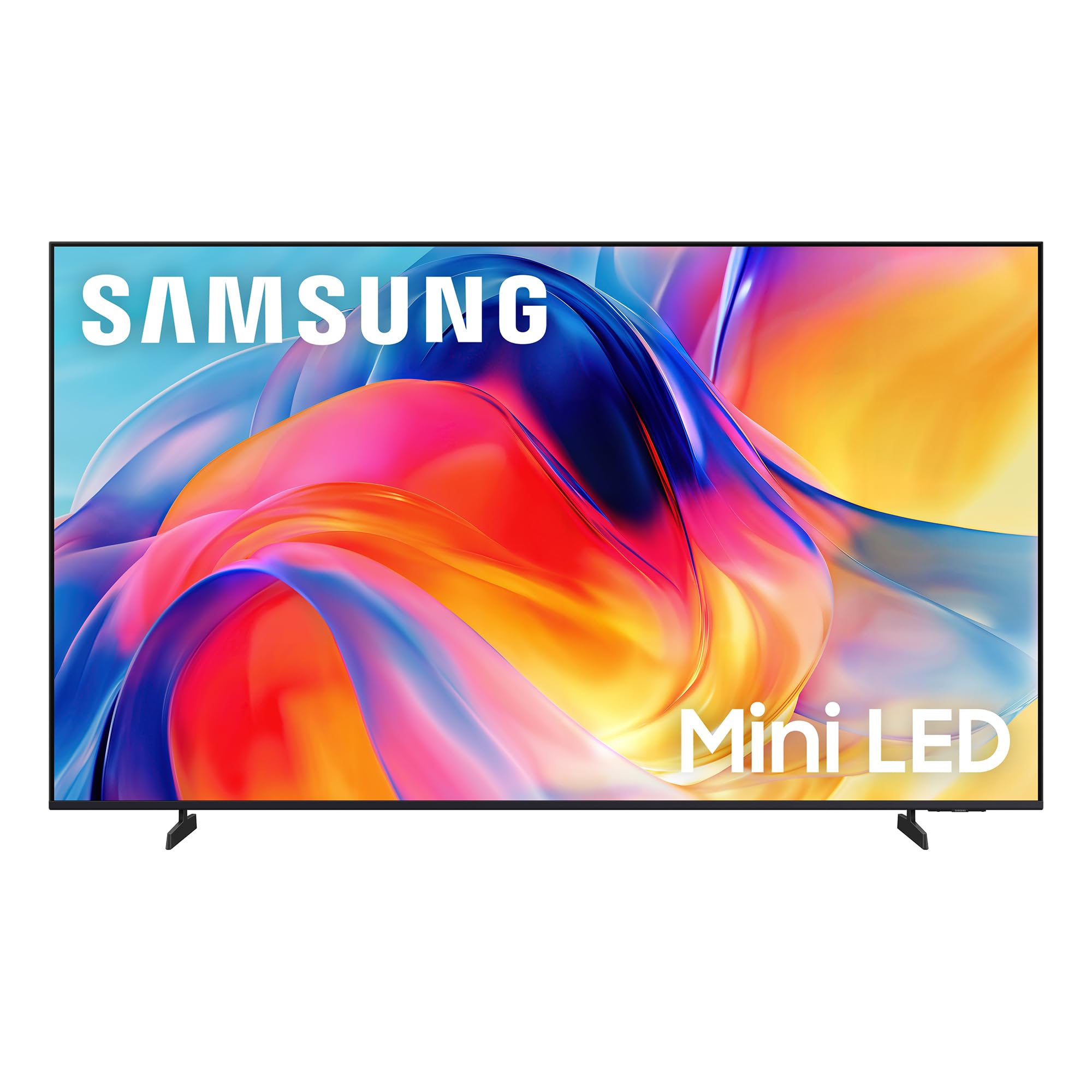
4. Samsung 75-Inch Class M70H Series Mini LED 4K Smart TV
Mini-LED precision that delivers brighter highlights and deeper blacks for sunlit rooms.
The Samsung M70H is the TV to pick if your living room gets real daylight. Its Mini-LED backlight technology uses thousands of tiny lights to deliver brighter highlights and deeper blacks than traditional HDR TVs, which directly counters the washed-out look on cheaper panels. The Mini LED Processor 4K further refines contrast, preserving detail in both the brightest highlights and deepest shadows.
Gamers get a serious boost here, too. The Motion Xcelerator + DLG 120Hz technology analyzes and tune the refresh rate to keep fast scenes sharp and fluid, which is a step up from the standard 60Hz panels. The Gaming Hub also aggregates your console, cloud service, and app games into one central place with personalized recommendations. And for sports fans, the dedicated Soccer Mode uses specialized settings to deliver 40% clearer motion for fast action and 30% more vibrant greens for realistic turf.
The remote draws the most criticism for laggy response and missing direct HDMI switching buttons. It also lacks input memory, so you may have to manually select your source again after turning it on. There’s no optical or RCA jack either, which blocks hookups for older sound systems. What wins people over is the picture and value — the crisp, clear quality and rich colors make it a great Samsung Smart TV for the money.
Backlight Mastery
- Mini-LED panel holds detail in bright and dark scenes alike
- 120Hz motion keeps gaming and sports exceptionally fluid
- Gaming Hub centralizes console and cloud play
Daily Friction
- The remote is laggy with no direct input switching buttons
- Only 3 HDMI ports, none reserved for optical audio
- Needs two people to safely lift and mount this heavy panel
Choose this if: Your viewing happens in a bright, sunlit space and you want the Mini-LED contrast that standard sets can’t match.
Just so you know: Plan for a soundbar and streaming stick on HDMI, because there are only three ports total.
5. Hisense 75″ E6 Cinema Series Hi-QLED 4K UHD Smart Fire TV
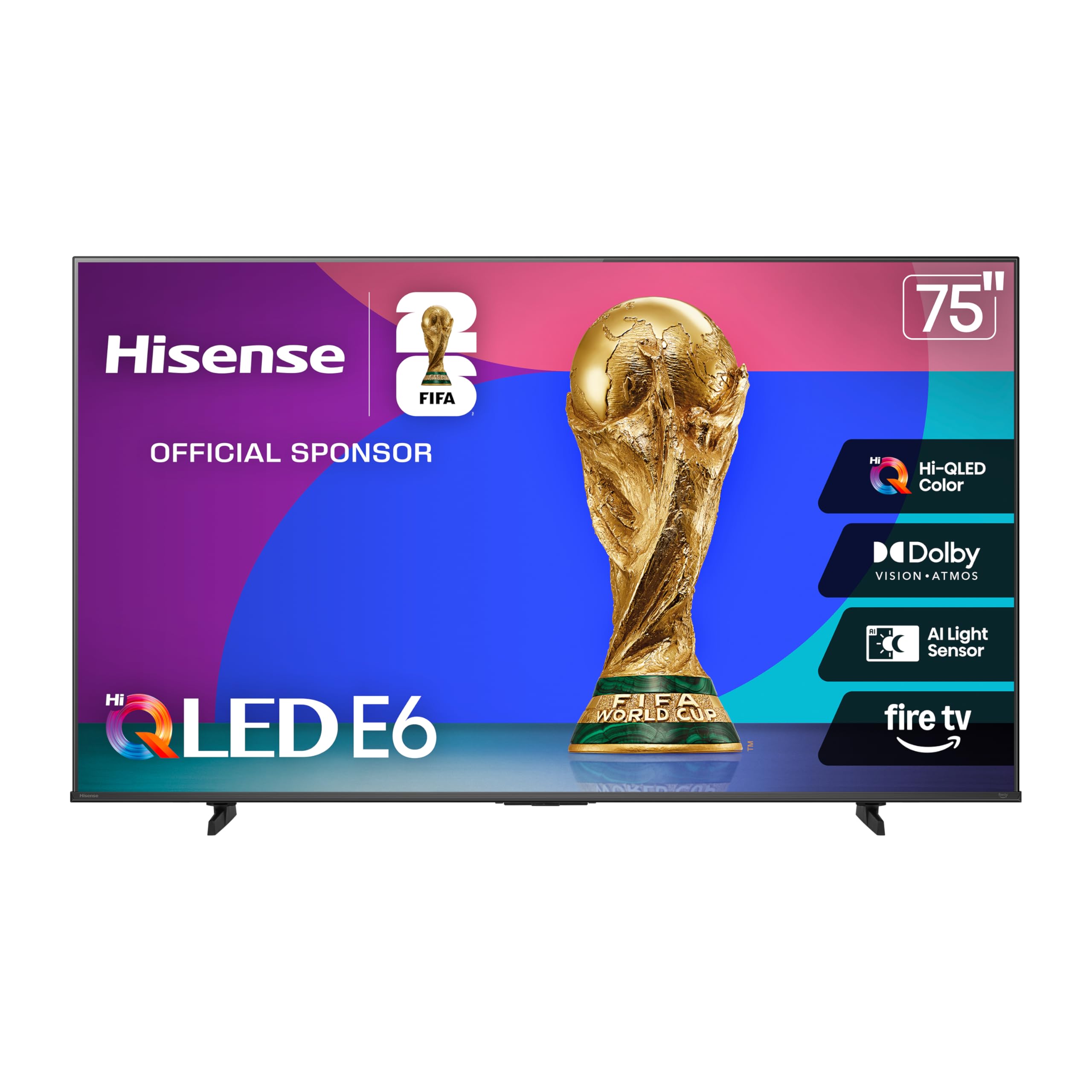
Cinema-grade HDR with a motion rate of 120 to keep breakneck sports crisp.
Movie nights get a real boost with the Hisense E6, thanks to its Hi-QLED Color panel (a quantum-dot layer that widens the color range) paired with Total HDR Solution. It handles every major HDR format—Dolby Vision, HDR 10+ Adaptive, HDR 10, and HLG—so dark scenes show deep blacks and bright scenes pop, no matter the source. Add Dolby Atmos audio (object-based surround sound) and you get a theater-like feel without leaving your couch.
This set also handles motion impressively with its Motion Rate of 120. The AI Smooth Motion feature, powered by MEMC technology and AI Noise Reduction, keeps the picture ultra-crisp and blur-free no matter how fast the movement on screen gets. An AI Light Sensor automatically adjusts screen brightness in response to ambient light, which saves electricity without forcing you into a dim, dull picture during the day.
The smart platform is Fire TV with Alexa, but it also works with Apple HomeKit and AirPlay for Apple users. Buyers most praise the vivid color and strong value for the price. The reliability is genuinely mixed, though — a notable number of owners mention random shutdowns and audio buzzing, and the AI upscaling doesn’t fix everything. Still, for those who get a good unit, the bright, sharp picture and game-friendly features feel like a steal for the price.
Entertainment Hub
- Full HDR support includes Dolby Vision and HDR 10+ Adaptive
- Motion Rate 120 with MEMC kills blur in fast sports
- WiFi 6 handles many devices with lower latency
Buyer Be Aware
- Reports of random shutdowns and loud audio buzzing exist
- Only 9.56GB of internal storage limits app installs
- App glitches and crashes reported on Hulu and essential
Grab it for: The absolute best cinematic HDR and motion handling at this price, with Apple HomeKit voice control as a bonus
Be mindful: Reliability is a lottery here, so buy with a solid return policy in place.
Understanding the Specs
Refresh Rate & Motion Handling
This is the number that tells you how smooth fast action looks. A standard 60Hz panel refreshes the image 60 times a second, which is perfectly fine for movies and most TV shows. But if you watch a lot of sports or play fast-paced video games, the action can look slightly choppy. A 120Hz panel refreshes twice as often, keeping fast camera pans and quick player movements looking fluid and clear. Remember that the TV’s motion processing can also estimate and insert frames to simulate smoothness, but a true higher native rate generally performs better.
Panel Technology: LED vs QLED vs Mini-LED
The panel type controls brightness and color, and it’s the most important spec for picture quality. A standard Direct LED TV lights the whole screen with a single backlight layer, which is fine but can make dark scenes look gray. QLED adds a quantum dot layer that boosts color volume and brightness, making colors look richer and more lifelike. Mini-LED takes it further by shrinking the lights themselves, allowing the TV to dim specific zones of the screen. This creates much deeper blacks while keeping the bright areas intense, which is why Mini-LED handles brightly lit rooms much better than standard LED.
FAQ
Do I need a soundbar with a TV this big, or is built-in audio enough?
Will my current HDMI cables work with these 4K TVs?
What does 4K upscaling actually do for my old DVDs and standard cable channels?
Is a 75-inch TV too big for my living room?
Samsung Tizen vs Fire TV, which smart platform is easier to use daily?
What’s the difference between HDR10+ and Dolby Vision?
How many HDMI ports do I realistically need on a 75-inch TV?
Can I wall mount a TV this large, and is that hard?
Why do some TVs buzz or shut off randomly, and should I worry?
Is there really such a thing as a good 75 inch TV under $500, or am I compromising too much?
Final Thoughts: The Verdict
For most living rooms, the 75 inch tv under $500 balance is the Samsung U8000H, because its 4K processor and Motion Xcelerator (a motion-smoothing feature) keep fast scenes clear and colors vibrant for daily viewing. If your room gets lots of daylight, the Samsung M70H is your pick—its Mini-LED backlighting (smaller LEDs for finer contrast control) cuts glare better than the U8000H. For the richest colors plus Dolby Vision on movie night, the TOSHIBA M450 stands out as the strongest contender here.
How We Picked
We do not accept paid placement. Every pick is matched to a real buyer and a real use-case; we do not hands-on test units.
Sources & Methodology
Specifications: manufacturer listings and product documentation. Review insights: verified customer reviews, as of September 2026. Pricing: not shown on this page (it changes often); check the current price via the retailer link.
As an Amazon Associate, Gadgets Feed earns from qualifying purchases. This does not affect which products we feature.