
Our readers keep the lights on and my morning glass full of iced black tea. As an Amazon Associate, I earn from qualifying purchases.
Specs are compiled from manufacturer listings and verified buyer reviews and can change over time — please confirm the key details on the product page before buying.
Walking into an attic that feels like a sauna in July is miserable, and it forces your air conditioner to run nonstop. The right ventilation fan pulls that trapped heat out so your upstairs stays comfortable and your cooling system gets a break. This guide compares three strong options around the 750 CFM (cubic feet per minute) mark — a measure of how much air the fan moves each minute — to help you find the best 750 roof vent for your home.
I’m Min — the founder and writer behind Gadgets Feed. This guide is built by comparing the manufacturers’ published specifications and the patterns across verified customer reviews, so you get each pick’s real strengths and trade-offs instead of marketing spin.
Whether you are venting a garage or cooling a whole attic, the 750 roof vent you choose depends on where you install it, how much noise you can tolerate, and if you want automatic thermostat control or a variable-speed setup.
Our Picks at a Glance

How To Choose The Best 750 Roof Vent
Not all fans at the 700-800 CFM range work the same way. The main difference depends on where you mount it and how you control it. Pick the wrong style and you might fight with installation complexity or end up with a fan that is louder than you expected.
Gable Mount vs. Inline Duct Fans
A gable mount fan sits directly in the wall of your attic or garage, pulling hot air out through a louvered shutter. It is straightforward to install because it replaces an existing vent opening. An inline duct fan, on the other hand, goes inside a duct run. It is better if you want to move air from a specific room or a distant space to the outside, but it needs ductwork.
Thermostat Control Matters More Than You Think
Fans with a built-in adjustable thermostat (like the Broan-NuTone 353) turn on automatically when heat builds up. That convenience means you do not have to remember to flip a switch every afternoon. But buyers report that the thermostat sensor reads the temperature right at the fan housing, so you may need to fine-tune the setting to match the actual attic temperature.
Noise Level is a Real Dealbreaker
A powerful fan that drowns out conversation in the room below is not worth the savings. Sound is measured in sones — the lower the number, the quieter it is. A fan rated at 4.7 sones, for instance, produces a noticeable hum but not a roar. Many buyer reviews mention that installing rubber isolation mounts or foam tape helps reduce vibration noise transferred through the ceiling.
Quick Comparison
| Model | Best For | Airflow (CFM) | Mount Type | Special Feature | Amazon |
|---|---|---|---|---|---|
| Broan-NuTone 353★ Best Overall | Attic / Garage Auto-Cooling | 760 CFM | Gable Mount | Built-in Thermostat | Amazon |
| Vortex Powerfans VTX1000 | Inline Duct / Quiet Operation | 790 CFM | Inline Duct | Speed Controller | Amazon |
| Broan-NuTone L700 | Ceiling / Wall High Capacity | 701 CFM | Ceiling / Wall / Inline | Dual Blower Wheels | Amazon |
In‑Depth Reviews
1. Broan-NuTone 353 Gable Mount Attic and Garage Ventilation Fan, 760 CFM
Our pick — over 4★ from 500+ verified ratings; the strongest balance of quality and price.
The automatic thermostat fan that kicks on when heat builds up so you don’t have to think about it.
This gable mount fan is designed to sit in the wall of your attic or garage, pulling hot air out through a louvered shutter. It operates on 760 CFM (cubic feet per minute) and uses a precision-balanced 14-inch metal blade — a 14-inch diameter steel blade that is specially designed for maximum airflow. The galvanized steel housing resists rust and adds strength, which matters for a fan that runs for years in an unconditioned space.
Owners mention it is effective at cooling a second floor and reducing AC use, especially when paired with larger intake vents. One reviewer noted it produces an audible hum from the attic, but many found it relatively quiet compared to other gable fans. The adjustable built-in thermostat lets you set the temperature threshold, though the sensor sits inside the shroud and may read a lower temperature than the attic air — so you might need to tweak the setting with a screwdriver to get it right.
Compared to the Vortex Powerfans VTX1000, the Broan-NuTone 353 moves 760 CFM versus 790 CFM. But this fan wins on value and convenience by including the thermostat, so you do not need to buy and wire a separate controller.
Reasons to Pick This
- Built-in adjustable thermostat runs the fan automatically when heat builds.
- Replaces a standard gable vent opening with simple installation — pre-assembly helps.
- Precision-balanced 14-inch metal blade delivers strong 760 CFM airflow.
Trade-offs to Know
- Thermostat sensor can read lower than actual attic temp, requiring fine-tuning.
- Housing may not be perfectly round; some buyers fixed blade contact by bending bracket screws.
- Not intended for use with an electrical extension cord — needs hardwiring.
Best for automatic attic cooling: If you want a set-and-forget fan that turns on when your attic hits a set temperature, this is the most straightforward pick at this CFM level.
Not ideal for ducted setups: This is a gable mount fan that needs a wall opening — it won’t work for inline duct runs or ceiling installations where you need to connect to ductwork.
2. Vortex Powerfans VTX1000 Vortex 790 CFM Powerfan, 10 inch
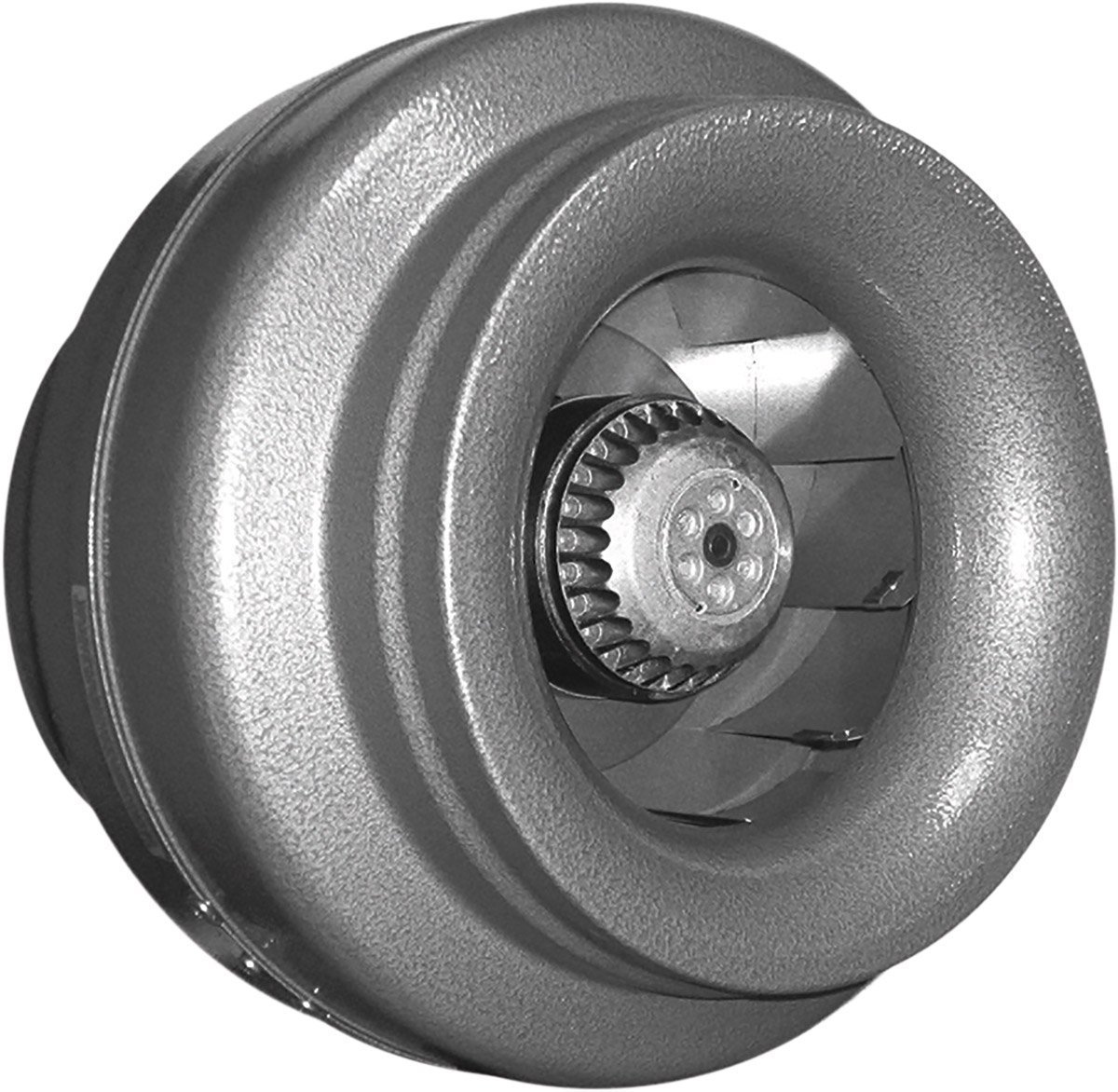
The inline duct fan that stays whisper-quiet even when moving more air than most residential units.
This fan is a different beast from the gable mount models. It is a modified centrifugal blower designed to sit inside a duct run — meaning you connect ductwork on both the intake and exhaust sides. The heavy gauge steel casing with a rustproof hammertone powder coat epoxy finish makes it feel built to last, and the permanently lubricated balanced motor is designed for long life. It pushes 790 CFM (cubic feet per minute) through a 10-inch duct opening, making it the highest airflow option in this comparison.
Customers note the unit is extremely quiet in operation — one mentioned it measured around 50 decibels at 1 meter — with only air movement noise rather than motor whine. Several owners noted the fan includes a factory-installed 120V power cord and is 100% speed-controllable, though there is a catch. Multiple reviews mention the promised Ventech 6-speed controller did not ship in the box, so check your packaging immediately; Amazon has sometimes offered a refund for the controller separately.
Compared to the Broan-NuTone 353, the Vortex moves 790 CFM versus 760 CFM. It also leads on build quality with its metal construction and sealed bearings. But unlike the 353, it has no built-in thermostat, so you must buy a separate controller or thermostat to automate it, which adds cost and complexity.
Why It Stands Out
- Powerful 790 CFM airflow from a modified centrifugal fan — reviewers point out this figure may be understated.
- Very quiet operation, about 50 dB at 1 meter, mostly just air movement sound.
- Impact-resistant, sound-absorbing heavy gauge steel casing with rustproof powder coat.
Watch Out For
- Speed controller is listed as included but several shoppers say it missing from the package.
- Screw came loose on one unit after three months, causing a catastrophic failure — possibly a QA issue.
- Requires separate thermostat or controller for automatic operation; not a set-and-forget fan.
Best for quiet ducted ventilation: If you need an inline fan for a grow room, workshop, or long duct run and silence matters most, this is the pick at this CFM level.
skip it if you want simplicity: No built-in thermostat and the controller shipping issue means extra hassle — look at the Broan-NuTone 353 if you want automatic operation from the start.
3. Broan-NuTone L700 High Capacity Ventilator Fan, 701 CFM

The ceiling-mount commercial fan that fits where gable and inline units cannot go.
This is the most versatile fan in the group because it ducts horizontally, vertically, or in-line with a separate adapter. It uses two impact-resistant centrifugal blower wheels to move 701 CFM (cubic feet per minute) at a rated sound level of 4.7 sones — audible but not overwhelming. The unit is designed for ceiling or wall installation, which makes it a fit for bathrooms, studios, or workshops where you need to pull air directly from the room rather than from an attic space. It includes automatic backdraft dampers (flaps that close when the fan is off to prevent outside air from coming back in) and permanently lubricated motors.
Buyers report it works well for the right application — one reviewer used it in a hair studio and it passed inspection on the first try. However, another customer noted it is not suitable for kitchen use where grease is present. A professional installer found it louder than expected after installation, which lines up with the 4.7 sones rating — this is not the quietest fan on the list. Compared to the Broan-NuTone 353 (760 CFM, gable mount), the L700 delivers slightly less airflow at 701 CFM but offers far more flexibility in how and where you mount it.
Between the three picks, the L700 is the only one that can be tucked into a ceiling or wall cavity. The Vortex needs an inline duct run, and the 353 requires a gable opening. If you have no gable vent and no straight duct path, the L700’s 8-way adjustable brackets give you installation options the other two do not.
Where It Shines
- Mounts in ceiling, wall, or inline — the most flexible installation of the three.
- Automatic backdraft dampers keep outside air out when the fan is off.
- Two centrifugal blower wheels provide balanced 701 CFM airflow.
Before You Buy
- Rated at 4.7 sones — louder than many residential bathroom fans; one buyer mentioned it is louder than expected.
- Not rated for kitchen grease environments; use it for general ventilation only.
- 701 CFM is the lowest airflow in this comparison — consider the 353 (760 CFM) if you need maximum attic cooling.
Best for flexible room ventilation: Choose this if you need to mount a fan in a ceiling or wall where no gable opening exists and you want dual-blower reliability.
Not for silent operation: At 4.7 sones, you will hear it running — pick the Vortex if low noise is your top priority.
Understanding the Specs
CFM — Cubic Feet Per Minute
This is the number that tells you how much air the fan moves each minute. A higher CFM means more hot air gets pushed out faster. For an attic, around 700 to 800 CFM is enough for a typical two-car garage or a medium-sized attic. Going lower means the fan runs longer to achieve the same cooling effect.
Mount Type — Gable vs. Inline vs. Ceiling
A gable mount fan sits in a wall vent opening and pulls air straight out. An inline duct fan goes inside a duct run, so it needs ductwork on both sides. A ceiling mount fan installs into the ceiling drywall and connects to ductwork above. Your attic layout determines which type fits. If you have a louvered gable vent, the gable mount is the easiest install. If you are running duct from a specific room, you need inline or ceiling style.
FAQ
Do I need a 750 CFM fan for my attic or is a smaller fan fine?
What is the difference between a gable mount fan and an inline duct fan?
Is a 14-inch blade better than a 10-inch blade?
Can I install a gable mount fan in my garage?
How loud is a 4.7 sones fan?
Does a roof vent fan need professional installation?
Can I use a 750 CFM fan for a bathroom?
What does a backdraft damper do?
Will a 750 CFM fan reduce my AC costs?
How do I choose between the Broan-NuTone 353 and the Vortex Powerfans VTX1000?
Final Thoughts: The Verdict
For most people, the 750 roof vent winner is the Broan-NuTone 353 because it combines automatic thermostat control, solid 760 CFM airflow, and straightforward gable mount installation at a price that makes sense for typical homeowners. If you need an inline fan for a ducted setup and low noise is your priority, grab the Vortex Powerfans VTX1000. And for a flexible ceiling or wall mount with dual blower reliability, the standout is the Broan-NuTone L700.
How We Picked
We do not accept paid placement. Every pick is matched to a real buyer and a real use-case; we do not hands-on test units.
Sources & Methodology
Specifications: manufacturer listings and product documentation. Review insights: verified customer reviews, as of July 2026. Pricing: not shown on this page (it changes often); check the current price via the retailer link.
As an Amazon Associate, Gadgets Feed earns from qualifying purchases. This does not affect which products we feature.