
Our readers keep the lights on and my morning glass full of iced black tea. As an Amazon Associate, I earn from qualifying purchases.
Specs are compiled from manufacturer listings and verified buyer reviews and can change over time — please confirm the key details on the product page before buying.
If you shoot the night sky from anywhere near a town, you already know the enemy: that orange-brown haze that washes out the Milky Way and turns your sensor’s blacks into muddy browns. A 77mm astrophotography filter is the simplest fix — a piece of glass that screws onto your lens and absorbs the yellow sodium-vapor light from streetlights before it ever reaches your camera. This guide breaks down the real trade-offs between the top picks, from budget entry points to premium optical glass, so you can match a filter to your lens, your sky, and your editing workflow.
I’m Min — the founder and writer behind Gadgets Feed. This guide is built by comparing the manufacturers’ published specifications and the patterns across verified customer reviews, so you get each pick’s real strengths and trade-offs instead of marketing spin.
Whether you are chasing your first Milky Way shot or refining deep-sky color, the right 77mm astrophotography filter makes a visible difference in contrast and star definition.
Our Picks at a Glance

How To Choose The Best 77mm Astrophotography Filter
Every filter in this category does one core job: it blocks the specific wavelengths of light put out by sodium and mercury street lamps, which are the main culprits behind skyglow. The differences come down to glass type, coatings, frame thickness, and how much orange cast each design leaves behind. Here is what actually matters when you are deciding.
Know Your Thread Size and Lens Barrel
Before anything else, confirm your lens actually takes a 77mm filter. The thread size is usually printed on the lens barrel or underneath the lens cap, often marked with a symbol like “ø” or “Ф77”. If your lens is a different size, you can often use a step-up ring to attach a 77mm filter, though that adds a little extra glass in front of your element.
Glass Type Defines the Color Profile
Many premium filters use neodymium or didymium glass, which naturally absorbs the yellow-orange wavelengths of sodium-vapor lights. This glass is what lets a filter reduce skyglow while keeping star colors reasonably true. Cheaper filters may achieve a similar effect with coatings alone, but the color cast can be harder to correct later in editing.
Coating Layers for Flare and Durability
Multi-layer coatings reduce internal reflections (ghosting and flare) and make the glass easier to clean. Look for coatings that are both hydrophobic (water beads up and rolls off) and oleophobic (oil, like fingerprints, wipes away cleanly). More layers usually mean less light lost, but the layer count alone is not the whole story — quality of application matters too.
Slim Frames Prevent Vignetting
On wide-angle lenses, a thick filter frame can block light at the corners of the frame, creating dark edges called vignetting. Filters marketed as “ultra-slim” or with a low-profile aluminum ring are designed to avoid this, which matters if you shoot at focal lengths like 20mm or wider.
Quick Comparison
| Model | Best For | Glass Type | Coating | Frame | Amazon |
|---|---|---|---|---|---|
| K&F CONCEPT Clear Night★ Best Overall | First-timers on a budget | AGC Optical Glass | 28 Multi-layer | 0.15″ Ultra-Slim | Amazon |
| Walking Way Natural NightRising Star | Urban cityscape & astro | HD Neodymium Glass | 28-layer Nano | Screw-on, protective case | Amazon |
| Cokin Nuances ClearskySodium-Lamp Specialist | Sodium & mercury lamp skies | Glass | Multi Coating | Standard | Amazon |
| Haida Clear-Night | Wide-angle Milky Way | Optical Glass | Nano Coating | 3.07mm Aluminum Alloy | Amazon |
| HOYA STARSCAPE | High contrast, low flare | Didymium Glass | Enhanced HMC Multi | Low-profile Black Aluminum | Amazon |
| Kenko Starry Night Prosofton | Starscape with soft-star effect | Optical Glass | Multi Coating | φ77mm | Amazon |
| Urth Neutral Night Plus+ | Truer colors in video & photo | Neodymium Glass | 20-layer CoraNano | Ultra-slim, Magnalium | Amazon |
| NiSi Natural Night | Durable field use | HD Optical Glass | Hydrophobic Nano | Brass Frame | Amazon |
| Breakthrough Night Sky | Harsh environments | Optical Glass | MRC16 & Nanotec | Weather-Sealed X4 Traction | Amazon |
In‑Depth Reviews
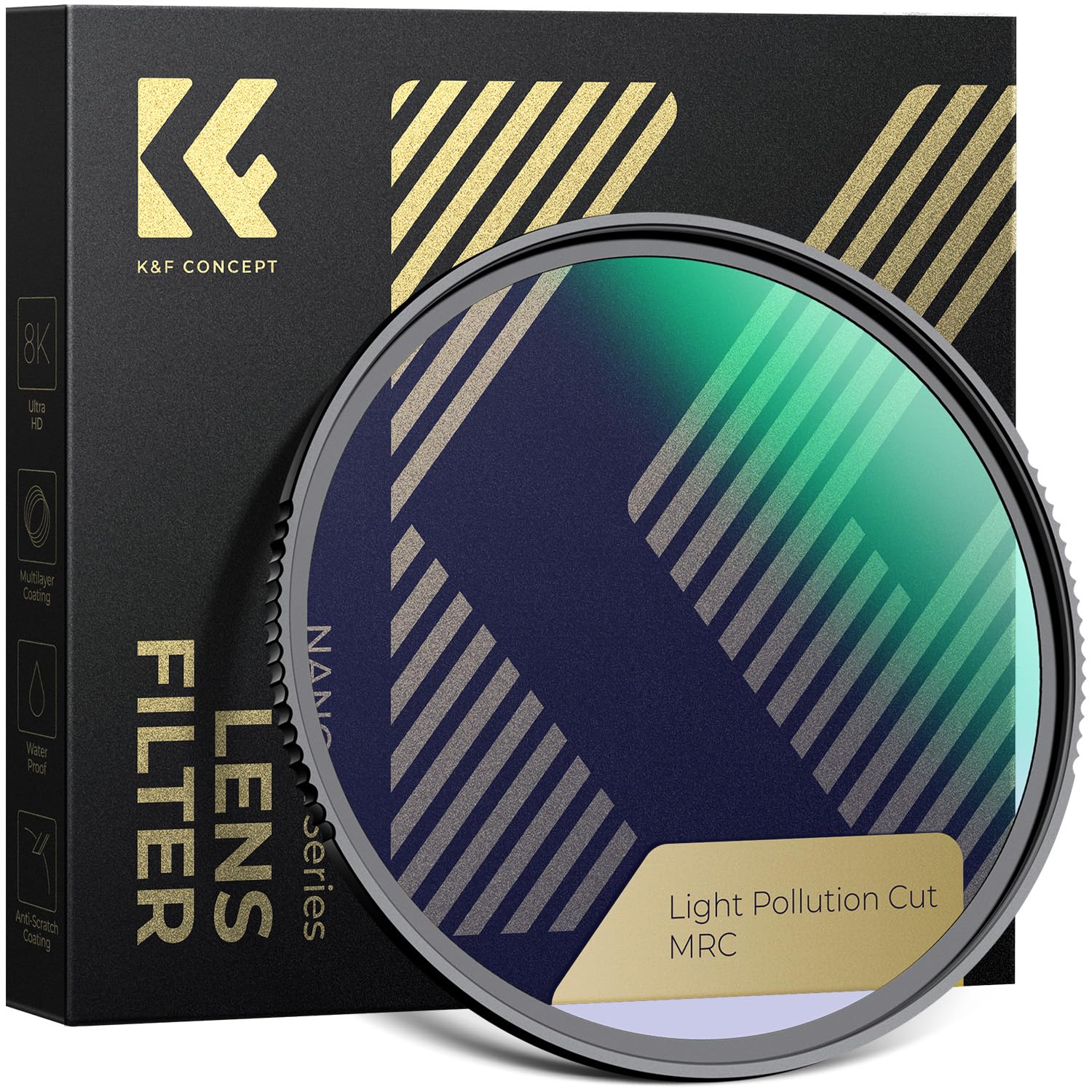
1. K&F CONCEPT 77mm Clear Natural Night Filter
Our pick — over 4.5★ from 750+ verified ratings; the strongest balance of quality and price.
The crowd-pleasing budget entry that cuts skyglow without emptying your wallet.
K&F CONCEPT is the pick for anyone who wants a noticeable cleanup of urban light pollution at a friendly price. The glass is imported AGC optical glass with no color cast, so your night shots keep their natural look while the yellow haze from streetlights drops away. It is also the most-reviewed filter in this list — a 4.6-star consensus that has held up across hundreds of owners.
Its 0.15″ ultra-slim frame prevents vignetting on wide-angle lenses. Its 0.15″ ultra-slim frame is designed to avoid vignetting on both wide-angle and telephoto lenses. The 28 multi-layer coating on both sides makes it waterproof, oil-resistant, and scratch-resistant, meaning a quick breath-and-wipe handles most cleaning in the field.
However, some buyers report mixed image clarity and unsealed packaging. Several owners note the image quality is not perfectly clear, and a few report marks appearing on their pictures. Some units also arrive in a generic bag rather than sealed retail packaging, which can feel like an open-box surprise, though the fast shipping softens that. If you want a low-risk way to test whether a light-pollution filter helps your style, this is the sensible starting point.
What Owners Love
- Reduces the yellowish hue in night photos, enough for the price.
- Ultra-slim frame avoids corner darkening on wide lenses.
- Broke in a fall yet protected the lens from damage entirely.
The Honest Caveats
- Image clarity gets mixed reviews from some owners.
- Packaging may arrive unsealed in a generic bag.
- Not perfectly color-neutral for every scene.
Reach for this if: you are new to night-sky shooting and want an affordable, proven way to tame city glow before upgrading.
Look elsewhere if: you need flawless edge-to-edge sharpness and pristine retail packaging from the moment the box opens.
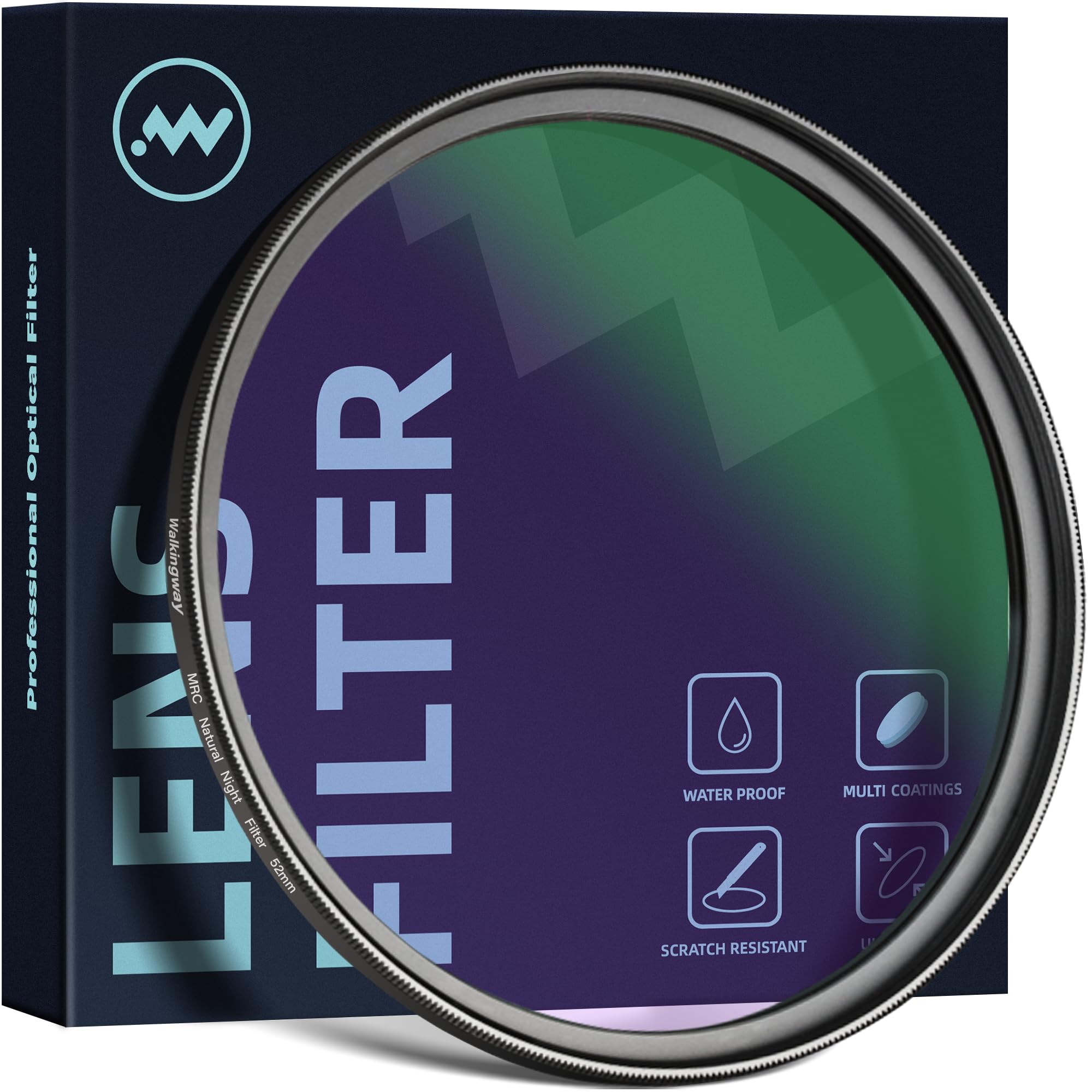
2. Walking Way 77mm Natural Night Filter
Neodymium glass that tames orange skyglow and boosts nebula color for urban shooters.
Walking Way is built for shooters fighting city light every single night. Its HD neodymium glass delivers high light transmission without chromatic aberration, so you get clean, true-to-life colors without edge distortion. One owner who shoots near the coast — where light pollution is a constant battle — reported the filter “definitely helps tame that orange sky glow and gives a cleaner, deeper background to work with in post.”
The 28-layer anti-reflective and anti-fingerprint coating makes the glass water-repellent, scratch-resistant, and oil-proof. That is a real advantage when you are swapping lenses in the dark or dealing with a misty shoreline. It also comes with a protective case, so the glass stays safe between outings.
However, it introduces a slight color cast that requires post-processing correction. One owner notes there is a color cast, but that background extraction in software like GraXpert fixes it, and they could not complain for the price. It shines for cityscapes, star trails, and auroras — anything where you want to block unwanted city lights while keeping sharp detail. If you are shooting in a Bortle 6 zone, this is a strong, affordable ally.
On the Coast: the neodymium glass and 28-layer nano coating make this a durable, effective choice for Milky Way and cityscape work where streetlights bleed into the frame.
3. Cokin Nuances Clearsky Light Pollution Filter 77mm
A focused filter that specifically targets the orange cast of sodium and mercury streetlights.
Cokin’s Clearsky is a specialist. Instead of a general color-correction approach, it is engineered to absorb yellow sodium-vapor light and yellow mercury-vapor light — the two most common types of urban street lighting. That makes it highly effective in towns where those lamps dominate the skyline. The multi-coating prevents internal ghosting and reflections, and it is oil, dust, and scratch resistant.
Its 1.5x filter factor costs about +0.6 stops of light, requiring longer exposures or higher ISO. That matters for exposure planning, but it is a modest price to pay for cleaner skies. Owners confirm it performs its function and works effectively, with many praising it as a solid, no-frills light-pollution solution.
Verify your lens thread size, as one buyer received a 72mm unit instead of 77mm. One buyer found that their unit would not fit a 77mm thread, reporting it as a 72mm size instead. This is a case where confirming your lens’s thread size before purchase is essential, not optional.
Best when: your local night sky is dominated by classic sodium and mercury street lamps, and you want a dedicated, effective absorbent filter.
Think twice if: you are not 100% certain your lens barrel is a true 77mm thread — verify the symbol on the lens first.
4. Haida 77mm Clear-Night Filter

A slim aluminum-ring filter that cuts the glow for Milky Way and landscape night shots.
Haida is the wide-angle shooter’s friend. Its frame is an ultra-slim 3.07mm aluminum alloy ring, which is remarkably thin and keeps the whole filter lightweight while remaining durable. That slim profile is exactly what you need to avoid vignetting on ultra-wide lenses, and the included plastic case makes transport easy. It is built to absorb the yellow light from sodium-vapor lamps — the dominant urban light source — so the stars and skyline both get richer contrast.
Cleaning is fast and effective because the optical glass has a nano coating that makes water or oil bead up and slide off. Owners mention it “cuts through light pollution beautifully, bringing out richer colors and crisper details in the stars and skyline.” Another owner shooting the Milky Way in a Bortle 5 area (a moderate light-pollution zone) said it makes a real difference by reducing horizon ground glow.
One owner uses it on a telescope for astrophotography with zero complaints. This is a versatile pick that works across camera lenses and scopes, especially when you are fighting the glow of a city skyline at the horizon of your Milky Way frame.
Thin and Balanced: the 3.07mm ring keeps wide-angle corners clean, making this a top choice for city-edge Milky Way landscapes where horizon light bleeds in.
5. HOYA 77mm STARSCAPE Light Pollution Filter
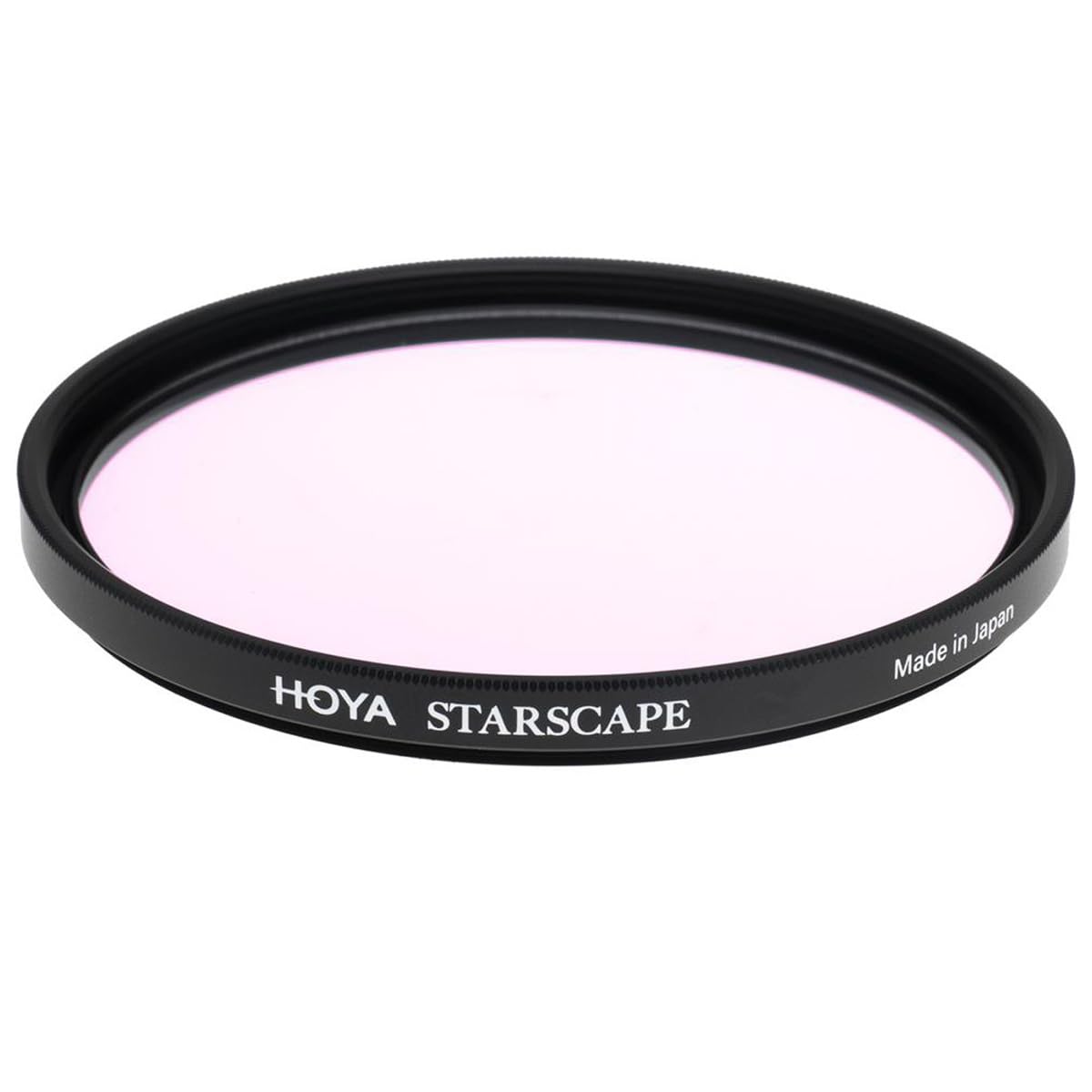
Didymium glass with 97%+ transmission that lifts star-to-sky contrast without killing color.
HOYA’s STARSCAPE is the specialist’s choice for clean, high-contrast night imagery. The didymium glass naturally separates stars from the sky, boosting celestial detail while preserving the true color of the landscape in long exposures. It cuts the yellow-orange wavelengths from sodium and mercury vapor lights, reducing skyglow and making stars pop against a black backdrop.
Its 97%+ light transmission and multi-layer coating reduce flare for high-contrast shots. With 97%+ light transmission and a multi-layer coating, it reduces reflections and flare for clean, high-contrast shots. The low-profile black aluminum ring fits securely on 77mm lenses and controls vignetting even when stacked with other filters. Owners rave about its performance for aurora photography, calling it “near-magical” for the price, and one noted it allowed a “decent picture of the Orion Nebula first try” with a 135mm lens at 20 seconds.
Its didymium glass enhances reds and brightens nebulae while keeping night landscapes usable. Where budget filters introduce a strong cast, HOYA enhances reds and brightens nebulae in long exposures while keeping night landscapes usable. It is the pick for astro shooters who want to minimize editing time and boost in-camera clarity.
Why It Wins
- 97%+ light transmission keeps shots bright and clean.
- Works with autofocus on cameras like the Nikon P1000.
- Aurora owners call it an absolute necessity for the price.
Where It Fits Less
- Some owners find it not sufficient for their specific needs.
- Adds a subtle color shift that favors astro over general use.
Grab it for: aurora hunting, deep-sky nebulae, and anyone who wants in-camera color correction rather than hours of post-processing.
skip it if: you shoot mostly daytime scenes and want one filter for everything — this one is night-sky focused.
6. Kenko Starry Night Prosofton φ77mm

A Japanese-made filter that tames streetlight cast and adds a dreamy glow to stars in one twist.
Kenko’s Starry Night Prosofton does something no other filter in this list does: it combines two effects in a single piece of glass. First, it cuts the yellow and orange color casts from sodium-vapor and mercury lamps, allowing for natural color reproduction. Second, it applies a softening effect only to point light sources like stars, so your starscape gets a gentle glow while the landscape and background stay perfectly sharp.
Made in Japan, this φ77mm filter is designed for starry landscapes, and it is a genuine time-saver. Because you get both effects at once, you eliminate the need to stack filters, which reduces the risk of vignetting and flare on wide-angle lenses. Owners who previously stacked two filters now use just this one, calling it a “2-in-1” convenience.
Its soft-star effect adds a gentle glow to stars, ideal for ethereal starscapes. The soft effect is not for everyone — if you want crisp, pinpoint stars, this is not the tool. But for photographers who want that slightly ethereal, glowy star look in their cityscape and starscape shots, it is a specialized and beloved option. Beginners have noted it delivers the effect they wanted at a reasonable price.
Choose this for: starscape images where a subtle softening of bright stars is the goal, and you want to avoid stacking multiple filters.
Pass on it if: you are a deep-sky purist who wants razor-sharp diffraction-limited stars.
7. Urth 77mm Neutral Night Lens Filter Plus+
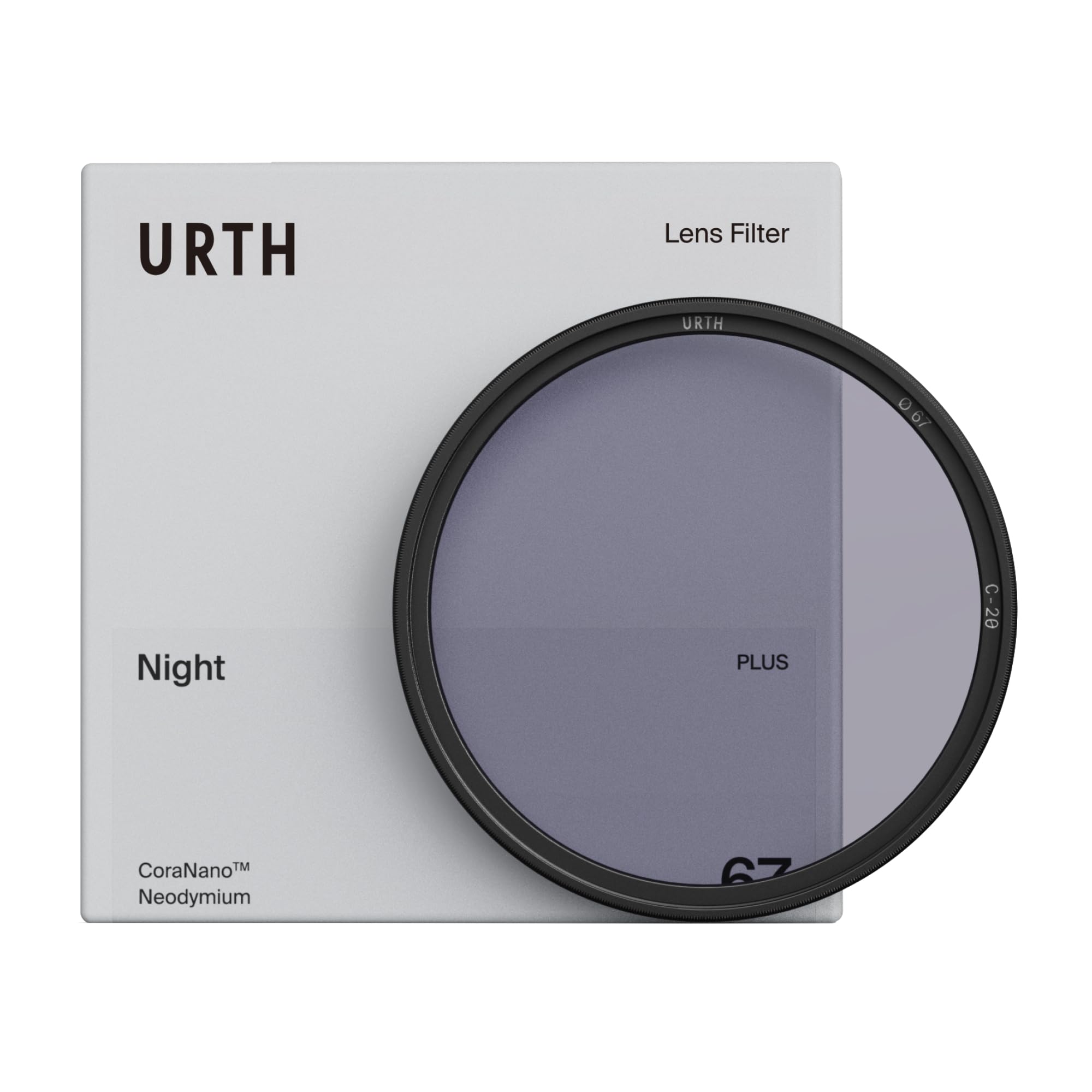
Neodymium glass with a 20-layer nano coating that keeps nighttime colors true and gradients clean.
Urth positions its Plus+ filter as the answer to warm, orange-tinted night photos. The neodymium glass cuts out light pollution’s warm hue, which gives you truer colors, better white balance, and sharper details — whether you are shooting stills or filming video at night. The 20-layer CoraNano coating delivers ultra-low reflectivity, superior contrast, and durability, so you are not fighting internal flare when bright lights are in the frame.
The frame is where Urth shows its engineering intent. It is made from magnalium, a tough aluminum-magnesium alloy, and designed with an ultra-slim rim to eliminate vignetting. That combination makes it both durable and practical for wide-angle night work.
Owners are impressively loyal to the brand, with many saying they now go straight to Urth whenever they need a filter. One night photographer described it as a “must have for astrophotography” specifically for filtering out yellow streetlight pollution, and another said it made their pictures look “incredible.” For video shooters, the accurate color reproduction is a standout benefit — you get natural-looking night footage without heavy color correction.
Color-Faithful Field Work: the magnalium frame and CoraNano coating make this a durable, reliable pick for night video and stills where accurate white balance matters.
8. NiSi 77mm Natural Night Filter
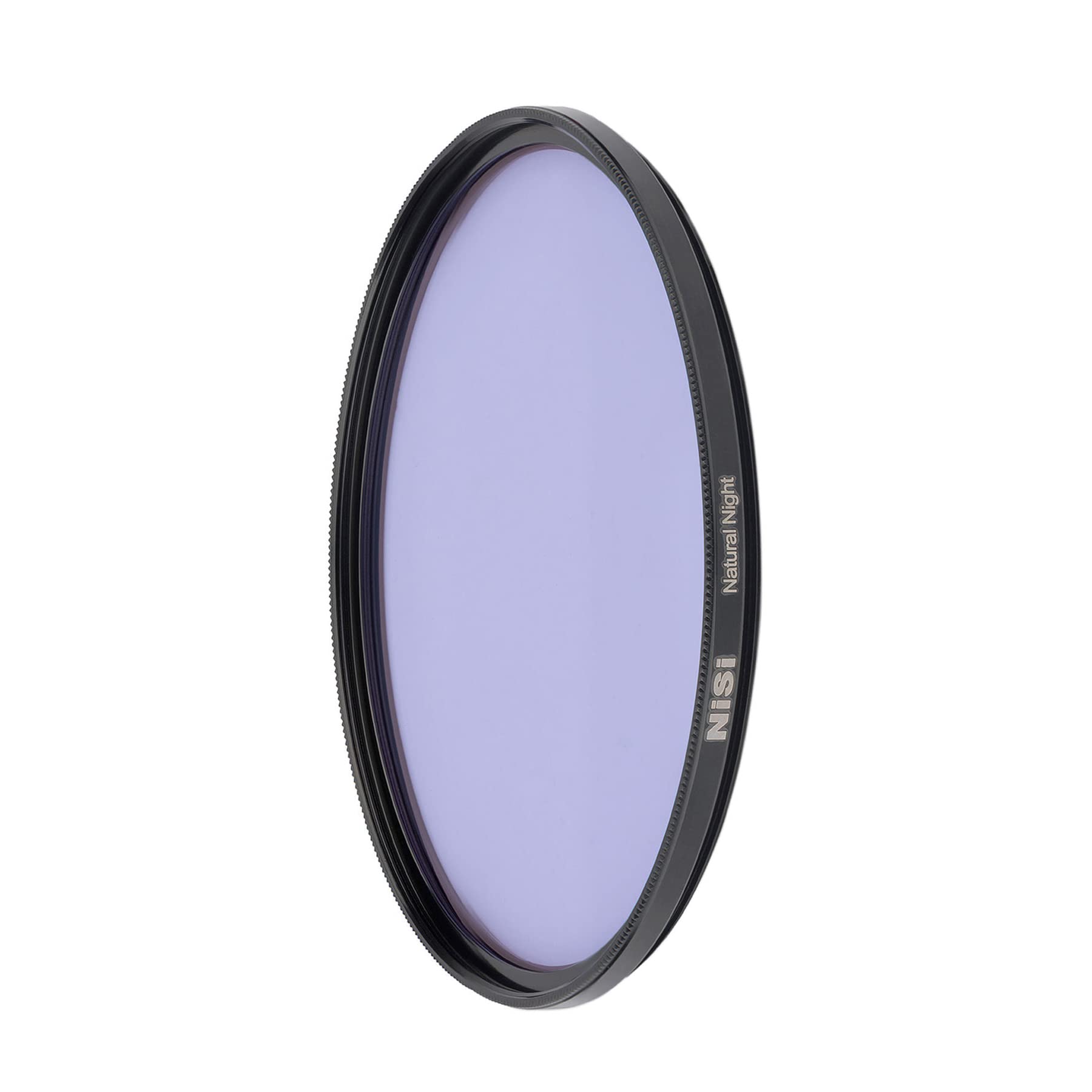
Brass-framed glass that screws on smoothly and blocks light pollution all night long.
NiSi is the pick for photographers who want premium build quality in demanding conditions. The Natural Night filter uses high-quality optical glass “like that used in telescopes,” which gives you exceptional sharpness and crisp astro images. The nano coating makes the glass waterproof, scratch-resistant, and anti-reflective — water beads up and falls straight off, which makes cleaning a breeze.
The brass frame is the defining feature here. Brass is heavier than aluminum, but it threads more smoothly and resists binding on the lens, which matters when you are mounting and removing filters in the dark. It also provides a level of durability that protects the glass during field use.
Owners confirm it is great for night captures and nightscape work, with one noting video colors at night appear natural as intended. There is an honest caveat from one owner who felt the filter, while eliminating light pollution, took a noticeable hit on sharpness in some shots, wondering if it was a defect or bad glass. For most, the protective and optical benefits far outweigh this occasional experience, but it is worth knowing before you commit.
Reach for: nightscape and video shooters who want a tough, smooth-threading brass frame and easy-clean hydrophobic glass for regular outdoor work.
Consider the risk: a small number of customers note softness that may be a QC issue, so buy from a source with easy returns.
9. Breakthrough Photography 77mm Night Sky Filter

The weather-sealed, grippy-frame filter that delivers “excellent clarity” for serious night-sky shooters.
Breakthrough Photography builds the Night Sky filter for harsh environments, and the X4 traction frame is its standout feature. This rugged, weather-sealed frame completes the sealing on your lens to protect against dust, moisture, and outdoor elements. The textured grip makes attachment and removal easy — even with cold, gloved, or arthritis-stiff hands, as one owner with mobility concerns happily noted.
The optics are backed by an industry-leading approach to coatings: MRC16 and nanotec coatings make the glass incredibly durable and easy to clean while delivering “incredible starlight definition and true color neutrality.” Owners shooting the Milky Way on a Sony A7R3 with a 20mm f/1.8 lens reported exceptional results under a new moon, calling it the best light-pollution filter they had tested.
This is the premium investment, and it shows in the details. It is backed by a 25-year Ironclad Guarantee, which speaks to the maker’s confidence in its longevity. The frame is thin and grippy, the color is rich and balanced, and the packaging is polished. If you want a filter that feels like a permanent part of your kit for decades, this is the one. The trade-off is simply the higher price of entry, but for serious astrophotographers, that buys a lot of confidence.
The Premium Pitch
- Weather-sealed traction frame protects against dust and moisture and is easy to grip in the dark.
- 25-year Ironclad Guarantee backs long-term field use.
- Reviewers point out “excellent clarity” and top-tier Milky Way results.
Weigh The Cost
- Premium price positions it above the value picks in this guide.
- Heavier, more rugged frame may feel overbuilt for casual shooters.
Worth it for: dedicated astro shooters, cold-weather photographers, and anyone who wants rugged, weather-sealed glass with a 25-year guarantee.
Only if: you shoot night skies regularly enough to justify the premium — otherwise, the value picks above will serve you well.
Understanding the Specs
Glass Type: Neodymium vs Didymium
Premium night filters are made from neodymium or didymium glass, which naturally absorb the yellow-orange frequencies of sodium-vapor streetlights. This is what actually reduces skyglow while keeping star color reasonably neutral. Budget filters may use standard optical glass with heavy coatings to achieve a similar effect, but they often leave a color cast you’ll need to fix in post-processing.
Coating Layers and Light Transmission
Coatings control both flare and cleaning. More layers (like 28-layer multi-coat) reduce internal reflections and make the glass water-repellent, oil-resistant, and scratch-resistant. Higher light transmission (like HOYA’s 97%+) means less light lost to reflection inside the filter, which is critical for faint deep-sky objects and long exposures where every photon counts.
Filter Factor and Exposure Cost
Some filters, like the Cokin Clearsky, have a 1.5x filter factor, which means they reduce light by roughly +0.6 stops. This matters because your exposure time or ISO must increase to compensate. A 1.5x factor is modest, but it is a real consideration when you are already stretching exposure limits for star trails or nebulae.
Frame Thickness and Vignetting
A thick filter frame can block light at the corners of a wide-angle lens, creating dark vignetting. Filters with ultra-slim rims (like K&F’s 0.15″ frame or Haida’s 3.07mm ring) are designed to prevent this. If you shoot at 20mm or wider, a slim frame is a concrete spec to prioritize, not a luxury.
FAQ
Will a 77mm filter fit my lens?
Does a light pollution filter work in heavy city light?
What is the difference between neodymium and didymium glass filters?
Why does my image have a color cast after using the filter?
Is an ultra-slim frame really necessary?
Can I stack a light pollution filter with other filters?
How do I clean a night sky filter safely?
What does filter factor 1.5x mean for my exposure?
Final Thoughts: The Verdict
If you want the most proven, affordable way to start shooting cleaner night skies, the 77mm astrophotography filter winner is the K&F CONCEPT Clear Natural Night — its 28-layer coating and ultra-slim 0.15″ frame deliver serious glow reduction at a friendly price, backed by the largest owner base in this list. For high-contrast deep-sky work where color science matters most, grab the HOYA Starscape with its didymium glass and 97%+ transmission. And if you shoot in harsh, wet, or dusty conditions, the Breakthrough Night Sky with its weather-sealed X4 traction frame and 25-year guarantee is the one to reach for.
How We Picked
We do not accept paid placement. Every pick is matched to a real buyer and a real use-case; we do not hands-on test units.
Sources & Methodology
Specifications: manufacturer listings and product documentation. Review insights: verified customer reviews, as of August 2026. Pricing: not shown on this page (it changes often); check the current price via the retailer link.
As an Amazon Associate, Gadgets Feed earns from qualifying purchases. This does not affect which products we feature.