
An 8-year-old sits at the edge of a table, eyes locked on a tower of plastic penguins or a cascade of colorful Tetriminos. At this age, board games become more than passing time — they become the arena where strategy, luck, and social cues collide. The right game turns a rainy Saturday into a memory, and the wrong one ends up collecting dust. Choosing a game for this specific age bracket means balancing rules that challenge without frustrating, turn lengths that respect attention spans, and themes that feel fresh no matter how many times the box comes off the shelf.
I’m Min — the co-founder and writer behind Gadgets Feed. I’ve combed through hundreds of customer reviews, spec sheets, and game mechanics to isolate the select few titles that actually deliver for this narrow, demanding age group. Every recommendation here is backed by specific data on playing time, player count, and measurable educational or developmental outcomes that matter at age eight.
After dozens of hours of research and cross-referencing real parent and kid feedback, this guide delivers the definitive list of 8 year old board games that earn their place on your shelf.
How To Choose The Best 8 Year Old Board Games
The core challenge when picking a board game for an eight-year-old is matching the rule complexity to their growing cognitive abilities without overshooting into frustration. At this age, children can handle multi-step strategies, abstract reasoning, and light reading, but they still crave tactile feedback and clear win conditions. The best games for this bracket offer a rulebook that can be explained in under three minutes but reveal deeper layers over repeated plays.
Playing Time and Attention Span
Games that run 20 to 40 minutes hit the sweet spot. Anything shorter feels unsatisfying; anything longer tests the patience of even the most focused eight-year-old. The top contenders in this list, like Spin Master’s Tetris Board Game and Hasbro’s The Game of Life, clock in at precisely 20 and 30 minutes respectively, giving kids enough runway to feel invested without checking out.
Player Count and Social Dynamics
Games designed for 2 to 4 players dominate this category because they accommodate standard family sizes while keeping downtime minimal. Titles like Scrabble or Outsmarted allow team play or larger groups, but the core experience remains tight. At age eight, the social lesson lies in taking turns, reading opponents, and handling both victory and defeat — mechanics that work best when every player stays engaged through the whole round.
Component Quality and Tactile Appeal
Eight-year-olds interact with games through their hands. Wooden tiles, sturdy cards, chunky pawns, and satisfying marble drops make the difference between a game that gets played weekly and one that gathers dust. Scrabble’s wooden letter tiles and ThinkFun’s Gravity Maze towers provide the physical feedback that digital alternatives cannot replicate, anchoring the experience in the real world.
Quick Comparison
On smaller screens, swipe sideways to see the full table.
| Model | Category | Best For | Key Spec | Amazon |
|---|---|---|---|---|
| Spin Master Tetris Board Game | Strategy | Competitive puzzle fans | 128 Tetriminos, 20 min play | Amazon |
| Hasbro The Game of Life | Family | Story-driven play | 115 cards, 30 min play | Amazon |
| Hasbro Scrabble | Word | Vocabulary building | 100 wooden tiles, 40 min play | Amazon |
| ThinkFun Gravity Maze | STEM | Spatial logic puzzles | 60 challenge cards, 9 towers | Amazon |
| QUOKKA World Race Game | Geography | Map learning | 100 question cards, 47″x28″ board | Amazon |
| PlayMonster Don’t Rock the Boat | Motor Skills | Hand-eye coordination | Pirate ship + 32 penguins | Amazon |
| Outsmarted App-Connected Trivia | Trivia | Large group play | 10,000+ questions, 2–24 players | Amazon |
In‑Depth Reviews
1. Spin Master Games Tetris: The Board Game
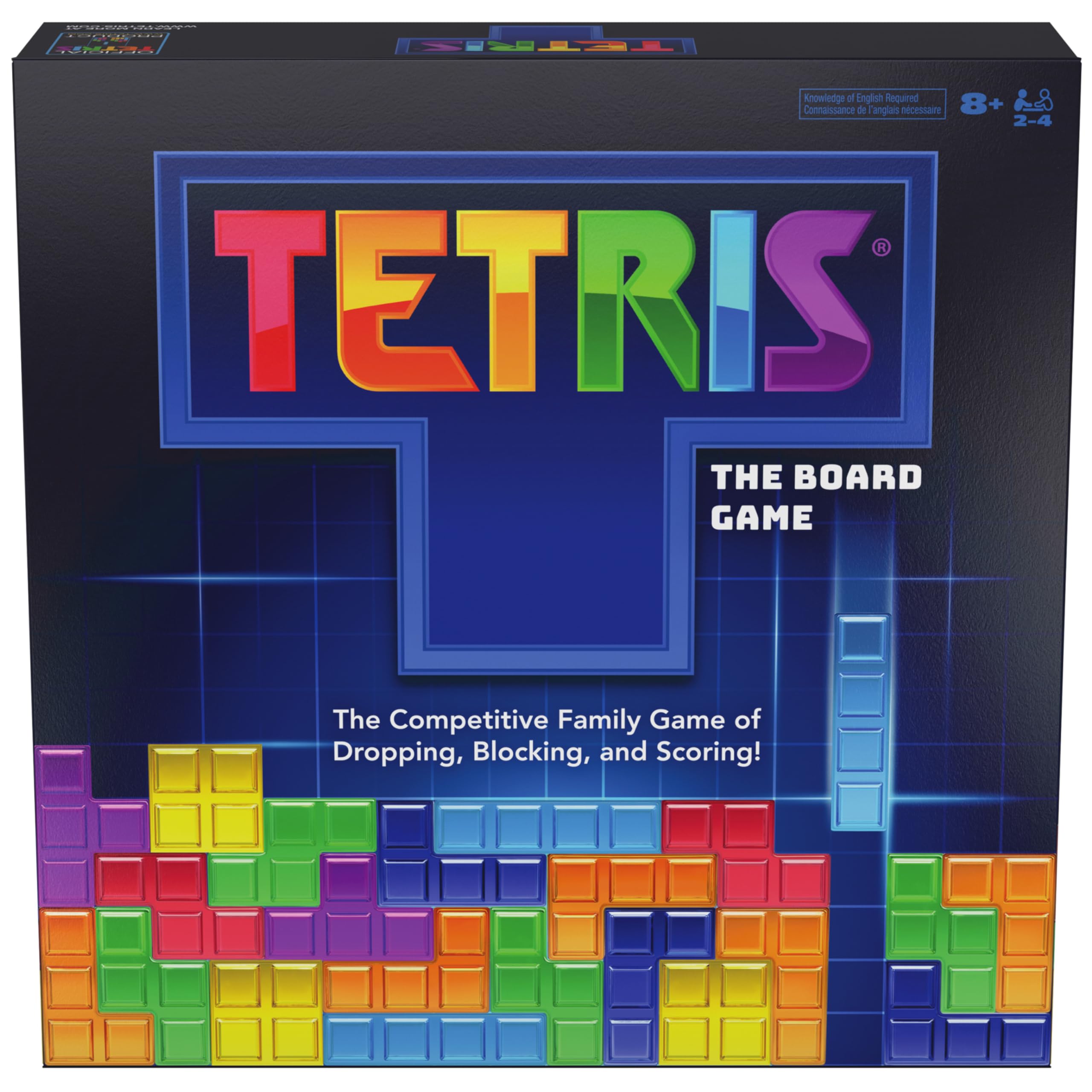
This physical adaptation of the classic digital puzzle translates the satisfying drop-and-clear loop into a multiplayer head-to-head format. Players rotate and place semi-translucent Tetriminos into their own grid while using black Garbage Drop Icons to dump pieces onto opponents’ boards. The blocking mechanic introduces a strategic layer absent from the original game, forcing eight-year-olds to think both offensively and defensively.
The components — 128 Tetriminos, 4 player grids, and a central game board — are molded in vivid colors that mirror the videogame’s aesthetic. Customer feedback consistently highlights how quickly the rules click: one parent noted their 9-year-old was “thinking without realizing it,” while another praised the balance of strategy and luck that keeps rounds unpredictable. The 20-minute playing time aligns perfectly with the attention span of this age group.
Where this game excels is in its ability to bridge generations. Adults who grew up on the Nintendo classic find the physical version equally engaging, while kids discover the spatial reasoning challenge in a tactile format. The competitive twist turns the solitary puzzle into a shared experience that demands both speed and planning.
Why it’s great
- Faithful Tetris mechanics translated to tabletop with a clever blocking system
- Quick setup and 20-minute rounds ideal for family game nights
- Builds spatial reasoning and strategic planning without feeling like homework
Good to know
- Some pieces may arrive slightly bent, though functionality remains intact
- Competitive pressure can frustrate less patient players initially
2. Hasbro Gaming The Game of Life

The Game of Life has anchored family game nights for generations, and this edition delivers 30 minutes of career-building, vacation-choosing, and money-managing fun. The standout feature for this age group is the 31 Career cards — options like Ice Cream Flavor Maker and Secret Agent tap directly into the imagination of an eight-year-old. The banknotes and Spin to Win tokens add a tangible economic layer that introduces basic financial concepts through play.
The game board itself measures about 20 inches square, with a built-in spinner that replaces the need for dice. The 115 cards include Life, Career, and House buying decisions, ensuring no two playthroughs feel identical. One verified customer noted the game’s appeal across generations, calling it “perfect for game nights” with clear instructions that let kids jump in within minutes.
Where The Game of Life truly shines is in its narrative structure. Each spin sends players down a branching path of choices — take a ski trip or a safari? Become a chef or a pilot? This decision-making framework gives eight-year-olds a sense of agency while teaching consequences in a low-stakes environment. The only downside mentioned across reviews is the plastic money and pegs, which some users found less durable than the game’s vintage counterparts.
Why it’s great
- Career cards with imaginative roles keep kids engaged and laughing
- Easy to learn with spinner-based movement for quick setup
- Teaches money management and decision-making through storytelling
Good to know
- Plastic components feel cheaper than classic versions from past decades
- Limited to 2–4 players, which may exclude larger families
3. Hasbro Gaming Scrabble Board Game

Scrabble at age eight is less about high-scoring triple-word scores and more about the tactile joy of arranging wooden tiles into recognizable words. This edition includes 100 wooden letter tiles stored in a drawstring felt bag, which introduces a sensory ritual that digital word games cannot replicate. The textured gameboard keeps tiles firmly in place, preventing frustrating shifts during play.
The 40-minute playing time sits at the upper end of the ideal range, but the game’s turn-based nature allows natural breaks. Parents can adjust difficulty by allowing dictionary checks or playing in teams, making Scrabble adaptable for kids at different reading levels. Customer feedback from one parent of a 10-year-old highlighted that this edition’s “real wood tiles and felt bag” elevated the experience compared to cheaper plastic versions.
Where Scrabble distinguishes itself in this list is its explicit vocabulary-building mechanic. Every round forces players to think about letter combinations, prefix and suffix patterns, and the scoring value of each character. For an eight-year-old, this transforms a spelling lesson into a competitive game where longer words and strategic placement on premium squares — double and triple letter/word scores — become the path to victory. The wooden rack lets kids arrange letters physically, engaging fine motor skills alongside language centers.
Why it’s great
- Wooden tiles and felt bag provide premium tactile quality that lasts
- Vocabulary and spelling improvement happens naturally through gameplay
- Adaptable rules allow team play or simplified scoring for younger players
Good to know
- Reading fluency is required, which may frustrate struggling readers
- 40-minute sessions can feel long for less word-inclined eight-year-olds
4. ThinkFun Gravity Maze

Gravity Maze is a single-player logic puzzle that challenges kids to build marble run towers that guide a steel ball from start to target. The 60 challenge cards progress from beginner to expert, and the satisfaction of releasing that marble and watching it follow your designed path is genuinely addictive. For an eight-year-old, the spatial reasoning demands hit exactly the right note — hard enough to require multiple attempts, easy enough that success feels earned, not accidental.
The components — 9 towers in varying heights, 3 marbles, a game grid, and a target piece — are molded from durable ABS plastic that survives drops and rough handling. One customer described it as their “favorite toy of the year” for an 8-year-old who loved building and puzzles, noting the child played with it daily. The STEM educational objective is explicit in the design, but kids experience it as pure fun: planning tower placement, predicting marble trajectories, and debugging failed runs.
What sets Gravity Maze apart from the other games on this list is its solo-friendly nature. While many board games require a group, this one delivers equally well as an independent activity, making it ideal for quiet afternoons or travel. The challenge cards provide clear progression, giving kids a sense of mastery as they advance through difficulty levels. Some reviews noted that advanced players might breeze through the early cards, but the 60-challenge count and the ability to create custom layouts extend replay value indefinitely.
Why it’s great
- Screen-free STEM learning that develops spatial reasoning and planning skills
- Progressive difficulty keeps kids challenged for months, not days
- Durable plastic towers survive repeated play and travel
Good to know
- Not a multiplayer game; best as a solo or parent-child activity
- Early challenges may feel too easy for kids already adept at puzzles
5. QUOKKA Board Game for Kids 8-12
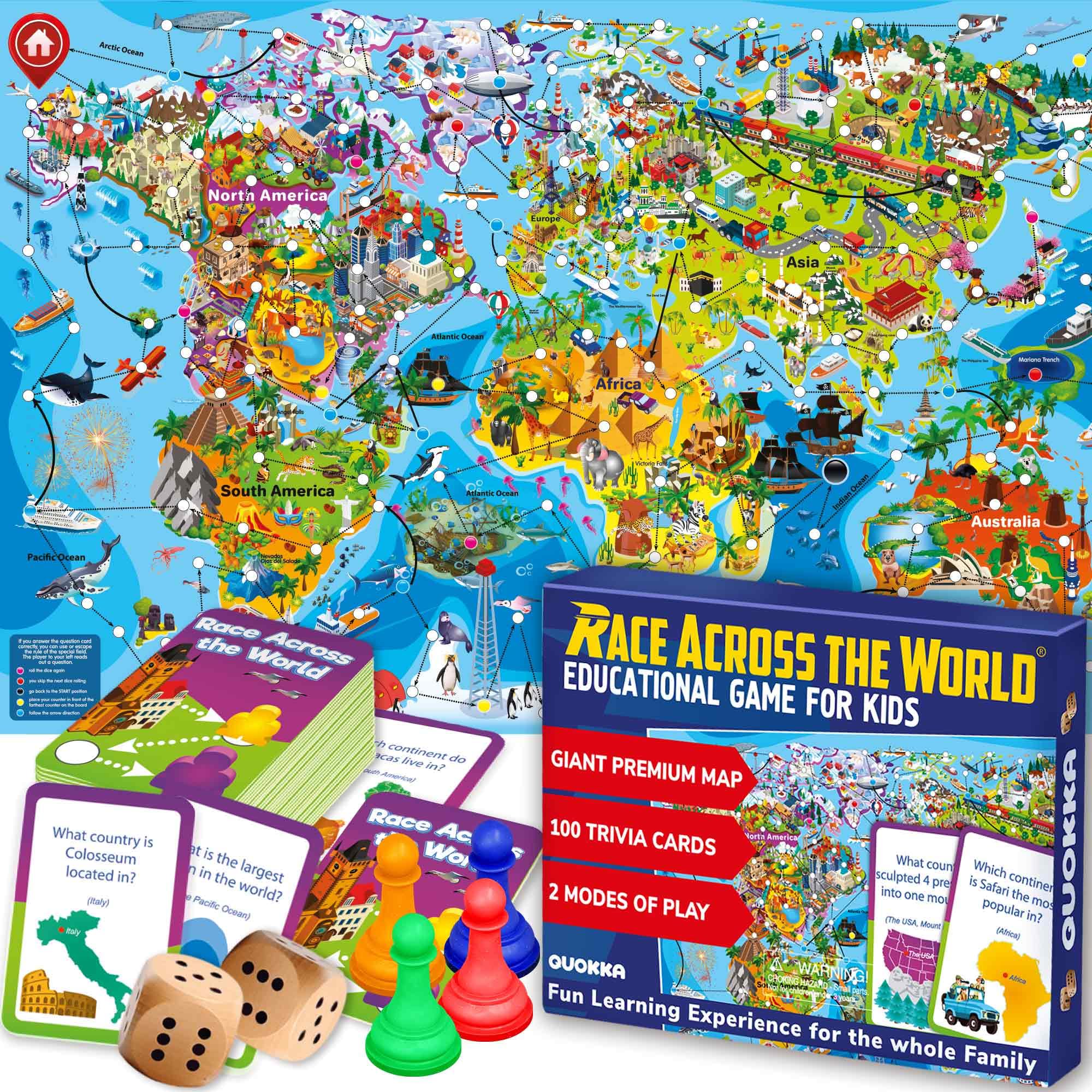
This geography-themed race game spreads across a massive 47 by 28-inch floor board printed with a detailed world map. Players move pawns across continents, answering 100 educational question cards that cover oceans, animals, volcanoes, and cultural landmarks. The sheer scale of the board transforms the living room floor into a learning environment, and the 130-card deck ensures a broad range of topics that challenge both kids and adults.
The trivia questions are designed with three tiers of clues, allowing players to pick difficulty levels that match their knowledge. One parent reported that their 8-year-old used the game to prepare for a school geography test, calling it “a great idea to get a child to learn the map without it being boring.” The physical movement of the pawn across the giant board adds a kinesthetic learning element that standard trivia games lack.
Where QUOKKA stands out is its versatility for group play — it accommodates 2 to 8 players, making it one of the few options on this list that works for large families or birthday parties. The cardboard board is durable enough for repeated setup and takedown, and the cards fit neatly into the box for storage. Some reviewers noted missing or broken pieces upon arrival, which suggests checking the contents early, but the educational value and family engagement outweigh the occasional quality control issue.
Why it’s great
- Giant floor map turns learning geography into an active, physical experience
- Supports up to 8 players for large family or party game sessions
- Three-tier clue system adapts difficulty to player knowledge level
Good to know
- Some units may arrive with minor defects like missing pieces
- Questions assume basic geographic knowledge; beginners may need adult help
6. PlayMonster Don’t Rock the Boat

Don’t Rock the Boat is a balancing game where players take turns placing penguin figures onto a rocking pirate ship without tipping it over. The tension builds with every placement — one wrong move sends all the penguins sliding into the sea. For an eight-year-old, the game delivers pure tactile suspense: the ship rocks slightly with each added weight, forcing careful hand control and spatial judgment.
The set includes a plastic pirate ship base, 32 penguin pieces, and a simple instruction card that makes setup possible in under a minute. Customer reviews consistently mention the laughter this game generates — one parent noted their 8-year-old “loved it — especially with the penguins” — and the 5+ age rating means younger siblings can join without frustration. The game works for 2 to 4 players, and rounds last roughly 10 to 15 minutes, fitting neatly into shorter activity windows.
This game excels as a dexterity challenge in a category dominated by strategy and trivia. The fine motor skill demands — steady hands, gentle pressure, and angle awareness — give it genuine developmental value, but kids experience it purely as a silly race to see who makes the ship flip. The build quality is adequate for the price point, though the plastic penguins show wear after heavy play. For families looking for a quick, high-energy option that requires zero reading or language skill, Don’t Rock the Boat is the clear pick.
Why it’s great
- Zero reading required; purely physical skill game accessible to all ages
- Quick 10–15 minute rounds ideal for short attention spans
- Generates consistent laughter and dramatic tension with each turn
Good to know
- Plastic components feel light and may not survive aggressive play
- Limited strategic depth; best as a filler game between longer sessions
7. Outsmarted App-Connected TV Quiz-Show Board Game
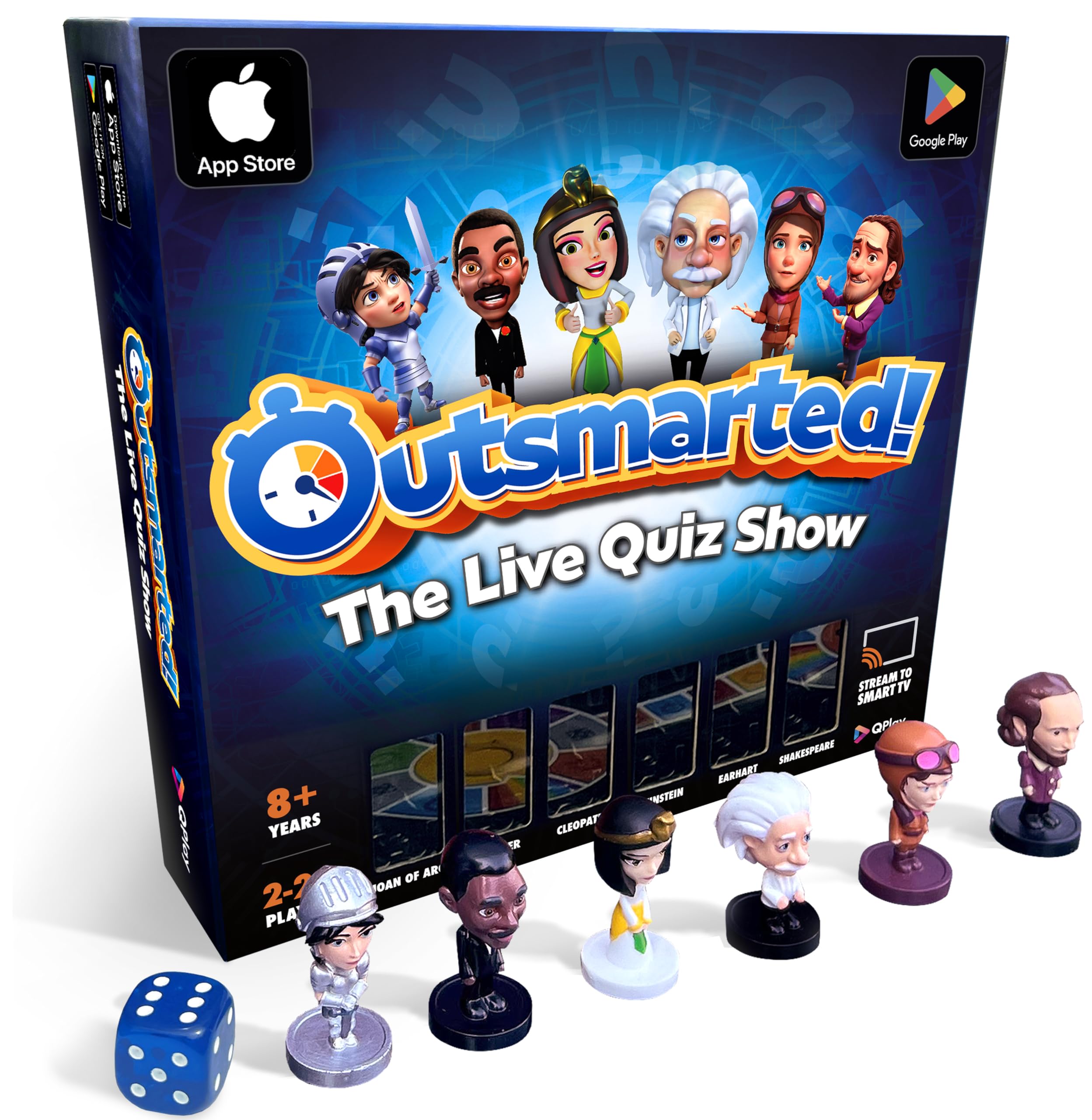
Outsmarted bridges the gap between traditional board games and modern app-driven entertainment. The physical board and miniatures provide the tabletop anchor, but the questions — over 10,000 across 10 core categories — are delivered through a smartphone or tablet app that adjusts difficulty based on each player’s age. Eight-year-olds get questions tailored to their knowledge level, while adults face harder prompts, leveling the playing field.
The game supports 2 to 24 players, making it the most scalable option in this list. Remote play is a standout feature: friends or family members can join through the free app from anywhere in the world, which proved valuable for families separated by distance. The board includes a tablet stand, and streaming to a Smart TV via AirPlay or Chromecast turns the experience into a living room quiz show with full visual and audio cues.
What makes Outsmarted relevant for the 8-year-old demographic is its ability to make trivia feel current. The question bank includes a Breaking News category, and the app receives regular updates that keep content fresh. Verified customers praised the “age-appropriate questions” and noted that kids enjoy playing because they can genuinely compete with adults. The only friction point is the initial setup, which requires downloading the app and connecting devices — a process that takes longer than a traditional box-opening but pays off in depth of content.
Why it’s great
- Age-adaptive questions let kids compete on equal footing with adults
- Remote play via app connects distant family members in real time
- 10,000+ up-to-date questions with image, song, and video clips
Good to know
- Requires at least one smartphone or tablet for question delivery
- Initial setup is less intuitive than traditional board games
FAQ
What is the ideal playing time for an 8-year-old board game?
Should I choose cooperative or competitive games for this age?
Final Thoughts: The Verdict
For most families, the best 8 year old board games winner is the Spin Master Tetris Board Game because it transforms a beloved digital puzzle into a tactile, competitive experience that builds spatial reasoning in 20-minute bursts. If you want vocabulary and spelling development embedded in classic gameplay, grab the Hasbro Scrabble. And for screen-free STEM learning that works as a solo activity, nothing beats the ThinkFun Gravity Maze.