
Finding a high-current DC circuit breaker that can handle the sustained load of a large solar array, a server rack battery bank, or an industrial UPS system requires more than just checking the amperage rating. The physical build, contact material quality, and interrupt capacity at the system’s operating voltage define whether a disconnect switch truly protects your gear or becomes a failure point under fault conditions.
I’m Min — the co-founder and writer behind Gadgets Feed. I’ve spent hundreds of hours poring through technical datasheets, thermal derating curves, and customer field reports to separate the breakers that deliver genuine protection from those that overstate their capabilities on paper.
This guide is built around the specifics of selecting, installing, and trusting a high-amp DC breaker for heavy off-grid and backup power systems. Use these recommendations and technical benchmarks to find the best 800 amp breaker that matches your system voltage, fault current requirements, and enclosure space constraints.
How To Choose The Best 800 Amp Breaker
An 800A DC breaker sits between your battery bank and your inverter, or between your charge controllers and the battery bus. Choosing the wrong one means nuisance tripping, insufficient short-circuit protection, or connection points that overheat under continuous load. The spec sheet needs careful parsing.
DC Voltage Rating and Interrupt Capacity (kAIC)
A 1500V DC breaker is not overkill for a 48V or 96V bank — it is required by code for systems where the maximum system voltage could rise above the breaker’s rating under open-circuit conditions. The interrupt capacity (expressed in kA) must exceed the potential fault current your battery bank can deliver. A 20 kA interrupt rating at 1000V is standard for large off-grid lithium banks, while 40 kA is safer for multi-kilowatt-hour installations.
Contact Material and Thermal Management
The composition of moving and stationary contacts directly affects arc extinction and long-term resistance. Breakers that advertise silver content above 50% in moving contacts and 80%+ in stationary contacts are built for repeated high-current making and breaking. The housing should also feature arc barriers or internal venting channels that quench the plasma generated during a fault-event at 800 amps.
Terminal Type and Physical Dimensions
An 800A breaker needs lugs that accept battery cable sizes up to 500 kcmil or twin 4/0 runs. Check the maximum wire size the lugs can physically clamp. The breaker’s overall footprint — width, depth, and height — determines whether it fits inside your existing electrical enclosure or requires an external weatherproof box. Screw-mount or DIN-rail compatibility is also critical for secure panel installation.
Quick Comparison
On smaller screens, swipe sideways to see the full table.
| Model | Category | Best For | Key Spec | Amazon |
|---|---|---|---|---|
| DIHOOL 800A DC | DC Disconnect | Heavy-duty PV and battery isolation | 1500V DC, 40 kA interrupt at 1500V | Amazon |
| Siemens S4242B3225 | AC Load Center | 3-phase commercial sub-panel | 225A, 42-circuit, 3-phase | Amazon |
| Square D HOM4080M200PC | AC Load Center | Residential 200A main panel upgrade | 200A, 40-space, 80-circuit | Amazon |
| Square D HOM3060M200PCVP | AC Load Center | 200A residential with plug-on neutral | 200A, 30-space, 60-circuit | Amazon |
| Square D HOM4080L225PGC | AC Main Lug | 225A convertible sub-panel | 225A, 40-space, 80-circuit | Amazon |
| Eaton BRP08B200RF | AC Main Lug | Outdoor solar or generator sub-panel | 200A, 8-space, 16-circuit outdoor | Amazon |
| Siemens TL137US | Temporary Power Panel | Job-site temporary power distribution | 125A, 50/30/20A outlets installed | Amazon |
| Siemens WP4212 | Meter Socket | Multi-tenant metering enclosure | 400A total, 200A per position | Amazon |
In‑Depth Reviews
1. DIHOOL 800 Amp DC Circuit Breaker

This is the only true 800-amp rated product in the list, and it is built specifically for DC applications like photovoltaic arrays, large UPS backup, and battery bank isolation in datacenter environments. The thermal-magnetic trip mechanism provides both overload and short-circuit protection, a significant upgrade over simple disconnect switches that offer no fault-sensing capability.
The contact material is the critical differentiator here — 50% silver content in the moving contacts and 85% silver in the stationary contacts. That high silver composition minimizes contact resistance and pitting during repeated high-current switching, which directly translates into lower heat generation at the connection point under sustained 800A loads. The 1500V DC rating with a 40 kA interrupt capacity at 1500V provides a generous safety margin for large lithium battery banks that can deliver enormous fault currents.
Physically, this breaker is substantial at 125 x 250 x 170 mm and weighs over 12 pounds. It mounts via screws onto a panel surface and includes lugs that accommodate thick battery cable runs. The remote trip solenoid capability is useful for emergency shut-down scenarios, though the solenoid is sold separately. For pure DC high-current protection, this unit is the benchmark.
Why it’s great
- High silver-content contacts reduce arc wear and thermal rise
- 40 kA interrupt rating at 1500V handles worst-case battery fault currents
- True thermal-magnetic trip, not just a manual disconnect switch
Good to know
- Physical size is large — ensure your enclosure has the depth and width to accommodate it
- Remote trip solenoid is an additional purchase
2. Siemens S4242B3225 225-Amp Load Center
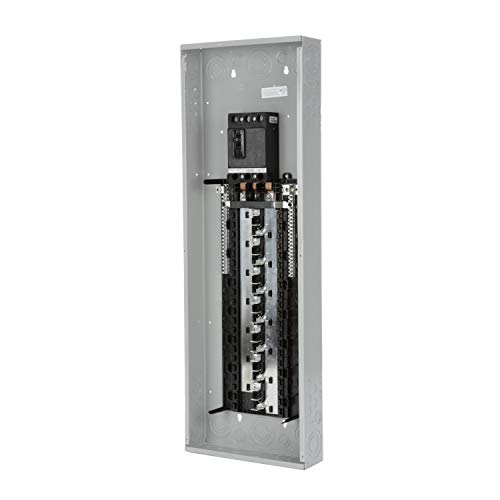
This is a premium three-phase AC panel designed for commercial or industrial service, not a DC disconnect, but it represents the construction quality and branch-circuit flexibility that a high-end breaker installation demands. The 225-amp main breaker feeds 42 spaces in a 3-phase, 4-wire configuration for 120/240 or 120/208 volt systems.
The aluminum bus bars are rated to handle continuous 225-amp loads without excessive temperature rise, and the enclosure is UL-listed for indoor use. It accepts Siemens and Murray plug-on breakers, giving you a vast selection of branch breakers for lighting, machinery, or HVAC loads in a workshop or small commercial building. The three-phase capability is essential for anyone running three-phase motors, welders, or phase converters.
Installers praise the straightforward layout and robust build quality. The 42-circuit capacity provides plenty of room for future expansion, and the 225-amp main rating makes it a suitable upgrade path from a standard 200-amp residential panel if you have the service capacity. For an AC distribution application that demands industrial-grade reliability, this Siemens unit is a top-tier choice.
Why it’s great
- True 3-phase 225A operation with a UL listing
- 42-space capacity offers ample room for expansion
- Compatible with widely available Siemens and Murray breakers
Good to know
- This is an AC panel, not a DC-rated breaker for battery systems
- Three-phase wiring is more complex than single-phase; professional installation is strongly recommended
3. Square D HOM4080M200PC Load Center

This Square D Homeline panel is a cornerstone of residential 200-amp service in North America, and for good reason. The 40-space, 80-circuit design accepts full-size, tandem, and quad breakers, allowing you to pack up to 80 individual circuits into a relatively compact enclosure. The plug-on neutral bar is the standout feature — it drastically simplifies the installation of AFCI and GFCI breakers, which now simply snap onto the neutral bar without needing a pigtail connection.
The main breaker is rotatable, supporting overhead feed, underground feed, back feed, or side feed configurations, which gives an electrician maximum flexibility during installation. The 22 kA interrupting rating at 240V is standard for residential service. The bus bar is aluminum, which is common at this price point and adequate for normal residential loads when properly torqued.
Users consistently note the ease of installation and the clean fit inside a standard wall cavity. The ability to use tandem breakers to double the number of circuits on a single space is especially valuable when retrofitting an older home that needs more branch circuits for modern appliance loads. This panel is the reference standard for a 200A residential main breaker upgrade.
Why it’s great
- Plug-on neutral bar eliminates pigtail connections for AFCI/GFCI breakers
- Rotatable main breaker allows any feed direction — overhead, underground, or back-feed
- 80-circuit capacity handles extensive branch circuit layouts
Good to know
- Aluminum bus bars require careful torque to prevent thermal expansion issues
- Only compatible with Square D Homeline breakers
4. Square D HOM3060M200PCVP Load Center
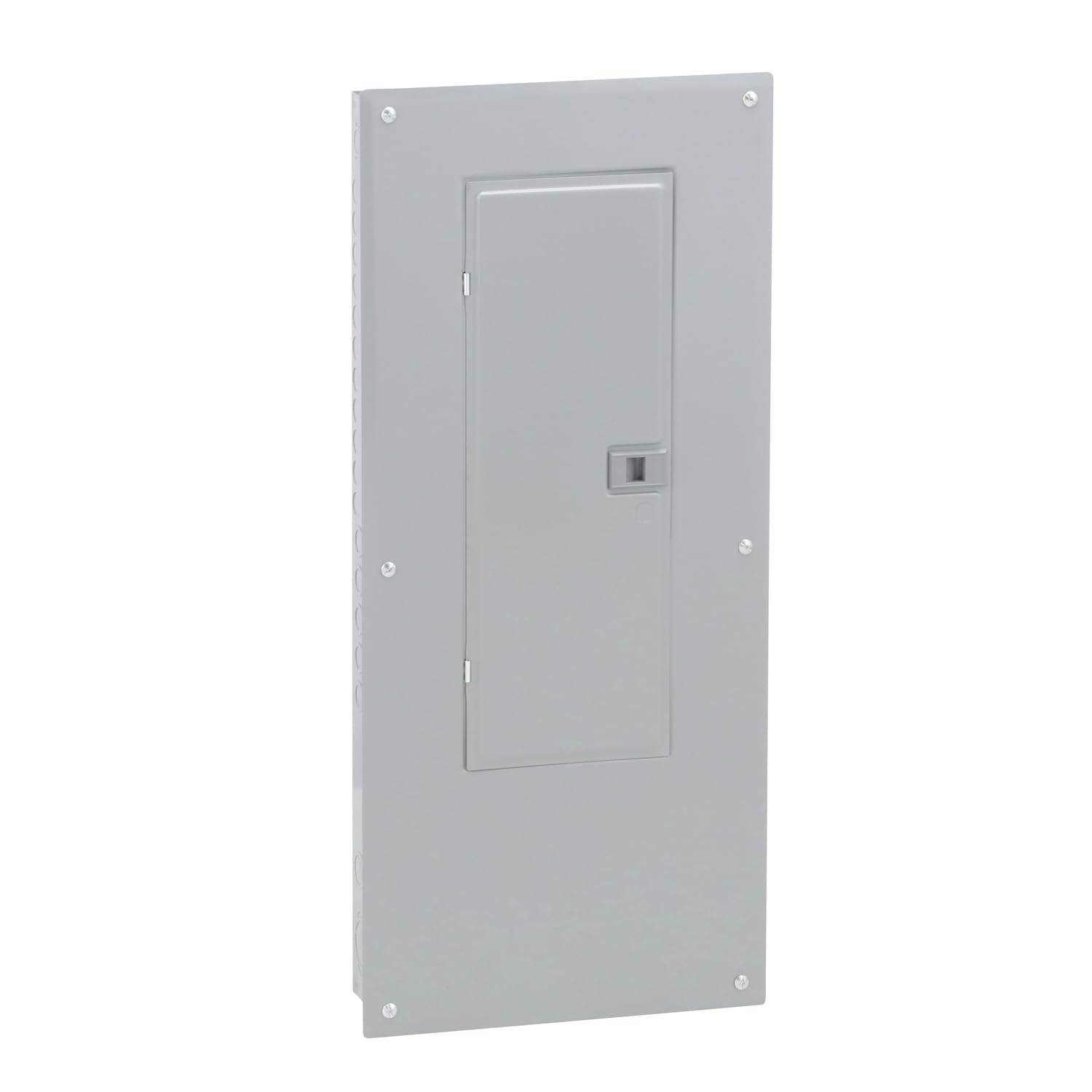
This 30-space, 60-circuit variant of the Square D Homeline series offers the same plug-on neutral technology as its larger 40-space sibling but in a package that fits tighter spaces and costs less per unit. It is the ideal choice for a standard suburban home where you need roughly 30 to 40 branch circuits — which covers most 3,000 to 4,000 square foot residences with no major sub-panel requirements.
The panel ships with three HOM120 single-pole breakers and two HOM230 double-pole breakers, giving you a modest start on your branch circuit layout. The fully distributed neutral bar is present on every space, so plug-on neutral breakers can be installed on any position. The combination flush/surface cover provides a clean finish against drywall or exposed surface mounting.
Customer reports confirm straightforward installation and solid performance for the price. One minor note — the main breaker can bow slightly downward, making it a tight fit into its slot on the panel cover. This is a known manufacturing tolerance issue that doesn’t affect function but requires a bit of careful alignment during cover installation. For the price, this panel delivers excellent value for a 200A service upgrade.
Why it’s great
- Same plug-on neutral technology as the premium Square D panels at a lower cost
- Compact 30-space footprint fits standard wall cavities
- Includes a few breakers to get started with your branch circuits
Good to know
- Main breaker may require careful alignment when fitting the panel cover
- 30-space capacity may be limiting for very large homes with many dedicated circuits
5. Square D HOM4080L225PGC Load Center

This is a main lug panel, meaning it lacks a main breaker and is intended for use as a sub-panel fed from a separate main breaker upstream. The 225-amp bus rating exceeds the typical 200-amp service, providing some headroom if your feed circuit is rated higher or if you plan to upgrade service later. The 40-space, 80-circuit layout mirrors the popular HOM4080M200PC but in a main-lug format.
The plug-on neutral bar is included, supporting Homeline AFCI and GFCI breakers on any space. The panel is convertible to a main breaker configuration if you add a QOM2 main breaker (sold separately), which makes this a flexible option if you want to start as a sub-panel and later convert it to a main panel. The aluminum bus bar is rated for 225A continuous, and the enclosure accepts a plug-on surge arrestor for whole-panel surge protection.
Shipping damage is a recurring risk on this product, as the panel is large and relatively thin-gauge steel; one reviewer reported a damaged control module on arrival. Inspect the enclosure immediately upon delivery and file a claim if any denting or bent components are visible. For a sub-panel in a workshop, addition, or detached garage, this 225A main lug panel provides the capacity and future flexibility needed.
Why it’s great
- 225A bus rating offers overhead for higher-capacity feeder circuits
- Convertible to main breaker configuration with an add-on QOM2 breaker
- Plug-on neutral for easy AFCI/GFCI installation
Good to know
- Main lug design requires an upstream overcurrent protection device
- Shipping damage is a documented issue — inspect thoroughly on arrival
6. Eaton BRP08B200RF Load Center
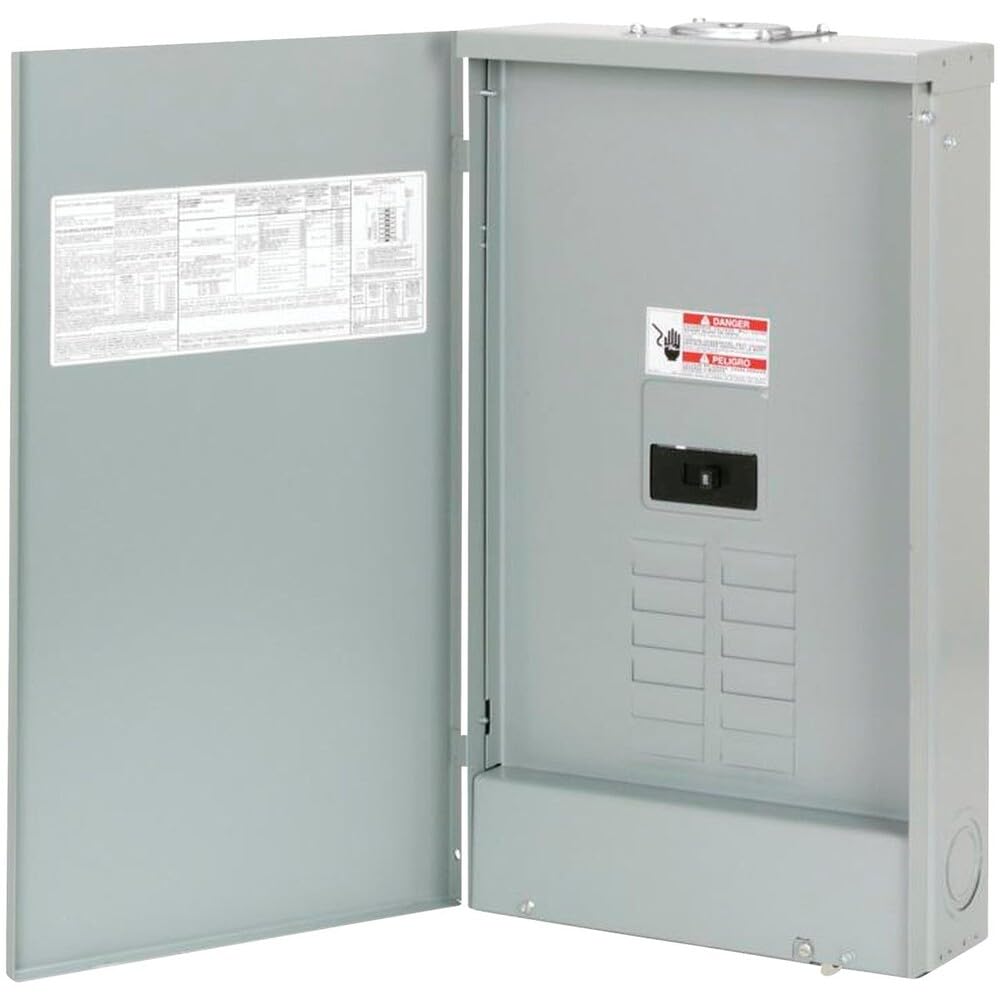
This Eaton BR series panel is rated for outdoor installation, with a weather-resistant enclosure constructed from alloy steel and aluminum. It is a main lug panel with a 200A bus rating and provides 8 spaces and 16 circuits — a compact footprint that is ideal for powering a separate solar array combiner, a generator sub-panel, or an outdoor workshop with limited branch circuit needs.
The feed-through lugs on this panel allow you to pass the main feeder cable through the enclosure and continue to another downstream panel. This is a major advantage for generator installations where you want to feed a critical loads panel without creating a separate splice box. The panel accepts standard Eaton BR series and compatible type breakers, which are widely available and affordable.
One critical catch — this panel does not include a main breaker, so it needs a main breaker upstream. Some buyers have mistakenly assumed a main breaker was included. If you need an outdoor-rated sub-panel with feed-through capability for a generator, solar, or shed, this Eaton unit is purpose-built for that exact scenario. The price is competitive with less flexible alternatives.
Why it’s great
- Outdoor-rated enclosure for wet or exposed locations
- Feed-through lugs simplify generator and solar installations
- Compact 8-space design fits tight spaces
Good to know
- Does not include a main breaker — must be fed from an upstream overcurrent device
- Limited to 16 total circuits, not suitable for a whole-house main panel
7. Siemens TL137US Temporary Power Panel

This Siemens Talon panel is pre-assembled with a 50-amp RV outlet, a 30-amp locking receptacle, and a 20-amp duplex receptacle — all wired through their own breakers — plus four extra breaker spaces for future circuits. It is designed for temporary construction power, RV shore power at a residence, or a portable generator connection panel.
The 125-amp main breaker provides a robust feed capacity for an RV, welder, or temporary workshop. The rain-tight enclosure is UL-listed for outdoor use, and the elevated cover with a padlock tab prevents unauthorized tampering. The panel is surface-mount or pole-mount, and it uses standard Siemens circuit breakers for the installed outlets and spare spaces.
Installers consistently report a one-hour setup time with two people using 6-gauge wire and a 50A breaker on the supply side. The inclusion of a 50A, 30A, and 20A outlet in one assembly eliminates the need for multiple separate boxes. This panel is not an 800-amp DC breaker, but it is the right tool for anyone needing a code-compliant, pre-wired power distribution box for outdoor or job-site work.
Why it’s great
- Pre-wired with 50A, 30A, and 20A outlets — install and you have power
- Rain-tight and UL-listed for outdoor use
- Extra breaker spaces allow future circuit additions
Good to know
- 125A feed may be insufficient for large all-electric RVs with multiple AC units running simultaneously
- Not suitable as a primary residential service panel
8. Siemens WP4212 Meter Socket
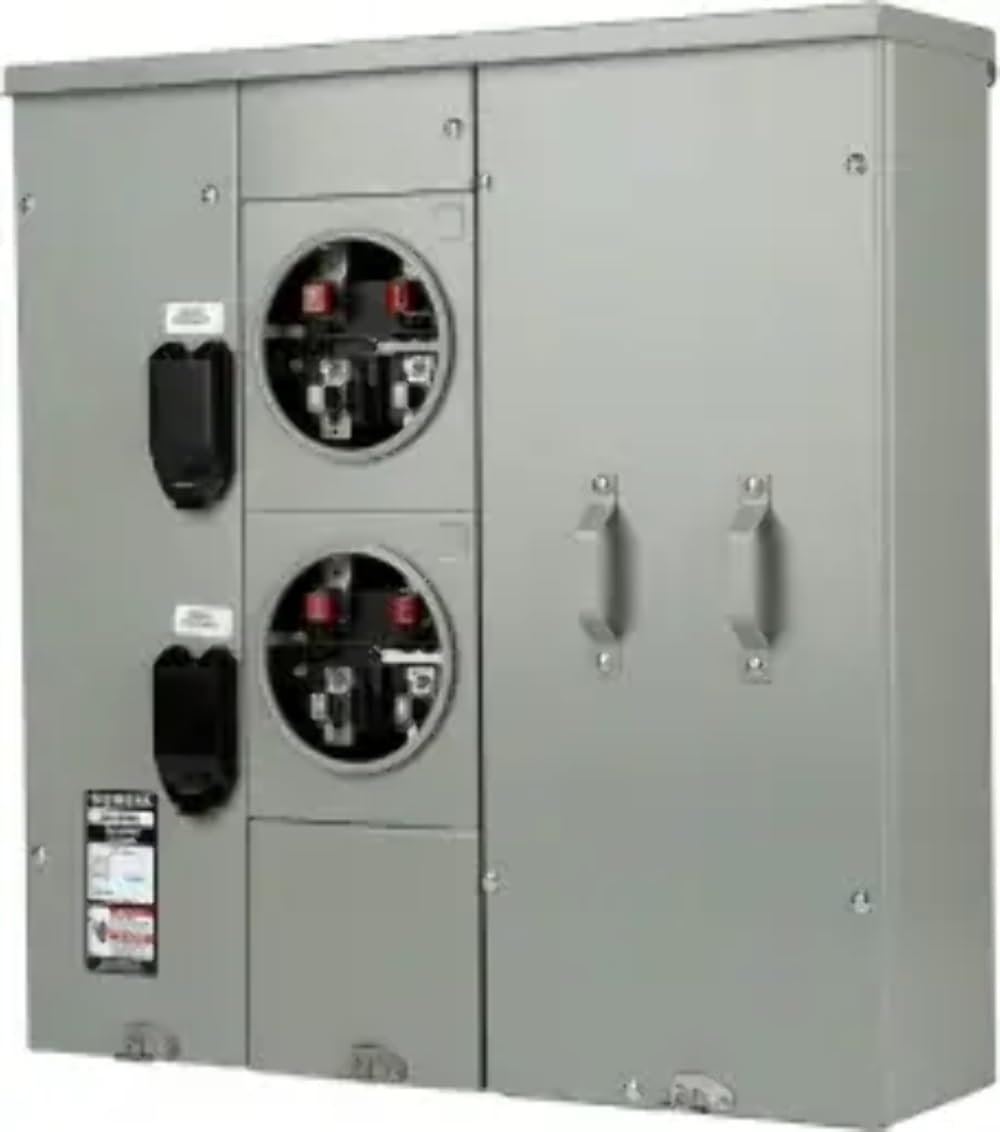
This Siemens meter socket is a specialized enclosure for multi-tenant or multi-unit residential metering. It is rated for 400 amps total across two positions, with each position capable of feeding a 200-amp tenant main breaker (not included). The ring-type cover is designed for utility-meter sealing and is made of alloy steel for durability in outdoor environments.
The enclosure uses HV type hubs on the top end wall for service entrance conduit. Tenant mains can be Siemens Type QS, QSH, QSHH, HQS, or HQSH breakers in the 150–225 amp range, or Type QP or QPH for 125 amps or less. This modular approach allows each unit in a duplex or small apartment building to have its own metered service drop without requiring separate utility connections.
At 75 pounds and built from heavy-gauge steel, this is a distinctly industrial piece of equipment. Buyers consistently report pricing well below local electrical supply houses, making it a smart option for contractors and property owners doing their own procurement. The 400-amp capacity across two 200-amp positions is the standard configuration for duplex metering in North America. Tenant breakers must be sourced separately.
Why it’s great
- 400A total capacity across two metered positions for duplex applications
- Significantly cheaper than local supply house pricing for the same Siemens part
- HV hub openings on top simplify service entrance conduit routing
Good to know
- Tenant main breakers are not included — must be purchased separately
- Ring-type cover requires a compatible utility meter ring seal
FAQ
Can I use an 800A DC breaker on a 48V battery bank?
What is the difference between a thermal-magnetic breaker and a disconnect switch?
Do I need a remote trip solenoid for my 800A DC breaker?
Final Thoughts: The Verdict
For most users, the best 800 amp breaker winner is the DIHOOL 800A DC Circuit Breaker because it combines a true thermal-magnetic trip mechanism, high silver-content contacts, and a 40 kA interrupt rating in a package purpose-built for high-voltage DC battery and solar systems. If you need an AC main panel for a residential service upgrade, grab the Square D HOM4080M200PC for its plug-on neutral technology and 80-circuit capacity. And for a compact outdoor sub-panel with feed-through lugs for a generator or solar combiner, nothing beats the Eaton BRP08B200RF.