
An 800-watt solar panel system isn’t just about the peak number on the spec sheet — it’s about real-world watt-hours per day, voltage compatibility with your charge controller, and whether the panels are rigid, bifacial, or portable. Buyers often confuse “800W STC” with 800W actual output, and that distinction separates a system that powers a fridge from one that barely charges a battery.
I’m Min — the co-founder and writer behind Gadgets Feed. I’ve spent hundreds of hours analyzing real customer output data, degradation curves, and thermal coefficients across N-type, bifacial, and PERC cell architectures to find the panels that actually deliver on their claims in off-grid, RV, and home backup setups.
This guide breaks down the best options for harnessing 800 watt solar panel power, from plug-and-play kits to modular portable arrays, so you can match the right cell technology and configuration to your specific energy needs.
How To Choose The Best 800 Watt Solar Panel
An 800W solar panel system can power a small cabin, an RV with moderate loads, or offset a portion of a home’s daily consumption. But the panel count, cell type, and voltage configuration determine whether you get usable power or a frustrating underperforming setup. These four factors will save you from buying panels that can’t talk to your controller.
Cell Technology: N-Type vs. P-Type vs. Bifacial
Standard P-type cells degrade faster in high heat and lose efficiency after the first year. N-type cells — found on many mid-range and premium panels — have a lower temperature coefficient, meaning they lose less power when the panel gets hot. Bifacial panels collect light from the rear side, boosting total output by 10-25% if mounted above a reflective surface like a white roof or gravel. For 800W systems that live on an RV roof, N-type offers better summer performance. For ground mounts, bifacial gives you free extra wattage.
Voltage and Charge Controller Compatibility
A 12V nominal panel produces ~20V open circuit; four in series yields ~80V. A 24V nominal panel produces ~36V Voc. Most MPPT charge controllers have a maximum input voltage (often 100V or 150V for 12V battery banks). Exceed that on a cold day and you fry the controller. Always add a 25% cold-weather safety margin to Voc. If your controller is PWM, you must match panel voltage to battery voltage exactly — series wiring on a PWM controller will waste more than half your panel’s power.
Rigid vs. Portable Panels
Rigid panels with aluminum frames and tempered glass last 25-30 years and survive hail, snow, and wind. Portable folding panels use ETFE or PET laminates, weigh less, and pack small, but they degrade faster and produce less power in high heat because they lack an air gap for cooling. If the panels will stay on a roof or ground mount for years, buy rigid. If you move them between campsites weekly, portable is acceptable — just plan on replacing them after 5-7 years.
Warranty and Real-World Output Guarantee
Panel degradation is real. A quality 400W panel should still produce 390W after 25 years (0.5% annual degradation). Cheap panels often degrade 0.8-1% per year, meaning your 800W system becomes a 650W system after a decade. Look for a power output warranty of at least 25 years and a product warranty (workmanship) of at least 10 years. Panels from brands that publish third-party EL test results and temperature coefficient data are more trustworthy than generics.
Quick Comparison
On smaller screens, swipe sideways to see the full table.
| Model | Category | Best For | Key Spec | Amazon |
|---|---|---|---|---|
| ECOBOSS 800W N-Type 4×200W | N-Type Rigid | Best overall value with high efficiency | 25.6% N-Type cell efficiency | Amazon |
| Anker SOLIX C1000 + 400W Panel | All-in-One Kit | Plug-and-play power station bundle | 1056Wh LFP battery | Amazon |
| EcoFlow DELTA 3 Max + 400W | Premium Power Station Bundle | Ultra-fast charging with large battery | 3400W X-Boost output | Amazon |
| DOKIO 800W 2×400W | Budget Rigid | Large rigid panels for ground mounts | 31V output, 3m MC4 leads each | Amazon |
| JJN Bifacial 2×400W | Bifacial Rigid | Maximizing yield from reflective ground | 25% bifacial N-type cells | Amazon |
| EPOCH 800W Bifacial 2×400W | Bifacial Rigid | Durable construction with IP68 junction box | Class A+ cells, 25% efficiency | Amazon |
| Ayahoomane 800W Portable 2×400W | Foldable Portable | Mobile off-grid and camping | 36V output, IP67 waterproof | Amazon |
| EcoFlow 125W Bifacial 4×125W | Modular Bifacial | Flexible modular portable system | 25% N-type bifacial, 50V per panel | Amazon |
| SUNGOLDPOWER 4×200W | Premium Rigid | Reliable 24V system with long warranty | Grade A cells, 25-year power warranty | Amazon |
| PLUGGEDSOLAR 800W Plug & Play | Plug & Play Kit | Grid-tied home offset without electrician | Micro-inverter with 50ft cord | Amazon |
| SUNGOLDPOWER 6×560W Bifacial | Large-Scale Premium | Whole-home or heavy off-grid loads | 30% bifacial PERC N-type | Amazon |
In‑Depth Reviews
1. ECOBOSS 800W N-Type 4×200W
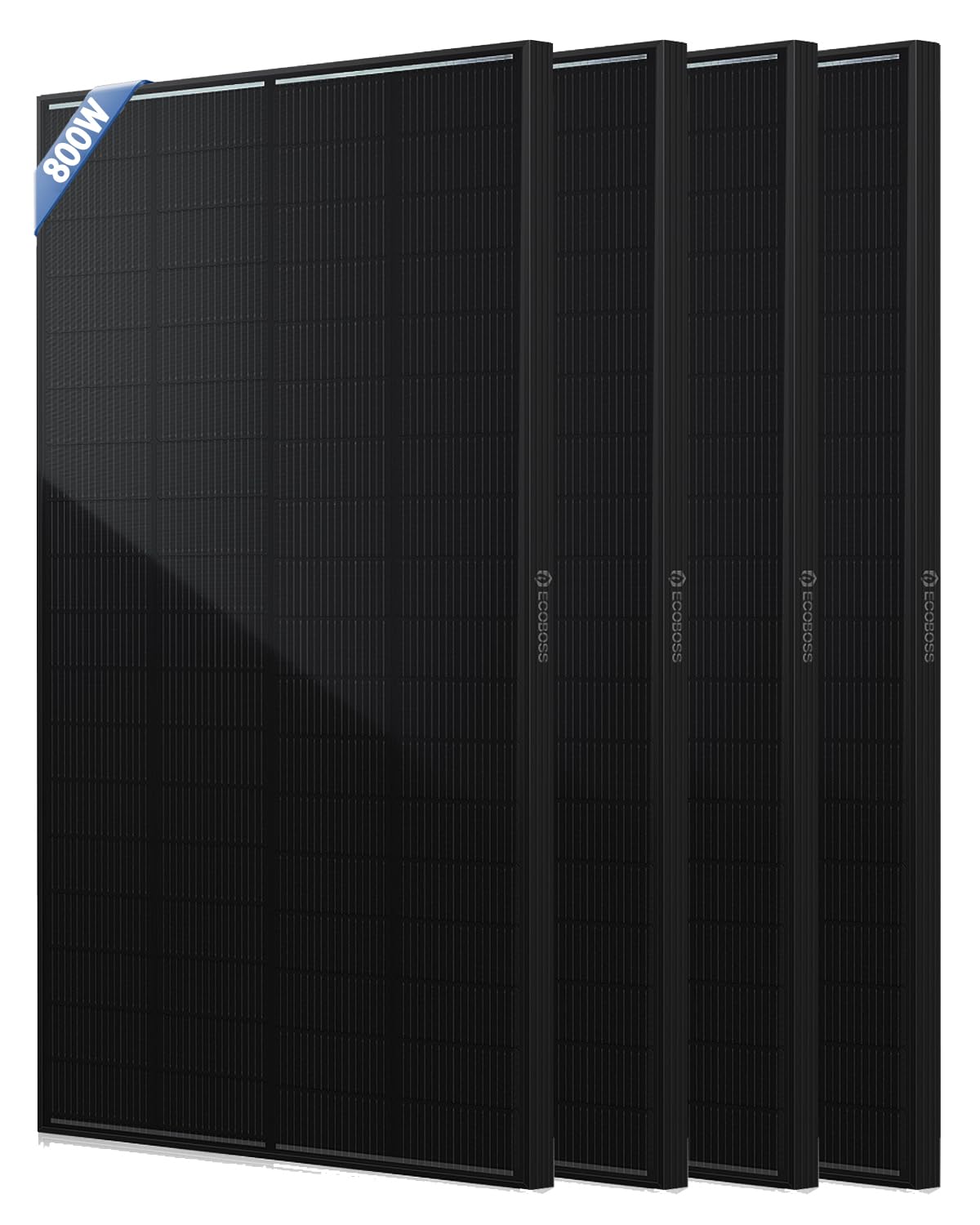
The ECOBOSS 800W kit bundles four 200W N-type panels with a 16BB busbar architecture, achieving a certified 25.6% conversion efficiency — higher than typical P-type panels in this price tier. Real-world customer reports show 170-185W per panel in early spring (85-92% of rated), which is excellent for a flat-mounted rigid panel. The N-type cells also boast a lower temperature coefficient, meaning less power loss during hot summer afternoons compared to standard P-type panels.
Each panel measures 52.75 x 30.31 inches with a 1.18-inch frame, which is a manageable size for RV roofs or ground-mount arrays. The 3.2mm low-iron tempered glass and corrosion-resistant aluminum frame are engineered for 30-year outdoor deployment. The included TPT backsheet and EVA film encapsulation protect against moisture ingress, a common failure point in humid or coastal environments.
Owners report that the panels maintain consistent output even in partial shade thanks to the 16BB layout, which reduces internal resistance and hot spots. The 12V nominal output pairs directly with standard MPPT and PWM controllers. The only downside noted is the 4 mounting holes — some installers prefer more attachment points for high-wind areas, but the panels are robust enough for most residential and RV applications.
Why it’s great
- Industry-leading 25.6% N-type efficiency at a mid-range price point
- Low temperature coefficient maintains output in hot climates
- 16BB busbar reduces micro-crack risk and improves shade tolerance
Good to know
- Only 4 predrilled mounting holes per panel
- Short factory cables may require extension for some setups
2. Anker SOLIX C1000 with 400W Solar Panel

The Anker SOLIX C1000 bundles a 1056Wh LiFePO4 power station with a 400W monocrystalline solar panel, forming a complete 800W-capable solar generator. The panel uses SunTrapping technology to achieve 23% conversion efficiency and features four adjustable angle settings (30°, 40°, 50°, 80°) for optimal sun capture. The power station itself can recharge from 0-80% in 43 minutes via AC, making it ideal for quick top-ups between solar charging sessions.
The 400W panel is IP67 weatherproof, meaning it can withstand heavy rain and dust storms without damage — a critical feature for campers and emergency backup users. The power station outputs a continuous 1800W (2400W SurgePad) across 6 AC outlets, 4 USB ports, and a car outlet, enough to run a fridge, lights, and electronics simultaneously. The LiFePO4 chemistry delivers 3000 cycles to 80% capacity, translating to roughly 10 years of daily use.
Customer reviews praise the build quality and packaging, though some note that the power station and panel ship separately, which can cause confusion if one arrives before the other. The panel’s kickstand is sturdy, but the 400W panel is heavy (27.6 lbs) for a portable setup. For users who want a turnkey solar + battery system without wiring, this is the most polished option.
Why it’s great
- Complete all-in-one solar generator with no additional wiring needed
- IP67 weatherproof panel survives rain, dust, and extreme temps
- LiFePO4 battery lasts 3000+ cycles
Good to know
- Panel and power station ship in separate packages
- Heavy panel for a portable setup
3. EcoFlow DELTA 3 Max + 400W Solar Panel
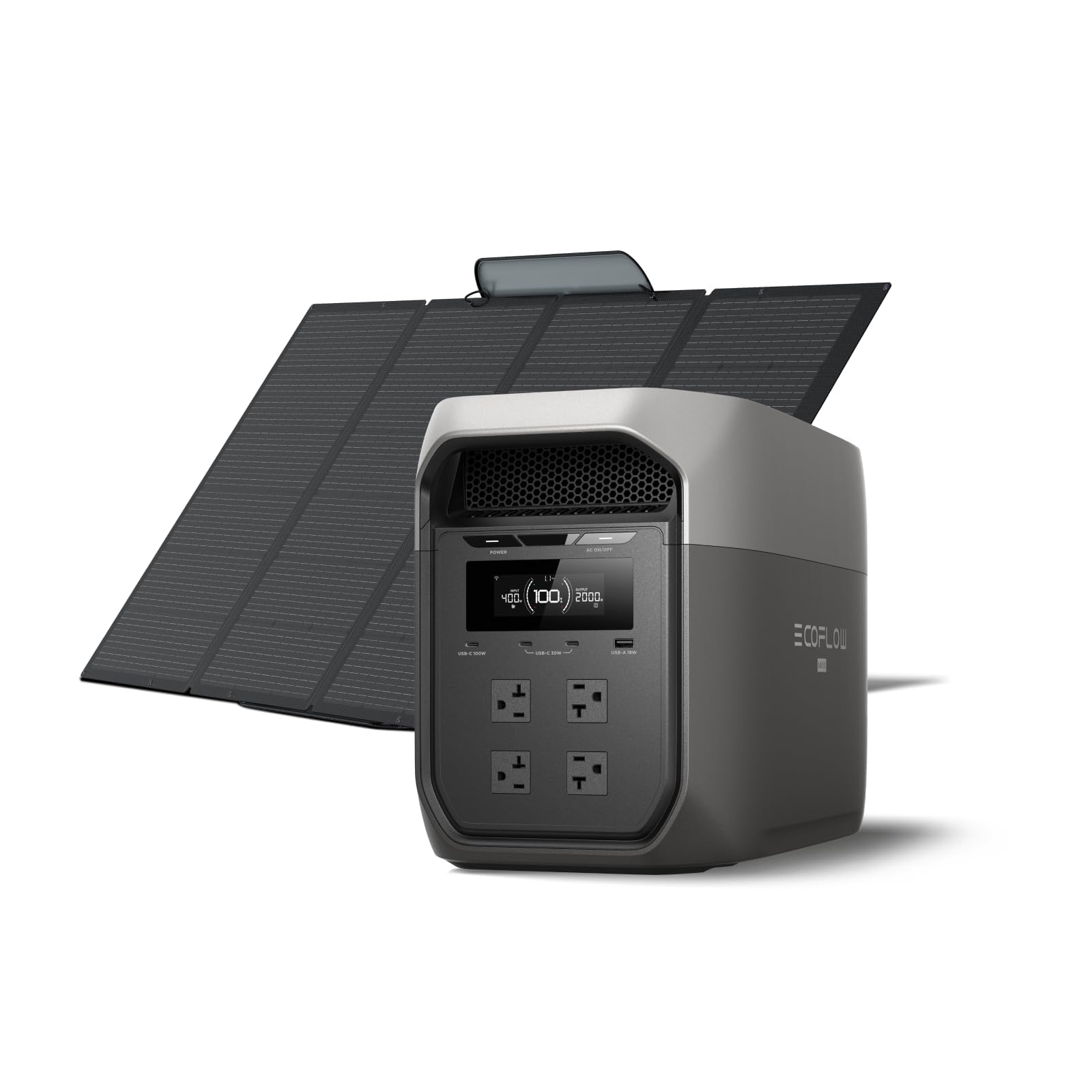
The EcoFlow DELTA 3 Max pairs a 2400W inverter (3400W X-Boost) with a 400W portable solar panel, creating an 800W-capable system that can run heavy appliances like fridges, microwaves, and power tools during outages. The power station uses advanced X-Stream technology to recharge from 0-80% in just 1.13 hours via AC, and it supports up to 1000W solar input for fast topping up when the sun is strong.
The 400W panel is a rigid monocrystalline design with a built-in kickstand and adjustable tilt. Customer reviews report consistent 340-390W output in good sun, with the bifacial design adding 5-10% extra from reflected light. The power station’s 10ms UPS transfer time keeps sensitive electronics like computers and medical devices safe during grid interruptions. The included EcoFlow app allows real-time energy monitoring and smart scheduling to optimize solar charging.
The system is heavy — the power station weighs roughly 60 lbs and the panel another 30 lbs — so it’s more of a stationary backup unit than a daily carry. Owners with RVs and off-grid cabins find it ideal, but the 400W panel’s kickstand can be finicky in wind. The 5-year warranty on the power station adds long-term confidence.
Why it’s great
- Ultra-fast AC charging (0-80% in 67 minutes)
- 3400W X-Boost runs most household appliances
- 10ms UPS transfer protects sensitive electronics
Good to know
- Heavy system, not suitable for frequent transport
- Kickstand can be unstable in strong wind
4. DOKIO 800W 2×400W Monocrystalline
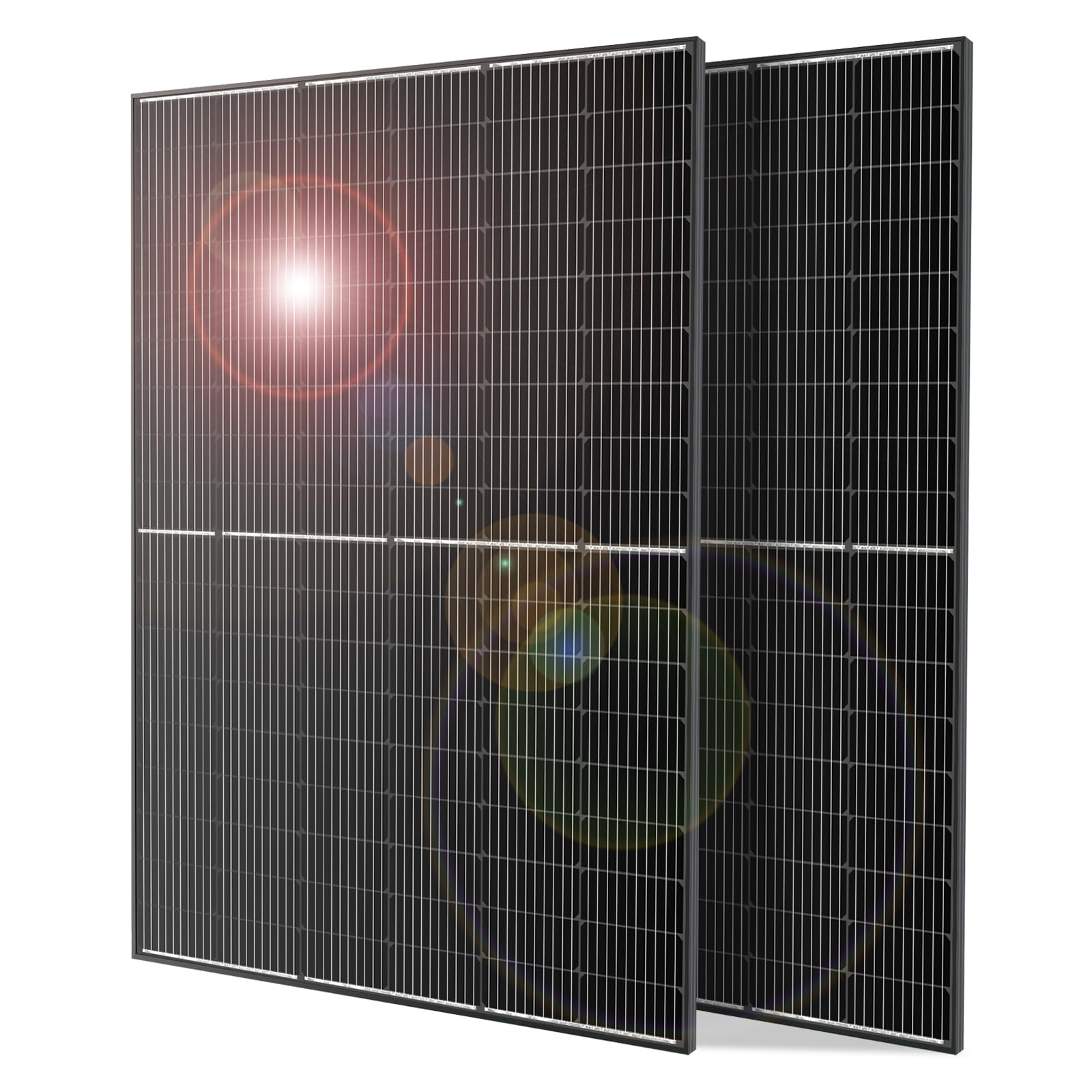
The DOKIO 800W kit provides two 400W monocrystalline panels that output 31V each, making them compatible with 12V and 24V battery banks. The 31V nominal output means you can wire them in parallel for a 12V system without exceeding most MPPT controllers’ input limits, or in series for a 24V system. Real-world customer reports show 600-700W on partly cloudy days and over 700W in full sun, which is respectable for a mid-range price.
Each panel comes with 3-meter MC4 leads, which is longer than the typical 1-meter pigtails found on budget panels. This reduces the need for extension cables and lowers connection resistance. The tempered glass and aluminum frame construction is weather-resistant for year-round yard, shed, and garden installations. The panels are 67.8 x 44.6 inches, which is large but manageable for ground mounts.
Owners using them with EcoFlow and Bluetti power stations report easy setup and consistent charging. The kit includes fewer joints than 8×100W configurations, reducing potential failure points. Downside: the panels are heavy (94.6 lbs per 400W panel) due to the glass and frame, so roof installations require two people. Some users note that output drops to 70-80% in high heat, which is typical for P-type cells at this price.
Why it’s great
- 31V output works well with 12V and 24V MPPT systems
- Long 3m MC4 leads reduce need for extension cables
- Fewer connection points than 8×100W arrays
Good to know
- Heavy panels require two people for roof installation
- P-type cells lose efficiency in high heat
5. JJN Bifacial 2×400W N-Type
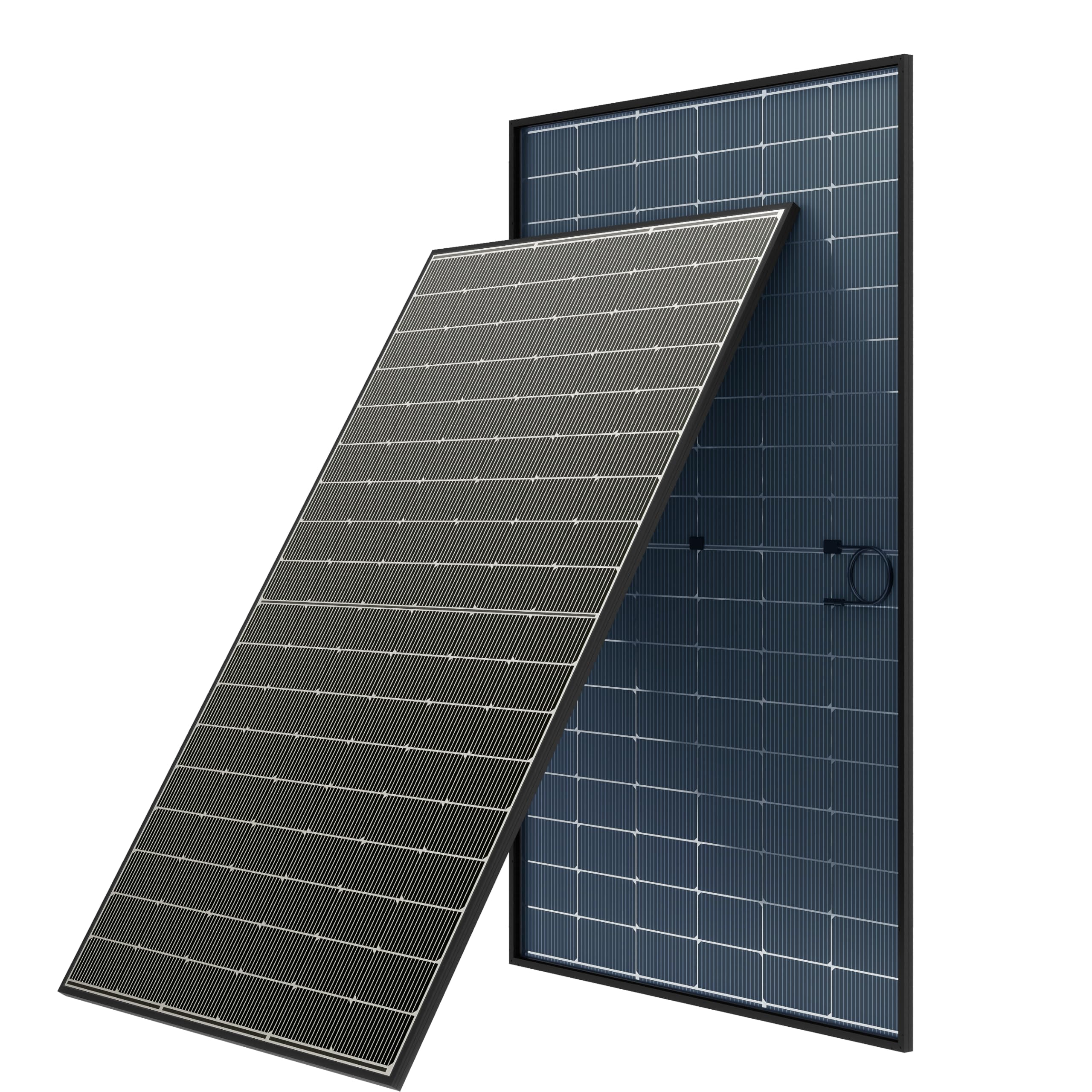
The JJN 2×400W kit uses N-type 16BB cells with a transparent backsheet for bifacial operation, capturing light from both the front and rear. In practical terms, this means a ground-mounted system on gravel or a white roof can produce up to 25% more energy than a standard panel with the same front-side rating. Customer reports confirm 380+W per panel in cool full sun and 87% output even when flat-mounted, outperforming many conventional 400W panels.
These panels are built to withstand 2400Pa wind loads and 5400Pa snow loads, which is significantly stronger than the typical 2000Pa threshold. The IP65 junction box and IP68 MC4 connectors provide reliable waterproofing. The 30-year power output warranty from JJN is among the longest in this category, reflecting confidence in the N-type cell degradation curve (typically 0.4-0.5% per year vs. 0.7-0.8% for P-type).
One caveat: a few customers reported minor cosmetic imperfections like small dots on cells, though output was unaffected. The panels are heavy at 94.6 lbs, so they’re best for permanent ground mounts or strong roof structures. The bifacial benefit is maximized when panels are elevated at least 1 meter above a reflective surface — flat roof mounting reduces rear-side gain.
Why it’s great
- Bifacial design captures 10-25% extra energy from rear light
- N-type cells degrade slower than P-type
- 30-year power warranty is best-in-class
Good to know
- Heavy panels need reinforced mounting
- Bifacial benefit requires reflective surface underneath
6. EPOCH 800W Bifacial 2×400W
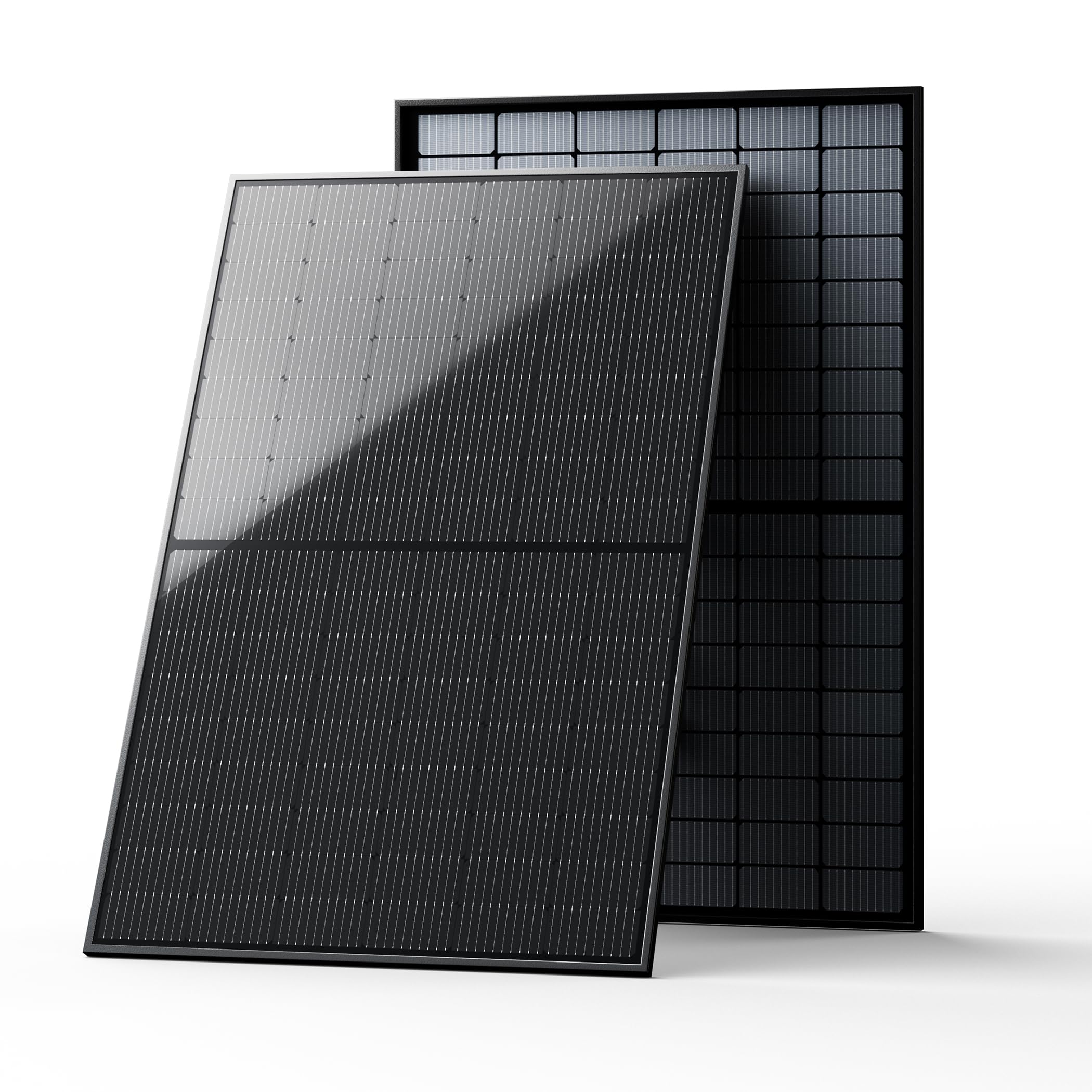
The EPOCH 800W kit uses Class A+ monocrystalline cells with PERC and half-cut technology, achieving up to 25% conversion efficiency. The 16BB cell design increases current collection and reduces the risk of micro-cracks. The panels are bifacial, with a transparent backsheet that allows rear-side energy generation. Customer tests show 275-350W per panel even in flat-mounted or cloudy conditions, and up to 350W on an SUV roof — strong real-world performance.
Durability is a standout feature. The IP68 junction box and IP67 MC4 connectors are rated for submersion and dust ingress, exceeding the IP65 standard of most competitors. The frame is black-anodized aluminum, which looks cleaner than silver frames on RV and home installations. Each panel undergoes 100% EL testing before shipping to ensure no hidden micro-cracks from manufacturing.
The 12-year product warranty and 25-year linear power output warranty provide long-term security. However, packaging and shipping have been inconsistent — some customers received damaged panels (scratched glass, bent frames) due to inadequate packaging during transit. If you buy, inspect immediately and document any damage. The panels are also heavy (107 lbs per 400W panel), so plan for a two-person installation.
Why it’s great
- Class A+ cells with PERC and half-cut for peak efficiency
- IP68 junction box beats standard IP65 protection
- 100% EL testing ensures no hidden micro-cracks
Good to know
- Shipping packaging can be insufficient — inspect immediately
- Very heavy panels, two-person installation required
7. Ayahoomane 800W Portable 2×400W
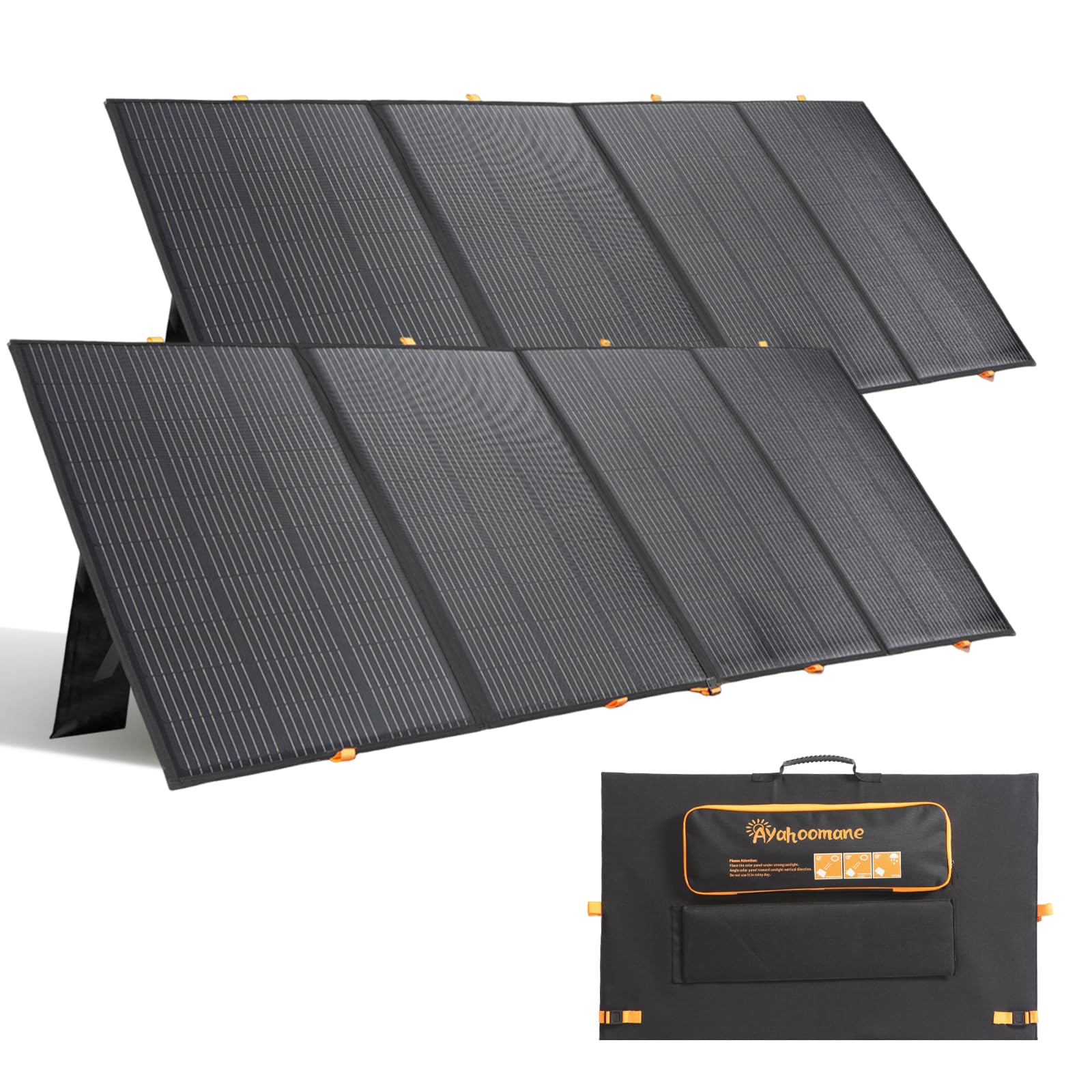
The Ayahoomane 800W kit consists of two 400W foldable solar panels that fold to 38.3 x 24 x 1.6 inches for transport. Each panel weighs 33.1 lbs, so the total system is 66.2 lbs — heavy for backpacking but manageable for car camping and RV setups. The panels output 36V, which is well-suited for high-voltage MPPT controllers and power stations like EcoFlow and Bluetti that accept up to 50V input.
The ETFE laminated surface is scratch-resistant and moisture-proof, with an IP67 rating that protects against water splashing. The panels come with multiple adapters (Anderson, XT60, DC7909, DC5525), ensuring compatibility with most portable power stations. Customers report 320-355W per panel in good sun, which is 80-88% of the rated 400W — typical for portable panels that lack the air-gap cooling of rigid panels.
One limitation: the MC4 pigtails are short (likely 14 AWG), which restricts series wiring options for high-current setups. The rear kickstand props can be finicky, occasionally folding when repositioning the panels. For users who need 800W of portable power for a weekend off-grid base camp, this is a solid choice, but the folding design means the panels will degrade faster than rigid options if left in the sun daily.
Why it’s great
- Folds compact for car and RV camping
- 36V output matches high-voltage power stations
- Multiple adapters included for wide compatibility
Good to know
- Short MC4 pigtails limit series wiring
- Kickstand props can fold when repositioning panels
8. EcoFlow 125W Bifacial 4×125W

The EcoFlow 125W kit takes a modular approach: four 125W bifacial panels can be deployed individually or linked to form a 500W array (expandable to 1000W+). Each panel weighs only 9.26 lbs, making them the lightest rigid panels in this roundup. Despite the low weight, they use N-type cells with up to 25% efficiency and a bifacial design that adds 5-20% extra energy from reflected light.
Each panel outputs 50V and 3A, which means wiring four in series gives 200V — too high for a standard 12V MPPT controller. EcoFlow includes XT60W connectors that handle automatic parallel wiring when used with their power stations, simplifying setup. The built-in 30-60° adjustable stands and solar angle guide help maximize sun capture without guesswork. Customers routinely see 500W from four panels, matching or exceeding the rated specification.
The panels are IP68 rated with a waterproof XT60-W connector, suitable for all-weather outdoor use. The lightweight design does have a downside: the panels are susceptible to wind gusts and need sandbags or stakes to stay put. The 1mm ultra-thin tempered glass is also more fragile than standard 3.2mm glass, so handling requires care. For portable users who prioritize weight over ruggedness, this system is unmatched.
Why it’s great
- Extremely lightweight panels (9.26 lbs each)
- Bifacial design adds 5-20% extra yield
- Integrated stands and solar angle guide for optimal tilt
Good to know
- 1mm glass is more fragile than standard 3.2mm panels
- Light weight makes panels susceptible to wind
9. SUNGOLDPOWER 4×200W Monocrystalline
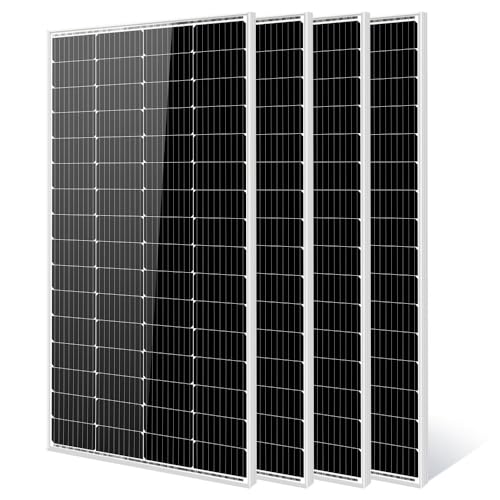
The SUNGOLDPOWER 800W kit uses four 200W monocrystalline panels built with Grade A solar cells and advanced encapsulation materials. The panels output 24V nominal, which is ideal for 24V battery banks and can be wired in series for 48V systems. The 36.16V Voc means you can safely put two in series on a 100V MPPT controller with cold-weather margin. Customers report 100-107W per panel, slightly overperforming the 100W label, which suggests conservative power rating.
Each panel measures 55.1 x 27.6 inches with a 1.2-inch aluminum frame, making them compatible with standard Z-brackets, side pole mounts, and tilt mounts. The 25-year power warranty and 12-month product warranty from SUNGOLDPOWER provide a reasonable safety net. The panels are well-packaged with double boxes and foam, reducing the risk of shipping damage.
One hidden issue: to activate the warranty, some customers report being asked to follow a Facebook page, leave a review, and send photos — and then not receiving a response. This bait-and-switch warranty activation scheme is frustrating and makes the advertised 25-year warranty feel less reliable. Also, the 200W panels are heavier than some competitors at 21.7 lbs each, which adds up over four panels.
Why it’s great
- Grade A cells with conservative power rating (often overproduces)
- 24V nominal output works seamlessly with 24V/48V systems
- Excellent packaging with double boxes and foam
Good to know
- Warranty activation process is clunky and potentially misleading
- Heavier than some competing 200W panels
10. PLUGGEDSOLAR Plug & Play 800W Kit

The PLUGGEDSOLAR 800W kit is designed for homeowners who want to offset their electric bill without hiring an electrician. It includes four 200W panels and a micro-inverter with a 50-foot plug-in cord that connects directly to a standard wall outlet. The system is estimated to generate ~1500 kWh per year, saving 20-40% on electricity bills for an average home. The micro-inverter includes a built-in power monitor for tracking production.
Customer reports show real-world output of ~600W (not 800W) due to the micro-inverter’s clipping behavior, which limits peak power. The system ships in two packages — the inverter/cord and the panels — which can arrive on different days, causing confusion. Some users found that the micro-inverter was not UL-1741 certified, which could be a safety concern and may not meet local utility interconnection requirements.
For experienced DIY solar users who can verify local codes and replace the micro-inverter with a certified unit (like the APSystem EZ1-LV), this kit provides a functional starting point. But as a plug-and-play solution out of the box, it underperforms its 800W rating and requires more technical knowledge than the marketing suggests. The panels themselves are decent quality monocrystalline with good dimensions for ground or roof mounting.
Why it’s great
- Simple plug-into-outlet installation, no electrician needed
- 50ft cord provides flexible placement away from the house
- Built-in WiFi monitor tracks energy production
Good to know
- Micro-inverter clips output to ~600W, not 800W
- Micro-inverter may not be UL-1741 certified
- Components ship separately, causing delivery confusion
11. SUNGOLDPOWER 6×560W Bifacial PERC
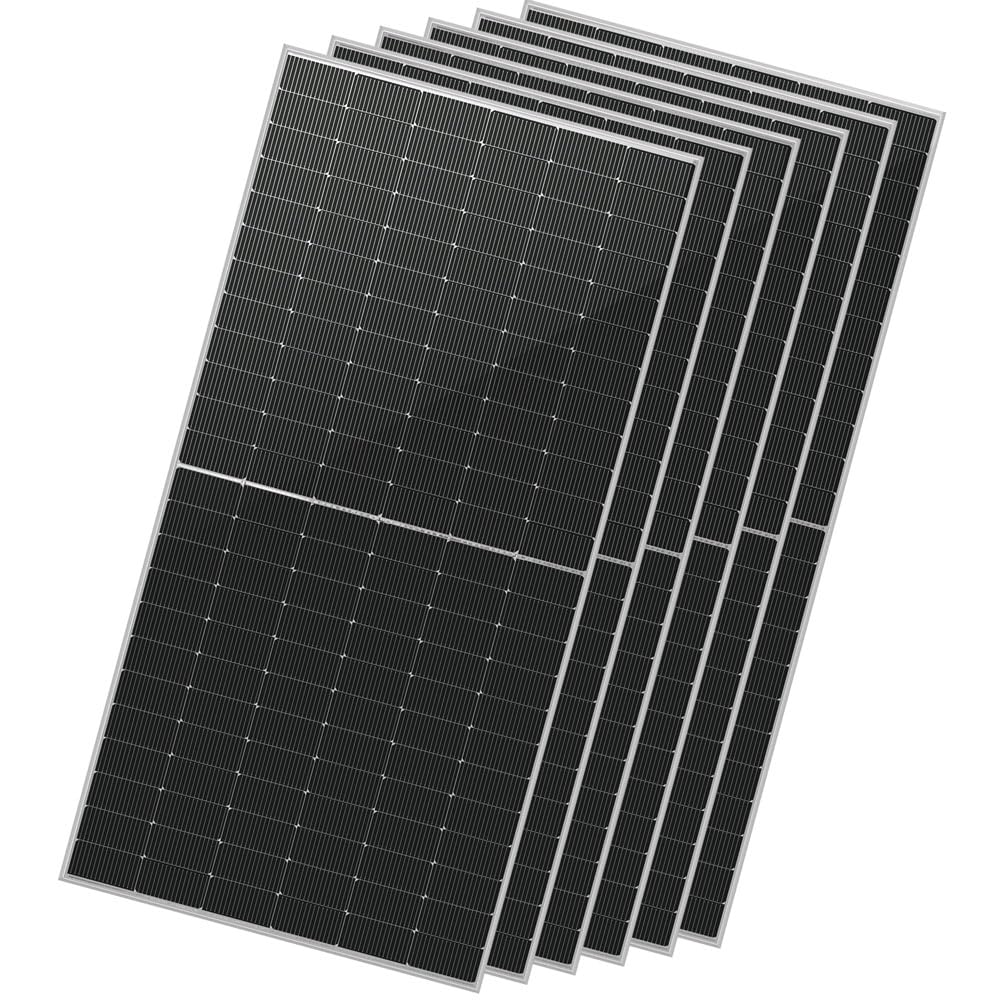
The SUNGOLDPOWER 560W kit is for serious off-grid installations where 800W is just the starting point. Six panels produce 3360W total (with up to 30% bifacial gain), far exceeding the 800W threshold. Each panel uses N-type 16BB bifacial PERC technology, combining the best available cell architecture for both front and rear energy capture. The 42.1V Voc and 13.3A Imp mean you can wire three in series on a 150V MPPT controller, or two in series on a 100V controller with cold-weather margin.
At 89.8 x 44.6 inches and 67.9 lbs each, these are massive panels that require a heavy-duty mounting system. Customers report over 600W per panel in full sun with moderate rear reflection, confirming the bifacial advantage. The panels are compatible with 12V, 24V, and 48V systems when wired appropriately. The 30-year linear power output warranty is reassuring, though the brand’s warranty activation process has been flagged as inconsistent by some buyers.
The biggest challenge is logistics. The panels ship on a pallet, and the liftgate service may not be large enough to unload — one customer needed a neighbor’s loader to move them. The factory cables are also reported as too short for large arrays. For users building a whole-home off-grid system with a 48V battery bank and sufficient mounting space, these panels offer unbeatable cost-per-watt for bifacial N-type technology.
Why it’s great
- 30% bifacial gain with N-type PERC cells — best efficiency in class
- Extra-long 30-year power output warranty
- Massive 560W per panel reduces total panel count for high-power systems
Good to know
- Extremely large and heavy — need pallet jack and two people to move
- Short factory cables unsuitable for large arrays
- Pallettized shipping may not fit standard liftgates
FAQ
Can I connect 800W of solar panels to a 12V battery system?
Why does my 800W solar panel system only produce 600W?
Should I wire my 800W panels in series or parallel?
How many 200W panels do I need for 800W?
Do I need a special charge controller for 800W solar panels?
Final Thoughts: The Verdict
For most users, the 800 watt solar panel winner is the ECOBOSS 800W N-Type 4×200W because it combines industry-leading 25.6% N-type efficiency with a price that undercuts premium rivals. If you want a complete solar generator kit with a battery and inverter, grab the Anker SOLIX C1000 with 400W Panel. And for maximizing yield from a ground-mounted array with bifacial technology, nothing beats the JJN Bifacial 2×400W with its 30-year warranty and real-world 380W+ per panel.