
That low-frequency hum from your differential isn’t a suggestion—it’s the sound of metal grinding against metal, accelerated by thermal breakdown in a gear oil that couldn’t handle the heat. Swapping in a quality synthetic 80W-90 isn’t just maintenance; it’s the single most effective way to silence drivetrain noise and protect hypoid gears under the extreme shear forces of towing, hauling, or spirited driving.
I’m Min — the co-founder and writer behind Gadgets Feed. I’ve spent hundreds of hours analyzing additive chemistry, viscosity retention data, and real-world customer fatigue patterns across dozens of gear oils to separate the legitimate performers from the cheap fillers.
Whether you’re servicing a truck’s rear axle, a motorcycle’s shaft drive, or a marine outboard’s lower unit, the right lubricant determines how long your gears actually last. This guide is built to help you identify the best 80w90 synthetic gear oil for your specific application and budget.
How To Choose The Best 80W90 Synthetic Gear Oil
Not all 80W-90 gear oil is created equal. The wrong viscosity or additive package can turn a smooth-shifting transmission into a grinding mess or leave your differential howling at highway speeds. Here’s how to cut through the noise.
API Service Classification: GL-4 vs GL-5
The GL-4 rating is designed for manual transmissions and transaxles with yellow-metal synchronizers (brass or bronze), where the aggressive sulfur-phosphorus additives in GL-5 oils can corrode those components. GL-5 oils pack higher extreme-pressure additives for hypoid gears in differentials, where sliding action generates immense heat. Using GL-5 in a GL-4 transmission shortens synchronizer life; using GL-4 in a GL-5 differential risks gear scoring.
Limited-Slip Additives: When You Need Them Built In
Limited-slip differentials use clutch packs to distribute torque. Standard 80W-90 gear oil may cause those clutches to chatter or grab unevenly unless friction modifiers are added. Some premium gear oils, like the TRIAX offering, incorporate the limited-slip additive package directly into the formulation, eliminating the guesswork of buying a separate friction modifier bottle.
Shear Stability and Temperature Range
Gear oil is subjected to intense shear forces that mechanically rip apart long polymer chains used as viscosity improvers. A shear-stable oil maintains its viscosity grade (80W-90) even after thousands of miles of hard use. A poorly formulated baseline oil will shear down to a thinner grade, reducing film strength and increasing wear. Look for oils that specify flash points above 390°F and pour points below -15°F for year-round confidence.
Quick Comparison
On smaller screens, swipe sideways to see the full table.
| Model | Category | Best For | Key Spec | Amazon |
|---|---|---|---|---|
| TRIAX Gear Premium LS 80W-90 | Synthetic | Limited-slip diffs & heavy towing | Load Stage 13 EP >120k PSI | Amazon |
| Liqui Moly Gear Oil GL4 85W-90 | Mineral | Manual transmissions (GL-4) | 220°C Flash Point | Amazon |
| Ford Motorcraft XY-80W90-QL | Mineral | Ford diff OEM spec | 266°F Upper Temp Rating | Amazon |
| STAR BRITE Star Tron 80W-90 | Synth Blend | Marine outboard lower units | API GL-5 / SAE J2360 | Amazon |
| Valvoline Daily Protection 80W-90 | Synth Blend | Daily drivers & general use | -15°F to 410°F Range | Amazon |
| Quicksilver 80W-90 Hypoid | Synthetic | Motorcycle shaft drives | API GL-5 / MT-1 | Amazon |
| Valvoline 831 Gear Oil 80W-90 | Conventional | Budget app. & Snapper mowers | API GL-5 Rated | Amazon |
In‑Depth Reviews
1. TRIAX Gear Premium LS 80W-90, GL-5
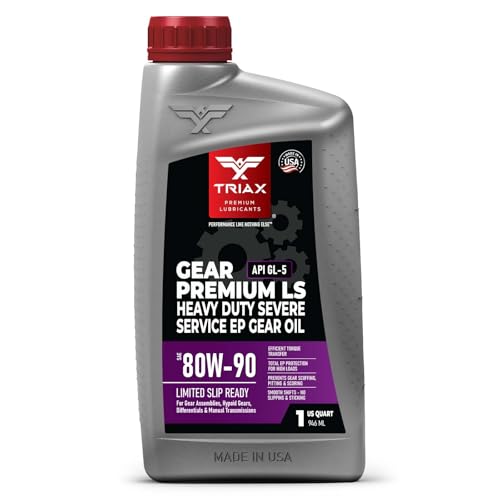
The TRIAX Gear Premium LS 80W-90 sets a new benchmark for extreme-pressure performance in the 80W-90 category. Its polyphosphate EP proprietary additive system is verified to exceed Load Stage 13 requirements—meaning it withstands over 120,000 pounds per square inch of surface stress without scuffing. That’s not marketing fluff; it’s a tangible safety margin for anyone running heavy differential loads, oversized tires, or towing regularly.
What makes this oil genuinely unique is its built-in limited-slip additive package. You do not need to buy a separate friction modifier for LS differentials—the formulation is already optimized for clutch-pack engagement, including differentials with integrated wet brakes. The base stock is shear-stable synthetic, so it resists viscosity breakdown far longer than conventional blends. Users running 4.88 gears on 35-inch tires in a Jeep XJ have reported zero chatter or noise after extended hauling.
The only real compromise is the 0.95-quart fill—it’s slightly shy of a full quart, so if your diff takes exactly 1.0 quarts, you’ll need a second bottle for the last 5%. But given the military NATO approval and the widest OEM specification range on the market, this is a minor inconvenience for top-tier protection.
Why it’s great
- Load Stage 13 extreme pressure rating (120k+ PSI)
- Built-in LS additive, no separate friction modifier needed
- Shear-stable synthetic base resists viscosity loss
Good to know
- Bottle is 0.95 qt, not a full quart
- Overkill for low-stress daily commuter diffs
2. Liqui Moly Gear Oil (GL4) SAE 85W-90, 1 L

Liqui Moly’s 85W-90 gear oil is a GL-4 formulation, which is the correct choice for manual transmissions and axles with yellow-metal synchronizers that would be corroded by GL-5’s aggressive additive chemistry. With a flash point of 220°C (428°F), this oil creates a stable lubricating film even under the high sliding friction of older transmission designs. Users report noticeably quieter gear engagement after a full drain-and-fill cycle.
The mineral base stock is refined to a high purity level, and the additive package includes corrosion inhibitors and anti-foaming agents. It’s fully miscible with other branded gear oils, though Liqui Moly recommends using it alone for maximum effectiveness. Customers servicing 1979 Toyota pickups and 2015 Chrysler vans alike note that the oil’s consistency remains stable over extended intervals, with no thermal breakdown smells after 1,000 miles of mixed driving.
One practical note: the bottle includes a pull-out straw, but many users found it ineffective for refilling tight transmission ports and recommend a transfer pump.
Why it’s great
- Correct GL-4 rating protects brass/bronze synchronizers
- High 220°C flash point for thermal stability
- Reduces gear noise significantly in manual transmissions
Good to know
- Pull-out pour straw is impractical for most fills
- Mineral base, not synthetic—shorter drain intervals than full syn
3. STAR BRITE Star Tron Synthetic Blend 80W-90 Marine
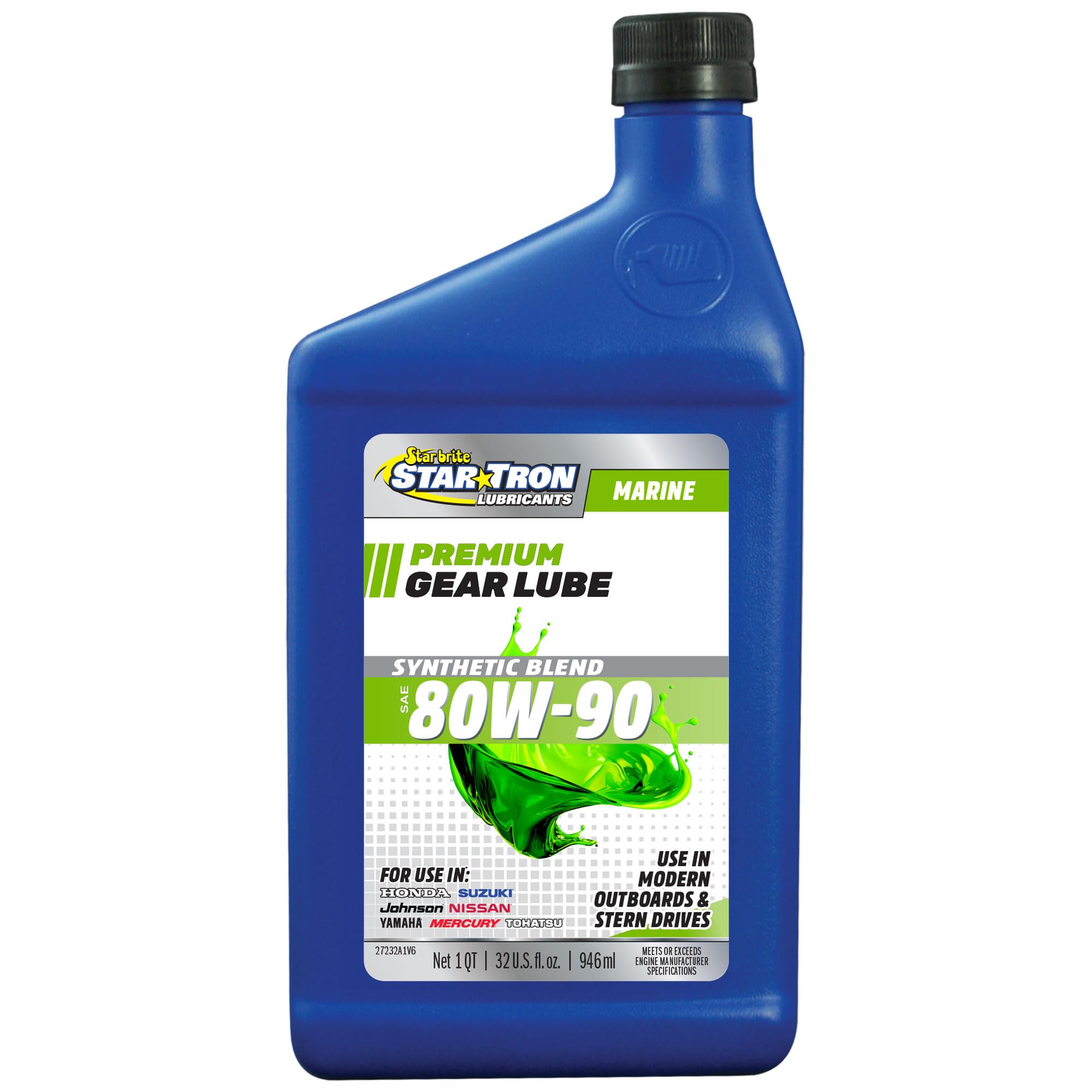
The STAR BRITE Star Tron 80W-90 is a synthetic-blend gear oil purpose-built for marine outboard and stern drive lower units, and it meets the stringent API GL-5, API MT-1, SAE J2360, and Mack GO-J specifications. The synthetic blend gives it a significant advantage over straight mineral oils in terms of thermal stability and resistance to water washout—critical for boat engines that operate in wet environments and see heavy throttle loads.
Extreme-pressure additives in this formulation deliver anti-wear protection even when the gear oil reaches high operating temperatures, which is common in high-horsepower outboards over 100 hp. Users servicing OMC outdrives and Mercury lower units report that it performs identically to OEM oils at roughly half the per-quart cost. The formula also incorporates rust and corrosion inhibitors to protect gear surfaces during storage.
The main consideration is that this is a marine-specific product. While it works perfectly in automotive differentials requiring GL-5, its additive profile is optimized for the lower-unit environment (water contamination risk, aluminum housings). If you only need gear oil for a truck or SUV, a dedicated automotive GL-5 might be a more straightforward choice.
Why it’s great
- Marine-grade synthetic blend resists water washout
- Meets multiple military and OEM specs (MIL-L-2105D)
- Cost-effective compared to branded marine oils
Good to know
- Primarily designed for marine applications
- Not the best option for GL-4 manual transmissions
4. Ford Genuine Ford Fluid XY-80W90-QL Premium Rear Axle Lubricant
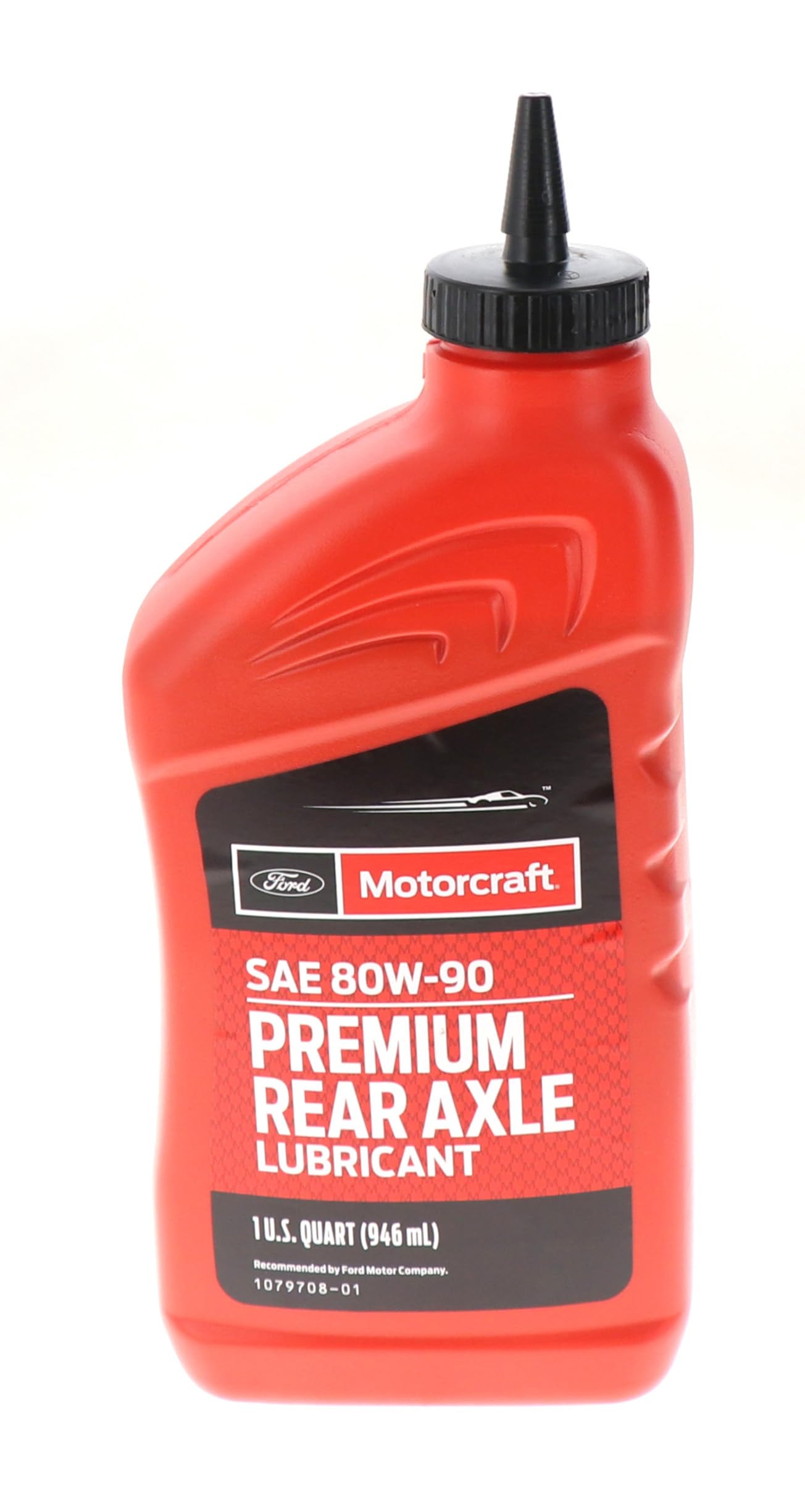
When an OEM specifically formulates a gear oil for its own drivetrains, you get zero guesswork. Ford’s Motorcraft XY-80W90-QL is the exact fluid specified for conventional and limited-slip differentials in Ford passenger cars, light trucks, vans, and buses. The mineral base oil is fortified with extreme-pressure additives to handle the high torque loads typical of Ford rear axles, and it carries an upper temperature rating of 266°F.
Users running 1995 Ford Rangers and 2014 F-150s have reported that this oil eliminated diff whine immediately after the first fill. It is recommended for both conventional and limited-slip differentials, though it does not contain built-in LS friction modifiers—you will need to add a separate bottle if your limited-slip unit requires it.
The biggest advantage is warranty compliance and certainty. There is no second-guessing whether the oil meets Ford’s corrosion protection or shear stability requirements. The down side is that this is a mineral-based product, so its drain interval is shorter than a full synthetic. If you want extended service life, a synthetic alternative may be more economical over time despite the higher upfront cost.
Why it’s great
- Guaranteed Ford OEM compliance for warranty
- Eliminates diff noise in older Ford axles
- Trusted Motorcraft quality control
Good to know
- Mineral base—shorter lifespan than synthetics
- No built-in LS additive; separate purchase needed
5. Valvoline Daily Protection 80W-90 Gear Oil

Valvoline’s Daily Protection 80W-90 strikes an excellent balance between performance and affordability. This synthetic blend uses extreme-pressure additives that deliver high load-carrying capacity specifically tested for towing and hauling applications. The temperature range is exceptionally wide—rated from -15°F up to 410°F—ensuring reliable cold-weather flow without thermal breakdown during sustained highway use.
It meets or exceeds API GL-5 standards and is also suitable for non-synchronized manual transmissions calling for GL-4. Users servicing Acura MDX transfer cases and Chevy road vehicles confirm that it prevents gear chatter and reduces whine immediately. The corrosion inhibitors protect gear teeth from rust during seasonal storage, and the oxidation resistance keeps the oil from thickening prematurely.
The only notable limitation is that this is not a full synthetic—it is a blend of mineral and synthetic base stocks. For extreme-duty racing or heavy towing in hot climates, a 100% synthetic (like the TRIAX) will maintain its viscosity grade longer. But for the vast majority of daily drivers and light to medium towing, this oil delivers outstanding protection at a budget-friendly cost.
Why it’s great
- Wide -15°F to 410°F operating range
- Proven noise reduction in differentials and transfer cases
- GL-5 rating with GL-4 backward compatibility
Good to know
- Synthetic blend, not full synthetic
- Separate LS additive needed for limited-slip diffs
6. Quicksilver 80W-90 Motorcycle Hypoid Gear Oil, 1 Quart

Quicksilver’s 80W-90 hypoid gear oil is formulated specifically for motorcycle shaft drives and separate clutch transmissions, where API GL-5 protection is needed to handle the high sliding friction of hypoid gears. The synthetic base stock provides excellent resistance to thermal breakdown, which is crucial for air-cooled motorcycle gearboxes that can run significantly hotter than car differentials.
Users with 1984 Honda Nighthawk 650 and 2006 Suzuki C50C shaft drives report that this oil eliminated drivetrain clunking and made gear engagement noticeably smoother. The oil meets API GL-5, MT-1, and SAE J2360, making it suitable for universal fit in most motorcycle shaft-drive systems. The pour spout design is clean and manageable for the tight fill ports on motorcycle final drives.
The primary limitation is the application specificity—if you are servicing a car or truck differential, you are better off with a dedicated automotive GL-5 product that may offer a more robust EP additive package for higher axle weight ratings. Also, like all gear oils, it has a strong sulfur odor, so wear gloves and work in a ventilated area.
Why it’s great
- Optimized for motorcycle shaft drive hypoid gears
- Synthetic base resists high-temperature breakdown
- Eliminates drivetrain clunking in older bikes
Good to know
- Less suitable for heavy truck axles
- Strong gear oil odor during fill
7. Valvoline 831 Gear Oil, Differential, 80W90, Conventional

Valvoline’s 831 gear oil is the entry-level conventional option in this comparison, and it serves a specific niche well: low-stress applications where synthetic performance is not justified. This is a mineral-based GL-5 oil that works for manual transmissions, differentials, and transfer cases. Users report that it quieted diff moan on older vehicles and worked perfectly in a Snapper lawn mower transmission.
At its price point, it delivers basic extreme-pressure protection for normal driving conditions. The 1-quart bottle is straightforward, and the oil is made in the United States. The conventional base means it will oxidize and shear down faster than a synthetic blend, so you should plan for more frequent drain intervals—especially if you are towing or driving in hot weather.
This is not the oil to choose for a high-performance differential, a limited-slip unit, or a marine environment. It lacks the advanced additive chemistry and thermal stability of synthetic options. But if you need a reliable, no-frills 80W-90 for a light-duty gearbox or a piece of outdoor power equipment, this gets the job done without breaking the budget.
Why it’s great
- Budget-friendly conventional option
- Effective for light-duty applications and lawn equipment
- American-made with proven Valvoline quality
Good to know
- Conventional base—shorter drain intervals required
- Not suitable for limited-slip or high-stress differentials
FAQ
Can I use 80W-90 gear oil in a transfer case that calls for ATF?
Is GL-5 gear oil always better than GL-4?
Do I need to add a friction modifier if I use a limited-slip differential oil?
How often should I change 80W-90 gear oil in my differential?
Final Thoughts: The Verdict
For most users, the best 80w90 synthetic gear oil winner is the TRIAX Gear Premium LS 80W-90 because it delivers extreme-pressure protection far beyond standard GL-5 requirements and includes built-in limited-slip additives at a fair price. If you need a GL-4 oil for a manual transmission with brass synchronizers, grab the Liqui Moly Gear Oil GL4 85W-90. And for marine outboard lower units, nothing beats the corrosion resistance of the STAR BRITE Star Tron 80W-90.