
Stepping into the world of an 8K 120Hz TV means you are no longer shopping for a simple screen; you are investing in the pinnacle of home theater technology. A display capable of 33 million pixels refreshing 120 times every second demands more than just a big budget. It requires careful consideration of processing power, panel technology, and how you actually consume content—whether that’s native 8K media, high-frame-rate gaming, or upscaled 4K and HD footage.
I’m Min — the co-founder and writer behind Gadgets Feed. This guide represents months of cross-referencing technical specifications, analyzing customer feedback, and comparing real-world performance metrics to separate the true flagship performers from the marketing-driven pretenders.
After extensive research into native panel resolution, AI upscaling neural network counts, peak brightness, HDMI 2.1 bandwidth, and motion handling accuracy, I have narrowed the field to the models that genuinely deliver on the promise of a best 8k 120hz tv experience.
How To Choose The Best 8K 120Hz TV
Selecting a TV for 8K 120Hz performance is a different process from a standard 4K purchase. The investment is significant, and the wrong choice—like a panel with poor upscaling or limited HDMI bandwidth—can leave you with a screen that never reaches its potential.
Neural Processing Power for True 8K
The single most important component in an 8K TV is its processor. Native 8K content remains scarce, meaning your TV will spend most of its life upscaling 4K, 1080p, and even lower-resolution content. Look for a processor with a high number of AI neural networks (256 or more) specifically dedicated to real-time upscaling. Without this, an 8K panel will simply magnify the flaws of your source material.
Panel Technology: Mini-LED vs. QD-OLED for 8K
For an 8K 120Hz TV, the panel choice defines your experience. Mini-LED, used by Samsung and TCL, offers extreme brightness (over 4,000 nits in some models) and eliminates burn-in risk, making it ideal for bright rooms and gaming with static HUDs. QD-OLED, found in Sony’s A95L, delivers superior per-pixel black levels and wider color volume, creating a more cinematic image in dark rooms. Mini-LED is better for sheer brightness and longevity; QD-OLED is better for contrast and color purity.
HDMI 2.1 Bandwidth and 120Hz Validation
Not every TV labeled “120Hz” can actually accept a 4K or 8K 120Hz signal. True 120Hz operation requires HDMI 2.1 ports with full 48Gbps bandwidth. Verify that the TV supports 4K 120Hz or 8K 60Hz input without chroma subsampling. For PC gaming at 8K, also confirm VRR (Variable Refresh Rate) support via AMD FreeSync Premium Pro or NVIDIA G-Sync to eliminate screen tearing.
Quick Comparison
On smaller screens, swipe sideways to see the full table.
| Model | Category | Best For | Key Spec | Amazon |
|---|---|---|---|---|
| Samsung QN900F (65QN900F) | 8K Mini-LED | True 8K & Bright Rooms | 256 AI Neural Networks | Amazon |
| Samsung Neo QLED QN800D (65QN800D) | 8K Mini-LED | 8K Affordability | 165Hz Motion Rate | Amazon |
| Hisense 100U8QG | 4K Mini-LED | Giant Screen & Peak Brightness | 5000 Nits Peak | Amazon |
| LG OLED B5 (83OLEDB5PUA) | 4K OLED | Cinematic Perfection | 0.1ms Response Time | Amazon |
| TCL QM8L (98QM8L) | 4K Mini-LED | Ultra-Large & Value | 4000+ Dimming Zones | Amazon |
| TCL QM6K (98QM6K) | 4K Mini-LED | Large Screen Budget | 144Hz Native Refresh | Amazon |
| Sony BRAVIA 9 (K-85XR90) | 4K Mini-LED | PS5 & Sports Mastery | XR Backlight Master Drive | Amazon |
| Sony QD-OLED A95L (XR77A95L) | 4K QD-OLED | Reference Color & Black Level | QD-OLED Panel | Amazon |
| Sony OLED A80L (XR77A80L) | 4K OLED | Mid-Range OLED Excellence | Acoustic Surface Audio+ | Amazon |
| Samsung OLED S84F (77S84F) | 4K OLED | Entry-Level OLED | 120Hz Motion Xcelerator | Amazon |
| Samsung Neo QLED QN90C (QN75QN90C) | 4K Mini-LED | Bright Room All-Rounder | Neural Quantum Processor 4K | Amazon |
| Sony BRAVIA 3 (K-100XR30M2) | 4K LED | Massive Screen Home Theater | XR Processor with AI | Amazon |
| SYLVOX Outdoor TV (75 Inch) | 4K Mini-LED | Outdoor & Patio Use | 3500 Nits / IP55 | Amazon |
In‑Depth Reviews
1. Samsung Neo QLED 8K QN900F (65QN900F)

The Samsung QN900F represents the current peak of consumer 8K TV technology. Its NQ8 AI Gen3 Processor, driven by 256 neural networks, handles real-time 8K upscaling with a level of detail and texture recreation that no other TV in this class matches. The Quantum Matrix Pro with Mini-LEDs delivers a peak brightness that easily cuts through ambient light, making it suitable for both dedicated home theaters and bright living rooms.
For gamers, the 4K 165Hz VRR support and Motion Xcelerator ensure that fast-paced titles remain fluid and tear-free. The Object Tracking Sound+ with Dolby Atmos creates a convincing soundstage that follows on-screen action, reducing the immediate need for a separate soundbar in smaller setups. The sleek, nearly edgeless metal design also allows for a flush wall-mounted installation.
While native 8K content is still rare, the QN900F’s upscaling is so effective that even 1080p Blu-rays look remarkably sharp and clean. The primary drawback is the premium cost, which positions this TV for enthusiasts who want the absolute best available today and plan to keep their screen for many years as 8K content matures.
Why it’s great
- Industry-leading 256 AI neural network for 8K upscaling
- Very high peak brightness with Mini-LED backlight
- Supports 4K 165Hz VRR for high-end PC gaming
Good to know
- Premium price point reserved for flagship budgets
- Some reports of vertical line artifacts in dark scenes
- Built-in speaker is good but benefits from a dedicated sound system
2. Samsung Neo QLED 8K QN800D (QN65QN800D)
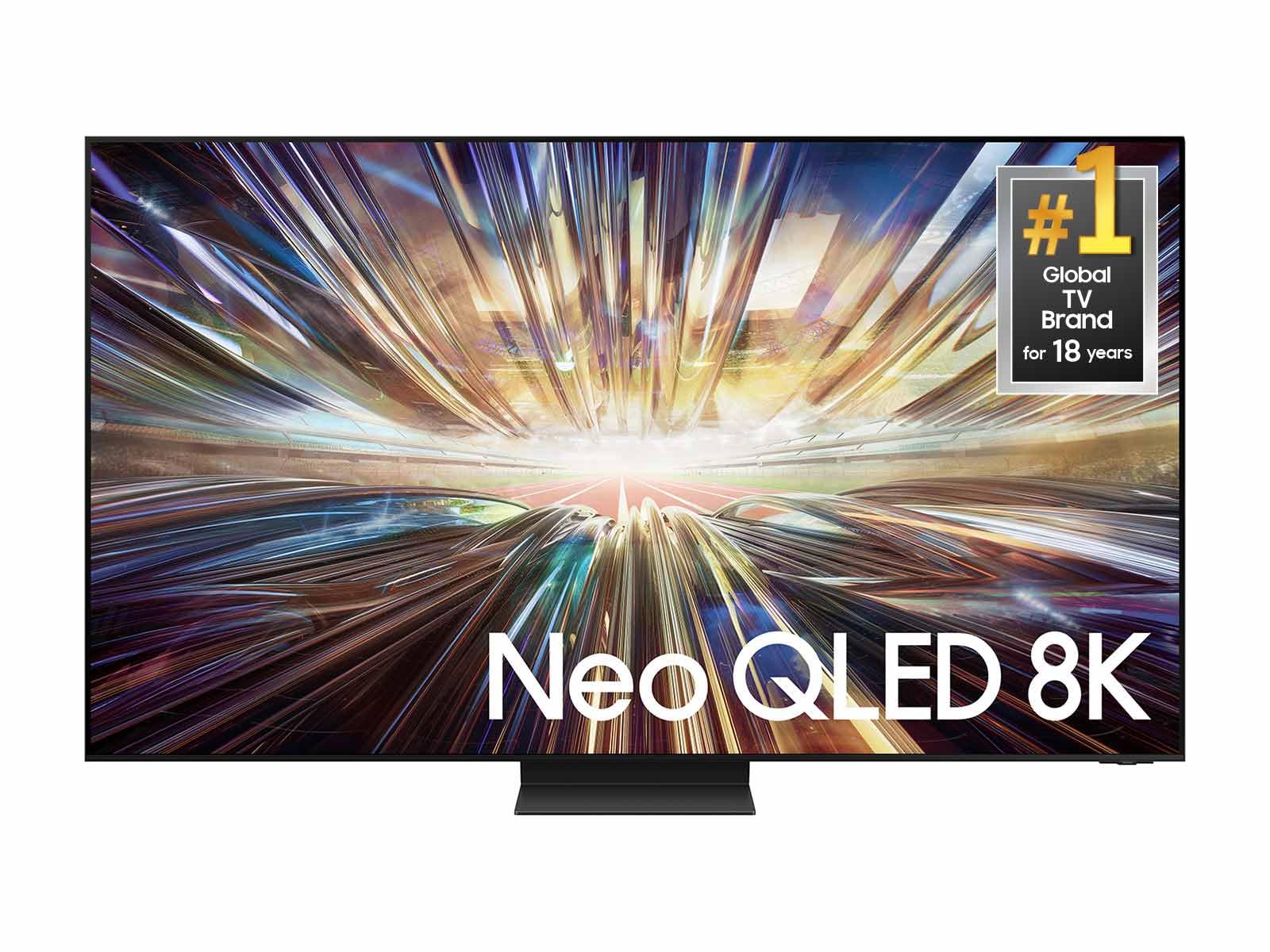
The QN800D is the sensible entry point into true 8K for shoppers who want the resolution upgrade without paying the absolute flagship premium. It shares the same NQ8 AI Gen2 Processor and Quantum Matrix Pro Mini-LED technology as higher-end Samsung models, delivering excellent 8K upscaling and a bright, punchy HDR image. The 165Hz Motion Xcelerator also makes it a capable choice for fast-paced gaming.
Its Real Depth Enhancer Pro adds a noticeable sense of dimensionality to content, making landscapes and complex scenes feel more immersive. The Object Tracking Sound+ and Dolby Atmos support provide a solid audio foundation, although serious home theater enthusiasts will still want to pair it with a dedicated sound system. The set includes multiple HDMI 2.1 ports for connecting modern consoles and PCs.
The most significant concern from long-term owners involves reliability, with reports of horizontal flickering lines appearing after months of use. This makes purchasing from a retailer with a robust return or extended warranty policy highly advisable. For users willing to accept that risk, the QN800D offers the best price-to-performance ratio for 8K today.
Why it’s great
- Lower cost of entry for true 8K resolution
- Excellent AI upscaling with NQ8 Gen2 processor
- 165Hz refresh rate supports high-frame-rate gaming
Good to know
- Documented cases of horizontal line failure out of warranty
- No built-in stand for tabletop use included in some regions
- Requires careful calibration out of the box for best results
3. Hisense 100U8QG
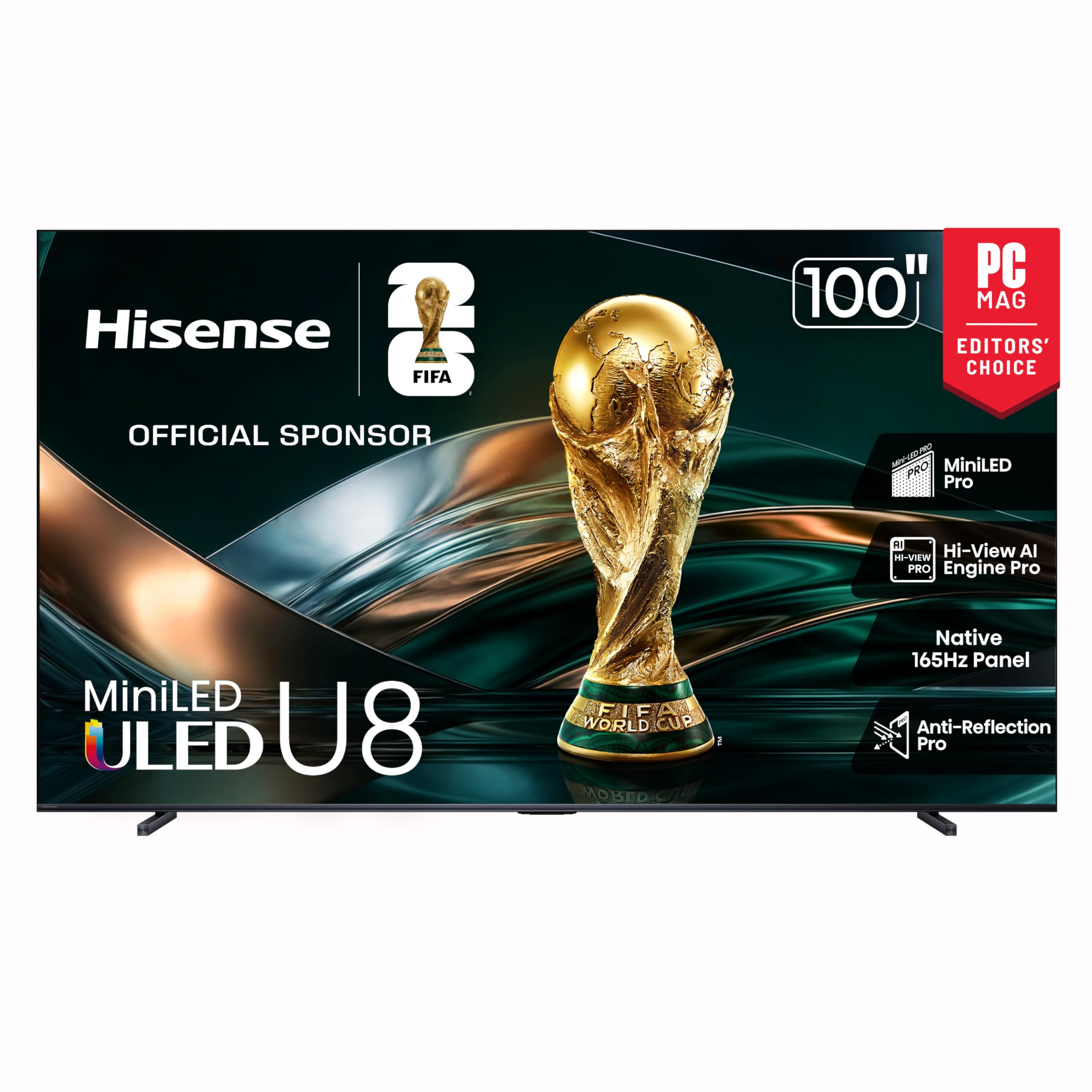
The Hisense 100U8QG is a brute-force assault on the premium TV market, offering a 100-inch screen with a staggering 5000 nits peak brightness and up to 5600 local dimming zones. This combination delivers an HDR experience that rivals commercial cinema projection, with specular highlights that look genuinely explosive. The Hi-View AI Engine Pro manages the Mini-LED array intelligently, minimizing blooming in most real-world content.
Gamers will appreciate the native 165Hz panel with VRR support up to 288Hz via Game Booster, plus AMD FreeSync Premium Pro for tear-free gameplay. The built-in 4.1.2 channel audio system with Dolby Atmos is surprisingly capable, with up-firing speakers that create a genuine height effect. The Google TV interface is fast and responsive, with access to all major streaming apps.
The trade-off for this extreme brightness and size is software stability. Some users report needing periodic factory resets to resolve system glitches. The sheer size also makes installation a multi-person job, and the TV requires a solid wall mount or a large, sturdy media console. For buyers who prioritize sheer screen real estate and retinal-burning brightness, this is an unmatched value.
Why it’s great
- Unrivaled 5000-nit peak brightness for HDR impact
- Massive 100-inch screen at a competitive price point
- Excellent gaming specs with 165Hz and FreeSync Premium Pro
Good to know
- Software stability issues are a recurring complaint
- Requires professional installation due to size and weight
- Built-in sound is good but still benefits from external speakers
4. LG OLED B5 (OLED83B5PUA)
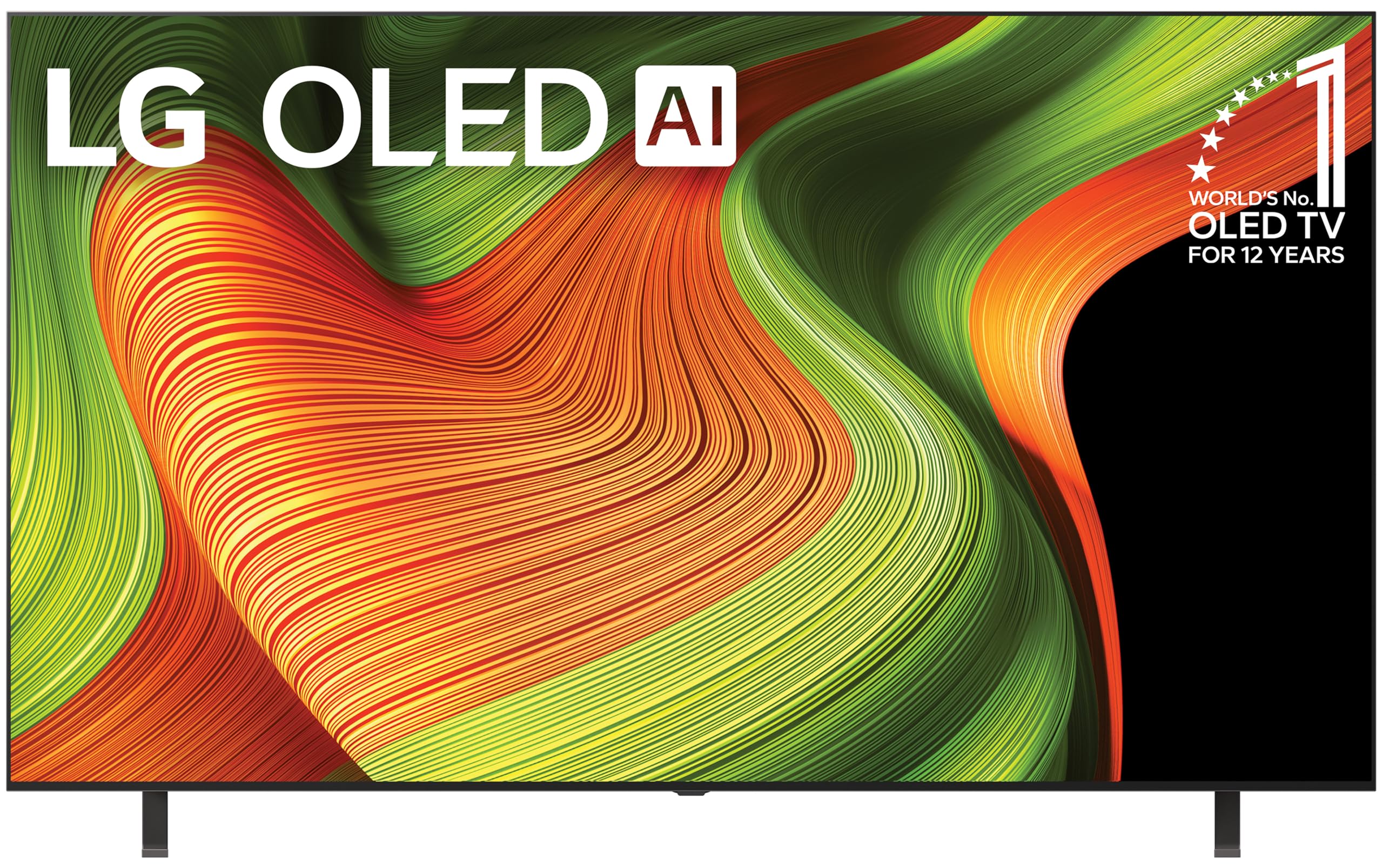
The LG B5 series offers the classic OLED advantage of infinite contrast with its self-lit pixel technology, delivering perfect blacks and stunning per-pixel control. The 83-inch B5 model brings this experience to a very large screen size at a price that undercuts LG’s premium C-series and G-series, making it a strong contender for movie lovers. The Alpha 8 AI Gen2 processor handles 4K upscaling effectively, keeping lower-resolution content watchable.
For gaming, the 120Hz refresh rate and 0.1ms response time provide instant, blur-free motion. Support for NVIDIA G-Sync, AMD FreeSync Premium, and four HDMI 2.1 inputs makes it one of the most versatile gaming OLEDs available. The Dolby Vision and Dolby Atmos support ensure compatibility with the latest home theater standards.
OLED’s inherent brightness limitation compared to Mini-LED is the main consideration here. In a very bright living room, the B5’s image can look less punchy than a high-end Mini-LED set. Additionally, the risk of permanent burn-in from static elements like news tickers or gaming HUDs remains a consideration for heavy daily use. For a dedicated dark-room theater, however, the B5 is superb.
Why it’s great
- Perfect black levels and infinite contrast ratio
- Very fast 0.1ms response time for gaming
- Excellent value for a large-screen OLED
Good to know
- Lower peak brightness than Mini-LED rivals
- Potential for burn-in with static content over time
- Setup requires two or more people due to large, thin panel
5. TCL QM8L (98QM8L)
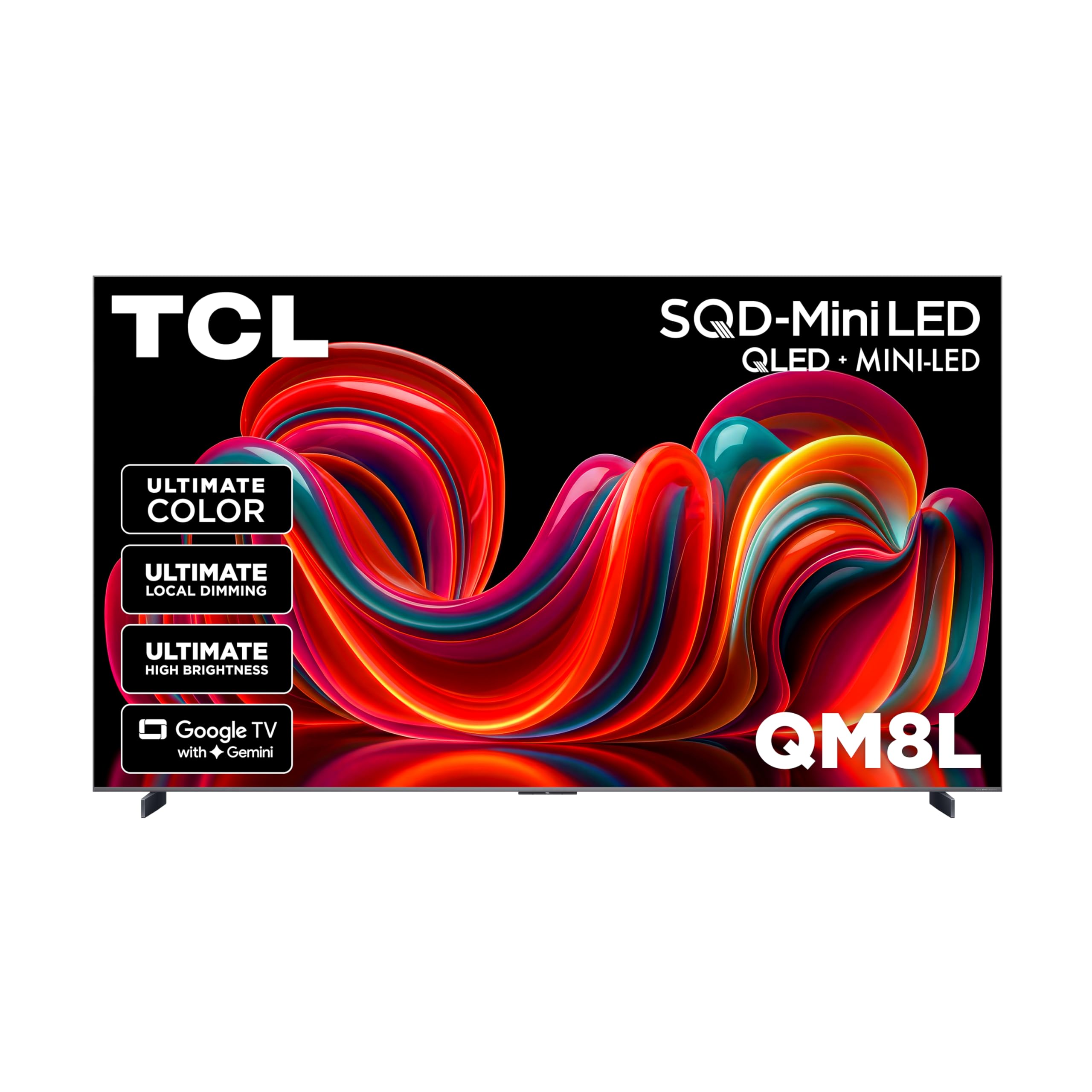
The TCL QM8L is a statement piece, offering a 98-inch screen with SQD-Mini-LED technology that delivers over 4000 discrete dimming zones. This allows for excellent control over blooming and a native 7000:1 contrast ratio, producing impressive black levels for a large LCD panel. The Audio by Bang & Olufsen system provides a built-in sound experience that genuinely competes with many mid-range soundbars.
The Google Gemini interactive AI integration provides a modern smart TV experience, and the 144Hz native refresh rate with Game Accelerator 288 VRR makes it a legitimate gaming option for console and PC users. The TCL Ultra Color Filter uses nanometer-scale particles for precise color reproduction. Out of the box, the image is bright and vibrant, though color accuracy benefits from calibration.
The primary concern is the Google TV operating system, which some users find has minor glitches that occasionally require a restart. The sheer physical size of the 98-inch panel also dictates the room scale; it needs significant viewing distance and a very large wall. For the price, this is the most screen area with high-end Mini-LED performance currently available.
Why it’s great
- Massive 98-inch screen with high-end Mini-LED
- Premium Bang & Olufsen-tuned audio system
- Excellent 144Hz gaming specs with VRR support
Good to know
- Google TV OS can have minor stability issues
- Requires a very large room and professional installation
- Color accuracy needs calibration for best results
6. TCL QM6K (98QM6K)

The TCL QM6K redefines what is possible at its price point by offering a 98-inch QD-Mini LED panel with a native 144Hz refresh rate. For consumers who prioritize screen size above all else, this TV delivers an immersive experience that smaller, more expensive sets simply cannot match. The Halo Control System local dimming effectively reduces blooming for a cleaner image than basic edge-lit TVs.
The Google TV platform is snappy and includes a motion-activated backlit remote, a surprising premium touch at this price level. Gaming performance is strong with Game Accelerator supporting high refresh rates, and the four HDMI ports include two at the full 144Hz specification. The built-in sound is functional for casual viewing, though a soundbar is a worthwhile upgrade for movies.
The QM6K is not an OLED killer; its black levels and contrast ratio are good for Mini-LED but do not match per-pixel lighting technologies. Bright room performance is decent, but reflections can be an issue in direct sunlight. For budget-conscious shoppers wanting the biggest possible 120Hz screen, the QM6K is an undeniable standout.
Why it’s great
- Most affordable path to a 98-inch 144Hz screen
- QD-Mini LED provides good color and contrast
- Snappy Google TV interface with backlit remote
Good to know
- Black levels and local dimming are good, not great
- Built-in speakers are mediocre
- Screen handling of reflections could be better
7. Sony BRAVIA 9 (K-85XR90)

The Sony BRAVIA 9 represents the pinnacle of Sony’s LED TV engineering. The XR Backlight Master Drive provides incredibly precise control over thousands of Mini-LEDs, delivering an image that rivals OLED in contrast while maintaining much higher brightness. The X-Anti Reflection coating is the best in class, effectively eliminating distracting reflections and making it perfect for bright living rooms.
PS5 owners will benefit from exclusive features like Auto HDR Tone Mapping and Auto Genre Picture Mode, which automatically optimize the TV’s settings for gaming. The XR Processor provides superior motion handling and upscaling, particularly noticeable with lower-quality cable and streaming content. Studio-calibrated picture modes for Netflix, Prime Video, and Sony Pictures Core ensure accurate image quality for popular services.
The premium price is the main barrier, and some defective units have been reported that failed within the first week. The acoustic performance, while good for a TV, still falls short of the immersive experience provided by a dedicated home theater system. For image processing quality and PS5 integration, the BRAVIA 9 is currently the best LED option.
Why it’s great
- Best-in-class anti-reflection technology
- Excellent Mini-LED contrast with bright HDR peaks
- Perfect integration with PlayStation 5 features
Good to know
- Premium price puts it near OLED competitors
- Some reports of early product failure
- External sound system recommended for full effect
8. Sony QD-OLED A95L (XR77A95L)

The Sony A95L uses a QD-OLED panel, a technology that combines the perfect black levels of OLED with the high color volume and brightness of quantum dots. The result is a reference-grade image that offers both deep blacks and bright, saturated colors that standard OLEDs cannot reach. The XR Triluminos Max processing extracts the full potential of the panel, delivering a wider palette of hues than any other consumer TV.
Built-in speakers are excellent thanks to Acoustic Surface Audio+, which uses the screen itself as a diaphragm for sound. The support for Dolby Vision, IMAX Enhanced, and Netflix Adaptive Calibrated Mode makes it a dream for film enthusiasts. PS5 gaming at 4K 120Hz with VRR is smooth and visually stunning, with the Game Menu providing easy access to all gaming settings.
The premium cost is substantial, and QD-OLED panels are not immune to burn-in, though the risk is lower than standard WRGB OLEDs. Some users have reported a milky film defect on the screen coating, which Sony has not consistently covered under warranty. For ultimate picture quality in a controlled lighting environment, the A95L remains the benchmark.
Why it’s great
- Best-in-class color volume and brightness for OLED
- Perfect black levels with infinite contrast
- Superb built-in Acoustic Surface Audio+
Good to know
- Very expensive, even for the premium tier
- Potential for screen coating defects out of warranty
- Risk of burn-in with static content, though reduced
9. Sony OLED A80L (XR77A80L)

The Sony A80L offers the best balance of OLED performance and cost within Sony’s lineup. Its Cognitive Processor XR provides excellent real-time enhancement, delivering natural colors, smooth motion, and impressive upscaling of lower-resolution content. The XR OLED Contrast Pro improves peak brightness over base OLED panels, making HDR highlights more effective in moderately lit rooms.
The Acoustic Surface Audio+ technology turns the screen into a speaker, creating a remarkably direct and clear sound that seems to come directly from the actors’ mouths. The inclusion of BRAVIA CORE with five movie credits and a 12-month subscription adds immediate value for film fans. PS5 gaming is well supported with 4K 120Hz, VRR, and exclusive Sony features.
The A80L is not as bright as the QD-OLED A95L or high-end Mini-LED sets, so it performs best in a dark or dimly lit room. Some users report software freezing issues that require periodic restarts. For buyers seeking Sony’s processing excellence and OLED contrast without paying QD-OLED prices, the A80L is a compelling choice.
Why it’s great
- Excellent Sony XR processing and upscaling
- Acoustic Surface Audio+ provides clear, direct sound
- Better value than the flagship A95L model
Good to know
- Lower peak brightness limits HDR in bright rooms
- Software can occasionally freeze or glitch
- Standard OLED burn-in risk applies
10. Samsung OLED S84F (77S84F)
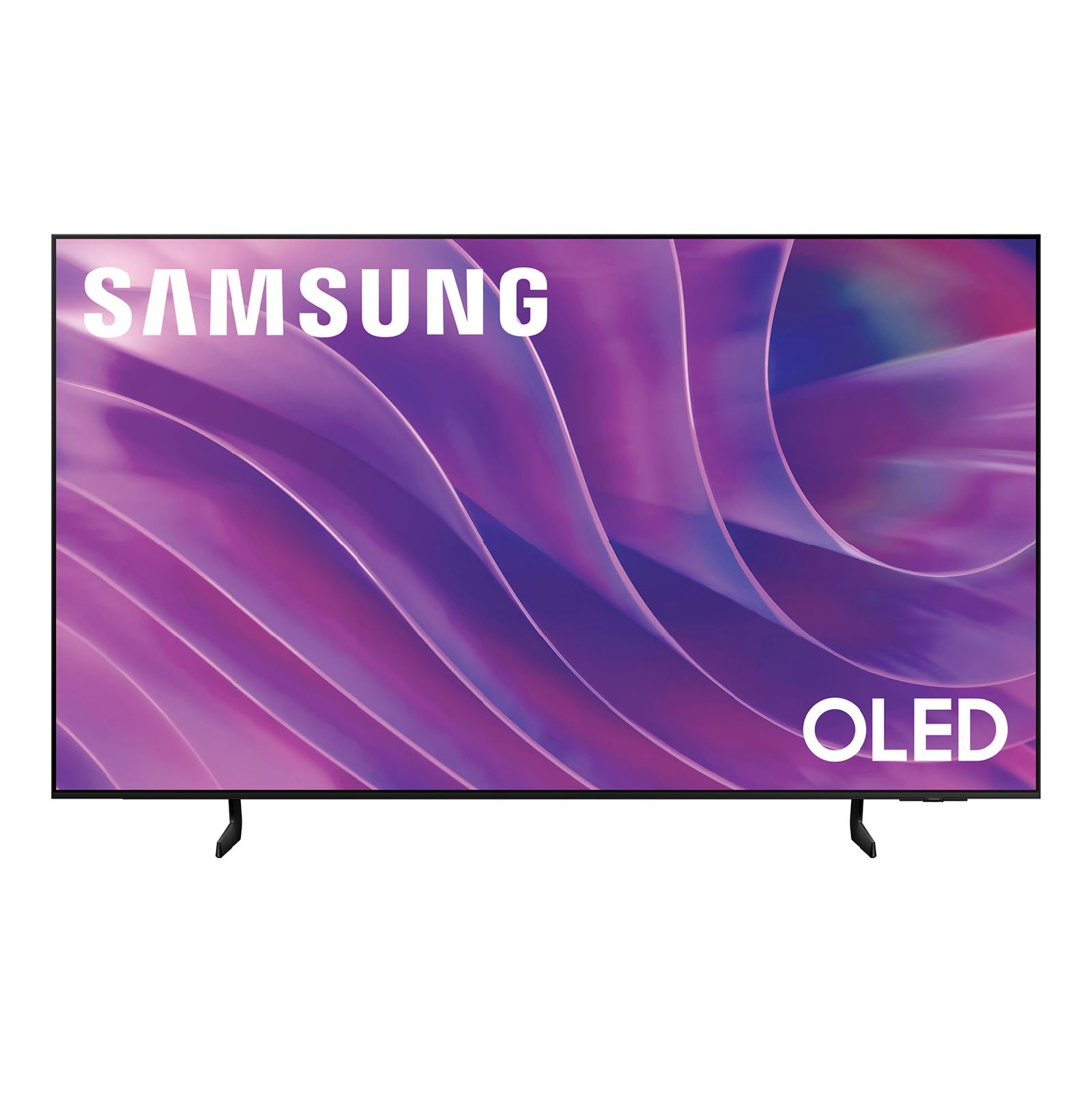
The Samsung S84F is the most accessible OLED in this lineup, bringing self-illuminating pixel technology and its inherent perfect black levels to a larger screen size at a budget-friendly price. The NQ4 AI Gen2 Processor provides 4K upscaling and improves the clarity of standard content. For consumers who want true OLED contrast and a 120Hz refresh rate without spending premium-tier money, this is a excellent place to start.
Pantone-validated colors and Motion Xcelerator 120Hz support ensure accurate color representation and smooth motion for sports and games. The Samsung Tizen OS offers a vast library of apps and built-in Samsung TV Plus for free content. The design is sleek and unobtrusive, fitting easily into most living spaces.
The S84F is a 4K TV, not 8K, so it is for buyers who prioritize OLED contrast over resolution. Reliability concerns exist, with some users reporting random screen blackouts after a few months. The sound quality is adequate for casual use but is clearly the weak point, and a soundbar will be necessary for an immersive audio experience.
Why it’s great
- Most affordable OLED option with 120Hz support
- Perfect black levels and excellent contrast
- Pantone-validated color accuracy
Good to know
- Some reports of random screen failures after 3 months
- Built-in speakers are underwhelming
- 4K resolution, not native 8K
11. Samsung Neo QLED QN90C (QN75QN90C)

The Samsung QN90C is a proven workhorse for bright rooms. Its Quantum Matrix with Mini-LEDs provides high brightness levels that can easily overcome glare from windows and overhead lights. The Anti-Glare coating with Ultra Viewing Angle ensures the picture remains consistent and detailed even when viewed from the side, making it ideal for wide living rooms.
The Neural Quantum Processor 4K provides excellent upscaling of HD content to near-4K quality. The Object Tracking Sound+ with Dolby Atmos creates a convincing surround effect. The Samsung Gaming Hub consolidates cloud and console gaming options, and the 120Hz Motion Xcelerator ensures smooth gameplay.
The main drawback is the Tizen operating system, which some users find intrusive with advertisements and frustrating input switching behavior. The solar-powered remote is a nice touch but lacks a number keypad for direct channel entry. For sheer bright-room performance and reliable gaming features, the QN90C is a solid mid-range investment.
Why it’s great
- Excellent brightness and anti-glare for bright rooms
- Good 4K upscaling from the Neural Quantum Processor
- Object Tracking Sound+ provides immersive audio
Good to know
- Tizen OS has a cluttered interface with ads
- Solar remote lacks a number keypad
- Input switching logic can be frustrating
12. Sony BRAVIA 3 (K-100XR30M2)
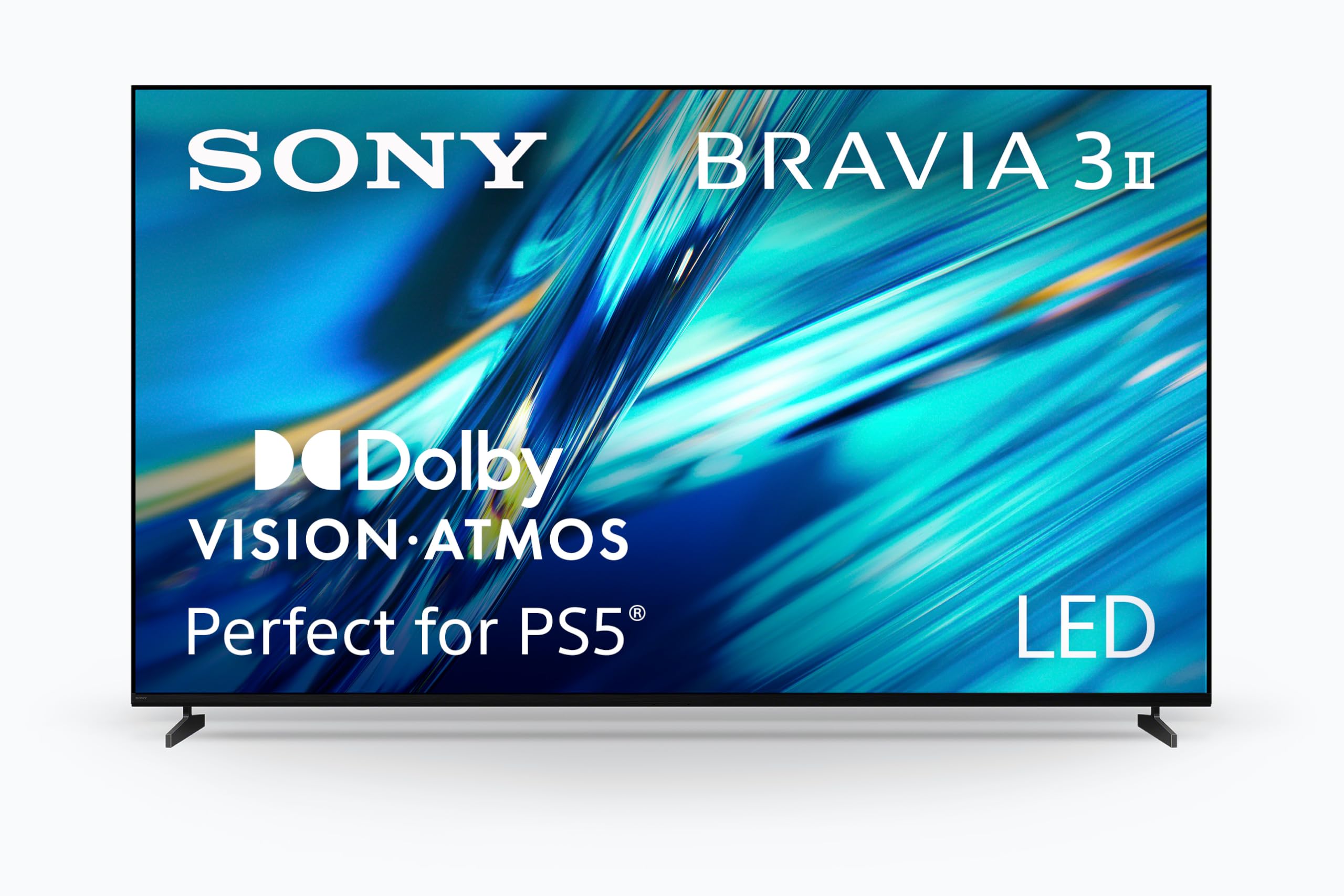
The Sony BRAVIA 3 is a massive 100-inch LED TV built for consumers who want a wall-filling cinematic experience with Sony’s renowned processing. The XR Processor with AI technology provides excellent scene-by-scene optimization for color, contrast, and clarity. The inclusion of Sony Pictures CORE with 5 credits and a 12-month subscription to hundreds of movies adds immediate utility for film enthusiasts.
Gaming is well catered for with 4K 120Hz support, VRR, and ALLM, making it compatible with the latest consoles. The Google TV with Gemini interface is modern and responsive, and the X-Balanced Speakers deliver decent bass for a built-in system. The exclusive PS5 features like Auto HDR Tone Mapping enhance the gaming experience for PlayStation owners.
This is an LED TV, so its black levels and contrast do not match Mini-LED or OLED competitors. Some users have reported software and casting issues, including DRM errors that prevent streaming paid content. For sheer screen size with Sony’s image processing pedigree, the BRAVIA 3 is a unique offering in this space.
Why it’s great
- Massive 100-inch screen for immersive cinema
- Sony’s XR processing provides excellent picture quality
- Includes Sony Pictures CORE with movie credits
Good to know
- LED panel has lower contrast than Mini-LED or OLED
- Some reports of software DRM issues
- Requires significant space and professional installation
13. SYLVOX Outdoor TV (75 Inch)
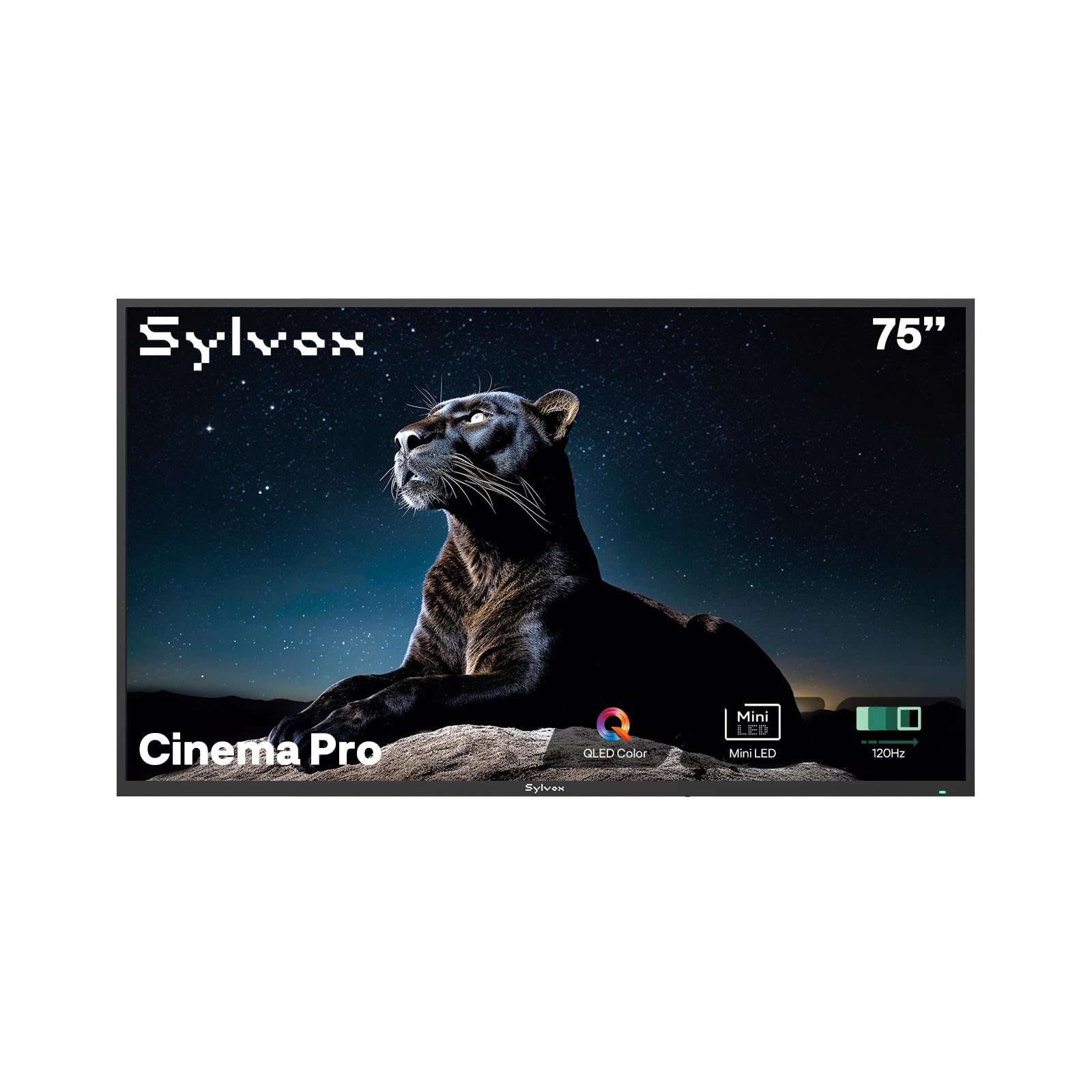
The SYLVOX Cinema Pro is a specialized 75-inch TV designed to survive and perform outdoors. Its 3500-nit peak brightness on a Mini-LED QLED panel is specifically engineered to combat direct sunlight, making it watchable on a patio or by the pool. The IP55 waterproof rating provides protection against rain and dust, and the rust-proof metal body ensures long-term durability in harsh weather.
The 120Hz refresh rate and HDMI 2.1 support keep it relevant for outdoor gaming sessions, and the Google TV interface provides access to streaming apps. The built-in 2x30W speakers with Dolby Atmos are functional, but the TV is best paired with dedicated outdoor speakers for proper sound. The included 2-year warranty provides peace of mind for the investment.
This TV is not designed for indoor use where its extreme brightness would be unnecessary. The internal speakers are underpowered for outdoor environments, and some units have shown weather-related failure after 18 months. For its specific purpose—outdoor entertainment—the SYLVOX is the most capable option available.
Why it’s great
- Extremely bright 3500-nit panel for outdoor sunlight
- IP55 weatherproof rating for outdoor durability
- Rust-proof metal construction for longevity
Good to know
- Built-in speakers are too quiet for outdoor use
- Some units have failed after 18 months of exposure
- Extreme brightness is unnecessary for indoor use
FAQ
Is native 8K content available, or is it all upscaling?
Can I connect my PC to an 8K 120Hz TV for gaming?
What is the best screen size to appreciate 8K resolution?
Will an 8K TV improve the look of my standard HD channels?
How does Mini-LED compare to OLED for an 8K TV?
Final Thoughts: The Verdict
For most users, the best 8k 120hz tv winner is the Samsung Neo QLED 8K QN900F because its 256-neural-network processor delivers the most convincing upscaled 8K image with the brightness needed for real-world rooms. If you want the absolute best contrast and color for a dark home theater, grab the Sony QD-OLED A95L. And for world-class gaming integration and motion handling, nothing beats the Sony BRAVIA 9.