
An 8TB NVMe SSD is not a casual upgrade — it is a declaration of intent. Whether you are building a workstation that chews through 8K ProRes timelines, a gaming rig with a library that never gets pruned, or a home lab running multiple VMs, you are buying one single physical slot to replace an entire shelf of spinning rust. The wrong choice means thermal throttling during a render, a drive that posts great benchmark numbers but stutters under sustained mixed loads, or an interface that leaves PCIe 5.0 bandwidth on the table.
I’m Min — the co-founder and writer behind Gadgets Feed. I’ve spent hundreds of hours dissecting controller architectures, NAND types, power management profiles, and real-world endurance ratings across every major 8TB NVMe SSD on the market to separate the genuine performance leaders from the spec-sheet illusions.
This guide walks through the specific trade-offs between Gen4 and Gen5 interfaces, DRAM vs HMB configurations, and thermal design requirements so you can confidently select the right 8tb nvme ssd for your actual workload.
How To Choose The Best 8TB NVMe SSD
An 8TB NVMe SSD is a long-term investment in your system’s storage backbone. Before you click buy, you need to align three variables: the physical interface your system supports, the heat dissipation your case can manage, and the specific read/write pattern your software demands. A mismatch in any one of these can turn a premium drive into a throttled bottleneck.
PCIe Gen4 or Gen5: The Real Bandwidth Question
PCIe 5.0 NVMe drives now push beyond 14,000 MB/s sequential reads — numbers that sound staggering until you realize your motherboard or external enclosure might only negotiate Gen4. A Gen5 drive installed in a Gen4 slot will still operate, but it will be capped at Gen4 speeds (~7,000 MB/s). Conversely, buying a Gen4 drive when your system supports Gen5 leaves performance permanently on the table. For external use, USB4 or Thunderbolt 4/5 enclosures present their own bandwidth ceilings. Check your platform’s supported PCIe generation before selecting your drive tier.
DRAM Cache vs HMB: The Consistency Factor
An 8TB drive has a vast NAND array to manage, and a dedicated DRAM cache is the difference between a drive that maintains predictable write speeds and one that stutters under heavy file transfers. Drives with onboard DRAM (typically 1GB per 1TB of NAND) hold the flash translation layer in fast memory, eliminating the latency penalties that host memory buffer (HMB) designs incur when the host system’s RAM is under load. For sustained professional workflows — video editing, large database operations, simultaneous read/write streams — DRAM-equipped drives are non-negotiable.
Thermal Management: The Silent Performance Killer
An 8TB NVMe SSD under sustained load generates significant heat. PCIe 5.0 drives, with their double-digit wattage draw, require active cooling or a well-vented heatsink to avoid thermal throttling that can crater write speeds by 50% or more. Some drives ship with pre-installed heatsinks; others are bare M.2 modules that rely on your motherboard’s integrated cooler. For laptops and SFF builds, a drive with a graphene label or low-profile design may be essential. For desktops with strong airflow, a third-party heatsink often suffices.
Quick Comparison
On smaller screens, swipe sideways to see the full table.
| Model | Category | Best For | Key Spec | Amazon |
|---|---|---|---|---|
| Kingston FURY Renegade G5 | Premium Gen5 | High-performance desktops & creative workstations | 14,800 MB/s Read / 14,000 MB/s Write | Amazon |
| Samsung 9100 PRO 8TB | Premium Gen5 | AI workflows & heavy multitasking | 14,800 MB/s Read / 13,400 MB/s Write | Amazon |
| Corsair MP600 PRO LPX 8TB | Optimized Gen4 | PS5 expansion & console storage | 7,000 MB/s Read / 6,100 MB/s Write | Amazon |
| TEAMGROUP MP44 8TB | Mid-Range Gen4 | Desktop & laptop capacity upgrades | 7,000 MB/s Read / 6,000 MB/s Write | Amazon |
| INLAND Performance Plus 8TB | Value Gen4 | Budget-conscious PC builds & storage pools | 7,100 MB/s Read / 6,700 MB/s Write | Amazon |
| WD_Black SN8100 8TB | Premium Gen5 | PC gaming & content creation | 14,900 MB/s Read / 11,000 MB/s Write | Amazon |
| Samsung 9100 Pro (B0FGPSR9VZ) | Premium Gen5 | High-capacity workstations & creators | 14,800 MB/s Read / 13,400 MB/s Write | Amazon |
| SANDISK Optimus GX PRO 8100 | Premium Gen5 w/ Heatsink | Sustained creative & AI workloads | 14,900 MB/s Read / 14,000 MB/s Write | Amazon |
| OWC Express 1M2 8TB | External Portable | High-speed external storage (USB4/Thunderbolt) | 6,000+ MB/s Real-world Peak | Amazon |
| Crucial X10 8TB | Portable External | On-the-go backups & game storage | 2,100 MB/s Read | Amazon |
| SSK 8TB External SSD | Budget External | Multi-device file transfers & backups | 2,000 MB/s Read | Amazon |
| Crucial T710 4TB PCIe Gen5 | Mid-Range Gen5 | Gen5 speed at 4TB capacity point | 14,900 MB/s Read / 13,800 MB/s Write | Amazon |
| Corsair MP700 Micro 4TB | Compact Gen5 | Laptops & mini PCs with limited space | 9,400 MB/s Read / 8,100 MB/s Write | Amazon |
In‑Depth Reviews
1. Kingston FURY Renegade G5 4096GB NVMe SSD

The Kingston FURY Renegade G5 is built around the SM2508 controller with 6nm lithography, a low-power DDR4 cache, and a 12-layer PCB that keeps this Gen5 drive stable under sustained load. Sequential read speeds hit 14,800 MB/s and writes reach 14,000 MB/s — figures that place it at the very top of the Gen5 hierarchy for both gamers running AAA titles and content creators moving 8K source files.
Real-world testing shows game installs run roughly 1.5x faster than a Gen4 990 Pro, and users report no thermal throttling during extended sessions thanks to the advanced thermal design. The M.2 2280 form factor fits standard desktop Gen5 slots, and the low-power cache architecture helps maintain consistent write performance without aggressive fan curves.
The 4TB capacity point is a sweet spot for users who need Gen5 speed but aren’t ready for the 8TB price jump. Backward compatibility with Gen4 slots means this drive won’t become obsolete with a future platform upgrade.
Why it’s great
- Industry-leading sequential speeds for Gen5 workloads
- Efficient thermal design with low-power DDR4 cache
Good to know
- 4TB capacity — users requiring 8TB will need a different option
- Requires a Gen5 motherboard slot for full speed
2. Samsung SSD 9100 PRO 8TB
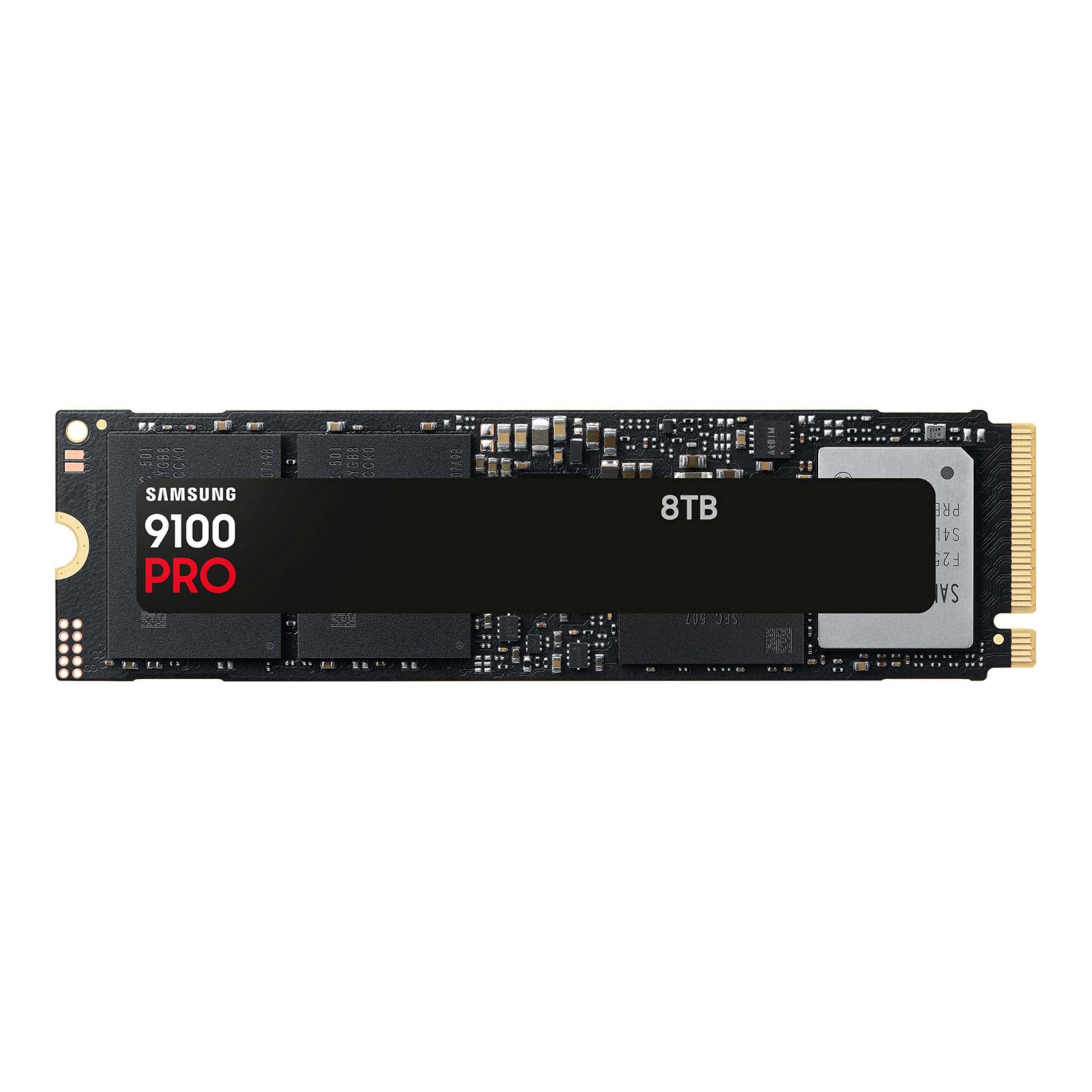
The Samsung 9100 PRO in 8TB delivers the full Gen5 experience with sequential reads up to 14,800 MB/s and writes up to 13,400 MB/s. The 5nm controller pulls up to 49% better power efficiency than the 990 PRO, which translates to lower thermal output and sustained performance in tight desktop and laptop installs.
Users report the 8TB variant handles AI model storage, 4K video projects, and large game libraries without a hitch. The included Samsung Magician software provides firmware updates and drive health monitoring. Temperatures peak in the low 50s °C under heavy load when paired with a good motherboard heatsink, with no throttling reported.
Random read/write speeds of 2,200K/2,600K IOPS make this drive suitable for the most demanding multitasking workloads. It’s the go-to choice for professionals who need maximum capacity at Gen5 speeds from a brand with a proven track record.
Why it’s great
- True 8TB capacity with Gen5 performance
- Superior power efficiency keeps thermals manageable
Good to know
- Premium price tier reflects the high capacity and speed
- Requires a Gen5 motherboard for full sequential speeds
3. Corsair MP600 PRO LPX 8TB
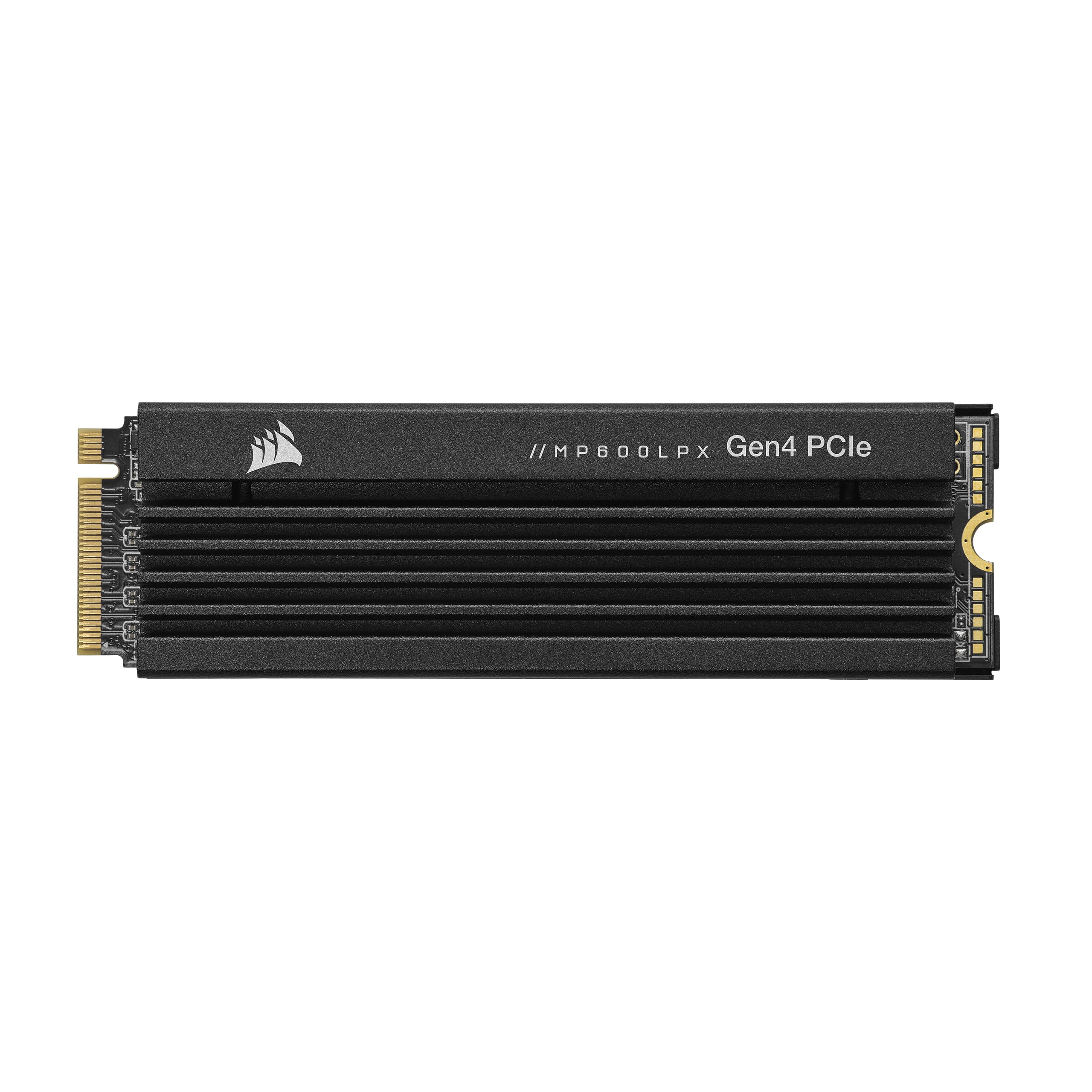
The Corsair MP600 PRO LPX is one of the few 8TB NVMe SSDs specifically optimized for the PlayStation 5, meeting Sony’s M.2 performance requirements with sequential reads of 7,000 MB/s and writes of 6,100 MB/s. The pre-installed low-profile aluminum heatspreader fits inside the PS5’s expansion bay without clearance issues.
Users report read speeds around 6,800 MB/s in testing — exceeding the advertised spec — with zero in-game loading delays and the ability to keep the entire game library installed without juggling titles. The 8TB capacity is a genuine luxury for console owners who buy physical discs and digital releases alike.
Beyond consoles, this drive also works as a high-capacity Gen4 desktop drive. The included heatsink handles sustained loads without throttling, and the 5-year warranty provides long-term peace of mind.
Why it’s great
- Perfectly sized and specced for PS5 expansion requirements
- Pre-installed low-profile heatsink avoids clearance issues
Good to know
- Gen4 interface caps speed compared to newer Gen5 options
- Premium tier pricing reflects the unique 8TB capacity in this form factor
4. TEAMGROUP MP44 8TB SLC Cache Gen4

The TEAMGROUP MP44 brings 8TB of Gen4 storage to a price point that makes massive capacity accessible for desktop and laptop users. Sequential reads and writes hit 7,000 MB/s and 6,000 MB/s respectively, which matches real-world performance of many premium Gen4 drives at a significant savings.
The graphene label acts as a heat dissipator, working with your motherboard’s heatsink to keep temperatures in check. Users consistently report plug-and-play reliability, with the drive working flawlessly for months in both PC builds and as a high-capacity storage option for servers and workstations.
Backward compatibility with Gen3 slots and support for both desktops and laptops make it a versatile option. The 5-year warranty provides coverage that rivals more expensive competitors.
Why it’s great
- Best price per gigabyte among 8TB NVMe SSDs
- Graphene thermal label aids heatsink integration
Good to know
- Gen4 speeds — not competitive with Gen5 on peak throughput
- Some users report better value from other options at higher price points
5. INLAND 8TB Performance Plus NVMe

The INLAND Performance Plus 8TB uses a Phison E18 controller paired with 8GB of DDR4 DRAM and 176-layer TLC NAND to deliver Gen4 speeds up to 7,100 MB/s read and 6,700 MB/s write. The DRAM cache is a significant advantage over budget HMB-based drives, ensuring consistent write performance during large file transfers.
With a massive 6,000 TBW endurance rating and a 6-year limited warranty, this drive is built for longevity. Users report easy installation in both desktop builds and PS5 consoles (with an add-on heatsink), and the performance is competitive with drives that cost significantly more.
The caseless M.2 2280 design increases compatibility with ultrabooks and mini PCs. It’s a strong choice for users who need the full 8TB capacity without paying the Gen5 tax.
Why it’s great
- Excellent endurance rating (6,000 TBW) for long-term reliability
- Dedicated DRAM cache for consistent performance
Good to know
- No pre-installed heatsink — must be added for optimal thermal performance
- Gen4 interface, not future-proof for Gen5 systems
6. WD_Black SN8100 8TB NVMe SSD
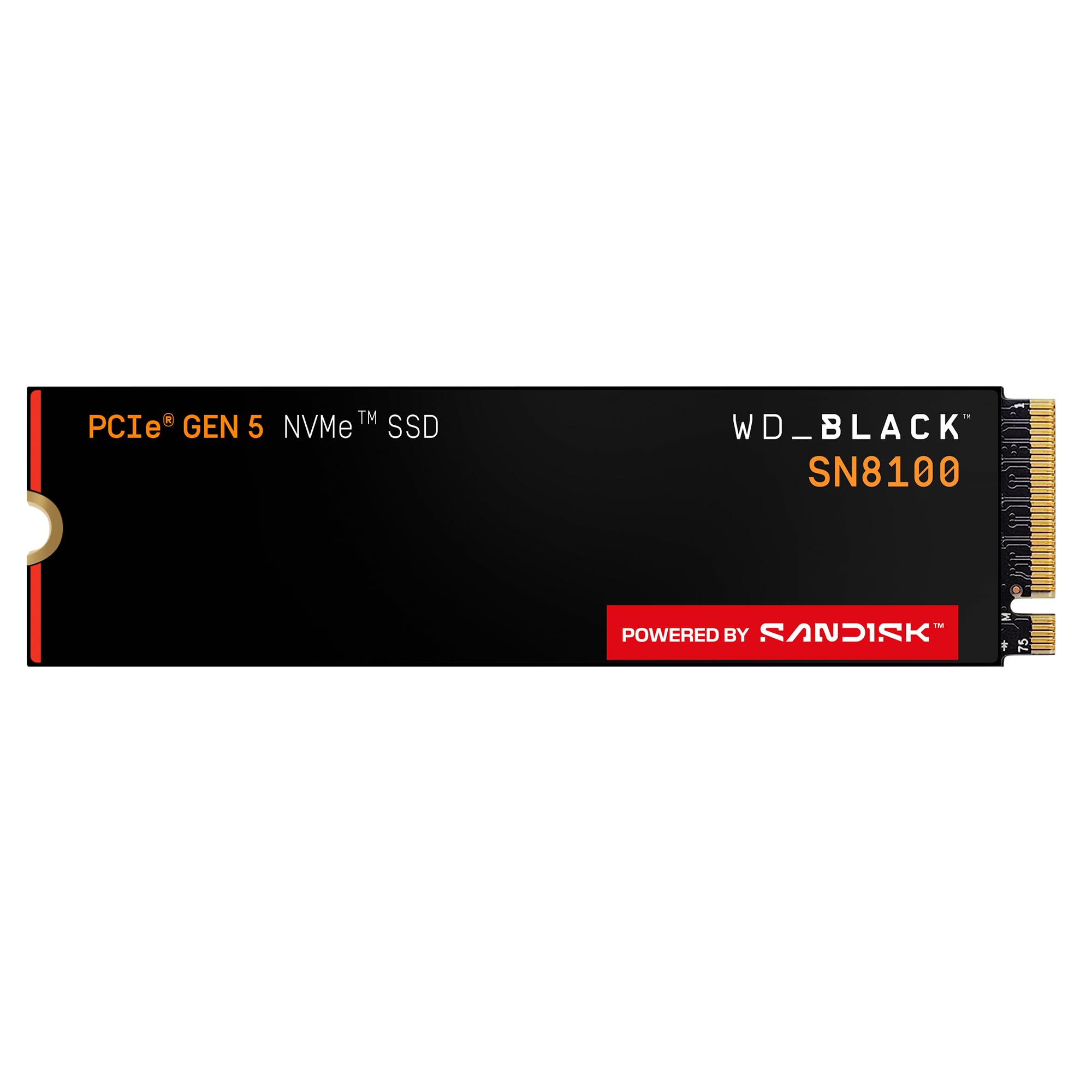
The WD_Black SN8100 pushes the Gen5 envelope with sequential reads up to 14,900 MB/s and writes up to 11,000 MB/s, backed by an impressive 4,800 TBW endurance rating on the 8TB model. The 8th generation BiCS TLC 3D CBA NAND technology delivers power efficiency that users report keeps thermals at a cool 82°F under load.
Content creators and video editors will appreciate the sustained write speeds that eliminate microstutters when working with large project files. The included Sandisk Dashboard software (Windows) provides drive health monitoring and firmware updates, while Acronis True Image handles data migration.
The drive’s random IOPS of over 2.3 million provide snappy responsiveness for AI model loading and heavy multitasking. It’s a direct competitor to Samsung’s 9100 PRO at a slightly different price tier.
Why it’s great
- Highest sequential read speeds at 14,900 MB/s
- High TBW rating for write-intensive workloads
Good to know
- Requires a Gen5 motherboard slot — no backward compatibility speed boost
- Sandisk Dashboard is Windows-only software
7. Samsung SSD 9100 Pro 8TB (B0FGPSR9VZ)
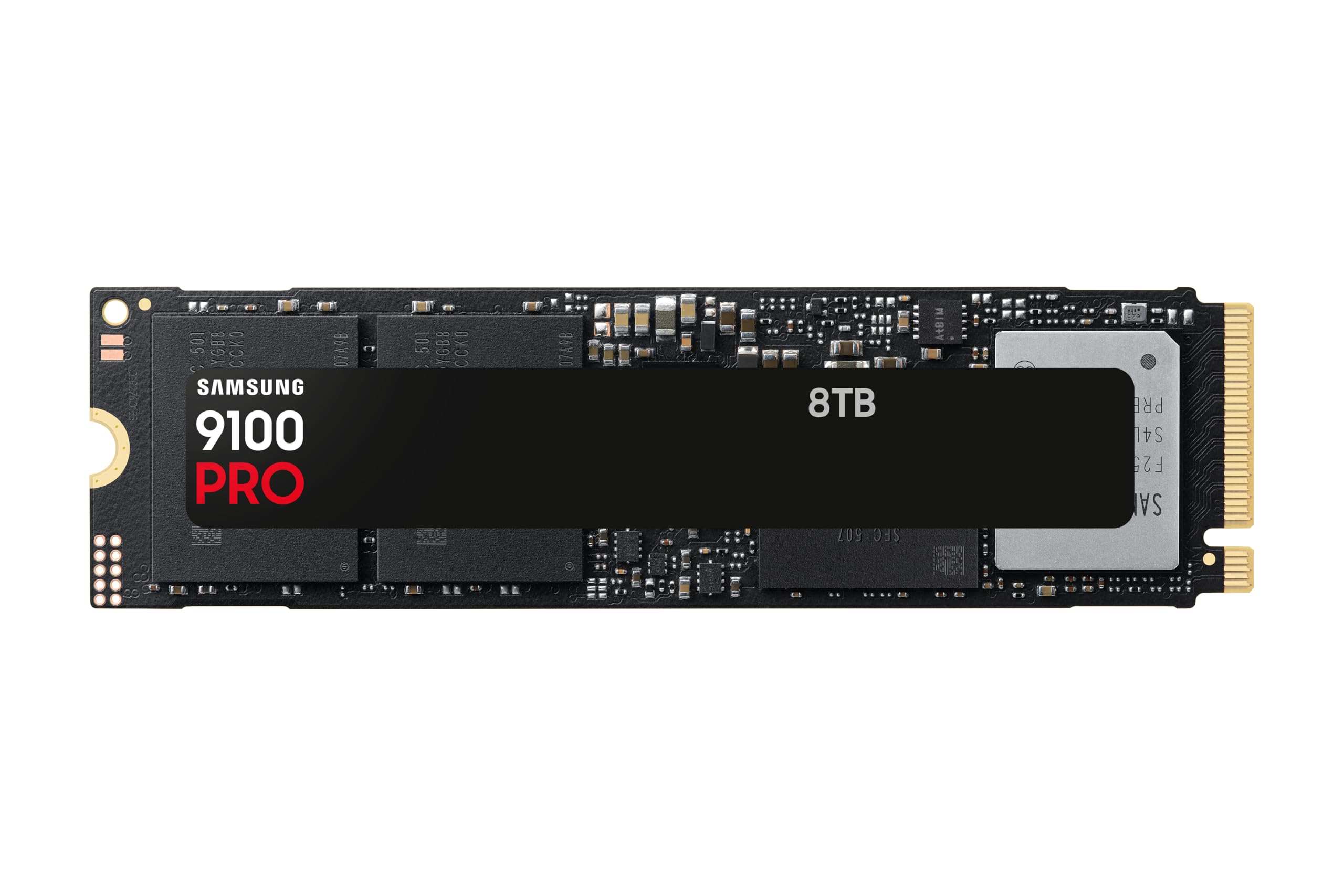
This variant of the Samsung 9100 PRO delivers the same 14,800 MB/s read and 13,400 MB/s write speeds as its counterpart, with the same 5nm controller and 49% power efficiency improvement over the 990 PRO. The 8TB capacity in a compact M.2 2280 form factor is ideal for powerful workstations and ultrabook upgrades.
Users report easy installation in gaming laptops like the Alienware Area-51 18, with the drive handling demanding titles and AI models without issue. The Samsung Magician software provides straightforward firmware updates and drive health monitoring.
The sequential read/write speeds make this drive suitable for 4K/8K video editing, 3D rendering, and AI content generation workflows. It’s a reliable choice for professionals who need both capacity and speed from a trusted brand.
Why it’s great
- Full 8TB capacity with competitive Gen5 speeds
- Samsung Magician software for easy management
Good to know
- Premium price point reflects brand and capacity
- Requires compatible Gen5 slot for optimal performance
8. SANDISK 8TB Optimus GX PRO 8100 PCIe 5.0
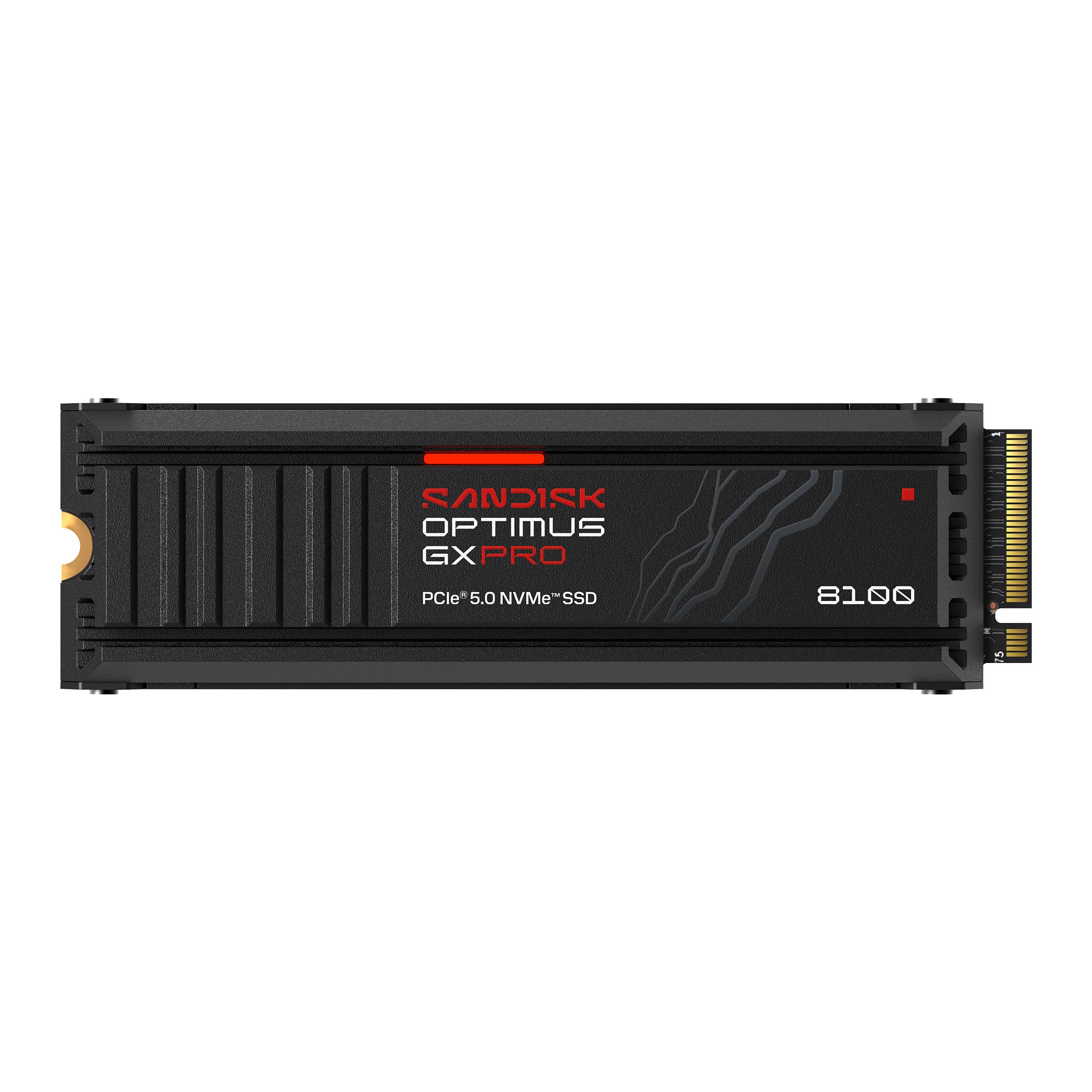
The Sandisk Optimus GX PRO 8100 is essentially the WD_Black SN8100 with an integrated low-profile anodized aluminum heatsink with RGB lighting. Sequential read speeds reach 14,900 MB/s and writes reach 14,000 MB/s, with random IOPS of 2.3M/2.4M for demanding AI and content creation workloads.
The 8TB capacity comes with a 4,800 TBW endurance rating, making it suitable for write-intensive tasks. Users report the included heatsink keeps temperatures well within operating range during extended rendering sessions, and the build quality matches Sandisk’s reputation.
The integrated nCache 4.0 technology helps maintain consistent write speeds under sustained load. This drive is essentially a premium-binned SN8100 with the heatsink included, saving users the cost of a separate purchase.
Why it’s great
- Pre-installed RGB heatsink for thermal management
- Excellent endurance for write-heavy workflows
Good to know
- Premium price point — one of the most expensive 8TB options
- RGB lighting may not appeal to all users
9. OWC 8TB Express 1M2 80Gb/s Portable NVMe SSD
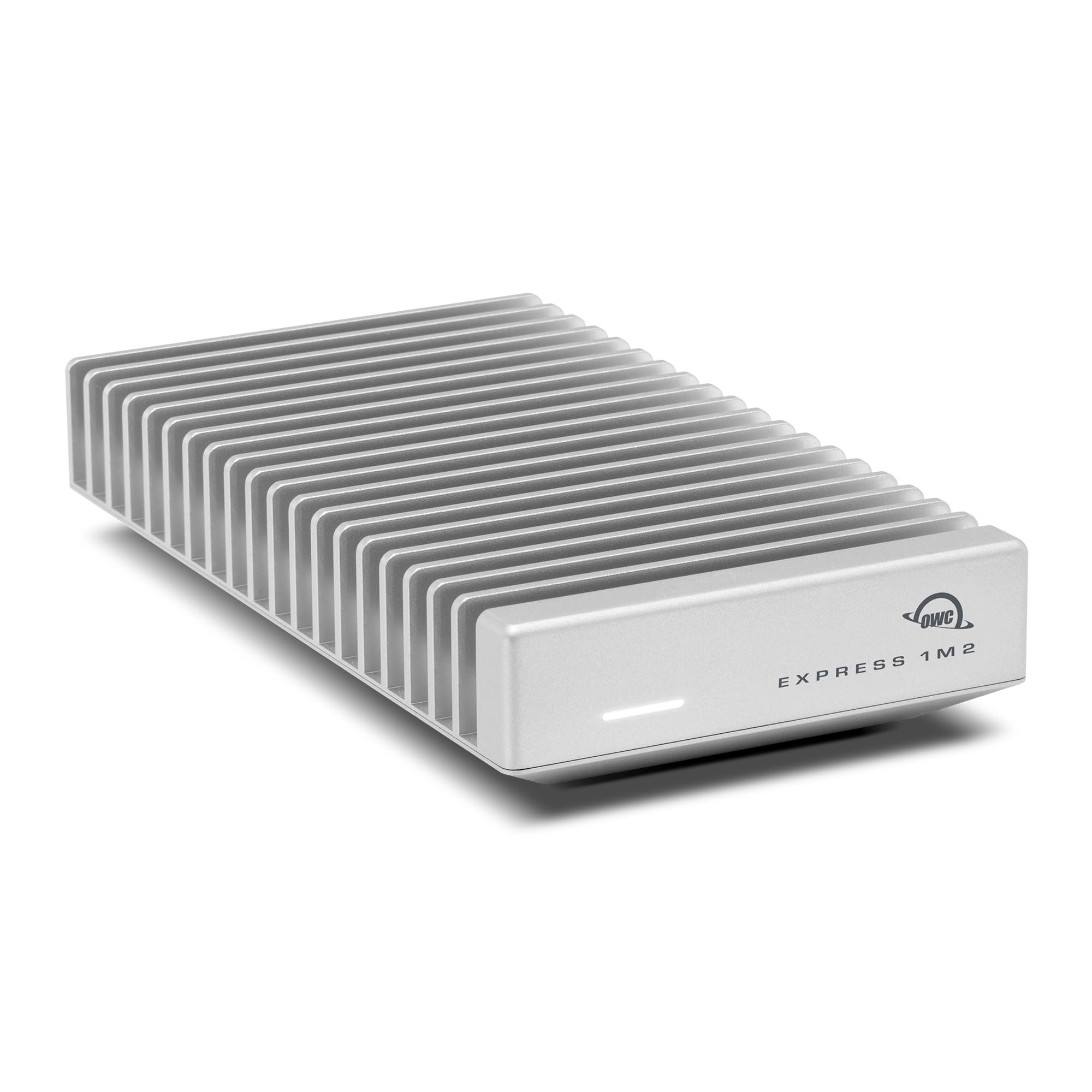
The OWC Express 1M2 is an external NVMe enclosure that supports PCIe Gen 3.0/4.0/5.0 M.2 SSDs via USB4 (80Gb/s) and Thunderbolt connectivity. With a compatible NVMe drive installed, it delivers real-world speeds exceeding 6,000 MB/s — faster than most internal Gen4 drives and competitive with direct-attached storage.
The patent-pending heat-dissipating design keeps the drive cool under sustained load without a fan, eliminating the failure point that plagues many active-cooled enclosures. Users report it stays cooler than their Mac Studio during multi-terabyte transfers, making it ideal for professional video editors and photographers working with large file sets on location.
The tool-free NVMe swap design means you can upgrade the internal drive as faster, more capacious options become available. It’s a future-proof investment for anyone who needs portable high-speed storage.
Why it’s great
- Unmatched external speeds via USB4/Thunderbolt
- Fanless, heatsink-based thermal design is silent and reliable
Good to know
- Requires a separate NVMe SSD purchase — not a complete drive
- Gen5 drive compatibility limited by bus-power constraints
10. Crucial X10 8TB Portable SSD
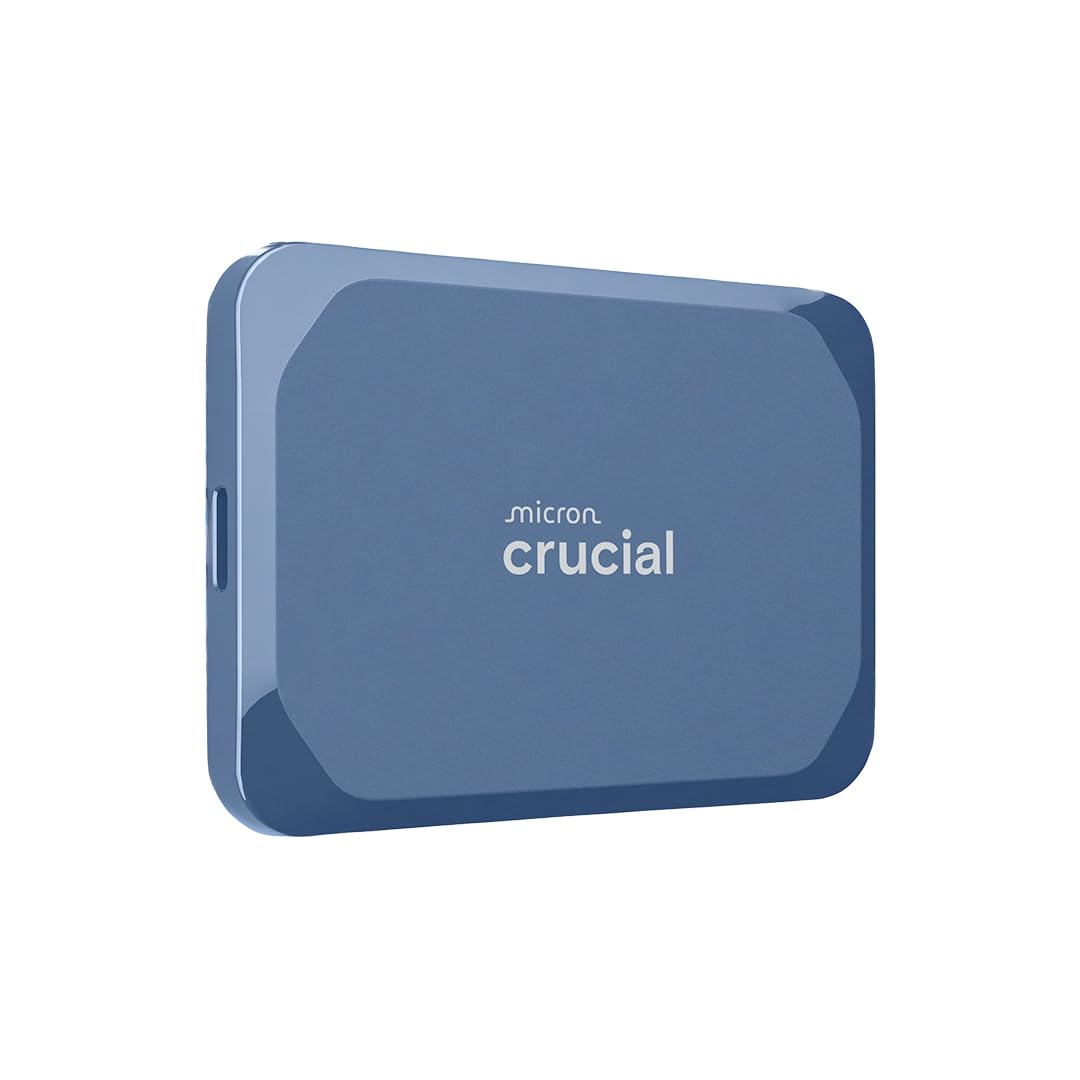
The Crucial X10 packs 8TB into a rugged IP65-rated enclosure that’s drop-resistant up to 9.8 feet. Sequential read speeds reach 2,100 MB/s via USB 3.2 Gen 2×2, and real-world testing shows sustained writes around 1,528 MB/s — fast enough for direct-to-drive 8K video editing and large project backups.
The drive’s compact size — small enough to fit in a wallet pocket — makes it a travel companion for photographers and videographers. Users report it stays cool and silent during extended use, with no performance degradation over time.
Broad compatibility with Windows, Mac, iPad Pro, Android, PS5, and Xbox means it works across your entire ecosystem. The included Mylio Photos+ and Acronis True Image software add value for media management.
Why it’s great
- IP65 dust/water resistance for on-location work
- Extremely portable form factor with high capacity
Good to know
- Speed capped by USB interface — slower than internal NVMe
- No activity LED for transfer monitoring
11. SSK 8TB External SSD

The SSK 8TB External SSD delivers up to 2,000 MB/s via USB 3.2 Gen 2×2, with a compact zinc-alloy enclosure that includes both USB-C (20Gbps) and USB-A (10Gbps) cables for broad device compatibility. The integrated S.M.A.R.T. health diagnostics and adaptive TRIM optimize data block management for sustained write performance.
Users report plug-and-play functionality with Macs and Windows PCs, with fast backup speeds and quiet operation. The blue activity LED provides visual confirmation of data transfers, and the compact form factor makes it easy to carry alongside a laptop.
Compatibility extends to iPhone 15/16 Pro, Android phones via OTG, gaming consoles, and tablets. It’s a versatile budget-friendly option for users who need high-capacity portable storage without the premium price tag of brand-name alternatives.
Why it’s great
- Includes both USB-C and USB-A cables for cross-platform use
- Compact design with activity indicator LED
Good to know
- Runs warm under sustained load — adequate ventilation required
- Peak speeds only with Gen2x2 compatible ports
12. Crucial T710 PCIe Gen5 NVMe 4TB

The Crucial T710 is a 4TB Gen5 NVMe drive that delivers up to 14,900 MB/s read and 13,800 MB/s write speeds using Micron G9 TLC NAND. Users report real-world improvements in data-heavy workloads—one user cut a data pipeline runtime from 1 hour to 28 minutes by switching to this drive.
The drive includes AES-256-bit hardware encryption with TCG Opal 2.01+ support, making it suitable for professional environments where data security is a priority. It also ships with a one-month Adobe Creative Cloud subscription and Acronis True Image for data migration.
Backward compatibility with Gen4 and Gen3 slots means this drive can be used in older systems today and unlocked for full speed with a future Gen5 motherboard upgrade. It’s a solid entry point into Gen5 storage at the 4TB capacity.
Why it’s great
- Excellent real-world sustained performance in professional workloads
- Hardware encryption for data security
Good to know
- 4TB capacity — not the 8TB some users need
- Requires compatible heatsink for sustained Gen5 performance
13. Corsair MP700 Micro 4TB PCIe 5.0 NVMe
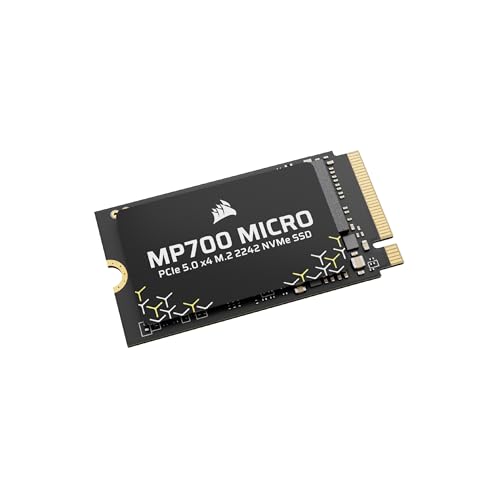
The Corsair MP700 Micro is a unique offering in the NVMe landscape: a Gen5 drive in a compact M.2 2242 form factor designed for thin laptops and mini PCs where space is at a premium. Sequential reads reach 9,400 MB/s and writes reach 8,100 MB/s — slower than full-length 2280 Gen5 drives, but impressive for the small footprint.
Users report easy installation in devices like the Lenovo Legion Go, where the compact size fits perfectly while delivering a significant speed upgrade over the original SSD. The drive uses high-density 3D TLC NAND for a good balance of performance and endurance.
Backward compatibility with PCIe Gen4 and Gen3 ensures it works in current systems while being ready for future Gen5-enabled devices. Ideal for users building ultra-compact systems who don’t want to sacrifice Gen5 performance.
Why it’s great
- Unique M.2 2242 form factor fits tight spaces
- Gen5 performance in a compact footprint
Good to know
- 4TB capacity — not as large as 8TB options
- Speeds lower than full-length 2280 Gen5 drives
FAQ
Will an 8TB NVMe SSD work with my PS5 if it doesn’t have a pre-installed heatsink?
Is there a noticeable difference between Gen4 and Gen5 8TB NVMe SSDs for gaming?
Can I use an 8TB NVMe SSD in a Thunderbolt enclosure and get full speeds?
Final Thoughts: The Verdict
For most users, the 8tb nvme ssd winner is the Corsair MP600 PRO LPX 8TB because it delivers massive capacity with PS5-optimized Gen4 speeds and a pre-installed heatsink at a price point that undercuts premium Gen5 options. If you want bleeding-edge Gen5 sequential performance for AI or content creation, grab the Samsung 9100 PRO 8TB. And for portable high-speed storage on the go, nothing beats the OWC Express 1M2 paired with your own NVMe drive.