
Our readers keep the lights on and my morning glass full of iced black tea. As an Amazon Associate, I earn from qualifying purchases.
Specs are compiled from manufacturer listings and verified buyer reviews and can change over time — please confirm the key details on the product page before buying.
A mid-size fridge around nine cubic feet is the workhorse of small kitchens, dorms, offices, and garages — and the three models here all land close to that number. The one that gets the edge is the Hamilton Beach 9.2 cu. ft Bottom Mount Freezer, a metal-finished unit that fits narrow spaces and keeps the freezer low so you are not bending to dig for frozen food. Every pick below sits within roughly 8.5 to 10 cubic feet, so the exact number you searched may differ by a hair — the closest same-type size serves the same purpose, and you will never be misled by a number that does not match.
I’m Min — the founder and writer behind Gadgets Feed. This guide is built by comparing the manufacturers’ published specifications and the patterns across verified customer reviews, so you get each pick’s real strengths and trade-offs instead of marketing spin.
These are the three mid-size fridges that actually earn their place on a shortlist right now. Skip the glossy marketing and focus on the three specs that decide everything here — real capacity, how the defrost works, and whether the door opens the way your space demands. That is what separates a 9 Cu Ft Refrigerator you keep from one you regret.
Quick Picks
- Hamilton Beach 9.2 Cu. Ft Bottom Mount Freezer — Best Overall
- Arctic Chef RFR1085 10 Cu Ft Frost Free — Best for Tight Spaces
- Frigidaire Frost Free Top Mount 10 Cu Ft — Best for Families
How To Choose The Best 9 Cu Ft Refrigerator
A mid-size fridge around nine cubic feet is not a mini-fridge and not a full kitchen unit — it is the in-between size that fits a studio, a small office kitchen, a dorm room, or a garage corner. The number matters, but it is rarely the whole story. Two fridges both sold as “9 cubic feet” can differ by several inches in depth and by how their internal space is split between the fresh-food and freezer sections. Here is what to lock down before you buy.
Capacity — what “9 cu ft” really means
A fridge quoted at nine or ten cubic feet counts everything inside — fresh food shelves plus the freezer. A model with a three-cubic-foot freezer leaves about seven cubic feet of shelf space for groceries. That is plenty for one or two people and tight for a family of four. If you cook for a crowd, look at the bigger end of the range, because the difference between a 9.2 and a 10 cubic foot unit shows up as real shelf inches.
Defrost: manual versus frost-free
This is the single biggest day-to-day difference between these fridges. A manual-defrost unit builds up ice on the freezer walls, and you have to thaw it out yourself — every couple of months for a busy household. A frost-free (automatic defrost) fridge runs a built-in cycle that clears the ice for you, so you never plan a defrost day. That convenience is worth weighing heavily, especially if the fridge sees a lot of door-opening.
Door swing, depth, and leveling
Measure your opening twice. A reversible-door fridge lets you hinge the door on the left or right, so it can open into an alcove without blocking a walkway. Depth matters most in narrow spots — a shallow unit squeezes between counters where a deeper one will not clear the door frame. Look for adjustable leveling feet, because an uneven floor makes a tall, narrow fridge wobble. A few mid-size models also ship with rear castors so you can roll them into place before leveling.
Quick Comparison
| Model | Best For | Total Capacity | Freezer Capacity | Defrost Type | Amazon |
|---|---|---|---|---|---|
| Hamilton Beach RFR9004 | Small kitchens and dorms | 9.2 cubic feet | 2.8 cubic feet | Manual | Amazon |
| Arctic Chef RFR1085 | Narrow spaces and garages | 10 cubic feet | — | Frost Free | Amazon |
| Frigidaire Frost Free Top Mount | Family kitchens on a budget | 10 cubic feet | 2 cubic feet | Frost Free | Amazon |
In‑Depth Reviews
1. Hamilton Beach 9.2 Cu. Ft Bottom Mount Freezer Refrigerator
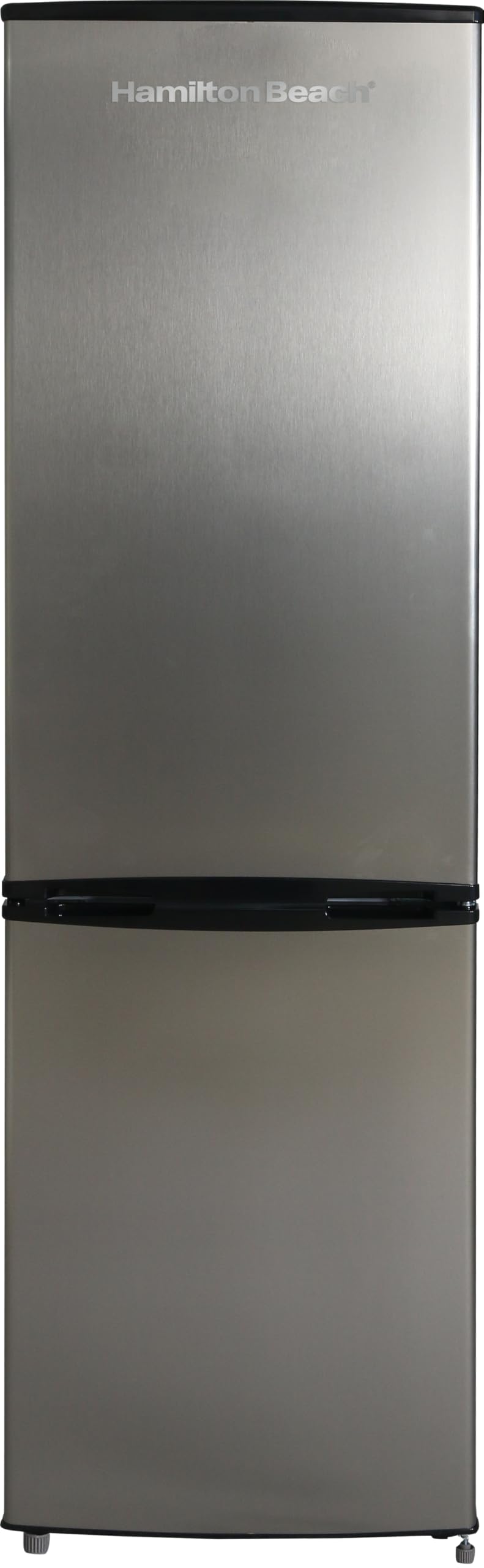
The freezer sits at the bottom — so your everyday food lands at eye level, not your frozen peas.
If you want the fridge that fits a genuinely small kitchen, the Hamilton Beach 9.2 cu. ft earns the top spot. The freezer compartment sits at the bottom instead of the top, which flips the usual layout: the food you grab most often — milk, produce, leftovers — is right at eye level, and only the frozen goods require a bend. It is a 9.2-cubic-foot unit overall, with 2.8 cubic feet of that in the freezer, split into three sections of slightly different sizes so you can organize by how often you use things.
Inside you get three removable glass shelves, which wipe clean with a damp cloth and slide out when you need to fit something tall. The crisper drawer is a clear bin with a tempered-glass cover that keeps produce fresher longer. The door holds a rack sized for 355ML cans and bottles, handy if this is the drinks fridge for a household. The door itself is reversible, so you can flip the hinge to whichever side clears your walkway, and the compressor cooling keeps the temperature steady once you settle it in.
What owners consistently appreciate is the fit: the compact footprint makes it a natural for dorm rooms, small kitchens, and offices, and the dual-tone stainless look is a step up from a plain white box. The honest trade-off is defrosting — this is a manual-defrost unit, so ice builds on the freezer walls and you have to thaw it yourself. A few owners note that if the doors do not shut fully, the back wall sweats and ices faster, and one long-term owner observed the unit “Came dented in plastic pieces, broken but still working two years later.” Treat it gently on arrival and keep the doors fully closed.
One more thing worth knowing before you buy: it uses 400 kwh a year, which is the highest energy draw of the three fridges here, so it is best as a second fridge or in a space where efficiency is not the priority. The capacity sits just under the 10-cubic-foot Arctic Chef below, but you get a bigger dedicated freezer — 2.8 cubic feet versus the Frigidaire’s 2 cubic feet — and a layout that puts fresh food where you can reach it.
What lands well
- Bottom-mount freezer keeps the food you use most at eye level
- Three removable glass shelves plus a clear crisper with tempered-glass cover
- Reversible door fits left or right hinge setups in tight kitchens
- 2.8-cubic-foot freezer split into three organized sections
Where it asks for care
- Manual defrost — ice builds on the freezer walls and needs thawing
- 400 kwh a year is the highest draw of the three here
- Only one door shelf, so door storage is limited
- Exterior dents easily in transit — inspect on arrival
Reach for this if: you have a small kitchen, dorm, or office and want fresh food at arm’s height with a proper 2.8-cubic-foot freezer.
Look elsewhere if: you would rather never think about defrosting — both 10-cubic-foot picks below run frost-free cycles instead.
2. Arctic Chef RFR1085 10 Cu Ft Frost Free Refrigerator
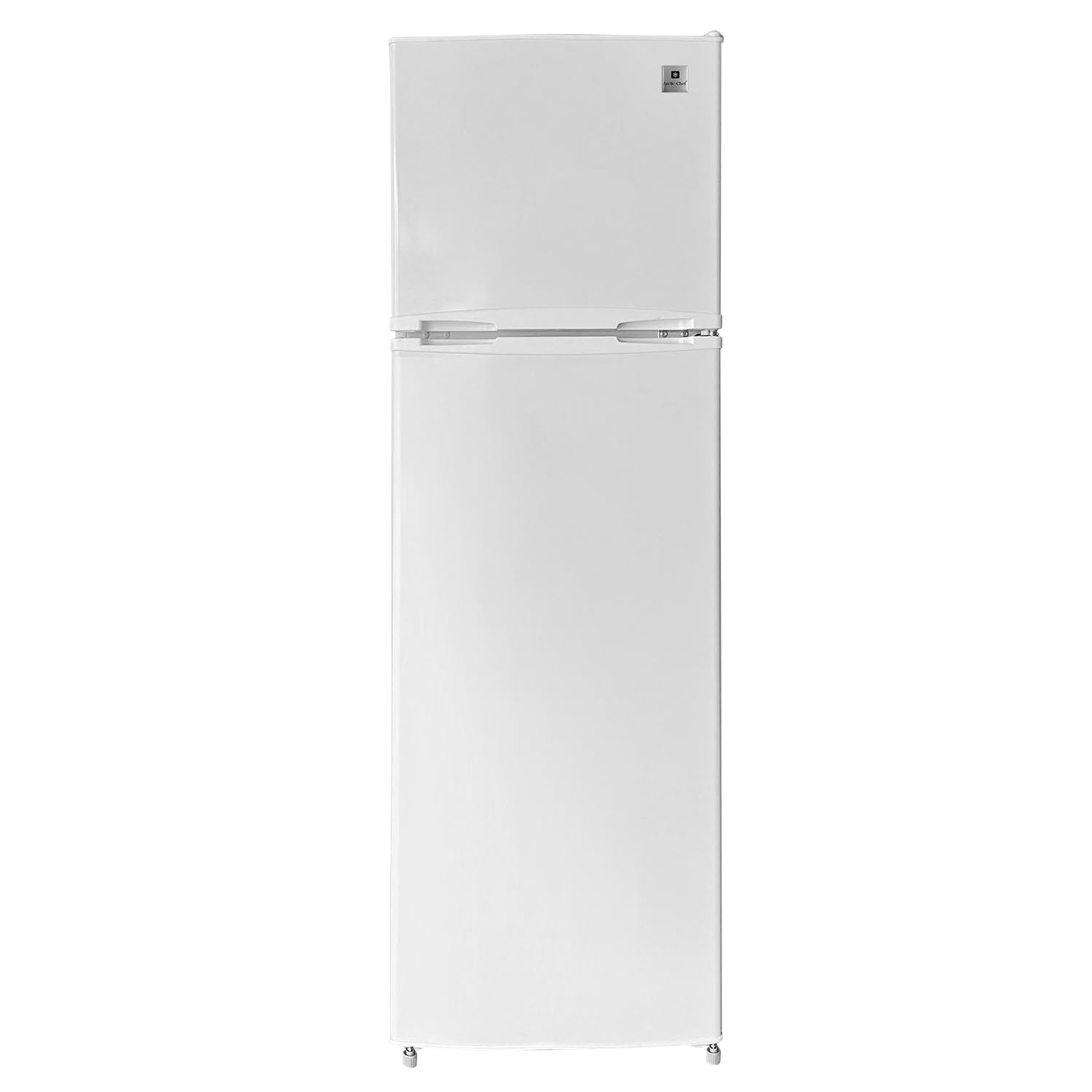
Ten cubic feet that slips between a furnace and a water heater — the shallow-depth pick that squeezes in where nothing else will.
The Arctic Chef RFR1085 is the one to look at when depth, not width, is the problem. It is a 10-cubic-foot unit, and the door holds four clear shelves — that is four times the single door shelf on the Hamilton Beach above, so the door becomes real storage instead of a token rack. Inside you get three adjustable slide-out glass shelves plus one clear vegetable crisper, all on a frost-free system that runs an automatic defrost cycle so ice never piles up on the walls. The reversible hinge lets you set the door to open on whichever side suits the space, and it comes in a matte white finish that blends into a wall.
Because it is a 10-cubic-foot fridge against the Hamilton Beach’s 9.2, you get more overall room — the Arctic Chef holds a full cubic foot more of total capacity. Where it earns its keep is in awkward spots: narrow enough to fit a tight gap, yet tall enough to hold real groceries. Two leveling legs on the front and two rear castors mean you can roll it roughly into place before you dial the leveling feet down, a small thing that saves a lot of shuffling in a cramped laundry or utility corner.
The story owners tell is split, and it is worth hearing honestly. People love the size and the value, and the frost-free cycle means no manual defrost weekends. But the build quality and long-term reliability draw mixed feedback — some units arrive with shipping damage, and buyers report the narrow, tall body can tip, which is why M5 anchor points sit on top for wall strapping. Owners mention the unit can be uneven at cooling: the back wall runs colder than the front, so milk pushed against the back can freeze while the front stays merely cool. Anchor it to the wall, leave a little air gap around items, and it behaves.
That said, the capacity-to-dollar value here is the strongest on the list, and the frost-free convenience is exactly what the Hamilton Beach cannot offer. If your priority is squeezing a real 10-cubic-foot fridge into a shallow alcove and never defrosting by hand, this is the tight-space specialist to beat.
The narrow-depth advantage: this is the pick for a shallow gap. The frost-free defrost runs on its own, and the four door shelves turn the door into usable storage that the top pick simply does not have.
The honest catch: tall and slim means it can tip, so wall-anchor it, and expect the back of the fridge to run colder than the front. Cool unevenness and shipping dents are the recurring notes — inspect the box before you accept it.
The snug-fit call: buy this if a shallow depth and a frost-free cycle matter more than a rock-solid finish.
Think twice if: you want set-and-forget reliability and cannot wall-anchor the unit — the tipping risk and cooling swings make that a mismatch.
3. Frigidaire Frost Free Top Mount 10 Cu Ft Apartment Size Refrigerator
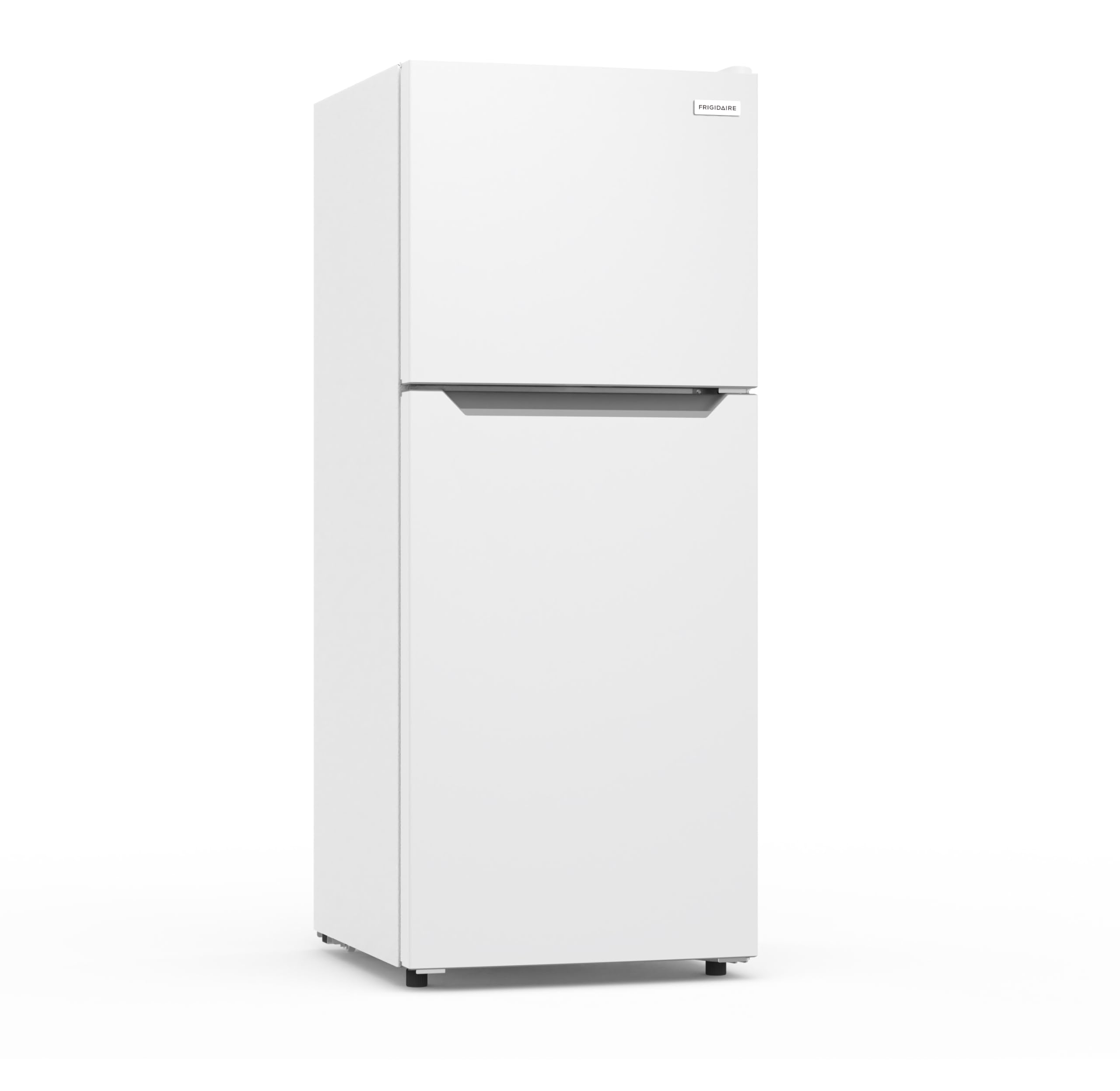
A 10-cubic-foot family fridge with the freezer up top, an adjustable thermostat, and a light inside so you stop hunting in the dark.
If you want the freezer up top and a full-featured fridge that behaves like a downsized kitchen unit, the Frigidaire is the pick. It carries 10 cubic feet total, split into 8 cubic feet of fresh-food space and a 2-cubic-foot freezer compartment on top — that is a bigger fresh-food section than the Hamilton Beach and a smaller freezer, which suits anyone who cooks more than they freeze. An adjustable thermostat lets you dial in the temperature, and the frost-free system clears the freezer’s ice automatically.
Small conveniences add up here. Inside there is a built-in lamp, so you can actually see into the back corners instead of angling a phone light in. The feet are height-adjustable and the shelves move, so you can reconfigure the interior around a tall pitcher or a stack of takeout containers. The door hinges are reversible too, letting you swing it from the other side if your layout needs it. For a family that wants a straightforward, well-lit 10-cubic-foot fridge without a full-size footprint, this is the tidy answer.
The things owners flag are worth knowing up front. It runs 300 kwh a year — between the Arctic Chef’s 200 and the Hamilton Beach’s 400 — so it is a middling draw for its size. Delivery dents come up, and the recurring theme is door seals that need a firm push to shut — the kind of fit-and-finish niggle you correct by pressing the door home rather than returning the whole unit. A handful of buyers also note longer-term seal wear. Treat the door closure as a habit, and the frost-free cycle keeps the freezer clean.
Against the Arctic Chef, this one trades four door shelves for a single door shelf and swaps the shallow-depth trick for a friendlier top-mount layout. If reach matters — no bending for frozen food — the Hamilton Beach still wins, but the Frigidaire gives a family the biggest fresh-food section of the three with the least fuss.
Reasons it climbs the list
- 8 cubic feet of fresh-food space — the roomiest of the three here
- Frost-free defrost runs automatically, so no manual thawing
- Built-in interior lamp for seeing the back shelves
- Adjustable thermostat plus adjustable feet and shelving
What to keep in mind
- Only one door shelf, so door storage is light
- Door seals can need a firm push to close the whole way
- Delivery dents show up across the reviews
- 300 kwh a year sits mid-pack for its size
Best matched to: a household that wants the largest fresh-food section and a lit, adjustable interior without a full-size fridge footprint.
Not the fit for: freezer-first cooks or anyone who wants maximum door storage — the top pick’s bottom-mount freezer and the Arctic Chef’s four door shelves each beat it there.
Understanding the Specs
Capacity And Freezer Split
The cubic feet quoted on a fridge counts everything inside — fresh food plus the freezer. A 10-cubic-foot model that puts 8 cubic feet in the fresh-food section and 2 in the freezer gives you more shelving for groceries than one that spends more of its total on a bigger freezer. Match the split to how you cook: freezer-heavy households want the bigger freezer section, fresh-food-heavy households want the bigger fresh compartment.
Defrost System (Manual vs Frost Free)
A manual-defrost fridge builds an ice layer on the freezer walls that you clear by hand every so often — fail to do it and the layer thickens and eats your storage. A frost-free (automatic defrost) fridge runs a timed cycle that melts the ice on its own, so you never plan a thaw day. Frost free costs a little more in energy because the cycle runs regularly, but it removes the single most common mid-size-fridge chore.
Energy Draw (kwh per year)
Every fridge here lists an annual energy figure in kwh — the total electricity it draws over a year. Lower is cheaper to run. Among these three, the Arctic Chef lists 200 kwh per year, the Frigidaire 300, and the Hamilton Beach 400, so a second-fridge or garage install will notice which one you choose. Pick the lowest draw if the fridge runs around the clock in a hot space.
Door Swing And Fit
A reversible door lets you set the hinge on the left or right, so the fridge opens away from a wall or walkway instead of blocking it. Depth matters in narrow spots — a shallow unit clears a tight gap that a deeper one will not. Adjustable leveling feet keep a tall, slim fridge steady, and rear castors let you roll one into place before you dial the feet down.
FAQ
Is a 9 cu ft refrigerator big enough for a family of four?
What is the difference between manual defrost and frost free in a mid-size fridge?
Why does my fridge build up ice even though it is frost free?
Can a 10 cu ft refrigerator fit in a narrow space between cabinets?
How much does a 9 or 10 cu ft fridge cost to run?
Do these fridges have a bottom freezer or a top freezer?
Can I reverse the door so it opens the other way?
What should I check when the fridge is delivered?
Is a freezer-on-bottom fridge easier to use?
Final Thoughts: The Verdict
If you just want the best all-around 9 Cu Ft Refrigerator, the Hamilton Beach 9.2 Cu. Ft Bottom Mount Freezer is the pick — a bottom-mount freezer that keeps your daily food at eye level, a 2.8-cubic-foot freezer split into three sections, and a compact footprint that slides into a small kitchen or dorm. For a shallow gap where nothing else fits, the frost-free Arctic Chef RFR1085 gives you a full 10 cubic feet and four door shelves. And for the family that wants the biggest fresh-food section and a lit, adjustable interior, the Frigidaire Frost Free Top Mount brings 8 cubic feet of fresh space with automatic defrost.
Whichever way you lean, buy the one whose defrost system and door layout match how you actually live.
How We Picked
We do not accept paid placement. Every pick is matched to a real buyer and a real use-case; we do not hands-on test units.
Sources & Methodology
Specifications: manufacturer listings and product documentation. Review insights: verified customer reviews, as of September 2026. Pricing: not shown on this page (it changes often); check the current price via the retailer link.
As an Amazon Associate, Gadgets Feed earns from qualifying purchases. This does not affect which products we feature.