
A 9×13 baking pan is the undisputed workhorse of any kitchen, yet most home bakers settle for pans that warp, stick, or bake unevenly. The difference between a perfectly golden-brown sheet of brownies and a burnt-edge, raw-center disaster comes down to the pan’s material, gauge, and coating. This guide subjects seven contenders to a forensic-level analysis of their heat distribution, durability, and release performance so you can bake with confidence.
I’m Min — the co-founder and writer behind Gadgets Feed. I’ve spent hundreds of hours combing through technical specifications, customer testing patterns, and competitive comparisons to identify which 9×13 baking pans deliver the structural integrity and thermal consistency serious bakers demand.
Whether you swear by non-stick convenience or prefer the raw performance of uncoated aluminum, this guide cuts through the marketing noise to present only the best 9×13 baking pans that genuinely solve the heat-distribution and warping problems that plague standard bakeware.
How To Choose The Best 9×13 Baking Pan
Selecting a 9×13 pan is about understanding the material science that governs how heat travels through metal or ceramic and into your batter. The wrong pan will scorch the edges of your lasagna while leaving the center lukewarm. The right pan delivers consistent, repeatable results every time.
Material: Aluminum vs. Aluminized Steel vs. Ceramic
Pure aluminum pans, like the Doughmakers, are the gold standard for commercial bakers because aluminum is the most thermally conductive common metal — it heats up fast and distributes heat evenly across the pan. Aluminized steel (KitchenAid, Wilton) layers aluminum over a steel core for a balance of conductivity and structural rigidity; the steel prevents warping under high heat. Ceramic and stoneware pans (LIFVER, DOWAN, Lareina) excel at heat retention rather than rapid conduction — they stay hot longer after leaving the oven but take longer to reach temperature, which can affect browning times for delicate recipes.
Gauge Thickness and Warp Resistance
Pan thickness is measured in gauge — the lower the gauge number, the thicker the metal. A standard thin pan (22-gauge or higher) will twist and buckle under the thermal shock of a 350°F oven, creating high and low spots that produce unevenly baked results. Doughmakers uses 18-gauge aluminum, which resists warping even after years of use. Ceramic pans avoid warping entirely by nature of their rigid construction, but they are heavy and can crack if subjected to sudden temperature changes.
Coating Chemistry: Non-Stick vs. Uncoated
Non-stick coatings (PTFE-based or ceramic-based) make cleanup trivial but degrade over time — the Wilton Platinum and KitchenAid pans use a silicone-infused double coating that withstands metal utensils better than standard coatings, but no non-stick layer lasts forever. Uncoated aluminum (Doughmakers) relies on a pebble-textured surface that creates natural release properties through physical texture rather than chemical coating; it’s scratch-proof and rust-proof, but it requires hand washing and occasional deep cleaning to remove baked-on residue. The Caraway pan uses a ceramic non-stick coating that is PTFE- and PFOA-free, offering a middle path with a slick surface that releases food easily while avoiding the toxicity concerns of traditional non-stick.
Quick Comparison
On smaller screens, swipe sideways to see the full table.
| Model | Category | Best For | Key Spec | Amazon |
|---|---|---|---|---|
| Doughmakers 9″x13″ | Aluminum | Even browning, scratch resistance | 18-gauge aluminum, pebble texture | Amazon |
| Caraway Rectangle Pan | Ceramic-coated aluminum | Non-toxic non-stick, high heat tolerance | 550°F max temp, PTFE/PFOA-free | Amazon |
| Lareina Ceramic with Lid | Stoneware ceramic | Covered baking, heat retention | 4.0 quarts, included ceramic lid | Amazon |
| DOWAN Deep Ceramic | Glazed ceramic | Deep pans, elegant serving presentation | 4 quarts, 3-inch depth, embossed | Amazon |
| LIFVER Ceramic Dish | Ceramic | Budget ceramic, deep capacity | 115 oz, 500°F oven safe, handles | Amazon |
| KitchenAid Nonstick Pan | Aluminized steel | Entry-level non-stick, brand trust | Swiss-engineered nonstick coating | Amazon |
| Wilton Platinum Oblong | Alloy steel | Everyday baking, dishwasher-safe coating | DURALAST double coating, 450°F max | Amazon |
In‑Depth Reviews
1. Doughmakers 9″ x 13″ Commercial Grade Aluminum Bake Pan

The Doughmakers pan is the closest thing to a professional bakery pan available to home cooks. Its 18-gauge pure aluminum construction — significantly thicker than the standard 22-gauge consumer pans — distributes heat with near-zero temperature variance across the 9×13 surface. The patented pebble pattern on the interior creates a physical non-stick effect: air circulates under the baked goods, producing a golden-brown bottom crust while the raised pebbles minimize contact area, making cakes and brownies release without chemical coatings.
Because there is no non-stick coating to degrade, you can use metal spatulas and knives without fear. The pan is oven-safe up to 428°F, which covers nearly every baking scenario except extreme broiling. Customer reports consistently mention that biscuits and rolls brown evenly on both top and bottom without greasing the pan, and that the pebble surface, though requiring a 3-5 minute hand wash to remove residue, never rusts or flakes. The reinforced rolled edges prevent the warping that thin pans suffer after repeated thermal cycling.
The trade-off is that this pan is not dishwasher safe and requires hand washing promptly after use. Baked-on residue builds up over time if not scrubbed thoroughly, though nothing a quick soak in hot soapy water cannot handle. The uncoated aluminum also reacts with acidic ingredients like tomato sauce, which can impart a metallic taste if left in the pan for extended periods — so this is strictly a baking pan, not a storage dish.
Why it’s great
- Zero warping even after years of use thanks to 18-gauge industrial-grade aluminum
- Pebble texture provides natural release without PTFE, PFOA, or any chemical coating
- Scratch-proof surface allows metal utensils without damaging the pan
Good to know
- Reacts with acidic ingredients — do not store tomato-based dishes in the pan
- Hand wash only; residue builds up and requires scrubbing every few uses
- No lid included and not designed for covered baking
2. Caraway Non-Stick Ceramic 9”x13” Rectangle Pan
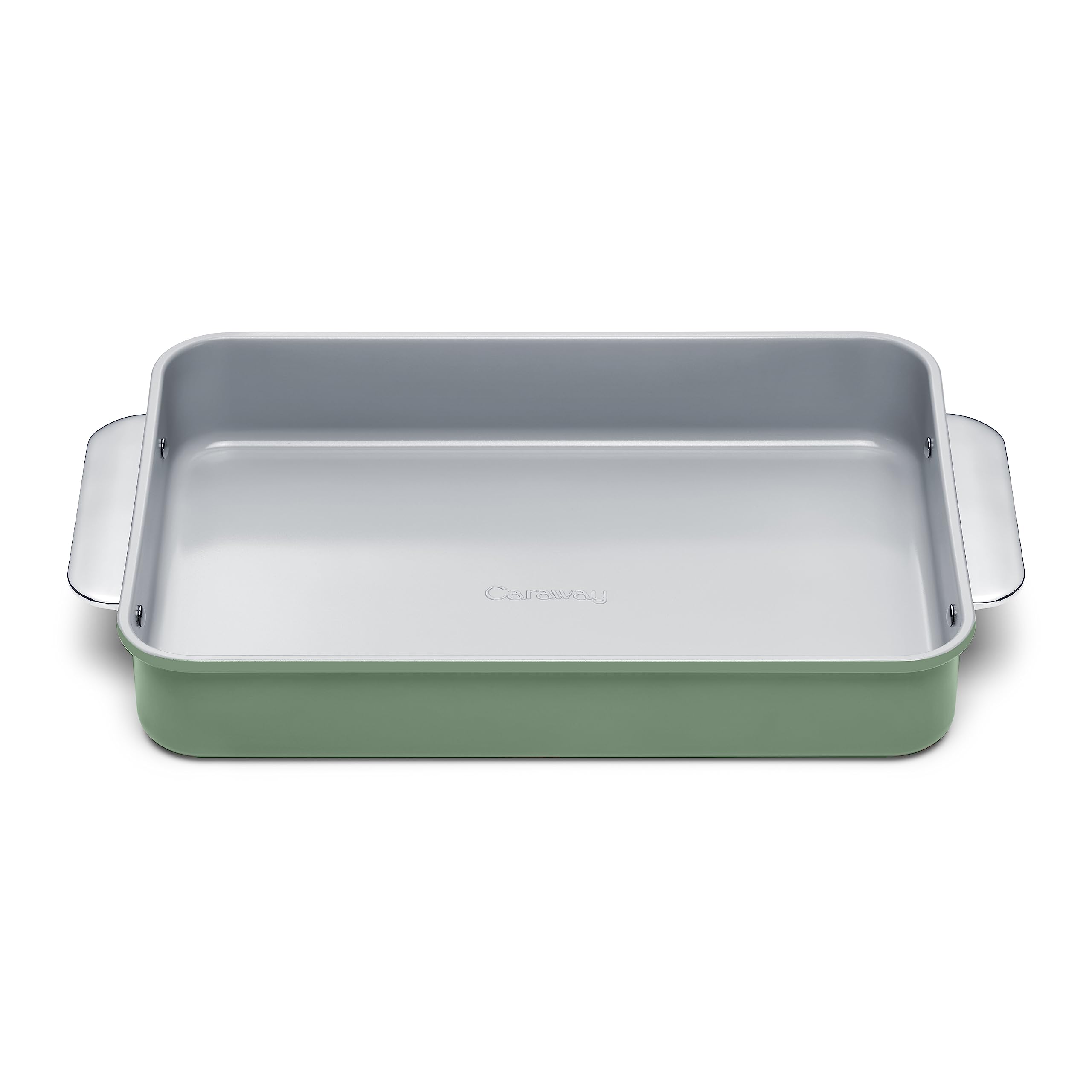
Caraway has built a reputation on kitchenware that prioritizes non-toxic materials without sacrificing performance, and this rectangle pan exemplifies that philosophy. The ceramic non-stick coating is completely free of PTFE, PFOA, PFAS, lead, and cadmium — a meaningful advantage for health-conscious bakers who want easy release without chemical concerns. The pan’s aluminum core provides the thermal conductivity needed for even browning, while the ceramic layer creates a surface slick enough that brownies and lasagna slide out without oil or spray.
The standout technical spec here is the 550°F maximum oven temperature, which is significantly higher than the 450°F ceiling of most coated pans. This makes the Caraway suitable for high-heat roasting and broiler finishes that would damage standard non-stick coatings. Customer reviews consistently note that even burnt-on food releases after a short soak, though the pan requires hand washing to preserve the coating’s integrity. Color options like Sage and Cream integrate with Caraway’s broader cookware line, making this a design-forward choice for kitchens where aesthetics matter.
The primary concern reported by long-term users is coating durability: some customers describe chipping after extended use, and Caraway’s customer service response to these claims has been inconsistent according to feedback. The pan is also the most expensive option in this guide, and the ceramic coating, while safer than PTFE, is not as inherently durable as the uncoated surface of the Doughmakers. For bakers who prioritize a non-toxic, naturally slick surface and are willing to hand wash with care, this pan delivers a premium experience that justifies its position as a top-tier option.
Why it’s great
- PTFE/PFOA/PFAS-free ceramic coating is among the safest non-stick surfaces available
- 550°F heat tolerance handles high-temperature roasting and broiler use
- Exceptional release performance — even caramelized sugar lifts off with minimal effort
Good to know
- Hand wash only to maintain the ceramic coating’s integrity
- Some users report coating chipping after extended use; customer service response is mixed
- Premium price point compared to aluminized steel or pure aluminum alternatives
3. Lareina Large Ceramic Casserole Dish with Lid

The Lareina casserole dish brings an unusual combination of features to the mid-range price point: a full 4.0-quart capacity, a matching ceramic lid, and a depth of 3.2 inches that accommodates multiple layers of lasagna or a large roasting chicken. The stoneware construction excels at heat retention — once heated, it holds temperature longer than metal pans, keeping food warm during serving. The non-porous enamel exterior prevents staining from tomato-based sauces and makes cleanup straightforward, even after baked-on cheese has set.
The included lid is a practical differentiator: it fits securely enough to trap steam for moist braising but is intentionally designed with a slight gap to allow some steam to escape, preventing pressure buildup. This makes the pan ideal for covered casseroles and roasts where you want the interior to stay moist without the lid sealing shut. The pan is oven safe, microwave safe, and dishwasher safe, offering the most versatile care regimen in this guide. Customer feedback highlights the weight — 5.5 kilograms — as evidence of the thick ceramic construction, and users consistently note that the deep walls prevent spillover during transport.
The main limitation is that ceramic, by its nature, does not conduct heat as efficiently as aluminum. The pan takes longer to preheat, and the browning on the bottom of baked goods will be less pronounced than what you would achieve with a metal pan. Additionally, the Lareina is heavy enough that handling it when full requires both hands and care. For bakers who prioritize oven-to-table presentation, covered cooking versatility, and deep capacity over rapid heating, this pan delivers exceptional value at a mid-range price.
Why it’s great
- 3.2-inch depth is among the deepest 9×13 options — ideal for multi-layer lasagnas and roasts
- Included ceramic lid fits well and allows steam venting without sealing shut
- Dishwasher, microwave, and freezer safe for maximum versatility
Good to know
- Ceramic heats up slowly — expect slightly longer preheating times than metal pans
- Heavy construction (5.5 kg) makes it cumbersome to handle when full
- Bottom browning is less pronounced compared to aluminum or aluminized steel pans
4. DOWAN 9×13 Deep Lasagna Baking Dish
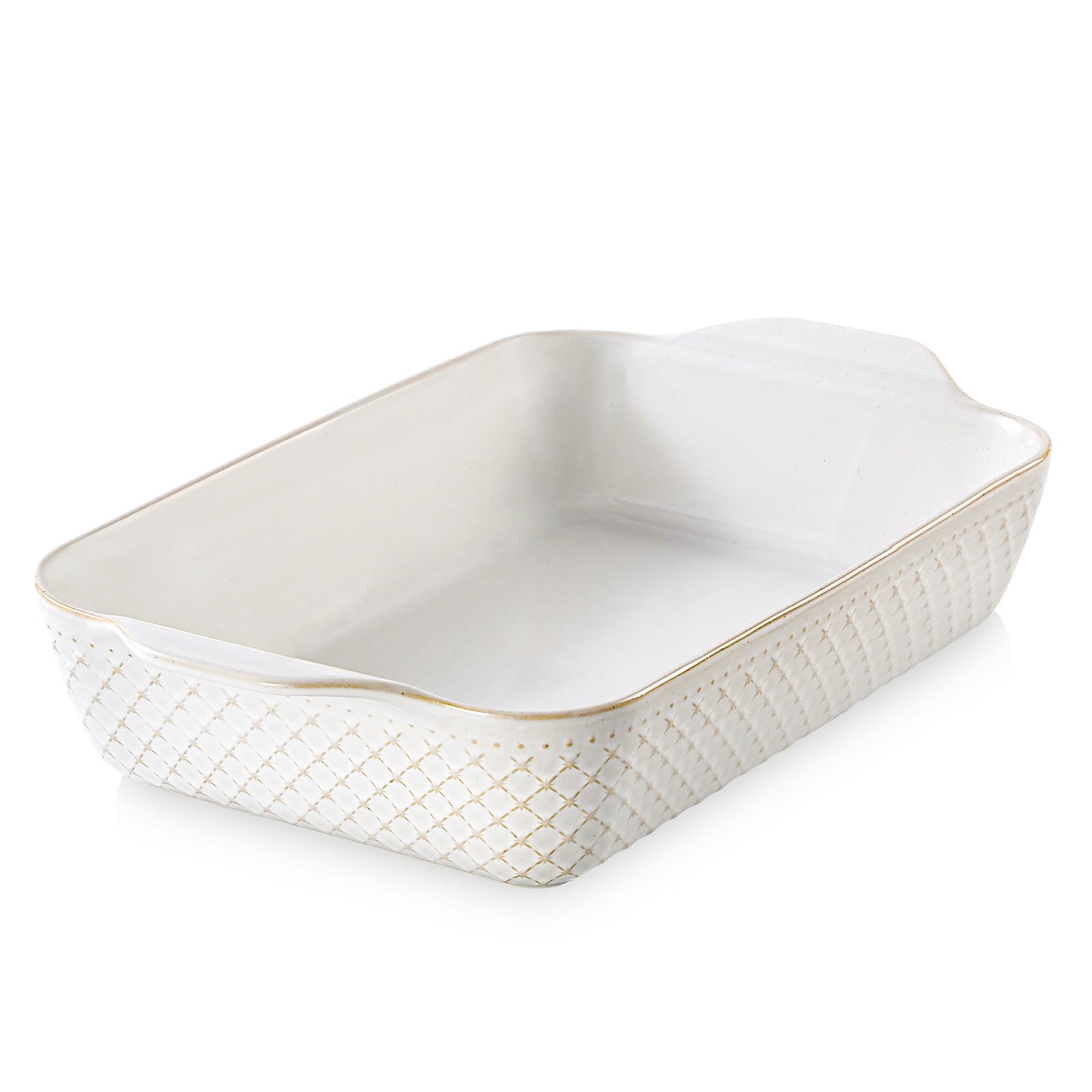
DOWAN’s entry into the 9×13 category focuses on depth and aesthetics: the pan’s interior measures 3 inches deep, giving it a generous 4-quart capacity that rivals the Lareina’s volume while maintaining a slightly more manageable weight of 4.8 pounds. The Arctic White glaze with embossed detailing makes this dish visually distinctive enough to serve directly at the table, and the integrated grip handles are proportioned to provide a secure hold even when the pan is loaded with a heavy lasagna. The high-fired ceramic construction resists staining and chipping better than lower-temperature stoneware.
The key differentiator here is the embossed surface texture on the exterior walls. While primarily decorative, the raised pattern also increases the surface area exposed to oven heat, which can contribute to more even side-wall heating compared to a completely smooth ceramic pan. Customer reviews confirm that the pan bakes evenly across the entire surface, with no reports of hot spots or undercooked centers. The glazed interior is non-porous enough that red sauce residue rinses off without soaking, and the pan emerges from the dishwasher looking like new after repeated uses.
The downsides are common to all ceramic offerings: the DOWAN pan does not conduct heat as quickly as metal, so you may need to extend baking times slightly for recipes that rely on bottom crust formation. The embossed design, while attractive, creates crevices that can trap food particles if not scrubbed thoroughly. The pan also lacks a lid, so if covered baking is important, you will need to improvise with foil. For bakers who want a deep, visually impressive dish that transitions seamlessly from oven to table, the DOWAN offers a compelling mid-range option with a refined finish.
Why it’s great
- 3-inch depth provides ample capacity for thick lasagnas and layered casseroles without spillover
- Embossed ceramic glaze is both attractive and resistant to staining from acidic sauces
- Easy-grip handles are well-proportioned for secure transport even when fully loaded
Good to know
- No lid included — requires foil for covered baking applications
- Ceramic heats slowly; may need adjusted baking times for consistent results
- Embossed exterior grooves require careful cleaning to prevent food residue buildup
5. LIFVER Casserole Dish for Oven, 9×13 Ceramic Baking Dish

The LIFVER ceramic dish enters the budget-friendly tier with a surprisingly generous 115-ounce capacity and a 500°F oven safety rating that exceeds many metal pans in this price range. The dual-handle design uses an anatomically contoured shape that makes carrying a full pan more comfortable than the thin strap handles found on some glass competitors. The high-fired ceramic body is dense enough to deliver the even heat distribution typical of stoneware, and the smooth glaze prevents the interior from absorbing food odors or stains over time.
For the price, the LIFVER offers an unusual depth of 2.95 inches — just a hair under the DOWAN’s 3 inches — making it suitable for substantial casseroles and roasting applications. The pan is dishwasher, microwave, freezer, and oven safe, covering the full spectrum of thermal environments a home cook might need. Customer reviews specifically highlight the pan’s performance with focaccia bread, where the ceramic’s heat retention creates the crisp bottom crust that bakers look for. The black color option hides wear better than white ceramics and matches most kitchen decor.
The most significant caveat comes from a product description discrepancy: the listing uses language that could be interpreted as describing enameled carbon steel, but the pan is in fact heavy ceramic. This means it is not compatible with stovetop use (ceramic cannot handle direct flame or induction coils). The pan is also heavy, though at a slightly lower weight than the Lareina, making it more manageable. For bakers on a tight budget who want the heat-retention benefits of ceramic without the premium price, the LIFVER delivers solid performance with the understanding that it is an oven-only tool.
Why it’s great
- 115-ounce capacity at a budget-friendly price represents exceptional value for money
- 500°F oven safety rating handles high-temperature baking without cracking
- Comfort-grip handles are anatomically contoured for easier carrying when full
Good to know
- Listing text is misleading — this is heavy ceramic, not enameled carbon steel; not stovetop safe
- Ceramic construction is heavy and takes longer to preheat than metal pans
- No lid included; requires foil for covered baking applications
6. KitchenAid Nonstick Aluminized Steel Cake Pan
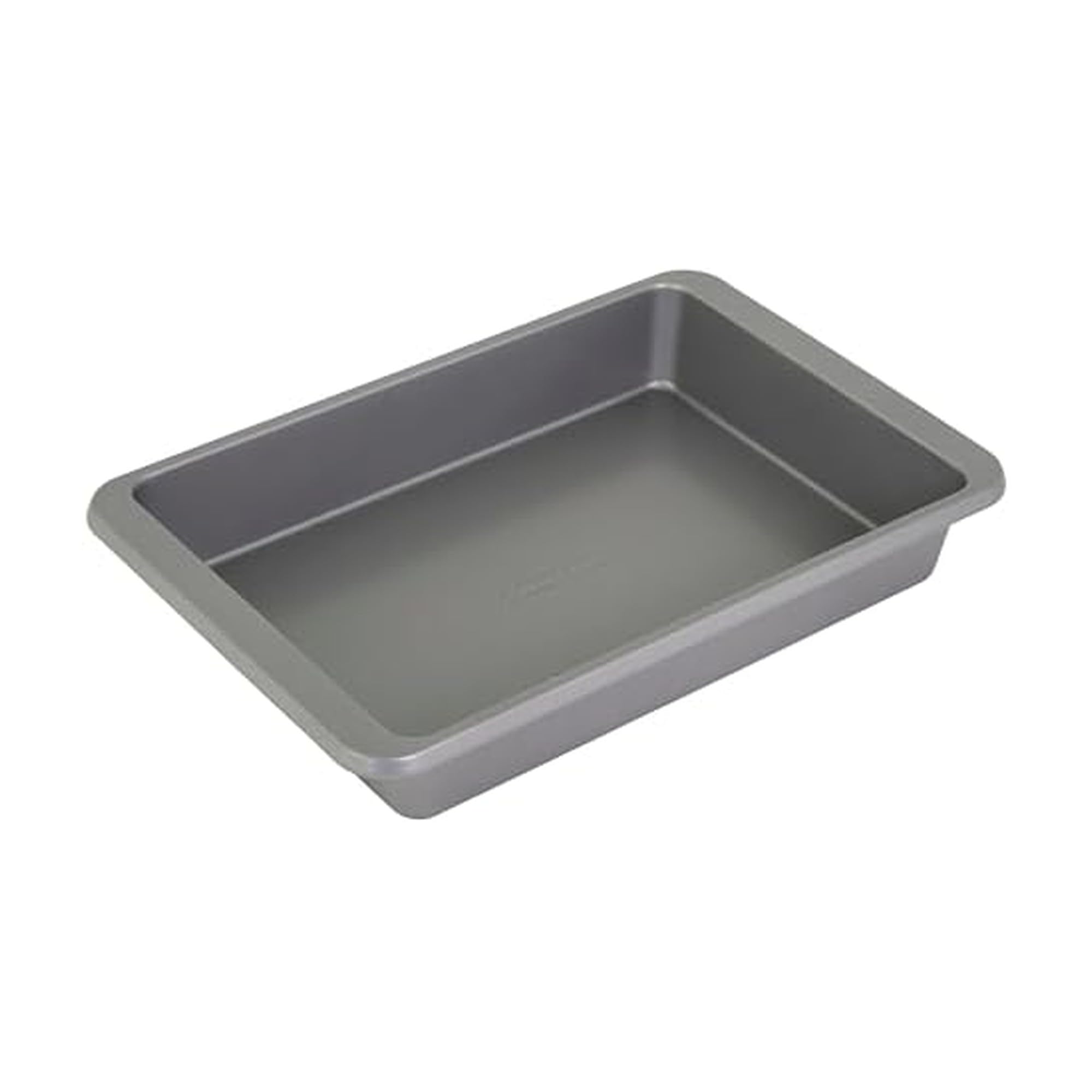
KitchenAid’s entry-level 9×13 pan uses aluminized steel — a steel core clad in aluminum — which provides better heat distribution than plain carbon steel while maintaining the structural rigidity that prevents warping. The Swiss-engineered non-stick coating is applied as a heavy-duty layer that customers report survives lasagna, brownies, and even Detroit-style pizza without sticking. The extended handles extend 1.5 inches beyond the pan body, providing enough clearance for a secure grip even when wearing bulky oven mitts.
The pan weighs 703 grams — noticeably heavier than budget non-stick pans of the same size — and the added mass contributes to more stable thermal performance. Customer feedback positions this pan as a “cheaper alternative to Goldtouch pans,” suggesting the non-stick performance punches above its price tier. Multiple users confirm that even sticky batters and caramelized sugar residues release cleanly, and the aluminized steel construction promotes consistent browning across the entire 9×13 surface rather than concentrating heat at the edges.
The downsides are twofold. First, despite the product listing claiming dishwasher safety, there is conflicting information in the technical specifications, and some users report that the non-stick coating degrades faster with dishwasher exposure — hand washing is recommended for longevity. Second, the pan’s 2.28-inch depth is shallower than the ceramic alternatives in this guide, making it less suitable for deep casseroles or multi-layer lasagnas. For everyday baking of sheet cakes, brownies, and single-layer dishes, the KitchenAid delivers reliable non-stick performance at a budget-conscious price from a trusted brand.
Why it’s great
- Aluminized steel construction provides even heat distribution without warping over time
- Swiss-engineered non-stick coating releases even sticky batters and caramelized sugar
- Extended handles offer a secure grip with oven mitts for safe oven-to-counter transport
Good to know
- Dishwasher safety is disputed — hand washing is recommended to preserve the coating
- 2.28-inch depth is shallower than ceramic options; not ideal for deep lasagnas
- Non-stick coating, while effective, will eventually degrade with regular use
7. Wilton Platinum Non-Stick Oblong Baking Pan
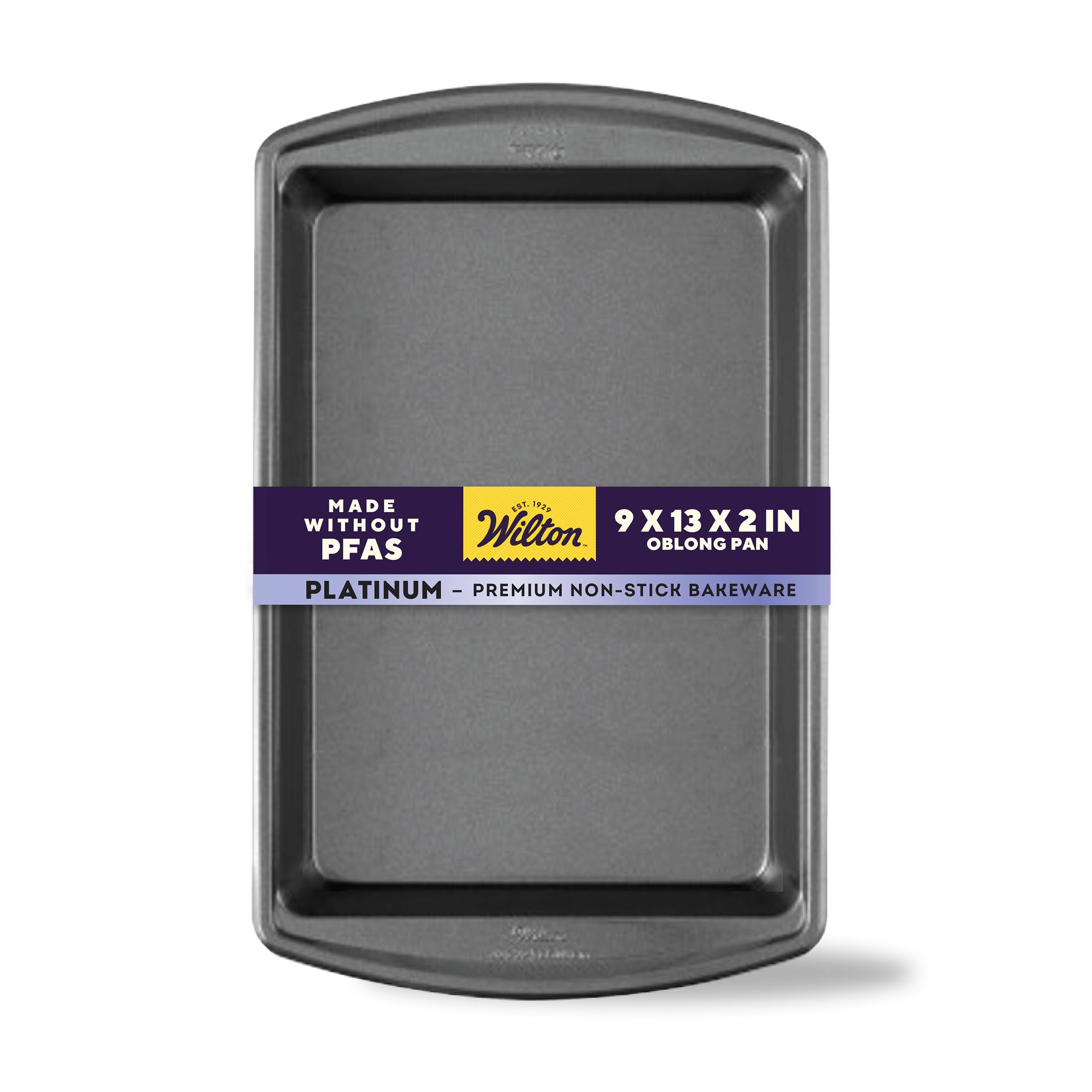
Wilton’s Platinum series represents the brand’s bakeware innovation, featuring what they call DURALAST Silicone Infused Double Coating — a non-stick surface engineered to be 5x more durable than standard coatings. The alloy steel core is thicker than typical consumer pans, and the manufacturer claims anti-warping technology that maintains flatness under thermal cycling. The pan is oven-safe up to 450°F and is made without PFAS, aligning with the growing demand for non-toxic bakeware. The extended handles are proportioned for easy transport, and the 2.19-inch depth is standard for sheet cakes and brownies.
Customer feedback is broadly positive, with users describing the pan as a “workhorse” that browns food beautifully and provides even baking across the entire surface. The non-stick performance handles lasagna, dressing, chicken, and sheet cakes without requiring excessive greasing, and the dishwasher-safe construction simplifies cleanup. The pan’s weight at 1.5 pounds provides enough heft to feel substantial during use without being cumbersome to handle when full. Wilton’s brand heritage — founded in 1929 and trusted by decorating enthusiasts — adds confidence for buyers who associate the name with reliable cake-baking results.
The most significant concern is coating durability over extended periods. Some long-term users report that the non-stick coating begins to chip or peel despite careful hand washing, which contradicts the “5x more durable” marketing claim. Additionally, the price has reportedly increased since late 2024, pushing it closer to mid-range territory. For bakers who want a dependable, dishwasher-safe non-stick pan from a heritage brand and are willing to accept that the coating may eventually need replacement, the Wilton Platinum remains a solid choice at a competitive entry-level price.
Why it’s great
- DURALAST silicone-infused coating is more durable than standard non-stick layers
- Made without PFAS for a non-toxic baking surface at a budget-friendly price
- Alloy steel construction with anti-warping technology maintains flatness over time
Good to know
- Some users report coating chipping or peeling after extended use despite careful handling
- Price has increased recently, reducing the value gap compared to mid-range alternatives
- 2.19-inch depth is standard but not deep enough for substantial multi-layer casseroles
FAQ
Why do my brownies burn on the edges but stay raw in the center?
Can I use metal utensils on a ceramic non-stick 9×13 pan?
Is a glass 9×13 pan better than ceramic for even baking?
What does “aluminized steel” mean and why does it matter for a 9×13 pan?
Final Thoughts: The Verdict
For most users, the best 9×13 baking pans winner is the Doughmakers Commercial Grade Aluminum Bake Pan because its 18-gauge pure aluminum construction and pebble-textured surface eliminate the warping and uneven heating that plague consumer-grade pans. If you need a non-toxic, ultra-slick non-stick surface for delicate baked goods, grab the Caraway Non-Stick Ceramic Rectangle Pan. And for deep, covered casseroles that run from oven to table, nothing beats the Lareina Ceramic Casserole Dish with Lid.