
Your wireless mouse cursor starts stuttering, the sensor jitters across the screen, and every scroll wheel tick feels sluggish. That erratic behavior is almost always caused by a single AA battery hitting the voltage threshold where your mouse’s optical sensor and wireless transmitter can no longer draw stable power. Choosing the wrong battery type or letting a near-dead cell linger in the tray is the number one reason a perfectly good mouse gets replaced prematurely.
I’m Min — the co-founder and writer behind Gadgets Feed. I’ve spent countless hours tracking capacity ratings, discharge curves, and voltage sag data across the battery market to find which cells actually keep a 2.4GHz or Bluetooth mouse sensor running at full polling rate until the very last milliwatt.
This guide cuts through the shelf-life marketing to identify the best aa battery for wireless mouse users, focusing on consistent voltage output, leak resistance, and cycle economy over raw alkaloid longevity.
How To Choose The Best AA Battery For Wireless Mouse
Wireless mice are low-drain devices, but they have a strict voltage appetite. Optical sensors and radio transmitters require a stable 1.2V to 1.5V to maintain 1000 Hz polling and smooth cursor tracking. A battery that sags below 1.1V under load causes phantom clicks, dropped connections, or erratic sensor jumps — long before the battery is technically “dead” in a flashlight.
Chemistry matters more than capacity
Standard alkaline batteries start at 1.5V but drop steadily to 0.9V. Your mouse stops working reliably around 1.1V, wasting the lower half of alkaline’s energy. NiMH rechargeables hold a flat 1.2V for nearly their entire discharge, giving your mouse consistent performance until the battery is truly empty. Lithium primaries hold 1.5V flat and then drop off a cliff — no gradual fade, just clean cutoff.
Rechargeability changes the economics
A wireless mouse user may swap batteries every 3 to 6 weeks. Over a year, that’s 10 to 18 single-use alkaline cells. A four-pack of NiMH or Li-ion rechargeables, each lasting 500 to 2100 cycles, eliminates that waste stream entirely and delivers steadier voltage than disposable cells.
Quick Comparison
On smaller screens, swipe sideways to see the full table.
| Model | Category | Best For | Key Spec | Amazon |
|---|---|---|---|---|
| Eneloop Panasonic BK-3MCCA8BA | NiMH Rechargeable | Low-self-discharge cycle economy | 2100 cycle rated, 2000 mAh min | Amazon |
| Energizer Ultimate Lithium AA | Lithium Primary | Extreme temp and long shelf storage | 8800 mAh, 1.5V flat curve | Amazon |
| Duracell Coppertop 28 Count | Alkaline Premium | Bulk household convenience | 2850 mAh, 12-year shelf life | Amazon |
| INSZIII 4100mWh Li-ion | Li-ion Rechargeable | USB-C direct charging convenience | 4100 mWh, 1200 cycles | Amazon |
| Duracell Coppertop 16 Count | Alkaline Standard | Trusted brand for everyday use | Power Boost ingredients, 12-year shelf | Amazon |
| Energizer Alkaline Power 32 Count | Alkaline Economy | Budget-friendly bulk pack | 10-year storage, 32-pack | Amazon |
| ACDelco 60-Count AA | Alkaline Value | Highest sheer pack count | 2600 mAh, 10-year shelf life | Amazon |
In-Depth Reviews
1. Eneloop Panasonic BK-3MCCA8BA

The Eneloop AA is the gold standard for NiMH rechargeables largely because of its exceptionally low self-discharge rate, retaining 70% of its charge after 10 years of storage. For a wireless mouse user who may go weeks between swaps, that means you can grab a cell from the drawer three months later and still get a full day of use without recharging. The 2100 cycle rating translates to roughly 2,000 mAh per charge — enough to power a Logitech MX Master for 6 to 8 weeks on a single cycle.
These cells deliver a flat 1.2V plateau that stays above 1.15V for the vast majority of the discharge curve, which is exactly what a mouse’s optical sensor needs to maintain 1000 Hz polling without stutter. Panasonic manufactures these in Japan with strict quality control; independent testers routinely measure actual capacity above the 2000 mAh minimum, often hitting 2245 mAh per cell. Internal resistance sits around 170 milliohms, which is low enough to handle the brief peak draws of a gaming mouse during rapid flicks.
The eight-pack format means you always have a charged backup ready while the other four cells rotate through your charger. The pre-charge from the factory using solar power is a nice touch — you can use them immediately after opening.
Why it’s great
- Consistent 1.2V output, no sag-induced mouse stutter
- Ultra-low self-discharge for grab-and-go convenience
- 2100 cycle economy saves hundreds of alkaloids from landfill
Good to know
- Needs a separate NiMH charger (not included)
- Lower peak discharge than lithium for high-drain pro gear
2. Energizer Ultimate Lithium AA

The Energizer Ultimate Lithium is the longest-lasting non-rechargeable AA on the market, and its voltage characteristic is uniquely suited to wireless mouse operation. Unlike alkaloids that drop steadily from 1.5V down to 0.9V, lithium primaries hold a stable 1.5V rail for roughly 90% of their capacity before dropping off suddenly. Your mouse sensor sees full power until the very last half-hour of battery life, eliminating the “fading cursor” phenomenon standard alkaline cells produce.
The 8800 mAh rating is nearly triple that of a typical alkaline AA, meaning a single cell can power a standard office mouse for 4 to 6 months of daily use. They also perform in extreme temperatures from -40°F to 140°F, which matters if you keep a mouse in an unheated garage or car. The leak-proof guarantee is backed by Energizer’s standing — they simply do not leak under normal use conditions.
These cells are incredibly lightweight at just 100 grams for the 8-pack, which reduces the mass in your mouse by nearly 20% compared to alkaline cells. That weight savings improves glide feel during fast movements.
Why it’s great
- Perfect flat 1.5V output for flawless sensor tracking
- Extremely lightweight — reduces mouse mass noticeably
- Leak-proof construction protects your mouse’s battery contacts
Good to know
- Non-rechargeable — higher per-cell cost than alkalines
- Not suitable for high-drain devices like camera flashes
3. Duracell Coppertop AA 28 Count
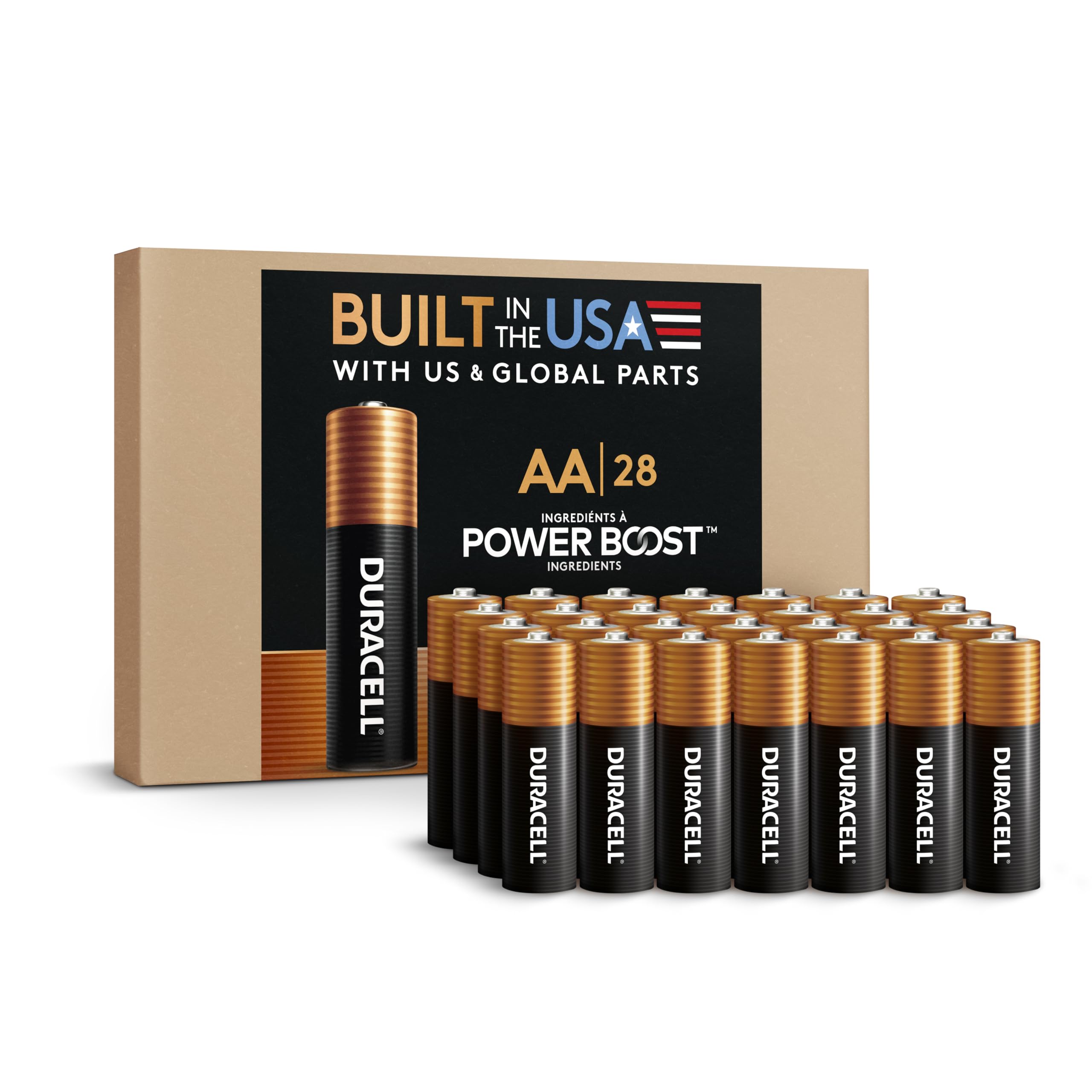
The 28-count Duracell Coppertop pack is the most convenient bulk alkaline option for households with multiple mice, remotes, and toys running simultaneously. Each cell delivers 2850 mAh of capacity, which is on the higher end of the alkaline market, and the proprietary Power Boost Ingredients reduce the voltage sag rate compared to generic alkalines. Your mouse will run at full speed for roughly 75% of the battery’s life before dropping into the lower efficiency zone.
The re-closable cardboard box is genuinely useful for organized storage — no loose batteries rattling in a drawer. Duracell backs these with a 12-year storage guarantee, so you can buy the 28-pack once and use cells from it over the course of a year without worrying about expiration degradation. The steel jacket and anti-leak design minimize the risk of alkaline goo damaging your mouse’s battery compartment.
While you can find cheaper per-cell prices with store-brand alkalines, the Coppertop’s consistency and leak resistance justify the premium for anyone who has lost a device to a burst battery.
Why it’s great
- High 2850 mAh capacity for extended mouse runtimes
- 12-year shelf life makes bulk buying practical
- Good leak resistance for protecting mouse internals
Good to know
- Voltage still drops gradually after 75% discharge
- Single-use — creates more waste than rechargeables
4. INSZIII 4100mWh Rechargeable Li-ion AA
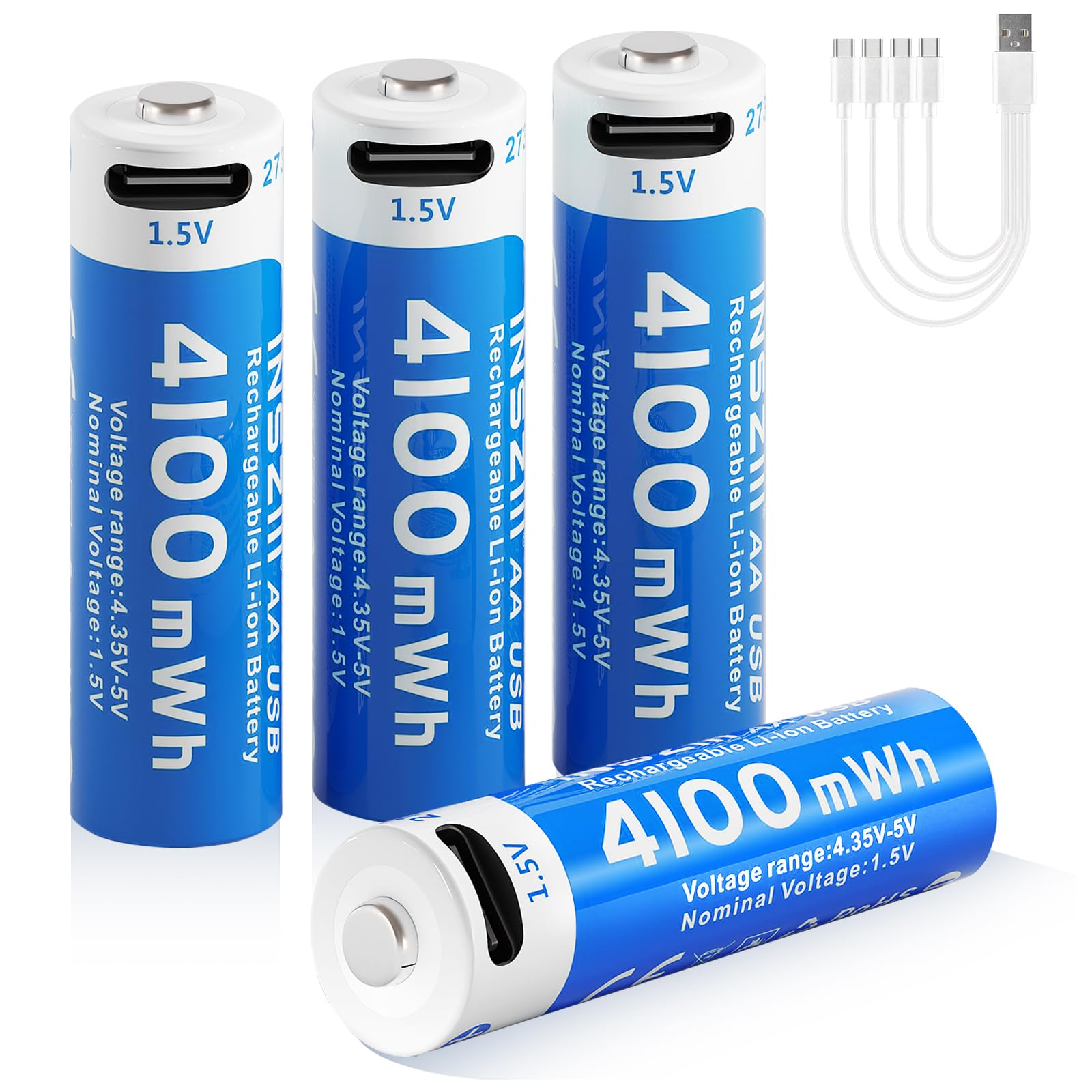
The INSZIII Li-ion AA battery is a modern twist on the rechargeable category because it integrates a USB-C port directly into the cell body, eliminating the need for a separate charger. The 4100 mWh capacity (roughly 2733 mAh at 1.5V) is substantial for a Li-ion AA, and the constant 1.5V output rail is identical to lithium primaries — no voltage sag means your mouse sensor never sees a power dip. The 4-in-1 USB-C cable that comes in the box lets you charge all four cells simultaneously.
With 1200 charge cycles, the per-use cost drops to nearly zero after the first few recharges. The built-in LED indicator shows charging progress: flashing green for active charge, solid green when full. The 2.5-hour full charge time is fast enough that you can rotate a spare set without any downtime. Each cell weighs 20 grams, which is comparable to standard alkalines, so you won’t notice a weight shift in your mouse.
The integrated safety circuit prevents overcharging, overcurrent, and short circuits — important for Li-ion chemistry that requires precise voltage management.
Why it’s great
- Built-in USB-C charging — no charger needed
- Constant 1.5V output for stutter-free mouse tracking
- 1200 cycles practically eliminate battery waste
Good to know
- Li-ion chemistry requires built-in protection circuits
- 4-pack format means you need to manage battery rotations
5. Duracell Coppertop AA 16 Count
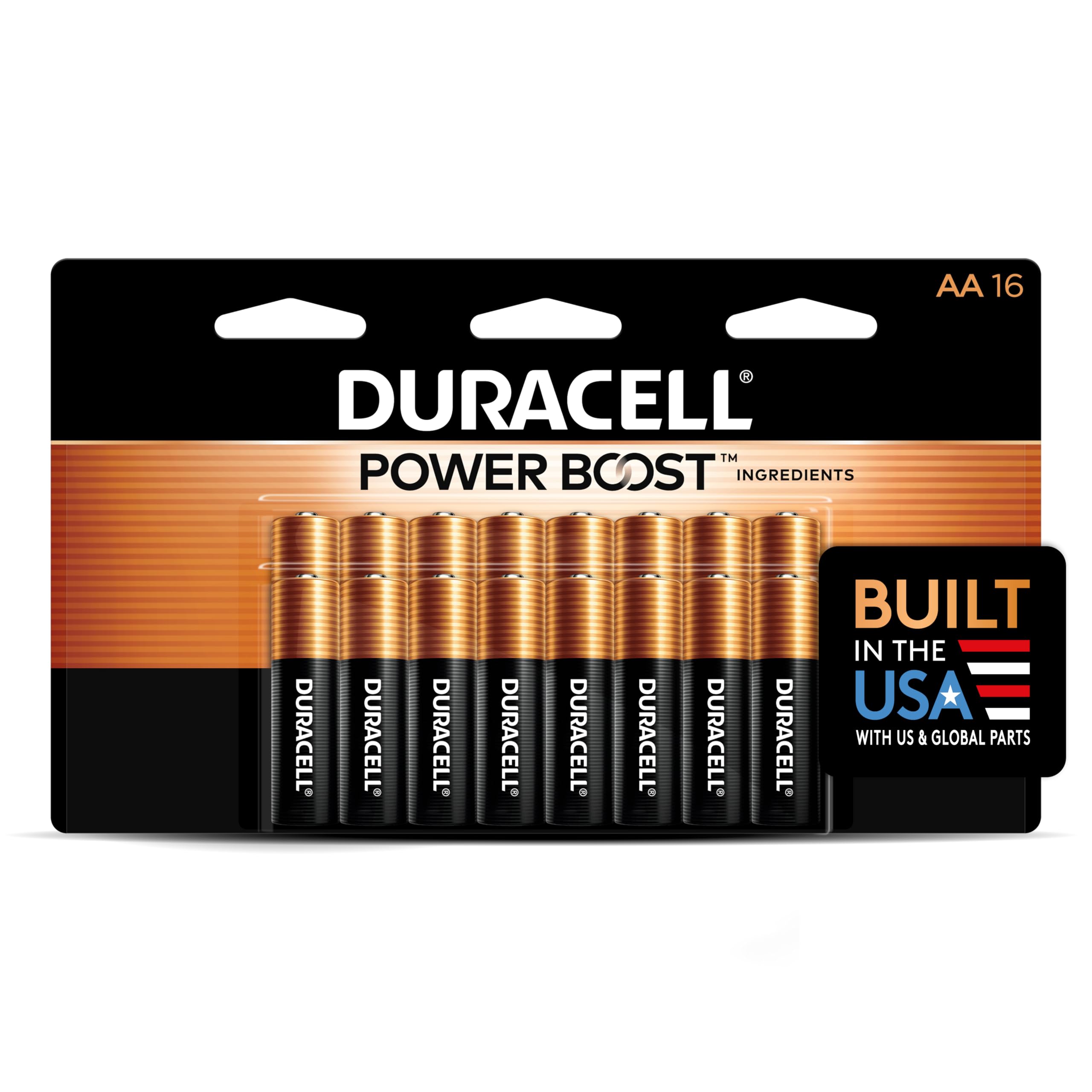
The 16-count Duracell Coppertop pack is the entry point into the Duracell ecosystem, offering the same Power Boost Ingredients and 12-year storage guarantee as the larger pack at a lower upfront cost. Each cell delivers consistent alkaline performance with a slightly improved discharge curve compared to drugstore generics — the voltage drop is more gradual, giving you a longer usable window before your mouse starts acting erratically. For a single-mouse household, this pack covers roughly a year of battery swaps.
Duracell manufactures these with US and global parts and tests for quality against defects. The 1.5V starting voltage is standard for alkaloids, and the 12-year shelf life means you can store the unused cells without worry. The “Men’s” department tag on the listing is a data anomaly, not a functional specification — the batteries work identically in any device.
These are the go-to for people who want the Duracell name without committing to the larger 28-count box. Perfect for gifting alongside a new mouse.
Why it’s great
- Trusted brand with reliable quality control
- 12-year storage guarantee for worry-free stocking
- Power Boost formulation improves voltage stability
Good to know
- Single-use creates more waste than rechargeable options
- 16 count may run out quickly in multi-mouse households
6. Energizer Alkaline Power 32 Count

The Energizer Alkaline Power 32-pack is the most cost-effective way to keep AA batteries on hand for a household with multiple wireless mice, remotes, and game controllers. The per-cell cost is notably lower than the Duracell Coppertop, and the Energizer brand reliability holds up well: customers consistently report long runtimes in mice and low failure rates. The 10-year shelf life means you can store the pack in a drawer for a decade and still pull out functioning cells.
Each cell weighs 24 grams, which is standard for alkaline AAs, and the 1.5V starting voltage provides reliable power for mouse sensors through most of the discharge cycle. Energizer includes recycled steel content in the construction (up to 10%), which is a small environmental nod. The 32-count format fits neatly into the bulk-buy strategy for families who go through batteries quickly.
While the voltage curve drops steadily rather than holding flat, these are a solid mid-range alkaline option for anyone not ready to switch to rechargeables.
Why it’s great
- Excellent per-cell value in a large 32-pack
- 10-year shelf life for long-term storage
- Consistent Energizer reliability for mouse use
Good to know
- Standard alkaline voltage sag affects late-stage mouse performance
- Non-rechargeable — ongoing waste stream
7. ACDelco 60-Count AA Super Alkaline

The ACDelco 60-count AA pack offers the highest sheer cell count of any product on this list, making it the default choice for offices, classrooms, or clinics with dozens of wireless mice to feed. Each cell provides 2600 mAh of capacity at 1.5V, which is close to the Duracell Coppertop’s 2850 mAh but comes at a substantially lower per-cell cost. The 60-count comes in a reclosable cardboard box with batteries sealed in 4-packs inside, making organization simple.
The 10-year shelf life is competitive with major brands, and the stainless steel coating prevents corrosion and leakage that could damage expensive peripherals. ACDelco uses no mercury or cadmium in the construction, reducing the environmental impact of disposal. User reviews consistently call these “better than cheap generics” and note that they hold voltage well in low-drain devices.
The trade-off is that 60 cells is a lot of batteries to store, and unless you have a fleet of devices, many will sit unused for years before you rotate through them.
Why it’s great
- 60 cells cover a year+ of mouse battery needs
- Good 2600 mAh capacity per cell
- Leak-resistant stainless steel coating
Good to know
- Bulk format impractical for single-mouse users
- Voltage curve same as standard alkaline cells
FAQ
Can I use rechargeable AA batteries in my wireless mouse?
Why does my mouse start stuttering before the battery is dead?
How often should I replace the AA battery in my wireless mouse?
Final Thoughts: The Verdict
For most users, the best aa battery for wireless mouse winner is the Eneloop Panasonic BK-3MCCA8BA because its flat 1.2V output eliminates sensor stutter completely while offering 2100 recharge cycles that pay for themselves within the first year of use. If you want extreme longevity with zero voltage sag, grab the Energizer Ultimate Lithium AA — each cell runs a mouse for months and never leaks. And for bulk cost efficiency with a trusted brand name, nothing beats the Energizer Alkaline Power 32-pack.