
Our readers keep the lights on and my morning glass full of iced black tea. As an Amazon Associate, I earn from qualifying purchases.
Specs are compiled from manufacturer listings and verified buyer reviews and can change over time — please confirm the key details on the product page before buying.
You want your above-ground pool to be warm enough for a comfortable swim, not a teeth-chattering shock. This guide breaks down the real-world performance and durability of the top models so you can pick one that actually heats your water and survives the weather.
I’m Min — the founder and writer behind Gadgets Feed. This guide is built by comparing the manufacturers’ published specifications and the patterns across verified customer reviews, so you get each pick’s real strengths and trade-offs instead of marketing spin.
After analyzing the specs, buyer reports, and verified data across several models, you’ll have a clear picture of which above ground gas pool heater fits your setup, budget, and tolerance for potential headaches.
Quick Picks
- Hayward W3H135FDN H-Series — Best Overall
- Raypak PR106AENC 105,000 BTU Natural Gas Heater — Value Powerhouse
- Raypak 105k BTU Above Ground Pool Heater — Fast Propane
- Raypak 014786-156A 150K BTU Propane Heater — Top Power Propane
- Raypak 014784 PR156AENC 150K BTU Natural Gas — Sleek Natural Gas
How To Choose The Best Above Ground Gas Pool Heater
Picking a gas pool heater depends on matching the unit’s power to your pool size and choosing a fuel type your home already uses. Here are the three things that matter most.
BTU Output and Your Pool Size
BTU (British Thermal Unit) is the measure of heating power. A higher BTU number means the heater can warm more water faster. For an average above-ground pool (around 10,000 to 15,000 gallons), a 105,000 BTU model is a common starting point, while a 135,000 or 150,000 BTU unit will heat the water much quicker. The trade-off is that a bigger heater costs more to buy and run.
Natural Gas vs. Propane
This decision depends entirely on what your house has. If you already have a natural gas line running to your backyard, a natural gas model is simpler and usually cheaper to operate. Propane models are more flexible for placement since they run off a tank, but the fuel can cost more. Buyers report propane models often burn hotter, meaning they can heat a pool faster than their natural gas counterparts with the same BTU rating.
Heat Exchanger Material and Headers
The heat exchanger is the part that actually transfers heat from the burner to your pool water. Cupro-nickel is a premium material that resists corrosion from pool chemicals better than standard copper. Polymer headers are a feature on some models that prevent rust stains from metal particles entering your pool water. The durability of these components is the number one factor that determines whether your heater lasts for decades or fails within a year.
Quick Comparison
| Model | Best For | BTU | Weight | Fuel Type | Amazon |
|---|---|---|---|---|---|
| Hayward W3H135FDN | Fast Heating & Digital Controls | 135,000 | 117.5 lbs | Natural Gas | Amazon |
| Raypak PR106AENC | Quiet Operation & Polymer Headers | 105,000 | 78.8 lbs | Natural Gas | Amazon |
| Raypak 105k BTU Propane | Fast Heat with Propane Fuel | 105,000 | 85 lbs | Propane | Amazon |
| Raypak 014786-156A Propane | High-Power 150K BTU Output | 150,000 | 115 lbs | Propane | Amazon |
| Raypak 014784 PR156AENC | High-Power 150K BTU Natural Gas | 150,000 | 100 lbs | Natural Gas | Amazon |
In‑Depth Reviews
1. Hayward W3H135FDN H-Series
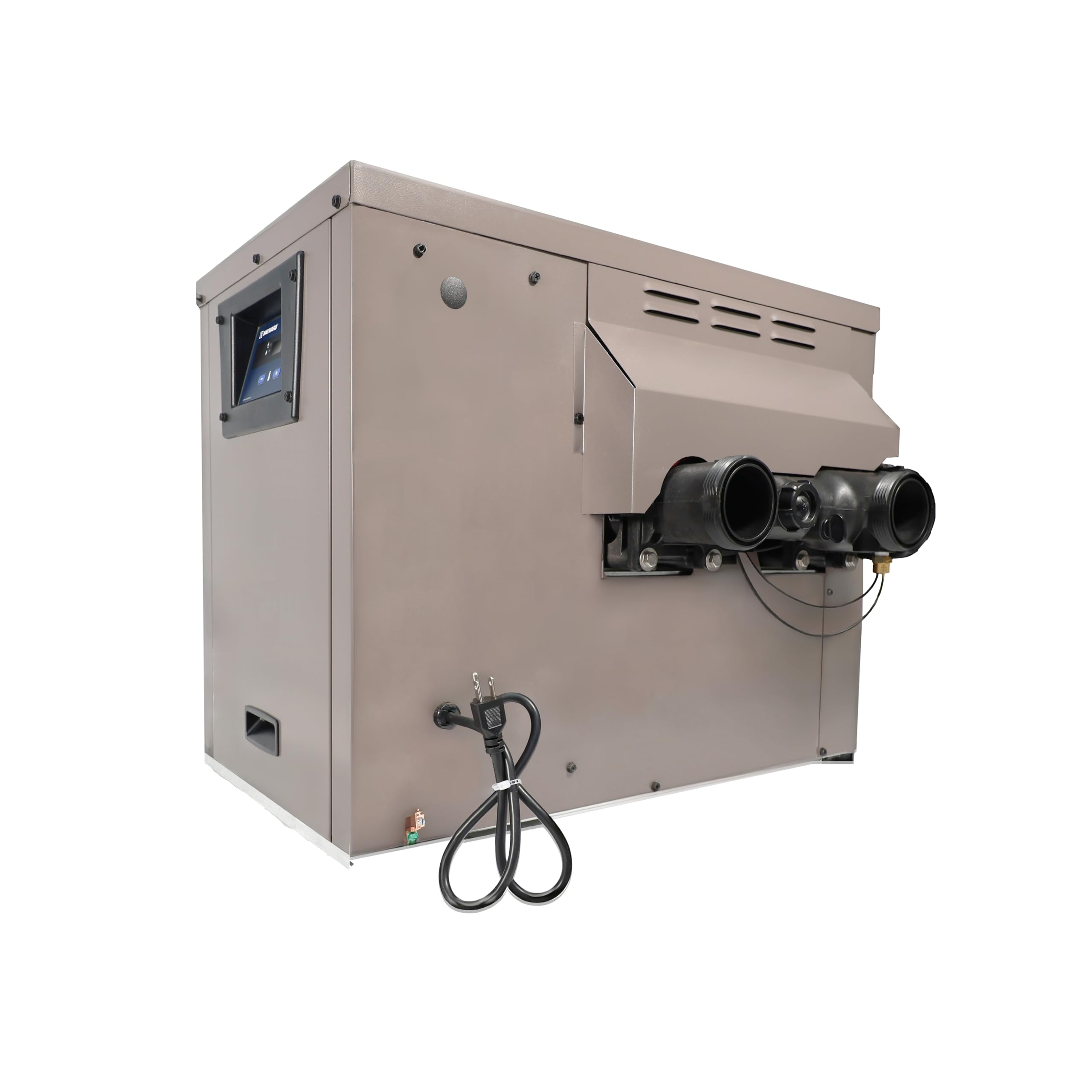
The digital-powered workhorse that gets your pool warm in a couple of hours.
Heating your pool quickly so you can actually use it is the whole point, and this Hayward model delivers on that promise thanks to its 135,000 BTU output — significantly more powerful than the 105,000 BTU units below. The key to its long-term reliability is the cupro-nickel heat exchanger (a strong alloy that resists corrosion better than standard copper), so it handles your pool’s chemical balance without rusting through as fast. You also get an intuitive digital control panel to set your target temperature easily.
Owners mention this unit “heats up your pool in 2-3 hours maybe less depending on your size,” which is a serious advantage over slower 105,000 BTU models. However, the strength comes with weight — this heater weighs 117.5 pounds, making it 49% heavier than the Raypak PR106AENC at 78.8 pounds, so you will need help moving it into place. On the durability side, one professional reviewer noted the heater failed after three seasons even with a pool maintenance service, pointing to a common theme that “pool heaters are notoriously pieces of **** that last 4-7 years max.”
Another owner mentioned the importance of getting the extended warranty, calling these heaters “very fragile” and warning to expect a hefty jump in your gas bill. The trade-off is clear: fast, powerful heat from a well-engineered unit, but you cannot skip professional installation and a solid warranty to protect your investment.
Smart Power Pick: The 135,000 BTU cupro-nickel heater with digital controls delivers the fastest warm-up and the most corrosion-resistant build in this lineup, perfect for a family that wants to extend their swim season without waiting all day.
Honest Caution: Its higher weight (117.5 lbs) and reports of early failures after 3 seasons mean a professional install and extended warranty are non-negotiable — cheaping out here costs you later.
Reach for this if: You want the fastest heating time and a digital interface you can actually read, and you are willing to pay for professional setup and a warranty.
Look elsewhere if: You have a smaller pool (under 9,000 gallons) or want a lighter unit that is easier to move and install yourself.
2. Raypak PR106AENC 105,000 BTU Natural Gas Heater
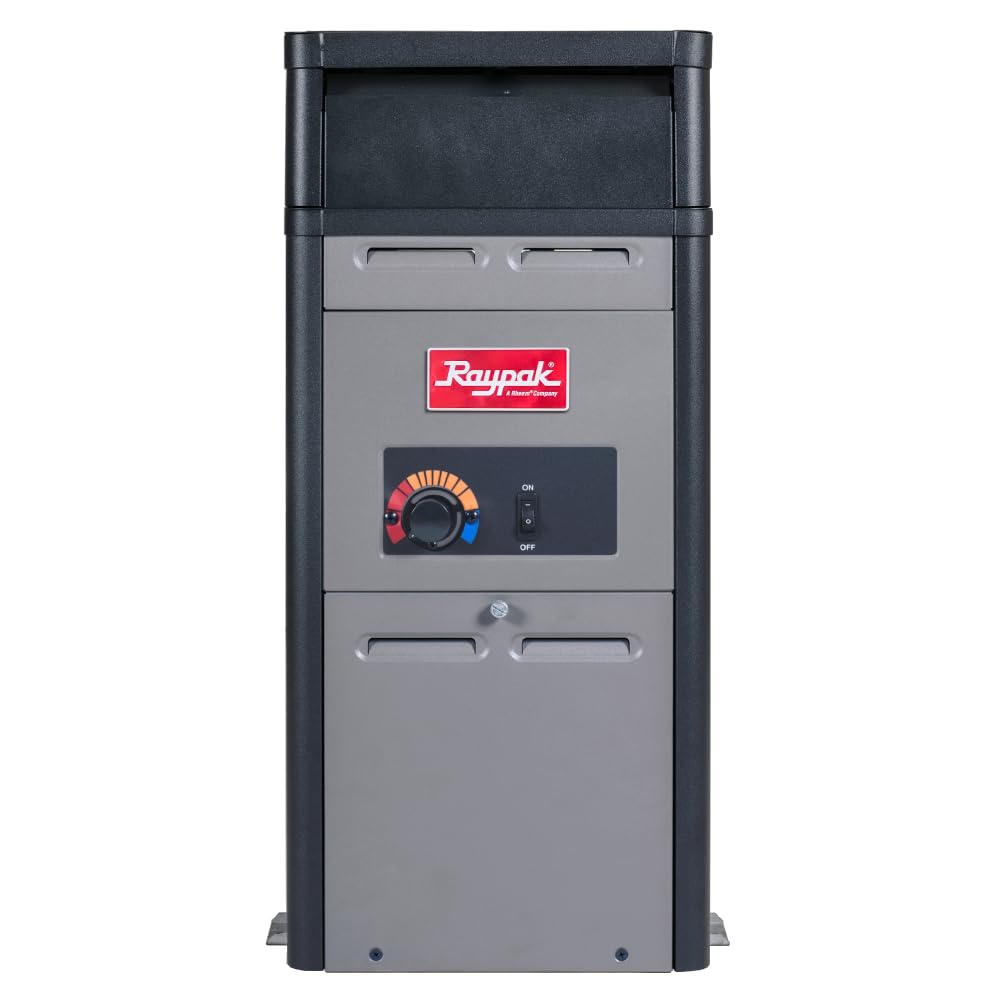
The ultralight natural-gas option that runs so quiet you forget it is on.
If you want a heater that blends into the background, this Raypak is the quietest runner here — one reviewer noted it was so silent they had to hold a hand over the exhaust to confirm it was operating. At only 78.8 pounds, it is the lightest model in this comparison, making it a realistic candidate for a DIY installation compared to the 117.5-pound Hayward. The polymer headers (the plastic-like entry and exit fittings) are a smart feature because they prevent rust stains from metal parts bleeding into your pool water.
The 105,000 BTU output is enough to heat a typical above-ground pool, but the big story is the reported durability: one buyer mentioned their first unit lasted almost 20 years. That is an outlier, but it suggests a well-built design. However, there is a serious split in buyer experience. Another reviewer reported a catastrophic leak within the first year, saying “water level dropped, heater leaked and rusted internally,” and the manufacturer blamed pool chemicals and refused a replacement. The “all-copper-fin-tube” heat exchanger is a single piece of extruded copper, which heats efficiently but is more vulnerable to chemical attack than cupro-nickel.
This heater also uses an “uninterrupted heating” design that works without a fan, so wind, leaves, or snow cannot blow out the flame — a real plus if your pool sits in an exposed yard. The trade-off is that the plumbing connections are tight, so you may need an extra straight pipe segment before attaching an elbow.
What You Get
- Runs super quiet — you will not hear it working
- Lightest unit at 78.8 pounds for easier installation
- Polymer headers prevent rust stains in your pool
The Risks
- Multiple reports of internal leaking and rust within the first year
- All-copper heat exchanger is less corrosion-resistant than cupro-nickel
- Plumbing connections are very close together, complicating pipe runs
Grab this if: You want a lighter, quiet heater with polymer headers that protect your pool from rust stains, and you are comfortable with a potential durability gamble.
skip it if: You cannot risk internal leaks — the failure reports make a strong extended warranty or professional install essential.
3. Raypak 105k BTU Above Ground Pool Heater (Propane)
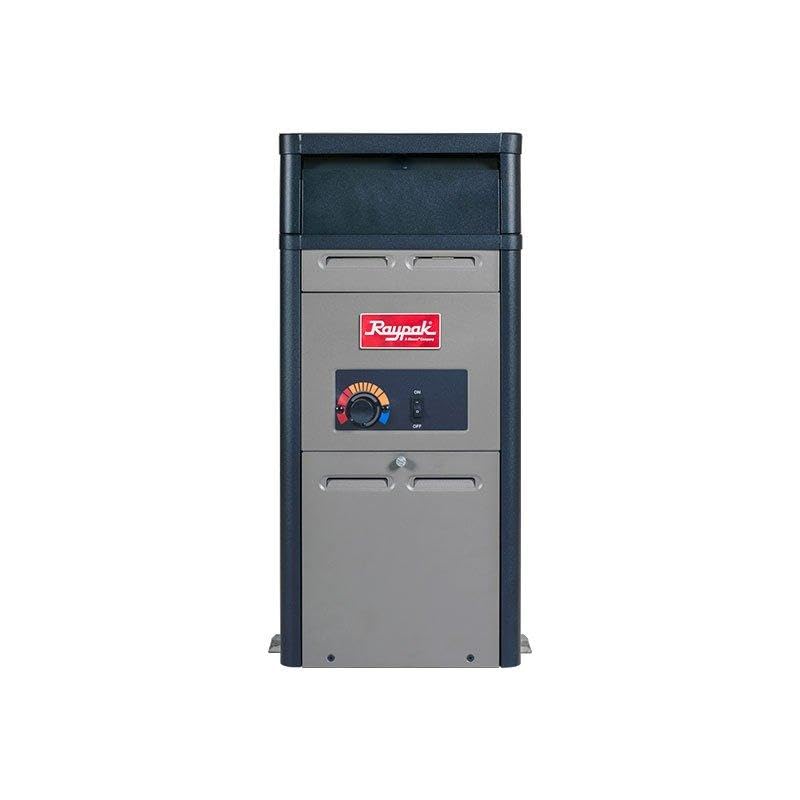
The propane-powered beast that raised an 18,000-gallon pool two degrees every hour.
If you have a propane hookup and want heat fast, this Raypak is a serious contender. One long-time pool professional (who used to sell Teledyne Laars heaters) tested this on a 17,800-gallon round pool and reported it raised the water temperature two degrees per hour, calling it a “monster” that outperformed his old 175,000 BTU unit. The secret is that propane burns hotter than natural gas, so this 105,000 BTU unit can feel more powerful than its rating suggests. It measures 33.79 x 33.79 x 37.78 inches, making it a 23% larger footprint than the Raypak 150K natural gas model (27.5 x 27 x 12 inches), so check your pad space before buying.
But the buyer experience is split hard. While one owner praised its speed, another reported the unit stopped working after only one week of use in the 2024 season and said the company refused warranty support, blaming the customer. A third reviewer found the power button broken after just two uses. A major concern is shipping damage: one unit arrived with a crushed end, and the buyer worried about internal circuit board damage.
The heater includes an analog control, which is simpler than a digital panel but less precise. The polymer header and copper tubing are standard for Raypak at this price point. The big takeaway is that this model offers incredible heating speed on propane, but the pattern of early failures and poor customer support is a real red flag.
Propane Speed Star: If you need to heat a large above-ground pool quickly and have propane access, this unit’s two-degree-per-hour performance is genuinely impressive — but buy from a seller with a good return policy.
Reliability Warning: The consistent pattern of broken buttons, early failures, and warranty disputes means you should expect to pay for a professional installer if you want the warranty honored.
Ideal for: Propane users with large pools (17,000+ gallons) who prioritize rapid temperature rise and can handle the bulkier 33.79-inch size.
Not for: Anyone who needs a low-maintenance, long-term heater — the failure reports are too common to ignore.
4. Raypak 014786-156A 150K BTU Propane Heater

The high-BTU propane option that extends your swim season well into fall.
At 150,000 BTU, this is among the most powerful propane heaters you can buy for an above-ground pool, meaning it can rapidly heat even the largest pools on the market. It is a direct upgrade from the 105,000 BTU models if your pool is bigger than 15,000 gallons or you live in a cooler climate. The unit weighs 115 pounds, which is typical for its power class and similar to the 117.5-pound Hayward, so you will want a dolly for delivery and setup.
The heating performance is strong: one New England owner said “I’ve used it more this year from when I first bought it… I run it for a few hours and then it’s pool time,” confirming it makes a real difference in extending the usable season.
The most alarming report came from a buyer who paid for professional HVAC installation only to discover the unit arrived defective with a gas leak. The seller initially approved a return, then refused it after a representative named “Ebony” intervened. This highlights the critical importance of checking the seller’s return policy before clicking buy. One owner also warned that the warranty is voided if you self-install, requiring a certified installer (which costs extra) to maintain coverage.
Why It Works
- Massive 150,000 BTU output heats very large pools quickly
- Self-install possible in under an hour for experienced DIY owners
- Extends swim season significantly in cold-weather regions like New England
Watch Out For
- High risk of receiving a defective unit with gas leaks
- Warranty requires certified professional installation
- Heavy 115-pound unit needs two people to position
Get it for: The sheer power to heat a large pool on propane, plus the potential for a quick self-install if you have experience.
Avoid it for: confidence — the defective-unit and warranty-voiding stories make this a gamble unless you buy through a local dealer.
5. Raypak 014784 PR156AENC 150K BTU Natural Gas Heater
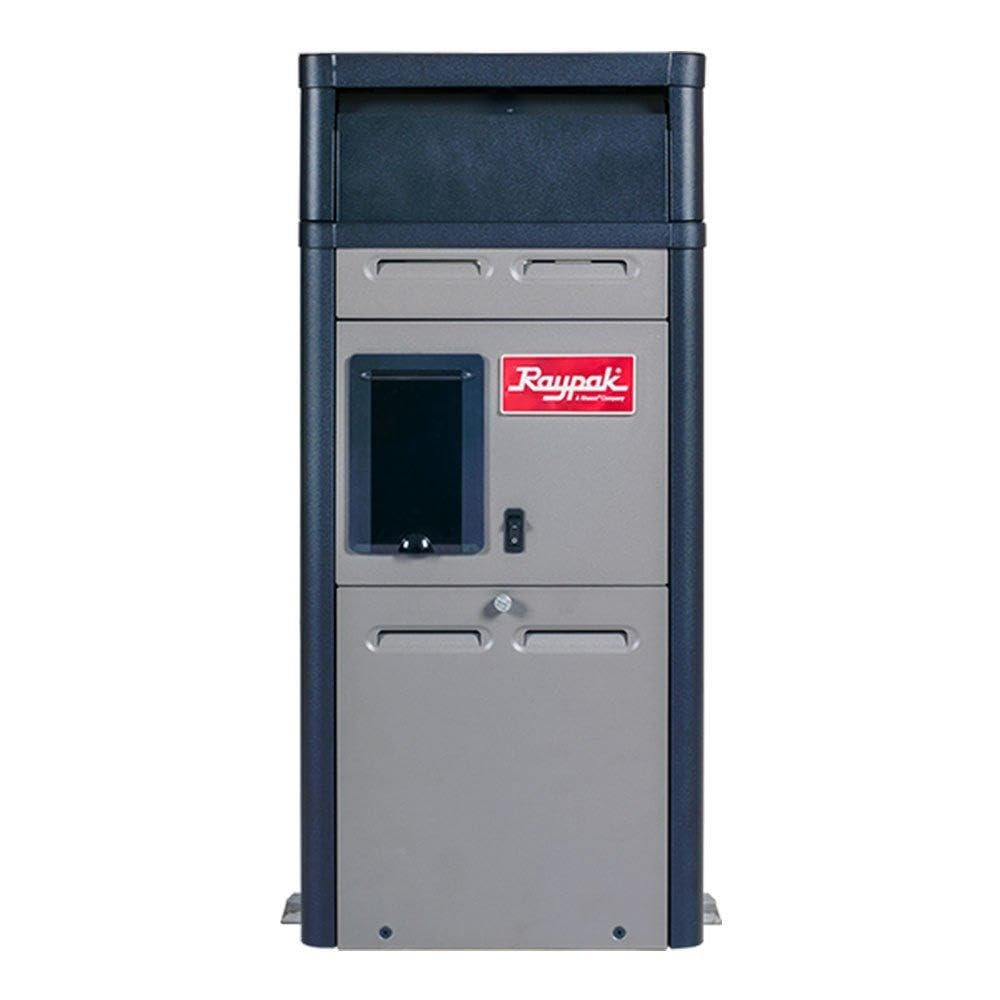
The compact natural-gas giant that packs 150,000 BTU into a 12-inch-deep shell.
If you have a natural gas line and need maximum heating power in a surprisingly small package, this Raypak model stands out. Its dimensions are just 27.5 x 27 x 12 inches, which is 23% more compact than the propane version of the similar Raypak 105K, meaning it can fit into tighter spaces on your pool pad. It weighs 100 pounds (lighter than the 115-pound propane 150K), making it slightly easier to maneuver. The 2-inch water connections are standard for above-ground pool plumbing.
Customers note strong performance: one verified buyer uses it on an 8,700-gallon pool and said “it had no problem heating the water quickly,” while another with a 15,000-gallon pool confirmed it heats “to whatever temperature we want.” The heater is also energy-efficient, which should help keep your gas bill from soaring as much as a less efficient model. However, there is a critical setup detail: if you have a 2psi natural gas line, an external regulator must be added (costing about on Amazon) to reduce the pressure to 1/4psi, or you will face a 90% ignition failure rate.
The durability red flags are real. One owner reported the first unit lasted only 4 months before leaking, and the replacement unit leaked after just 1 week. The warranty is only 90 days, and you must pay to return a defective unit. This is a powerful heater that works well when it works, but the reliability track record is the weakest in this lineup.
Space-Saving Power: The 150K BTU output in a compact 12-inch-deep frame makes this the best fit for tight installations — but only if you are ready to handle the regulator setup.
Reliability Gamble: The two-unit leaking failure and 90-day warranty make this the riskiest long-term purchase; buyer beware on seller responsiveness.
Choose this if: You need max BTU in a small footprint with natural gas, and you are comfortable adding an external regulator for a 2psi line.
Pass on it if: You want a heater that will last multiple seasons without leaking — the 4-month failure reports are a dealbreaker for most.
Understanding the Specs
BTU (British Thermal Unit)
This is the measure of how much heat the heater produces. Think of it as the engine size. A 135,000 BTU heater can warm your pool water faster than a 105,000 BTU model. For a typical above-ground pool (10,000 to 15,000 gallons), you generally want at least 100,000 BTU. If you live in a cooler area or have a larger pool, stepping up to 150,000 BTU makes sense so you are not waiting all day for the water to warm up.
Heat Exchanger Material
This is the part that transfers the burner’s heat into your pool water without letting the two mix. Cupro-nickel is the premium choice — it resists corrosion from pool chemicals much better than plain copper. Standard copper heats efficiently but can be eaten away by unbalanced water chemistry, leading to leaks. Some models use a single piece of extruded copper, which is durable but still vulnerable to chemical attack.
Polymer Headers
These are the plastic-like manifolds at the water inlet and outlet. Their job is to prevent rust and metal particles from entering your pool water, which can cause ugly staining on the pool liner. If a heater uses metal headers, even a small amount of internal corrosion can send rust into the pool. Polymer headers are a smart feature for above-ground pools where staining is more visible.
FAQ
What size gas pool heater do I need for my above ground pool?
Can I install an above ground gas pool heater myself?
How long do above ground gas pool heaters typically last?
What is the difference between propane and natural gas pool heaters?
Why does my pool heater keep shutting off or failing to ignite?
Will a gas pool heater work in windy conditions?
How much space do I need around a gas pool heater?
Can I run a natural gas pool heater on propane?
Final Thoughts: The Verdict
Across the board, the above ground gas pool heater winner is the Hayward W3H135FDN because its 135,000 BTU output, cupro-nickel heat exchanger, and digital controls offer the best balance of speed, durability, and ease of use — if you are willing to pay for professional installation and an extended warranty. If you want a lighter, quieter natural gas unit with polymer headers to prevent rust stains, grab the Raypak PR106AENC. And for sheer propane-powered speed on a large pool, the standout is the Raypak 105K BTU Propane model — just be ready for the risk of early failure.
How We Picked
We do not accept paid placement. Every pick is matched to a real buyer and a real use-case; we do not hands-on test units.
Sources & Methodology
Specifications: manufacturer listings and product documentation. Review insights: verified customer reviews, as of July 2026. Pricing: not shown on this page (it changes often); check the current price via the retailer link.
As an Amazon Associate, Gadgets Feed earns from qualifying purchases. This does not affect which products we feature.