
Restoring a rusty car part, stripping decades-old paint from cast iron, or cleaning oxidation off aluminum components requires a dedicated workspace. A standard abrasive blast cabinet isolates the process, containing media and dust while giving you direct visibility and control. Without a properly sealed cabinet, your entire shop becomes a sand-blast zone—every surface coated in fine grit and debris.
I’m Min — the co-founder and writer behind Gadgets Feed. This guide is the result of cross-referencing hundreds of verified owner experiences, comparing internal dimensions, dust collection capacity, and real-world assembly pitfalls across nine different models to identify which abrasive blast cabinet actually delivers on its promises.
Whether you need a compact bench unit for occasional hobby work or a full-size floor model with integrated media reclamation, this analysis covers the full spectrum of value, durability, and visibility to help you confidently choose the best abrasive blast cabinet for your shop.
How To Choose The Best Abrasive Blast Cabinet
Buying the wrong cabinet means fighting constant media leaks, poor visibility, and a machine too small for your parts. Focus on four areas: size, sealing, dust collection, and the gun system. The cabinet’s internal work area determines what parts fit — measure your largest typical workpiece before deciding. A 60-gallon cabinet handles small brackets and engine components, while 90-gallon or larger units accommodate wheels, bumpers, and cylinder heads.
Sealing and Dust Containment
A leaky cabinet turns your garage into a respiratory hazard zone. Look for pre-installed sealing strips and included silicone sealant. Most budget and mid-range units require additional RTV sealant at every panel joint during assembly. Check user feedback for specific leak points — common spots include the door latch, seam between upper and lower sections, and the glove ports. A cabinet that leaks media from day one will cost you more in abrasive replacement and cleanup time than upgrading to a better-sealed model.
Dust Collection and Media Reclamation
Without a dedicated dust collector, visibility drops to zero within minutes. A shop vac can work in a pinch, but industrial models with 1.6 HP or more use a cyclone separator to reclaim usable media while expelling fine dust. The VEVOR SBC220BF and Eastwood B100/B120 integrate vacuum units specifically designed for the cabinet’s airflow, reducing media consumption by 60-80% compared to open-blast setups. If your budget is tight, plan on adding an aftermarket dust cyclone and a dedicated vacuum port.
Gun System and Nozzles
The supplied blast gun is often the weakest link in entry-level cabinets. Ceramic nozzles in 4.5mm, 5mm, 6mm, and 7mm sizes let you adjust media flow for different tasks: fine glass beads for delicate cleaning versus aggressive aluminum oxide for heavy rust removal. Many users report replacing the stock gun with a Campbell Hausfeld or aftermarket unit within the first month. Factor in a -50 gun upgrade when budgeting for a budget-tier cabinet.
Quick Comparison
On smaller screens, swipe sideways to see the full table.
| Model | Category | Best For | Key Spec | Amazon |
|---|---|---|---|---|
| Eastwood B120 | Premium Pro | Professional shops & large parts | 48″W x 24″D x 24″H internal, foot pedal | Amazon |
| Eastwood B100 | Premium Mid | Large parts with dust collector | 45.75″W x 22.75″D x 22.75″H internal | Amazon |
| Homak Vertical | Mid-Range | Standalone floor unit | 120 PSI max operating pressure | Amazon |
| VEVOR 90G w/ Dust Collector | Mid-Range Plus | Integrated dust & media reclaim | 1.6 HP dust collector, 90 gal capacity | Amazon |
| 90 Gallon Blue Parts-Diyer | Mid-Range | Large work envelope | 28.7″ x 18.7″ top access door | Amazon |
| DEWALT BlastVac | Mid-Range Portable | Portable blasting with vacuum | 5.5–6.5 SCFM @ 115 PSI, 35 lbs media | Amazon |
| KEYSCO ALC 40002 | Premium Portable | High-flow portable pressure blaster | 90 lbs abrasive capacity, 30-45 min runtime | Amazon |
| VEVOR SBC200 | Entry Value | Budget-friendly entry cabinet | 60 gal, 5 CFM @ 40-120 PSI | Amazon |
| 60 Gallon Parts-Diyer | Budget | Entry-level stationary cabinet | 33″ x 21.65″ x 14.56″ work area | Amazon |
In‑Depth Reviews
1. Eastwood B120 Sand Blasting Cabinet Kit
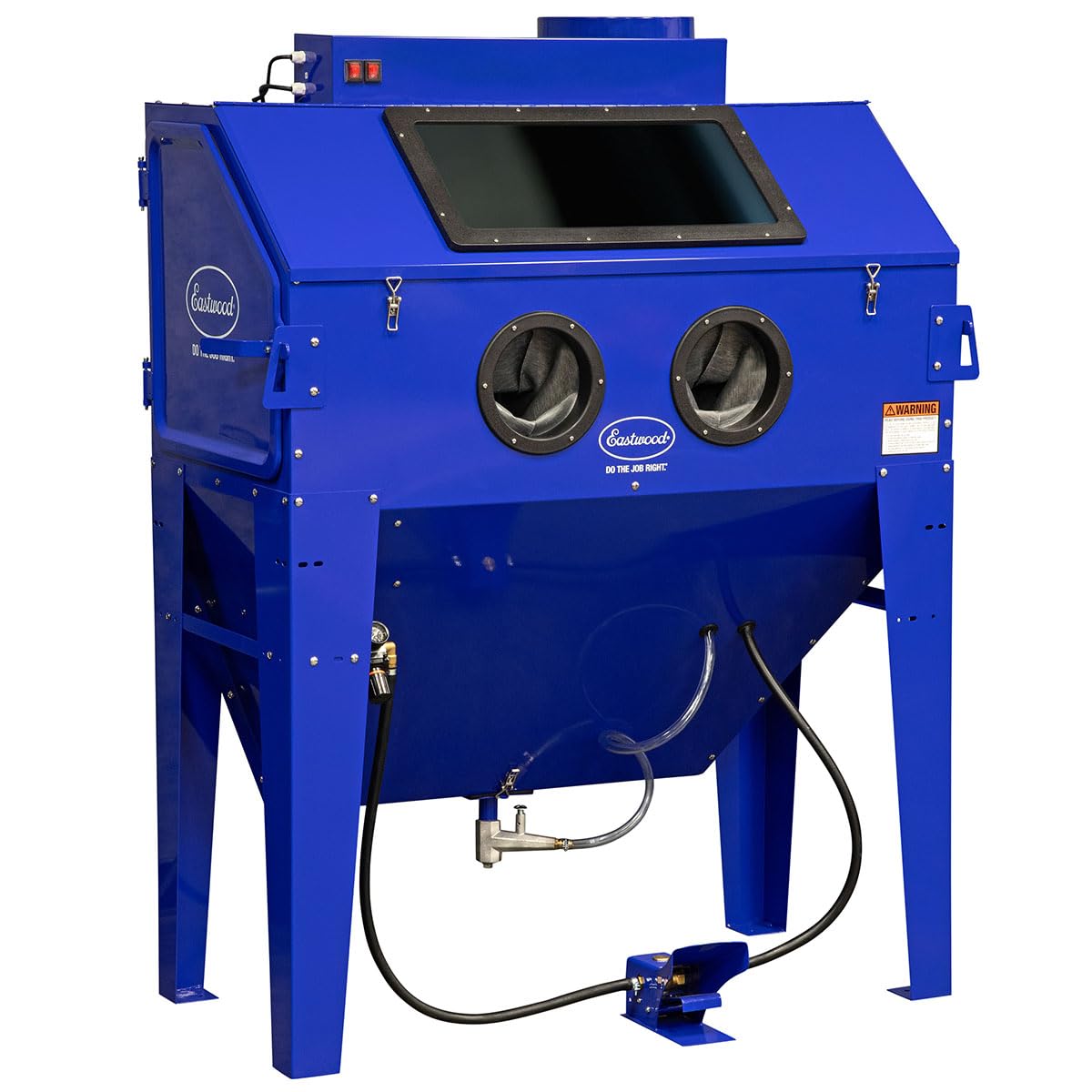
The Eastwood B120 represents the gold standard for serious workshop blasting. Its internal dimensions of 48 inches wide, 24 inches deep, and 24 inches high provide 14.8 cubic feet of usable space — enough to comfortably fit wheels, intake manifolds, even a small engine block. The 16-gauge steel panels and 14-gauge legs resist flexing under the weight of heavy parts up to 220 lbs. A foot pedal frees both hands for precise nozzle control, reducing fatigue during extended blasting sessions. The integrated dust collector moves 80 CFM of air, pulling fine dust through a cyclone separator that reclaims reusable media while exhausting only the finest particles.
Assembly is straightforward with no drilling required — the panels seal tightly without media leaks when assembled according to instructions. The high-intensity LED lighting illuminates the full work area, eliminating shadows that hide missed spots. The included ceramic nozzle set covers 4.5mm through 7mm openings, allowing fine bead work at low pressure and aggressive stripping at high flow. Owners consistently report that the B120 performs on par with commercial cabinets costing twice as much, with the foot pedal being a standout feature that substantially reduces hand fatigue. The top-opening glass lid and side doors provide multiple access points, making it easy to load awkwardly shaped parts without contortion.
The 14-gauge legs require two people for initial attachment, but the rest of the assembly can be handled solo. The factory-installed sealing strips and included sealant mean zero post-assembly leak chasing — a major time saver. At 150 lbs of media capacity, you can load 50-pound bags of glass beads, aluminum oxide, or garnet without constant refilling. The B120 is not for soda blasting (the dust collector bags clog), but it handles all traditional abrasive media with exceptional efficiency. For any shop that regularly restores parts, this cabinet pays for itself in saved media and reduced cleanup time within the first year.
Why it’s great
- Massive 48″ x 24″ x 24″ work area fits large automotive and industrial parts
- Foot pedal operation frees both hands for precise control
- Integrated 80 CFM dust collector reclaims media and keeps workspace clean
Good to know
- Assembly requires two people for leg installation
- Not suitable for soda blasting media
2. Eastwood B100 Large Abrasive Media Blasting Cabinet

The Eastwood B100 offers a slightly more compact footprint than the B120 while still providing substantial internal volume at 45.75 inches wide by 22.75 inches deep and 22.75 inches high. Its defining feature is the clam shell front opening — the entire front face tilts upward, giving you a low lift-over height for loading heavy or bulky parts like brake rotors, suspension components, or transmission casings without having to hoist them over a high threshold. The integrated dust collector and flow-through ventilation maintain visibility even during continuous use with fine media. Heavy-gauge steel construction with a powder-coated finish ensures the cabinet resists rust and corrosion from abrasive wear over years of service.
Owners praise the build quality, noting that the cabinet arrives with extra glass protectors and multiple gun tip sizes. The internal LED lighting is functional but many users add a magnetic LED light bar for extra brightness — a quick modification that dramatically improves shadow coverage. Assembly requires two people for the legs and the rear duct must be partially disassembled to install the vacuum tube, a step that adds about 20 minutes to the build. The cabinet holds 150 lbs of media and up to 220 lbs of parts, matching the B120’s capacity in a slightly tighter width. Medium glass beads work exceptionally well for paint removal on cast iron and steel surfaces, with the integrated dust collector successfully reclaiming most media for reuse.
Shipping damage is the most common complaint — units may arrive with minor dents or scratches that do not affect functionality but are cosmetic disappointments at this premium price point. The internal light is adequate but not overwhelming; upgrading to an external LED strip is a popular first modification. The clamp-style door seals tightly without leaks, a notable improvement over lower-tier cabinets that require aftermarket sealing. For shops that work with large parts but lack the floor space for the B120’s full width, the B100 is a pragmatic compromise that sacrifices only 2.25 inches of width while retaining the same core dust collection and heavy-duty build.
Why it’s great
- Clam shell front opening makes loading heavy parts much easier than traditional doors
- Integrated dust collection and media reclamation system works effectively out of the box
- Heavy-gauge steel with powder coating resists corrosion and wear
Good to know
- Some units arrive with cosmetic dents from shipping
- Internal LED lighting benefits from an additional magnetic light bar
3. Homak 36-3/8-Inch Vertical Abrasive Blast Cabinet

The Homak vertical cabinet occupies a sweet spot for mid-range buyers who want a standalone floor unit without the assembly hassle of larger kits. Standing 52.75 inches tall with a 36.75-inch width, this cabinet features a large one-piece tank-style design that handles bulky items better than multi-panel cabinets of similar volume. The 3.2 mil epoxy-polyester powder coat finish is notably thicker than the paint found on entry-level cabinets, providing better resistance to chipping and corrosion from abrasive media. The removable mesh work surface tray simplifies media changes — just lift out the tray and drain the used abrasive through the integrated drain plug rather than scooping it out by hand.
The impact-protected light with an on/off switch is a practical touch that prevents accidental lamp breakage when loading parts. However, the supplied blast gun is the weakest component — multiple users report replacing it with a Campbell Hausfeld or equivalent within the first few sessions due to inconsistent media flow and premature wear. The cabinet accepts standard aftermarket guns and metering valves without modification, so this is a manageable upgrade rather than a design flaw. The plexiglass lens can arrive scratched due to insufficient packaging, which is frustrating at this price point. Users recommend ordering replacement lens protectors simultaneously to avoid downtime.
Assembly is straightforward with clear instructions, though the front legs may arrive slightly bent from shipping — easily straightened with a mallet. The pre-drilled ports for dust collection and lighting are well-positioned, and the cabinet seals adequately when all joints are sealed with the included silicone. The 120 PSI maximum operating pressure is sufficient for most media types, though heavier aluminum oxide grits benefit from running closer to the upper end of the range. For the price, the Homak delivers a solid foundation that, with a gun upgrade, performs comparably to cabinets costing significantly more.
Why it’s great
- Thick 3.2 mil epoxy-polyester coating resists abrasive wear better than budget paint
- Large one-piece tank design handles oversized parts well
- Impact-protected light with dedicated switch prevents accidental damage
Good to know
- Stock blast gun is weak and should be replaced immediately
- Plexiglass lens may arrive scratched from inadequate packaging
4. VEVOR 90 Gallon Sandblasting Cabinet with Dust Collector
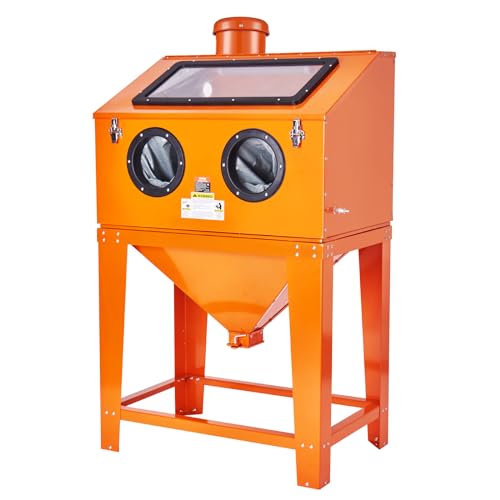
VEVOR’s SBC220BF addresses the most common pain point of entry-level cabinets — inadequate dust management — by bundling a 1.6 HP dust collector and media reclaimer directly with the cabinet. The 90-gallon capacity handles up to 203.4 lbs of abrasive media, and the dust collector’s cyclone design separates reusable media from fine dust, returning usable grit to the hopper while expelling only harmful particulate. Operating at just 5 CFM at 40-120 PSI, this cabinet works with smaller air compressors that would struggle with higher-consumption blasters. The large acrylic window provides excellent visibility, and the four included lens protectors extend window life considerably.
Assembly is the primary challenge here — expect several hours of work, and the instruction manual is notoriously poorly translated from Chinese, with mismatched part numbers and confusing assembly order. Take pre-assembly photos of every panel to track orientation, and plan on applying additional RTV sealant at every seam. The wing nut securing the vacuum filter has a tendency to back off under vibration; replace it with a nylock nut immediately to avoid dumping several pounds of media across your garage floor. The included blasting gun is functional but benefits from an upgraded metering valve for finer media flow control. Two side panels on some units arrived with unbent edges requiring manual straightening.
Despite the assembly headaches, the performance once operational is impressive for the price point. The integrated dust collector dramatically reduces the cloud of fine dust that typically obscures visibility during blasting, and media reclamation works well enough to reduce media consumption by roughly half compared to cabinets without dedicated dust systems. The 1.6 HP motor provides strong suction that keeps the work area clear even with aggressive blasting. For buyers willing to invest the time in proper assembly and sealing, the VEVOR offers integrated dust collection at a fraction of the cost of premium Eastwood units. The 90-gallon size fits wheels, brake calipers, and most engine components without issue.
Why it’s great
- Integrated 1.6 HP dust collector and media reclaimer significantly reduces airborne dust
- 90-gallon capacity with 203.4 lb media holding capacity
- Low 5 CFM air consumption works with smaller compressors
Good to know
- Assembly instructions are poorly translated and require considerable patience
- Wing nut on vacuum filter must be replaced with nylock nut to prevent media dumping
5. Parts-Diyer 90 Gallon Sandblasting Cabinet
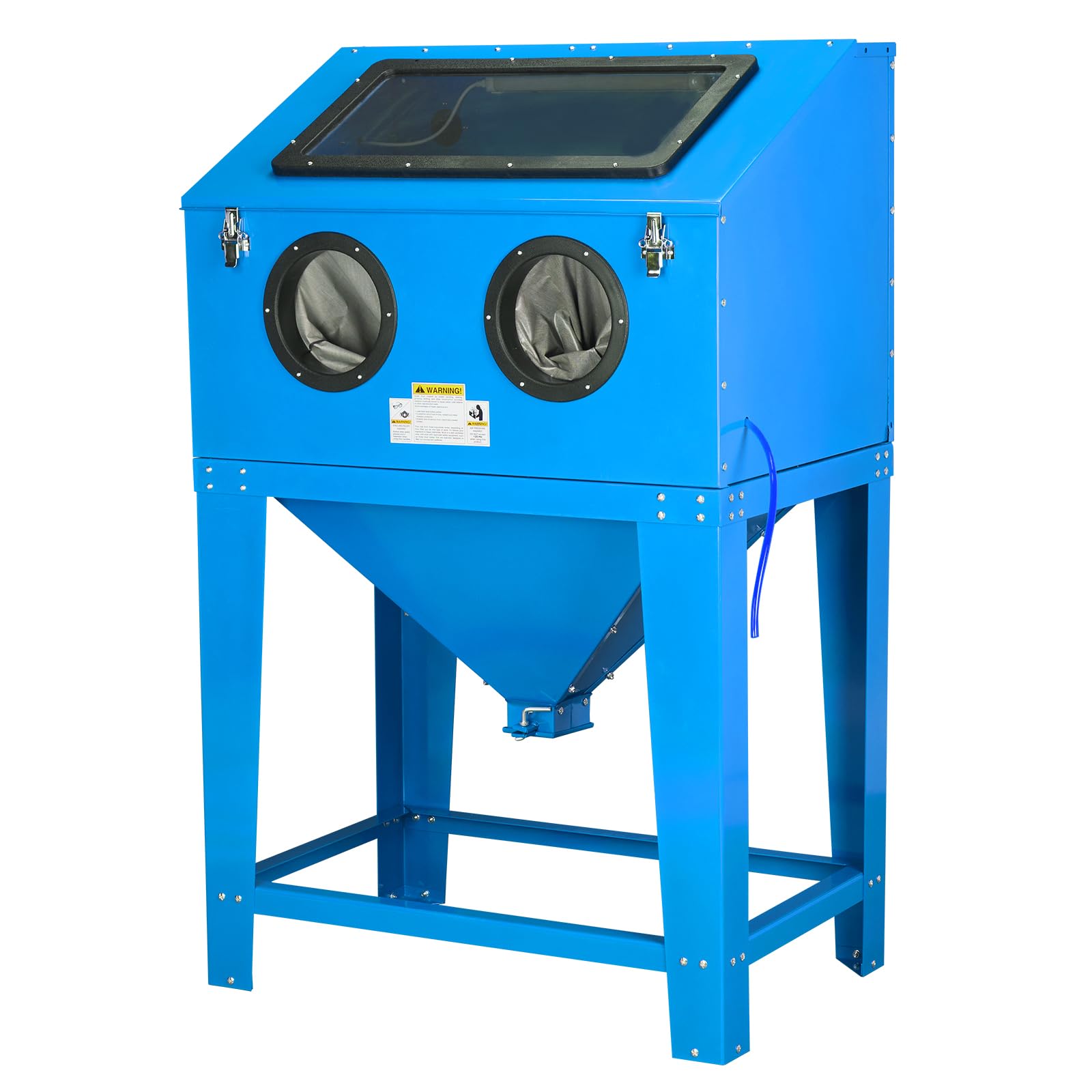
The 90-gallon blue cabinet from Parts-Diyer prioritizes spacious access with a top door measuring 28.7 inches wide by 18.7 inches deep — large enough to drop in a full-size car wheel without angling or twisting. The heavy-duty steel construction uses four legs plus four reinforcing beams for stability, and the powder-coated finish resists the corrosive environment inside any blast cabinet. Operating pressure spans 40-80 PSI at 5 CFM, making it compatible with most residential air compressors. The included blasting gun comes with four ceramic nozzles in 4.5mm, 5mm, 6mm, and 7mm sizes, giving you immediate flexibility for different media types and surface conditions.
The large acrylic window provides an expansive field of view, and the five included protective films extend the window’s life considerably before replacement is needed. The LED lighting is functional but positioned such that shadows can form on the bottom of larger parts — adding a magnetic LED strip on the top interior surface resolves this for about . Assembly is time-consuming and requires considerable patience with the manual, which has the same translation issues common to this price tier. The critical step is installing the seal between the upper and lower box sections before tightening any panel screws — skipping this requires complete disassembly later. The included sealant is insufficient for all seams; purchase an additional tube of RTV silicone during assembly planning.
Owners report that the cabinet holds up well under regular use, with the oversized rubber gloves providing good dexterity for detailed nozzle work. The side access door simplifies loading and unloading heavier parts, and the drain plug makes media changes relatively painless. A dedicated dust collector is strongly recommended; using a shop vac directly connected to the port creates negative pressure that pulls media through the cyclone too aggressively, wasting abrasive. Pairing this cabinet with the VEVOR dust collector or an aftermarket cyclone separator transforms it into a highly capable system. For its internal volume, this cabinet offers exceptional value when you factor in the time and sealant investment needed to make it air-tight.
Why it’s great
- 28.7-inch top access door is one of the largest in its class, accommodating wheels and large parts
- Four ceramic nozzles from 4.5mm to 7mm cover all common media types
- Heavy-duty steel construction with reinforcing beams provides solid stability
Good to know
- Requires extensive sealing with additional RTV silicone beyond what is included
- Internal LED light placement creates shadows on larger parts
6. DEWALT Abrasive BlastVac DXCM009-0369

The DEWALT BlastVac fundamentally rethinks the blast cabinet concept — rather than a fixed enclosure, it uses a powerful turbine vacuum system to recover and reuse media from any surface in real time. This makes it ideal for blasting parts that are too large or awkwardly shaped to fit inside a traditional cabinet, such as car frames, trailers, or heavy equipment components. The vacuum assist creates negative pressure at the nozzle, pulling spent media and dust directly into the recovery canister while the operator blasts. Operating at 5.5 to 6.5 SCFM at 115 PSI, it requires a compressor with at least 7-8 CFM of continuous output. The easy-lift top provides quick access for loading abrasive and cleaning the filter without tools.
The media recovery system is the standout feature — it successfully reclaims 80-90% of abrasive media like aluminum oxide, dramatically reducing material costs compared to open-blast setups where media is used once and lost. However, the vacuum filter requires cleaning approximately every hour of operation to maintain suction, and the recirculation cone is a consumable part that wears out after heavy use. The heavy-duty steel body and ETL certification speak to build quality, but the unit’s portability means it lacks the contained work environment of a traditional cabinet — you cannot blast indoors without covering nearby surfaces, and media dust still escapes the vacuum cone to some degree. The included gun, hose, and nozzles are good-quality DEWALT components that integrate seamlessly.
Opinions divide sharply on value. Proponents highlight the media recycling as a major cost saver and praise the relatively quick setup and cleanup cycle compared to stationary cabinets. Critics argue it is essentially a high-end shop vac with a blaster nozzle, pointing to the price tag and the need to frequently clean the filter during prolonged sessions. For DIY restorers who blast infrequently and value the ability to work on parts that would never fit a cabinet, the DEWALT provides unique versatility. Professional shops with high-volume blasting needs should still invest in a fixed cabinet, but the BlastVac excels as a complement for large or irregular workpieces. The 1-year limited warranty provides standard coverage, and replacement cones and filters are readily available.
Why it’s great
- Turbine vacuum recovery reclaims 80-90% of abrasive media, cutting material costs
- Portable design allows blasting of parts too large for any stationary cabinet
- Quick setup and no permanent workshop footprint required
Good to know
- Vacuum filter needs cleaning roughly every hour of continuous use
- Not a fully enclosed system — dust still escapes into the surrounding area
7. KEYSCO ALC 40002 Portable Pressure Blaster

The KEYSCO ALC 40002 is a pressure-style abrasive blaster designed for high-flow, high-output jobs where a stationary cabinet cannot accommodate the part size or volume of work. Holding approximately 90 lbs of abrasive with a 30-45 minute continuous runtime, it is ideal for stripping large metal surfaces, concrete forms, or structural steel. The welded steel frame and pull-up closure for loading abrasive are built for job site abuse, and the integrated handle allows easy maneuvering on wheels. The pressure blast design forces media through the nozzle at higher velocity than siphon-feed systems, making it significantly faster for removing heavy rust, thick paint, or mill scale. A 3/32-inch nozzle at 80 PSI consumes just 7 CFM, making it feasible with a 5 HP 2-stage compressor.
Made in the USA construction is a key selling point — the KEYSCO is welded and assembled domestically, which shows in the quality of the welds and the thickness of the steel used for the pressure vessel. However, the paint finish is thin and can flake off after the first use, which is disappointing for a premium-priced tool. The unit ships with a dent in the stand frequently enough to be a pattern, though the tank itself is typically undamaged. The included nozzle set and hose are functional but benefit from an upgrade to a longer hose for large-scale blasting. The suction tube design works well with standard silica sand, glass beads, and aluminum oxide, though the media inlet screen should be used to prevent clogs from oversized particles.
For buyers needing a pure outside blasting solution for large-scale restoration or construction projects, the KEYSCO is unmatched in its class. The 90-lb capacity means fewer refills during a day’s work, and the pressure blast action cuts through heavy coatings in a fraction of the time a siphon cabinet would require. However, this is not a finely controllable tool — it is a brute-force media cannon. Visibility is limited to what the operator can see through a blast hood, and media loss is 100% (no reclamation). The KEYSCO is best suited for professionals who already own a stationary cabinet for precision work and need a portable high-flow unit for large outdoor blasting where media cost is secondary to speed.
Why it’s great
- Pressure blast design delivers significantly higher velocity and faster stripping than siphon cabinets
- 90 lb media capacity with 30-45 minute continuous runtime reduces refill frequency
- Made in USA with welded steel construction for long-term durability
Good to know
- Paint finish is thin and flakes off after first use
- No media reclamation — 100% media loss per pass
8. VEVOR SBC200 60 Gallon Sandblasting Cabinet

VEVOR’s SBC200 offers the lowest entry point for a dedicated stationary cabinet, with a 60-gallon capacity and operation as low as 5 CFM at 40-120 PSI. This makes it viable for small DIY compressors that cannot handle high-consumption blasters. The cold-rolled steel body with powder-coated surface provides adequate corrosion resistance for a garage environment. The large acrylic window and included LED lighting aim to provide clear visibility, though the light is notably dim in practice — most users find it sufficient only in a dark shop and add an external LED strip. The kit includes a blasting gun and four ceramic nozzles, covering 4.5mm through 7mm for versatility across media types from fine glass beads to coarse aluminum oxide.
Assembly is relatively straightforward compared to the 90-gallon models, with all necessary hardware included. The pre-installed sealing strip and included sealant do a decent job of containing media, though some owners report small leaks at the bottom seam after extended use — a bead of automotive RTV around the base resolves this permanently. The dust collector port is designed to accept a standard shop vac, but without a cyclone separator, the shop vac clogs quickly with fine dust. Adding a dust cyclone separator is the single most impactful upgrade for this cabinet. The gloves are functional for short sessions but can develop pinhole leaks after several months; having a spare set on hand is wise.
Customer feedback consistently highlights the need for minor modifications to reach full satisfaction. The included air filter is basic and benefits from replacement with a moisture-separating regulator. The rubber gloves are adequate but not premium — upgrading to thicker gloves reduces hand fatigue during long blasting sessions. The viewing window has removable plastic film to protect the acrylic from frosting, which extends the window’s life significantly. For the price, the SBC200 provides a functional work envelope for small parts like brackets, fasteners, and small engine covers. It will frustrate anyone expecting a turnkey solution, but DIYers comfortable with minor fabrication and sealing work can get respectable performance from this budget-friendly unit.
Why it’s great
- Very low 5 CFM air consumption works with almost any home compressor
- Includes four ceramic nozzles for media flexibility
- Budget price makes it accessible for hobbyists and first-time buyers
Good to know
- Internal LED light is dim and benefits from aftermarket upgrade
- Requires dust cyclone separator for effective dust management
9. Parts-Diyer 60 Gallon Air Sandblasting Cabinet
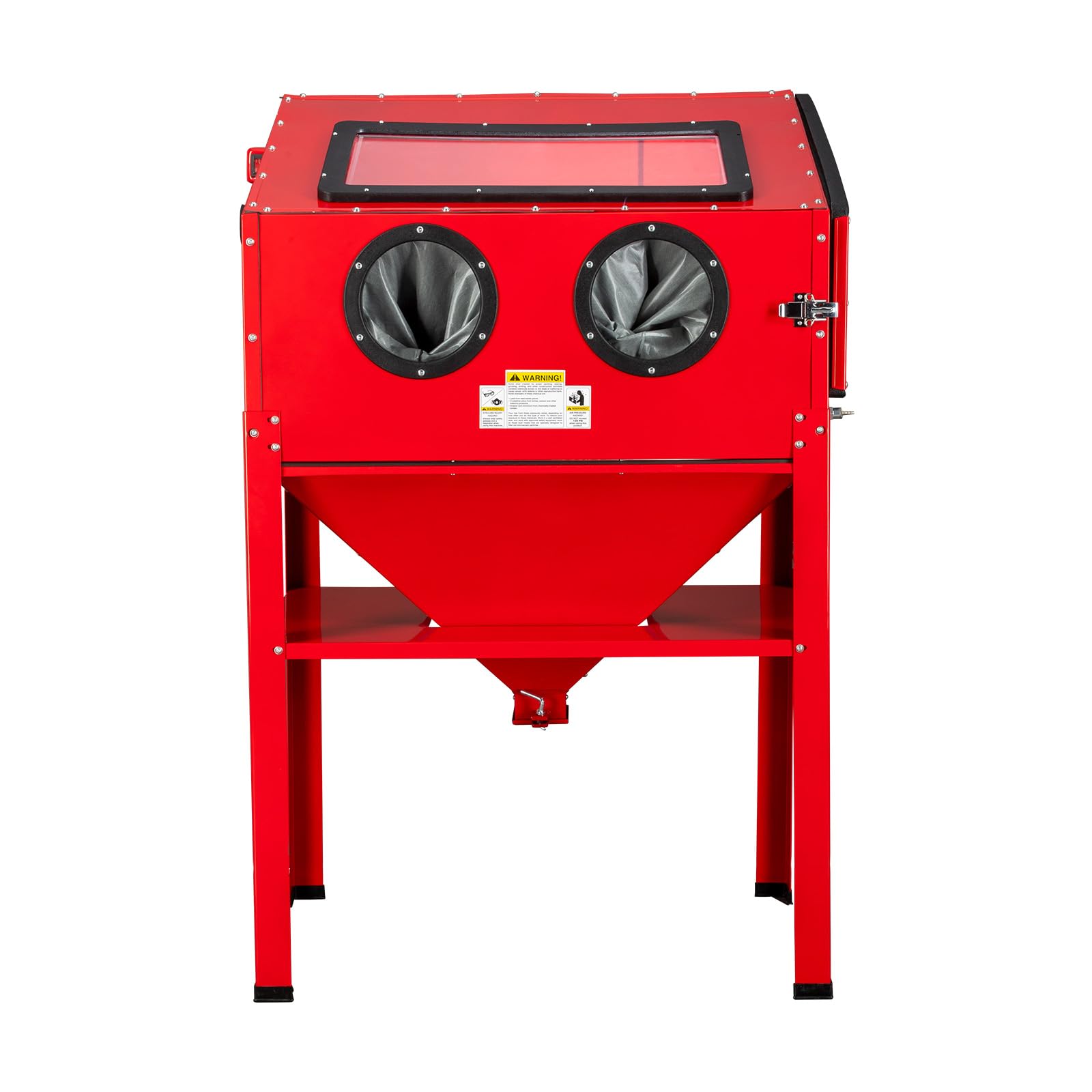
The Parts-Diyer 60-gallon cabinet represents the most affordable fully enclosed option on this list, offering a work area of 33 inches by 21.65 inches by 14.56 inches. The sturdy steel construction with powder-coated finish provides basic corrosion resistance, and the support frame with four legs offers decent stability once assembled. The viewing window measures 21.25 inches by 9.84 inches with a built-in LED tube for illumination, though the light’s positioning is suboptimal — it creates a glare zone on the glass that makes seeing small details difficult. The mask/visor is usable but many owners peel off the protective film immediately, which accelerates glass frosting.
Assembly is the biggest hurdle. The instructions are minimal and the included hardware requires patience — reviewers note you need “three hands to install some screws.” The included sealant is insufficient to prevent dust leakage at the seams; plan on purchasing a tube of premium RTV silicone and applying it generously to every joint before final tightening. The bottom tape seam is a known leak point where media escapes during operation without additional sealing. The suction tube is also undersized, restricting the flow of heavier media like aluminum oxide. Many users modify the pickup tube to a larger diameter or add an aftermarket metering valve for better media flow control.
Despite these shortcomings, the cabinet functions well for light to moderate use with glass beads or fine sand. The side access door is a convenient feature for loading parts without removing the top, and the drain plug simplifies media changes. The included blasting gun is adequate for occasional use but will be the first component to fail under frequent operation. The oversized rubber gloves provide good mobility for detailed nozzle work. This cabinet is best suited for the budget-constrained DIYer who enjoys tinkering and modification. If you are willing to invest a few hours in proper assembly, sealing, and a gun upgrade, it can become a solid performer for small-part restoration at a fraction of the cost of entry-level premium cabinets.
Why it’s great
- Lowest entry price for a fully enclosed stationary blast cabinet
- Side access door and drain plug simplify media changes and part loading
- Pre-installed LED tube provides basic interior illumination
Good to know
- Assembly is tedious with poor instructions and multiple known leak points
- Undersized suction tube restricts flow with heavier media types
FAQ
Can the Eastwood B120 handle soda blasting media?
How much additional sealant should I buy for a budget 60-gallon cabinet?
What is the minimum compressor size for a 60-gallon blast cabinet?
How do I prevent the viewing window from frosting over during use?
Final Thoughts: The Verdict
For most users, the best abrasive blast cabinet winner is the Eastwood B120 Kit because its massive 48-inch internal width, foot pedal control, and integrated 80 CFM dust collector deliver professional-grade performance with zero modifications required. If you need integrated dust collection at a more accessible price point, grab the VEVOR 90 Gallon with Dust Collector. And for portable work on parts too large for any cabinet, nothing beats the DEWALT BlastVac.