
If you’ve ever swallowed a standard ferrous sulfate tablet and spent the next few hours regretting it with cramps or constipation, you already know the core problem of iron supplementation: the mineral is essential, but the wrong form of it is punishing. Every milligram of elemental iron taken does nothing if the intestine refuses to let it through. True absorption depends not on how much iron is in the capsule but on which molecular form that iron takes and which co-factors are present alongside it.
I’m Min — the co-founder and writer behind Gadgets Feed. I pour over clinical trial data, patient-reported outcomes, and third-party lab verifications to isolate which formulations actually move serum ferritin and hemoglobin markers instead of just making label claims.
The iron market overflows with pills that promise restoration but deliver stomach upset instead. After weeks of cross-referencing lab reports, chelation types, and real user bloodwork updates, I’ve assembled a decisive buyer’s guide to the best absorbed iron supplement for anyone who wants efficacy without the side effects.
How To Choose The Best Absorbed Iron Supplement
The defining variable between an iron pill that works and one that just causes inflammation is the chelation form — the chemical cage that holds the iron atom. Two molecules of iron with the same milligram label can behave completely differently inside the human gut.
Iron Form: Bisglycinate vs. Sulfate vs. Heme Iron
Ferrous sulfate is the historical standard found in cheap grocery-store bottles, but it ionizes aggressively in the stomach, creating oxidative stress that triggers nausea and constipation. Iron bisglycinate wraps the mineral in two glycine amino acid molecules, allowing it to pass through intestinal transporters without creating that irritation. Heme iron polypeptide comes from animal hemoglobin and uses a separate absorption pathway that bypasses many of the transport inhibitors (tannins, phytates, calcium) that block non-heme iron. For maximum absorption with zero digestive sacrifice, bisglycinate or heme formulations dominate the premium tier.
Cofactor Stack: Vitamin C, Folate, and B12
Absorption is a multi-step chain. Vitamin C reduces ferric iron to ferrous iron inside the gut and forms a soluble chelate that the enterocyte can grasp. Folate (as methylfolate) and B12 (as methylcobalamin) are essential for the actual hemoglobin synthesis and red blood cell maturation once the iron enters the bloodstream. A formula that delivers iron alone without these co-factors forces your body to scavenge them from tissue stores, limiting the net impact on serum ferritin.
Dosage Rationale and Bioavailability Density
Higher milligrams are not automatically better. The human intestine caps non-heme iron absorption at roughly 10–20% of the dose, and excess unabsorbed iron creates the same gut inflammation that causes people to quit supplementation. Optimal strategies rely on moderate doses (18–26 mg elemental) paired with absorption enhancers so that nearly every milligram enters circulation, not the toilet. Heme iron, with its separate transporter, can achieve 25–35% absorption at lower elemental loads (11 mg), making it the densest option per milligram swallowed.
Quick Comparison
On smaller screens, swipe sideways to see the full table.
| Model | Category | Best For | Key Spec | Amazon |
|---|---|---|---|---|
| Pink Stork Iron for Women | Premium | Life-stage specific women’s support | 18 mg bisglycinate + 50 mg acerola C | Amazon |
| Solgar Gentle Iron 25 mg | Premium | High dose with zero GI distress | 180 capsules, 25 mg bisglycinate | Amazon |
| Hemeboost Heme Iron 11.6 mg | Premium | Highest bioavailability heme format | 232 mg heme iron polypeptide | Amazon |
| Metagenics Hemagenics | Mid-Range | Doctor-recommended clinical formula | Amino acid chelate + B6, B12, folate | Amazon |
| MegaFood Blood Builder | Mid-Range | Clinically tested for no side effects | 26 mg bisglycinate + C + B12 + folate | Amazon |
| MaryRuth’s Iron Gummies | Mid-Range | Sugar-free chewable alternative | Gummy format + vitamin C | Amazon |
| KAPPA NUTRITION Iron 9-in-1 | Budget | Multi-ingredient value formula | 26 mg + beetroot + MCT + folate | Amazon |
In‑Depth Reviews
1. Pink Stork Iron for Women
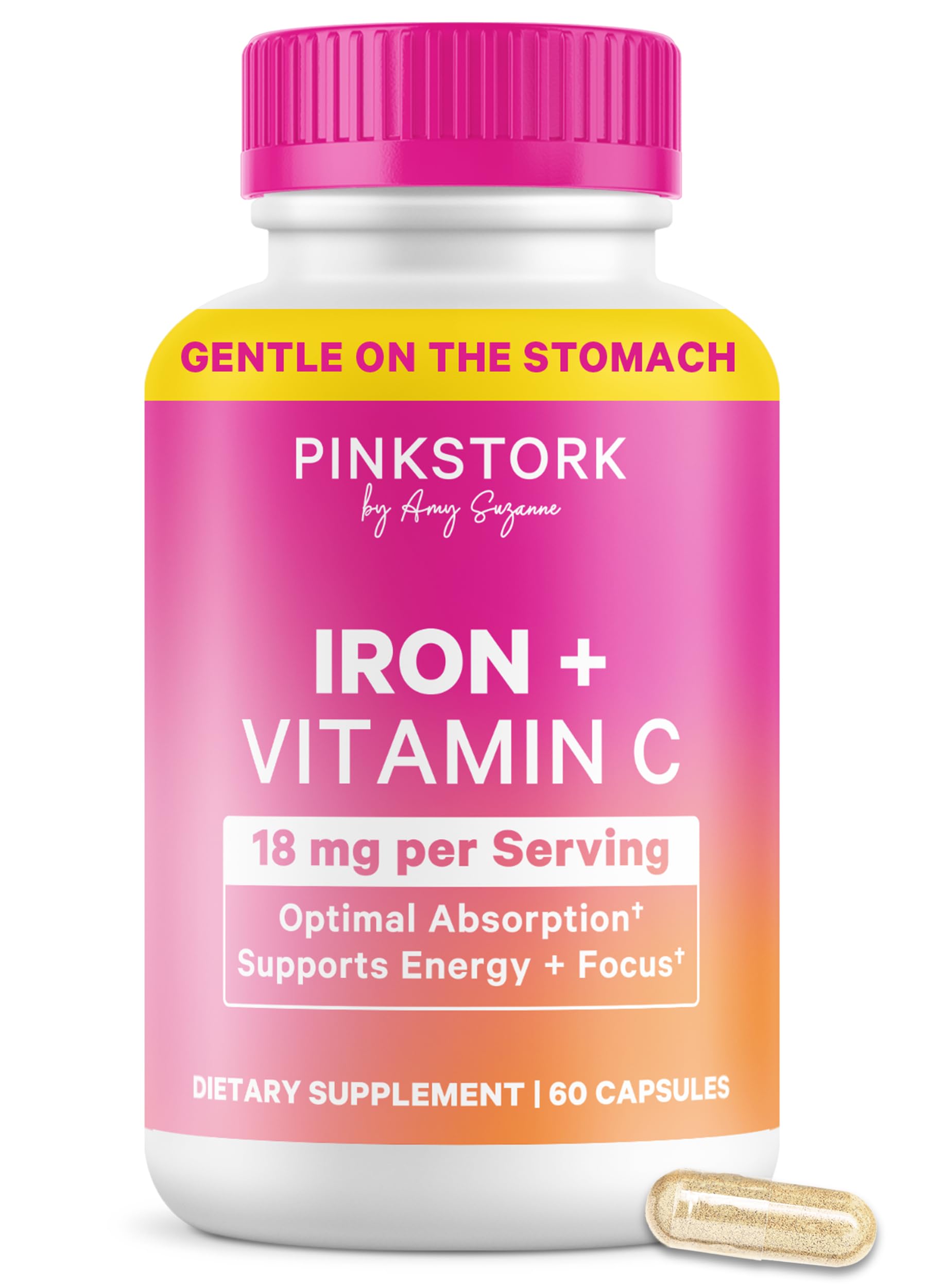
Pink Stork delivers exactly 18 mg of chelated iron bisglycinate paired with a whole-food vitamin C source from acerola fruit extract — a combination that directly addresses the two bottlenecks in iron transport. The bisglycinate form uses the dipeptide transporter pathway to avoid the oxidative gut irritation that ferrous sulfate triggers, while the 50 mg of natural vitamin C reduces ferric iron into the absorbable ferrous state within the intestinal lumen. This is the precise chemical environment your body needs to move iron across the enterocyte membrane efficiently.
The formula is purpose-built for women through every physiological stage: menstrual cycles, pregnancy, postpartum recovery, and perimenopause. Each capsule provides a moderate elemental dose that matches the daily RDA for menstruating women without flooding the gut with excess unabsorbable iron that causes inflammation. Real user bloodwork shared in reviews shows ferritin moving from 10 to 11.7 g/dL in one month when taking two capsules daily — a tangible lab-confirmed shift rather than a subjective energy claim.
Third-party tested for purity and manufactured in a cGMP facility in the USA, the capsules are vegan, non-GMO, and free from gluten, dairy, soy, and nuts. The bottle provides a full 60-day supply at a standard dosage of one capsule daily, making it both a high-efficacy and cost-efficient long-term protocol for anyone whose iron levels need restoration without digestive rebellion.
Why it’s great
- Whole-food vitamin C from acerola enhances absorption without synthetic ascorbic acid
- Lab-confirmed ferritin increases from real users in as little as one month
- Gentle enough for pregnancy and breastfeeding without constipation
Good to know
- Elemental dose of 18 mg may be lower than some users with severe deficiency want per capsule
- Bottle provides a two-month supply, so another container must be purchased for long-term use
2. Solgar Gentle Iron 25 mg Vegetable Capsules 180 Count 2 Pack
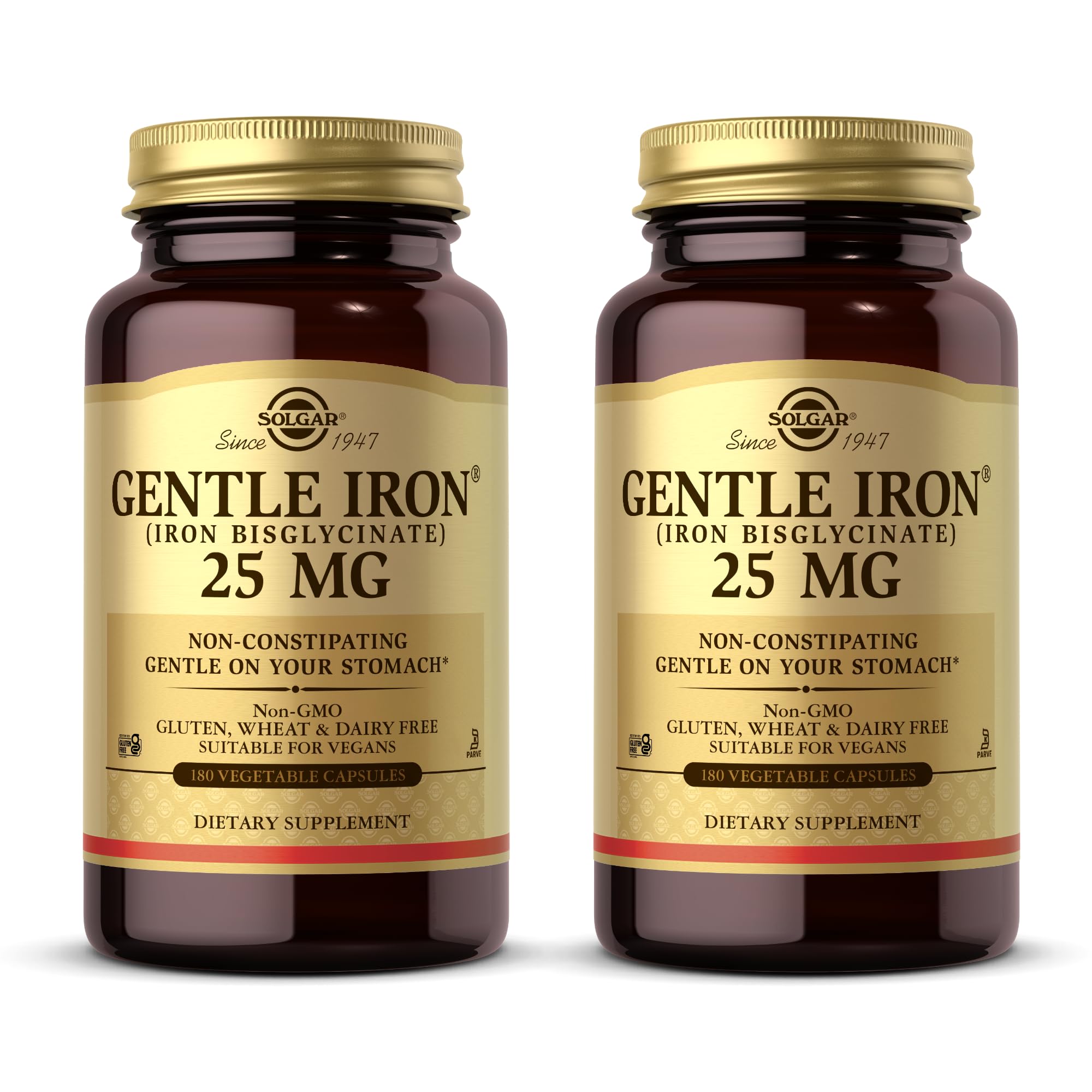
Solgar’s Gentle Iron is widely cited by regular blood donors who report passing the hematocrit screening consistently after switching to this bisglycinate formula. The 25 mg elemental iron per capsule sits at the higher end of the moderate dose range, making it suitable for individuals with known ferritin depletion who need a stronger daily push without stepping into the constipating territory of ferrous sulfate. The 180-capsule count in each bottle — and the two-bottle pack — provides a six-month supply at a single purchase, lowering the per-capsule cost significantly over time.
The iron bisglycinate in this formula is specifically engineered to bypass the gastrointestinal irritation pathway. User reports spanning several years of continuous use confirm zero stomach cramping, no black stool distress, and no nausea. One recurring observation from long-term users is that when supply lapses occurred, their measured ferritin levels dropped noticeably, confirming that the product was indeed the source of maintained iron stores rather than placebo effect.
Solgar maintains non-GMO certification and gluten-free status, and the capsules are suitable for vegan diets. For anyone who has already confirmed their iron deficiency and wants a reliable, high-cadence, long-term replenishment protocol with minimal reordering friction, this two-pack format is the most volume-efficient option on the list.
Why it’s great
- Six-month supply from a single two-pack purchase eliminates frequent reordering
- 25 mg elemental dose provides a strong daily push for confirmed deficiency
- Decades of reliable user data showing maintained ferritin without GI side effects
Good to know
- Does not include vitamin C or B vitamins in the same capsule; may need separate cofactors
- Large two-bottle package may be intimidating for first-time iron supplementers
3. Hemeboost Heme Iron 11.6 mg

Hemeboost occupies a unique position because it uses heme iron polypeptide — an animal-derived iron form that enters the bloodstream through a separate transporter (HCP1) that non-heme iron cannot use. This alternative pathway means heme iron is not blocked by the common inhibitors that cripple non-heme absorption: calcium from dairy, tannins from tea and coffee, phytates from grains, and polyphenols from vegetables. Users report being able to take it alongside meals without the typical absorption interference nightmare that non-heme iron users must carefully schedule around.
The elemental iron load per tablet is only 11.6 mg, but the heme transport system achieves absorption rates of 25–35% compared to the 10–20% ceiling of bisglycinate or sulfate. Lab results from users confirm the effective equivalence: one reviewer’s ferritin and hemoglobin markers rose noticeably after switching from non-heme pills to this heme format despite the lower milligram count. Another user, post-transfusion, reported sustained energy improvement after approximately two weeks of taking three tablets daily.
Hemeboost is marketed as safe for pregnancy and breastfeeding, and its allergen-free certification (lactose-free, GMP, Halal) makes it one of the most cross-contamination-conscious options available. The only meaningful drawback is the premium cost per tablet — the most expensive per-dose option here — which reflects the higher manufacturing complexity of extracting and stabilizing heme iron from animal hemoglobin. For individuals whose serum markers remain stubbornly low despite high-dose non-heme supplementation, the heme pathway is the definitive next step.
Why it’s great
- Separate absorption pathway immune to calcium, tannin, and phytate interference
- Achieves 25–35% absorption rate versus the 10–20% ceiling of non-heme forms
- Allergen-free certification makes it safe for highly sensitive individuals
Good to know
- Highest per-capsule cost on the list, making long-term use expensive
- Only 11.6 mg elemental iron per tablet; users with severe deficiency need multiple tablets daily
4. Metagenics Hemagenics Iron Supplement
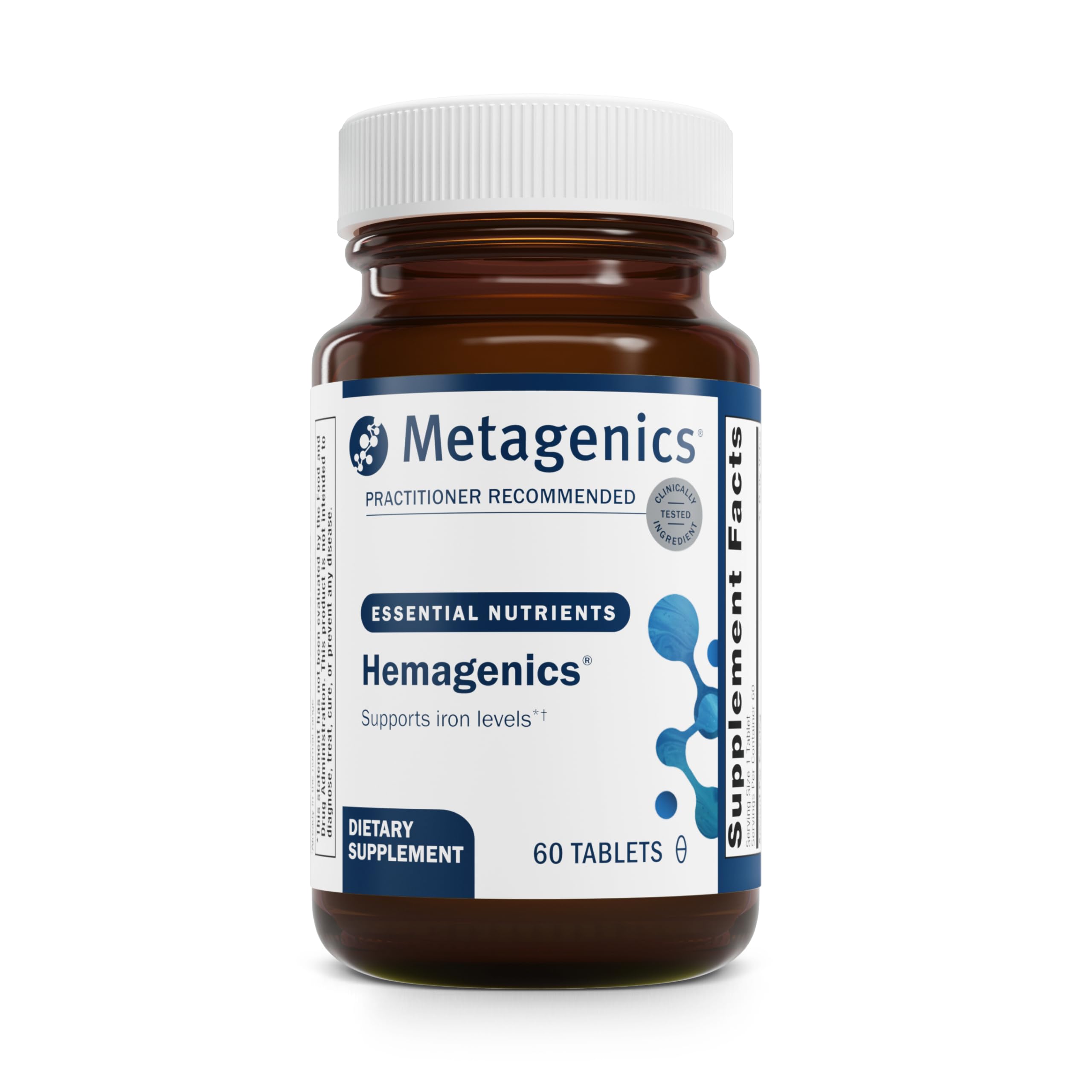
Metagenics is the #1 doctor-recommended professional supplement brand, and Hemagenics reflects that clinical pedigree in its formulation structure. The iron is delivered as a mineral amino acid chelate — a similar principle to bisglycinate but using a broader amino acid matrix to reduce gastrointestinal irritation. What sets this formula apart from the simpler iron-only options is the complete B-vitamin inclusion: B6 (as pyridoxal-5-phosphate), B12 (as methylcobalamin), and folate (as L-5-methyltetrahydrofolate). These three cofactors are not optional extras; they are rate-limiting substrates in the hemoglobin synthesis and red blood cell maturation pathways.
User feedback consistently highlights the single-tablet serving size as a major compliance advantage. Many iron supplements require four to six capsules per day to reach a therapeutic dose, which reduces the likelihood of consistent daily intake. Hemagenics packs its full formula into one tablet taken once or twice daily, making it impossible to forget a midday dose. The tablet is described as easy to swallow with no perceptible smell or metallic aftertaste.
The formula is specifically labeled as non-constipating, and reviewers who regularly donate blood report taking a one-month course post-donation to restore iron stores quickly without any digestive disruption. The rigorous third-party testing and non-GMO, gluten-free, and vegetarian certification provide an additional layer of confidence for users whose systems react poorly to fillers and flow agents common in budget supplements. For anyone who prefers a professional-grade, cofactor-complete tablet that mirrors what a functional medicine practitioner might prescribe, Hemagenics is the pharmaceutical-standard choice.
Why it’s great
- Single-tablet serving eliminates the multi-capsule hassle common with iron supplements
- Full B-vitamin stack (B6, B12, methylfolate) supports actual red blood cell formation
- Doctor-recommended brand with rigorous third-party purity testing
Good to know
- Price per tablet is higher than consumer-brand equivalents
- Does not specify the exact elemental iron milligram count on the front label
5. MegaFood Blood Builder Iron Supplement
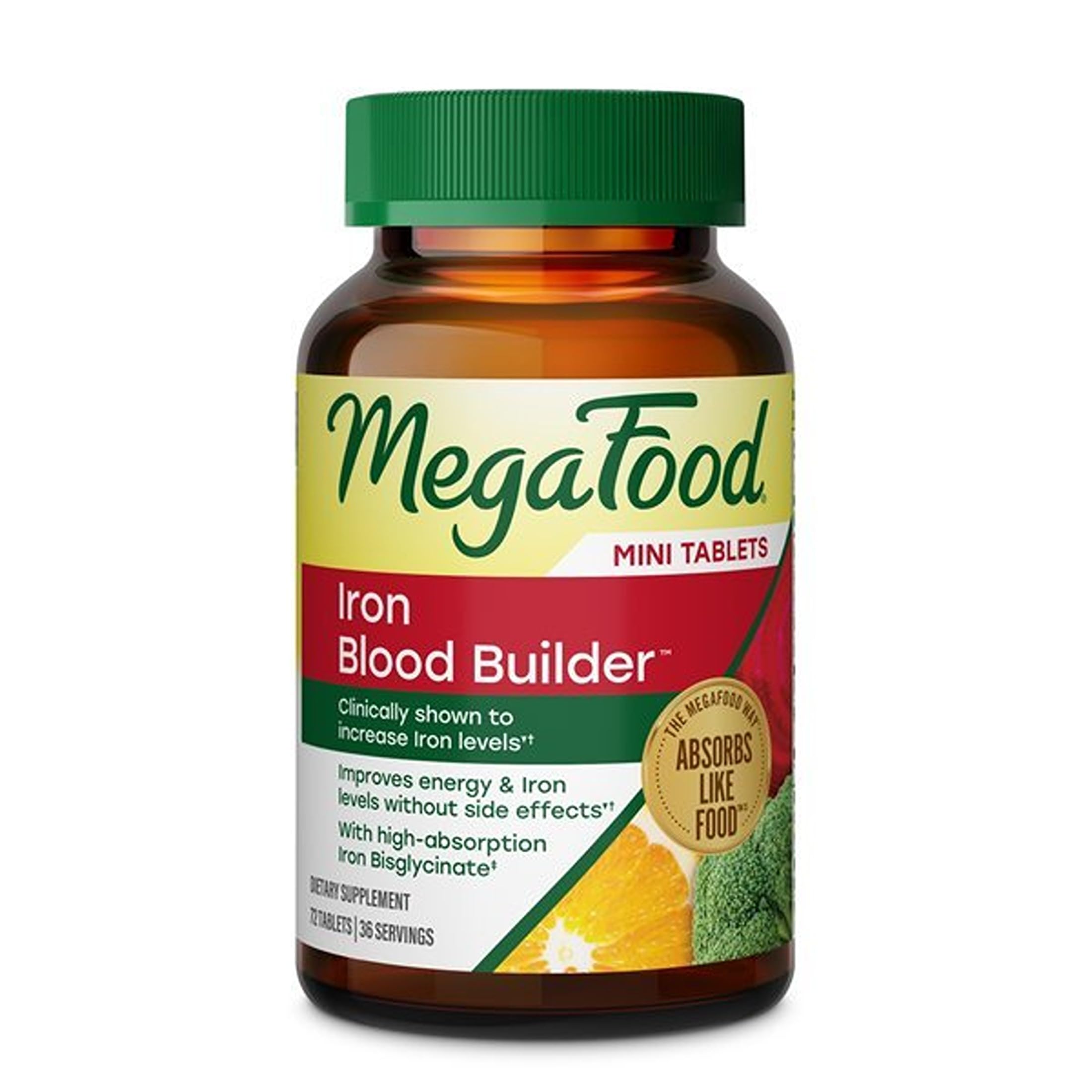
MegaFood’s Blood Builder is one of the rare iron supplements that can point to an actual eight-week clinical trial showing increased iron levels with zero reports of nausea or constipation. The active ingredient is iron bisglycinate at 26 mg elemental per serving (two mini tablets), paired with food-based vitamin C and whole-food B12 and folate from organic ingredients. The “Blood Builder” name is earned: the formulation targets the complete erythropoiesis pathway, not just iron repletion in isolation.
The mini-tablet format is a thoughtful design choice for people with pill aversion. Each tablet is significantly smaller than standard caplet sizes, but the trade-off is that users must take two tablets to reach the full 26 mg dose — a detail that has confused some buyers expecting a single-tablet serving. The tablets are described as easy on the stomach even when taken on an empty stomach, which is unusual for any iron product, and the clinical trial data supports this claim rather than leaving it as marketing language.
MegaFood tests for 150 chemical substances and holds Non-GMO Project verification and vegan certification. The formula is free from gluten, dairy, soy, eggs, tree nuts, peanuts, and sesame, making it among the most allergen-conscious options available. For the user who wants the reassurance of published clinical evidence rather than anecdotal reviews alone, Blood Builder provides the most transparent efficacy documentation in this comparison.
Why it’s great
- Published 8-week clinical trial confirms zero GI side effects with significant iron level increase
- Mini-tablet design allows for empty-stomach dosing without irritation
- Tested for 150 chemical contaminants for safety confidence
Good to know
- Serving requires two tablets, not one, which can cause dosage confusion
- Some users may prefer a larger single-capsule dose instead of splitting
6. MaryRuth’s Iron Gummies with Vitamin C
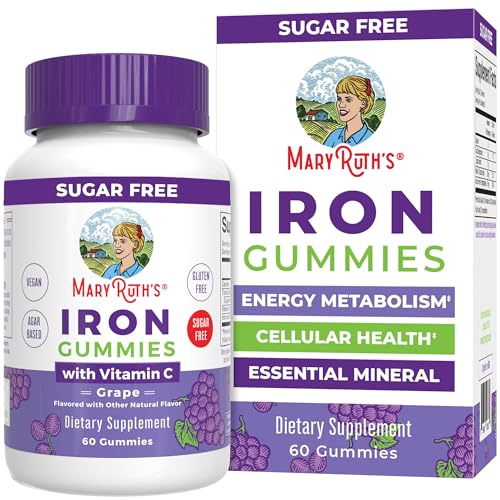
MaryRuth’s Iron Gummies occupy a unique slot in this guide because they solve the compliance problem for people who cannot or will not swallow capsules. Each gummy provides iron plus vitamin C in a sugar-free, grape-flavored format that is Clean Label Project Certified and B Corp Certified. For menstruating individuals who already take several other pills daily, a pleasant-tasting gummy can be the difference between consistent intake and skipped doses.
The texture divides opinion sharply. Multiple reviewers describe the gummy as having a pumice-like, grainy mouthfeel due to the iron particles, and the grape flavor carries an unavoidable metallic undercurrent. However, the same users who acknowledge the unpleasant texture also report concrete lab results: one reviewer saw ferritin climb 26 points and iron rise 18 points over eight months of daily use. The format may sacrifice palatability, but the absorption data from real-world bloodwork is undeniable.
The sugar-free formulation uses allulose and monk fruit, making it suitable for individuals monitoring sugar intake or following ketogenic protocols. The bottle contains 60 gummies, providing a two-month supply at the standard dose. For users who travel frequently or need a portable iron source that does not require water, the gummy format removes the need to carry a water bottle for pill swallowing. If your primary barrier to iron supplementation is pill fatigue or gag reflex, this is the most accessible gateway option available.
Why it’s great
- Gummy format eliminates pill-swallowing issues for texture-sensitive users
- Real-world lab data shows significant ferritin increases over several months of use
- Sugar-free formulation with clean-label certification for diet-conscious buyers
Good to know
- Grainy texture and metallic aftertaste are reported by multiple users as unpleasant
- Each gummy provides a relatively low iron dose; users may need multiple gummies daily
7. KAPPA NUTRITION Iron 26mg 9-in-1 Advanced Complex
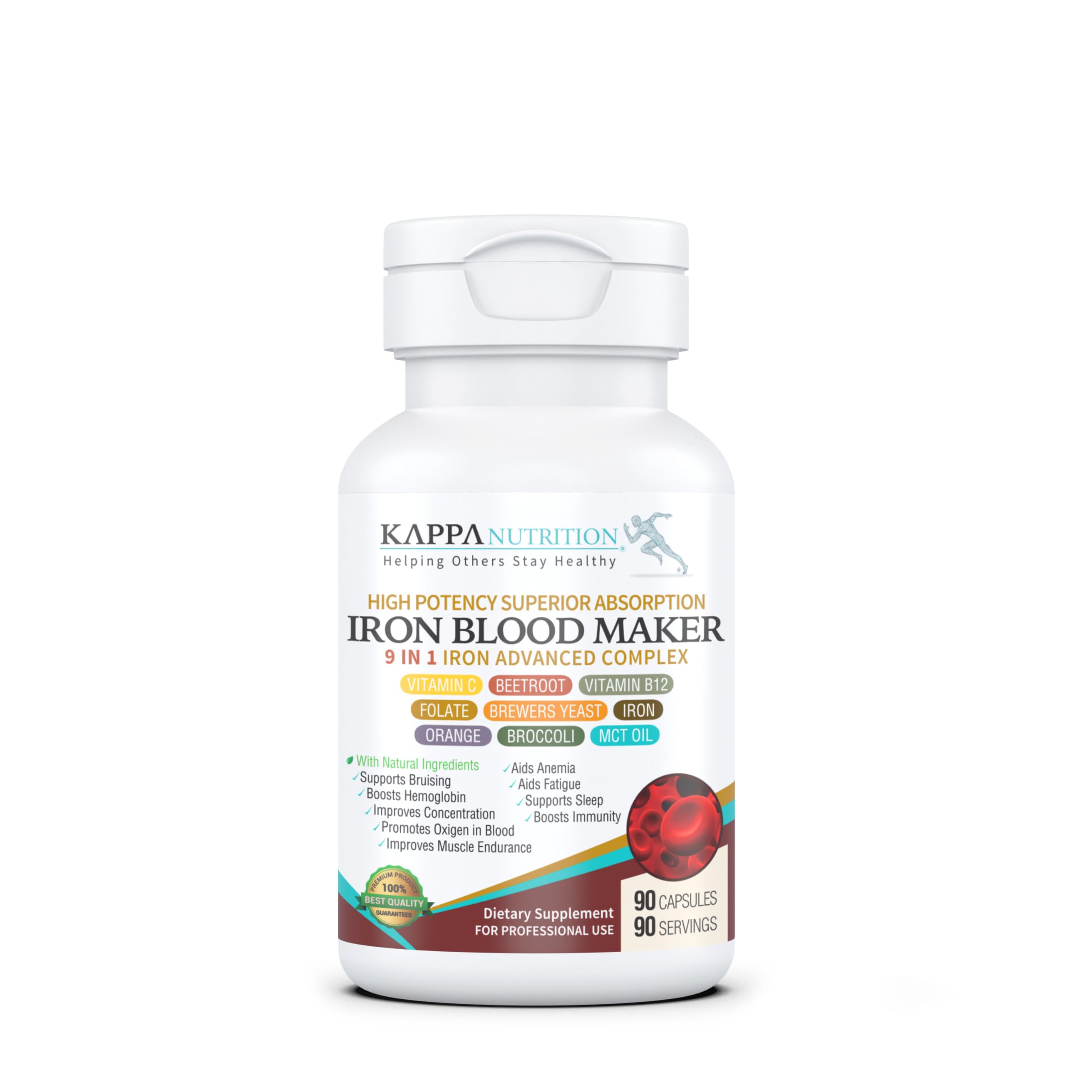
KAPPA NUTRITION takes a kitchen-sink approach that contrasts sharply with the minimalist formulas above: 26 mg iron is joined by vitamin C, orange citrus bioflavonoids, folate, B12, beetroot extract, brewer’s yeast, broccoli concentrate, and MCT oil. The strategy is to provide every cofactor and plant compound that might support hemoglobin synthesis, blood health, and oxygen transport within a single capsule. For someone who wants to avoid managing four separate supplement bottles, this all-in-one format reduces complexity to a single daily capsule.
The inclusion of 667 mcg DFE of folate (as methylfolate) and B12 makes this formula capable of supporting red blood cell maturation without requiring additional B-vitamin purchases. The beetroot and broccoli concentrates provide dietary nitrates and sulforaphane precursors that may offer complementary vascular support, though these are more supportive than essential for iron absorption per se. The MCT oil is a distinctive addition rarely seen in iron formulas, likely included to support fat-soluble nutrient transport and mitochondrial energy production.
User reports confirm effectiveness in moving lab markers: one reviewer documented ferritin rising from 9 to 27, iron from 23 to 38, and saturation from 6% to 12% over two months on a single capsule daily, with no smell, no taste, and no constipation. The same user noted that monthly mouth ulcers stopped after starting the supplement — a anecdotal benefit that aligns with iron’s role in mucosal health. For the budget-conscious buyer who wants maximum ingredient density per capsule, this 9-in-1 complex delivers the widest spectrum of blood-support nutrients at the lowest per-bottle cost on the list.
Why it’s great
- Single capsule provides nine active ingredients including beetroot, folate, B12, and MCT oil
- Real-user bloodwork shows significant ferritin and iron saturation improvement in two months
- Lowest per-bottle cost, making it accessible for long-term daily use
Good to know
- The iron form is not specified as bisglycinate or chelate on the product label
- Multiple plant extracts increase the theoretical risk of sensitivity for some users
FAQ
Does iron bisglycinate really prevent constipation better than sulfate?
Can heme iron be taken with coffee or calcium without blocking absorption?
How long should I take an iron supplement before expecting lab improvements?
Final Thoughts: The Verdict
For most users, the best absorbed iron supplement winner is the Pink Stork Iron for Women because its 18 mg of chelated bisglycinate paired with whole-food acerola vitamin C provides the ideal chemical environment for efficient iron transport without the digestive penalties of higher-dose or cheaper-form options. If you want the proven clinical trial data and mini-tablet convenience of empty-stomach dosing, grab the MegaFood Blood Builder. And for a long-term, volume-efficient six-month supply that works for regular blood donors and chronic deficiency management, nothing beats the Solgar Gentle Iron 25 mg two-pack.