
That one room in your house — the bedroom above the garage, the office at the end of the duct run, the sun-baked nursery — always feels like a losing battle against the thermostat. The central HVAC system blows, but the air trickles out of that register like it gave up halfway through the crawlspace. An AC booster fan is the dedicated, low-voltage turbine that sits directly in or along that duct, forcing conditioned air into the spaces the main system neglects. It is the difference between setting the whole house to 68°F to cool one room and letting the booster handle the isolated weak spot.
I’m Min — the co-founder and writer behind Gadgets Feed. This guide is the product of dozens of hours reading real owner testimonials, cross-referencing duct opening measurements, and comparing static pressure ratings and noise levels across the register booster and inline duct fan categories to separate the smart buys from the noise makers.
Whether you are battling a scorching second floor or a frigid basement, choosing the right best ac booster fan means matching the fan type, CFM rating, and thermostat control to your specific duct size and the distance of the problem run.
How To Choose The Best AC Booster Fan
Selecting an AC booster fan starts with diagnosing the problem. A single weak register in a short duct run needs a register booster fan that sits flush over the vent. A large area or a long, flex-duct run to a distant room often requires an inline duct fan spliced directly into the ductwork. Matching the fan type to the duct layout is the first step toward a solution that actually works.
Register Booster vs. Inline Duct Fan
Register booster fans replace the existing vent cover. They are plug-and-play, require no duct modification, and are ideal for a single weak register in a floor or wall. Inline duct fans, by contrast, are circular units installed within the duct itself, often in the crawlspace or attic. They handle much higher static pressure, move significantly more CFM, and can boost airflow for an entire zone or a long, restricted duct branch. If you need to push air through 40 feet of flex duct, a register booster alone will not overcome that resistance — you need an inline fan.
CFM and Static Pressure
CFM (Cubic Feet per Minute) is the volume of air the fan moves. A register booster for a single 4×10-inch vent typically delivers 120 to 200 CFM, which is sufficient for standard floor registers. An inline duct fan can deliver 280 to 675 CFM, compensating for long or restricted duct runs. Static pressure — the resistance the fan works against — is equally important. A fan with high static pressure capability is essential for pushing air through bends and long flex ducts.
Thermostat and Auto On/Off Features
A thermostat-controlled booster fan uses a temperature sensor at the register to detect when the HVAC system is actively heating or cooling. It turns on automatically, then shuts off when the cycle ends. This prevents the fan from running perpetually, saving energy and avoiding overshoot. Models with smart chips or memory functions can recall your last speed and temperature threshold, making seasonal transitions effortless — set it once for cooling and flip to the heating setting when winter arrives.
Quick Comparison
On smaller screens, swipe sideways to see the full table.
| Model | Category | Best For | Key Spec | Amazon |
|---|---|---|---|---|
| MATULSA 4×10 | Register Booster | Budget-friendly temperature control | 10 speeds, remote, smart thermostat | Amazon |
| VELLEE 4×12 | Register Booster | Whisper-quiet mid-range option | 120 CFM, 10 speeds, as low as 18 dBA | Amazon |
| Voltset 4-Inch | Inline Duct Fan | Inline 4-inch duct ventilation | 280 CFM, 2200 RPM, 30 dB | Amazon |
| VIVOHOME 6×10 | Register Booster | Oscillating louver direction control | 120 CFM, 10 speeds, auto oscillating louvers | Amazon |
| Suncourt EZ8 HC600 | Register Booster | Auto-on sensing for floor registers | 200 CFM, 8 speeds, auto on/off | Amazon |
| VEVOR 6-Inch | Inline Duct Fan | Zone duct boosting with temp/humidity control | 402 CFM, EC motor, temp/humidity controller | Amazon |
| Tjernlund M-8 | Inline Duct Fan | High CFM for long, large-diameter duct runs | 675 CFM, 8-inch, metal construction | Amazon |
In‑Depth Reviews
1. Suncourt Equalizer EZ8 Floor Register Booster Fan — HC600
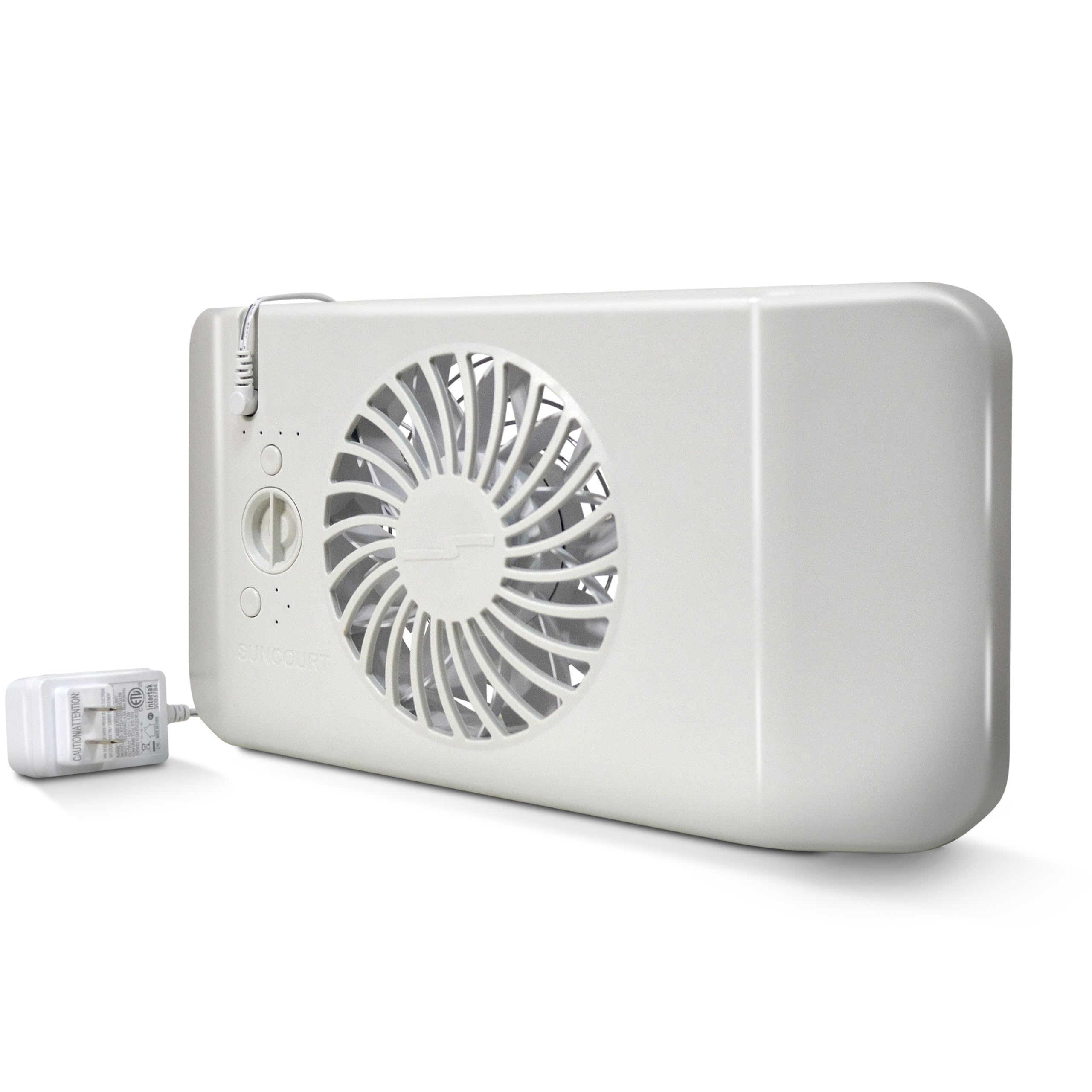
The Suncourt EZ8 HC600 is engineered by a company that has specialized in register boosters since 1988, and the build quality reflects that legacy. It boosts airflow by up to 300% — 200 CFM at max speed — which is substantial for a register-mounted unit. The 8-speed push-button control lets you dial in exactly the noise-to-airflow ratio you can tolerate, and the low-profile plastic housing fits flush over standard floor vents, including common sizes up to 6×12 inches.
The standout feature is the patented auto on/off sensing technology. The fan detects when the HVAC system is actively running — by sensing airflow or temperature change — and powers on automatically without any seasonal toggle between heating and cooling modes. Real-world owners in 1950s houses with floor vents report that three units reduced a 6°F temperature difference between floors, and the auto mode activates reliably within 15 to 25 seconds of the furnace or AC turning on.
At higher speeds, the fan is audible as white noise but is consistently described as less disruptive than a portable AC unit or a space heater. The included 6-foot power cord and flame-retardant materials add peace of mind. The 3-year warranty is the longest in the register booster category, signaling confidence in the thermally protected motor.
Why it’s great
- Patented auto-sensing technology works seamlessly across heating and cooling seasons
- 200 CFM max airflow is among the highest for flush-fit register boosters
- Backed by a 3-year warranty and decades of specialized brand reputation
- Fits multiple standard duct sizes up to 6×12 inches without tools
Good to know
- Audible at highest speeds — better suited for living spaces than silent bedrooms at level 8
- Auto mode resets to default after a power outage; requires push-button re-selection
2. VIVOHOME Register Booster Fan — 6×10 with Adjustable Louver
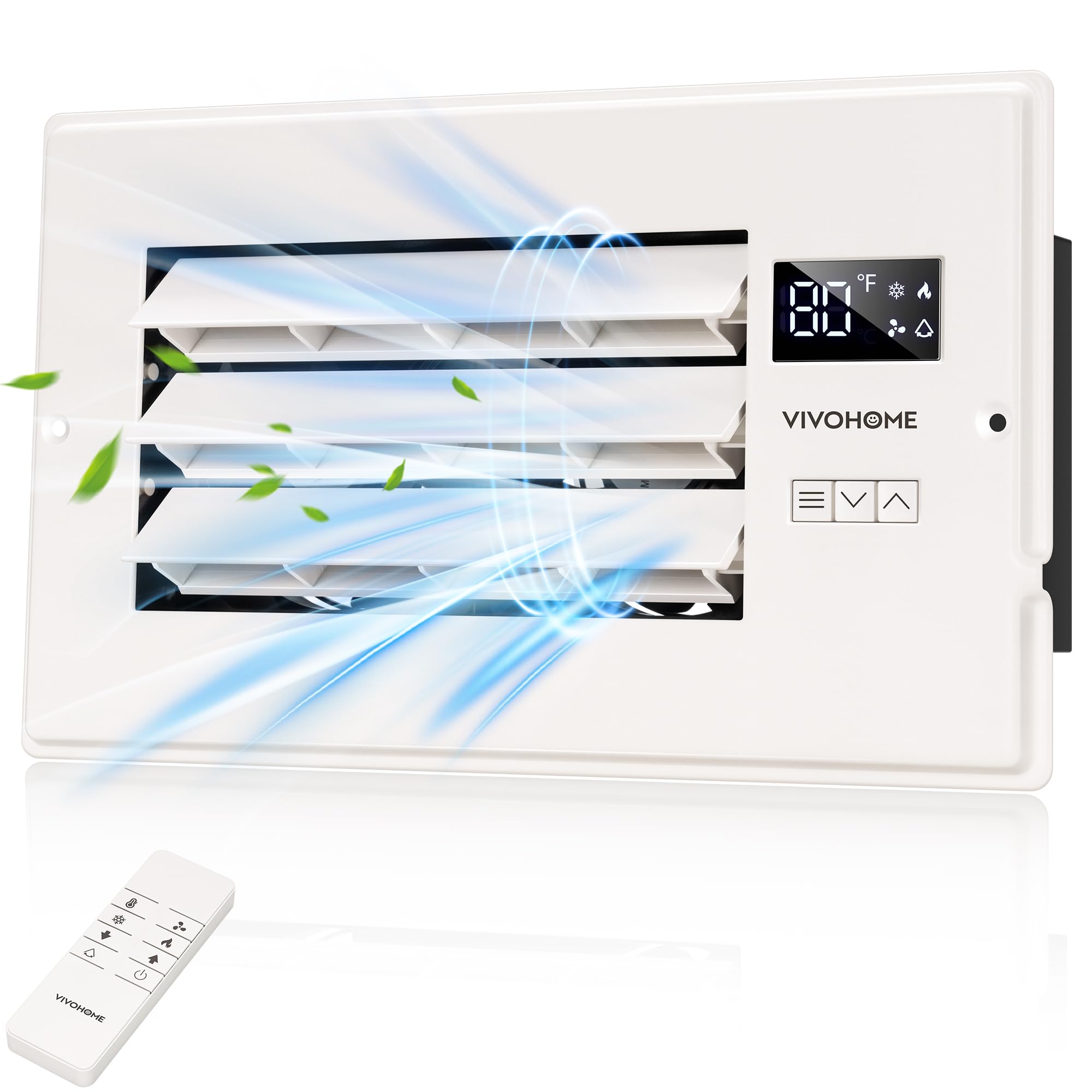
The VIVOHOME 6×10 booster distinguishes itself with automatic oscillating louvers that rotate between 60° and 120°, directing conditioned air exactly where it is needed. This is a significant upgrade over fixed-direction vents, especially in rooms where the register is located near a wall or under furniture. The louvers can be set to sweep continuously or lock into a fixed angle, giving you precise control over air distribution.
Under the hood, the energy-efficient EC motor delivers up to 120 CFM across 10 speed settings, and the integrated thermostat sensor with memory function recalls your last temperature threshold, fan speed, and louver angle after a restart. Owners report a noticeable improvement in second-floor bedrooms, with some eliminating the need for a portable AC unit entirely. The premium aluminum alloy and ABS build feels substantial compared to fully plastic competitors.
The fan operates below 18 dBA at lower speeds — genuinely silent — while higher speeds produce a gentle white noise. One critical installation note: the louver system adds a depth of 2.3 inches, so you must measure the depth of your vent opening to ensure clearance. This fan fits duct openings between 9.9 and 10.4 inches in length and 4.1 to 7.2 inches in width.
Why it’s great
- Oscillating louvers actively direct air, solving dead-zone issues around furniture
- Memory function retains your settings through power cycles
- EC motor is energy-efficient and nearly silent at speeds 1–5
- Compatible with floor, wall, and ceiling vents for flexible placement
Good to know
- Deeper than standard register covers; verify vent depth is at least 2.4 inches
- Louvers are delicate; avoid forcing them manually
3. VEVOR Inline Duct Fan — 6-Inch with Temperature Humidity Controller

The VEVOR 6-inch inline duct fan is designed for serious zone boosting where a register fan cannot overcome the static pressure of long, flex-duct runs. The EC motor delivers 402 CFM while consuming up to 30% less energy than a standard AC motor, and the included temperature and humidity controller allows the fan to automatically adjust its speed based on environmental conditions. This is a set-it-and-forget-it solution for a grow tent, basement, or a distant attic room.
The LCD controller displays real-time temperature and humidity, and provides 10 variable speed settings. Owners using it for attic ventilation and long duct runs report that at low speeds it is nearly silent — drawing only about 6 watts — while high speeds move air aggressively. The package includes stainless steel clamps, anti-vibration rubber mats, and straps for either hanging or wall-mounting the unit.
Real-world measurements show that at full speed, this fan moves approximately 1600 ft/min through 50 feet of duct with three elbows — a demanding scenario that would choke a standard register booster. The noise level is rated at 32 dBA, which is excellent for an inline fan of this capacity. Some owners of the 8-inch version found it louder than expected, but the 6-inch model consistently earns praise for its quiet operation and reliable performance over continuous months of use.
Why it’s great
- 402 CFM with EC motor efficiency — moves massive air for lengthy duct runs
- Integrated temperature and humidity controller enables automatic speed adjustment
- Low-speed operation is nearly inaudible and draws minimal power
- Complete mounting kit included for flexible installation options
Good to know
- Intended for inline duct installation, not as a drop-in register replacement
- High speed is audible; best installed in a crawlspace or attic for noise isolation
4. VELLEE Quiet Register Booster Fan — 4×12
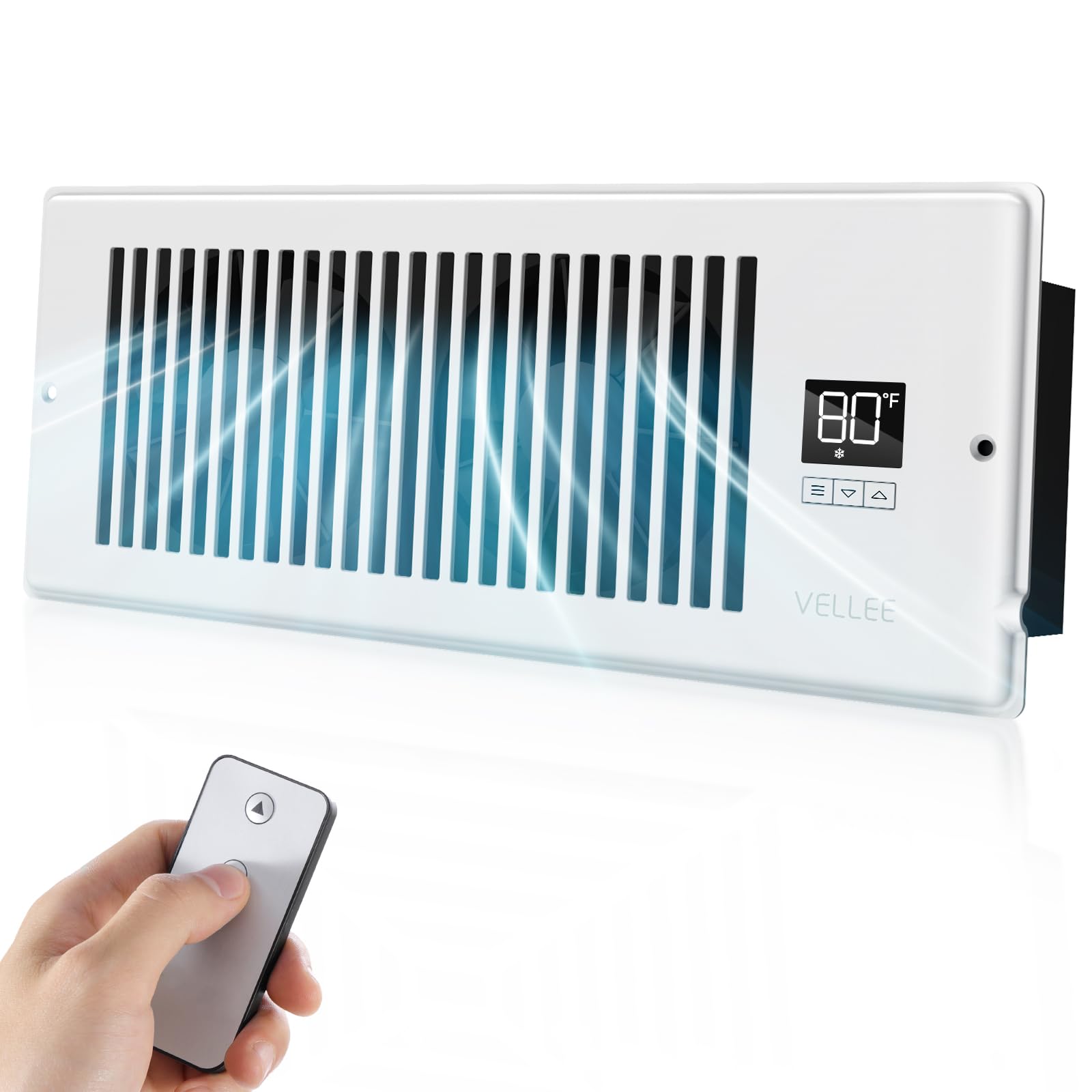
The VELLEE 4×12 register booster is the quietest option in the mid-range tier, with the high-static-pressure PWM motor rated as low as 18 dBA at its lowest speed. The 10-speed control and smart thermostat chip allow automatic start and stop based on the detected register temperature, and the minimalist remote control avoids the confusion of multi-button panel operations. Owners who have tried other brands consistently report that the VELLEE is far superior in terms of build and noise control.
Installation is straightforward — the fan fits the duct opening, not the vent cover. The critical measurement is the duct opening cutout: for the 4×12 model, the neck insertion depth is 1.96 inches with dimensions of 9.72 by 3.93 inches. The faceplate measures 13.77 by 5.51 inches, which covers the opening completely. The 22-year-experienced team behind VELLEE refined the setup process based on feedback from 1,000 initial users, making it one of the easier units to install without professional help.
Customer reviews from homes in hot climates — Arizona, Georgia — confirm that the VELLEE transformed upstairs kids’ rooms from uncomfortably hot to consistently cool, reducing strain on aging AC units. The transparent product description explicitly notes that if ducts are not properly sealed or insulated, the fan’s effectiveness will be limited — honest guidance that helps buyers set realistic expectations.
Why it’s great
- Exceptionally quiet operation at low speeds — ideal for bedrooms and nurseries
- Smart temperature sensor with automatic on/off based on duct temperature
- Easy installation with refined setup instructions for a hassle-free experience
- Excellent customer service with size replacement support
Good to know
- Requires precise measurement of the duct opening — not the vent cover
- Some owners find the fan louder at speeds above 6; best kept at mid-range settings
5. MATULSA Register Booster Fan — 4×10

The MATULSA 4×10 register booster proves that effective temperature control does not require a premium budget. This unit features 10 adjustable speed settings, a remote control, and a smart thermostat that detects the register temperature to automatically start and stop in both cooling and heating modes. The triangular hollowed-out safety surface ensures small fingers cannot reach the blades, a thoughtful design detail for floor vents in homes with toddlers.
The low-profile design fits standard 4×10-inch vents and installs in minutes with the included plug-and-play power adapter. Real-world owners in sun-exposed Georgia homes reported a temperature drop from the low 80s to 71°F after 24 hours of operation, with the fan on its highest setting pulling air effectively from distant basement vents. The dual control — built-in button plus remote — makes speed changes convenient from across the room.
Noise is the primary trade-off at this entry-level price point. Owners note that speeds 6 through 10 are audible, though tolerable as white noise, and that the fan is noticeably louder than premium competitors at equivalent speeds. One owner reported a motor failure after five months of continuous use, which is a risk at this price tier. However, the vast majority of owner reviews describe the MATULSA as an effective, cost-efficient solution for improving comfort in the farthest room from the HVAC unit.
Why it’s great
- Smart thermostat with cold and hot trigger settings for year-round use
- 10-speed control with both a built-in button and a convenient remote
- Kid-safe triangular hollowed-out surface design for floor vents
- Remarkable temperature improvement for the investment level
Good to know
- Noticeably loud at speeds above 6; best for living areas rather than silent bedrooms
- Reported durability issues in a small subset of units after several months
6. Voltset 4 Inch Duct Fan — Inline Ventilation Exhaust
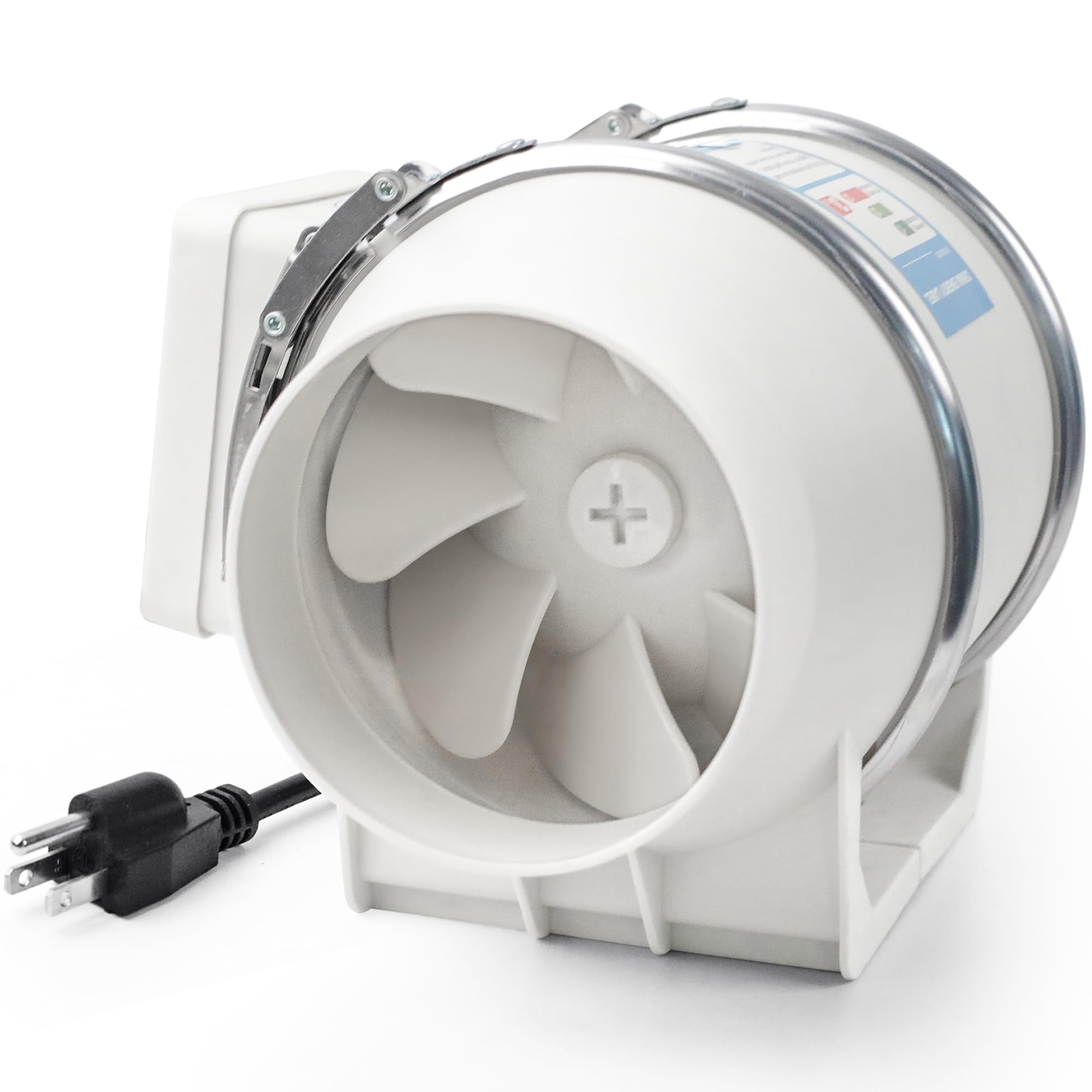
The Voltset 4-inch inline duct fan delivers 280 CFM at 2200 RPM, making it a solid mid-range choice for boosting airflow through 4-inch ductwork in basements, small grow tents, or workshops. The copper core motor provides superior heat dissipation compared to standard aluminum windings, contributing to the fan’s rated 10,000+ hour service life. The touchpad control offers two operating speeds — low and high — for simple airflow management.
Noise is rated at 30 dB, which is competitive for an inline fan at this CFM level. Owners using it for 3D printer enclosure venting found it effective at removing fumes without being disruptive during long print sessions. The quick-release clips and universal mounting brackets make tool-free installation in standard 4-inch ducting straightforward. The compact dimensions — 7 by 9 by 6 inches — allow it to fit into tight crawlspace or ceiling cavities.
One minor design issue reported by owners is a slight air leak from the outer cone openings where the housing meets the duct, which can reduce effective CFM slightly. Additionally, the two-speed control (high/low via touchpad) lacks the variable speed granularity of PWM-controlled competitors. However, for simple ventilation applications — bathroom exhaust assist, small room air circulation, or boosting a short duct run — the Voltset offers excellent value and reliable performance.
Why it’s great
- 280 CFM at a competitive noise level for 4-inch inline duct applications
- Copper core motor with 10,000+ hour lifespan for long-term reliability
- Quick-release clips enable tool-free installation in standard ductwork
- Compact size fits in tight spaces like crawlspaces and ceiling cavities
Good to know
- Only two speed settings (high/low); no variable speed granularity
- Minor air leakage reported at the housing cone seam
7. Tjernlund M-8 In-Line Duct Booster — 8-Inch Metal
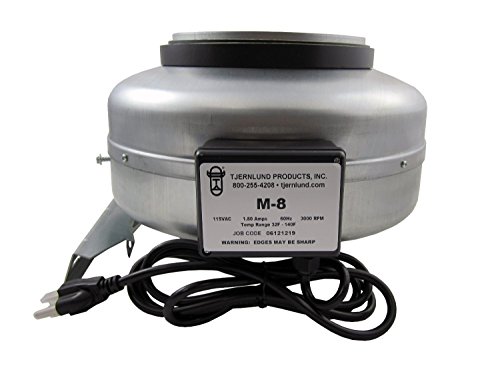
The Tjernlund M-8 is the most powerful fan on this list, pumping up to 675 CFM through 8-inch ductwork. This is a centrifugal fan designed for heavy-duty applications — boosting airflow through 50 to 100 feet of duct, ventilating entire basements, or overcoming the static pressure of multiple elbows and long flex runs. The all-metal housing and balanced turbine produce virtually no mechanical vibration, and the unit can be mounted directly in the duct line without isolation concerns.
Owners who upgraded from standard 240 CFM inline fans to the M-8 report that it pushes 5 to 8 times the air through the same duct run, despite the rated CFM being only 2.2 times higher — a testament to its superior static pressure capability. The fan can handle continuous air temperatures up to 130°F, making it suitable for both heating and cooling applications. Professional installers often wire the M-8 to the HVAC system’s auxiliary output so it activates on a call for heat or cool.
The noise level is the primary consideration. The M-8 is loud when run at full speed in an open space, but owners found that installing it in a crawlspace or adding an 8-inch duct splice on the intake (which acts as a muffler) reduces the noise by half or more. The unit ships with a cardboard collar on the intake that must be removed before installation. This is a commercial-grade solution for homeowners with serious, persistent ducting issues that smaller fans cannot resolve.
Why it’s great
- 675 CFM centrifugal design handles long duct runs and high static pressure
- All-metal construction with balanced turbine for minimal vibration
- Can be wired directly to HVAC system for automatic on/off with heating/cooling calls
- Designed for continuous operation with 130°F air temperature tolerance
Good to know
- Noticeably loud at full speed; best installed in a crawlspace or utility area
- Larger and heavier than residential register boosters — requires solid mounting
FAQ
How do I measure my duct opening for a register booster fan?
Will a register booster fan damage my HVAC system?
Can I use an inline duct fan to boost a single register?
What is the difference between a thermostat-controlled fan and an auto-sensing fan?
Final Thoughts: The Verdict
For most users, the best ac booster fan winner is the Suncourt Equalizer EZ8 HC600 because its patented auto-sensing technology, 200 CFM output, and 3-year warranty deliver reliable, set-and-forget performance for the widest range of standard floor registers. If you need directional air control and near-silent operation at low speeds, grab the VIVOHOME 6×10 with oscillating louvers. And for serious zone boosting through long duct runs, nothing beats the VEVOR 6-Inch Inline Duct Fan with its 402 CFM EC motor and integrated temperature-humidity controller.