
Our readers keep the lights on and my morning glass full of iced black tea. As an Amazon Associate, I earn from qualifying purchases.
Specs are compiled from manufacturer listings and verified buyer reviews and can change over time — please confirm the key details on the product page before buying.
That dripping, sweating AC line running outside your house isn’t just an eyesore — it wastes energy, invites mold, and can lead to expensive water damage inside your walls. The fix is a layer of proper AC coolant line insulation that wraps around the exposed copper pipe, and choosing the right one depends on thickness, material, and how well it actually stays put in the weather.
I’m Min — the founder and writer behind Gadgets Feed. This guide is built by comparing the manufacturers’ published specifications and the patterns across verified customer reviews, so you get each pick’s real strengths and trade-offs instead of marketing spin.
Below you will find a breakdown of the four most practical options for the best ac coolant line insulation, from a heavy-duty wrap that blocks UV rays to a foam tape that snakes around tight bends.
Quick Picks
- 3 Layers HVAC Copper Pipe Insulation Cover — Best Overall
- Redford Supply Co. 2 inch x 14 ft Pipe Insulation — Maximum Freeze Protection
- XFasten Foam Pipe Insulation Tape 2 Inch x 15 Feet — Tough Adhesion
- DEMEDO Pipe Insulation Tape, 2 inch x 16.5 FT — Flex & Fit
How To Choose The Best AC Coolant Line Insulation
Insulating your outdoor AC lines is about more than just slapping on any foam tape. The wrong choice can trap moisture against the pipe, leading to corrosion, or simply fall apart after a single sunny season. Here is what actually matters.
Thickness and Thermal Conductivity
Thicker insulation creates a bigger barrier between the cold pipe and the warm outside air, which means less condensation and better energy efficiency. Look for the material’s thermal conductivity rating — a lower number (measured in BTU, or British Thermal Units) means the material is better at resisting heat transfer. For example, a rating of 0.11 BTU is a solid benchmark for freeze protection. A wrap that is only 0.1 inches thick will provide minimal protection, while a true 2-inch thick tape creates a serious thermal block.
Material and Outdoor Durability
Most insulation tapes use EVA foam (ethylene-vinyl acetate, a flexible rubber-like foam) or closed-cell foam. EVA foam typically stretches more — a key feature for wrapping around the sharp bends of an AC lineset without tearing. You also need a material that resists UV rays from the sun and stays flexible in freezing temperatures. Some wraps add an extra outer layer of 600D Oxford fabric (a tough woven nylon fabric) with an aluminum foil inner layer to block both UV light and radiant heat, adding a vapor barrier that prevents moisture from sneaking in underneath the wrap.
Adhesion and Wrap Method
Self-adhesive foam tape relies on a sticky backing to hold itself together. A high tensile strength rating (the force required to pull it apart, measured in lbs/inch) suggests the foam itself is strong, but the adhesive’s long-term grip is what matters. Some buyers report that tape with a grid-pattern plastic layer on the sticky side sticks better than flat adhesive. For wraps that do not stick to themselves well, a roll of standard electrical tape on the ends or a few zip ties can save you from a unraveled mess later. Non-adhesive wrap-around covers that use Velcro straps are another option — they are faster to install and easier to remove later for inspection.
Quick Comparison
On smaller screens, swipe sideways to see the full table.
| Model | Best For | Thickness | Length | Material | Amazon |
|---|---|---|---|---|---|
| 3 Layers HVAC Copper Pipe Insulation Cover | UV & weather protection | 0.1 Inches | 78.74 Inches | Oxford / Aluminum / Pearl Cotton | $16.99Amazon |
| Redford Supply Co. 2 inch x 14 ft | Maximum freeze protection | 2 Inches | 14 ft | ARCTIC EVA | $16.97Amazon |
| XFasten Foam Pipe Insulation Tape | Heavy-duty adhesion | — | 15 ft | EVA Foam | $19.99Amazon |
| DEMEDO Pipe Insulation Tape | Flexibility for tight bends | — | 16.5 ft | Rubber Foam | $16.59Amazon |
In‑Depth Reviews
1. 3 Layers HVAC Copper Pipe Insulation Cover
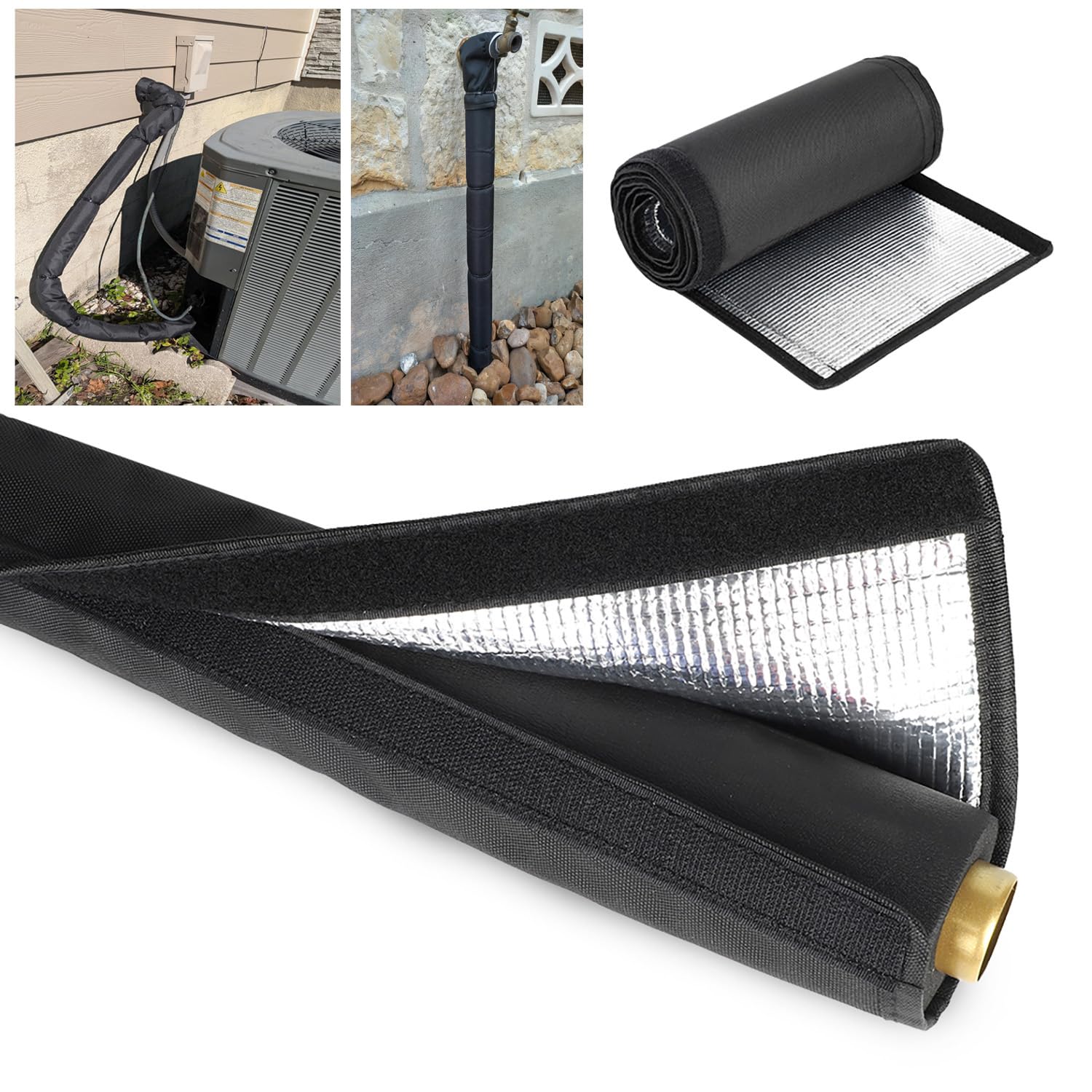
The wrap-around cover that adds a tough outer shell over your existing pipe insulation.
This is not a stick-on tape — it is a 78.7-inch long by 11.8-inch wide sleeve made from three bonded layers: a tough outer layer of 600D Oxford fabric (the same woven material used in heavy-duty luggage), a middle layer of pearl cotton, and an inner layer of reflective aluminum foil. That aluminum layer acts as a vapor barrier, which is a key advantage for stopping condensation from forming underneath the wrap. The 0.1-inch thickness is thin compared to foam tape, but the multi-layer design gives it a different job: it goes over your existing foam insulation to protect it from UV rays, physical knocks, and weather, which owners mention is a smart move because sunlight destroys plain foam over time. Four adjustable nylon straps with Velcro make installation fast — you just wrap it around the pipe and press the straps closed without any tools.
Unlike the narrower foam tapes that wrap like a bandage, this cover is wide enough (11.8 inches) to shroud an entire lineset section in one go. Customers note the “durable thick material was easy to put on and velcro it close,” and one reviewer specifically mentioned installing it over existing wrapped lines for extra UV protection. The trade-off is that at 0.1 inches thick, it provides minimal thermal insulation on its own — its real strength is as a protective armor layer. If your lines are already insulated with foam tube and you need to stop that foam from crumbling in the sun, this is the solution.
Perfect partnership: Use this as a jacket over foam insulation — the Oxford fabric blocks UV rays that destroy bare foam, and the aluminum layer reflects heat and blocks moisture.
Reach for this if: your existing foam insulation is exposed to direct sunlight and you want a durable, easy-to-install cover that adds a vapor barrier without needing adhesive.
Look elsewhere if: you need bulk thermal insulation for an uninsulated bare copper pipe — this wrap is too thin on its own to stop condensation in that scenario.
2. Redford Supply Co. 2 inch x 14 ft Pipe Insulation

The thickest foam tape here at a full 2 inches for serious freeze blocking.
This is the tape that says “I am serious about winter.” At 2 inches thick — a massive 20x gap versus the 0.1-inch fabric cover above — it uses ARCTIC EVA foam that stretches up to 7 times its length without snapping, so you can pull it tight around the tight turns of an AC lineset. The maker claims a tensile strength of 110 lbs/inch, making the foam itself very tough to tear. It also has an ultra-low thermal conductivity of 0.11 BTU (meaning it resists heat flow very effectively), which reviewers point out delivers “good freeze protection tested to low 20s°F.” At 14 feet long, it is 18% shorter than the DEMEDO tape (16.5 feet), but the sheer thickness means each wrap covers more thermal ground. One reviewer noted that due to the required overlap, the 14-foot roll only covered about 3 feet of pipe — so you may need more length than you expect for full coverage.
The catch, and it is a real one, is the adhesive. Multiple reviews say the tape does not stick well to itself or to the pipe. One buyer described it as “hard to work with when wrapping” and another recommended finishing the ends with 3M 88 electrical tape to stop it from unraveling. At 2 inches thick, it is also dense and slightly harder to cut than a thin foam tape, though buyers confirm it cuts cleanly with a utility knife. If you are in a climate where temperatures dip into the low 20s°F, the thickness and material quality justify the extra effort needed to secure the ends.
What stands out
- 2-inch thickness provides the best thermal barrier of any tape here — very effective against freezing
- ARCTIC EVA foam stretches up to 7x without tearing, so it conforms to tight pipe bends
- Low thermal conductivity (0.11 BTU) means less energy loss from your AC lines
The real drawback
- Adhesive strength is weak — reviewers report it does not stick well to itself and needs zip ties or electrical tape on the ends to prevent unraveling
- Overlap requirements mean the 14-ft roll covers far less pipe than you might expect, driving up cost per job
Get this for: maximum freeze protection in climates that see sub-freezing temperatures — the 2-inch EVA foam is the best defense against frozen lines.
skip it if: you want a ‘wrap and forget’ experience — the poor self-adhesion is a real frustration you’ll need to work around with extra tape or ties.
3. XFasten Foam Pipe Insulation Tape 2 Inch x 15 Feet

The EVA foam tape that actually sticks to itself without fighting you.
At 15 feet long and 2 inches wide, XFasten’s tape sits between the others in length, but its real selling point is how well the adhesive works. Multiple reviewers call it “very sticky” and note it “adheres to itself well” — a direct contrast to the Redford tape’s adhesive struggles. The foam itself has a listed tensile strength of 100 lbs/inch, and the low thermal conductivity of 0.11 BTU matches the Redford’s rating for energy efficiency. It stretches up to 6x without breaking, which is plenty flexible for wrapping around AC bends. One practical buyer tip: cut the tape lengthwise to make two strips and use zip ties at tight angles for a cleaner wrap than trying to force thick foam around an elbow.
The real-world cost is the main consideration here. One reviewer who used it for two 5-foot AC lines reported needing four rolls, plus waterproof tape on top, which pushed the total past and required about two hours of work. That makes it a premium investment compared to the DEMEDO tape. On the plus side, buyers confirm that once it is on, it stays on — one reviewer taped over it with UV-resistant line tape for extra protection, which is a smart move because the exposed EVA foam will degrade slower with a UV shield. If you want a tape that does not need supplementary adhesive or zip ties to stay put, this is the pick.
One-tape solution: unlike the Redford tape, this one sticks firmly to itself on the first wrap, so you skip the extra step of taping down the ends.
Choose this if: you want strong self-adhesion and do not want to mess with zip ties or electrical tape on the ends.
Consider a different option if: you are insulating a long run of pipe on a budget — the cost per roll adds up quickly for larger jobs.
4. DEMEDO Pipe Insulation Tape, 2 inch x 16.5 FT
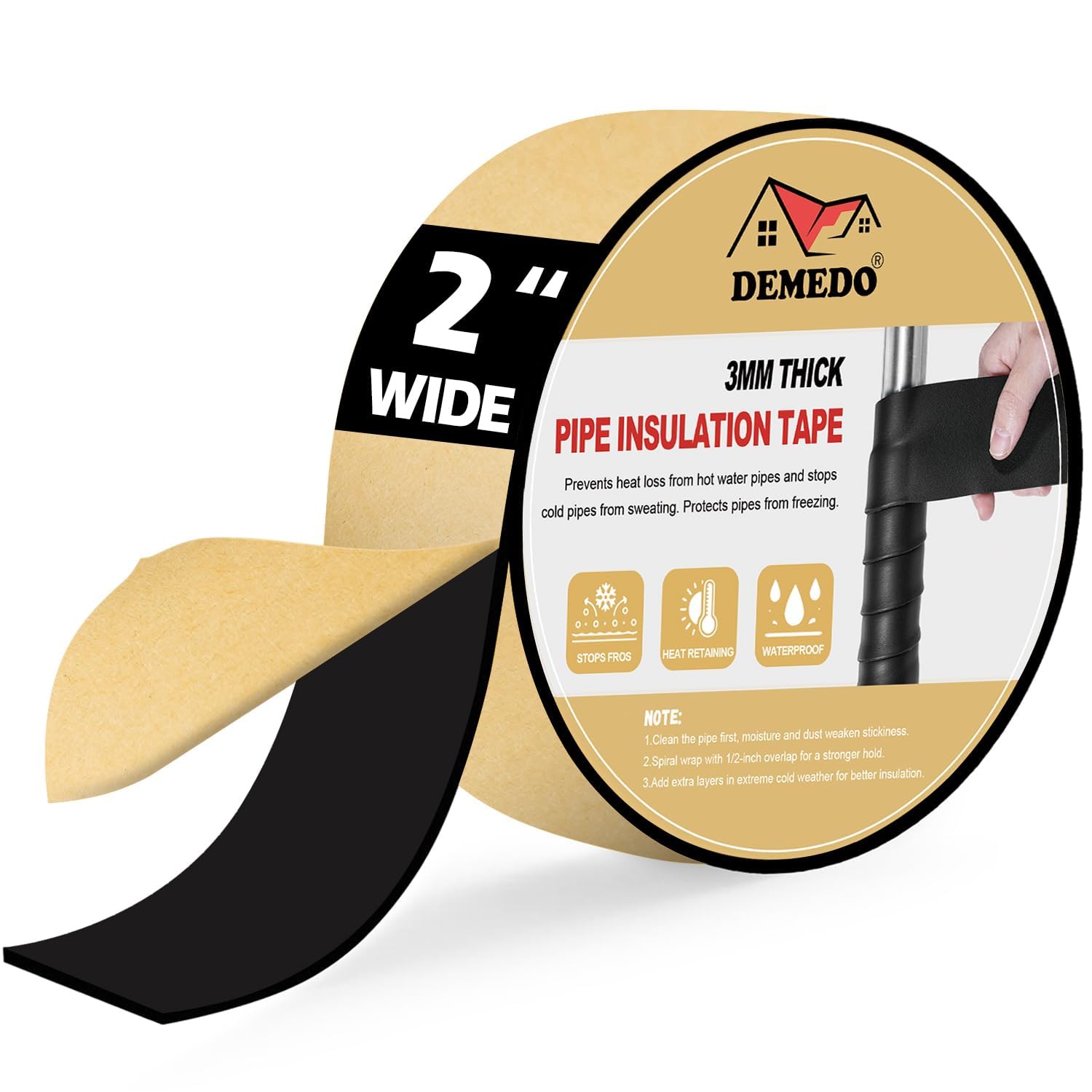
The longest single roll here at 16.5 feet, designed for pipes with tricky elbows.
Made from soft rubber foam instead of EVA, this tape is notably more flexible — a real advantage when you are wrapping PEX drain lines or the sharp 90-degree bends on AC copper lines where stiffer tape wants to lift off. It is 16.5 feet long, which is 18% more tape than the Redford Supply Co. roll, so you get more coverage per purchase. The maker says the fabric adhesive backing provides stronger grip on different pipe materials including metal, PVC, and AC pipes, and one review noted the “grid plastic on sticky side” helps it bond better than some competitors. That is the same feature a buyer mentioned: it “worked well initially but peeled next day,” though that same reviewer still called it “better than alternatives” after reapplying.
Unlike the XFasten tape which needs careful cutting to avoid wasting material, the DEMEDO tape is designed to be “easy to customize and cut to size with scissors.” The rubber foam is softer than EVA, which means it compresses more under a zip tie and feels less durable if you bump into it. But that softness is exactly why buyers recommend it for sweating PEX and drain pipes where the tape needs to “fit bends and fittings easily without gaps.” One reviewer used it on cold plunge fittings and confirmed it “really sticks well, especially to itself.” If you have a pipe with multiple tight turns and you want the longest continuous wrap possible, this is the tape that bends with you.
Why you want it
- Longest roll at 16.5 ft — more coverage per purchase than the 14-ft or 15-ft options
- Soft rubber foam is highly flexible and conforms to tight pipe elbows and unusual shapes without gaps
- Self-sticks firmly to itself, which is useful for wrapping complex pipe runs
Watch out for
- Softer foam is less durable against physical contact and UV exposure — best used under a protective outer wrap if exposed to sun
- One buyer mentioned the tape peeled the next day after the initial wrap
Best for: pipes with lots of bends and fittings where a rigid tape cannot seal — the rubber foam conforms where others leave gaps.
Not ideal for: long straight runs in direct sunlight without a protective outer cover (like the 3-layer HVAC wrap).
Understanding the Specs
Thermal Conductivity (BTU)
This number tells you how easily heat passes through the material. A lower BTU rating means the insulation is better at keeping the cold pipe cold and the warm air out. You will see 0.11 BTU on the better EVA foam tapes here. For comparison, standard fiberglass insulation batts are around 0.03 BTU per inch, but foam pipe tape is much thinner and more flexible. The key takeaway: any insulation with a 0.11 BTU rating will significantly reduce condensation and heat transfer for a residential AC line.
Tensile Strength (lbs/inch)
This measures how much force the foam itself can take before tearing. A rating of 100 or 110 lbs/inch means you can pull the tape tight around a pipe corner without it snapping. In practice, this matters most when you are wrapping a sharp 90-degree elbow — lower-strength tape will rip as you stretch it. The XFasten (100 lbs/inch) and Redford (110 lbs/inch) both have high ratings here, while the softer DEMEDO rubber foam does not list a tensile spec, which lines up with its more flexible but less tear-resistant feel.
FAQ
Do I need a vapor barrier on my AC coolant line insulation?
Can I use standard foam pipe insulation from a hardware store?
How many layers of insulation tape do I need?
Will pipe insulation tape stop condensation on my AC lines?
How do I stop insulation tape from unraveling over time?
Is thicker insulation always better for AC lines?
Can I leave foam tape exposed to sunlight?
How do I measure how much insulation tape I need?
Will pipe insulation interfere with my AC system’s operation?
What is the difference between EVA foam and rubber foam for insulation?
Final Thoughts: The Verdict
If you want one dependable pick, the best ac coolant line insulation winner is the 3 Layers HVAC Copper Pipe Insulation Cover because it adds a durable, UV-blocking outer shell with a vapor barrier that keeps your existing foam insulation working longer. If you live in a freezing climate and need maximum thermal thickness, grab the Redford Supply Co. 2-inch tape and plan to secure the ends yourself. And for the trickiest pipe bends that need a flexible, long-lasting self-adhesive wrap, the DEMEDO 16.5-ft tape bends where others break.
How We Picked
We do not accept paid placement, and we did not hands-on test every unit. Instead, we match each pick to a real buyer and use-case by comparing the manufacturers’ published specifications against the patterns in verified customer reviews — so you get each pick’s real strengths and trade-offs instead of marketing copy.
Sources & Methodology
Specifications: manufacturer listings and product documentation. Review insights: verified customer reviews, as of July 2026. Pricing: not shown on this page (it changes often); check the current price via the retailer link.
As an Amazon Associate, Gadgets Feed earns from qualifying purchases. This does not affect which products we feature.
Product prices and availability are accurate as of the date/time indicated and are subject to change. Any price and availability information displayed on Amazon at the time of purchase will apply to the purchase of this product. As an Amazon Associate I earn from qualifying purchases.
CERTAIN CONTENT THAT APPEARS ON THIS SITE COMES FROM AMAZON. THIS CONTENT IS PROVIDED "AS IS" AND IS SUBJECT TO CHANGE OR REMOVAL AT ANY TIME.
Amazon and the Amazon logo are trademarks of Amazon.com, Inc. or its affiliates.