
Our readers keep the lights on and my morning glass full of iced black tea. As an Amazon Associate, I earn from qualifying purchases.
Specs are compiled from manufacturer listings and verified buyer reviews and can change over time — please confirm the key details on the product page before buying.
Basements are the hardest rooms to cool. They trap humidity, stay stuffy, and most portable ACs struggle to push air down there. The fix is an AC that pairs serious cooling power with a built-in dehumidifier—and our list below narrows that field down to the nine models that actually work.
I’m Min — the founder and writer behind Gadgets Feed. This guide is built by comparing the manufacturers’ published specifications and the patterns across verified customer reviews, so you get each pick’s real strengths and trade-offs instead of marketing spin.
Before we dive in, one honest note: this list uses flexible matching for basement suitability (models with 8,000 BTU or higher and a dehumidifier function), so the nearest same-type size serves the same purpose even if the exact spec search differs. The short version for most people: the ac for basement you want is a dual-hose portable model that also pulls moisture out of the air.
Our Picks at a Glance
How To Choose The Best AC For Basement
Choosing an AC for a basement isn’t the same as picking one for a living room. Basements run cooler but damper, so your priorities are moisture removal, airflow balance, and the noise the unit makes while it runs for hours.
Match BTU to square footage
BTU (British Thermal Units) is the raw cooling output. A small 8,000 BTU unit handles a compact basement up to 350 square feet, while a 14,000 BTU model covers 550 square feet or more. Undersize it and the unit runs nonstop without ever catching up.
Pick dual-hose over single-hose
A single-hose unit pulls air from the room to cool the compressor and pushes it outside, which creates negative pressure and lets hot outside air seep back in. A dual-hose system uses one hose for intake and one for exhaust, so it keeps room pressure balanced and cools faster—critical in a basement with limited airflow.
Prioritize the dehumidifier
Basements feel cold and clammy because of humidity, not just temperature. An AC with a dedicated Dry mode pulls moisture out of the air, which makes the space feel more comfortable even before the temperature drops. Look for a unit that removes at least 40 pints per day.
Quick Comparison
| Model | Best For | Cooling Power | Floor Area | Noise Level | Amazon |
|---|---|---|---|---|---|
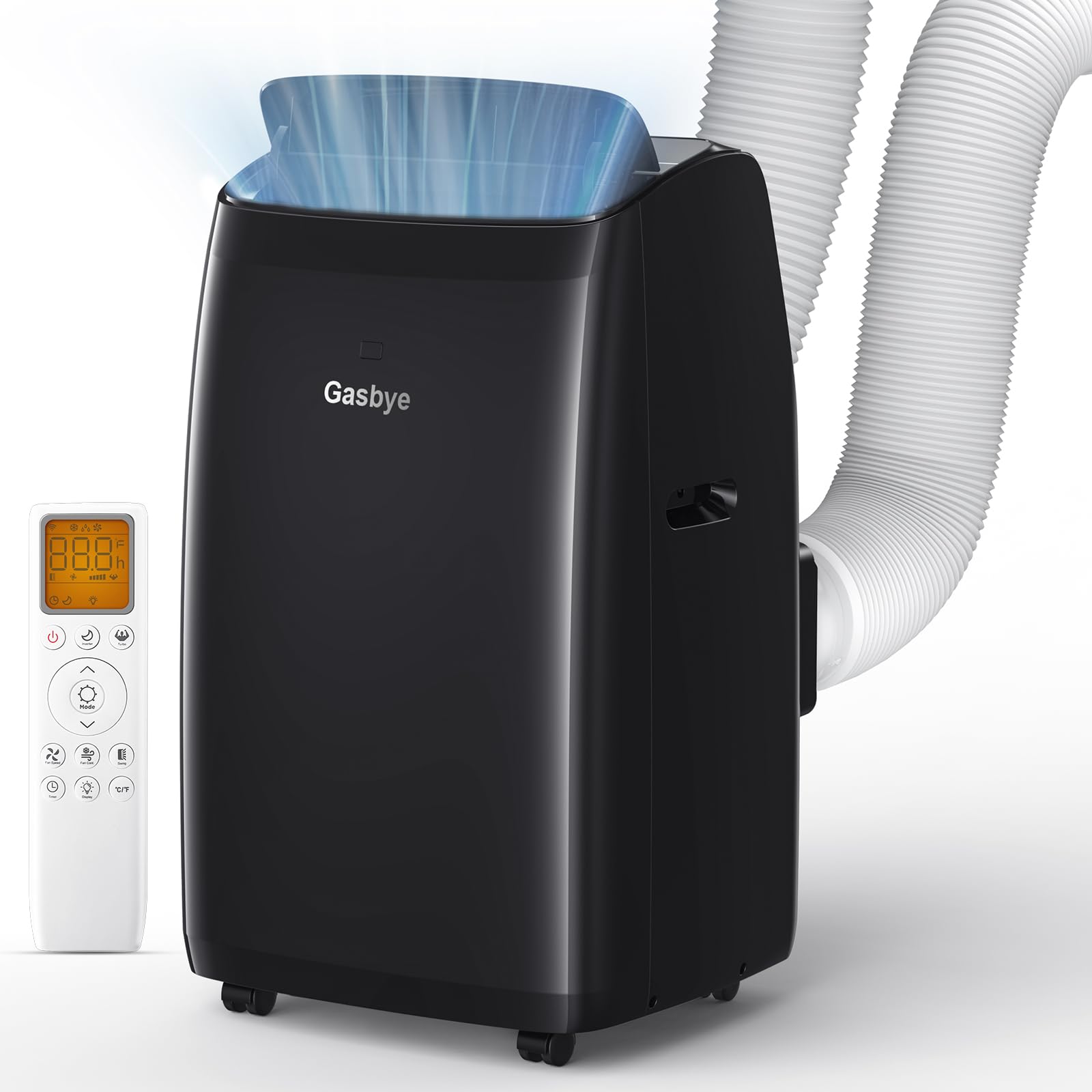
| Gasbye Dual Hose★ Best Overall | Whole-basement cooling | 14,000 BTU | 550 sq ft | 45 dB | Amazon |
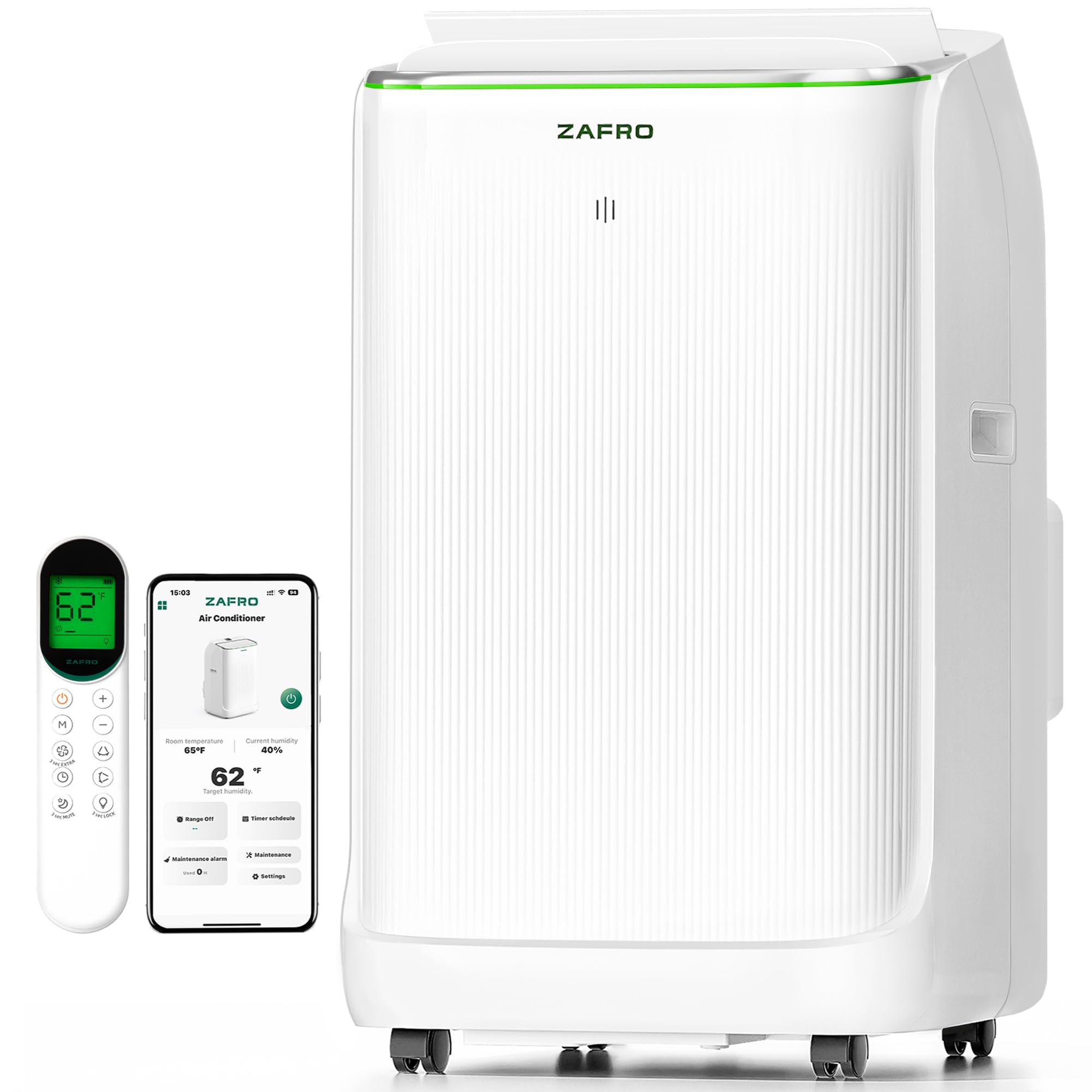
| ZAFRO Dual HosePremium Quiet Pick | Premium quiet cooling | 14,000 BTU | 700 sq ft | 42 dB | Amazon |
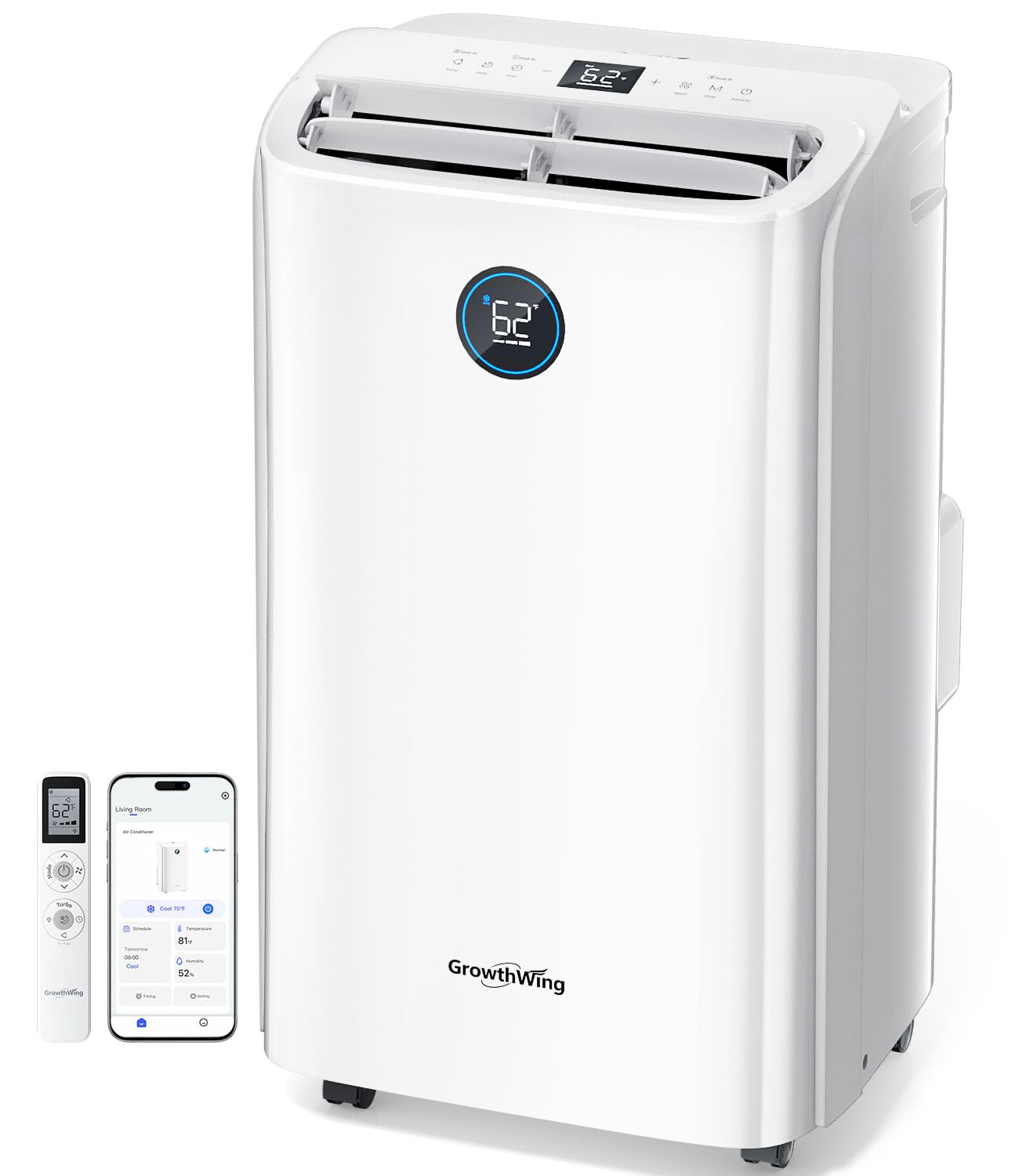
| GrowthWing 14KSmart Value | Smart app control | 14,000 BTU | 700 sq ft | 42 dB | Amazon |
| Temprium 8,000 BTU | Small rooms & smart control | 8,000 BTU | 350 sq ft | 50 dB | Amazon |
| Waykar Dehumidifier | Humidity control only | — | 5,000 sq ft | 42 dB | Amazon |
| Antarctic Star 10K | Budget portables | 10,000 BTU | 450 sq ft | 53 dB | Amazon |
| LG 8K Window | Existing window openings | 8,000 BTU | 350 sq ft | 53 dB | Amazon |
| YLEOOB 16K | Very large open basements | 16,000 BTU | 750 sq ft | 42 dB | Amazon |
| Midea U-Shaped | Quiet window installs | 12,000 BTU | 550 sq ft | 32 dBA | Amazon |
In‑Depth Reviews
1. Gasbye Dual Hose Portable Air Conditioner
Our pick — over 4.5★ from 450+ verified ratings; the strongest balance of quality and price.
The dual-hose powerhouse that chills a full basement without the hum.
This is the unit buyers trust for whole-basement duty. It delivers 14,000 BTU of cooling for rooms up to 550 square feet, and the dual-hose design keeps the air pressure balanced so hot air doesn’t creep back in—a real advantage over single-hose portables. Buyers report it pulls a bedroom down to 61°F where their old unit topped out at 66°F., and they praise the ice-cold output even in brutal summer heat.
The quiet operation comes from the full DC inverter compressor, which drops to around 45dB in inverter mode by cutting compressor load to 50% within two minutes. That matters when the unit runs for hours in a basement while the rest of the house sleeps. It’s also efficient: 442 kilowatt hours per year, which beats the 577 kWh of smaller 8,000 BTU unit above—a 31% gap in annual energy use despite cooling a larger area.
The one thing owners flag is condensate. In very humid basements, the auto-evaporation can saturate and need manual draining—up to 4-5 gallons on the worst days. The higher drainage outlet on the back makes that chore easier than most, and the backlit remote plus display-off feature handle nighttime use well. The 3-year coverage with full refund or free replacement is a strong safety net.
Why It Wins
- Dual-hose design cools faster and keeps pressure balanced
- Inverter compressor cuts noise to 45dB and saves energy
- Backlit remote and display-off for sleep-friendly control
The Trade-offs
- Can need manual condensate draining in very humid basements
- Full-size 29.3″ H unit needs floor space
- Temperature control can run a couple degrees off setpoint
Reach for this if: you want one unit that cools an entire basement and you’re willing to handle occasional water draining.
Think twice if: your basement has no window access at all—this needs a window vent kit to work.
2. ZAFRO Smart Inverter Portable Air Conditioner
Inverter-quiet cooling that homeowners say outclasses premium brands.
ZAFRO pairs a dual-hose setup with a smart inverter compressor and a high 480 cubic meters per hour airflow, so it circulates cool air evenly through large basements. The 14,000 BTU output (10,000 BTU SACC) covers up to 700 square feet, and owners specifically note it cools a 650 sq ft basement with ease. The Extra Mode locks the temperature at 61°F and runs at full power for instant relief on the hottest days.
Quiet is the headline here—as low as 42 decibels thanks to the inverter compressor cutting vibration and resonance. That’s quieter than a normal conversation, and it matters when the unit sits near a home office or bedroom. The self-evaporating system means zero manual draining for up to 72 hours in humidity under 90%, a huge convenience for basement duty. The CEER of 12.8 beats the standard 7.83 by a wide margin, so it sips power even on long runs.
Smart control comes via the ZAFRO app, remote, or touch panel, with six modes—Cool, Dry, Fan, Sleep, Extra, and Eco—plus a 24-hour timer. Four-way oscillation distributes air both vertically and horizontally, which eliminates the hot corners many portables leave behind. Owners consistently call it the best portable they’ve owned, noting it matches far pricier brands on noise and build quality.
Standout Strengths
- Dual-hose with 480 m³/h airflow for even cooling
- 42 dB quiet operation and 72-hour drainage-free cooling
- CEER 12.8 efficiency with six operating modes
Know Before Buying
- Annual energy use runs 942 kWh—higher than some rivals
- Premium pricing puts it above mid-range options
- Higher humidity above 90% still needs the drain hose
Best for: buyers who want premium quiet performance and minimal maintenance in a large basement.
A fair warning: if energy use is your top concern, the Gasbye above it sips less power.
3. GrowthWing 14,000 BTU Smart WiFi Portable
App-controlled cooling that runs drainage-free for three straight days.
GrowthWing brings 14,000 BTU of cooling for spaces up to 700 square feet, with a wide 77° air outlet that pushes powerful airflow across a room. Owners mention it cools a 20′ x 24′ room with a vaulted ceiling down to 73°F., and a workout room with no AC in just 5-8 minutes. The eco-friendly R32 refrigerant balances fast cooling with quiet operation for year-round comfort.
The headline feature is the 72-hour auto-evaporation system. Most portable ACs need constant manual draining, but this one handles up to three days of cooling without you emptying a tank—a genuine relief for basement use. When you switch to extended dehumidifier duty, you just connect the included drain hose. Sleep mode drops operation to 42 dB and dims the display automatically.
Control comes through the app, voice commands, or the included remote, and setup takes minutes with adjustable panels that fit windows from 20.39″ to 67″. Owners appreciate that it works right from the start and cools a medium top-floor apartment within the hour. It’s a solid mid-premium pick that checks the smart-control box without the top-tier price.
Reasons To Buy
- 72-hour drainage-free cooling in most environments
- 42 dB sleep mode with auto-dimming display
- Wide 77° air outlet cools large rooms fast
Considerations
- Lower review count means a shorter track record
- Annual energy use (900 kWh) is on the higher side
- Window kit fits 20.39″ to 67″ openings only
Pick this if: you want app control and near-zero maintenance draining in a mid-size basement.
Look elsewhere if: you need the longest field-tested reliability record.
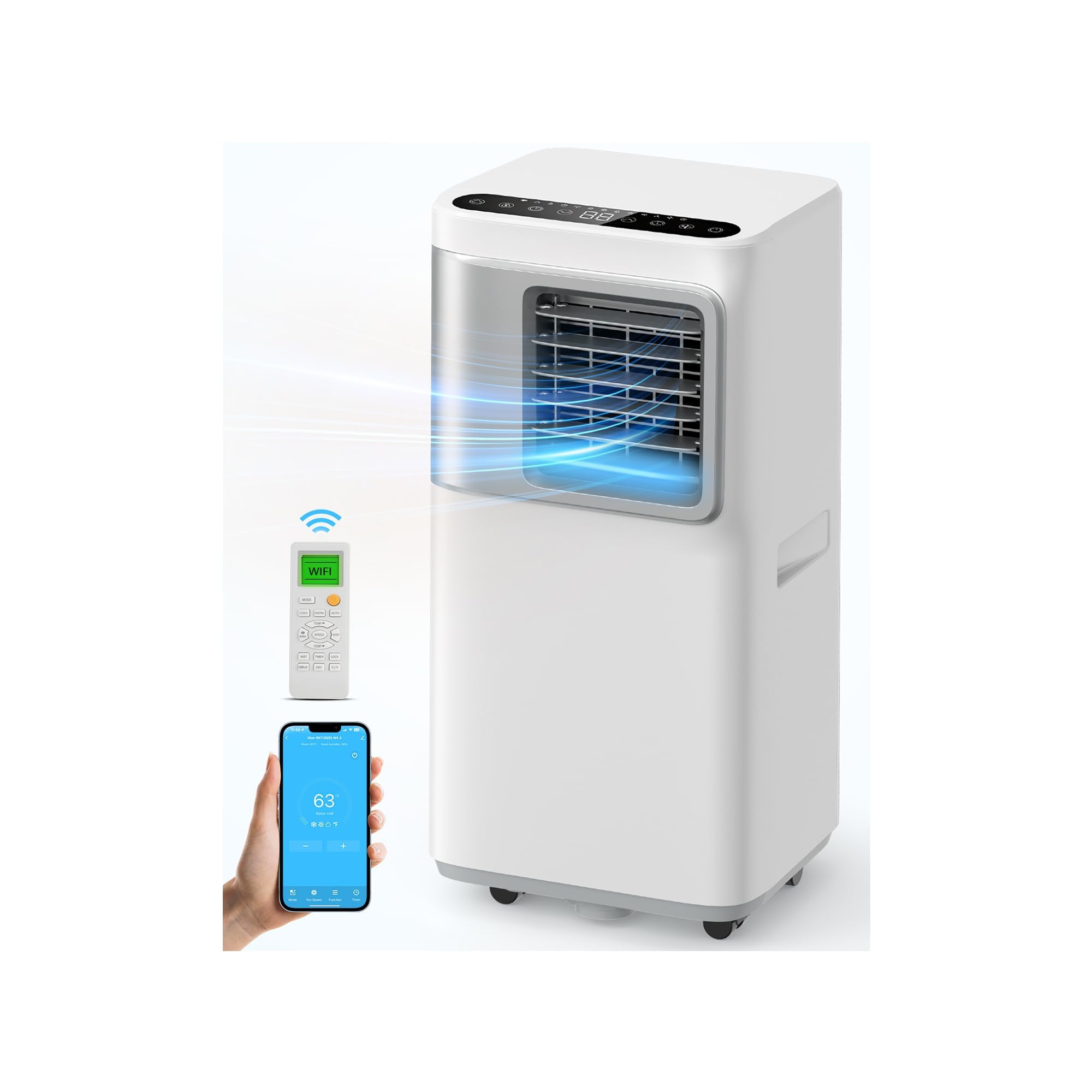
4. YLEOOB 16,000 BTU Portable Air Conditioner
The biggest portable here, built for open basements that need serious airflow.
When a basement is large and open, you need raw power. This 16,000 BTU unit cools up to 730 square feet in minutes, and customers note it ran nonstop for three weeks while keeping a bedroom cool, dry, and fresh. The long-distance airflow pushes chilled air across the room, and the 5-in-1 design adds a high-capacity dehumidifier, 3-speed fan, and intelligent sleep mode.
The drainage-free innovation is a standout for basement duty. A built-in water self-evaporation system eliminates manual draining during daily cooling, even in high-humidity areas. Smart WiFi lets you program 24/7 schedules and monitor energy use from your phone, so you can pre-cool the basement before heading downstairs. Four 360° heavy-duty wheels and hidden handles make it easy to move around.
One honest note: some buyers question whether the BTU output truly reaches 16,000, so treat the spec with mild skepticism. Sleep mode keeps operation below 42 dB—quieter than a library—though the compressor can be audible on high fan. It’s the right pick when square footage outpaces everything else on this list.
What Stands Out
- 16,000 BTU covers up to 750 square feet of open space
- Self-evaporation means no manual draining in daily use
- WiFi app with 24/7 scheduling and energy monitoring
Watch These
- Some owners question whether true output hits 16,000 BTU
- Compressor noise on high is noticeable
- Annual energy use hits 900 kWh with heavy use
Go with this for: the largest basement spaces where no other portable has enough reach.
Be ready for: higher power draw and a compressor that announces itself on max fan.
5. Midea 12,000 BTU U-Shaped Window Air Conditioner
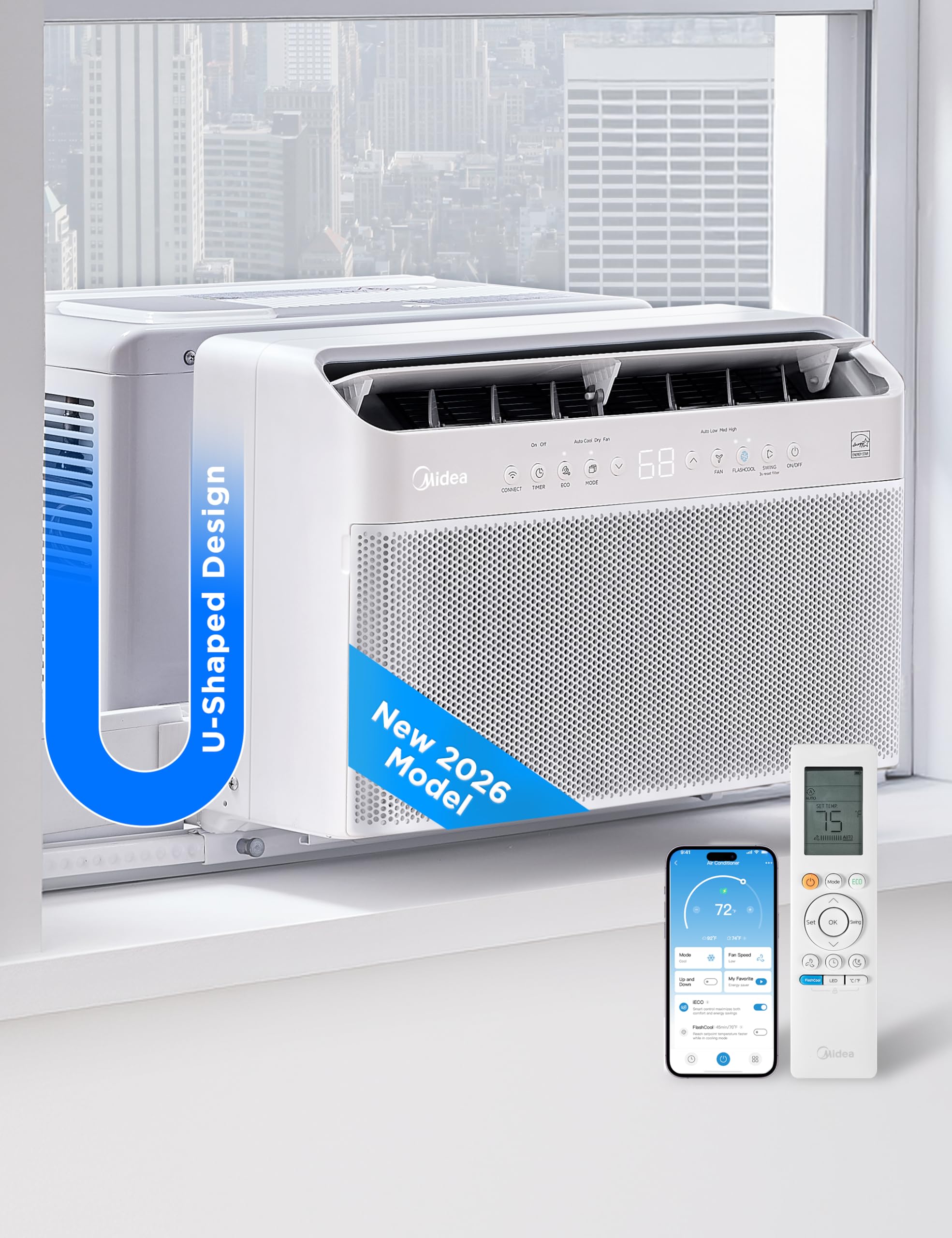
A window unit that blocks outside noise while it chills 550 square feet.
If you have a basement window, the U-shaped design is a clever alternative to bulky portables. The shape lets your window close almost completely around the unit, sealing out hot air and blocking outside noise. Midea claims operation as low as 32 dBA—about 9 times quieter than traditional window units—and owners confirm it’s remarkably quiet for the category.
The 12,000 BTU output covers up to 550 square feet, and reviewers point out it cools a 900 sq ft space comfortably with the help of fans. The advanced DC inverter tech delivers over 37% energy savings compared to traditional units, and it’s the first window AC to earn ENERGY STAR certification. In one owner’s test, the electric bill halved after switching.. Wi-Fi control via the SmartHome app works with Alexa or Google Assistant.
Installation uses a quick-snap bracket that fits single-hung or double-hung windows 22″-36″ wide with a minimum height of 13.75″. The catch is the remote: some owners find it fiddly, and older windows may need leveling or minor modification. But for raw silence and efficiency in a window opening, this is the strongest choice on the list.
Core Strengths
- 32 dBA operation—9x quieter than traditional window units
- 37%+ energy savings with ENERGY STAR certification
- Window closes almost fully for better sealing and view
Setup Realities
- Install can be tricky on older or uneven windows
- Remote control draws mixed feedback from owners
- Needs a window—no free-standing option
This is your unit if: a basement window is available and silence plus efficiency top your list.
skip it if: there’s no window opening—you’ll need a portable instead.
6. LG 8,000 BTU Window Air Conditioner
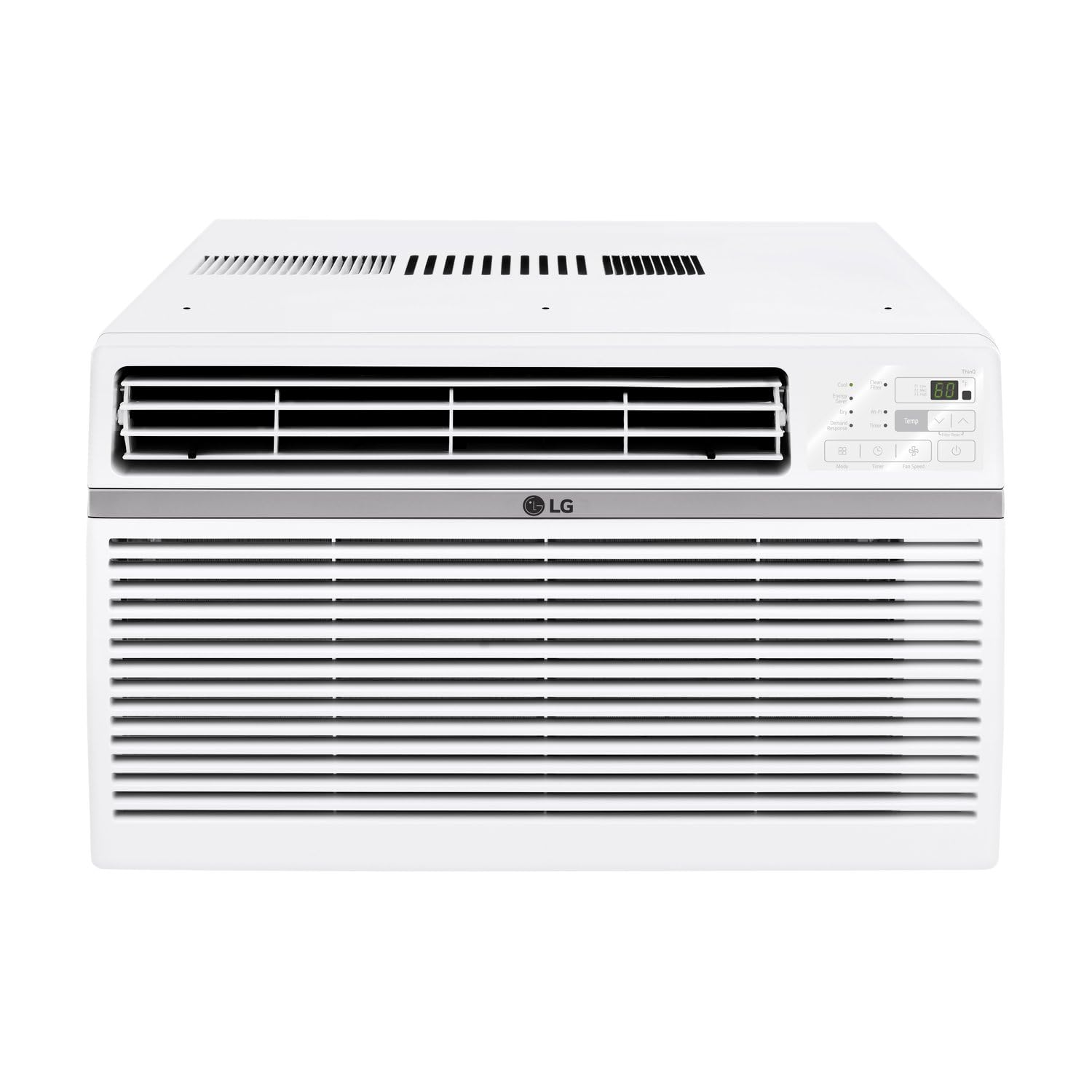
A dependable window unit that drops a room 8 degrees in an hour.
LG’s 8,000 BTU window unit is the no-frills workhorse for a smaller basement or workshop area up to 350 square feet (about a 14′ x 25′ room). Shoppers say it dropped a room from 81°F to 73°F in one hour., and One buyer bought five of them for rental properties in Georgia heat, cooling a 1,000 sq ft mobile home to the mid-70s.. It’s a proven performer that just works.
Operation is as low as 53 dB in low mode, and the scroll compressor keeps things running smoothly. Three cooling and fan speeds plus Auto Cool mode give you control, and the Auto Restart feature powers the unit back on after a power outage—no manual reset needed. That’s genuinely useful in a basement where a tripped breaker or storm could otherwise leave you sweating until you notice.
The honest caveat is durability. Some buyers report units lasting about two years before cooling output drops, though others have units running strong. The CEER rating is 6.2, and one sharp-eyed buyer notes the listing references an 11.4 SEER figure meant for whole-home systems—the real efficiency number is fine for a window unit but lower. If you want simplicity and brand trust at a mid-range price, this delivers.
Why Buy It
- Drops room temperature 8°F in about an hour
- Auto Restart re-powers the unit after outages
- 53 dB low mode keeps noise manageable
Honest Limits
- Some owners see reduced output after about two years
- CEER 6.2 is moderate efficiency
- No dehumidifier mode for damp basements
Choose this for: a compact, no-apps-required window install from a trusted brand.
Note the trade-off: it won’t help much with basement humidity, and longevity is a mixed bag.
7. Antarctic Star 10,000 BTU Portable Air Conditioner
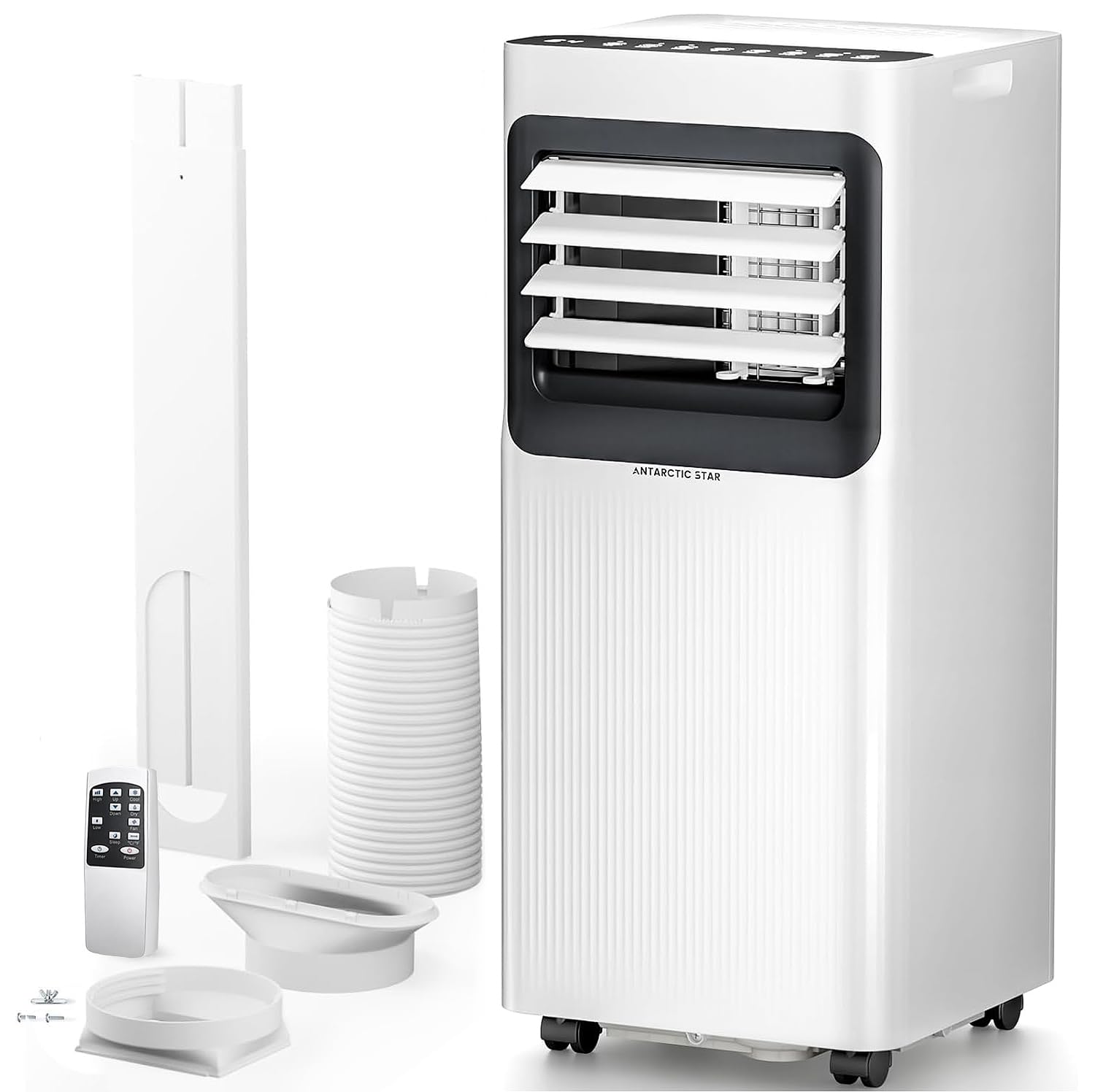
Zero-tool setup and 10,000 BTU for a compact basement or workshop.
Antarctic Star targets the buyer who wants cooling without a contractor. This 10,000 BTU portable covers up to 450 square feet, and setup takes under 15 minutes with zero tools—just roll it in on the caster wheels, attach the window kit, and go. Owners who got a “Like New” unit with a missing part had the manufacturer’s rep ship a free replacement, which speaks to the support.
The 4-in-1 design switches between cooling, fan, dry, and sleep modes. It operates at just 53 dB on low, quieter than a normal conversation, and sleep mode dims the display and cuts noise further. Temperature range runs 61°F–95°F with high/low fan speeds, and a 24-hour auto-off timer helps manage energy use. The remote or intuitive LED touch panel handles all controls—no app required.
The honest catch is that cooling performance gets mixed feedback. Some owners say it gets cold quickly and handles 108°F heat, while others find it underpowered for larger or hotter rooms. One reviewer noted the advertised BTU didn’t match the energy sticker, so treat the 10,000 rating with mild skepticism. It’s a decent budget pick for a small, partially finished basement—just don’t expect it to freeze a large open space.
Fast & Friendly
- Setup in under 15 minutes with no tools needed
- 4-in-1 modes include dry and sleep functions
- Caster wheels and carry handle for easy moving
Set Expectations
- Cooling strength is mixed for larger or hotter rooms
- Some units arrive with fit or sealing issues
- No WiFi—remote and panel only
This suits: a small basement or office where easy setup matters more than max cooling.
Reconsider if: your basement is large or runs very hot—this may fall short.
8. Waykar 80 Pints Energy Star Dehumidifier

The humidity fix for basements that feel damp even when they’re cool.
Not every basement problem is heat—often it’s moisture. This dehumidifier removes 80 pints per day and covers up to 5,000 square feet, making it the go-to for whole-basement humidity control. Owners mention it dropped humidity to 43% upstairs and 48% on the main floor., and that drier air let them set their AC higher at 78°F and save money. It directly tackles the clammy feeling that makes basements uncomfortable.
The 90° auto swing airflow distributes dry air evenly across the room, and smart humidity control reaches as low as 30% RH—wider than the 40% minimum on many rivals. It’s ENERGY STAR certified and runs at around 42 dB, quiet enough for sleep or work. The built-in 4.3L (1.14 gal) water tank is easy to empty, or you can connect the included drain hose for continuous gravity drainage with a standard 3/4″ garden hose connection.
Owners praise the effectiveness and compact size, with the brand’s U.S.-based support and 1-year warranty (plus an extra free year on registration) earning consistent mentions. The honest caveats: long-term reliability is mixed, with some units failing around 9-10 months before warranty replacement, and the humidity readout can run inaccurate—One owner saw 65% displayed versus 50% actual.. It’s a dedicated dehumidifier, not a cooler, so pair it with an AC for full basement comfort.
Moisture Control
- 80 pints per day across up to 5,000 square feet
- 42 dB quiet operation with 24-hour timer
- ENERGY STAR certified with dual drainage options
Reality Check
- Long-term reliability is mixed; some fail near 10 months
- Humidity readout can be inaccurate
- Removes moisture only—no cooling function
Buy this if: your basement’s main problem is dampness and musty air rather than heat.
Remember: this alone won’t cool the room—it works best alongside an AC unit.
9. Temprium 8,000 BTU Portable Air Conditioner
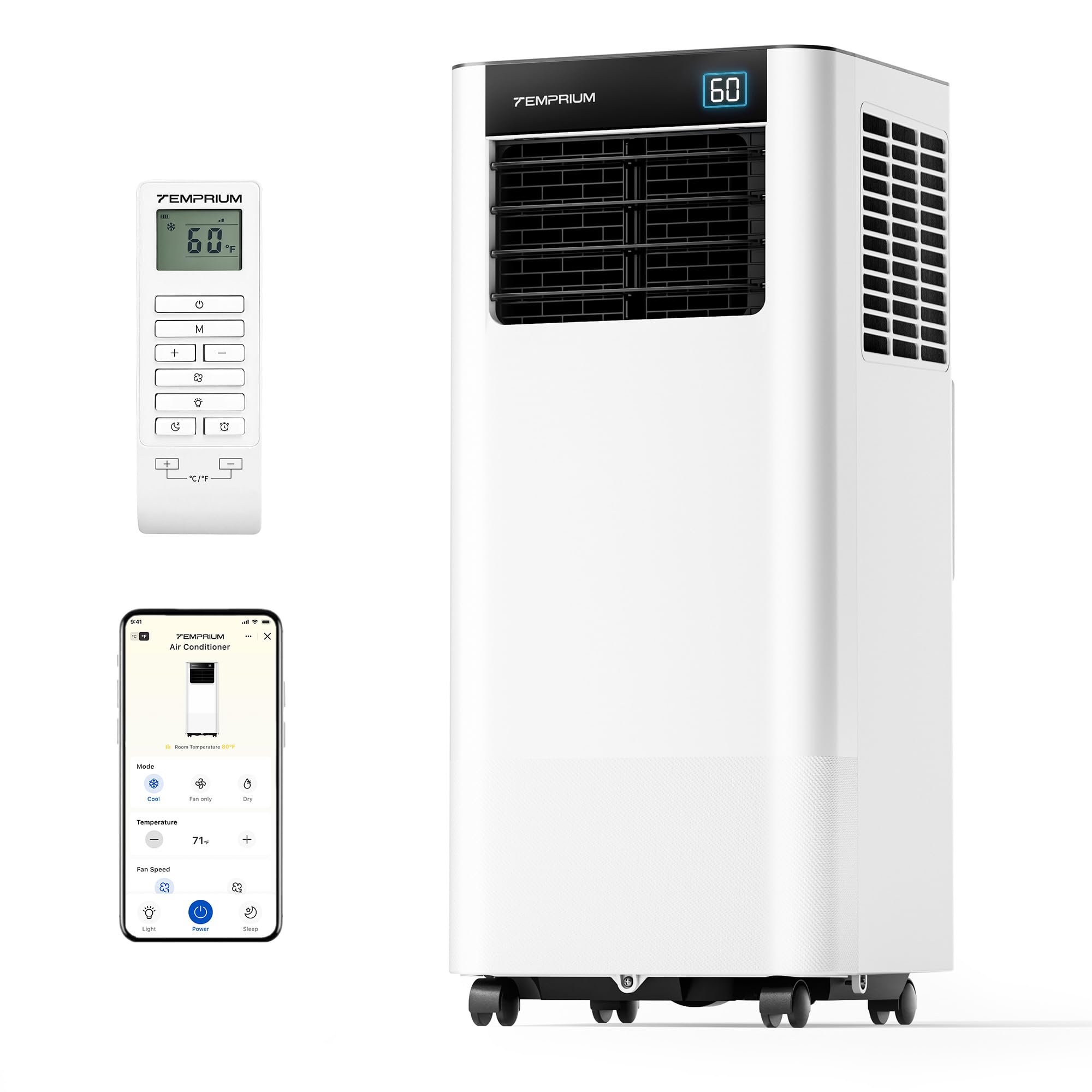
A smart budget portable that cools 350 square feet and answers to your voice.
The Temprium is the entry-level smart pick that still gets real work done. Its 8,000 BTU output covers rooms up to 350 square feet, and customers note it cools a basement effectively even in Georgia heat, with strong airflow from a distance. The 320 m³/h air movement pushes chilled air as low as 60°F, and One buyer says it outperformed a Toshiba while running quieter..
Smart control is the differentiator at this price. Adjust temperature, switch modes, or schedule cooling through the TEMPRIUM App, or just use voice control with Alexa or Google Assistant. A remote and top panel offer traditional control when you want it. The 3-in-1 design also works as a dehumidifier—removing up to 41 pints of moisture per day on Dry mode—and as a fan for mild days, which is handy for a damp basement.
Setup is genuinely tool-free with universal window kits fitting 20-49 inch sliding windows, ideal for rentals. The honest gripes: some reviewers point out the unit turning on and off unexpectedly, and Google Home compatibility draws mixed feedback. For a small basement on a budget, it’s a lot of features for the money.
Budget Highlights
- WiFi app, voice, remote, and touch control
- 3-in-1: cools, dehumidifies up to 41 pints/day, fan
- Tool-free install fits 20-49 inch windows
Watch For
- Some units cycle on and off unexpectedly
- Google Home integration is unreliable per owners
- Water tray may need manual emptying on high fan
This fits: a smaller basement on a budget where app and voice control are the draw.
Set expectations: reliability and Google Home support aren’t its strongest suits.
Understanding the Specs
BTU and SACC Ratings
BTU (British Thermal Units) measures raw cooling power—higher means more heat removed per hour. But for portables, the SACC (Seasonally Adjusted Cooling Capacity) number is the honest one, because it reflects real-world performance after accounting for the exhaust hose. A unit might claim 14,000 BTU ASHRAE but deliver only 10,000 BTU SACC. Match the SACC number to your square footage to avoid disappointment.
Dual-Hose vs. Single-Hose
Single-hose portables pull room air to cool the compressor and push it outside, creating negative pressure that sucks hot air back in. Dual-hose units use one hose for intake and one for exhaust, keeping room pressure balanced. In a basement with poor airflow, that balance matters a lot—dual-hose cools faster and maintains temperature more efficiently.
Dehumidifier Capacity
Measured in pints per day, this tells you how much moisture the unit removes. Basements run naturally humid, so a Dry mode that pulls 40-plus pints per day makes the space feel cooler and less clammy even before the temperature drops. If humidity is your main issue, a dedicated dehumidifier might serve you better than an AC.
Noise Level in Decibels
Decibels (dB) measure sound pressure—every 10 dB jump sounds roughly twice as loud. A unit at 42 dB is quieter than a library whisper, while 50 dB is closer to normal conversation. For a basement that doubles as a bedroom or office, prioritize a unit in the low 40s dB range, especially one with a sleep mode that dims the display.
FAQ
What size AC do I need for my basement?
Is a dual-hose portable AC worth the extra money for a basement?
Will a portable AC dehumidify my basement enough on its own?
Can I use a window AC unit in a basement window?
How often do I need to drain a portable AC in a basement?
What’s the difference between ASHRAE and SACC BTU ratings?
Is an inverter AC worth it for a basement?
Do I need a window for a portable AC to work?
Final Thoughts: The Verdict
The crowd favorite among our picks is the Gasbye Dual Hose—it earns 4.8 stars across a large base of owners who consistently praise its cooling and quiet inverter operation, making it the safest bet for a full basement. If smart app control and near-zero maintenance matter more, the ZAFRO delivers premium 42dB quiet with 72-hour drainage-free cooling. And for the tightest budgets, the Temprium packs WiFi and a dehumidifier into a compact 8,000 BTU package—just don’t expect it to freeze a large space.
How We Picked
We do not accept paid placement. Every pick is matched to a real buyer and a real use-case; we do not hands-on test units.
Sources & Methodology
Specifications: manufacturer listings and product documentation. Review insights: verified customer reviews, as of August 2026. Pricing: not shown on this page (it changes often); check the current price via the retailer link.
As an Amazon Associate, Gadgets Feed earns from qualifying purchases. This does not affect which products we feature.