
Our readers keep the lights on and my morning glass full of iced black tea. As an Amazon Associate, I earn from qualifying purchases.
Specs are compiled from manufacturer listings and verified buyer reviews and can change over time — please confirm the key details on the product page before buying.
Your AC works hard to keep your home cool, but if the copper lines running to the outdoor unit are bare, you are paying for cold that never arrives. The right AC pipe insulation stops energy loss, prevents winter freezing, and shields copper lines from sun damage. This guide ranks the top options using manufacturer specs and verified owner feedback.
I’m Min — the founder and writer behind Gadgets Feed. This guide is built by comparing the manufacturers’ published specifications and the patterns across verified customer reviews, so you get each pick’s real strengths and trade-offs instead of marketing spin.
You’ll learn which materials survive outdoors, how to match the inside diameter to your copper lines, and why a 4.7-star elastomeric wrap is the best starting point.
Our Picks at a Glance


How To Choose The Best AC Pipe Insulation
Choosing the right insulation means matching material, inside diameter, and outdoor exposure. Getting these three factors right prevents ill-fitting or short-lived insulation.
Match the inside diameter to your pipe
Guessing the size is the most common mistake. The inside diameter (ID) of the tube must match the outside diameter of your copper line. A 1-inch ID tube fits a 1-inch copper pipe snugly. If the tube is too loose, you lose the insulation benefit; too tight, and you cannot get it on. Always measure the pipe’s outer width before ordering.
Check the material for your climate
Closed-cell elastomeric rubber blocks both heat and moisture vapor, making it a top choice. Foam tubes are lighter and cheaper but can be less durable in direct sun. If your pipes sit outdoors in harsh weather, look for a wrap with an outer layer of waterproof fabric or reflective foil to protect the foam underneath from UV rays and rain.
Decide between tube, tape, or full cover
Pre-slit foam tubes are the classic choice for straight runs and are quick to install. Self-adhesive tape is ideal for wrapping around bends, elbows, and valves that a straight tube cannot cover. Full-length wrap covers with a fabric or foil shell are best for protecting existing, already-insulated lines from sun and physical damage.
Quick Comparison
| Model | Best For | Material | Thickness | Length | Amazon |
|---|---|---|---|---|---|
| K-FLEX USA Elastomeric★ Best Overall | Replacing old outdoor AC lines | Rubber/PVC | 0.25 inches | 6 ft | Amazon |
| PATIKIL Foam TubeBest Value | Budget-friendly insulation | Rubber Foam | 0.35 inches | 6 ft | Amazon |
| 5 Layers HVAC CoverWeather Shield | Protecting existing foam outdoors | Oxford/Aluminum | — | 72 inches | Amazon |
| DEMEDO Insulation Tape | Wrapping bends and elbows | Rubber Foam | 2 inches | 16.5 ft | Amazon |
| Salimhib Wrap Tape | Thin wrap for tight spaces | Polyethylene | 0.13 inches | 33 ft | Amazon |
| Kingdder Pre-Slit Packs | Multi-pipe jobs with clamps | Neoprene | 1 inches | 7.8 ft total | Amazon |
| DEMEDO Double Bubble Foil | Reflective wrap for heat ducts | Foil Bubble Wrap | — | 16.5 ft | Amazon |
| Redford Supply Wrap | Extreme winter freeze protection | ARCTIC EVA | 3 inches | 14 ft | Amazon |
| Amylove Foam Tubes | Bulk pack for sprinklers | PEP foam | 0.3 inches | 12 x 3.3 ft | Amazon |
In‑Depth Reviews
1. K-FLEX USA 3/4″ x 6 ft. Elastomeric Pipe Insulation
Our pick — over 4.5★ from 100+ verified ratings; the strongest balance of quality and price.
The trusted classic that swaps out decayed outdoor line insulation in minutes.
For anyone staring at cracked, sun-baked insulation on their AC copper lines, this 6-foot elastomeric tube is the dependable replacement. It is made from a rubber and PVC blend that stays flexible, so it bends around corners and cuts cleanly with scissors. The 0.25-inch wall thickness provides a solid thermal barrier for 3/4-inch copper refrigerant lines.
The built-in adhesive seam and overlay flap create a double-sealed closure, which is exactly what you want on an exterior line exposed to weather. It is noticeably thicker and denser than basic foam alternatives, and it holds up well when animals decide to chew on it — a common frustration that owners mention. Buyers report it as a direct upgrade over insulation that had deteriorated for a decade.
The main trade-off is the price, which sits above generic foam tubes. But for a single critical AC line, the durability and secure seal justify it. The thing everyone raves about is the quality, with easy installation and strong adhesion following close behind.
Owner Wins
- Secure double-sealing flap blocks moisture
- Flexible rubber blend resists cracking
- Cuts easily with household scissors
The Trade-Off
- Costs more per foot than foam tubes
- 6-foot length needs planning for long runs
Best for: Homeowners replacing worn-out insulation on a single 3/4-inch AC line who want a secure, long-lasting seal.
Think twice if: You need to cover a very long line and want the lowest cost per foot — a bulk foam roll fits that budget better.
2. PATIKIL 1″(25mm) ID x 6Ft x 0.35″ Pipe Insulation Foam Tube
A budget-friendly foam that pulls double duty on pipes and gym gear.
This 6-foot foam tube is the definition of a versatile value buy. At 0.35 inches thick, it is actually 40% thicker than the K-FLEX elastomeric wrap, giving you more physical padding for less money. The closed-cell structure prevents heat conduction and acts as a moisture barrier, which is critical for stopping condensation on cold lines.
Beyond AC pipes, owners have found creative uses: one wrapped a 2-inch PVC drain with a 2 3/8-inch inside-diameter version to keep it from freezing in a crawlspace. Others have repurposed it as padding for roof rack bars or grip for fitness equipment. It handles temperatures from -40°C to 120°C, so it is safe for both hot and cold applications. Just be aware the foam is softer than elastomeric rubber — it insulates well but is more prone to denting if hit.
What wins people over is the insulation quality, which is the most-praised aspect. The flexibility means you can bend it around tight corners without cracking, and installation needs no extra materials — just cut, wrap, and fit snugly.
Reach for it if: You want a low-cost 6-foot tube that also works for drains, sprinklers, or even furniture padding.
Look elsewhere if: The line is outdoors in direct sun — this soft foam will need a protective outer wrap to last.
3. 5 Layers HVAC Copper Pipe Insulation Cover
A tough fabric armor that wraps over your existing insulation to block sun and freezing.
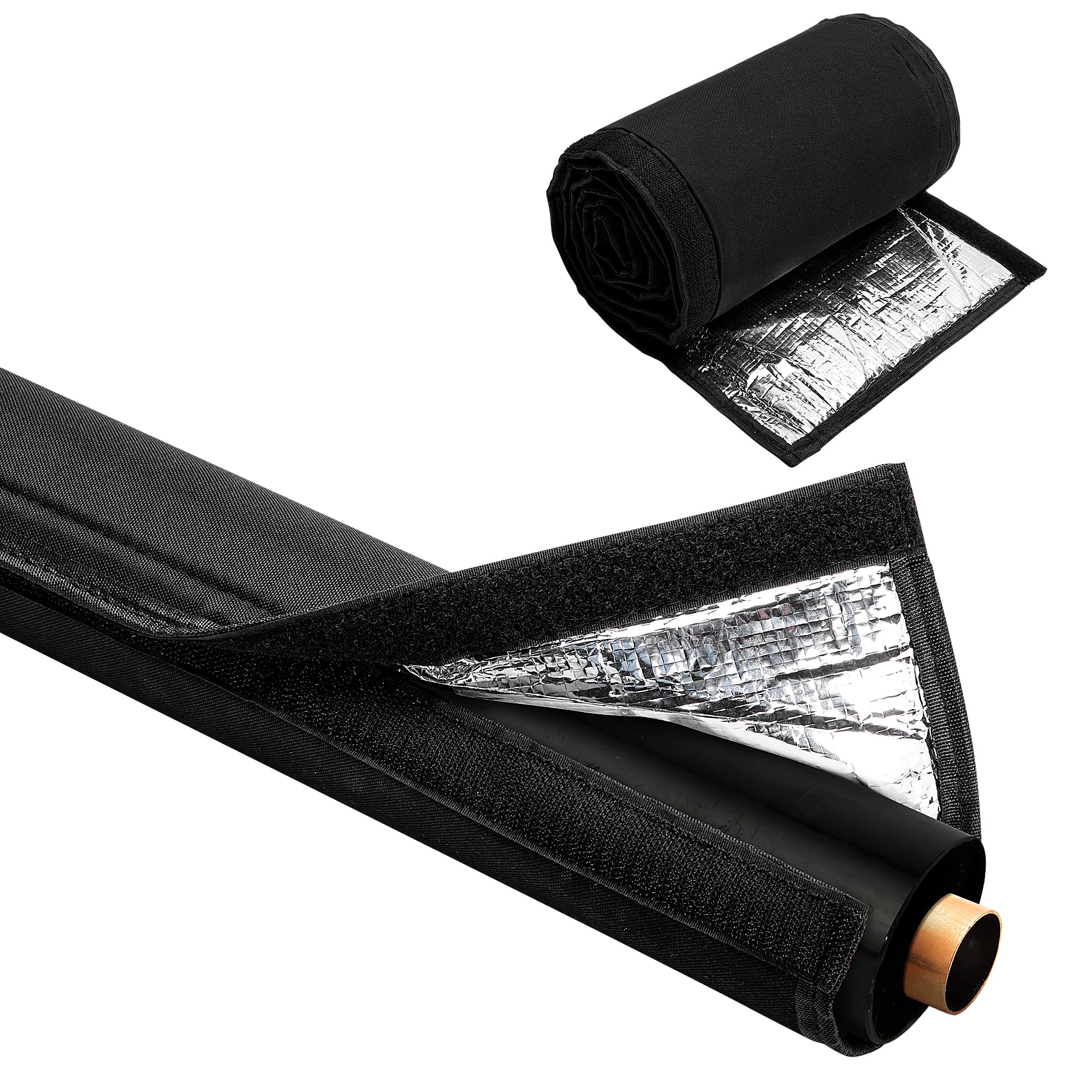
This is not a replacement for foam — it is the shield that protects it. The 5-layer design combines a waterproof 600D Oxford fabric outer shell, a soft thickened pearl cotton core, and a high-quality insulating aluminum foil inner layer. At 72 inches long and 10.2 inches wide, it is over 5 times wider than the 2-inch K-FLEX tube, so it wraps around a whole section of line with plenty of overlap.
The touch-fastener (Velcro) closure makes installation genuinely simple — you wrap it around the line and press the Velcro shut, no tape or glue needed. It is the standout feature owners praise most, with buyers reporting that the Velcro is strong and the cover holds up without degrading even after a year of outdoor use. One owner noted it was long enough to double up on the line for extra coverage.
The honest downside is that it is a cover, not a core insulator — you still need foam underneath for thermal protection. But as a protective layer against UV rays, rain, and freezing temperatures, it is the thing everyone raves about for keeping existing pipe insulation looking and working like new.
Why it wins: The Velcro enclosure and durable outer fabric make it the easiest way to add a year-round weather barrier to already-insulated outdoor lines.
Keep in mind: Pair it with foam tubes underneath — this cover protects, it does not insulate on its own.
4. DEMEDO Pipe Insulation Tape
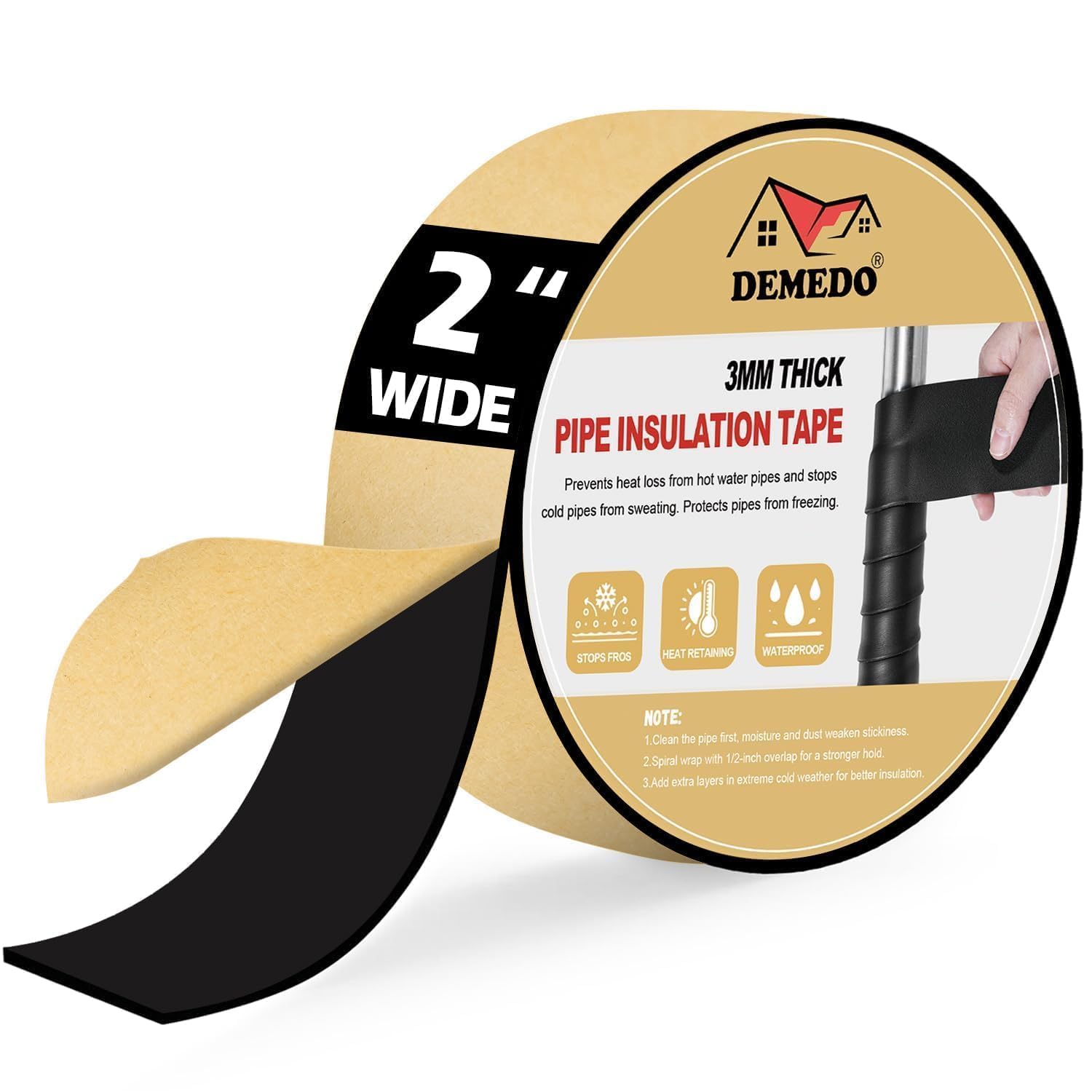
Flexible foam tape that hugs elbows and valves no rigid tube can reach.
Straight foam tubes fail at the tricky spots — the bends, elbows, and valves where lines change direction. This 16.5-foot roll of 2-inch-wide soft rubber foam tape solves that by conforming to any shape you wrap. The fabric adhesive backing grips the pipe surface firmly, and the foam is dense enough to protect against snow, rain, and intense sun.
What buyers appreciate most is the ease of use, with the self-adhesive nature making it a quick, no-mess install. One owner found it held up well as a wrap for an outdoor AC line, while another valued that it needed no extra glue. The flexibility is the key advantage — it bends easily around pipe elbows where pre-slit tubes leave gaps.
The honest caveat is that the adhesive has mixed reviews. Some owners mention the backing peels over time, especially on dirty or unprepared surfaces. The advice that comes up most is to clean the pipe thoroughly before wrapping, and owners who did so had a clean finish that stayed put. It is a great companion product to seal the joints between foam tubes.
What Works
- Conforms tightly around elbows and fittings
- Long 16.5 ft roll covers whole pipelines
- Adhesive backing means no extra glue
Prep Matters
- Adhesion varies — clean pipes stick best
- 2-inch width is narrow for large pipes
Grab it for: Sealing joints and wrapping bends on AC lines or water pipes where straight tubes leave gaps.
skip it if: Your pipes are dusty or dirty and you cannot wipe them down first — the tape needs a clean surface to hold.
5. Self Adhesive Pipe Insulation Wrap Foam Tape 1/8″ Thick x 2″ x 33 Feet
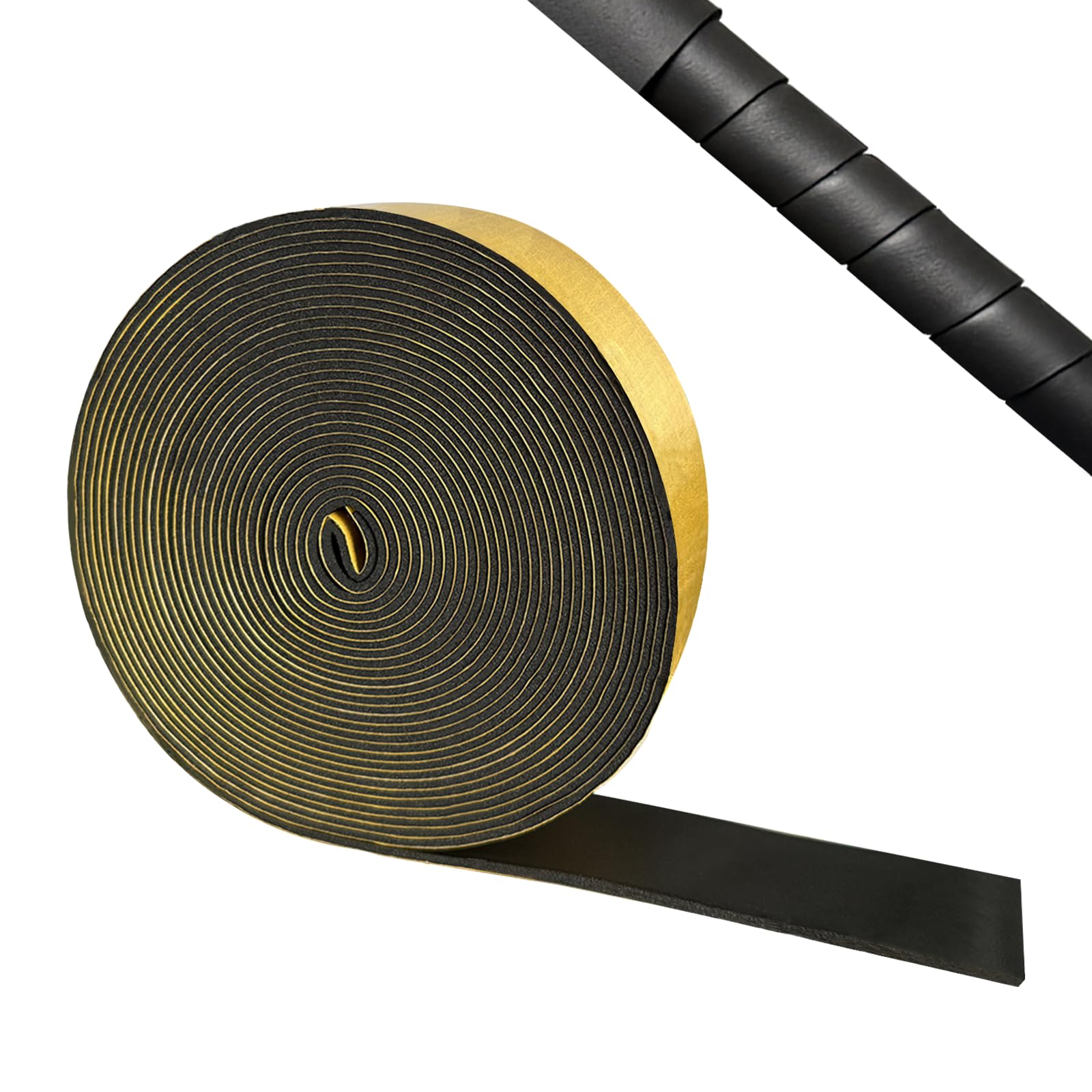
A long, thin polyethylene wrap that beats melted tape on hot water lines.
When you need to cover a long run of pipe with minimal bulk, this 33-foot roll of 2-inch-wide polyethylene foam tape delivers the length. At just 0.13 inches thick, it is a slim wrap — about half the thickness of the 0.35-inch PATIKIL tube — making it ideal for tight spaces where a bulky tube will not fit. The foam is flexible, bends easily, and cuts cleanly with scissors.
Owners highlight the insulation quality as the standout, with one noting it wrapped securely around exposed AC tubing and was exactly the length needed. Another valued that it did not melt like a previous tape on hot water heater pipes — a real durability win for high-temperature lines. It also carries flame retardancy and moisture resistance, adding safety where pipes run near other equipment.
The notable weakness is adhesion. Customers note mixed results, with some finding the foam separates from the adhesive backing during application. The tape itself is a solid insulator, but you may need to secure the ends with duct tape or cable ties for a permanent hold. It is best suited for a quick, layered wrap rather than a permanent, peel-proof seal.
The upside: Generous 33-foot length and solid heat resistance at a low price per foot.
The catch: The foam-to-adhesive bond is the weak point — budget for extra tape to secure the ends.
6. Kingdder 6 Pcs Pipe Insulation Foam Tube Self Adhesive

A six-piece kit with a foil outer shell that makes pipes easy to spot.
Each of these six 1.3-foot tubes covers a 1-inch copper pipe, giving you about 7.8 feet of total coverage. The construction combines neoprene foam with a strong silver fiberglass aluminum film outer layer. That shiny foil is a real practical bonus — it makes the pipes highly visible, which one owner specifically appreciated for exterior driveway spigot lines exposed to cold weather.
The pre-slit design makes installation straightforward: clamp the tube on the pipe, tear the self-adhesive paper, and wrap. The kit also includes sealing tape (a 3-4 ft length, which owners did not expect) so you can seal the joints between tubes for full coverage. The most-praised aspect is the quality, with buyers noting the adhesive adheres well and the tube is easily modified around valves and fittings.
The recurring negative is durability — a few owners reported the adhesive failing and, in one case, pipes still bursting in a barn despite the wrap. This is a warning that for extreme, sustained freezing, no foam wrap is a guarantee; it is a protective layer, not a heat source. For typical outdoor AC lines and spigots, it works well and looks clean.
Ideal for: Homes with multiple 1-inch pipes to insulate at once, especially where you want the foil to make lines visible.
Consider carefully if: You face brutal, prolonged sub-zero winters — the self-adhesive seam is the weak link there, so seal it well.
7. Double Bubble Reflective Foil Insulation Tape (4 inch)
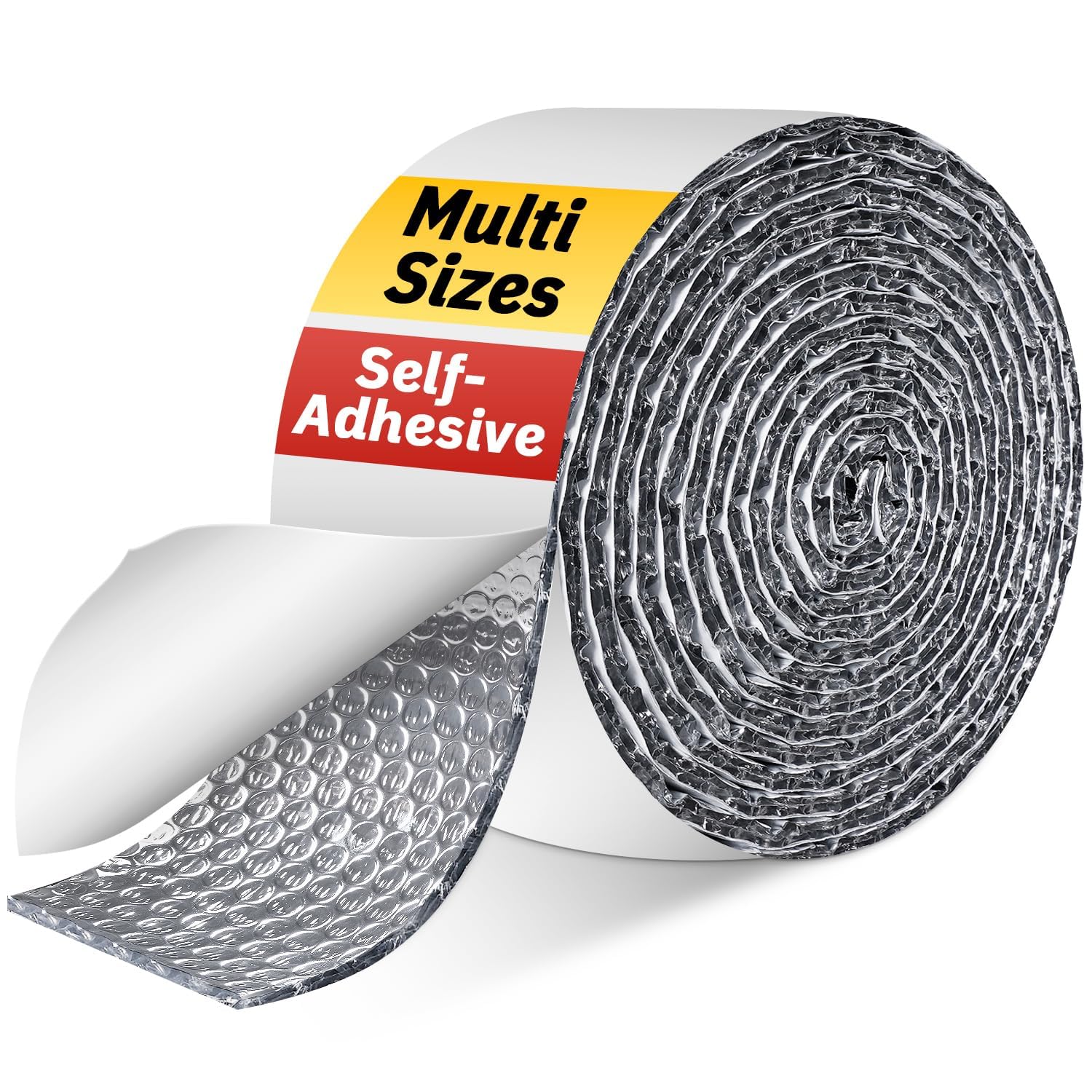
Reflective bubble wrap that bounces heat away from ducts and hoses.
This 4-inch by 16.5-foot roll of double-bubble foil insulation works differently from foam — it reflects radiant heat rather than absorbing it. The aluminum foil outer layer blocks light damage and reflects heat, while the double bubble core adds a thermal break. It is a solid choice for portable AC unit hoses, exhaust ducts, and HVAC ductwork where you want to keep heat out and cold in.
The adhesive backing means one person can install it easily, overlapping every half-inch as you go to ensure the exhaust pipe is completely wrapped. Owners praise the insulation properties and found creative uses — one repaired a refrigerator with it, another improved a camper’s AC ductwork. It is also useful as a vapor barrier in attics, garages, and metal buildings.
The honest caveat is the adhesive. Reviewers point out mixed results, with several noting the foil adhesive did not hold on its own and needed an added 2-sided tape to stay in place. It is a great insulating material that needs a little help with adhesion on rough or dirty surfaces. Plan to supplement the edges with additional tape for a permanent bond.
Standout quality: Excellent reflective insulation that genuinely improves duct and hose performance.
Plan for it: The sticky backing is unreliable on rough surfaces — keep extra tape handy to secure the edges.
8. Redford Supply Co. 3 inch x 14 ft Pipe Insulation Wrap
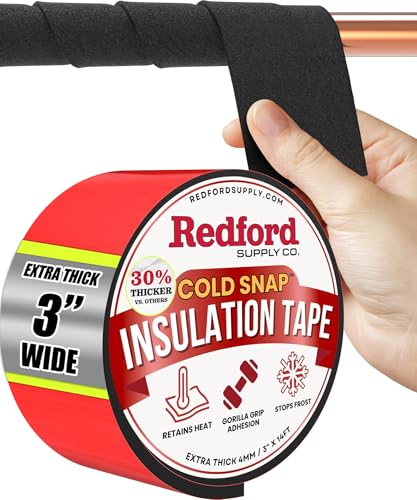
A dense, wide EVA wrap built to survive weeks of hard freeze.
When winter gets serious, this 3-inch by 14-foot roll of ARCTIC EVA material is the heavy-duty answer. It is significantly wider than standard 2-inch tapes, letting you cover more pipe surface per pass. The material is dense and durable, with owners noting it outlasts basic pool noodles and survives direct weather exposure without degrading. It is designed for outdoor water pipes, copper lines, and AC lines facing extreme cold.
The functionality is what owners praise most, with many testing it through genuine freezes. One owner insulated pool plumbing that survived a week below zero with no frozen pipes. Another found the dense wrap easy to cut cleanly with a utility knife for a professional finish. It provides strong freeze protection and a durable outer layer that holds up to the elements.
The biggest recurring issue is the adhesive — shoppers say it does not stick well to itself, so the wrap can unravel if not secured at the ends. The practical fix, which experienced owners use, is to finish with a high-quality tape like 3M 88 or rubber tape at the ends. The 14-foot length also covers less than you expect once you account for overlap, so measure carefully before ordering.
Built Tough
- Dense EVA material survives harsh winters
- Wide 3-inch width covers more per pass
- Cut cleanly with a utility knife
Watch For
- Adhesive needs help — secure ends with tape
- Overlap eats into the 14 ft length
Pick this if: You need trustworthy anti-freeze protection for outdoor plumbing through a genuinely cold winter.
Reconsider if: You want a stick-and-forget install — this wrap demands a final tape wrap at the ends to stay put.
9. Amylove 12 Pcs 3.3 Feet Pipe Insulation Foam Tube
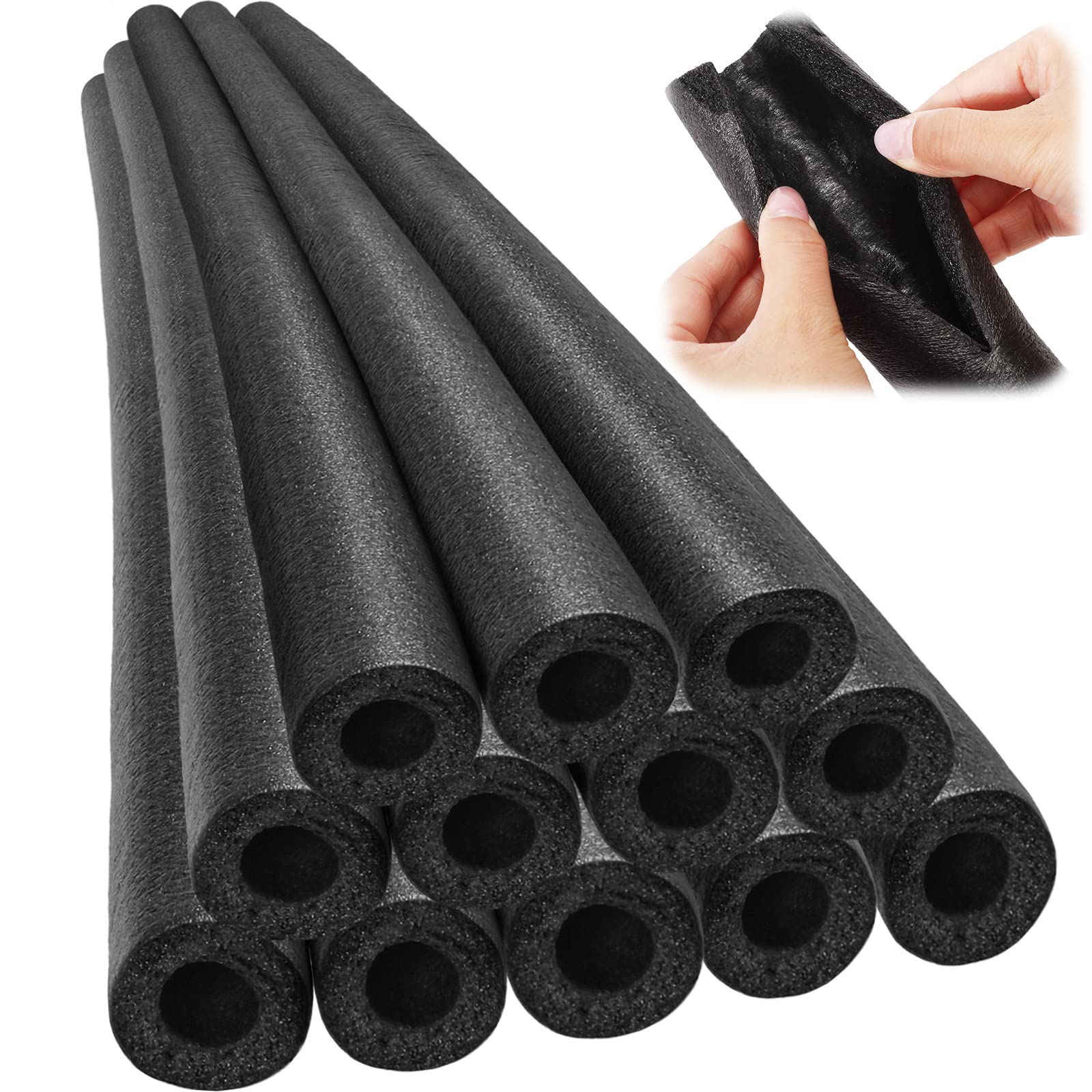
A dozen short foam tubes for sprinklers, spigots, and craft projects.
This bulk pack gives you 12 separate 3.3-foot tubes, each sized for a 1-inch copper pipe with a 0.3-inch wall thickness. The sheer quantity is the appeal — enough to cover a whole irrigation system, multiple spigots, or a network of outdoor pipes in one purchase. The PEP foam is flexible, easy to bend, and the pre-slit design means installation is as simple as clamping it over the pipe.
Functionality is the top praise, with owners confirming the tubes work well for their intended purpose. One owner insulated PVC lines and found them a definite improvement over bare pipe, and another appreciated that the tight fit, combined with good tape, means you never worry about freezing again. The lightweight foam is also handy for crafts, pool floats, and obstacle courses.
The honest trade-off is thickness. At just 0.3 inches, this foam is noticeably thinner and shorter than the heavy-duty 6-foot hardware-store tubes. A few owners felt they were too thin for serious outdoor insulation and too short for long runs. For a critical, exposed main line, this is not the primary choice — but for covering multiple smaller pipes affordably, it gets the job done.
Best use: Covering many 1-inch pipes, sprinklers, or spigots at once while staying affordable.
Not for: A single critical outdoor line in a harsh freeze zone — go thicker for that job.
Understanding the Specs
Material Type
Material choice dictates heat-blocking and moisture resistance. Elastomeric rubber (like the K-FLEX) is a top-tier choice because it is closed-cell, meaning it blocks both heat transfer and water vapor. Foam tubes (PEP, polyethylene, neoprene) are cheaper and lighter but can be softer and less UV-resistant. Foil bubble wrap reflects radiant heat rather than absorbing it, making it ideal for ducts and hoses. For outdoor lines, look for a fabric or foil outer shell to protect the foam underneath from sun damage.
Thickness & Inside Diameter
The inside diameter (ID) must match your pipe’s outside diameter for a snug fit. A 1-inch ID tube fits a 1-inch copper pipe. The wall thickness (often 0.25 to 0.35 inches) determines how much thermal protection you get — thicker walls block more heat transfer in extreme conditions. Thinner wraps (like 0.13-inch tape) are for tight spaces and light protection, while 0.35-inch tubes are better for serious insulation. Always measure your pipe’s outer width before ordering.
FAQ
What is the best material for AC pipe insulation?
How do I know what size pipe insulation to buy?
Can I use foam pipe insulation outdoors?
What is the difference between a pre-slit tube and self-adhesive tape?
Will pipe insulation prevent my pipes from freezing?
How long does AC pipe insulation last?
Can I wrap insulation around a pipe that already has some?
Is foil bubble wrap good for AC pipes?
Final Thoughts: The Verdict
For most homeowners, the ac pipe insulation winner is the K-FLEX USA Elastomeric because it delivers the best balance of durability, secure sealing, and insulation performance for outdoor copper lines — the crowd favorite at 4.7 stars among hundreds of owners. If you are sourcing wrap for a DIY project with tight bends, the DEMEDO Tape is the one to reach for. And for protecting existing insulation from the elements, the 5 Layers HVAC Cover adds a year-round weather shield in minutes.
How We Picked
We do not accept paid placement. Every pick is matched to a real buyer and a real use-case; we do not hands-on test units.
Sources & Methodology
Specifications: manufacturer listings and product documentation. Review insights: verified customer reviews, as of August 2026. Pricing: not shown on this page (it changes often); check the current price via the retailer link.
As an Amazon Associate, Gadgets Feed earns from qualifying purchases. This does not affect which products we feature.