
Our readers keep the lights on and my morning glass full of iced black tea. As an Amazon Associate, I earn from qualifying purchases.
Specs are compiled from manufacturer listings and verified buyer reviews and can change over time — please confirm the key details on the product page before buying.
Portable air conditioners are the only cooling option for renters, dorm dwellers, or anyone with a window that a permanent unit will never fit. The catch nobody warns you about: a single-hose model pulls the room’s cold air out through the exhaust and dumps it outside, so two units with the same BTU number can feel wildly different in the same bedroom.
I’m Min — the founder and writer behind Gadgets Feed. This guide is built by comparing the manufacturers’ published specifications and the patterns across verified customer reviews, so you get each pick’s real strengths and trade-offs instead of marketing spin.
Hose design, SACC rating, and drain behavior decide whether a floor AC actually feels cold — so here is what separates a genuinely capable ac portable air conditioner from one you end up returning.
Our Picks at a Glance


How To Choose The Best AC Portable Air Conditioner
Start with the room, not the sticker. A portable AC cools best in one closed space, and every open doorway or hallway gives the cold air somewhere else to go. Measure the room’s square footage first, then match the unit’s SACC (the standardized cooling number) to it.
Why the Two BTU Numbers Matter
A portable AC box often shows two ratings: ASHRAE BTU, which describes the compressor’s raw output, and SACC BTU, which is the real-world usable number at standard conditions. That second figure is the fair comparison across brands. When two units share an ASHRAE number but differ in SACC, the higher SACC unit will generally cool more of your space.
Hose Design and Where the Heat Goes
Every portable AC sends hot air out through an exhaust hose that sits in your window. Single-hose units push that air out and pull replacement air back in from the same room, which pulls in heat through door gaps. Dual-hose designs like the Whynter ARC-1280WX and Midea Duo separate intake and exhaust, so they leak less hot air back into the room — though the extra hose takes floor space and needs a bigger window opening.
Noise, Drainage, and Daily Friction
The compressor is the loud part, so quieter units physically insulate it or use an inverter that ramps speed instead of cycling. Drainage is the other daily chore: self-evaporating models recycle condensate through the condenser coil, but in a very humid climate — the common threshold in the listings here is around 90% humidity — you still connect the drain hose, or a small bucket, and empty it.
Quick Comparison
| Model | Best For | Rated Coverage | Cooling Power | Hose Design | Amazon |
|---|---|---|---|---|---|
| 14000 BTU Smart Portable Air Conditioner (Air Future)★ Best Overall | Whole-room cooling with quiet sleep | 750 sq. ft | 14000 BTU ASHRAE / 10000 BTU SACC | Single hose | Amazon |
| TURBRO Finnmark 10,000 BTUBudget Champion | Budget cooling for sheds and small rooms | 400 sq. ft | 10000 BTU ASHRAE / 6000 BTU SACC | Single hose | Amazon |
| TOSOT Aovia 9,000 BTUCompact Pick | Tight-floor rooms and bedrooms | 250 sq. ft | 9000 BTU ASHRAE / 5200 BTU SACC | Single hose | Amazon |
| Midea 8,500 BTU ASHRAE | App and voice control in a small room | 150 sq. ft | 8500 BTU ASHRAE / 5000 BTU SACC | Single hose | Amazon |
| ZAFRO 12,000 BTU Drainage-Free | Small bedrooms with minimal upkeep | — | 12000 BTU ASHRAE / 8000 BTU SACC | Single hose | Amazon |
| Whynter ARC-1280WX 13,000 BTU | Quiet inverter cooling for mid-size rooms | 500 sq. ft | 13000 BTU ASHRAE / 10000 BTU SACC | Dual hose | Amazon |
| ZAFRO Smart Inverter 14,000 BTU | Big living spaces with inverter quiet | 700 sq. ft | 14000 BTU ASHRAE / 10000 BTU SACC | Dual hose | Amazon |
| DREO 515S 12,000 BTU | Bedrooms with smart sleep schedules | 150 sq. ft | 12000 BTU ASHRAE / 8000 BTU SACC | Single hose | Amazon |
| Whynter ARC-1230WN Inverter | Large open-plan rooms | 600 sq. ft | 14000 BTU ASHRAE | Dual hose | Amazon |
| Midea Duo 14,000 BTU with Heat | Year-round cooling and heating | — | 14000 BTU ASHRAE / 12000 BTU SACC | Dual hose-in-hose | Amazon |
In-Depth Reviews
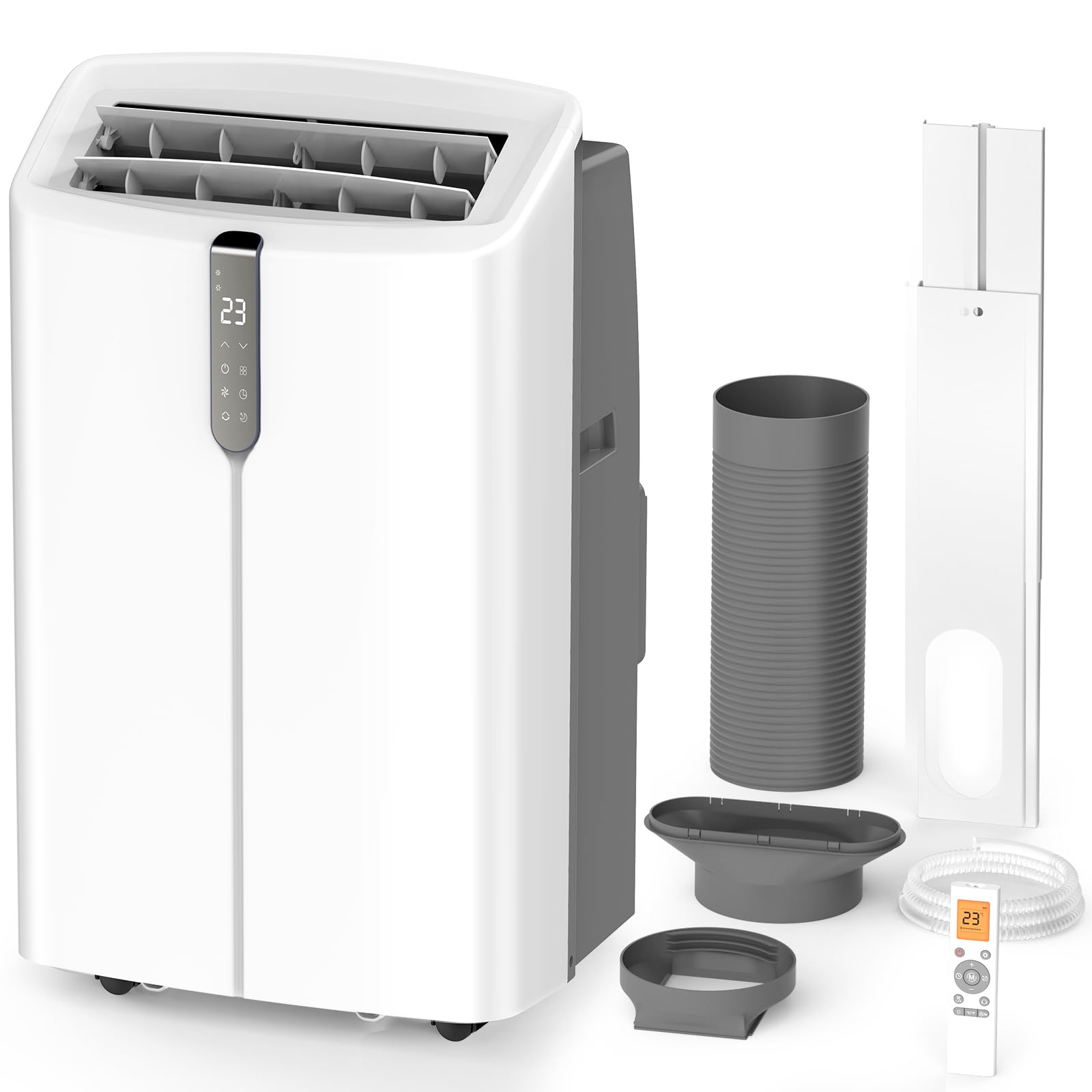
1. 14000 BTU Smart Portable Air Conditioner, Cools up to 750 sq. ft
Our pick — over 4★ from 200+ verified ratings; the strongest balance of quality and price.
750 square feet of coverage from a floor unit that rolls on four swivel casters.
This is the biggest coverage number in the group. Its 14000 BTU ASHRAE rating backs the 750 sq. ft. claim, and its 45dB sleep mode is the quietest way to cool a room that size overnight. The R32 refrigerant runs on standard 115V/60Hz household power and the cooling system is rated to hold steady between 61°F and 90°F.
The spec sheet covers the day-to-day chores too. A 24-hour programmable timer handles on and off scheduling, the auto swing louver spreads air across the room, and a child lock keeps small fingers out of the touch panel. Four 360° swivel casters plus recessed side handles mean you move it without lifting. Self-evaporation recycles condensate through the condenser coils and out the exhaust hose, which cuts how often you drain it.
Here is the gap between the brochure and your bedroom floor. This is a single-hose unit, so the exhaust pulls room air outside and some hot air finds its way back through door gaps — it still delivers, and the performance side of the record is what carries this pick. Buyers report: “Lowered room 81°F to 75°F in 2 hrs, to 68°F overnight.” A recurring gripe is the exhaust hose popping out of its connectors, which duct tape fixes in seconds. The control panel sits on top of the unit rather than the front, so you read it by looking down.
What carries it
- 750 sq. ft. coverage — the widest reach on this list
- 45dB Sleep mode plus child lock and a 24-hour timer
- Four 360° swivel casters and side handles for room-to-room moves
Where it asks patience
- Single-hose exhaust lets some warm room air back in
- Exhaust hose connectors can pop loose; tape them down
- Top-mounted control panel is harder to read from across the room
Built for: a hot upstairs bedroom or open living area where you want one unit to do the heavy lifting.
Rethink it if: the window opening is tiny and you cannot fit the adjustable seal plate.
2. TURBRO Finnmark 10,000 BTU Portable Air Conditioner
The punch-above-its-class pick for sheds, garages, and rooms you only cool part of the day.
The cooling math is where this one earns a look. Its 10000 BTU ASHRAE rating sits against the 14000 BTU unit above — a 40% cooling-power gap — but the coverage claim of 400 square feet against 750 square feet tells the real story of the 88% room-size difference. For a workspace or a bedroom, 400 square feet of rated coverage is plenty, and the 6000 BTU SACC figure is what it actually delivers in standardized conditions.
The 3-in-1 setup adds a dehumidifier rated to pull up to 73 pints per day and a 2-speed fan, and the 24-hour timer lets you automate start and stop. As owners put it: “Cooled 14’x24′ shed at 100°F outside to tolerable.” The dial-style control knob and large LED display are easy to read at a glance, and sleep mode dims the screen and drops the indicator brightness by half so a bright light does not keep you up. A full window kit handles vertical or horizontal sliding windows and the maker says setup can finish in under 15 minutes. Let the unit sit upright a few hours before the first power-on so the refrigerant settles.
What wins people over is the reliability — that is the single most-praised trait in its own feedback. The honest caveat is cooling power itself, which draws a split verdict: some owners mention it cools well, some report it does not cool at all. The recurring maintenance note is drainage — in humid weather you will run a drain hose or a bucket, so write that into your routine. Expect a white-noise hum rather than silence; this is a compressor appliance, and a few owners find it loud enough to notice.
The value read: a sub-500-sq-ft space gets real cooling at the entry point of this list, and the 73-pint dehumidifier number is genuinely useful in damp basements or garages.
Honest limit: treat 400 square feet as the ceiling — push it into a large open living room and the cooling rate falls off.
Reach for this if you need to cool one bedroom, dorm room, or workshop without spending big.
Look elsewhere if your space runs larger than roughly 400 square feet or sits in direct sun all afternoon.
3. TOSOT Aovia 9,000 BTU Portable AC, Dehumidifier and Fan
The smallest floor footprint here, and the one that fits rooms other units cannot.
Tight quarters are this unit’s whole reason for existing. Its 9000 BTU ASHRAE (5200 BTU SACC) rating covers up to 250 square feet, and the compact size is the second most-praised trait in its own feedback — that is why a bedroom, office, or narrow apartment wall is where it belongs. The 3-in-1 design also runs as a fan or a dehumidifier that removes 2.1 pints of water per hour.
Setup is the easiest part. Connect the heat exhaust hose, adjust the window panel with the quick-adjust knob, and power up — the installation kit ships in the box. Auto evaporation means you rarely empty collected water unless you live somewhere genuinely humid. The LED control panel handles mode, fan speed, and temperature, and the remote works up to 20 feet away, which is handy when the unit tucks behind furniture.
The trade-off to plan around is the thermostat readout. Several owners set it well below their target — one buyer parks it at 67°F to land the room at 72 to 74°F — so you will dial in your own comfort offset in the first week. Reliability splits too: many units run for years, while some stop working inside that window, so it helps to buy from a seller with a clean return path. On a more practical note, it is heavy to carry up stairs, though it rolls fine once you set it down.
Footprint first: if your only floor space is a two-foot strip beside a bed, this is the unit that slides in without blocking the door.
Balance it against: the 14000 BTU pick costs more but covers three times the rated square footage — pick by room size, not by brand.
Best fit: a small bedroom or home office where every square inch of floor counts.
Think twice if: you want to cool a whole floor, since 250 square feet is the hard ceiling on its coverage.
4. Midea 8,500 BTU ASHRAE Portable Air Conditioner

Smallest room, biggest control options — the pick that answers when you are not in the room.
The 8,500 BTU ASHRAE (5,000 BTU SACC) rating covers up to 150 square feet, so this is a bedroom or den unit, not a whole-floor machine. What it gives up in reach it gains back in control: the Midea SmartHome app for iOS and Android lets you switch modes and set a schedule from anywhere, and it pairs with Alexa and Google Assistant for voice commands. The 24-hour timer holds any temperature between 62°F and 90°F across cooling, dehumidification, and fan-only modes.
Installation is a no-tools job. Attach the 5-foot hose and the adjustable window brackets that fit openings from 26.5 to 48 inches, roll it into place, and turn it on. The washable air filter is the other maintenance item — pull it out and rinse it, and cleaning it weekly during operation helps the unit keep performing. Durability and build quality are what buyers call out most, and it is rated at 4-Star BEE efficiency with a copper core, running just 615 kilowatt hours per year.
The honest catch is the drain in humid weather. A few owners hit a P1 water-full error even in cooling mode, particularly in muggy climates, and the fix is opening the upper drain cap before the lower one so the tank empties fully. Noise is a fair-weather friend: low mode is tolerable, but this is a reciprocating compressor, so do not expect silence.
The convenience case: schedule it from your phone so the bedroom is cold before you walk in, which is exactly the job the app and timer are there for.
Size it honestly: at 200+ square feet, spend up on the 14000 BTU category — you will feel the difference on the first hot night.
Pick this one if your room is 150 square feet or under and you want voice and app control built in.
Pass if you refuse to run a drain hose in summer humidity.
5. ZAFRO Portable Air Conditioner, 12000 BTU, 72H Drainage-Free
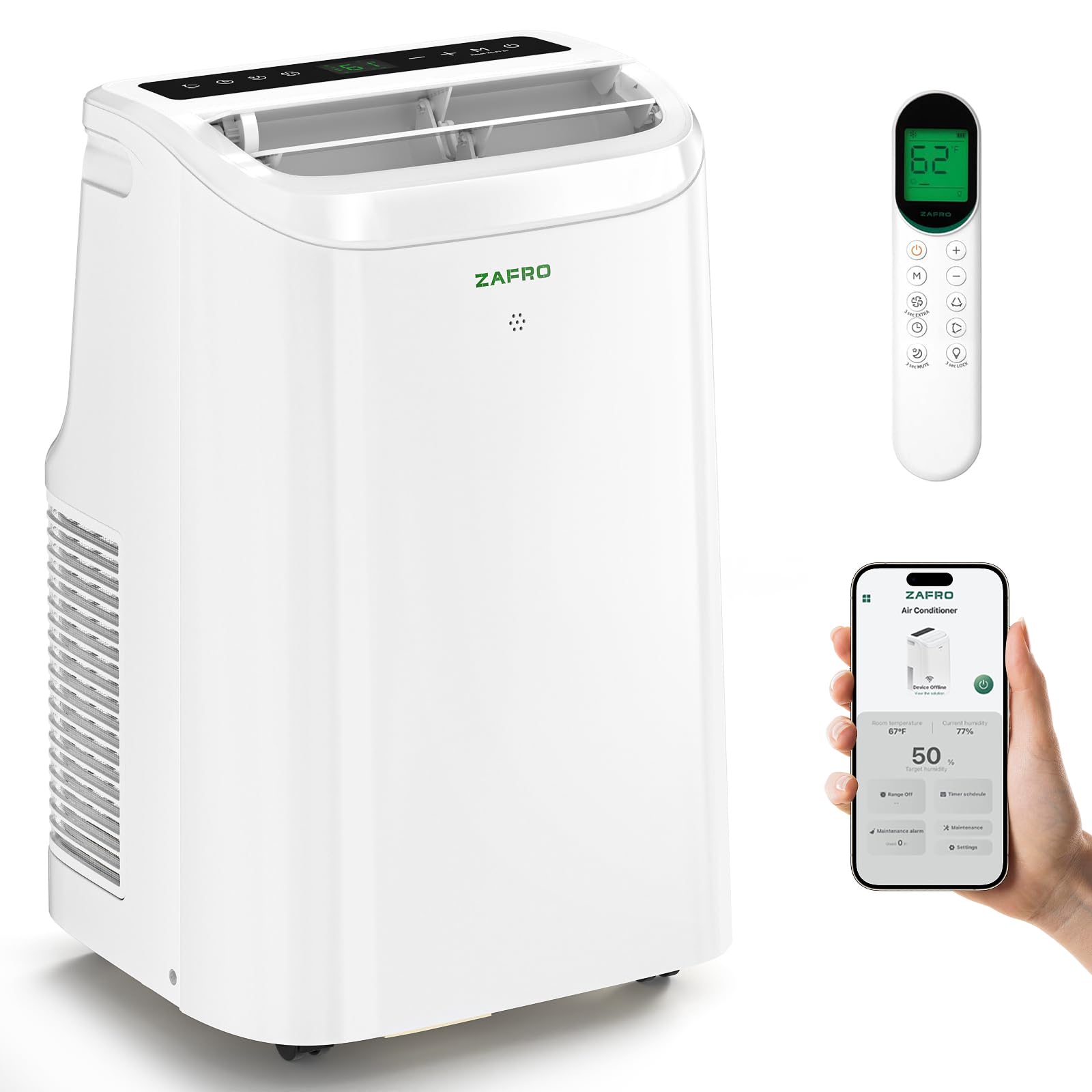
Built to skip the bucket — self-evaporating condensate handling for rooms you do not want to babysit.
Draining a portable AC by hand gets old fast, and this model is engineered to avoid it. A water wheel throws collected moisture evenly across the condenser coil, where it evaporates and leaves through the exhaust hose, so there is no drain pipe to install. The 12000 BTU ASHRAE (8000 BTU SACC) rating covers small and mid-size rooms, and the 3-in-1 setup runs cooling, dehumidification, or fan with four fan speeds — low, mid, high, and auto — plus an automatic mode. Temperature control spans 61°F to 86°F.
Smart control is fully stocked. The ZAFRO app, Amazon Alexa, and Google Home all adjust modes, fan speeds, and the 24-hour timer remotely, and a remote with a 22.97ft range works from across the room. Sleep mode steps the sound down to 47dB while easing temperature and fan speed toward morning. The whole unit is 59.3 lb and 23.23 inches tall, with four smooth casters and side handles for pushing it between rooms, and the universal window kit fits double-hung and sliding windows without tools.
Owners say it cools a bedroom fast and runs quietly, and the app shows the room temperature dropping in real time. The refill is the recurring note: a handful of buyers mention that single-hose models cycle off to prevent freezing mid-session, which is worth knowing if you plan to run it in a sealed room for hours. Packing the window seal tightly with the included foam keeps that heat from creeping back in.
Best daily rhythm: set it before bed, wake up with the room still cool, and never think about a water tank.
The catch: it is a single-hose design, so a well-sealed window kit matters more than usual.
Choose it for: bedrooms and small bedrooms where the goal is cooling with almost no upkeep.
Skip it for: an open-plan space that needs more than a single room’s worth of coverage.
6. Whynter ARC-1280WX 13,000 BTU Dual Hose Smart Wi-Fi Portable AC
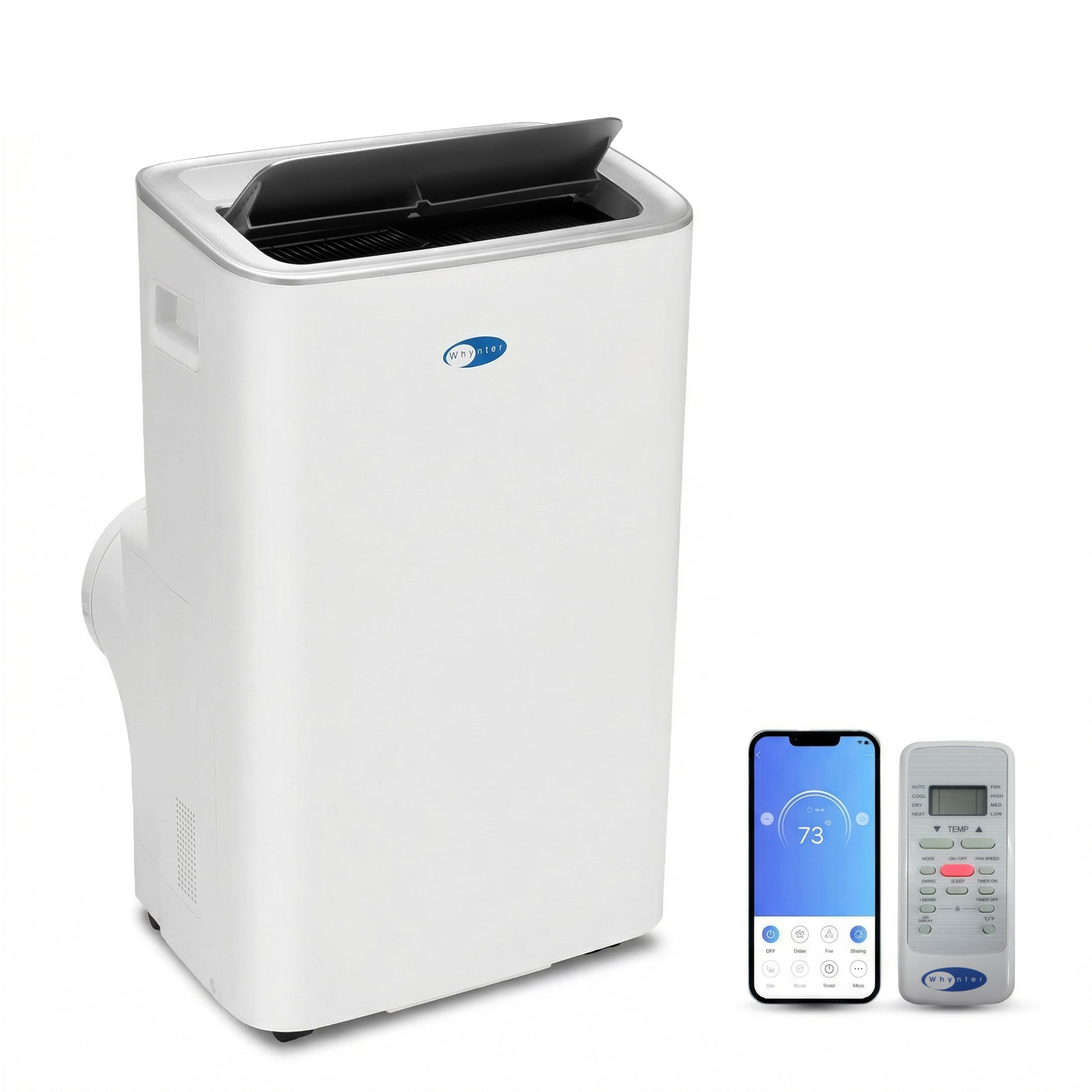
For rooms with a proper window opening and neighbors below — this one cools without announcing it.
Its 13000 BTU ASHRAE (10,000 BTU SACC) rating covers up to 500 square feet, and the dual-hose design keeps it from fighting the hot air it just pushed out. Two hoses separate intake from exhaust, so the unit is not fighting the hot air it just pushed out. Running on the NEX inverter compressor, it holds a steady temperature instead of hard cycling on and off, rated for whisper-quiet operation at noise levels as low as 50 dBA and an EER (energy efficiency ratio) of 9.9.
Connectivity is the second draw. The NetHome Plus app controls the unit over Wi-Fi from anywhere, and it works with Amazon Alexa, Google Home, and Apple Siri for voice commands. A 5-speed fan and a fully automatic 80-degree airflow louver spread the cold air where you want it, while the 24-hour timer, sleep mode, self-evaporation, washable air filter, and carbon filter cover the rest of the daily features. Thermostat control spans 60°F to 86°F.
The installation reality check is the window kit. It fits best in a generous window opening and, on some installations, the insert needs trimming, while the hose clips can leave small gaps if they are not seated tightly. The temperature control also drew a mixed note from one owner who found the unit running continuously on manual mode. That said, this is the higher-efficiency, quieter route — the inverter holds temperature far more evenly than a fixed-speed compressor, and the noise floor is the lowest on this list.
Where it wins: near-silent inverter cooling for a 500-sq-ft room, with app and voice control built in.
What to budget for: a window wide enough for the dual-hose kit — measure before you buy.
Ideal for: someone with a spacious window opening who wants the quietest, most efficient unit here.
Not ideal for: skinny casement windows or renter setups where you cannot trim the panel.
7. ZAFRO Smart Inverter Portable Air Conditioner, 14000 BTU Dual Hose
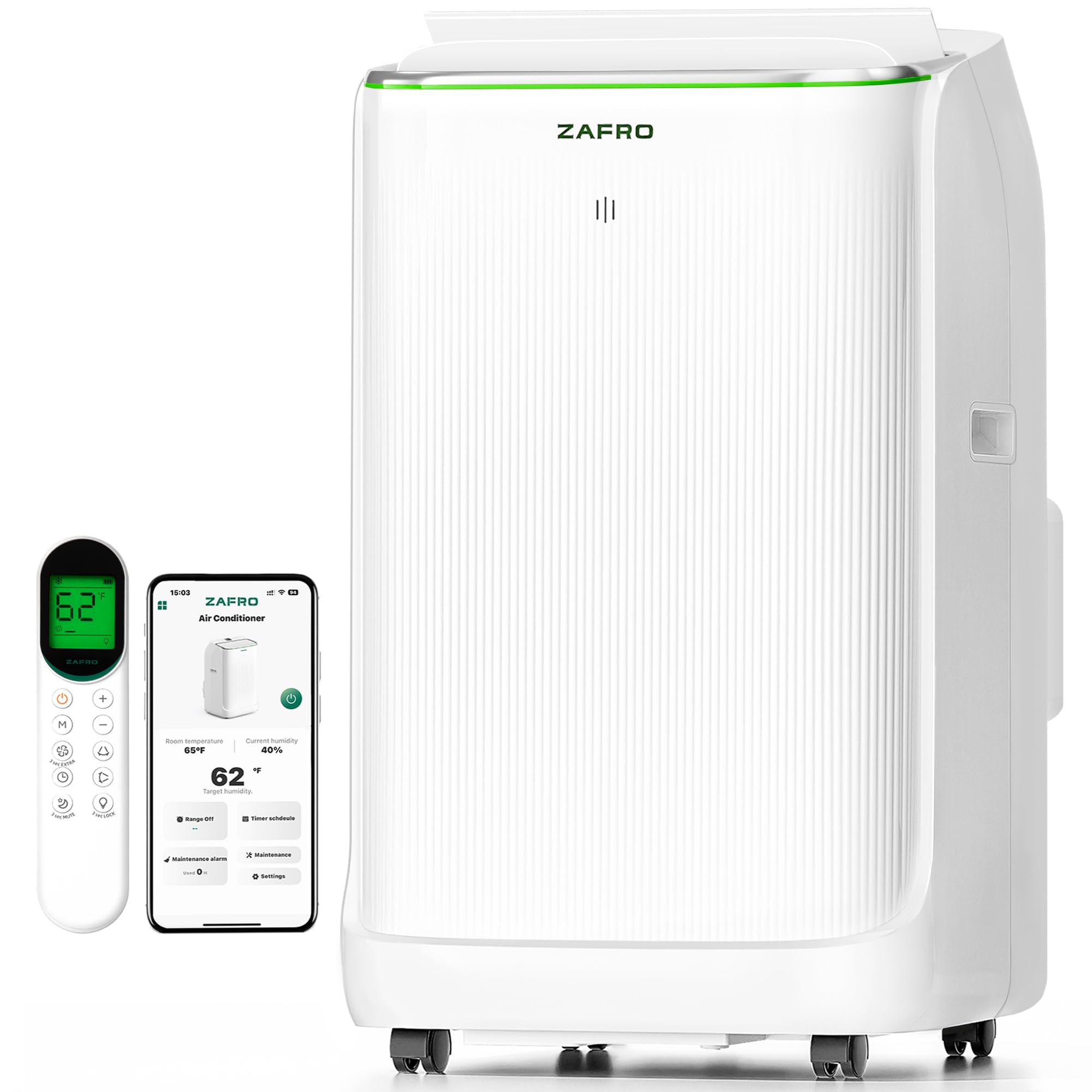
Inverter engineering plus a dual-hose intake — the closest thing here to a room you never notice is being cooled.
This is the unit to look at if you want the strongest combination of reach and efficiency. Its 14000 BTU ASHRAE (10,000 BTU SACC) rating covers up to 700 square feet, and the dual-hose system moves 480 cubic meters of air per hour. The inverter compressor holds temperature by ramping instead of cycling, which is where the 42-decibel quiet mode comes from — that is quieter than ordinary conversation, and the six modes (Cool, Dry, Fan, Sleep, Extra, and Eco) let you tune it to the situation. An Extra Mode locks the temperature at 61°F at full power for the worst of a heatwave.
Efficiency is the headline number. Its CEER of 12.8 sits well above the 7.83 standard, and the inverter control keeps power draw low enough for all-day use. The self-evaporating system handles moisture in humidity under 90% for 72 hours without draining, and a drain hose is supplied for the muggy beyond that. Wi-Fi control through the ZAFRO app, a 24-hour timer, four-way oscillation, and filter-clean reminders round out the feature set. Owners consistently report cooling a much larger area than a small bedroom, and the quiet operation comes up again and again.
The one thing to plan around is the dual-hose footprint. Both hoses and the window panel take up real space, so you need a wide window opening and floor clearance beside it. The included window kit helps, but a narrow casement will fight you. Once installed, though, the combination of coverage and low noise makes this the pick most likely to make you forget the outdoor temperature.
The case for it: 700 sq. ft. of coverage, quiet inverter operation, and a CEER of 12.8 make this the value leader in the premium tier.
The trade-off: dual-hose installation needs a generous window, so measure before you commit.
Right for you if you are cooling a large main room or open-plan space and want power without noise.
Think twice if your only window is a narrow casement or a high transom.
8. DREO 515S 12,000 BTU Portable Air Conditioner
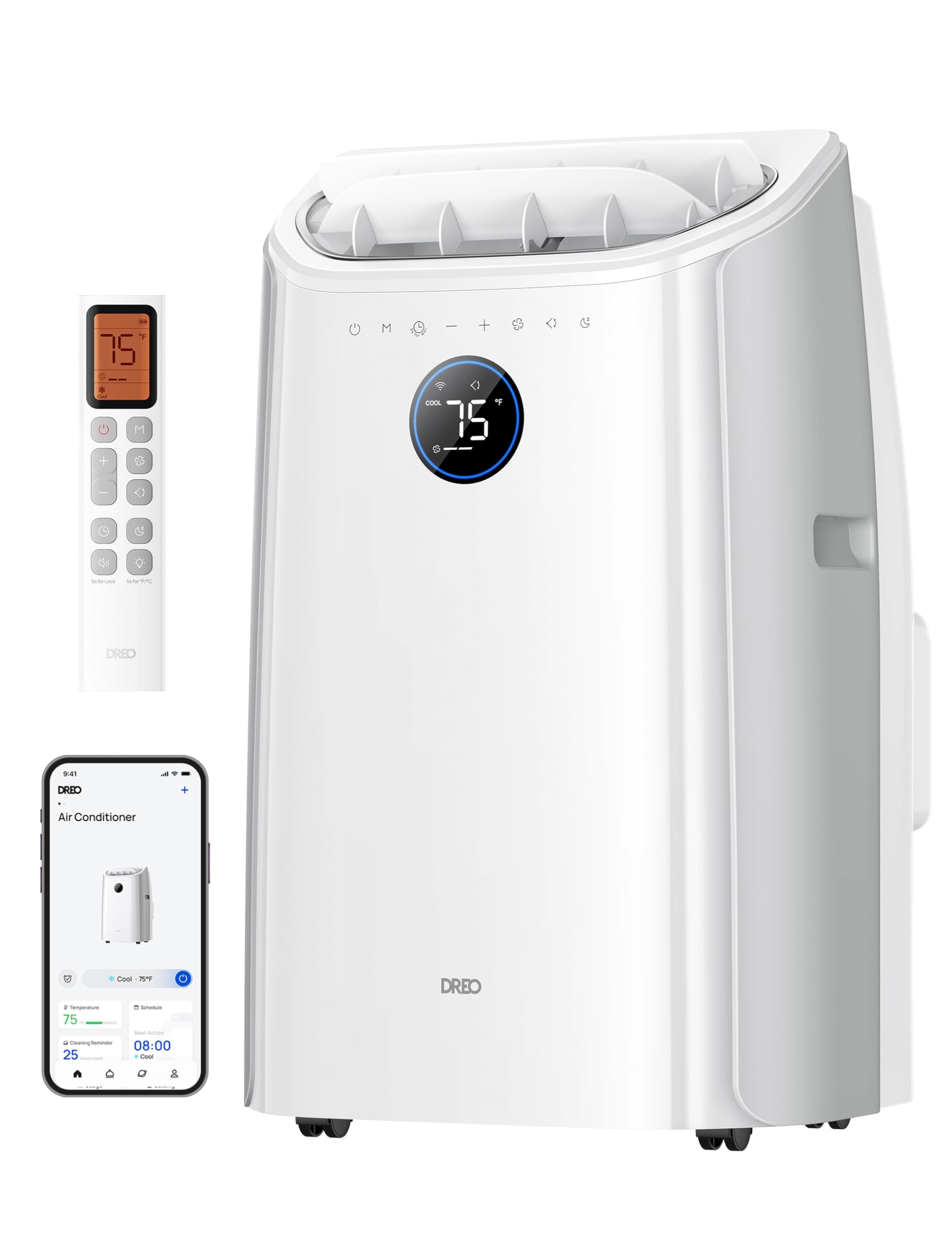
Reach up to 16 feet from the unit, with a sleep curve that adjusts through the night.
This is the bedroom specialist. Its 12000 BTU ASHRAE (8000 BTU SACC) rating covers up to 150 square feet, and the IceCool system throws cold air up to 16 feet, so it can sit by the window while you sleep across the room. A patented noise isolation system holds the compressor and turbulence noise to 45dB, and cooling stays adjustable between 61°F and 86°F. Set it low and let the room cool while you are out, or run the sleep curve to nudge the temperature through the night.
Control covers every method you might want. Siri, Amazon Alexa, and Google Home handle voice commands, and the DREO app monitors temperature and humidity while letting you customize the sleep curve. Drainage is handled by a patented system of sensors and a pump that evaporates excess water in environments under 90% humidity, so you do not manage a bucket during normal summer weather. The 3-in-1 design gives you Cool, Fan, and Dry modes, each with three functions.
Two things to know before you buy. One, high humidity is the exception: in dry or very humid conditions, customers note intermittent leaking and regular draining, so a drain hose helps. Two, the thermostat can read a few degrees off actual room temperature, and one owner corrected a 2-5°F difference through a firmware update. On the practical side, expect white-noise-level sound at the loudest setting, not silence — that is the compromise of a compressor-based unit in a compact case.
The sleep-first angle: the sleep curve and app monitoring are built for overnight use, which is why this pick sits in the bedroom lane.
Heads-up: water management becomes a weekly chore during rainy-season humidity, so plan the drain hose routing.
Go for this if a quiet, app-controlled bedroom unit is the priority and the room is small.
Rethink if you need to cool more than 150 square feet or want zero drain maintenance.
9. Whynter ARC-1230WN 14,000 BTU Smart Wi-Fi Portable AC
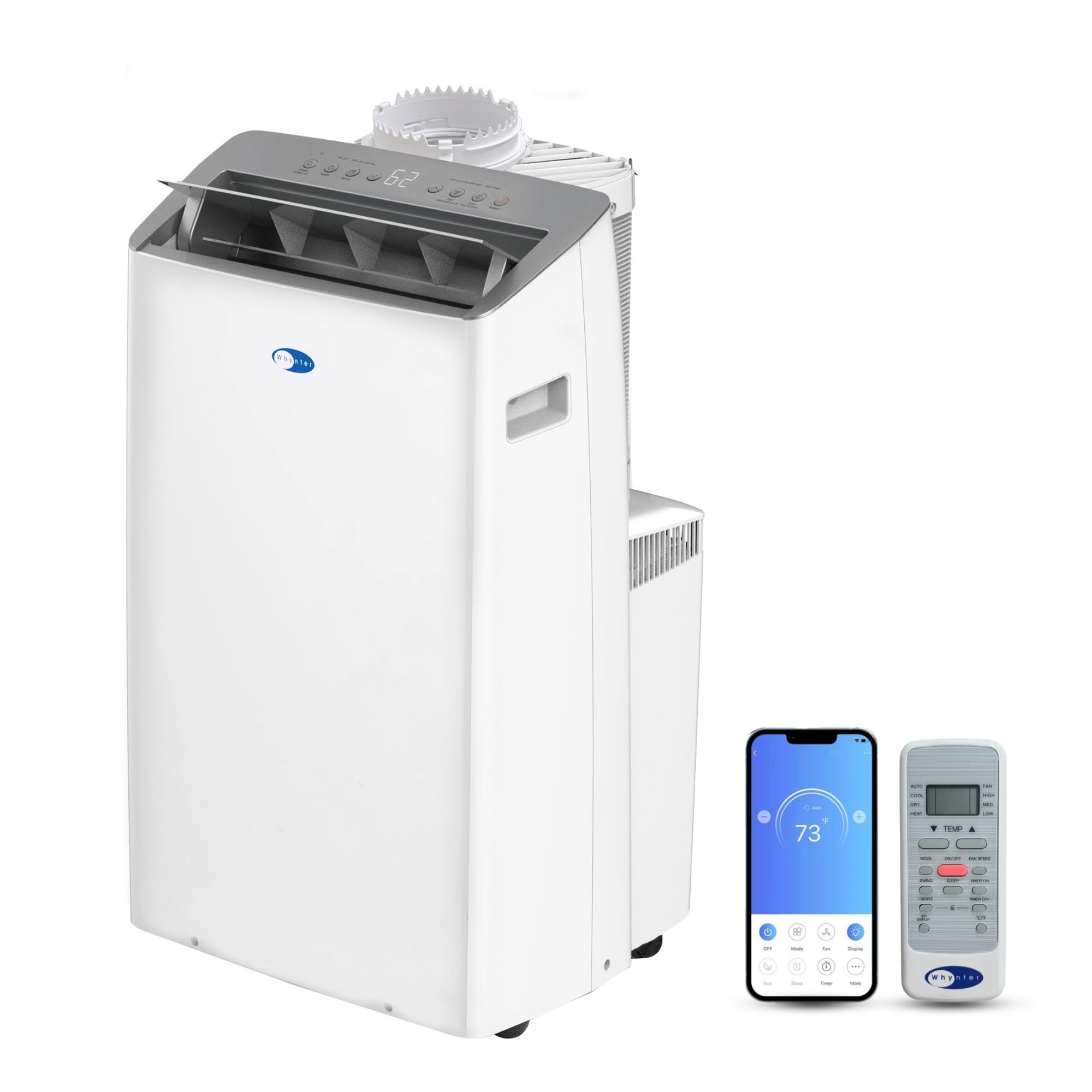
A 600-square-foot claim and a hose-in-hose design built to stop heat leaking back indoors.
Scale is what sets this one apart. The 14000 BTU rating targets large areas up to 600 square feet, and the dual-hose design — an extendable hose-in-hose that reaches up to 47 inches — separates intake from exhaust so outside heat does not seep back through the gaps. Its inverter compressor is rated at 20% more cooling and 40% more efficient use, with a 60°F to 86°F thermostat range across cool, dehumidify, and fan modes.
The convenience features are built for a big room. A built-in dehumidifier with a patented auto drain function exhausts up to 87 pints of condensate per day without manual emptying, and the NetHome Plus app controls the unit over Wi-Fi from anywhere. Alexa and Google Home handle voice commands. A 19.5-inch-wide cabinet, a window installation kit that reaches 82 inches, and a washable air filter round out the package, and the unit runs on standard 115V household power.
The one pattern to watch is reliability over the long haul. Most reviewers point out it cooling large spaces well, dropping room temperatures noticeably and holding up over months of daily use. A smaller group runs into issues around the one-year mark, including water leaking from the window hose during rain, so keep the hose clear of the weather. Also plan for the size: it is a deep cabinet and needs real floor space beside the window, not a narrow slot.
Where it earns its place: the combination of 600 sq. ft. coverage, a 20% cooling lift, and 87-pint-per-day auto drain suits a big open room.
What to keep in mind: the cabinet is bulky and the hose-in-hose needs a wide window opening.
Matches you if you are cooling a large open-plan living or dining room and want automatic drainage.
Better to look elsewhere if your window opening is smaller than a standard slider.
10. Midea Duo 14,000 BTU Portable Air Conditioner with Heat

Two jobs in one chassis — cool the room in July, warm it in January, from the same hose kit.
This is the pick to look at if you want one unit for the whole year. Midea’s industry-first hose-in-hose design separates intake from exhaust, so the unit pulls in outside air instead of dragging hot room air back through door gaps. Its 14000 BTU ASHRAE (12000 BTU SACC) inverter compressor saves more than 40% energy versus the U.S. federal standard, and the heat pump covers a 41°F to 86°F operating range.
Year-round function is the feature set’s core. The unit handles cool, heat, dehumidify, and ventilate, all with the shared hose kit, and it is designed for whole-room circulation rather than spot cooling. Smart control covers the rest: the SmartHome app for iOS and Android runs the unit from anywhere, and Alexa and Google Assistant handle voice commands. A washable air filter cleans out quickly for low-maintenance ownership.
The catch is the installation and the fit. The stiff exhaust hose can pull out of the window adapter if it is not secured, and the supplied hose runs short for some setups. The unit is designed around vertical windows, and a horizontal window needs a 90-degree adapter, which eats into efficiency. Some buyers also report that the intake and exhaust can leak air back into the room if the seals are not tight, and that the heat mode overshoots the set temperature by a few degrees — the app helps you correct it. On the upside, shoppers say cooling a bedroom to 68°F and keeping a living room at 70-75°F, and the inverter keeps it markedly quieter than a fixed-speed unit.
The year-round argument: a single unit that cools in summer and heats in winter, replacing two separate appliances.
The fit warning: it wants a vertical window, a secure hose, and a clear space beside the unit — try before you commit if your setup is unusual.
Choose this if you want cooling and heating from one unit and have a vertical window to work with.
Steer clear if your window is horizontal or you have no floor clearance beside it.
Understanding the Specs
ASHRAE BTU vs SACC BTU
ASHRAE BTU is the raw cooling number a compressor produces under a standardized test, and it is the bigger number on the box. SACC BTU is the real-world usable cooling figure and is the one that stays consistent across brands. When a box lists both — for example 14000 BTU ASHRAE and 10000 BTU SACC — the SACC figure is what the room actually receives. Compare units on SACC, not the headline ASHRAE number.
Single Hose vs Dual Hose
A single-hose portable AC pushes hot air out through one hose and pulls replacement air back in from the room, which drags warm air through door gaps. A dual-hose design splits intake and exhaust, so the unit works with outside air on both sides and leaks less heat into the room. The trade-off is the extra hose: it takes more floor space and needs a wider window opening.
Self-Evaporation and Drainage
Condensate is the water a portable AC pulls out of the air. A self-evaporating design routes that water onto the condenser coils, where it evaporates and leaves through the exhaust hose, so you rarely empty a tank. In very humid weather — the common threshold in these listings is around 90% humidity — the system cannot keep up, and you connect a drain hose or a bucket to stay ahead of the water.
Inverter Compressors and Decibels
A fixed-speed compressor switches on at full power and off again, which is louder and less even. An inverter compressor ramps up and down to hold a steady temperature, which cuts both the noise and the power draw. Inverters here run anywhere from 42dB to 50dB, while fixed-speed models often exceed that — quieter operation is the practical payoff.
FAQ
Do I need a window for a portable air conditioner to work?
What is the difference between ASHRAE BTU and SACC BTU on the box?
How many square feet can a portable AC actually cool?
How often do I have to drain a portable air conditioner?
Is a dual-hose portable AC better than a single-hose one?
Are portable air conditioners noisy enough to disturb sleep?
Can a portable air conditioner work without a drain hose?
Does a portable AC need a special outlet or circuit?
Do I need to let a portable AC sit before turning it on?
Can a portable air conditioner heat a room as well as cool it?
How should I maintain a portable AC to make it last?
Final Thoughts: The Verdict
For most rooms, the ac portable air conditioner to start with is the 14000 BTU Smart Portable Air Conditioner because it pairs the widest coverage on the list — 750 square feet — with a 45dB sleep mode and rolling casters, so it handles a full bedroom or living area without waking you. If quiet efficiency matters more than coverage, reach for the ZAFRO Smart Inverter 14000 BTU Dual Hose with its 42dB operation and dual-hose intake. And for a shed, dorm, or small budget room, the TURBRO Finnmark 10,000 BTU covers 400 square feet at the entry point of the list. Whichever you choose, check your window opening first — the hose kit, not the BTU number, decides whether the install actually works.
How We Picked
We do not accept paid placement. Every pick is matched to a real buyer and a real use-case; we do not hands-on test units.
Sources & Methodology
Specifications: manufacturer listings and product documentation. Review insights: verified customer reviews, as of September 2026. Pricing: not shown on this page (it changes often); check the current price via the retailer link.
As an Amazon Associate, Gadgets Feed earns from qualifying purchases. This does not affect which products we feature.