
Our readers keep the lights on and my morning glass full of iced black tea. As an Amazon Associate, I earn from qualifying purchases.
Specs are compiled from manufacturer listings and verified buyer reviews and can change over time — please confirm the key details on the product page before buying.
If your car’s air conditioning has gone warm and a shop has already quoted you a full compressor or evaporator replacement, a stop leak is the cheaper thing to try first — but only if it matches your refrigerant and your leak size. Get those two things wrong and you have wasted an afternoon and a can of sealant. This guide lines up the nine sealants worth knowing about, explains which refrigerant each one is built for, and shows you exactly who each pick suits.
I’m Min — the founder and writer behind Gadgets Feed. This guide is built by comparing the manufacturers’ published specifications and the patterns across verified customer reviews, so you get each pick’s real strengths and trade-offs instead of marketing spin.
Sealant only works on small leaks, so the real decision is matching the formula to your refrigerant type and leak size. That single match is what decides whether your ac stop leak for cars actually holds pressure or quietly does nothing.
Our Picks at a Glance
How To Choose The Best AC Stop Leak For Cars
Before you buy anything, find your car’s refrigerant type. It is printed on a sticker under the hood or on the underside of the hood itself, and it is usually R-134a on older cars or R-1234yf on newer ones. Buy the sealant built for that exact refrigerant, because the cans and the charging ports are not the same size and a mismatched can will not connect at all.
Match the formula to the leak, not the marketing
A stop leak is designed to seal small pinhole leaks and slow seepage in rubber and metal lines. It cannot rebuild a cracked condenser or a blown compressor. If your system loses its full charge in a day or two, the hole is too big for any of these formulas and you need a proper repair.
Know how you will get the sealant in
Some products are direct-inject vessels that go straight into your service port with a manifold gauge set. Others are simple cans that thread onto a charging hose. Some, like the Nu-Calgon EasySeal, are built to be injected without pumping down an R-410A unit. Pick the delivery method that matches the tools you already have or are willing to buy.
Check compatibility with your oil and parts
Look for a formula that lists compatibility with the lubricants in your system — POE, PAG, and mineral oil are the three common types. The best formulas also state they are non-hardening and free of solid particles, because solidified polymer residue is what clogs expansion valves and orifice tubes later on.
Quick Comparison
| Model | Best For | Refrigerant | Treats Up To | Delivery | Amazon |
|---|---|---|---|---|---|
| Nu-Calgon 4050-11 EasySeal Direct Inject★ Best Overall | HVAC pros and split systems | R-410A friendly | 2 to 7.5 tons | Direct inject | Amazon |
| ZeroR Max Seal ES Pro SealBest Value | Small A/C systems, one-can fix | All oils and refrigerants | One system per can | Pressurized can | Amazon |
| Errecom Extreme UltraNo-Polymer Pick | Preventative maintenance | All refrigerants | 6 tons (21 kW) | Cartridge | Amazon |
| RED TEK ProSeal12 | Older R-12 and R-134a cars | R134a, R12 | — | Can | Amazon |
| A/C Zero Leak Fluorescent Yellow | Automotive and home HVAC mix | POE, PAG, mineral oil | 5-ton systems | Liquid bottle | Amazon |
| BlueDevil Red Angel | Slow leaks in R-12 or R-134a | R-12, R-134a | — | Can | Amazon |
| R-1234yf Stop Leak | Newer cars on R-1234yf | R-1234yf only | — | Pressurized can | Amazon |
| Leak Saver Direct Inject | DIY car and home systems | All except ammonia | 5 tons | Direct inject | Amazon |
| Nu Calgon 4050-08 EasySeal | Slow leaks in small systems | All refrigerants | — | Direct inject | Amazon |
In‑Depth Reviews
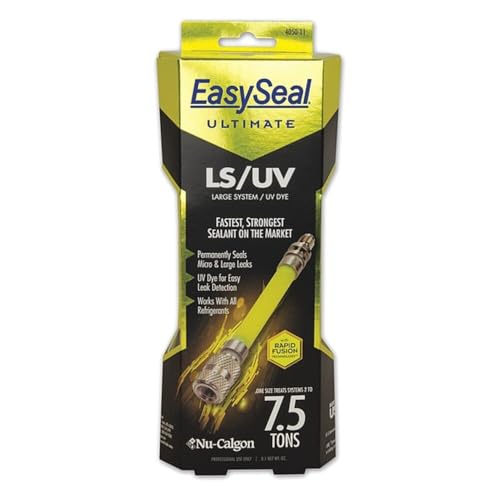
1. Nu-Calgon 4050-11 EasySeal Direct Inject-UV Dye
Our pick — over 4★ from 350+ verified ratings; the strongest balance of quality and price.
One tiny vessel that seals a coil leak without pumping down your R-410A unit
This is the smallest package in the whole lineup — the item weight is just 0.16 ounces, which makes it a 42x weight difference against the RED TEK can at 6.72 ounces. That lightness is the point: it is a concentrated formula, so less material ends up sitting inside your system waiting to cause trouble later. It treats systems from 2 to 7.5 tons, which covers the split systems, heat pumps, microchannel coils, and mini splits most people are chasing a fix for.
A clear tube lets you watch the sealant travel in. That sounds like a small thing until you have burned a can because you could not tell whether it actually injected. On top of that, the R-410A units do not need to be pumped down first, which saves you a whole evacuation setup. The one hard rule: it is one-time use, so it goes into one system and that is it.
What wins people over is the quality of the package itself — customers keep coming back to how it seals small condenser coil leaks that a technician flagged. The honest catch is that it only works on pinholes: on major leaks with low pressure (≤50 psi R22, ≤70 psi R410A), a certified tech reported that it failed once and refrigerant was lost again after months. If your system is losing its charge fast, this is not the tool.
Where it earns its keep
- 0.16 ounces — a highly concentrated formula that puts less material in the system than the 6.72-ounce RED TEK can
- Clear tube lets you see the sealant flow in, so you know it actually went in
- R-410A units don’t need to be pumped down before injecting
- Covers a wide spread, from 2 tons up to 7.5 tons
Where it hits its limit
- Doesn’t work on major leaks — low-pressure systems under 50 psi R22 or 70 psi R410A are out of range
- One-time use only, so a second attempt means buying again
- The best results need a manifold gauge set up front
Grab this if: you have a slow, hard-to-find pinhole leak in a split system, heat pump, mini split, or packaged unit and want a small, precise dose.
Hold off if: your leak is a full-charge loss — that size of leak is outside what this sealant can hold.
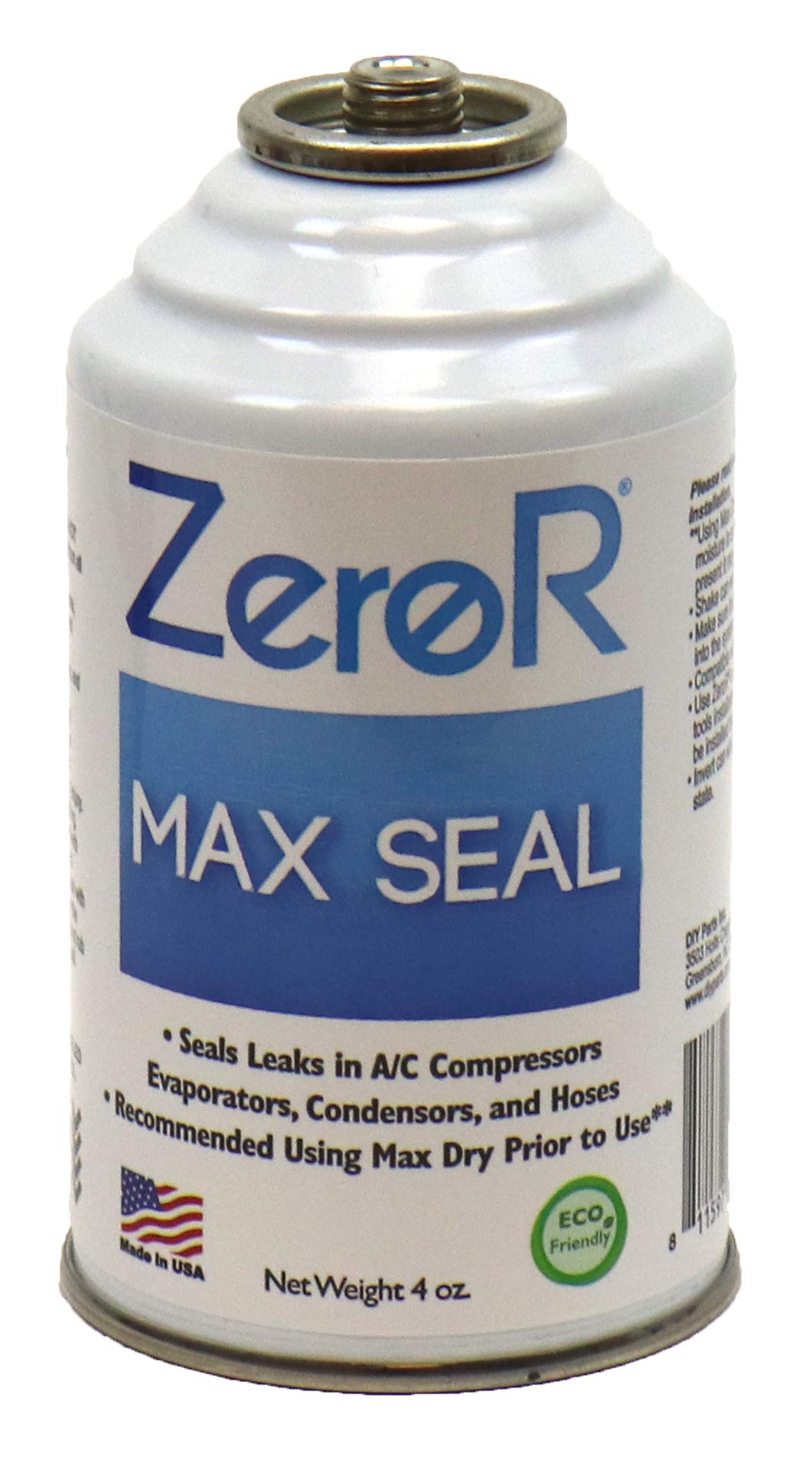
2. ZeroR Max Seal ES Pro Seal, 4 oz
A one-can fix for a small system that keeps losing its charge
The ZeroR is a single 4-ounce can designed to go into one A/C system and seal leaks across all the components. That 4-ounce size is worth noting: it is the same volume as the RED TEK ProSeal at 4 ounces, even though the RED TEK weighs 6.72 ounces as shipped. ZeroR claims it is specially built to stop leaks in all components, not just the rubber parts like o-rings and hoses that cheaper stop leaks only “condition.”
Compatibility is broad here — it mixes safely with all types of oils, stop leaks, and refrigerant. If you are topping up an older, neglected system and you do not know exactly what oil is in it, that matters. The maker recommends pairing it with their MAX Dry product to remove system moisture.
The catch is real and it’s in the listing: Return policy considers this a HazMat Material. It cannot be returned, Amazon will not supply a return label, and the seller will not either. That means the decision is locked the moment you click buy. Owners using it on their own units report the system no longer needs a refrigerant top-up, though a few are still waiting to see how it holds up.
The buying question: do you want one can that claims to seal every component type, with no return possible? That is what this is. It goes in once, treats one system, and the result is on you.
Fit note: if you share a shop AC, are troubleshooting multiple units, or want the option to return an unopened can, skip this one and pick a resealable bottle instead.
Worth it for: a single small A/C system where you want the sealant to cover every part of the loop, not just the rubber bits.
Not for: anyone treating more than one system, since one can is only meant for one unit.
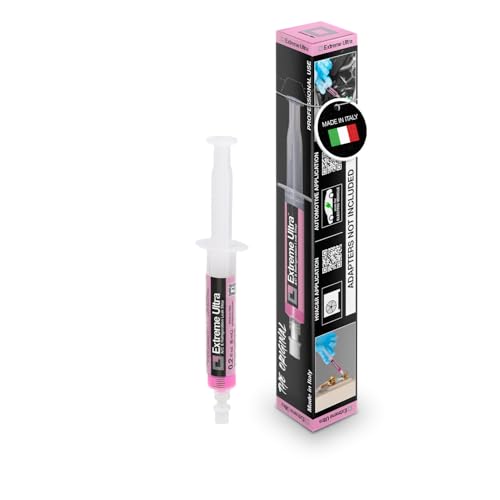
3. Errecom Extreme Ultra A/C Leak Stop
The polymer-free formula built to avoid clogging expansion valves and Schrader valves
Errecom’s formula is polymer-free on purpose. The spec sheet says it does not react with moisture or oxygen, which the maker claims prevents blockages or damage to the components that clog up — expansion valves (TXVs, TEVs, capillary tubes) and Schrader valves. If you have ever had a stop leak turn into a gummy restriction in the expansion valve, you know why that spec exists.
It covers systems up to 6 tons (21 kW) and works with all refrigerants and lubricants. The company recommends a 5-minute vacuum test before use to confirm the leak is small enough to seal — that step alone saves people from wasting a cartridge on a leak the product can never fix. It is refillable under a US-patented system (US 11002470): refills cost a cartridge, not a whole new injector.
Honest picture: the reviews are split. Someone running an appliance repair route reported it has not worked on any of the roughly 10 refrigerators he has tried it in, and another noted it may have slowed a condenser leak but did not stop it. Plenty report success on smaller leaks. This is a formula for the careful user who runs the vacuum test first, not a gamble on a mystery leak.
Why pick it over the cans: the refillable cartridge means the second and third jobs cost you a cartridge, not a whole kit — the only product here with that model.
The honest trade-off: the split reviews mean you should run the 5-minute vacuum test first. If your leak fails that test, no amount of this cartridge will help.
Pick this when: you are treating leaks repeatedly across systems and want to refill the same injector instead of buying new cans each time.
Skip it when: you have a clearly large leak or a compressor issue — no cartridge fixes those.
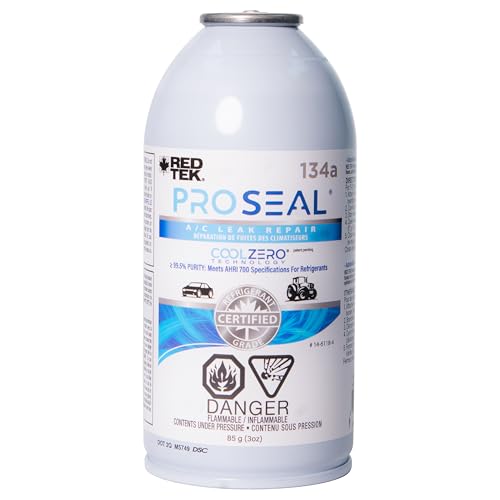
4. RED TEK ProSeal12 A/C Seal Treatment
The formula the older-car crowd keeps coming back to
If your project is a 30-year-old car with an R-12 or R-134a system, this is the pick that keeps showing up in that world. It stays in the system as a liquid lubricant after installation, ready to seal future leaks as they appear — so one can does two jobs. It is compatible with the metals, seals, gaskets, hoses, compressors, and o-rings in the system, and lists compatibility with R134a, R12, and both mineral and synthetic (Ester and PAG) lubricants.
RED TEK says this formula is less toxic than methanol-based seal treatments. The container holds 2 fluid ounces of liquid, but the can as shipped weighs 6.72 ounces — much of that is the can itself, which is why it sits at the heavy end of the lineup here.
What buyers report is mostly about older vehicles: a 30-year-old car with a fully sealed leak is the classic case, and blown-cold air is the recurring note. The honest catch is the instructions: one reviewer noted they are awful and conflicting and that there is no tech support or internet help, and another advises pumping down the system before adding. If you can read past a bad instruction sheet, this one has a decade of results behind it. Note also that it is non-refundable and non-returnable because it is classed as hazardous.
What makes it a classic
- Compatible with R134a and R12, plus mineral, Ester, and PAG lubricants
- Stays in the system as a liquid lubricant that keeps sealing future leaks
- Formula avoids methanol, unlike some competing seal treatments
- 4-ounce can with 2 fluid ounces of liquid volume
What to have ready before you buy
- Instructions are widely reported as confusing — plan to research before you hook up
- No support line for troubleshooting, so the fix is on you
- Non-returnable due to hazardous material classification
- One buyer reports a clogged system after use, though most owners mention a full seal
Reach for it when: you have an older car (a ’90s or older R-12 or R-134a system) and want a formula with a long track record.
Look elsewhere when: you have never charged an A/C system before — the instruction quality is the weak point here.
5. A/C Zero Leak 4 oz Fluorescent Yellow

The full-bottle bottle that treats a car or a home unit equally well
Zero Leak comes as a 4-fluid-ounce bottle of fluorescent yellow liquid — no cans, no pressurized propellant, no tube. That 4-ounce size is exactly what makes it a home-and-auto crossover: one bottle treats up to a 5-ton system, whether that is a car or a residential air conditioner. The formula seals minor leaks in evaporators, condensers, seals, and gaskets without hardening, and the maker says it stays moisture-safe to prevent blockages.
Compatibility is one of the strongest specs here. It works with POE, PAG, and mineral oil-based lubricants, so it goes into any of the three common oil types without a fight. And the color is not just cosmetic — the fluorescent yellow shows up under UV light, which lets you trace exactly where a leak is escaping.
The catch is delivery. This is a liquid bottle, not a can, so you will need an injection setup to get it into the system. One buyer mentioned it needs a pressure oil/dye injector kit and that auto use calls for about 2oz per 2.2 lbs of refrigerant. Another warns it is “not for novices” for exactly that reason. The reward is that it handles real leaks — an evaporator leak on a 2008 Trailblazer that beat three other sealers is the standout story from the review pages.
Where it shines: the fluorescent dye. If your system has never been traced before and you want to actually see where the leak is before you seal it, this bottle gives you that.
What to have ready: an injector kit. Without one, this liquid stays in the bottle and your A/C stays warm.
Pick it if: you are comfortable with an injector kit and you want one bottle that covers a car or a home A/C up to 5 tons, with dye to trace the leak afterward.
skip it if: you want a push-button can — this is a liquid that needs a tool to go in.
6. BlueDevil Red Angel Automotive A/C Stop Leak

The red bottle people reach for when a car loses a little Freon every few weeks
Red Angel is a chemical weld rather than a polymer filler. The formula contains no solid or particulate matter, which the maker says prevents clogs in the A/C system and damage to a recovery unit. It works in both R-12 and R-134a systems, and the maker claims a permanent, guaranteed seal. The 2-ounce bottle is small, but a slow leak only needs a little product to find and coat the escape point.
Customers note the ice-cold air coming back and holding for a couple of months at a stretch. One noted his system stayed leak-free for 6 months of a Florida summer after a careful, quick injection — with the system evacuated first so air did not race the sealant into the leak. That is the technique this product rewards: prepare the system, then get the can in fast.
What to know before you buy: this is a temporary fix for a slow leak, not a substitute for a repair. A few reviewers report short-term relief — initial success for a month or two and then a return of the leak — and one notes a pressure sensor was damaged by the sealant. That last case is why the chemical-weld approach needs to match your system exactly. If your leak is quiet and slow, this lands well; if it is fast and obvious, skip to a real repair.
Why owners like it: no particulates means less risk to your recovery machine and expansion valve, and the chemical weld holds quickly on slow leaks.
What you should accept going in: results are sized to your leak, so treat this as a season-extension fix rather than a permanent repair.
Good match for: a slow leak in an R-12 or R-134a car where you want to get through one more summer without a shop bill.
Wrong tool for: a fast leak, or a system where you are not prepared to evacuate and inject carefully.
7. Stop Leak for R1234yf Systems
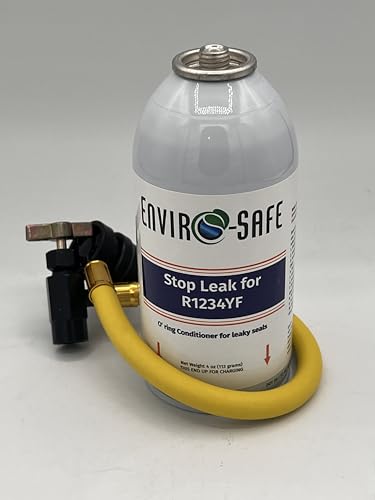
Built for the newer cars running R-1234yf — a different fitting and a different pressure
This is the only product in the lineup that is specifically built for R-1234yf, which is the refrigerant used in most new cars. If your vehicle uses R-1234yf and you bought a generic stop leak, the can would not thread onto your port. This one does. The can is a normal pressurized container that uses an R-1234yf-specific connection — it is not for R-134a systems, so check the sticker under your hood before you buy.
Reviewers point out it working across a range of newer vehicles, including a 2019 Nissan Kicks S, a 2018 Jeep Grand Cherokee, and a 2017 BMW 5 Series. One buyer described the AC blowing 40 degrees after adding the stop leak with fresh refrigerant on a 2017 Silverado. Functionality is the most frequently mentioned strength across the reviews, so the pattern on newer cars is a good one.
The instructions are the weak spot. One owner reported you have to be very delicate with the valve: back the screw fully out first, screw the valve in quickly to pierce the can and seal it, then attach the hose. Skip that order and you can lose your car’s refrigerant into the open air. Another noted that a car must be very low on Freon before the can helps, and that refrigerant pressure needs to land around 35-40 psi on the low side.
The single reason to buy: it is the right connector for R-1234yf, and no other can in this roundup is built for that refrigerant.
What reviewers flag: the instruction sheet is thin. Read it twice and follow the valve sequence exactly.
Buy it when: your car sticker says R-1234yf and you want a stop leak made for that system, with the right fitting from the start.
Don’t buy it when: your car uses R-134a — the can will not connect at all.
8. Leak Saver Direct Inject AC Leak Sealer

The one that works with nearly every refrigerant, including ammonia-free car systems
Leak Saver’s coverage is the broadest in this lineup. The maker states compatibility with all systems, all refrigerants except ammonia, and all oils — including R410A, R22, R134A, r1234yf, R404A, R290, and R600a. Systems up to 5 tons are covered. The 3.2-ounce unit uses direct injection through a basic manifold gauge set or the brand’s own Leak Shot Injection Kit, no messy syringes or pressurized cans.
The sealant reacts with the air and moisture at the leak site to permanently seal the leak, so long as the complete refrigerant charge is not lost within 7 days. Run as preventative maintenance instead, and the active ingredient circulates to seal future leaks before they cause refrigerant loss. Made in the USA, and the company reports more than 4,000,000 units sold since 2015.
Two things to plan for. First, the install is not a one-minute job: one experienced DIYer noted he still pulled air into the system and recommends watching the instructional videos and following every step in order. Second, adapters are needed for cars and mini splits — the standard 134A-to-1/4-inch charging adapter for automotive systems and a 5/16-inch to 1/4-inch adapter for mini splits, sold separately. The formula itself has years of results in home and auto systems.
Why it’s the crowd favorite here
- Works with all systems and refrigerants except ammonia, including car refrigerants
- Seals leaks permanently when the charge is not lost within 7 days
- Doubles as preventative maintenance — the active ingredient circulates to seal future leaks
- 3.2-ounce direct-inject vessel, no pressurized can or syringe needed
What to plan for
- Automotive systems need a separate 134A-to-1/4-inch adapter, not included
- Mini splits need a separate 5/16-inch to 1/4-inch adapter
- Install is not a one-step process — watch the videos and follow the order exactly
- The 7-day rule means large, fast leaks are outside what this sealant is designed for
This is your pick if: you want one can that covers a car, a home system, or both, and you can follow an injection process patiently.
Not for you if: you want a plug-and-play can — this one expects a manifold gauge setup and an adapter for the car.
9. Nu Calgon 4050-08 EasySeal Direct Inject

The single-dose vessel that small-system owners keep coming back to
This EasySeal Ultimate LS is the concentrated sibling of the 4050-11 above — same family, smaller dose. It holds 0.1 ounces of liquid in a single-use vessel. That tiny amount is deliberate: the formula is concentrated, so more product is not necessary and less material ends up in the system. It is designed for split systems, heat pumps, microchannel coils, packaged units, and mini splits, and it does not require pumping down R-410A units.
The clear tube lets you confirm the sealant actually moved into the system. Shoppers say it holding up long-term: one used it in a 3.5-ton system with a 2-3 lb-per-year R22 leak and had no need for a refill in the following year. Another says 3 years later the system is still sealed and working after previously needing a recharge every few months.
The catch is the injection itself. One customer observed the first tube failed to inject because of a recessed valve pin actuator and lost product — the second tube worked after unscrewing the valve core a few turns. The takeaway: this is designed for small condenser, evaporator, and line leaks, not compressor faults or major leaks. If your leak is somewhere reachable and slow, this is a good match; if you cannot verify the leak location, get that diagnosed first.
Where it earns repeat buys: the single-tube format works well for a small system you are treating once and forgetting about, with no cartridge to store afterward.
The honest catch: injection is finicky on some valves. Give yourself a spare tube or ask your tech to handle the install if you are unsure.
Best for: a small split system, mini split, or heat pump with a slow leak you have already traced to a condenser, evaporator, or line.
Not for: a system that has lost its full charge, or one with a suspected compressor leak.
Understanding the Specs
Refrigerant Type (R-134a vs R-1234yf)
Your car uses one refrigerant or the other, and the cans and fittings are different sizes. R-134a has been standard on older cars and R-1234yf is standard on newer ones. Buying a stop leak built for the wrong refrigerant means the can will not thread onto your service port at all. Always check the sticker under the hood first.
Treated Tonnage
A ton is the cooling capacity of the system, not the weight of the sealant. A “5-ton system” is a large residential A/C; a car system is well under one ton of cooling capacity but still uses a full dose of sealant. Products here treat anywhere from 2 tons up to 7.5 tons, and a car is within that range on most of them.
Delivery Method
Three flavors here: pressurized cans that thread onto a charging hose, direct-inject vessels that go through a service port with a manifold gauge set, and liquid bottles that need an injector kit. Pick the delivery method that matches the tools you already own, because buying a stop leak that needs an adapter you do not have wastes a trip.
Oil Compatibility
POE, PAG, and mineral oil are the three refrigerant lubricant families. Some stop leaks work with all three; others only list one or two. Match your system’s oil to the formula so the sealant mixes cleanly instead of separating inside the loop.
FAQ
Will a stop leak work on my car’s A/C or is it just a temporary patch?
How do I know whether my car uses R-134a or R-1234yf?
Can a stop leak clog my expansion valve or recovery machine?
Do I need any special tool to install a car A/C stop leak?
Does a stop leak work on a leak I cannot see under the hood?
How long until I know whether the seal actually held?
Can I use one bottle or can on more than one car or system?
Is a direct-inject can better than a pressurized can for a DIYer?
Will a stop leak hurt my system or my recovery machine later?
Can I add a stop leak if my system is still blowing cold?
Final Thoughts: The Verdict
For most buyers with a slow leak in a modern car or a home system, the ac stop leak for cars winner here is the Nu-Calgon 4050-11 EasySeal Direct Inject because it packs a concentrated 0.16-ounce formula into a direct-inject vessel that covers systems from 2 to 7.5 tons and works without pumping down R-410A units. If you drive a newer car on R-1234yf, grab the R-1234yf Stop Leak — the fitting is specific to that refrigerant and no other can here fits that port. And for a slow leak in an older R-12 or R-134a car that you want to hold through one more season, the RED TEK ProSeal12 is the one with the longest track record. Whichever you pick, confirm your refrigerant type on the under-hood sticker first; get that one match right and every other decision gets easier.
How We Picked
We do not accept paid placement. Every pick is matched to a real buyer and a real use-case; we do not hands-on test units.
Sources & Methodology
Specifications: manufacturer listings and product documentation. Review insights: verified customer reviews, as of September 2026. Pricing: not shown on this page (it changes often); check the current price via the retailer link.
As an Amazon Associate, Gadgets Feed earns from qualifying purchases. This does not affect which products we feature.