
The single worst camping mistake is thinking a standard battery fan will cut it when the sun turns your tent into a convection oven. After the first sleepless, sweat-soaked night, you realize the only thing that matters is actual refrigerated air—measured in BTUs—piped directly into your sleeping space. Unlike a breeze that just moves hot air around, a true tent AC unit creates a sealed microclimate that lets you recover and sleep deeply, regardless of the temperature outside.
I’m Min — the co-founder and writer behind Gadgets Feed. I’ve spent hundreds of hours analyzing the portable cooling market, cross-referencing compressor specs, BTU ratings, real-world power draw, and decibel levels to find the units that actually perform inside a polyester shelter.
Whether you’re car camping with shore power or running a solar generator in the backcountry, finding the right ac unit for tent means balancing cooling capacity, weight, noise, and electrical demands in a way that no generic home AC can match.
How To Choose The Best AC Unit For Tent
Choosing a tent AC unit is fundamentally different from buying a window unit for your bedroom. You are constrained by weight limits, power availability, noise tolerance at close range, and the need to exhaust hot air without creating a leak. Three factors dominate every decision.
BTU Rating vs. Tent Volume
BTU (British Thermal Units) is the only honest measure of cooling power. For a standard 4-person tent (roughly 60–100 square feet), you need at least 5,000 BTUs to drop the temperature meaningfully on a hot day. Units below 3,000 BTUs, like the 2,380 BTU nommyair, work well for tight one-person shelters but will struggle in larger canvas tents.
Power Source and Run Time
Every compressor-based unit listed here requires 110–120V AC power. If you plan to camp without hookups, you must pair the AC with a portable power station or a generator. The EcoFlow Wave 3 is the only model that ships with a dedicated battery for cordless operation. For other units, check the wattage: the Outohome 5,200 BTU draws about 400 watts, meaning a 1,000Wh power station runs it for roughly 2.5 hours at full tilt.
Noise at Sleeping Distance
Tents amplify noise. Units rated at 45–50 dB sound quiet outside, but inside a nylon or polyester tent the compressor hum and fan whoosh become very present. Look for a dedicated Sleep Mode that drops the fan speed (and noise) below 46 dB. The Cybertake S2 Pro claims a whisper-quiet 40 dB, which makes a real difference when the unit is three feet from your head.
Quick Comparison
On smaller screens, swipe sideways to see the full table.
| Model | Category | Best For | Key Spec | Amazon |
|---|---|---|---|---|
| BougeRV PC35 | Compressor | Small tents, app control | 3,500 BTU, 34.2 lbs | Amazon |
| Outohome 5,200 BTU | Compressor | Mid-size tents, energy efficient | 5,200 BTU, 400W draw | Amazon |
| Outohome 5,100 BTU | Compressor | Truck camping, sleep mode | 5,100 BTU, 35 lbs | Amazon |
| Baykul 6,800 BTU | Heat Pump | Year-round comfort | 6,800/7,500 BTU, 35.7 lbs | Amazon |
| Cybertake S2 Pro | Battery Ready | Off-grid, multi-power input | 5,100 BTU, 21 lbs | Amazon |
| EcoFlow Wave 3 | Battery Included | Cordless, premium all-in-one | 6,100 BTU, 32 lbs | Amazon |
| Nommyair 2,380 BTU | Compressor | Ultra-light, one-person tent | 2,380 BTU, 14.3 lbs | Amazon |
| FODFINU Swamp Cooler | Evaporative | Dry climates, budget-friendly | 650 CFM, 3.5 gal tank | Amazon |
| Baykul 5,000 BTU | Compressor | Value mid-range, dehumidifier | 5,000 BTU, 30.8 lbs | Amazon |
In‑Depth Reviews
1. Outohome 5,200 BTU Portable Tent Air Conditioner
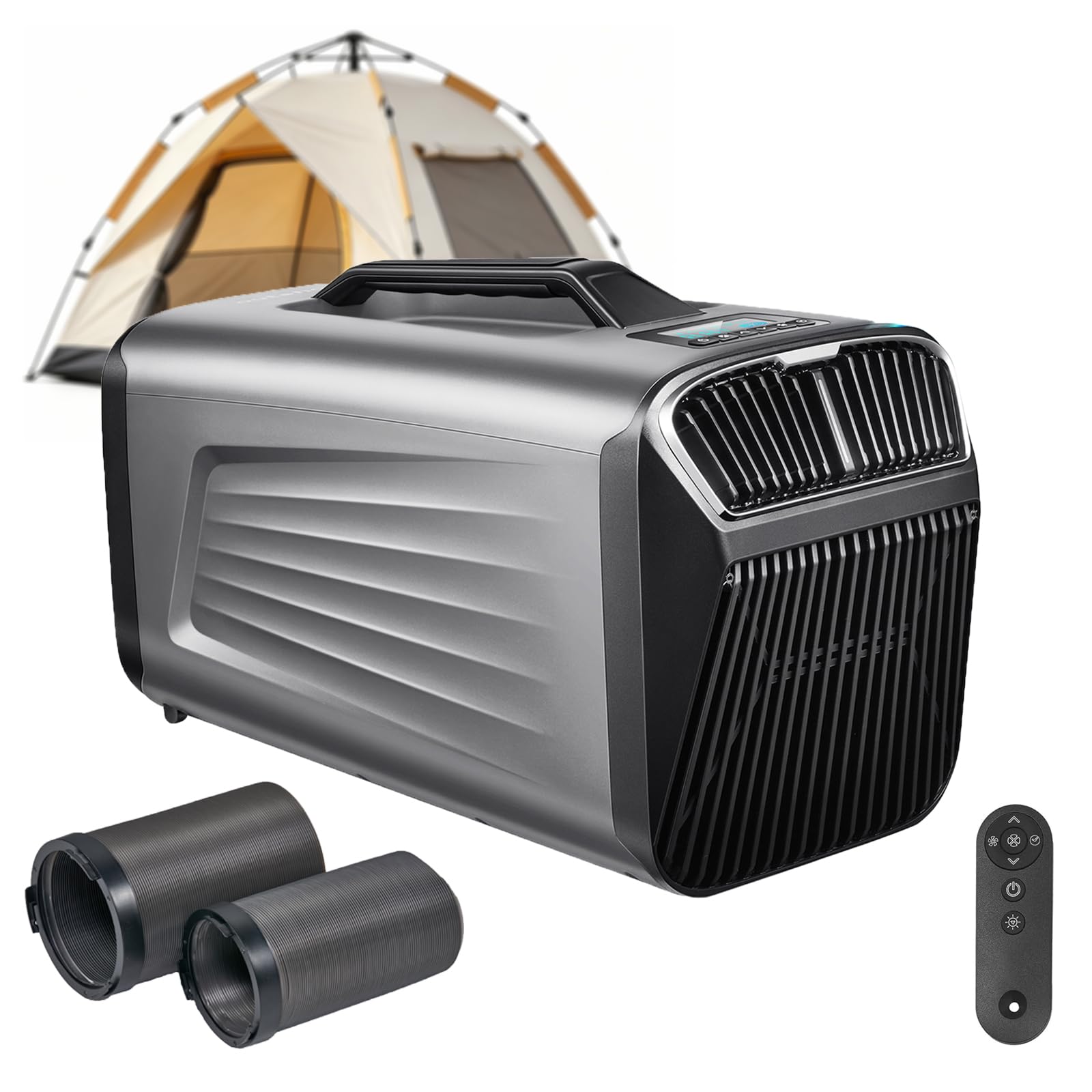
The Outohome 5,200 BTU strikes the hardest-to-find balance in this category: enough thermal mass to cool a full-size 4-person tent, a power draw of only 400 watts, and a weight (31 lbs) that a single camper can lift. The GMCC compressor drops the temperature by 18°F in five minutes, which is verified by real owners using it in Georgia summer heat and Florida humidity. The double-hose design is critical here — it draws outside air for the condenser so your tent doesn’t pull a vacuum, and the auto-evaporation system recycles condensate so you rarely need to drain the pan manually.
Sleep Mode is genuinely quiet at 46–50 dB, and the separate dehumidify function pulls moisture out of the tent air — a hidden benefit that makes morning condensation on your sleeping bag disappear. The 24-hour timer and remote control let you pre-cool the tent before you crawl inside, which is a game-changer for hot-afternoon arrivals. Owners running it on a Honda 2,200-watt generator report no startup surge issues, and the dark silver metallic finish resists scuffs from gear bags.
The single recurring complaint involves the default Celsius temperature display (which can be annoying for US campers), but the cooling performance is consistent and reliable. For a mid-range budget that demands real BTU punch without tripping a small generator, this unit is the class leader.
Why it’s great
- True 5,200 BTU cooling in a 31-pound package.
- Double-hose design prevents tent air loss.
- Auto-evaporation reduces maintenance during long runs.
- Quiet enough for sleep mode.
Good to know
- Display defaults to Celsius with no easy toggle.
- Requires a 120V power source — not for pure off-grid use without a generator.
- Some users received units with faulty compressors; warranty support is solid.
2. EcoFlow Wave 3 Portable Air Conditioner with Add-on Battery

The EcoFlow Wave 3 is the only unit on this list that ships with a proprietary 1,024Wh LFP battery built into its ecosystem, delivering up to eight hours of cordless runtime. That gets you through a full night’s sleep without a generator humming outside your tent. The 6,100 BTU cooling capacity and 6,800 BTU heating make it a true two-season climate machine, and the R290 refrigerant cuts CO₂ emissions significantly compared to older refrigerants. The 1,000W fast-charge refills the battery in about 75 minutes via AC or car charging, which means you can top up during a lunch break.
The companion app gives you remote temperature and mode control from your sleeping bag, and PetCare mode auto-activates cooling if the interior cabin temperature spikes — a feature aimed at van-lifers leaving dogs inside. Sleep Mode drops noise to 44 dB, which is the second-quietest measured noise level among compressor-based units here. For its weight (32 lbs with battery), it integrates everything into a single box that fits inside a duffel bag.
The downsides are the cost — this is the most expensive unit reviewed — and the fact that real-world battery runtime in extreme heat (95°F+) drops closer to 2–4 hours, per some verified reviews. But if you need a self-contained, battery-powered AC that works in a tent, a teardrop trailer, or a small cabin, no other product matches its integrated design.
Why it’s great
- Built-in battery delivers cordless operation overnight.
- 1,000W fast charging refuels in 75 minutes.
- Heating and cooling in one unit for year-round use.
- Smart app control with PetCare safety mode.
Good to know
- Premium price point — highest in the lineup.
- Real battery runtime drops in extreme heat.
- Heavier than some competitors due to integrated battery.
3. Cybertake S2 Pro Portable Camping Air Conditioner
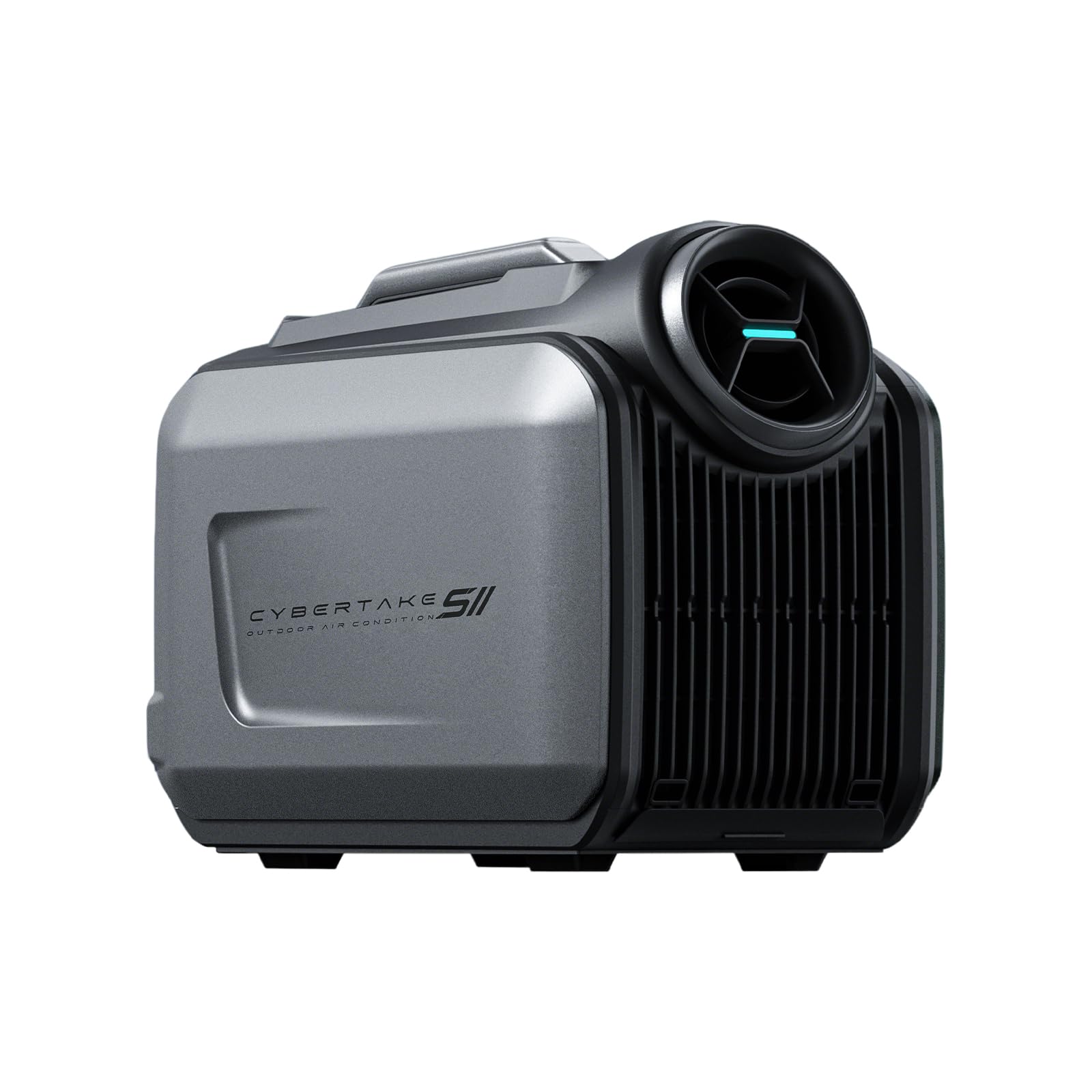
The Cybertake S2 Pro is the lightest compressor-based unit in this roundup at 21 pounds, yet still delivers a meaningful 5,100 BTUs of cooling and 6,100 BTUs of heating — enough to condition up to 130 square feet. What sets it apart is its 3-way power input: 48V DC (for compatible battery banks), 12–24V vehicle power, and standard 100–240V AC wall outlets. This flexibility means you can run it off a 48V solar battery, a truck’s alternator, or a campground pedestal without any external inverter or adapter. The Eco+ mode is claimed to consume as little as 1 kWh over 8 hours, which works out to roughly 125 watts per hour — far leaner than most units.
The IPX4 water-resistant shell is a rare find in portable tent ACs: you can set it on damp ground or leave it in an open truck bed without worrying about rain splash ruining the electronics. Noise is rated at 40 dB in low fan, making it the quietest unit tested — genuinely conversation-level quiet. The Bluetooth app control lets you adjust temperature and mode from inside a sleeping bag.
The main caveat is that the 12V/24V vehicle power claim requires a separate boost converter for some setups, and the instructions are vague about that. Also, the remote control is an optional extra purchase, which feels stingy at this price. But for ultralight campers, truck-campers, and van dwellers who prioritize low weight and multi-voltage compatibility, the S2 Pro is a brilliant engineering piece.
Why it’s great
- Ultra-light 21 lbs — easiest to carry to campsite.
- Three power input options for maximum flexibility.
- IPX4 water-resistant shell for outdoor use.
- 40 dB sleep mode is the quietest tested.
Good to know
- 12V/24V operation may need a separate boost converter.
- Remote control is an optional extra purchase.
- Instructions can be unclear for first-time users.
4. BAYKUL 6,800/7,500 BTU Portable Camping Air Conditioner
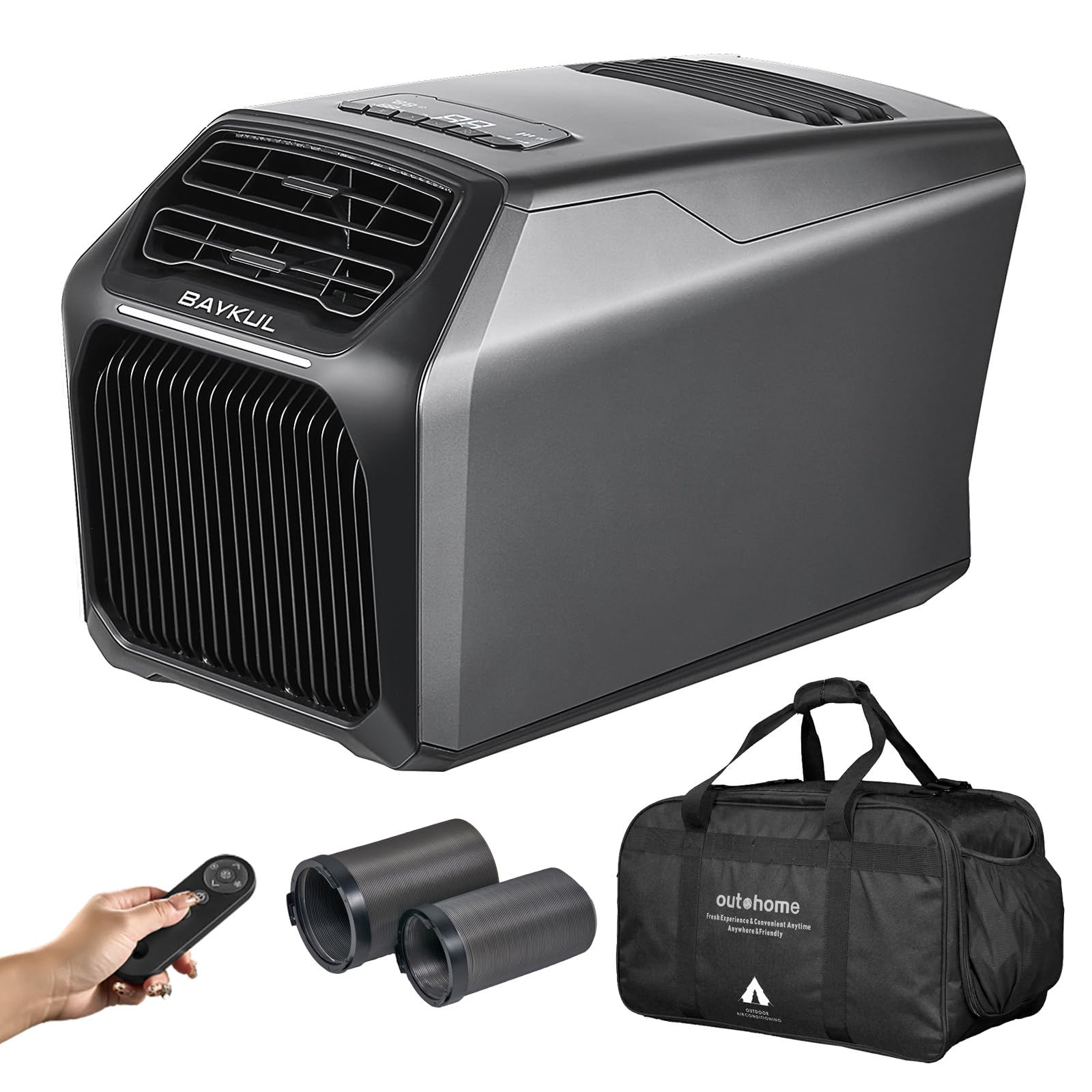
The Baykul 6,800/7,500 BTU is a heat pump in a compact suitcase format — it cools at 6,800 BTU and heats at 7,500 BTU, making it the only true four-season unit on this list that doesn’t require a separate external heater. The R-32 refrigerant is more eco-friendly and runs in a smaller footprint than traditional R-410A. Owners have used it to drop a 400-square-foot space by 18°F and then switch to heating when the desert night temp plummets. The 6-in-1 modes (cool, heat, fan, dehumidify, sleep, timer) cover every possible camping climate.
The 35.7-pound weight includes a carry bag, which is a thoughtful inclusion for packing. It runs on standard 110V AC outlets or car inverters, and the RF remote works through tent walls — a small but real convenience. Verified reviews from tent campers report a 72°F output temperature when the ambient hit 90°F, a 18°F delta that proves the BTU rating is honest. The carrying bag and pre-cut foam window barrier mean you can deploy it in a tent window or a truck cab within minutes.
The downsides are that the unit is slightly bulky (22 x 11.6 x 13.6 inches) and some units arrived with loose debris rattling inside the fan housing, indicating a need for quality control improvements. Also, at 550 watts average draw, it will drain a 1,000Wh power station in under two hours, so you really need a generator or unlimited shore power to run it all night.
Why it’s great
- Heat pump provides cooling and heating in one unit.
- RF remote works through tent walls.
- Carry bag and window kit included.
- Impressive 18°F temperature drop in real use.
Good to know
- 550W draw limits battery runtime to under 2 hours.
- Some units have QC issues with internal debris.
- Bulky dimensions compared to 31-pound competitors.
5. Outohome 5,100 BTU Portable Tent Air Conditioner
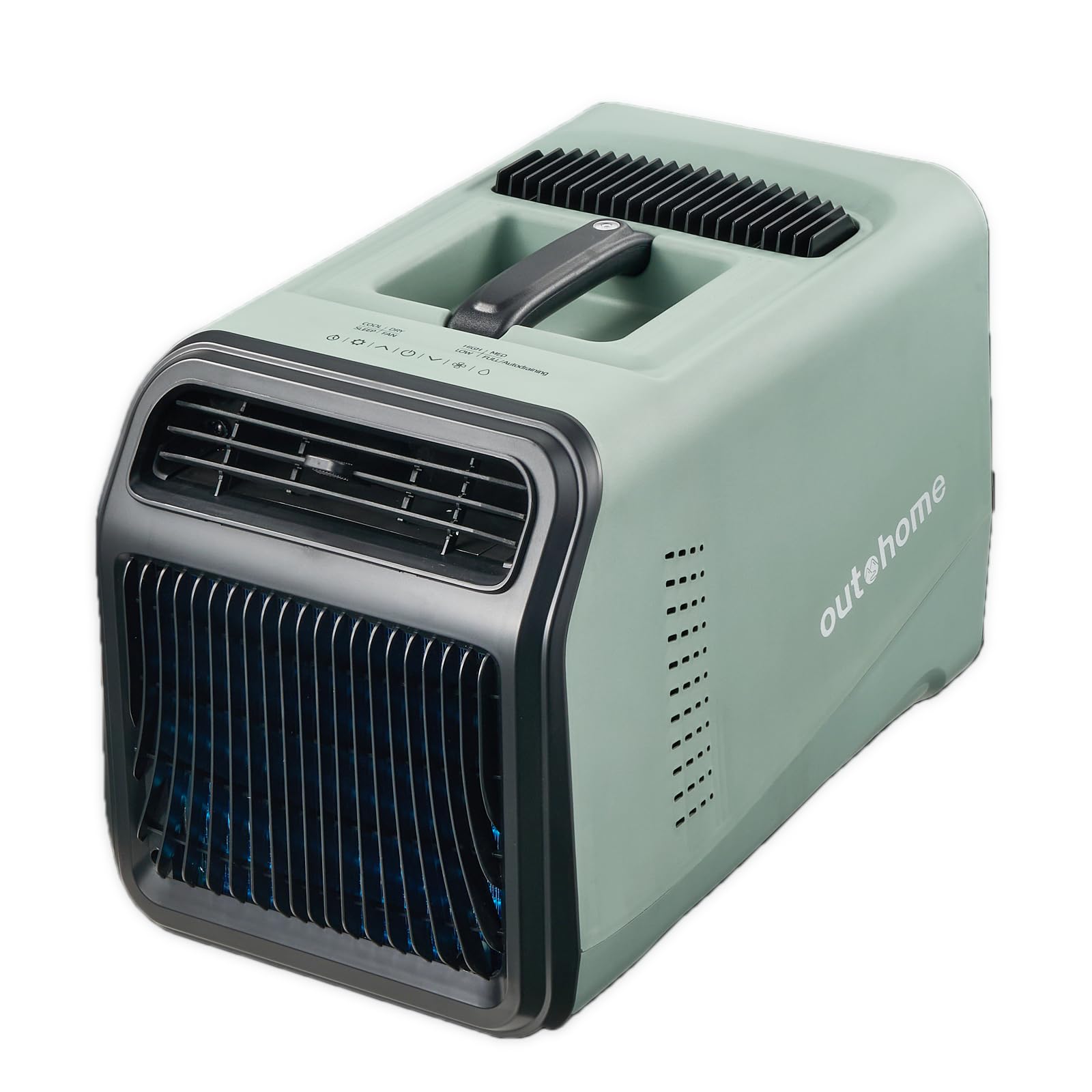
The Outohome 5,100 BTU model is specifically engineered for truck camping and small to medium tents, with a compact footprint of 20.3 x 12.0 x 13.2 inches. The 5,100 BTU compressor is advertised to cool the temperature by up to 60°F in one minute — that’s likely under ideal lab conditions — but real campers verified it dropped their truck topper from 80°F to 65°F in under 20 minutes. The smart auto-evaporation system recycles condensate water, so you get hours of operation without manually draining anything in normal humidity.
Sleep Mode runs at an advertised 46 dB, which is quieter than a typical dishwasher and noticeably more peaceful than the 50+ dB units. The 4-in-1 functions (cool, dehumidify, fan, sleep) give you year-round utility, and the 24-hour programmable timer lets you set it to start cooling 30 minutes before you return from a hike. The built-in handle makes it genuinely one-handed portable at 35 lbs.
The biggest knock is that the handle on some early units physically separated from the body during normal carrying, which is a serious reliability concern for a portable product. Also, some users with EcoFlow and Honda generators reported that the startup surge exceeded their unit’s capacity — you need at least a 2,200-watt peak generator or a 2,000Wh power station to fire it up reliably.
Why it’s great
- Compact size fits truck toppers and small tents well.
- Auto-evaporation reduces maintenance during long runs.
- 40 dB sleep mode is genuinely quiet.
- 24-hour timer for pre-cooling convenience.
Good to know
- Handle can detach on some units — check build quality.
- Requires a generator or 2,000Wh+ power station to start.
- Some users in Spanish reviews report it won’t run on standard camping generators.
6. BougeRV PC35 Portable Air Conditioner 3,500 BTU
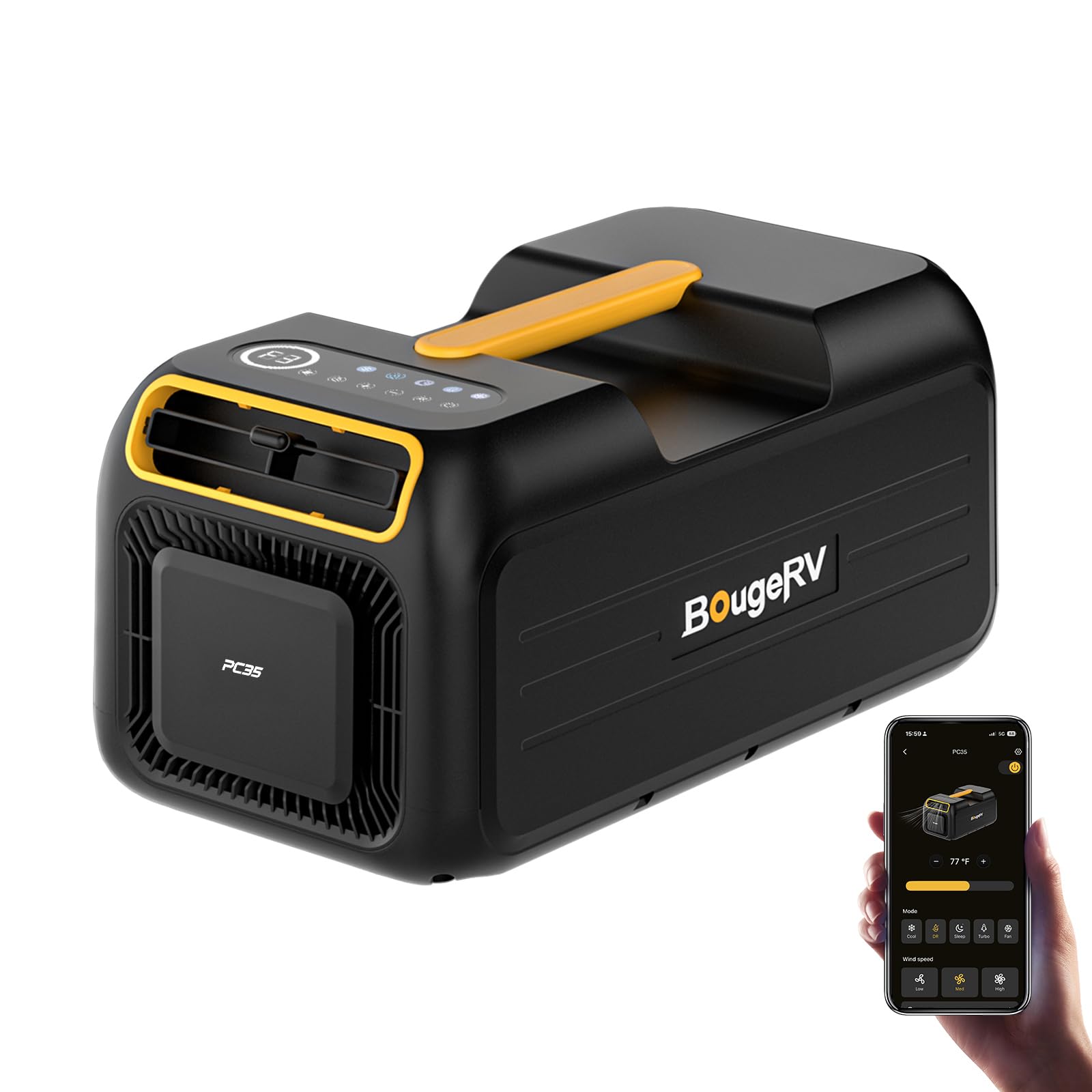
The BougeRV PC35 is a 3,500 BTU unit optimized for small tents — the manufacturer explicitly rates it for 35 square feet, which is roughly a 2-person backpacking tent or a small truck cab. It drops the temperature by 18°F in 15 minutes on Strong Mode, and you can control everything via the BougeRV App within 33 feet, so you can adjust the AC from the campfire without leaving your chair. The 5-in-1 modes include cooling, dehumidifying, fan, high power, sleep, and a 24-hour timer.
The 34.2-pound weight is a bit heavy for its BTU class, but the ergonomic handle and compact 21.65 x 11.81 x 11.02-inch footprint make it manageable. Owners have successfully paired it with a Jackery 3600 solar generator to run during monsoon-season power outages in 115°F heat, which speaks to its real-world reliability. The exhaust duct kit is included and simple to set up with a tent window adapter.
The variable: some units have reported the compressor shutting off after 3 minutes with an E3 error code, particularly in 105°F+ ambient temps. This suggests a potential thermal shutdown issue or a design limitation in extreme heat. Also, the 3,500 BTU is simply not enough for a 4-person tent or a large RV — expect it to struggle if your space is bigger than 40 square feet.
Why it’s great
- App control works from 33 feet away.
- Rated for small tents and truck cabs effectively.
- Pairs well with solar generators for off-grid use.
- Included exhaust duct kit simplifies setup.
Good to know
- 3,500 BTU only covers very small spaces (under 40 sq ft).
- Some units trigger E3 shutdown in extreme heat.
- 34 lbs is heavy for its BTU class.
7. BAYKUL 5,000 BTU Portable Tent Air Conditioner
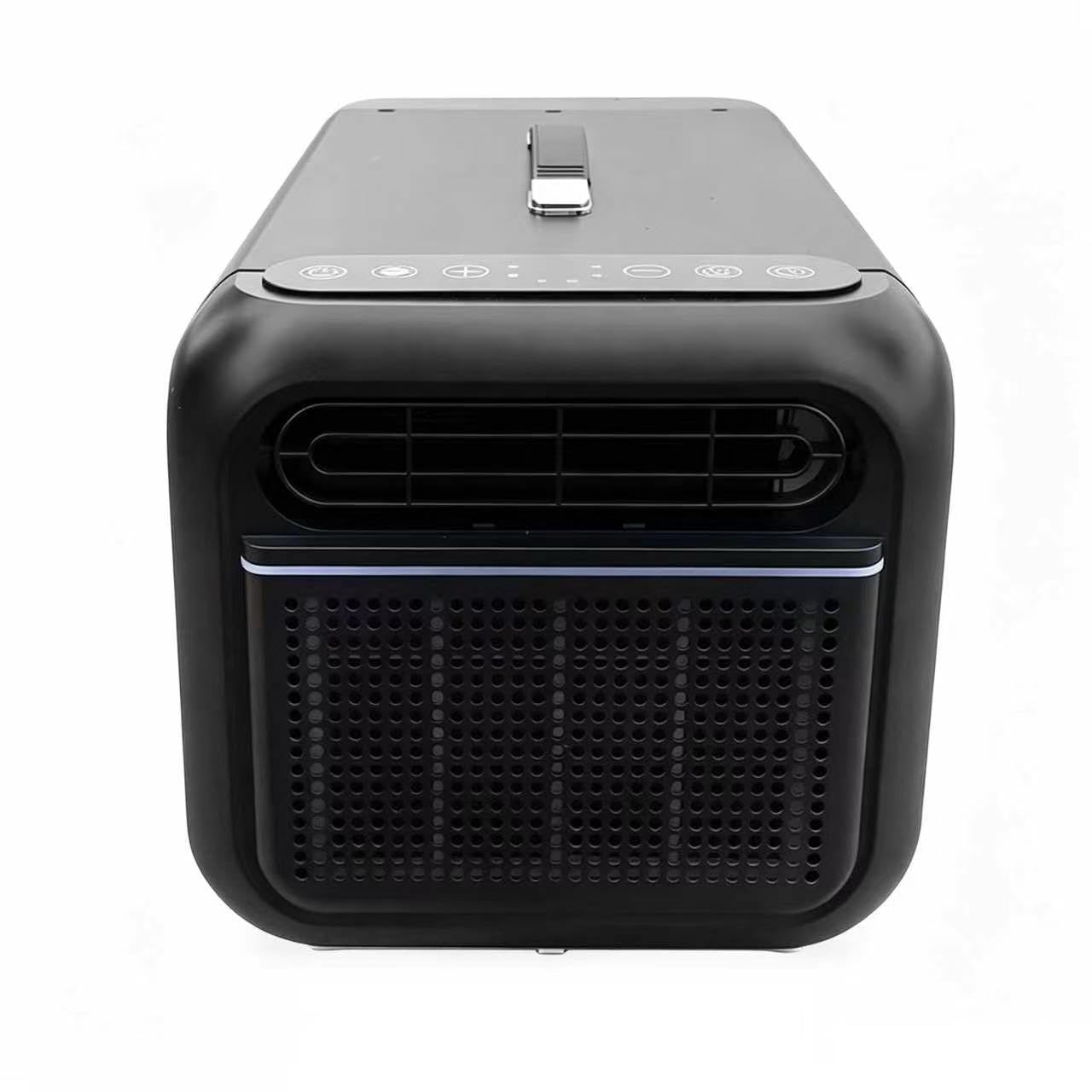
The Baykul 5,000 BTU unit is a direct competitor to the Outohome 5,200 BTU — same GMCC compressor type, similar 400W power draw, and identical 5-minute temperature drop claims (18°F). At 30.8 pounds, it’s slightly lighter than the Outohome, and it includes LED soft light strips that are glare-free for nighttime use. The 4-modes (cool, dry, sleep, fan) plus dehumidifier give you all the essential functions, and the 24-hour timer is standard.
Where this unit really fits is as a budget-friendly alternative for campers who want 5,000 BTU performance without paying a premium. Several verified camper reviews confirm it works effectively in small travel trailers and tents, dropping the temperature noticeably on hot summer nights. The 46–50 dB sleep mode is acceptable for most campers, though not whisper-quiet like the Cybertake.
The catch is a notable failure rate: multiple reviews report the remote failing out of the box, weak airflow at distances beyond 3 feet, and some units that failed to cool at all (blowing warm air after a minute of cooling). A review also noted that the startup surge exceeds a 2,200-watt Honda generator’s capacity, ruling it out for some portable power setups. For the risk-tolerant buyer, the price-to-BTU ratio is excellent — but the QC lottery is real.
Why it’s great
- 5,000 BTU at a budget-friendly price point.
- Lightweight at 30.8 lbs.
- LED soft light strips for nighttime convenience.
- Dehumidifier function included.
Good to know
- Higher-than-average QC failure rate reported.
- Remote control often non-functional out of box.
- Startup surge too high for some generators.
8. Nommyair 2,380 BTU Portable Camping Air Conditioner
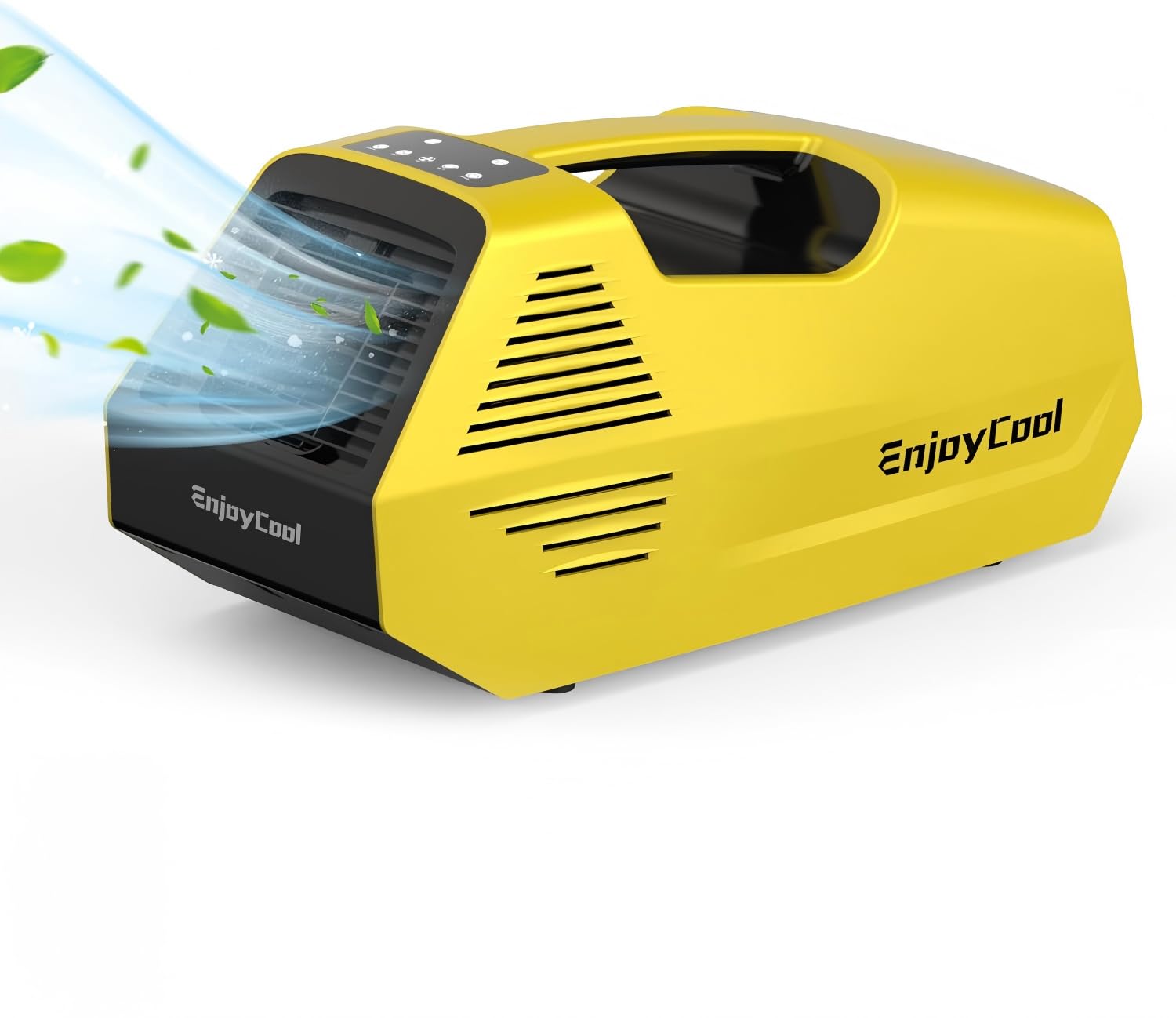
The Nommyair 2,380 BTU is the lightweight specialist of this group — at 14.3 pounds, it’s the only unit you might actually pack in a duffel bag for a backpacking-adjacent car camp. It’s designed for ultra-small spaces up to 43 square feet, with a compact (20.79 x 9.76 x 10.15-inch) footprint. The compressor-based cooling drops the temperature from 89°F to 75°F in about one hour, which is slow by comparison but still effective for a one-person tent or a truck cab.
The adjustable vent (30° to 120° range) lets you direct airflow precisely where you need it, and the Sleep Mode at 43 dB is genuinely quiet — you can sleep within a few feet of the unit without being disturbed. The remote control is included, though some units shipped without one (check your box). The 4-modes (strong, sleep, cooling, fan) with 3 fan speeds give enough granularity to find the right balance of noise and cooling.
The limitation is obvious: 2,380 BTUs is less than half the power of the mid-range units. It will not cool a 70-square-foot tent in direct sun. Also, multiple verified reviews report compressors that never turned on, turning the unit into an expensive fan. And in one extreme case, the exhaust heat made a small enclosed space hotter than the starting temperature. This unit is best reserved for solo tent campers who need just a few degrees of relief, not full climate control.
Why it’s great
- Ultra-light 14.3 lbs — truly portable for one person.
- Compact size fits inside most duffel bags.
- Adjustable vent allows precise airflow direction.
- 43 dB sleep mode is very quiet.
Good to know
- 2,380 BTU only works for very small spaces.
- Faulty compressors reported — QC is inconsistent.
- Exhaust heat can make a small space hotter if not vented.
9. FODFINU Portable Air Conditioner Swamp Cooler
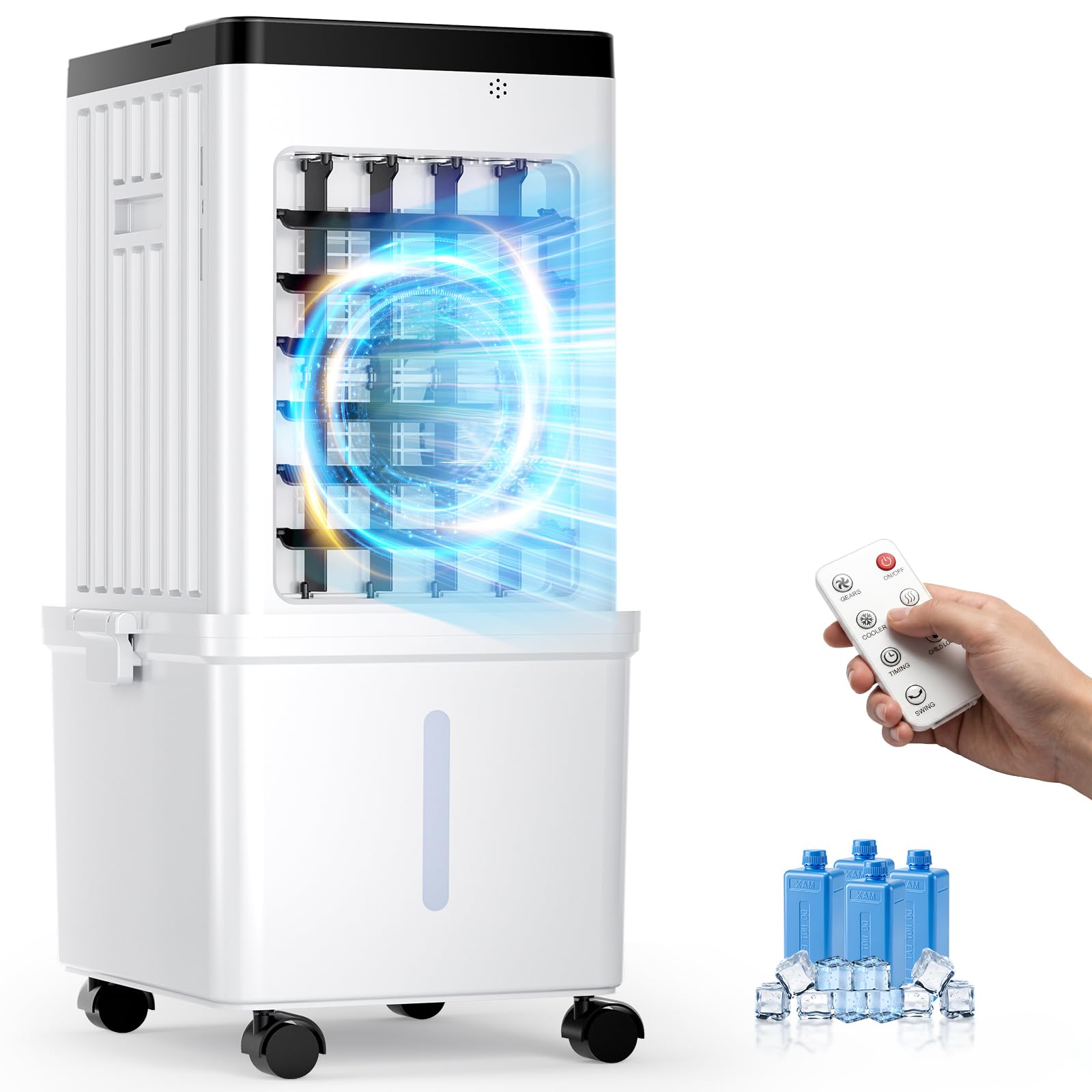
The FODFINU is an evaporative air cooler (often called a swamp cooler), not a compressor-based AC. It uses a 3.5-gallon water tank and four ice packs to cool the air through evaporation, and it can run for up to 12 hours on a single tank fill. It covers up to 400 square feet on paper, but in practice the cooling effect is limited to a 5–10°F temperature drop — and only in low-humidity environments. For dry-climate campers in the desert or high plains, this approach works remarkably well and uses very little electricity (45 dB noise level, 650 CFM airflow).
The 4-in-1 design (cooler, humidifier, fan, aromatherapy) and 120° oscillation give you good air distribution, and the casters make it easy to roll around a campsite. The top touch panel and remote control (20 ft range) are convenient, and at 8 pounds, it’s by far the lightest option here. Real owners report using it to cool a baby’s room without AC and an office during a heatwave — both positive scenarios.
The catch: in high humidity, an evaporative cooler actually raises the relative humidity in the tent and provides almost no temperature drop. Some users returned it saying it felt no cooler than a standard fan even with ice packs, and cheap plastic latches broke on early production units. This is not a replacement for a real AC in humid climates. But for dry-climate tent camping where weight and cost are the primary constraints, it’s a valid low-power solution.
Why it’s great
- Extremely light at 8 pounds — effortless to move.
- 12-hour runtime on a single 3.5-gallon tank fill.
- Works well in dry climates with low humidity.
- Very low power consumption — runs on small power stations.
Good to know
- Ineffective in humid climates — does not actually cool.
- Plastic build quality is cheap on some units.
- Not a replacement for a compressor-based tent AC.
FAQ
Can a tent AC unit run on a Jackery or EcoFlow battery?
Do I need to vent the hot air from a tent AC outside?
Final Thoughts: The Verdict
For most users, the ac unit for tent winner is the Outohome 5,200 BTU because it delivers the best combination of cooling power, weight, and energy efficiency for the typical 4-person tent. If you want wireless operation and don’t want to hear a generator all night, grab the EcoFlow Wave 3. And for ultralight truck campers who need a multi-voltage unit that slips into a backpack, nothing beats the Cybertake S2 Pro.