
Our readers keep the lights on and my morning glass full of iced black tea. As an Amazon Associate, I earn from qualifying purchases.
Specs are compiled from manufacturer listings and verified buyer reviews and can change over time — please confirm the key details on the product page before buying.
When a room turns into a sauna, you want two things from an air conditioner: icy air that reaches across the room, and a blower strong enough to push it there. The units here all carry a fan or blower mode, but they differ wildly in how far that stream of cold travels and how much noise it makes doing it. This guide breaks down six ACs with blowers by their real cooling muscle, their reach, and the trade-offs you will actually live with.
I’m Min — the founder and writer behind Gadgets Feed. This guide is built by comparing the manufacturers’ published specifications and the patterns across verified customer reviews, so you get each pick’s real strengths and trade-offs instead of marketing spin.
Cooling a studio apartment or a large master bedroom starts with matching the machine’s power to your room’s size and your tolerance for noise. The right ac with blower will circulate cold air evenly without running nonstop or turning your space into a wind tunnel. Here is how to pick the one that fits your room and your ears.
Our Picks at a Glance

How To Choose The Best AC With Blower
Match the blower’s power to your room’s square footage to avoid wasted energy and uneven cooling. A blower that is too weak for a large room will run nonstop without ever catching up, while an oversized unit in a small bedroom will cycle on and off and waste energy. The ideal blower circulates cold air evenly without creating a wind tunnel or constant hum.
Match BTU Output to Your Square Footage
BTU (British Thermal Units) is the measure of how much heat an AC can remove per hour — the higher the number, the more powerful the cooling. A 5,000 BTU window unit handles a small bedroom up to 150 square feet, while a 14,000 BTU portable unit can cover a large master suite or open living area reaching 700 square feet or more. If you pick a unit with too few BTUs for your space, the blower will push air that never gets properly cold, leaving you frustrated and the compressor running around the clock.
Dual-Hose vs. Single-Hose Design
Portable ACs come in two main configurations: single-hose and dual-hose. A single-hose unit pulls indoor air to cool the condenser and exhausts it outside, which creates negative pressure that sucks warm air back into the room. A dual-hose system uses one hose to draw outdoor air for the condenser and another to exhaust it, so it cools faster and maintains a more consistent temperature. For larger rooms and hotter climates, the dual-hose design is worth the extra setup effort because it prevents the blower from working against a constant influx of warm air.
Decibel Levels and Sleep-Friendly Features
Noise is measured in decibels (dB), and the difference between 42 dB and 52 dB is significant for a bedroom. Normal conversation sits around 60 dB, so anything below 50 dB is generally quiet enough to sleep through. Look for a dedicated sleep mode that lowers fan speed and compressor output during the night, and check whether the blower’s lowest setting is genuinely whisper-quiet. A unit that reads 45 dB on low mode will serve you far better in a nursery or home office than one that only drops to 52 dB.
Quick Comparison
| Model | Best For | Cooling Power | Floor Area | Noise Level | Amazon |
|---|---|---|---|---|---|
| ZAFRO Smart Inverter Portable AC★ Best Overall | Large rooms & energy savings | 14000 BTU | 700 sq ft | 42 dB | Amazon |
| Garvee 14,000 BTU AC UnitPremium Pick | Room-to-room versatility | 14000 BTU | 750 sq ft | Below 50 dB | Amazon |
| DREO Portable AC 515S | Smart home integration | 12000 BTU ASHRAE | 150 sq ft | 45 dB | Amazon |
| Hisense 8,000 BTU Portable AC | Renewed value & dual-hose | 8000 BTU DOE/SACC | 350 sq ft | 42 dB | Amazon |
| Air Future 10,000 BTU Portable AC | Compact footprint & fast cooling | 10000 BTU | 450 sq ft | 45 dB (sleep mode) | Amazon |
| Midea 5,000 BTU Window AC | Small bedrooms & budget buyers | 5000 BTU | 150 sq ft | 52 dB | Amazon |
In-Depth Reviews
1. ZAFRO Smart Inverter Portable Air Conditioner
Our pick — over 4★ from 450+ verified ratings; the strongest balance of quality and price.
The large-room champion that blasts 390 cubic meters of air per hour while sipping power.
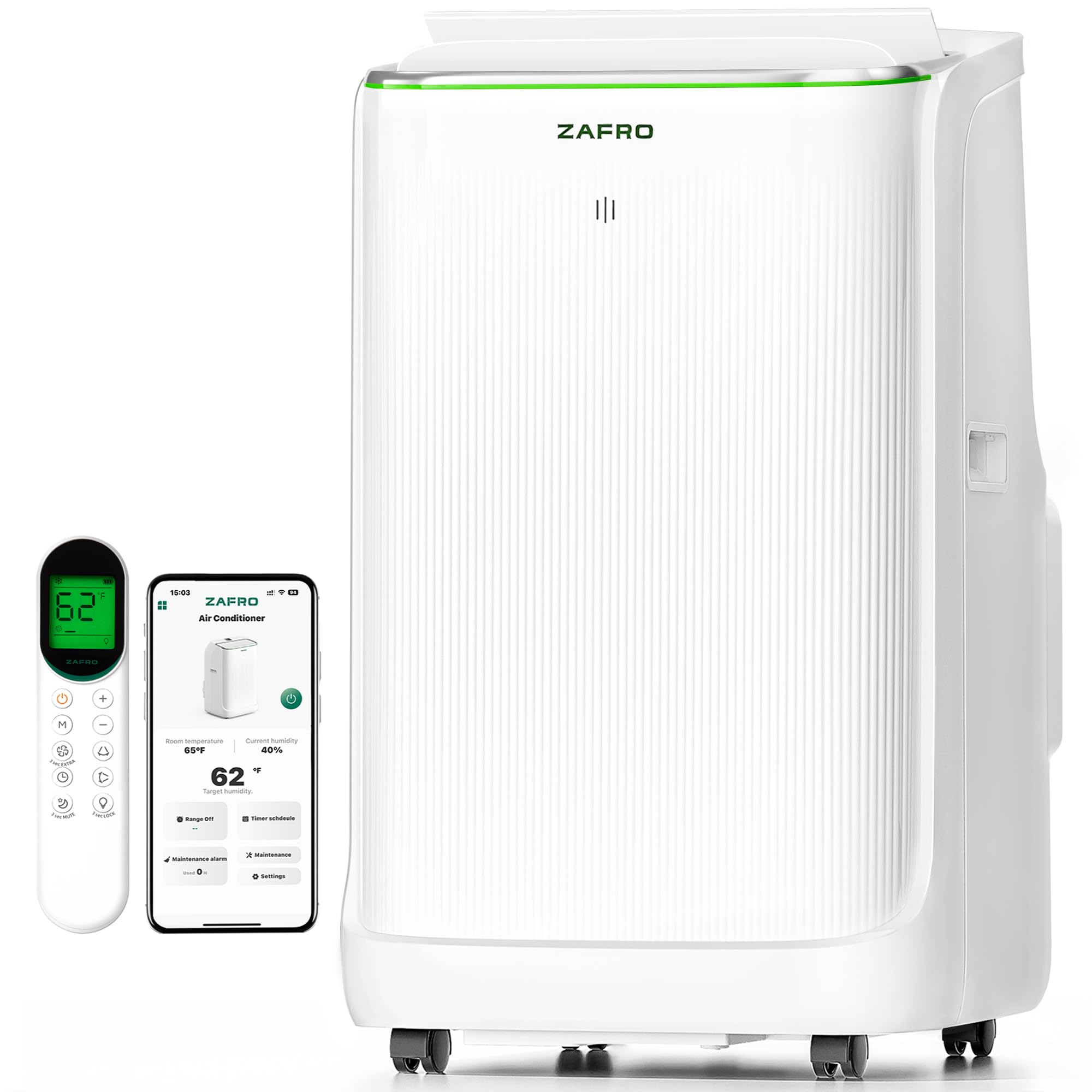
For a sprawling master bedroom or an open-plan living area, the ZAFRO Smart Inverter Portable is the heavyweight to beat. Its dual-hose system (two separate tubes for intake and exhaust) delivers a high airflow of 390 cubic meters per hour, so the blower pushes cold air rapidly and evenly across the whole space rather than just pooling it near the vent. It covers up to 700 square feet, a massive 4.7x jump from the 150 square feet the Midea window unit handles, and its 14,000 BTU output dwarfs the Midea’s 5,000 BTU by a 2.8x margin — so this is the pick when you have a genuinely large room to tame.
The inverter compressor delivers stable temperatures and lower energy bills over time. It runs at a CEER of 12.8, well above the standard 7.83, which translates to stable temperatures without the constant on-off cycling that drives up energy bills. Buyers report using it to cool a 400 sq ft master bedroom with setup under 10 minutes, and the snap-in dual hoses make installation painless. As owners mention: “Cools 400 sq ft master bedroom, <10 min setup, snap-in dual hoses, no draining in 3 weeks, user-friendly display/remote, quiet, pricey but worth it.”
The self-evaporating system means you can skip manual draining for up to 72 hours in environments with humidity below 90%, and a drain hose covers the rare extreme-humidity days. Sleep mode drops the noise to as low as 42 decibels — quieter than normal conversation and the same level as the Hisense unit above — so it won’t disturb your rest. With six modes including Cool, Dry, Fan, Sleep, Extra, and Eco, plus four-way oscillation and Wi-Fi app control, this unit adapts to almost any comfort need you can throw at it.
Why Owners Love It
- Cooling performance is the standout — owners consistently report rapid, even cooling across large rooms
- Ultra-quiet operation at 42 dB makes it bedroom-friendly
- Dual-hose design prevents warm air from being pulled back in
- 72-hour drainage-free operation means minimal maintenance
What To Consider
- The premium price tag reflects its power — this is an investment pick, not a budget buy
- Portable unit takes up floor space, so measure your room before committing
Reach for it if: you need to cool a large room fast and want energy savings from inverter tech — this is the most powerful, most refined unit here.
Look elsewhere if: you only need to cool a small bedroom and want to spend less — a smaller BTU unit will do the job with a smaller footprint.
2. Garvee 14,000 BTU AC Unit
The rolling powerhouse that chases the heat from bedroom to garage without breaking a sweat.
If your cooling needs shift from room to room, this Garvee unit is built to follow you. It cools spaces up to 750 square feet — the largest coverage in this lineup — with a 14,000 BTU output matching the ZAFRO above. The smooth-rolling casters and compact design make it genuinely easy to wheel from a bedroom to a home office to a garage, which owners confirm is its defining strength. RV and studio dwellers report it works excellently in spaces that can’t be easily modified, venting easily and running as quiet white noise.
Sleep mode and a programmable 1-24 hour timer keep the room at your ideal temperature automatically, while ultra-quiet operation below 50dB won’t interrupt your rest. The window kit fits widths from 20.48 to 49 inches, so it adapts to most standard windows with no handyman skills required. Owners note the setup is straightforward, though the hose connection can be tricky and a drain hose is recommended to avoid leaks — a small quirk for an otherwise smooth install.
The 3-in-1 design covers cooling, dehumidifying, and fan modes for year-round use. On energy, it uses about 1.3 kWh per hour at full tilt — roughly a day at common rates — which owners consider reasonable for the power on tap. It pulls 10 amps, so avoid sharing a circuit with heavy appliances, and be aware that startup wattage can strain a generator if you plan to run it off-grid.
Versatile cooling muscle: the largest floor-area coverage here at 750 square feet makes it the go-to for anyone who moves heat relief between rooms.
Keep in mind: it’s not the quietest unit on this list, and the hose connection needs a patient hand — but for flexible, powerful cooling, it delivers.
Best for: renters, RV users, and anyone who wants one machine to cool multiple spaces — the casters make it genuinely portable.
Not ideal if: you need whisper-quiet operation for a nursery or a dedicated window install — the Midea window unit is quieter and more permanent.
3. DREO Portable Air Conditioner 515S
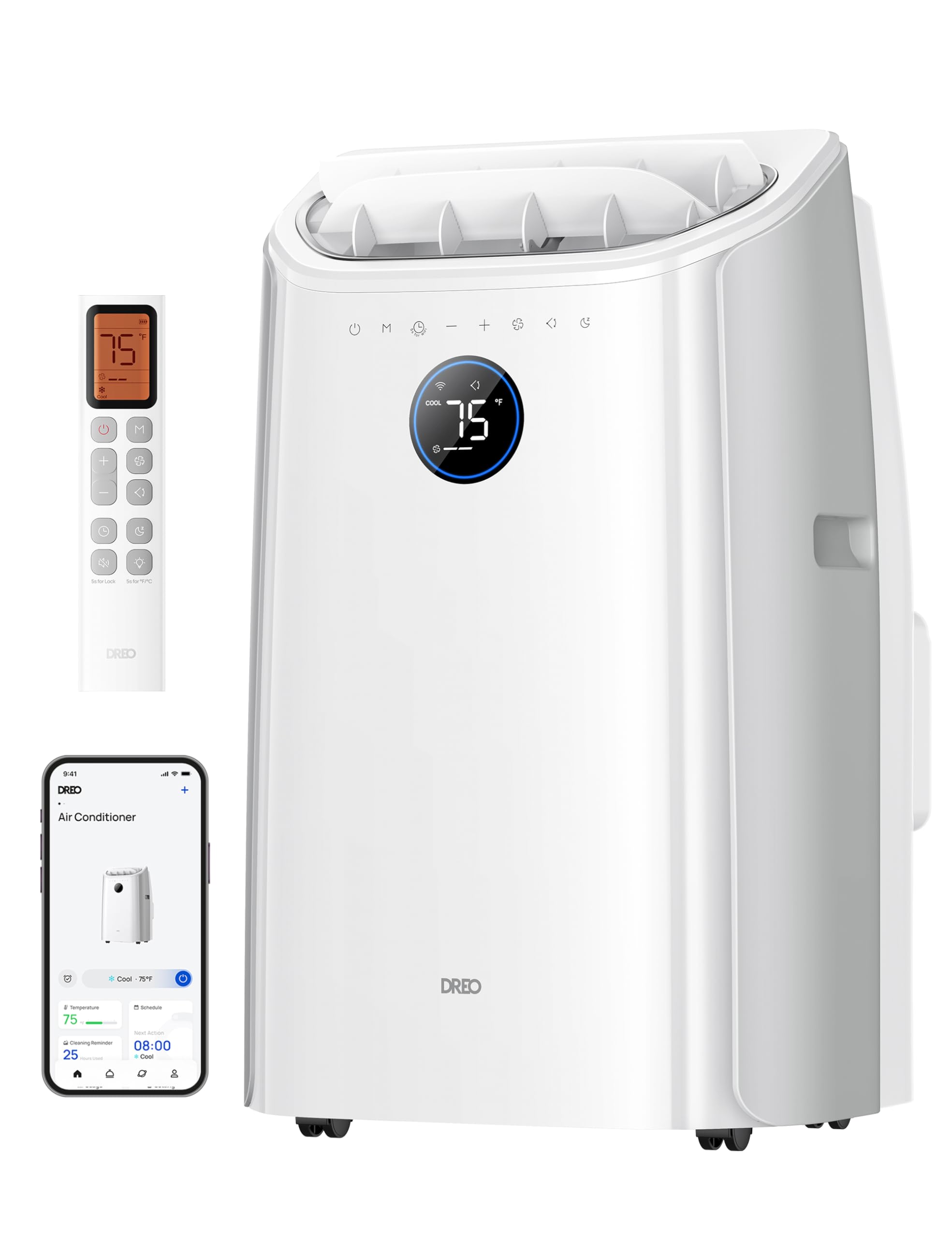
The voice-command smart unit that turns your bedroom into a haven of automated cool.
For the smart-home enthusiast, this DREO unit is the clear standout because it answers to your voice. It works with Siri, Amazon Alexa, and Google Home, so you can adjust the temperature without lifting a finger, and the DREO app lets you monitor humidity and customize your sleep curve. Its IceCool system pushes cold air up to 16 feet away, making the blower’s reach the longest here — ideal for a large bedroom where you want the breeze to actually reach your bed. The 12,000 BTU ASHRAE output (8,000 BTU DOE) is rated for 150 square feet, though customers note it comfortably handles larger vaulted spaces.
If you want a blower that runs quietly in the background, the DREO 515S uses its patented Noise Isolation System to drop compressor noise to just 45dB (decibels, a measure of sound level) — owners describe it as quieter than a window unit and even than central HVAC in some cases. The true drainage-free system uses a patented algorithm and sensors to evaporate excess water automatically in environments under 90% humidity, so you rarely think about draining. In one test, a 250 sq ft vaulted room dropped from 75°F to 70°F in under an hour, and a 120 sq ft room fell from 80°F to 66°F in under two hours — serious cooling chops for its class.
The 3-in-1 design covers Cool, Fan, and Dry modes, each with three functions for fine-grained control. Owners praise the large LED display that can be turned off at night, the easy setup, and the quality hose. The main caveat is weight — at 64.8 lbs, it’s heavy to move upstairs, and some dry climates may require intermittent draining. The exhaust hose can get hot, so an insulation wrap is a smart add-on for peak efficiency.
The Smart Home Edge
- Voice control via Siri, Alexa, and Google Home puts temperature control at your command
- 45dB noise level keeps bedrooms and offices quietly comfortable
- App-based sleep curve customization tailors cooling to your night
- Drainage-free system eliminates daily tank emptying in most conditions
Weight & Heat Checks
- At 64.8 lbs, it’s a workout to carry between floors
- Exhaust hose runs hot — insulation wrap recommended for best efficiency
Best for: smart-home users who want voice control and app-driven customization with genuinely quiet operation.
Think twice if: you need the raw power to cool a very large open-plan area — the ZAFRO’s 14,000 BTU covers far more square footage.
4. Hisense 8,000 BTU Portable Air Conditioner
The renewed dual-hose that delivers real inverter muscle at a fraction of retail.
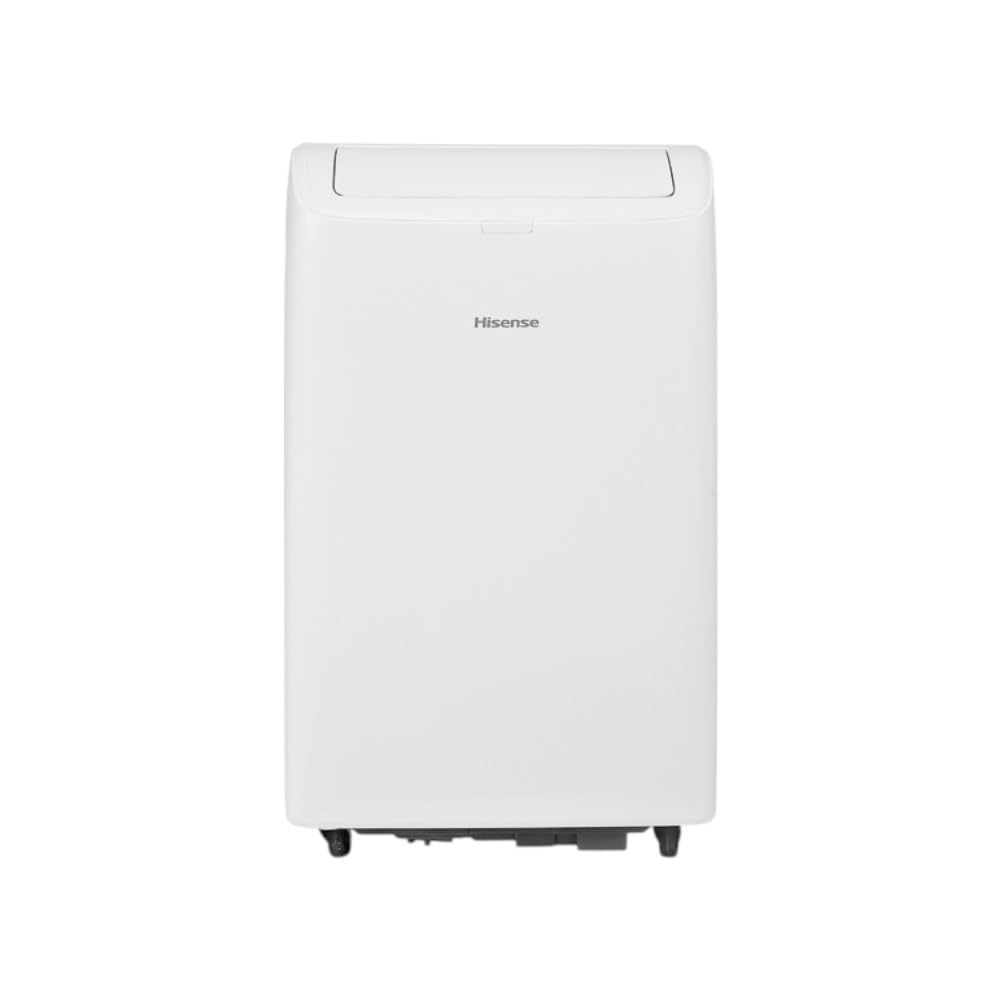
You don’t need to pay full retail to get serious cooling — this Hisense unit is a renewed (refurbished) model that delivers an 8,000 BTU DOE/SACC output (10,000 BTU ASHRAE) covering up to 350 square feet. Its dual-hose technology (two tubes for intake and exhaust) cools faster and more efficiently, and reviewers point out it outperforms single-hose units of the same rating because the design prevents warm air from being pulled back in. That keeps the blower working with clean, cold air rather than fighting an influx of heat.
The inverter technology delivers up to 40% more efficiency, which shows up in the power readings owners captured: 1000W on super, 500W on medium, and 400W on low. That flexibility means you can run it economically on medium for daily use and reserve super mode for heatwaves. It produces a real 42 dB noise level — a 24% reduction compared to the Midea window unit’s 52 dB — making it genuinely quiet for a bedroom or office. Owners describe cooling a 300 sq ft living room effectively, with one noting it works well even in a window that wouldn’t support a hanging unit.
The 3-in-1 operation covers cooling, dehumidifying, and fan mode, with drain-free cooling minimizing tank emptying. Setup takes about 30 minutes with the easy snap-together window kit, and Wi-Fi control via the ConnectLife app works with Google and Alexa. The biggest quirk owners flag is the proprietary short hose connector and hoses that sit close together in the window — a hose cover is a recommended add-on. Appearance gets mixed reactions, with some finding it nice and others less impressed, but functionally it delivers.
Winning efficiency play: the inverter compressor and dual-hose design deliver real cooling at power draws you can measure and manage.
The honest catch: the short proprietary hose connector limits window flexibility, so measure your window setup before committing.
Reach for this if: you want inverter efficiency and dual-hose performance without paying full retail — the renewed price makes it a standout value.
Look elsewhere if: you need ultra-large room coverage — the 350 sq ft rating means this is for mid-sized spaces.
5. Air Future 10,000 BTU Portable Air Conditioner
The space-saving blower that chills a 200 sq ft room in 15 flat minutes.
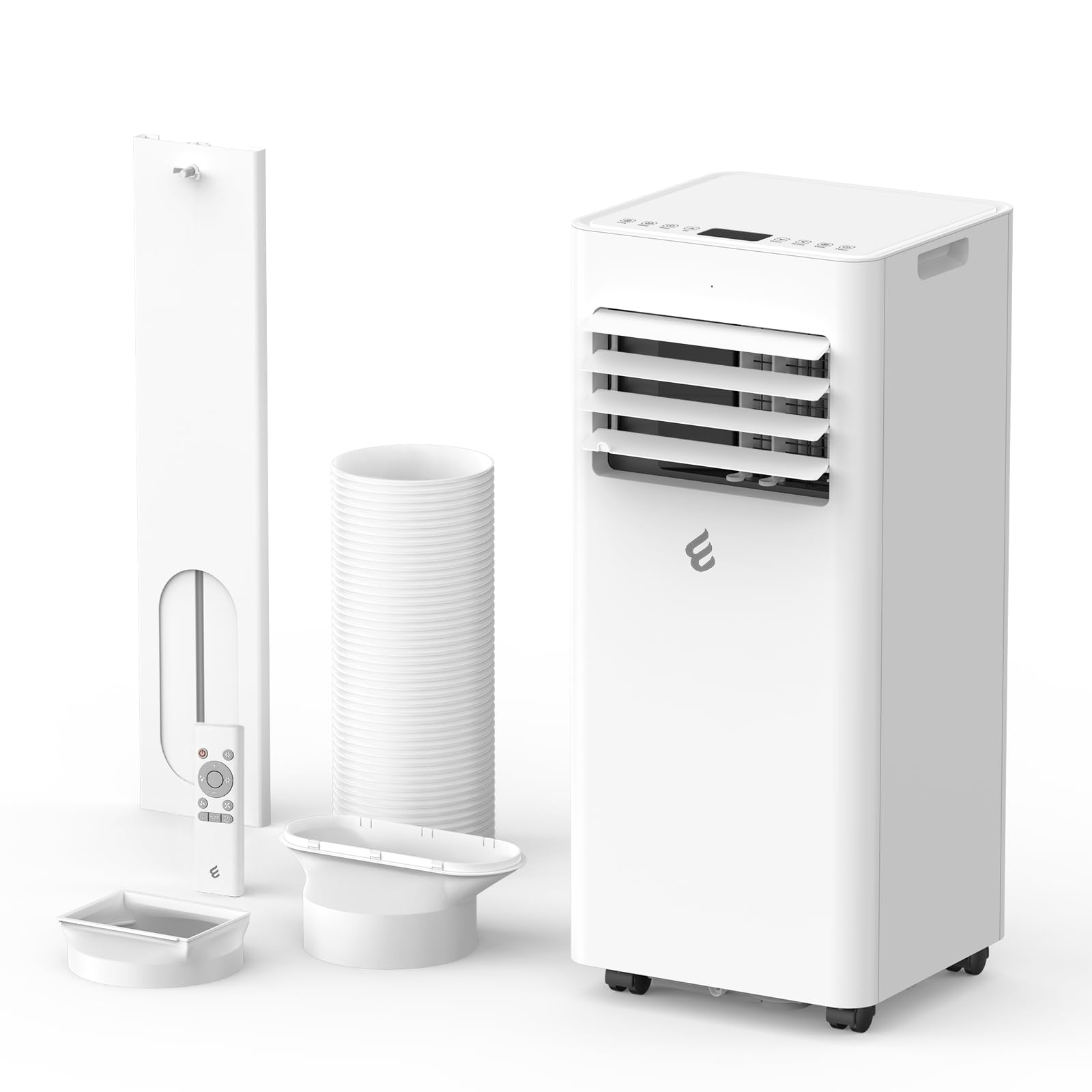
When floor space is precious, the Air Future unit compresses serious cooling into a slim 11.3″ x 11.8″ x 26.6″ footprint without skimping on power. Its blower pushes up to 240 CFM (cubic feet per minute) of cold air, rapidly cooling a 200 sq ft room to a comfortable temperature in just 15 minutes, with enough reach to handle a 450 sq ft space overall. The 10,000 BTU output and adjustable temperature range of 61°F to 90°F give you real control over your comfort, and the four casters make it easy to roll from bedroom to kitchen as needed.
The fan mode offers two adjustable air speeds up to 27 feet per second, so you can dial in a gentle breeze or a strong blast depending on the situation. Dehumidifier mode removes up to 50 pints of moisture per day, tackling sticky summer air, while sleep mode operates at 45 decibels for a comfortable night’s rest. The built-in water evaporation system handles 90% of the water produced in cooling mode, so you only need to think about draining on the most humid days. Owners describe rooms going from “lava hot to freezing cold in minutes,” and the tool-free window kit installs in just a few minutes with an adjustable range from 25.6″ to 50″.
The child lock feature — activated by holding the lock button for about 3 seconds — adds confidence for homes with curious kids. The 24-hour timer lets you pre-cool before arriving home, and the removable filter rinses clean under water for easy maintenance. The main trade-offs owners note are the non-insulated exhaust vent that radiates heat into the room, which an aftermarket insulated vent can fix, and a compressor buzz that’s noticeable but overall quiet. In humid climates, a drain bucket may be needed, and the unit weighs 48.5 lbs — manageable with the casters but not a one-hand carry.
Compact & Quick
- Slim footprint saves floor space while keeping full cooling capacity
- 240 CFM blower reaches and cools a 200 sq ft room in 15 minutes
- Child lock and 24-hour timer add safety and convenience
- Self-evaporating system handles 90% of condensation
Fit Notes
- Non-insulated exhaust vent radiates heat — aftermarket wrap recommended
- Humid climates may require a drain bucket
Best for: apartments and small homes where floor space is tight but cooling power can’t be compromised.
Not for: open-plan layouts over 450 sq ft — the ZAFRO’s higher BTU output carries larger spaces more efficiently.
6. Midea 5,000 BTU Window Air Conditioner

The budget window unit that quietly tames a small bedroom without drilling a single hole.
For a compact bedroom or home office, this Midea window unit delivers honest, no-frills cooling at an entry-level price. Its 5,000 BTU output covers up to 150 square feet — a space the ZAFRO’s 14,000 BTU could handle nearly 4.7 times over, but that’s exactly the point. You don’t need that much power for a small room, and this unit’s lighter footprint and simpler install make it the right tool for the job. The 3-speed fan circulates air effectively, and the dehumidifier mode pulls excess moisture on muggy days.
Installation is genuinely simple — shoppers say a tool-free window setup in about 6 minutes, with all mounting accessories included in the box. A screwdriver is required (not included) for the final steps, and pilot holes are recommended for some window frames, but it’s about as straightforward as window AC installs get. Owners confirm it fits a 12×12 bedroom perfectly and cools a 120 sq ft room to 74°F, with one test hitting 69°F. The intuitive LED display and remote control (batteries included) let you adjust time, temperature, and mode from across the room without getting up.
The removable, reusable air filter traps dust and pet hair, improving air quality and protecting the unit. Eco mode and the EasyTimer feature help keep energy use in check, and the one-year parts and labor warranty adds confidence. The noise level sits at 52 dB on low mode — the highest on this list, though owners note it’s quieter than older units and fine for sleep or work, if not silent. The minimum temperature drops to 63°F, and the fan speeds are similar enough that you’ll find your preferred setting quickly.
Simple, honest cooling: the fastest install in this lineup and a price that makes it the obvious choice for small rooms and tight budgets.
The trade-off: at 52 dB it’s the noisiest pick here, and cooling performance is sized for small spaces — don’t expect it to tame a large living area.
Best for: small bedrooms, home offices, and budget-conscious buyers who want a simple window install and dependable cooling.
skip it if: you need to cool a room over 150 square feet or want the quietest possible operation — step up to the Hisense or ZAFRO instead.
Understanding the Specs
BTU Output vs. Room Size
BTU (British Thermal Units) tells you how much heat the AC removes per hour — higher is more powerful. The 5,000 BTU Midea suits a 150 sq ft bedroom, while the 14,000 BTU ZAFRO and Garvee units handle 700 and 750 sq ft respectively. The golden rule is matching BTU to your square footage: too little means the blower runs nonstop without catching up, and too much means wasteful cycling. For a typical bedroom, a 5,000 to 8,000 BTU unit is plenty; for open-plan living areas, aim for 10,000 BTU and up.
Noise Levels in Decibels
Decibels (dB) measure sound pressure — and in an AC, they determine whether you can sleep or work nearby. This lineup ranges from 42 dB on the ZAFRO and Hisense units up to 52 dB on the Midea. For context, normal conversation sits around 60 dB, so anything at or below 45 dB is genuinely quiet. If you’re placing the unit in a bedroom or nursery, prioritize models with a dedicated sleep mode and a sub-50 dB rating, because the blower’s lowest setting is what you’ll hear all night.
Dual-Hose vs. Single-Hose Portables
Portable ACs pull in air to cool the condenser and exhaust it outside. A single-hose unit creates negative pressure that sucks warm air back into the room, making the blower work harder. A dual-hose system uses one hose to draw outdoor air for the condenser and another to exhaust it, so cooling is faster and room temperature stays more consistent. The ZAFRO, Hisense, and DREO units all use dual-hose designs, which is why they cool more evenly than comparable single-hose portables.
Self-Evaporating Drainage Systems
Traditional portable ACs collect condensation in a tank you must empty manually. Self-evaporating systems use a water-slinging wheel to throw moisture onto the hot condenser, where it evaporates naturally. The ZAFRO runs drainage-free for up to 72 hours in humidity below 90%, and the DREO uses a patented algorithm and sensors to eliminate draining under the same conditions. In extreme humidity above 90%, a drain hose is provided — so you only think about water on the muggiest days, not every day.
FAQ
What is the difference between BTU and SACC ratings?
How do I know which BTU size I need for my room?
Can I leave a portable AC running overnight?
Do portable ACs need to be drained regularly?
Is a dual-hose portable AC worth the extra setup?
What is inverter technology in an air conditioner?
Can I control these ACs with my phone or voice?
How hard is it to install a window AC unit?
What does the fan mode on these ACs actually do?
Which is better for a small bedroom — portable or window AC?
Final Thoughts: The Verdict
If you want one dependable pick, the ac with blower winner is the ZAFRO Smart Inverter Portable because it pairs the highest BTU output here with dual-hose efficiency, 42 dB quiet operation, and 72-hour drainage-free cooling for large rooms up to 700 square feet. If you want maximum cooling reach with room-to-room flexibility, grab the Garvee 14,000 BTU and its 750 sq ft coverage. And for smart-home integration with voice control and app-driven comfort, the DREO 515S is the one to reach for.
How We Picked
We do not accept paid placement. Every pick is matched to a real buyer and a real use-case; we do not hands-on test units.
Sources & Methodology
Specifications: manufacturer listings and product documentation. Review insights: verified customer reviews, as of August 2026. Pricing: not shown on this page (it changes often); check the current price via the retailer link.
As an Amazon Associate, Gadgets Feed earns from qualifying purchases. This does not affect which products we feature.