
Our readers keep the lights on and my morning glass full of iced black tea. As an Amazon Associate, I earn from qualifying purchases.
Specs are compiled from manufacturer listings and verified buyer reviews and can change over time — please confirm the key details on the product page before buying.
You push a stud finder across drywall, it beeps, you mark the spot, and you still drill into nothing. The difference between a frustrating afternoon and a clean mount depends on sensor count. More sensors reveal the full stud width, not just an edge guess.
I’m Min — the founder and writer behind Gadgets Feed. This guide is built by comparing the manufacturers’ published specifications and the patterns across verified customer reviews, so you get each pick’s real strengths and trade-offs instead of marketing spin.
We have compared the top models on the market, from multi-sensor scanners to budget-friendly essentials, to help you pick the right accurate stud finder for your next project without the guesswork.
Our Picks at a Glance

How To Choose The Best Accurate Stud Finder
The biggest myth is that one sensor is as good as many. A single-sensor finder can only tell you a stud is nearby; a multi-sensor unit shows you exactly where the edges and the center are in one pass. For hanging a TV, that difference means the difference between centering the bracket perfectly and fighting a crooked mount.
Sensor Count Is Everything
Think of the sensor array as the tool’s eyesight. A 13-sensor scanner sees a wide strip of the wall at once, so it can display the entire stud width without you sliding back and forth. A 5-sensor model is a step down but still far ahead of a basic two-sensor finder, which forces you to hunt for edges one side at a time.
Depth Rating Sets Your Limits
Every finder lists a maximum scanning depth, usually in inches. A tool rated for 1.5 inches handles standard drywall easily and reaches into thicker assemblies. If your walls are plaster over lath, tile, or double-layer sheetrock, a shallow-rated scanner will give you false readings, so match the depth rating to your actual wall construction.
Wire Detection Is a Safety Net
Before you drill anywhere near a light switch or outlet, a live-wire warning is worth having. These tools detect hot, unshielded AC cables behind the wall and beep to warn you off. Not every model includes this, and it adds a little to the price, but it turns a stud finder into a broader safety tool.
Quick Comparison
| Model | Best For | Sensors | Max Depth | Weight | Amazon |
|---|---|---|---|---|---|
| Franklin Sensors 710+★ Best Overall | Pro-grade accuracy | 13 | 1.6 in | 6.4 oz | Amazon |
| HART ProfessionalPlaster-Wall Hero | Plaster walls | 9 | — | 5.28 oz | Amazon |
| Franklin Sensors M50Best Value | Value multi-sensor | 5 | 1.5 in | 4.8 oz | Amazon |
| RYOBI ESF5002 | Large hands, TV mounts | — | — | 9.12 oz | Amazon |
| Zircon A100 | Tile and tricky surfaces | — | 1.5 in | 8.4 oz | Amazon |
| FNIRSI WD-01 | Rechargeable 6-in-1 scanning | — | 1.5 in | 9.3 oz | Amazon |
| SUNTUTUFY 5-in-1 | Budget all-around | — | 2 in (wire) | 9.5 oz | Amazon |
| Zircon StudSensor Pro SL | Classic edge finder | — | 1.5 in | 3.2 oz | Amazon |
| CRAFTSMAN CMHT77621 | Budget with wire alerts | — | 1.5 in | 5.6 oz | Amazon |
In‑Depth Reviews
1. Franklin Sensors ProSensor 710+
Our pick — over 4.5★ from 10,500+ verified ratings; the strongest balance of quality and price.
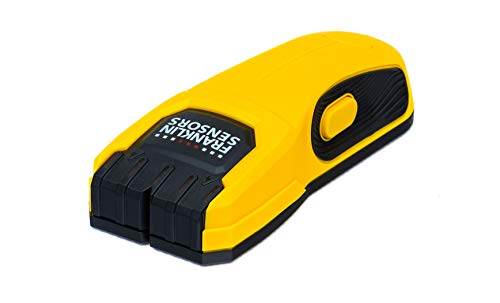
The wide-LED scanner that shows both stud edges at once, ending the guesswork.
The most reliable stud finder shows the full stud width, not just a flashing dot. The 710+ packs 13 patented sensors under that wide face, so the LED strip lights up the center and both edges of the stud simultaneously. You slide once, see the full width, and mark your mount points in seconds.
Its edge-finding skill is the thing everyone raves about. With a 1.6-inch measuring range, it auto-adjusts for depth through one layer of sheetrock without any calibration step—just press, hold, and scan. Buyers report it nailed 6 out of 7 stud hits for a grab bar install through fiberglass, calling it “not perfect but effective.” The trade-off: it skips wire detection entirely, so it is purely a stud tool, not a safety scanner.
It runs on two AA batteries, which you supply yourself.
deep-scan leader
- 13-sensor array shows full stud width in one pass
- No calibration—press and scan instantly
- Reliability and accuracy are the two most-praised points by a wide margin
pricey for pros
- No live-wire or pipe detection
- Not for thick plaster, tile, or double drywall
- Batteries not included
top pick: If you want the most trusted, accurate stud finder for standard drywall, this is the one—it simply sees more of the wall than anything else here.
budget buy: your walls are plaster or you regularly scan for wiring; this tool does neither.
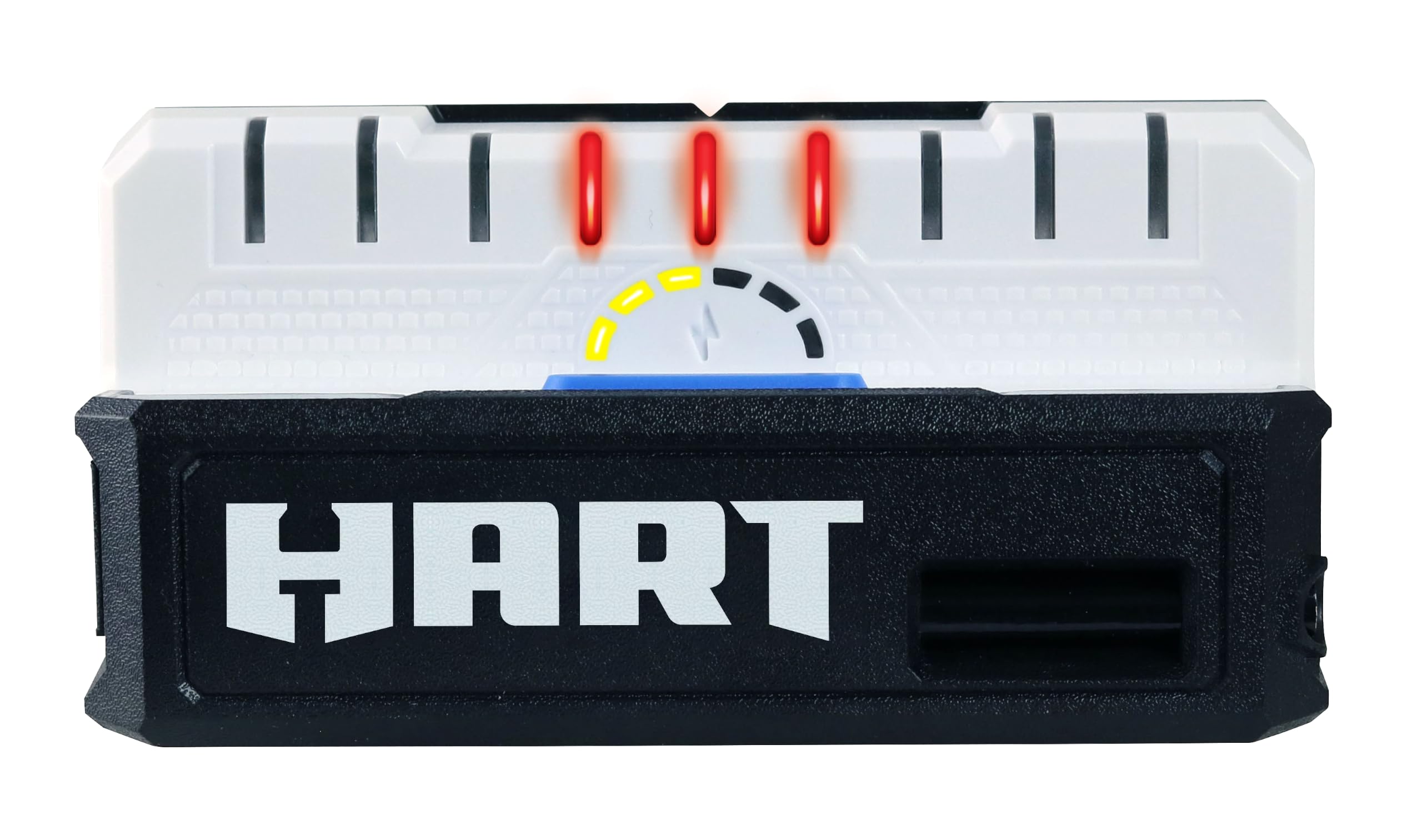
2. HART Professional 9-Sensor
Nine sensors that punch through real plaster walls where most finders give up.
If you have old “real” plaster walls, most stud finders are useless—but the HART Professional laughs at that limitation. Owners with genuine plaster report it works beautifully where they were told nothing would. The 9-sensor array displays the center and both sides of the stud, so you know exactly where you are relative to the middle.
It adds live wire detection and a clever pencil caddy, so you can mark your spot without reaching for a separate tool. The single-mode design means no calibration, no mode switching—press and hold, then scan. At 5.28 ounces it is featherlight, and its compact 5.45-inch length tucks into a pocket between jobs.
The catch is honest: stud tracking draws mixed feedback, with some owners unable to lock on reliably. This finder shines on plaster and standard drywall but can be pickier on unusual surfaces, so treat early readings with a quick rescan to confirm.
nine-sensor value: For plaster-wall owners, this is the finder that finally works where others fail, and the built-in wire warning adds drilling confidence.
bulky grip: If you only scan basic drywall, a simpler tool will do the same job.
3. Franklin Sensors ProSensor M50
Five sensors and live-wire alerts in a lighter, more affordable Franklin package.
You get the same Franklin “see the whole stud” idea here, just with five sensors instead of thirteen. The M50 still displays the full width of the stud on a precision LED bar, and its deep-scan mode reaches up to 1.5 inches through drywall to find both wood and metal studs. No calibration is required—start scanning anywhere, even directly over a stud.
The headline feature is live wire detection, which the pricier 710+ above skips. That makes this the safer choice for drilling near outlets, and it comes at a friendlier price. It weighs just 4.8 ounces, making it the lightest Franklin in this lineup, and the ergonomic grip earns consistent praise from owners who switched from pricier brands.
The honest fit note: ease of use draws divided opinions, so expect a short learning curve if you are new to multi-sensor scanners. It runs on AA batteries, which you provide, and it is not compatible with rechargeable cells.
quick check: you want Franklin-grade accuracy plus wire detection without paying flagship prices.
deep scans: you need the maximum 13-sensor array for the highest possible accuracy on tricky walls.
4. RYOBI Whole Stud Finder ESF5002

A chunky, glove-friendly body with a built-in punch that marks drywall for you.
Bigger hands finally get a stud finder that fits. The RYOBI ESF5002 is built wide and substantial at 9.12 ounces, and owners with larger palms call the size perfect. The display shows the full stud width—not just edges—which makes centering a TV mount bracket far easier than with a basic edge finder.
The a neat extra here is the built-in punch that physically dimples the drywall at your mark, no pencil needed. Owners note the marking feature is more of a handy convenience than a precision tool, but it saves a step when your hands are full. It carries a guide on the display that tells you exactly which way to move.
Accuracy and reliability both draw mixed feedback, with some owners reporting it fails and flashes lights on maybe 40% of passes, requiring a retry. The quality and ease of use win consistent praise, so this is a comfortable, versatile tool rather than the most infallible one.
budget friendly: For TV-mounting homeowners who want a comfortable grip and a built-in marking punch, this delivers.
basic accuracy: Expect to rescan occasionally; it is not the most consistent unit for tricky wall surfaces.
5. Zircon StudSensor A100

The edge finder that stays reliable even when scanning behind bathroom tile.
Some walls are just hostile to stud finders, and the Zircon A100 earns its keep on exactly those. Owners mention it found studs even behind bathroom tiles—a surface that stumps most scanners. Its LCD screen, audio tone, and SpotLite pointer work together to guide your mark before you hang shelves, mirrors, or cabinets.
Two scanning modes cover your bases: StudScan reaches 3/4 inch deep for standard drywall, while DeepScan doubles that to 1.5 inches for thicker walls and ceilings. The WireWarning Detection continuously hunts for hot, unshielded wires up to 2 inches deep while you scan, adding a genuine safety layer. A low-battery indicator tells you when the 9V cell needs replacing.
Reliability is what owners trust here, though function and accuracy both draw mixed notes—some get erratic results on unusual surfaces. One owner noted it struggled in a mobile home but tested fine in a regular house, so match it to standard residential construction.
easy use: you tackle varied surfaces like tile and thicker walls and want wire alerts built in.
complex walls: your project is on straightforward drywall; you may not need the extra modes.
6. FNIRSI WD-01 Wall Scanner

Six scanning modes in one rechargeable scanner that never needs battery shopping.
This is the multi-tool of the group, and its headline feature is the built-in rechargeable battery—no more hunting for AAs or 9Vs. The 6-in-1 detection covers wood and metal studs, plus separate scans for copper wire, iron, and live AC. Exact mode finds studs up to 0.75 inches deep, while depth mode pushes that to 1.5 inches.
What makes it genuinely useful for whole-house work is the reach: it detects ferrous metal (iron) up to 4.7 inches deep and non-ferrous metal like copper up to 3.9 inches. The digital LCD display and audio alarm guide you to the exact spot, and a positioning hole helps you mark edges and center precisely. It holds 9.3 ounces, so it feels solid in hand.
The honest trade-off: functionality and accuracy both draw mixed reviews, and plaster-and-lath walls trip it up—owners found only the nail finder reliable there, requiring tedious marking of multiple nails. Its ease of use is the clearest strength, making it a fast, friendly option for standard drywall.
versatile tool: flippers and frequent DIYers who want one rechargeable scanner that handles studs, metal, and wire in a single pass.
simple studs: anyone with older plaster walls—you will fight the edge finder the whole way.
7. SUNTUTUFY 5-in-1 Wall Scanner
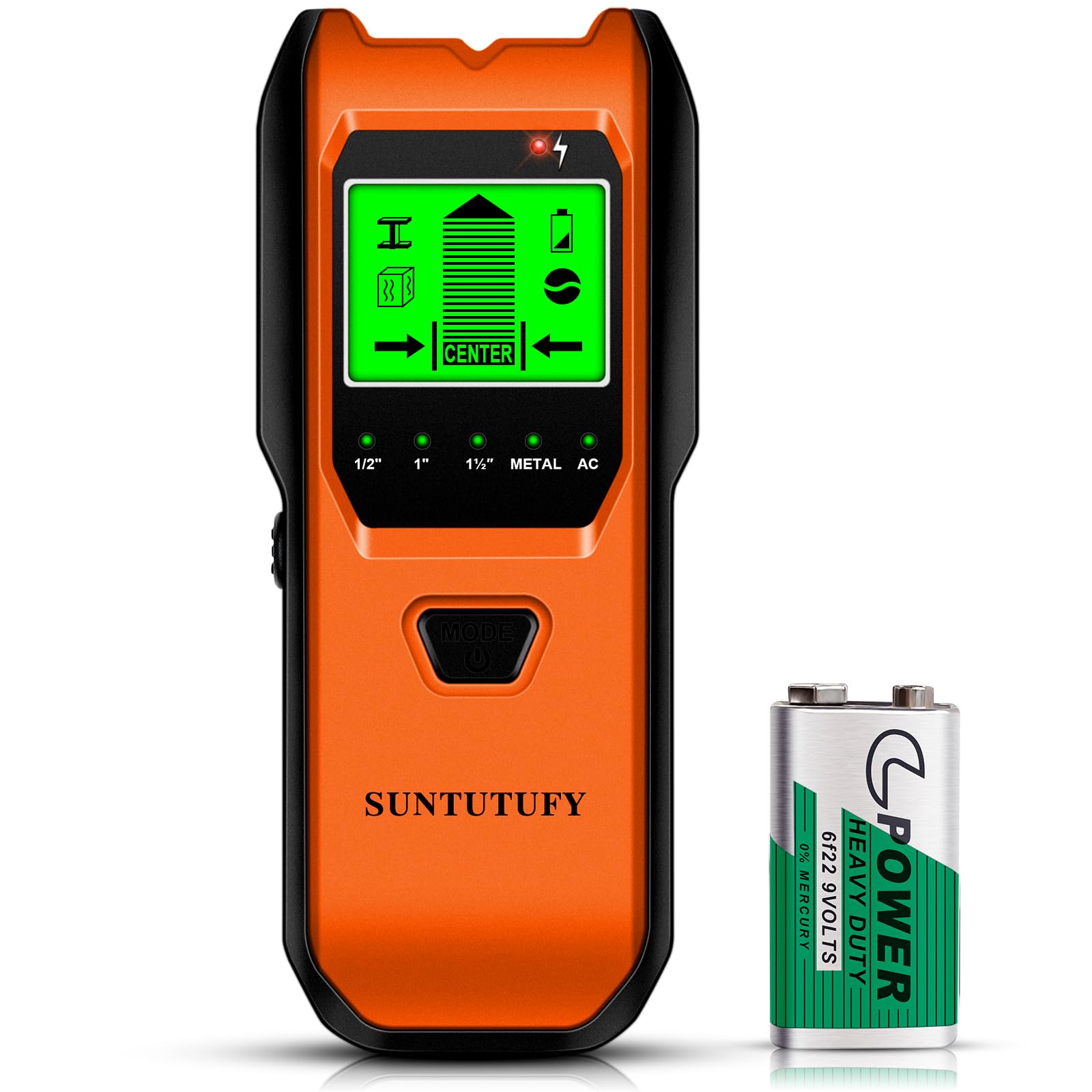
A budget-friendly 5-in-1 scanner that finds studs, metal, and live wires with a backlit LCD.
You do not need to spend premium money to get a genuinely useful scanner, and this one proves it. Owners with 3/4-inch sheetrock report it found studs perfectly to hang a TV, and the build quality impresses for the price. The upgraded backlit LCD keeps the readout clear even in a dark closet, and a beep alarm sounds as you close in on the edge or center.
Wire Warning Detection runs continuously in Stud and Metal scan modes, reaching up to 2 inches deep, which is a strong safety feature at this level. Automatic calibration before each use cuts down on errors, and it runs on plain batteries you replace yourself. It weighs 9.5 ounces, meaning it is noticeably heavier than the Franklin 710+, and you feel that difference on a long scan.
Stud identification draws genuinely mixed opinions, with some owners finding the accuracy less consistent than the name brands. For standard household projects on straightforward drywall, it is a capable, reliable budget pick; for precision work on tricky surfaces, you will want one of the multi-sensor Franklins above.
feature packed: you want a capable all-in-one scanner without spending flagship money.
daily abuse: your walls are anything beyond basic sheetrock and you need guaranteed precision every pass.
8. Zircon StudSensor Pro SL

A featherweight 3.2-ounce classic with red and green LEDs that signal every stud edge.
At just 3.2 ounces, this is the lightest finder in the roundup, and it disappears into a toolbox drawer. It is a classic edge finder: red LEDs light up as you approach a stud edge, and a patented SpotLite pointing system with an audio alert and green LED confirms when you have hit it exactly. The zStud Scan mode finds edges up to 3/4 inch deep, and DeepScan doubles that to 1.5 inches.
It even checks itself with an “over-the-stud” indicator, flashing a warning if you start the scan directly above a stud so you can restart in a clean spot. The one-button operation is genuinely simple, with roughly one second of calibration. Owners praise how accurate and durable it is over years of use.
The honest fit note: the 9V battery is not included, durability is a real concern if you drop it, and some customers note it beeping randomly. Reviewers point out deep scan on single drywall can throw early false positives, so keep that mode for genuinely thick material.
pro-grade accuracy: An ultra-light, simple edge finder that handles standard drywall reliably and costs little.
premium cost: Treat it gently—a drop can break it—and bring your own 9V battery.
9. CRAFTSMAN CMHT77621

The thin-profile budget finder that detects studs, metal pipes, and live AC in one sweep.
For the entry-level price, this CRAFTSMAN packs surprising range. It detects the center of wood and metal studs up to 1.5 inches deep, and auto-calibration keeps readings consistent. Its thin 0.3-inch profile slides easily into a pouch, and it runs on included batteries—a rare courtesy in this category.
Owners celebrate that it marks both edges of studs while also indicating live wires and metal plumbing pipes at the same time. One buyer report calls it “probably one of the BEST stud finders I’ve ever had.” The LED arrows and audible alerts guide you without needing to watch the unit constantly.
The honest reality: accuracy draws genuinely mixed feedback, with some owners finding it unreliable and others praising it. The wire detection can be over-eager, picking up phantom current in walls with no electrical, which deters drilling entirely. Shoppers say it cannot indicate pex pipe, so it is a metal-and-wire finder, not an all-plumbing solution.
affordable option: you want a slim, affordable finder that also flags live wires and metal pipes.
thick walls: you need consistent precision—this one is more variable than the multi-sensor picks above.
Understanding the Specs
Sensor Count and Array Width
The number of sensors under the housing is the biggest accuracy driver. A 13-sensor unit like the Franklin 710+ reads a wide strip of wall at once and displays the entire stud width—center and both edges—in one pass. A 5-sensor model like the M50 is still accurate but shows a narrower slice, and a basic edge finder makes you hunt each side separately.
Scanning Depth in Inches
This rating sets hard limits on your wall thickness. A finder rated for 1.5 inches handles standard drywall and reaches into thicker assemblies; 3/4-inch depth suits only the most basic single-layer walls. If you have plaster, tile, or double drywall, pick a model with a deeper rating or you will chase false readings.
FAQ
How does a multi-sensor stud finder work better than a single-sensor one?
Will a stud finder work on plaster and lath walls?
What does the scanning depth rating actually mean for my walls?
Should I get a stud finder with live wire detection?
How deep can a stud finder detect metal and wires?
Do stud finders need calibration before each use?
What kind of batteries do stud finders use?
Can a stud finder locate metal pipes behind walls?
Why does my stud finder give inconsistent readings on tile?
What is the difference between StudScan and DeepScan modes?
Final Thoughts: The Verdict
Across the board, the accurate stud finder winner is the Franklin Sensors 710+ because its 13-sensor array shows the full stud width in one pass, making it the most reliable tool for standard drywall. If you want live-wire detection with Franklin accuracy, grab the ProSensor M50. And for plaster-wall owners who thought no finder would ever work, the HART Professional is the one to reach for—its 9-sensor design punches through surfaces most scanners cannot touch.
How We Picked
We do not accept paid placement. Every pick is matched to a real buyer and a real use-case; we do not hands-on test units.
Sources & Methodology
Specifications: manufacturer listings and product documentation. Review insights: verified customer reviews, as of August 2026. Pricing: not shown on this page (it changes often); check the current price via the retailer link.
As an Amazon Associate, Gadgets Feed earns from qualifying purchases. This does not affect which products we feature.