
The deep burgundy of a mature Japanese maple is the signature accent of a thoughtfully designed garden, but the path from a shipped sapling to that four-season centerpiece is littered with disappointment. A twig that never leafs out, a graft that fails, or a tree that arrives as a barely-rooted stick are the real risks when buying online.
I’m Min — the co-founder and writer behind Gadgets Feed. I’ve spent countless hours analyzing hundreds of customer experiences, varietal differences, and shipping outcomes to help you find a live Acer palmatum that actually establishes in your landscape.
This guide focuses exclusively on verified, living trees from reputable sellers, cutting through the hype to identify the most reliable options for different garden goals and spaces. We’ve filtered the market to rank the best acer palmatum japanese maple for your specific planting needs.
How To Choose The Best Acer Palmatum Japanese Maple
Selecting a Japanese maple online requires more than just picking a pretty picture. The variety, the rootstock, the size at shipping, and the seller’s packaging practices all directly determine whether you get a thriving specimen or a dried-out disappointment.
Match the Cultivar to Your Space
Japanese maples range from dwarf varieties topping out at 4 feet to upright classics like ‘Bloodgood’ reaching 20 feet. A compact laceleaf like ‘Scarlet Princess’ is perfect for a patio container, while a ‘Bloodgood’ demands a prominent garden bed. Ignoring the mature height and spread is the most common mistake.
Understand the “Ships As” Size
A tree listed as “1-2 feet tall” may be a first-year cutting with a thin trunk and minimal root system. A “3-4 foot” tree in a 3-gallon pot has a far higher survival rate because its root ball is established. The container volume (2-inch pot vs. trade gallon vs. 3-gallon) matters more than the reported height of the foliage.
Check for Grafting and Rootstock
Many specialty cultivars are grafted onto hardier rootstock. A weak graft union is a failure point, and some buyers receive grafts that fail to thrive. Non-grafted, own-root trees are often more resilient but harder to find online. Look for explicit mention of grafting in the product details.
Quick Comparison
On smaller screens, swipe sideways to see the full table.
| Model | Category | Best For | Key Spec | Amazon |
|---|---|---|---|---|
| Brighter Blooms Bloodgood Japanese Maple | Premium | Large, classic statement tree | 3-4 ft. tall in nursery pot | Amazon |
| Orangeola Weeping Laceleaf Japanese Maple | Premium | Vibrant cascading color | Trade gallon pot; color-shifting leaves | Amazon |
| Japanese Red Maple (3 gal, CA-restricted) | Mid-Range | Larger established root ball | 3-gallon nursery pot; red laceleaf | Amazon |
| Scarlet Princess Japanese Maple | Mid-Range | Dwarf container specimen | Matures at 4 ft.; compact dissectum | Amazon |
| Little Sango Dwarf Coral Bark Maple | Mid-Range | Four-season bark interest | Matures at 5 ft.; coral red winter stems | Amazon |
| Red Japanese Maple (2-3 ft) | Budget-Friendly | Affordable entry-level red maple | 2-3 ft. tall; deep red spring leaves | Amazon |
| Japanese Red Maple Live Plant (1-2 ft) | Budget-Friendly | Lowest-cost starter sapling | 3-inch pot; 1-2 ft. tall | Amazon |
In-Depth Reviews
1. Brighter Blooms Bloodgood Japanese Maple Tree, 3-4 ft.

The Bloodgood is the gold standard for a reason: deep purple-red foliage that holds its color through the heat of summer, turning brilliant scarlet in autumn. This premium offering from Brighter Ships ships a substantial 3-4 foot tree in a nursery pot, which is a dramatically larger and more established specimen than the budget saplings on this list. Multiple verified buyers reported receiving trees exceeding 5 feet tall, indicating the seller under-promises and over-delivers on size.
The root ball arrives wrapped and moist, and while some leaves may show stress browning from shipping, the tree revives quickly once planted in well-draining soil with partial sun. The Bloodgood is an upright variety that matures to 15-20 feet, making it a true landscape anchor, not a container plant. Buyers in zones 5-8 consistently report strong growth within the first growing season.
A few customers noted cosmetic leaf spotting upon arrival, but Brighter Blooms offers a warranty, and replacements were handled promptly. The tree is easy to care for, requiring moderate watering and protection from intense afternoon sun in hotter climates. This is the set-it-and-forget-it choice for anyone who wants a high-impact, reliable red maple without the gamble of a tiny cutting.
Why it’s great
- Largest established size at 3-4 feet, far exceeds budget saplings
- Classic deep red color holds well through summer
- Seller warranty for damaged plants on arrival
Good to know
- Cannot ship to AZ, AK, or HI due to agricultural restrictions
- Leaf spotting from shipping may occur, but is cosmetic
2. Orangeola Weeping Laceleaf Japanese Maple
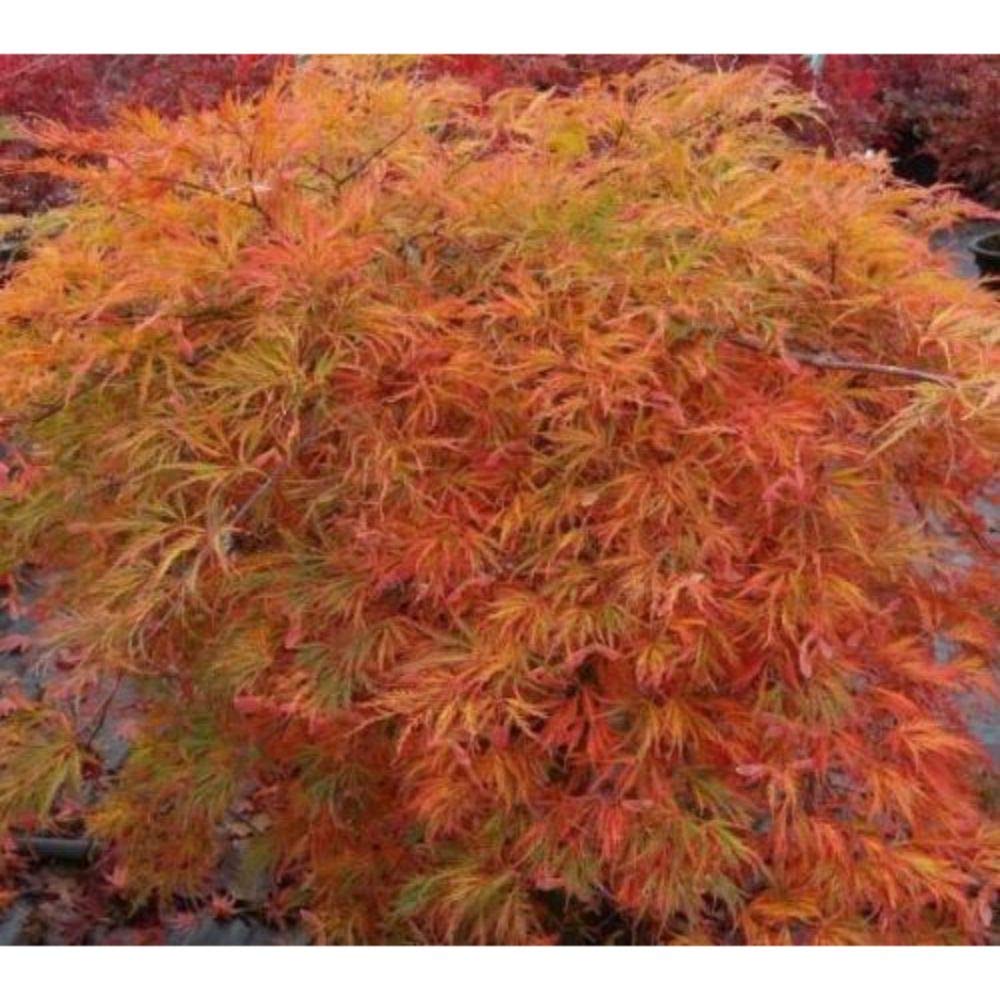
The Orangeola is a spectacle of seasonal transformation, emerging with bright orange spring foliage, deepening to rich red, and finishing with a show-stopping orange-red in fall. As a weeping laceleaf dissectum, its delicately cascading branches and glossy leaves create a dramatic mounding habit that works as a garden focal point or in a large container. It ships in a trade gallon pot with a well-developed root system.
Buyers consistently praise this variety for its vigorous growth; one customer reported a 28-32 inch tree reaching 40 inches tall within a week of planting. It handles full sun better than many laceleaf cultivars, though partial shade in the afternoon heat still produces the most vibrant color. The mature height is 6-10 feet with a 6-8 foot spread, making it a mid-sized statement piece.
There is a significant caveat: some buyers received a grafted plant that failed to thrive. The product description does not clearly state whether the tree is grafted or own-root. One customer reported the graft died within weeks. If you order this, inspect the graft union immediately upon arrival and ensure it is solid. Reputable sellers like New Life Nursery typically ship healthy specimens, but the risk is worth noting.
Why it’s great
- Unique orange-to-red-to-orange seasonal color progression
- Vigorous grower with glossy, cascading foliage
- Performs well in full sun compared to other laceleaf types
Good to know
- Potential graft failure if the union is weak on arrival
- Does not ship to CA, AZ, AK, or HI
3. Japanese Red Maple, 3 gal Nursery Pot

This mid-range option (priced at roughly ) punches far above its weight by offering a 3-gallon pot size, which is typically what you’d pay double for at a local nursery. The tree is described as a compact red laceleaf with deep burgundy foliage, suited for smaller gardens or as a focal point. The 3-gallon container provides a substantial root ball that dramatically increases survival odds.
Customer feedback is overwhelmingly positive. Buyers consistently describe the tree as “larger than expected” and “beautiful and healthy.” One customer was so impressed they ordered a second tree. The packaging is widely praised for protecting the tree during transit, with moist soil and zero damage upon arrival. The tree is ready for planting in well-drained, clay-tolerant soil with partial shade.
The major limitation is the shipping restriction: due to agricultural laws, this tree cannot be shipped to California, Arizona, Alaska, or Hawaii. Orders to those states are refunded. Beyond that, the mildest criticism is that the tree is a compact variety, so don’t expect a 15-foot Bloodgood from this. But for the pot size and health received, this is a remarkable value proposition for zones 5-8.
Why it’s great
- Large 3-gallon pot at a price comparable to 1-gallon options
- Consistently arrives healthy, moist, and well-packaged
- Excellent for small gardens or as a patio centerpiece
Good to know
- Cannot ship to CA, AZ, AK, or HI
- Compact growth habit, not a large upright tree
4. Scarlet Princess Japanese Maple Live Tree

The Scarlet Princess is a truly dwarf variety, bred from a witches’ broom mutation, meaning it naturally stays small and compact. It reaches only 4 feet at maturity, making it one of the most space-efficient red dissectums available. The color holds equally well to the famous ‘Crimson Queen,’ with deep scarlet foliage that brightens the smallest garden nook or container.
Buyers who received healthy trees praised the quick 3.5-day shipping and the fact that the trees arrived with roots and leaves intact, growing new foliage and height by June. The tree is shipped in a small container (typically a 4-inch or 6-inch pot) with original soil, so it’s a younger plant than the Bloodgood. One buyer noted the leaves turned greener in high summer heat, with color returning in fall—a normal behavior for many Japanese maples.
The downside is inconsistency. Several customers received tiny, sickly grafted twigs that died within weeks. The product is clearly a younger plant (1-2 years old), and when shipped improperly, it is fragile. If you order this, be prepared for a small sapling. The reward is a uniquely compact, uniform grower that will not outgrow its container or require constant pruning.
Why it’s great
- True dwarf growth habit with dense, compact nodes
- Color holds well through the season
- Ideal for containers, patios, and tiny spaces
Good to know
- Small pot size means it may be a 2-year sapling, not a bush
- Some buyers received weak grafted plants that died
5. Little Sango Dwarf Coral Bark Japanese Maple

If you want four-season interest, the Little Sango is the standout pick. While most Japanese maples lose their foliage appeal in winter, this dwarf coral bark variety features intense coral-red stems and branches that glow against snow or gray winter skies. In spring, bright lime-green leaves emerge, followed by yellow, orange, and pink color in the fall. It maxes out at 5 feet, making it a compact year-round performer.
Customer reports are generally very positive. One buyer in Minnesota reported the tree arrived strong and healthy, ordering additional varieties from the same seller. Another buyer who purchased in 2018 reports the tree is now a “cute little tree” after eight years of growth, confirming its slow-growing dwarf nature. The packaging is praised for keeping the tree moist.
The most common complaint, however, is that the tree arrives smaller than expected and sometimes with branches broken due to inadequate shipping containers. The tree is a 2-year plant in a small pot, so expectations must match that reality. The appeal here is not instant size but long-term beauty—the coral bark is a feature that only improves with age, and buyers who understand that are thrilled.
Why it’s great
- Stunning coral red stems provide winter garden interest
- Four-season color from lime green to yellow/orange/pink
- True dwarf at 5 feet, perfect for small spaces
Good to know
- Arrives as a small plant, not a bushy specimen
- Shipping can cause branch breakage in thin packaging
6. Red Japanese Maple Live Plant (2-3 ft)

This entry-level red maple from Japanese Maples and Evergreens offers an affordable way to get a tree in the ground if you’re patient and understand the risks of buying a smaller specimen. The tree is listed as 2-3 feet tall with deep red spring foliage that transitions to golden, orange, or red in the fall. It’s identified as the ‘Atropurpureum’ variety, a classic upright grower.
A small number of buyers have had success with this tree. One customer reports the deep red leaves wilted initially after transplanting but bounced back within a week after fertilizer, now thriving. The tree is shipped in a small pot inside a shipping bag, which is a minimal packaging approach. The mature height is listed at 10-15 feet, so with good care, this can become a real garden tree.
The failure rate on this product is high. Multiple buyers report receiving a twig that never grew or died within weeks. One customer in the Pacific Northwest planted 47 other trees successfully but this specific ‘twig’ remained a twig with only 7 leaves after three years. The product is a gamble—you may get a healthy start or a dead stick. If you have a green thumb and want the lowest price point, it’s a risk worth understanding.
Why it’s great
- Lowest price entry point into a red Japanese maple
- Classic upright growth habit with deep red spring leaves
- Can thrive with proper care and patience
Good to know
- High failure rate; many buyers received dead twigs
- Shipped in a small plastic pot with minimal protection
- Customer service for replacements can be delayed
7. Japanese Red Maple Live Plant (1-2 ft)
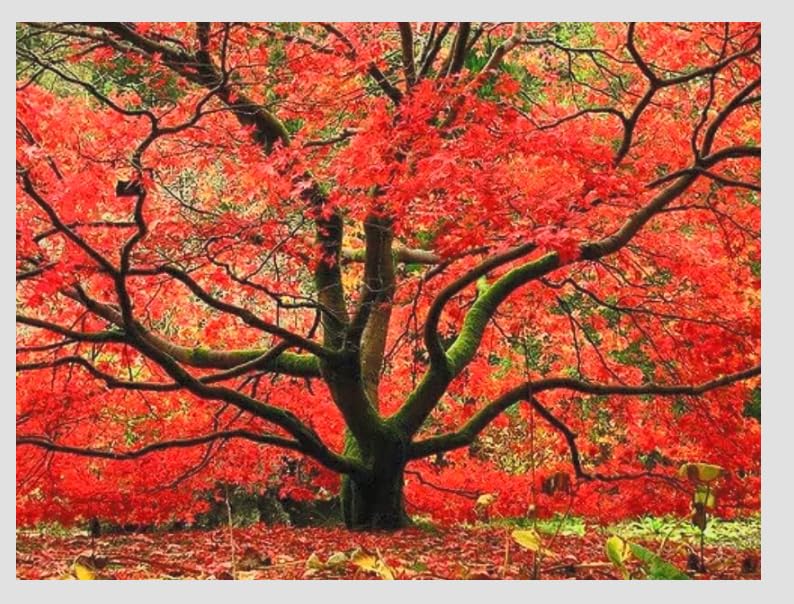
This is the absolute budget-level entry point: a 1-2 foot tall young tree shipped in a tiny 3-inch pot. It’s explicitly marketed as a “bonsai starter” and a plant “for landscaping, patio, garden or bonsai,” which sets the right expectation. This is a young sapling that will require years of care to become a garden centerpiece, but for the lowest price, it’s a viable project.
When the product works, it works well. One buyer reported their tree arrived beautiful and neatly packed, growing perfectly after planting. The tree is a hardy deciduous variety with brilliant red foliage from spring through fall, and it can eventually reach 20 feet at maturity. For those interested in the art of bonsai or low-risk experimentation, this is a great entry point.
The failure rate is substantial. The most critical review describes the tree as a “barely-rooting stick” that died despite experienced care, with the buyer noting it was their first Japanese maple loss in years. Another buyer reported the tree looked good initially but developed fungi and wilted after transplant. The 3-inch pot provides almost no root protection during shipping, making the tree highly vulnerable to drying out or physical damage.
Why it’s great
- Cheapest way to start a Japanese maple from a live tree
- Can eventually grow into a 20-foot landscape specimen
- Great for bonsai enthusiasts who want a project tree
Good to know
- Very small 3-inch pot makes it vulnerable to shipping stress
- High risk of the tree arriving dead or dying shortly after
- Seller packaging is inconsistent; some units arrive as dry sticks
FAQ
How long does it take for a shipped Japanese maple to establish?
Why did my Japanese maple arrive with brown or wilted leaves?
Can I grow a Japanese maple in a container permanently?
What does “grafted” mean on a Japanese maple listing?
Why is my Japanese maple’s leaves turning green instead of red?
Final Thoughts: The Verdict
For most users, the best acer palmatum japanese maple winner is the Brighter Blooms Bloodgood Japanese Maple because it offers the best combination of established size, reliable variety, and strong survival odds. If you want four-season color with striking winter bark, grab the Little Sango Dwarf Coral Bark Maple. And for a compact, cascading showpiece that transforms through the growing season, nothing beats the Orangeola Weeping Laceleaf Japanese Maple.