
Our readers keep the lights on and my morning glass full of iced black tea. As an Amazon Associate, I earn from qualifying purchases.
Specs are compiled from manufacturer listings and verified buyer reviews and can change over time — please confirm the key details on the product page before buying.
An acoustic electric ukulele lets you plug into a PA when the room gets loud and still play unplugged on the sofa. An acoustic electric ukulele has a pickup (a sensor that turns string vibration into an electrical signal) and a small preamp (a mini amplifier that boosts that signal) built into the body. So you can plug into a speaker, a PA (public address system), or a recording interface when the room gets loud — and still play it unplugged on the sofa. This guide sorts eight real options by body wood, preamp bands, and neck feel.
I’m Min — the founder and writer behind Gadgets Feed. This guide is built by comparing the manufacturers’ published specifications and the patterns across verified customer reviews, so you get each pick’s real strengths and trade-offs instead of marketing spin.
You will see where the budget-friendly bodies cut corners and where the premium builds earn their keep. What follows is a straight read on the acoustic electric ukulele options worth your time, sorted by how they actually play.
Our Picks at a Glance


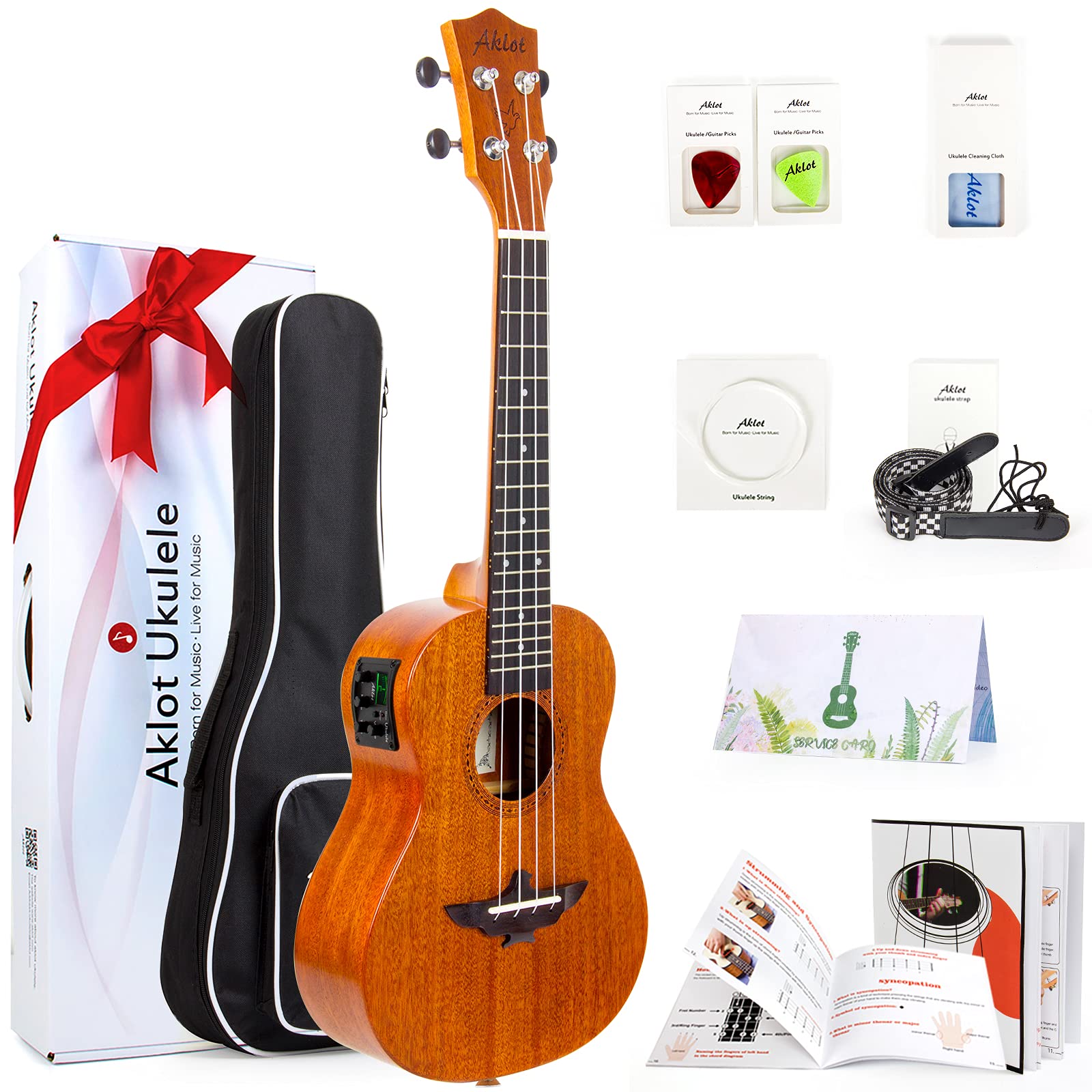
How To Choose The Best Acoustic Electric Ukulele
Start with the size, because it decides how comfortable the thing is in your hands before you ever plug it in. A concert body is the middle ground most adults pick up fastest. A tenor stretches the neck out a little for more frets and a fuller voice. A baritone is the biggest of the three here and tunes differently, so check the tuning before you buy.
Read the preamp, not just the pickup
The preamp is the small control panel built into the side of the body. It shapes your plugged-in sound and usually includes a tuner. A 2-band preamp gives you bass and treble knobs. A 3-band preamp adds a middle control, which lets you cut the honky mids that make a ukulele sound thin through a speaker. If you plan to play open mics or record, the extra middle knob is worth having.
Solid wood versus laminate
Solid wood means the top is one piece of timber rather than layered plies. Solid mahogany tends to give more sustain and a purer tone, which is why the AKLOT and Cordoba builds lean on it. Laminate and composite bodies cost less and shrug off humidity better, which matters if the uke lives in a car or a camper. Solid wood suits players who stay in one room; laminate and composite suit players who travel.
The extras that save a second order
A gig bag, a strap, spare strings, and a cable add up fast when bought separately. Several kits here bundle all of it. One detail buyers trip on: the cable. Some preamps need a mono instrument cable, not a stereo one, or the signal drops out. Check that before you blame the electronics.
Quick Comparison
| Model | Best For | Size | Body Material | Electronics | Amazon |
|---|---|---|---|---|---|
| Caramel CB207 Acacia Baritone★ Best Overall | Deep, guitar-like tone | 30″ baritone | Acacia | 3-band EQ + tuner | Amazon |
| Vangoa 26″ Mahogany TenorGreat Starter Kit | Budget stage starter | 26″ tenor | Mahogany | 2-band preamp | Amazon |
| AKLOT Solid Mahogany TenorSolid Wood Pick | Beginners who want solid wood | 26″ tenor | Solid mahogany | 3-band preamp | Amazon |
| Caramel CT904 Ebony Tenor | Adults stepping up from concert | 26″ tenor | Ebony | 3-band EQ + LCD tuner | Amazon |
| Luna Tattoo Concert | Players who want a look | Concert | Mahogany | Preamp | Amazon |
| Kala KA-TE Tenor Bundle | Stage-ready tone and tuning | Tenor | Mahogany | Kala UK-300-TR | Amazon |
| Enya NOVA UE Pro | Travel and built-in effects | 26″ tenor | Carbon fiber | AcousticPlus + effects | Amazon |
| Cordoba 20TM-CE | Unplugged tone first | Tenor | Solid mahogany top | 2-band EQ | Amazon |
In‑Depth Reviews
1. Caramel CB207 Acacia Baritone Acoustic Electric Ukulele with Truss Rod
Our pick — 4.5+★ from 300+ verified ratings; the strongest balance of quality and price.
The deep-voiced baritone that lets you fine-tune the neck yourself.
The standout here is a feature most ukuleles in this range simply do not have: an adjustable truss rod inside the neck. That is a metal rod you can tighten or loosen with the included wrench to change the string height, so you can dial in the action to suit your fingers. It also means the neck can be corrected later instead of being stuck the way it shipped.
This is a 30 inch baritone tuned D-G-B-E, so it sounds closer to a guitar than a soprano uke — lower, fuller, and easier for a guitarist to pick up. The body is striped acacia with a genuine pearloid soundhole decoration, and the black richilite bridge is drilled through so the strings sit in direct contact with the top wood. The onboard panel is a 3-band EQ with a built-in tuner and a color LCD, and it runs out through a 6.35mm jack into an amp, PA, or interface.
At 2.3 kg versus the Vangoa tenor’s 1.75 kg, and 29.53 inches long versus the Vangoa tenor’s 26 inches, it is the bulkier of the two. That size is the trade-off for the tone — it is not the uke you toss in a tote for the beach. The one mixed signal in the wood-quality chatter is worth knowing: acacia grain varies, so two units can look different from the listing photo. What wins people over is the sound and the value, and it is the crowd favorite here at 4.5+ stars across 300+ owners.
What earns it the top slot
- Adjustable truss rod lets you set your own action — rare at this level
- Full baritone voice from striped acacia, tuned D-G-B-E
- 3-band EQ with color LCD tuner built into the body
- Kit ships with gig bag, strap, picks, cloth, EQ cable, and spare strings
Who should size down instead
- At 2.3 kg and 29.53 inches long, it is bulkier to carry than a tenor
- Acacia grain varies between units, so the finish can differ from photos
Reach for this if: you want a lower, guitar-adjacent tone and the ability to set your own string height.
Look elsewhere if: you need something small enough to live in a backpack — a 26 inch tenor suits that better.
2. Vangoa 26 inch Mahogany Tenor Acoustic Electric Ukulele Starter Kit
The budget tenor that gets you on stage without a second shopping trip.
For a first amplified uke, the sensible question is not which wood is fanciest but whether the whole thing works when you plug in. Here the answer is a 2-band preamp with bass and treble knobs, fed through a mahogany body with a polished finish. It runs on a mono instrument cable, which the listing flags clearly — plug in a stereo cable and the signal can cut out, so keep that in mind before you assume the electronics are faulty.
The neck is a modern C shape with a shallow, flattened oval, and the action is set low on purpose to reduce finger pressure. That makes it forgiving for a beginner working through their first chords. Chrome-plated fully closed tuning pegs and four carbon nylon strings round out the hardware. At 1.75 kg it is the lighter option next to the 2.3 kg Caramel baritone, and at 26 inches long it slips into a gig bag with room to spare.
What buyers talk about most is the overall build and the sound — the mahogany gives a warmer, crisper voice than the plastic-bodied ukes at the entry tier. The honest catch is tuning: several owners find it drifts out of tune fairly quickly, which is normal for fresh nylon strings that are still stretching, and it settles as they break in. The pickup draws a mixed reaction too, so test your cable and amp settings early.
The value read: you get the uke, gig bag, strap, tuner, extra strings, picks, and a cleaning cloth in one box — no piecemeal ordering.
Plan for this: budget a week or two of retuning as the strings stretch, and keep a mono cable on hand.
Right call for: a first-time player who wants everything in one box and does not mind retuning during the break-in.
Think twice if: you need rock-solid tuning from the start for a gig this week.
3. AKLOT Electric Tenor Ukulele Solid Mahogany 26 inch
Solid mahogany at a laminate price, with a preamp that tames the mids.
A solid wood top is the upgrade most players chase, and this one delivers it in a 26 inch tenor without jumping into the top tier. Solid mahogany is denser and more stable than laminated plies under the same conditions, which gives you longer sustain and a purer tone. That is the core of why this pick holds up for beginners and intermediates alike.
The electronics are a 3-band preamp — bass, middle, treble — so you can cut the honky mids that make a plugged-in uke sound thin. Unlike the Vangoa’s 2-band panel, the extra middle control gives you more room to shape your tone through a PA. The 18:1 geared tuners and Aquila strings help it hold pitch once the strings settle, and every uke is pre-tuned before it ships so the strings are already stretching. The neck and soundboard are reinforced, and the action is set low to play without buzzing.
The finish is a deep mahogany with an open-pore satin look, and the fret wire is shaped to avoid snagging your fingers. The one honest note: a few owners find the onboard functions less consistent than they would like, so treat the preamp controls gently and test them on arrival. What wins people over is the build and the sound, and it is the most-reviewed pick in this lineup at 4.0+ stars across 800+ owners. There is also free lesson content on the maker’s site and channels to get you started.
Why solid wood matters here
- Solid mahogany gives more sustain and a purer tone than laminate
- 3-band preamp with a middle knob for shaping plugged-in sound
- 18:1 geared tuners plus Aquila strings for better pitch holding
- Low action and smoothed fret wire for comfortable fretting
Small things to note
- Onboard controls are the least consistent part — test on arrival
- Solid wood wants reasonable humidity care, unlike a composite body
the balance: solid-wood tone and a 3-band preamp (three tone controls for bass, middle, and treble) for players who want room to grow.
Skip if: you need a uke that lives in a car through seasonal swings — a composite body handles that better.
4. Caramel CT904 26 inch Ebony Tenor Electric Ukulele Kit

An ebony tenor built for adults who want a wider fretboard under their fingers.
If you have tried a concert uke and found your fingers bunched up, the 26 inch tenor is the fix. The fret spacing is wider, which suits adult hands, novices, and players stepping up from a smaller body. Caramel makes the case plainly: the 26 inch tenor gives better sound and roomier frets than a concert.
The body is ebony with polished edges and carefully finished frets, so your hand slides without snagging. The electronics are a 3-band EQ with an LCD color display tuner, feeding out through both a 6.35mm and a 3.5mm jack — handy if you want to run headphones or a different cable type. Every uke is tuned by a luthier before shipping, which takes some of the guesswork out of the first session. At 1.6 kg it sits between the lighter Luna and the heavier baritone, and the kit includes a gig bag, strap, picks, cloth, spare G-C-E-A strings, and the cables.
What buyers enjoy most is simply how fun it is to play, and the sound and value follow close behind. The built-in tuner earns its own praise for convenience — you can check pitch without a separate clip-on. One thing to watch: the electronics work great for many owners, but a few report a unit where they did not, so plug in and test within the return window. It sits at 4.5+ stars and holds strong across several hundred owners.
Comfort note: the wider tenor frets and polished fret ends are the reason adults gravitate here over a concert body.
Worth checking early: confirm the preamp and both jacks work as soon as it arrives.
Best fit for: adults who want a tenor’s roomier neck and a warm ebony look.
Hold off if: you prefer a compact concert body — the wider fretboard is the whole point here.
5. Luna Tattoo Concert Mahogany Acoustic/Electric Ukulele

A concert uke with Hawaiian tattoo artwork and a clear, resonant voice.
Some people buy a ukulele to be seen with it, and this is that pick. The design borrows from traditional Hawaiian body ornamentation — geometric patterns in black across the top, with fret markers shaped like stylized sharks’ teeth. It is a genuine conversation piece, not a decal slapped on a plain body.
The concert body and mahogany build are what give it its clear, resonant voice, and it is one of the lighter ukes in this lineup at just 0.7 kg — easy to hold through a long session. The preamp and pickup let you take that voice to a speaker when you need more volume. What buyers respond to most is the sound and the looks, in that order, with the artwork drawing plenty of attention on its own. At 4.5+ stars across 250+ owners, it earns its place on tone as much as on style.
The honest catch is tuning stability. Some owners find it needs more frequent retuning, and a few have noted long-term durability as a question mark rather than a guarantee. Treat the strap pegs and mahogany body with care and it holds up fine. If you want a 0.7 kg concert body with Hawaiian tattoo artwork and a clear mahogany voice, this is a satisfying buy.
What gives it character
- Distinctive Hawaiian tattoo artwork with sharks-tooth fret markers
- Light 0.7 kg concert body that is easy to hold for long sessions
- Clear, resonant mahogany tone with working onboard electronics
- Branded travel bag included
Where to set expectations
- Tuning stability is the recurring gripe — plan on regular retuning
- Long-term durability is less certain than the tone
Choose this when: the look matters as much as the sound and you want a concert body with real personality.
Pass if: you need a stage uke that holds pitch without a retune between songs.
6. Kala KA-TE Mahogany Tenor Acoustic-Electric Ukulele Bundle
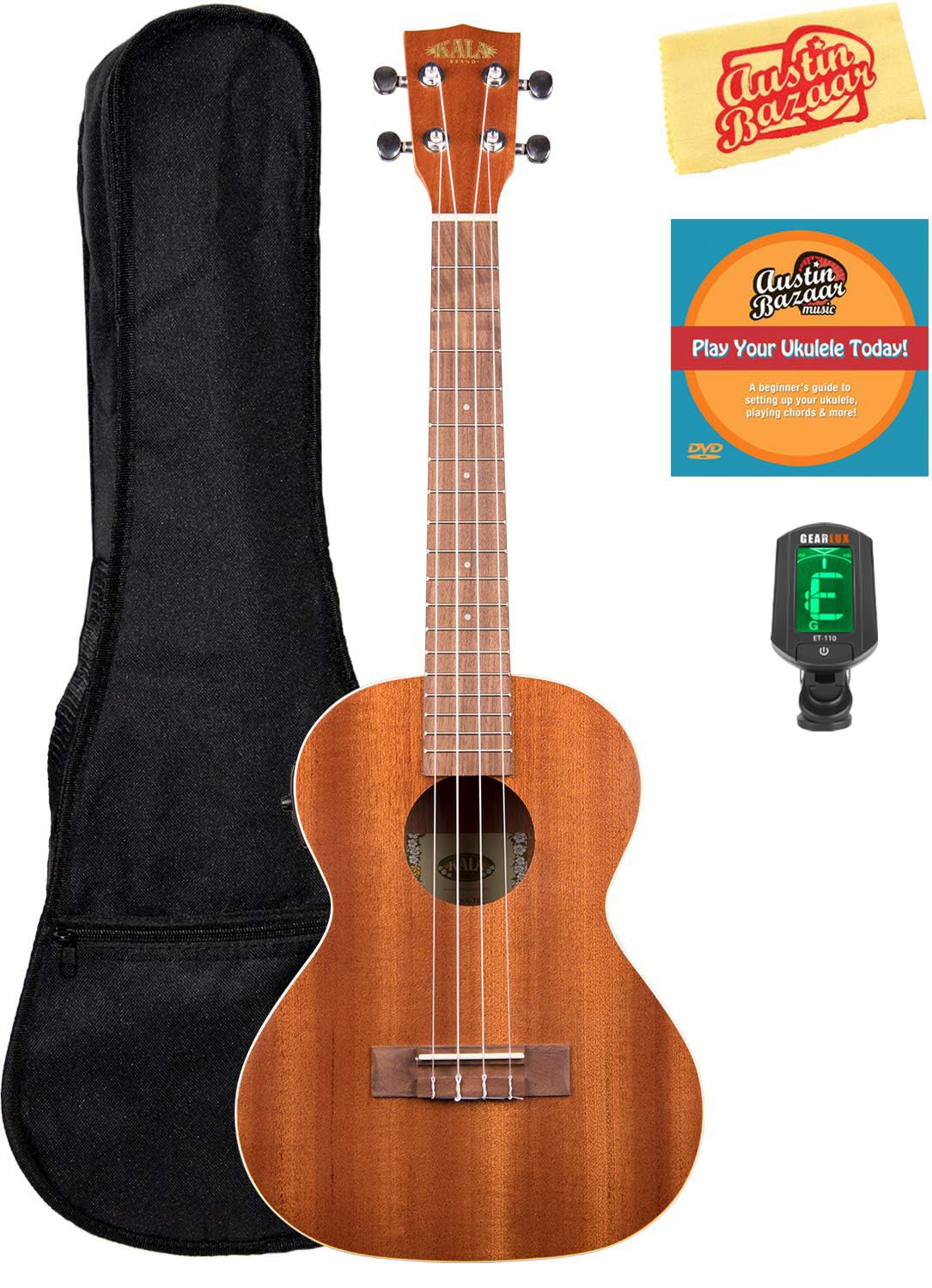
The name that shows up at every open mic, with electronics built for the stage.
Kala is the brand most players see first at a jam session, and this KA-TE is the tenor that carries the reputation. The body and neck are mahogany, the fingerboard is walnut, and it has cream binding around the edges. The electronics are Kala’s own UK-300-TR system, wired out through a 6.35mm jack — that is the same standard instrument jack your amp and PA expect.
The bundle adds a gig bag, a clip-on tuner, an instructional DVD, and a polishing cloth, so a total beginner can open the box and get going. In practice, owners say the tuner works well and helps the uke stay in tune through a session. The tone draws the warm, sweet quality players associate with this body style. What buyers praise most is the overall quality, with the sound and the value following close behind — the most extensive feedback pattern in this whole lineup.
Tuning retention is the one mixed note here: some owners find it needs attention to stay in tune, which is standard for a new instrument as the strings settle. Nothing unusual, just the normal break-in period. Between the Kala UK-300-TR electronics and the mahogany/walnut build, it is the safest pick if you plan to plug in regularly at gigs and want a known quantity.
Why gigging players trust it: Kala’s own UK-300-TR preamp and a mahogany/walnut build tuned for stage work.
The honest caveat: tuning retention needs a little patience while the strings settle — expect to retune early on.
The safe stage bet: a known brand, proper electronics, and a bundle that covers tuning and care.
Not for you if: you want distinctive wood grain — this is a clean, classic satin mahogany look rather than a showpiece.
7. Enya NOVA UE Pro 26 inch Carbon Fiber Acoustic-Electric Ukulele

The carbon fiber uke that adds reverb and chorus without an amp in sight.
Here is the feature that puts this one in its own lane: the AcousticPlus system adds reverb, chorus, and delay directly to the ukulele’s natural sound, so you get an enhanced tone with no amplifier connected. That is a real help for practice, songwriting, and casual performing where hauling gear is a nuisance. Plug into an amp, PA, or audio interface through the 1/4 inch jack and you get separate controls for effect level, reverb, and chorus/delay.
The body is a carbon fiber composite with a redesigned internal bracing structure, a 26 inch tenor shape, and a smooth cutaway for reaching the higher frets. That composite material is the practical part — it handles climate shifts better than solid wood, which is why this is the natural travel pick. It charges by USB in about 2 hours and gives roughly 4 hours of effects use per charge. At 1.98 lb it is one of the lightest tenor-sized ukes here.
Owners tend to rave about the brightness of the sound and how fun it is to play, and it holds tuning well even through string stretching. The EVA case, strap, capo, and extra strings come in the box, so it is genuinely ready to travel. The one thing opinions split on is long-term durability of the composite build, so if you like the effects and the portability, treat the case as part of the kit and it will serve you well.
The travel-first advantage
- Built-in reverb, chorus, and delay with no amp required
- Carbon fiber composite shrugs off climate changes
- USB rechargeable — about 2 hours to charge, roughly 4 hours of effects use
- Ships with EVA case, strap, capo, and extra strings
Points to weigh
- Composite durability draws mixed opinions over the long haul
- The effects are a bonus, not a substitute for a proper amp on a real stage
Made for the road: a USB-rechargeable uke with built-in effects that survives temperature swings.
Best left alone if: you only ever play in one room and want pure acoustic tone — the effects add complexity you may not use.
8. Cordoba 20TM-CE Acoustic Electric Tenor Ukulele

Solid mahogany top and a soft cutaway, built around unplugged tone first.
Where the Enya leans on effects, this one leans on wood. The top is solid mahogany, with matching mahogany back and sides and a rosewood bridge and fingerboard — the classic recipe for a warm, rich acoustic voice. Aquila Nylgut tenor strings in GCEA tuning come fitted, so it sounds right from the first strum.
The soft cutaway makes it easier to reach the upper frets, and the 2-band EQ gives you bass and treble control when you plug in. At 1.3 lb it is one of the lightest tenors in the lineup — no strain on your shoulder during a long sitting. The natural satin finish keeps the look understated. One thing the maker notes honestly: real wood varies in color and grain, so your uke may arrive lighter or darker than the photo.
What buyers value most is the quality of the instrument and the beauty of the mahogany tone. The build and looks earn steady praise too, and it is a genuine value for a solid-top build. Playability is the field where reactions split — some players love the feel immediately, others want to tweak the setup to their taste. It is the lowest review total of the group at 4.0+ stars, so weigh that against the solid-wood spec if raw tone is your priority.
The spec that matters: a solid mahogany top is the reason this one sounds fuller unplugged than a laminate body.
Set expectations: the natural wood grain may differ from the listing, and the setup could want a personal tweak.
Pick this for: the player who mostly strums unplugged and wants a solid-top acoustic tone in a light body.
Better elsewhere if: you need a preamp with mid control or built-in effects — the 2-band panel here is deliberately simple.
Understanding the Specs
Preamp Bands: 2-Band vs 3-Band
A preamp is the little control panel built into the side of the ukulele. A 2-band unit gives you bass and treble, which is enough for a clean, simple plugged-in sound. A 3-band unit adds a middle knob, so you can pull back the honky frequencies that make a uke sound thin through a speaker. If you play open mics or record, the extra control is genuinely useful.
Body Size and What It Changes
Concert, tenor, and baritone are three different reaches for your fretting hand. A concert body is compact and quick. A tenor stretches the neck out for more frets and a fuller voice, which suits adult hands. A baritone is the biggest and tunes D-G-B-E rather than the standard G-C-E-A, giving a lower, guitar-like tone. Sizing is the first decision, because it decides comfort before electronics ever enter the picture.
Solid Wood, Laminate, and Composite
Solid wood means the top is one piece of timber, which tends to give more sustain and a purer tone. Laminate is layered plies — cheaper and more stable in humidity. Carbon fiber composite is the most weather-resistant of the three and the lightest for travel. Solid wood rewards tone-chasers; carbon fiber composite rewards players who move between climates.
Tuning Stability and Break-In
New nylon and Nylgut strings stretch, so a fresh uke drifts out of tune for the first week or two. Geared tuners (like an 18:1 ratio) make fine adjustments easier. A built-in tuner on the preamp saves you a separate clip-on. None of this is a defect — it is the normal settling period before the strings hold pitch.
FAQ
Do I need a special cable to plug an acoustic electric ukulele into an amp?
Is a tenor or baritone ukulele easier for a guitarist to pick up?
How long does it take a new ukulele to stop going out of tune?
What is the difference between a 2-band and a 3-band preamp on a ukulele?
Can I play these ukuleles without plugging them in?
Will a ukulele preamp work with headphones?
Is solid mahogany better than laminate for an acoustic electric ukulele?
Does a ukulele cable come with the instrument?
Can the electronics on an acoustic electric ukulele be repaired if they fail?
Which ukulele size is best for an adult beginner?
Final Thoughts: The Verdict
For most players, the acoustic electric ukulele winner is the Caramel CB207 Acacia Baritone because the adjustable truss rod (a metal rod inside the neck that lets you set your own action) lets you set your own action and the 30 inch acacia body delivers a deep, guitar-adjacent voice with a 3-band EQ (three tone controls for bass, middle, and treble) and tuner built in. If you want solid-wood tone at a fair price, grab the AKLOT Solid Mahogany Tenor with its 3-band preamp. And for travel with built-in reverb and chorus, the Enya NOVA UE Pro is the one to reach for — the crowd favorite here sits at 4.5+ stars across 300+ owners, so it is a well-worn path rather than a gamble.
How We Picked
We do not accept paid placement. Every pick is matched to a real buyer and a real use-case; we do not hands-on test units.
Sources & Methodology
Specifications: manufacturer listings and product documentation. Review insights: verified customer reviews, as of November 2026. Pricing: not shown on this page (it changes often); check the current price via the retailer link.
As an Amazon Associate, Gadgets Feed earns from qualifying purchases. This does not affect which products we feature.