
Our readers keep the lights on and my morning glass full of iced black tea. As an Amazon Associate, I earn from qualifying purchases.
Specs are compiled from manufacturer listings and verified buyer reviews and can change over time — please confirm the key details on the product page before buying.
Amplifying an acoustic guitar without losing the warm, woody voice that made you buy it is the real challenge here. Most pickups do one of two things: they add a brittle “quack” to your tone, or they feed back the moment you turn up. The right system captures your guitar’s unplugged voice, so you must weigh piezo, magnetic, and microphone technologies before buying.
I’m Min — the founder and writer behind Gadgets Feed. This guide is built by comparing the manufacturers’ published specifications and the patterns across verified customer reviews, so you get each pick’s real strengths and trade-offs instead of marketing spin.
We compared 9 pickups head-to-head to find the acoustic guitar pickups that deliver studio-grade tone without the feedback headaches.
Our Picks at a Glance


How To Choose The Best Acoustic Guitar Pickups
Your pickup choice dictates your amplified tone, so first define if you need stage feedback resistance or studio-grade natural sound. A gigging performer needs feedback resistance and stage controls, while a home recorder might want the most natural tone possible with no batteries.
Piezo vs Magnetic: The Tone Divide
Piezo pickups sit under the saddle and capture the vibration of the whole top, which gives a brighter, more percussive sound that closely matches your unplugged tone. Magnetic pickups sit in the soundhole and only hear the strings, so they give a warmer, softer electric-guitar-like voice, but they are far less prone to feedback and require no modification.
Passive vs Active: The Power Question
Passive pickups need no battery and are simple to install, but they output a lower signal that might require a preamp to reach full volume. Active pickups have a built-in preamp powered by a battery, which boosts the signal and gives you tone controls, at the cost of remembering to change that battery.
Quick Comparison
| Model | Best For | Type | Power Source | Controls | Amazon |
|---|---|---|---|---|---|
| L.R. Baggs Anthem★ Best Overall | Studio-grade dual-source tone | Piezo + Microphone | Active Preamp | Volume, Mix, Phase, Mic Trim | Amazon |
| KNA NG-2Stage Ready | Nylon-string stage work | Piezo (detachable) | Passive | Volume Knob | Amazon |
| L.R. Baggs M1 ActiveGig Workhorse | Feedback-resistant gigging | Magnetic Soundhole | Active (Coin Cell) | Volume, Adjustable Poles | Amazon |
| Fishman Neo-D | No-drill vintage guitars | Magnetic Humbucker | Passive | None | Amazon |
| Seymour Duncan Woody HC | Classic soundhole plug-and-play | Magnetic Humbucker | Passive | None | Amazon |
| AMUMU SP60 | Budget humbucker upgrade | Magnetic Humbucker | Passive | Volume Wheel | Amazon |
| Fishman Neo-Buster | Feedback suppression combo | Magnetic + Buster | Passive | None | Amazon |
| KNA NG-1 | Simple nylon-string amplification | Piezo (detachable) | Passive | None | Amazon |
| Passive Piezo EP001K | Budgets wanting natural tone | Piezo (3-Element) | Passive | None | Amazon |
In-Depth Reviews
1. L.R. Baggs Anthem Acoustic Guitar Pickup and Microphone
Our pick — over 4.5★ from 250+ verified ratings; the strongest balance of quality and price.
The dual-source system that kills piezo quack and delivers a true microphone-like acoustic voice.
This dual-source system pairs a TRUMIC microphone with an undersaddle piezo to reproduce your guitar’s unplugged voice. It combines a patented TRUMIC microphone that captures most of the frequency range with an Element undersaddle pickup that handles the lowest frequencies, so the sound feels full and natural rather than thin or artificial. The mix control on the soundhole preamp lets you blend between the microphone with low-frequency support and the full-range piezo, which means you can dial in exactly how “acoustic” you want it to sound.
The battery-powered soundhole preamp offers volume, mix, phase inversion, and mic trim controls for on-stage tone shaping. The phase inversion switch flips the signal to kill feedback howl before it starts. Installation takes about an hour with an end-pin jack, but the payoff is dynamic response that tracks your picking intensity.
On a Taylor 714CE it “eliminates piezo quack/boominess,” the harsh artificial sound some undersaddle pickups produce. The trade-off is a slight brightness and mix-knob controls without center-detents, so dialing the exact middle takes feel. At just 0.15 kg, it is worth the patience if you want the best possible plugged-in tone.
Why Players Upgrade To This
- True-to-life acoustic sound with the mic and piezo working together
- Feedback-free at full volume thanks to the phase inversion control
- Soundhole preamp gives you volume, mix, and tone trimming without drilling
Where It Demands Patience
- Active system requires a battery to power the built-in preamp
- Installation involves wiring an end-pin jack, taking roughly an hour
- Slight brightness can surface on some guitars
The studio standard: Best if you record or play live and refuse to compromise on natural acoustic tone.
Think twice if: You want a no-mod, five-minute install — this demands proper wiring work.
2. KNA NG-2 Classical Flamenco Guitar Piezo Pickup with Volume Control
A no-mod nylon-string pickup with onboard volume for instant stage control.
For classical or flamenco guitar, this pickup gives you hands-on control without permanently altering your instrument. The lightweight wood-enclosed sensor slides under the strings and attaches securely without modifications, then detaches easily when you want to play purely acoustic. The onboard volume control separates it from its simpler sibling, letting you adjust output on stage or in the studio without reaching for an amp.
It runs completely battery-free, preserving a pure and natural signal straight from the wood. Players report a woody, authentic tone with no piezo quack, and it even picks up subtle harmonics and body percussion — a rare trick for a passive system. Installation takes around 15 minutes the first time, and the included cables (a 9-ft 1/8″ to 1/4″ instrument cable and a 3-ft 1/8″ to female 1/4″ jumper cable with a safety clip) have you covered.
Handcrafted in Europe from mahogany wood, it delivers sound that owners say beats budget alternatives, though it carries a warning: the delicate wooden sensor can crack if dropped, so remove it when not in use. A slight hum can appear when plugging directly into an amp, but a DI box clears it up completely. It performs well with both nylon and metal strings, making it more versatile than its classical branding suggests.
Natural and nimble: The volume knob and detachable design make this the easiest stage-ready path for nylon-string players who refuse to drill.
Handle with care: The wood-enclosed sensor is fragile and should be removed and stored safely after each use.
3. L.R. Baggs M1 Active Acoustic Guitar Magnetic Soundhole Pickup
An active magnetic that runs 1,000 hours on one coin cell and shrugs off feedback.
This is the soundhole pickup for players who gig loud and need a signal that stays clean at high volumes. The M1 Active is highly feedback-resistant, which means you can stand in front of a monitor without that ear-splitting howl. Its long battery life is the headline number: 1,000 hours on a single 3V lithium coin cell, which buyers report lasting over a year of regular use.
It includes adjustable pole pieces so you can balance each string to your preferred gauge and type, giving you per-string control most pickups lack. The result is a warm, woody acoustic tone that players say transforms even cheap guitars — one owner calls it a great upgrade for + instruments. It also picks up body percussive sounds, adding a lively, tactile quality to your playing.
The volume knob sits on the pickup body and some find it awkward to reach mid-play, though it is there when you need it. Installation is a quick soundhole mount, though wiring the 1/2″ end-pin jack takes patience and following the string pull-through method. The pre-set pole position works for bronze strings from the start, so you can play immediately and fine-tune later.
The dependable gig pick: Perfect for performers who want magnetic warmth, feedback resistance, and a battery that never dies mid-set.
Reach for the Anthem above if: You need microphone-level natural tone rather than the warmer magnetic voice.
4. Fishman Neo-D Magnetic Humbucker Acoustic Pickup
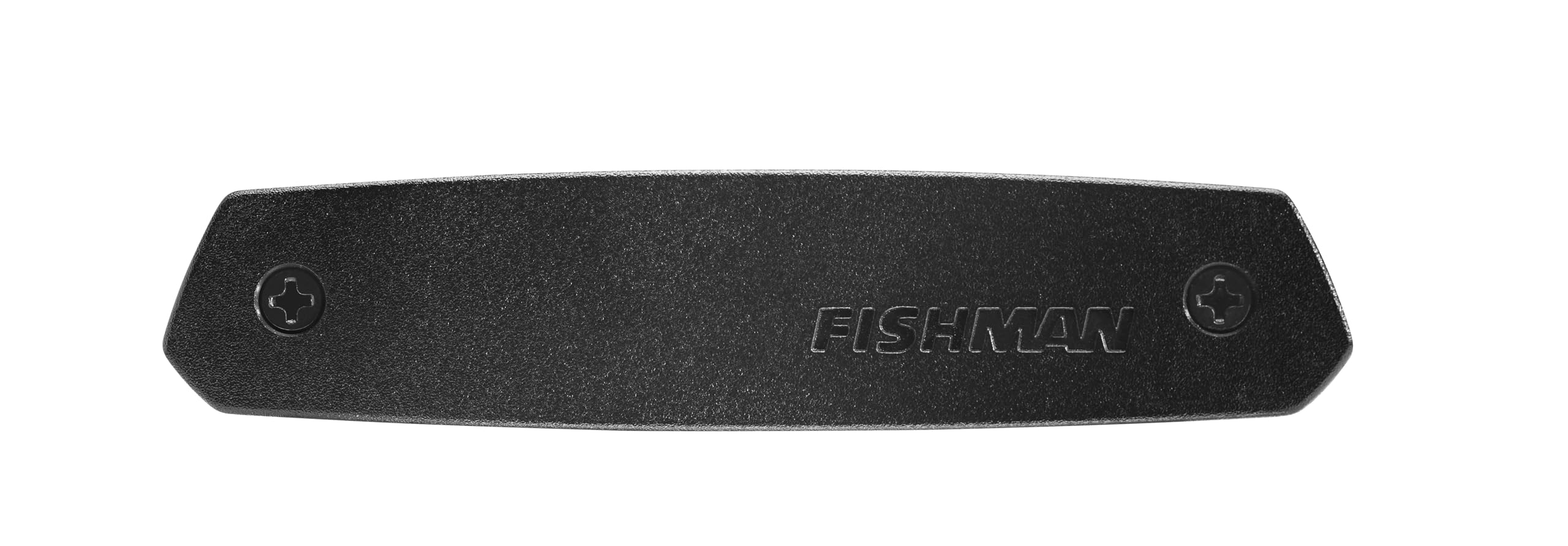
The non-invasive soundhole pick that leaves vintage guitars untouched.
For a sentimental vintage guitar you refuse to drill, the Neo-D slides into the soundhole and amplifies without a single permanent modification. It shares the same neodymium magnet structure as Fishman’s award-winning Rare Earth pickup, giving it exceptional string balance and sparkling clarity. The low-profile, high-impedance design needs no battery, and installation is truly easy — owners mention no need to even loosen the strings.
As a humbucker, it delivers warm, full tone with no hum, and players praise its rich low end and un-colored character. It works brilliantly on 12-string guitars and plugs straight into a DI box for live use, with enough output to drive a Bose S1 Pro speaker at satisfying volume. The design is passive and durable, making it a reliable grab-and-go option.
The main limitation is output level: as a passive unit it needs high gain on your amp, so you will likely want a preamp pedal in the chain. It is also designed for right-handed guitars, so lefties need to experiment with orientation to find their ideal tone. At just 0.5 x 2 x 3 inches, it is the definition of low-profile, slipping in and out as needed.
Why It Is A Favorite
- Installs and removes without drilling or loosening strings
- Neodymium magnets deliver rich, balanced tone with no hum
- Passive design means zero batteries to manage
The Fine Print
- Low output demands an amp preamp or boost pedal for full volume
- Right-handed design takes orientation tweaks for lefties
5. Seymour Duncan Woody Hc Hum Canceling – Maple – Acoustic Guitar Pickup

A classic mellow-voiced soundhole humbucker that catches overtones beautifully.
This is the soundhole pickup for players who want a mellow, rounded voice with zero hum at a sensible price. The Woody HC uses a dual-coil design to cancel hum, and owners consistently note it catches overtones nicely and captures subtle tones, with one praising it as excellent on a 12-string. Its maple finish looks clean in the soundhole, blending naturally with lighter guitar tops.
Installation is genuinely easy — it fits snugly in the soundhole with no drilling, and a 1/4″ male jack means you simply plug in your cable and play. It replaces weak factory pickups with a warmer, more balanced sound, and at 9.6 ounces it is substantial but secure once seated. Many owners use it for gigs, plugging straight into an amp or board.
The honest trade-off is that the hum-canceling is not perfect in every environment, with a few players reporting residual static that a noise gate fixes. Output is on the lower side, so a boost pedal may be needed with a portable amp. Weighing in as a passive unit, it needs no battery and delivers a clean, clear, crisp sound that has made it a staple for years.
Solid and simple: Grab this if you want a proven, mellow magnetic tone with easy no-drill install and no batteries.
Look elsewhere if: You need the loudest output or total silence in electrically noisy venues.
6. AMUMU SP60 Acoustic Guitar Pickup Humbucker Magnetic Passive Soundhole Pickup
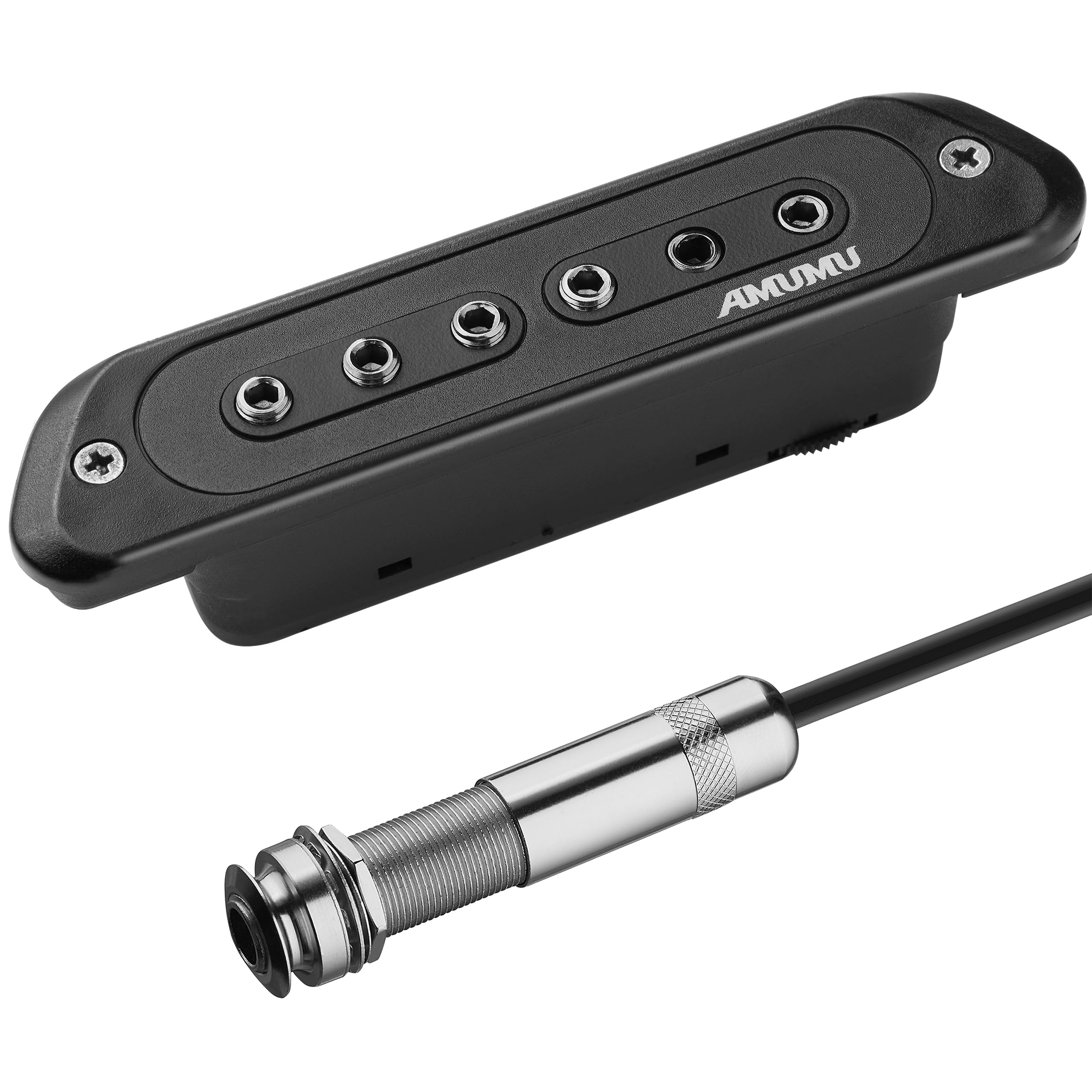
A ceramic-magnet humbucker that transforms cheap guitars with thunderous lows.
Do not let the budget-friendly price fool you — this passive humbucker delivers a warm, dynamic tone that owners say transformed a cheap parlor guitar with thunderous lows and sweet highs. The ceramic magnet core and dual-coil design reduce noise while boosting clarity and sustain, and the adjustable pole pieces let you balance each string with a screwdriver. It fits soundholes from 3.82″ to 5.1″, covering most steel-string acoustics.
The built-in volume wheel gives you precise output control on the fly, and the black finish blends discreetly into the soundhole. Installation takes about an hour and involves wiring the internal cable to an end-pin jack, with owners suggesting drilling a separate hole to avoid loosening the strap button. Once in, the passive design means no battery drain, and the volume is sufficient at 80% max for most amps.
The catch is that it needs a bit of setup: without adjusting the poles, the sound can come across muddy, and the volume dial is a little hard to reach mid-play. Note that as a passive pickup, it requires an amplifier with a built-in preamp to reach proper volume — plugging straight into a mixer will sound weak. The white cable clips also draw some criticism for their adhesive, a minor swap for many.
Bang for the buck: The SP60 is the best budget path to a fat, hum-free magnetic voice, provided you spend 10 minutes on pole adjustment.
Know before you buy: It is meant for steel-string guitars only — nylon-string instruments will not work with it.
7. Fishman Neo-Buster Humbucker Soundhole Acoustic Pickup and Feedback Buster

A magnetic humbucker fused with a feedback buster, built for loud stages.
This Fishman pairs a humbucker soundhole pickup with a Feedback Buster — a physical cover that blocks the soundhole and stops the howl before it starts. That combination is the reason it is a favorite in large churches and loud stages, where players report it eliminates feedback and delivers clean sound straight through the board without a preamp. Up close, owners praise the absence of ground hum.
The passive design keeps things simple: no battery, just a straightforward magnetic pickup that captures a warm acoustic tone. It fits a standard Martin 000 soundhole snugly, and the integrated buster doubles as a way to tighten the fit. For those playing amplified in uncontrolled spaces, it is a one-box solution to the two biggest acoustic problems.
The trade-off is in the fit: it does not conform to every soundhole, with some smaller guitars like the Seagull Entourage rejecting it entirely, and others requiring all strings loosened to slip it in place. A few note the rubber ring is flimsy and can snap during removal, and there is no volume knob, so you adjust at the amp. At 0.28 inches thick and 8.1 ounces, it is a compact, purposeful tool rather than a tone-chasing luxury.
For the loud room: Pick this if feedback is your nemesis and you want a single passive unit that tackles it head-on.
Check your fit first: Measure your soundhole — smaller-bodied guitars may not accommodate this one.
8. KNA NG-1 Classical Flamenco Guitar Piezo Pickup, Passive Pickup

The battery-free detachable piezo that brings faithful nylon-string tone to any stage.
This is the simpler, lower-cost sibling in the KNA family, and it earns its place as the no-frills way to amplify a classical guitar. The lightweight wood-enclosed sensor slides under the strings and captures the authentic tone of a nylon-string guitar with clarity and balance, attaching securely without modifications. It is nearly invisible once installed, which owners appreciate for keeping the instrument’s clean look.
Being battery-free and passive, it delivers a pure signal that players describe as faithful to the unplugged sound, standing up to systems like the Fishman F1 in quality. The included kit covers you completely: a 9-ft 1/8″ to 1/4″ instrument cable, a 3-ft 1/8″ to female 1/4″ jumper cable with a safety clip, and an additional magnetic clip for cable management. Handcrafted in Europe from mahogany wood, it feels like a quality instrument piece rather than a plastic accessory.
The recurring caution is fragility — the thin mounting wood can crack if you yank the cord, so gentle handling and a belt clip are essential. It also needs a preamp to sound its best, and the included 9-ft cable runs a little short for some stage setups. Best on classical and flamenco guitars, it is a non-invasive, inexpensive upgrade that players call a beautiful-sounding addition.
Simple and transparent: The NG-1 is the pick for nylon-string players who want authentic tone with zero installation risk.
Treat it kindly: The wood sensor is delicate, and the system wants a preamp in the chain for full glory.
9. Passive Piezo Acoustic Pickup EP001K with Three Balanced German-Made Piezo Elements

Three German-made ceramic discs that deliver natural acoustic tone on a strict budget.
You get the natural voice of a piezo system without paying premium prices with the EP001K, which packs three balanced, high-output German-made ceramic elements at 20mm diameter each. It delivers a frequency response of 22Hz-18kHz — well beyond the EADGBE guitar range of 82Hz to 1,397Hz — so you hear the full spectrum of your strings. Owners say the transparent, natural amplified sound closely matches their guitar unplugged, on everything from 6-strings to 12-string Yamahas and Martin D-18s.
It is completely passive, needing no batteries, and the slim design installs under the saddle in a methodical afternoon — glueing the elements, feeding the cable, and wiring an end-pin jack. Players who replaced a Fishman in a Fender essential call it a clear win at half the price of a K&K, and pairing it with an IR loader pedal yields a mic-like sound that is the stuff of budget rigs. The lifetime warranty backs it for the long haul.
The honest hurdle is installation: it is the most involved job here, with feedback mixed between owners who find the YouTube-guided process straightforward and those who wrestle with fit under smaller bridge plates. A few report one element blocking a bridge pin hole, fixed with careful drilling. As a passive unit, you will want an external preamp or DI, but the tonal payoff is exceptional for the money.
The Value Argument
- Transparent piezo tone rivals far costlier systems
- Three German-made elements balance output across the strings
- Lifetime warranty and zero battery costs
Where It Challenges You
- Installation is tricky and demands patience and care
- Needs a preamp or DI to reach full live volume
- Fit can be tight on smaller bridge plates
Understanding the Specs
Piezo vs Magnetic vs Microphone
The transducer type defines your entire tone. Piezo pickups sit under the saddle and capture the top’s vibration, giving a bright, percussive sound close to your unplugged tone, but they can sound brittle (the dreaded “quack”) without a good preamp. Magnetic pickups live in the soundhole and hear only the strings, delivering a warmer, softer voice that resists feedback but sounds less like your bare acoustic. Microphone-based systems, like the TRUMIC, capture the air and body resonance for the most natural tone, but they amplify everything — including potential feedback.
Passive vs Active Power
This determines your signal strength and controls. Passive pickups need no battery and install simply, but they output a lower signal that often requires a preamp pedal or amp gain boost to reach full volume. Active pickups include a built-in preamp powered by a battery (like a 3V coin cell or 9V), which boosts the signal and adds tone controls like volume, mix, and phase inversion. The trade-off is battery life — the L.R. Baggs M1 Active stretches one coin cell to 1,000 hours, while other active systems need more frequent changes.
FAQ
What is the difference between a piezo and a magnetic acoustic pickup?
Do I need a preamp for a passive acoustic pickup?
Will a soundhole pickup fit my acoustic guitar?
How long does a battery last in an active acoustic pickup?
Can I install an acoustic pickup myself or do I need a luthier?
What causes feedback with an acoustic pickup and how do I stop it?
Is a dual-source pickup like the L.R. Baggs Anthem worth the extra cost?
What is the best pickup for a nylon-string classical guitar?
How do adjustable pole pieces help my sound?
Why do some pickups have a low output volume?
Final Thoughts: The Verdict
For most players, the acoustic guitar pickups winner is the L.R. Baggs Anthem because it is the only system here that pairs a real microphone with a piezo to deliver true-to-life tone in one package. If you want a no-mod magnetic option that resists feedback and runs 1,000 hours on one coin cell, grab the L.R. Baggs M1 Active. And for nylon-string players who refuse to drill, the KNA NG-2 with its onboard volume knob is the one to reach for.
How We Picked
We do not accept paid placement. Every pick is matched to a real buyer and a real use-case; we do not hands-on test units.
Sources & Methodology
Specifications: manufacturer listings and product documentation. Review insights: verified customer reviews, as of August 2026. Pricing: not shown on this page (it changes often); check the current price via the retailer link.
As an Amazon Associate, Gadgets Feed earns from qualifying purchases. This does not affect which products we feature.