
Our readers keep the lights on and my morning glass full of iced black tea. As an Amazon Associate, I earn from qualifying purchases.
Specs are compiled from manufacturer listings and verified buyer reviews and can change over time — please confirm the key details on the product page before buying.
A noisy room isn’t just annoying — it makes phone calls hard, music sound muddy, and your home office feel like a coffee shop. The fix is simple: place the right material between you and the noise. This guide breaks down seven acoustic insulation options for walls — from professional-grade hangable panels to peel-and-stick foam — backed by specs and buyer experience.
I’m Min — the founder and writer behind Gadgets Feed. This guide is built by comparing the manufacturers’ published specifications and the patterns across verified customer reviews, so you get each pick’s real strengths and trade-offs instead of marketing spin.
Whether you’re tuning a recording studio, silencing a refrigerator, or quieting a conference room, you’ll see each option’s strengths and trade-offs.
Quick Picks
- ATS Acoustics Sound Absorbing Acoustic Panel 24″ x 48″ x 2″ Beveled Edge (Ivory) — Pro Grade
- UMIACOUSTICS 4 PCS Acoustic Panels with Hanging Bracket, 2” Thick Fiberglass — Room Tamer
- Soon Global Acoustical Wall Panels, 6-Piece 23.62 x 23.62 Inches, Arcadian Vortex — Decorative Pro
- Art3d 2-Pack 108″ x 12″ Acoustic Wood Slat Panels, Smoky Oak — Pro Coverage
- TONOR Wood Slatwall Panels, 4 Pack 47.2″ x 23.6″ (31ft²), Walnut — Echo + Decor
- NeatiEase Wood Panels for Wall, 4-Piece 96″ x 12.6″ Soundproof Wood Slat Panel, Teak — Full Wall Fix
- 22 Pack Self-Adhesive Sound Proof Foam Panels for Walls 12″x12″x0.4″ Fabric — Budget Remedy
How To Choose The Best Acoustic Insulation For Walls
Buying wall insulation for sound differs from buying it for temperature. You are fighting sound waves — echo, reverberation, and noise transfer — and the material’s density, thickness, and mounting method all decide how well it works. Here are the three things to get right first.
Thickness and Density Matter Most
A thin foam panel that is 0.4 inches thick will absorb some high-frequency chatter (think the whine of a 3D printer) but does almost nothing for low-frequency rumble like a subwoofer or heavy footsteps. For serious echo control in a room, target panels that are at least 2 inches thick. The denser the material — mineral wool and fiberglass outperform standard polyester foam — the wider the range of frequencies it stops.
NRC Rating: The Single Number to Check
NRC stands for Noise Reduction Coefficient, a rating from 0 to 1 that tells you what fraction of sound a panel absorbs. An NRC of 1.0 means the panel absorbs all the sound that hits it (perfect for a recording studio). A lower NRC, like around 0.5, still helps with echo but won’t deaden a room completely. Always check the NRC spec before buying — many decorative panels omit it entirely, which usually means poor absorption.
Installation Method Dictates Your Options
If you rent or cannot drill into walls, self-adhesive peel-and-stick panels or adhesive squares are your only choices — but they may pull paint off when removed. If you own the space, brackets or screws give a permanent, secure mount that handles heavier panels (which typically absorb more sound). Professional-style panels with a solid wood frame and mounting hardware take more effort to install but deliver dramatically better results than stick-on foam.
Quick Comparison
On smaller screens, swipe sideways to see the full table.
| Model | Best For | Thickness | Coverage | Weight | Amazon |
|---|---|---|---|---|---|
| ATS Acoustics 24″x48″ | Pro studio echo control | 2 Inches | 1152 sq. in. | 8.25 Pounds | Amazon |
| UMIACOUSTICS 4 PCS | Medium room reverb kill | 2 Inches | — | — | $98.99Amazon |
| Soon Global Arcadian 6-Pack | Decorative sound dampening | — | 3348 sq. in. | — | Amazon |
| Art3d 108″ Slat Panel 2-Pack | Long wall coverage + style | — | 18 sq. ft. | 11.5 Pounds | Amazon |
| TONOR Wood Slat 4-Pack | Budget decorative echo control | 0.39 Inches | 31 sq. ft. | 6.17 Pounds | Amazon |
| NeatiEase Wood Slat 4-Pack | Full wall makeover | — | 33 sq. ft. | 19.96 Kilograms | $161.99$179.99Limited time dealAmazon |
| 22 Pack Self-Adhesive Foam | Quick spot fixes | 0.4 Inches | 21.27 sq. ft. | — | Amazon |
In‑Depth Reviews
1. ATS Acoustics Sound Absorbing Acoustic Panel 24″ x 48″ x 2″ Beveled Edge (Ivory)
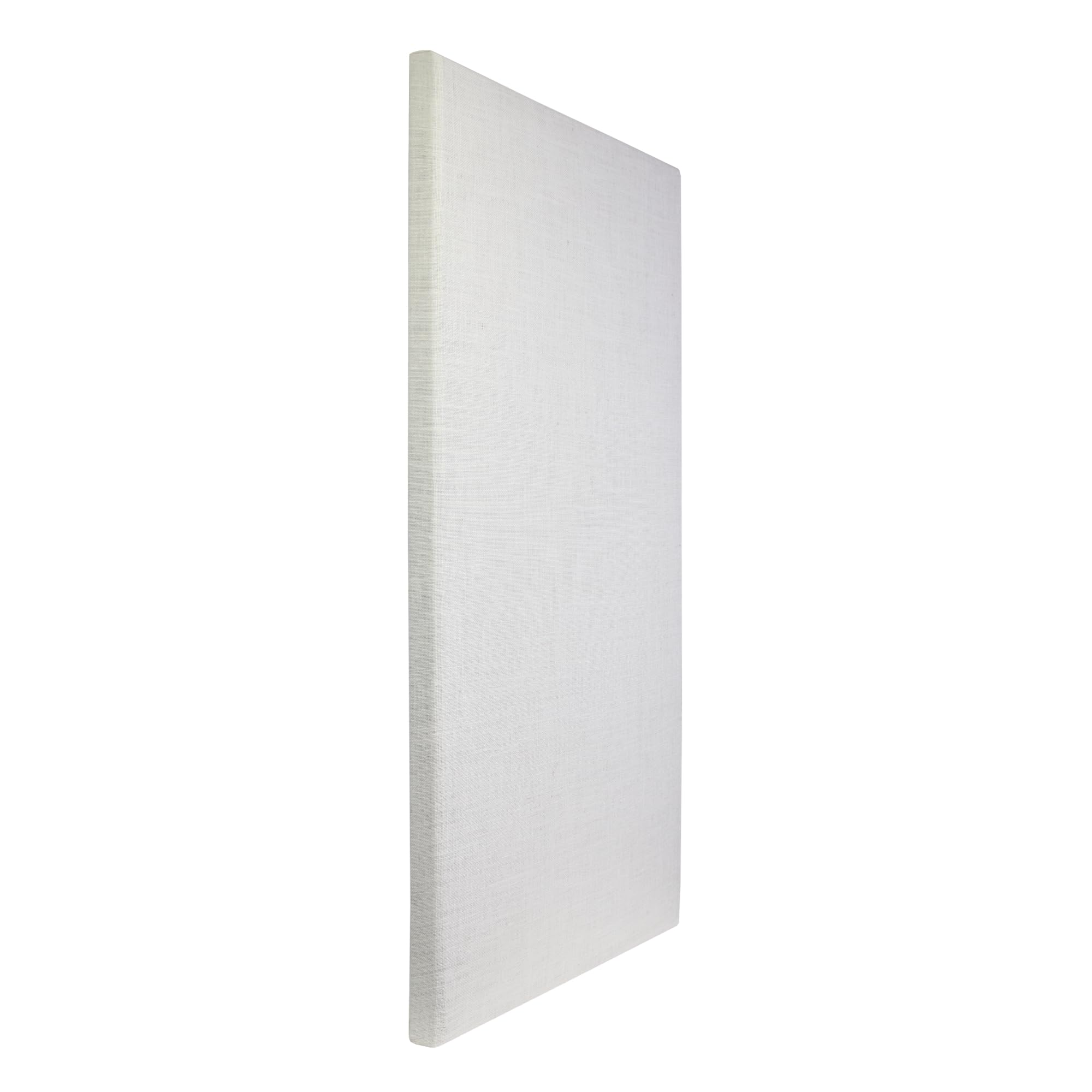
This panel’s NRC 1.0 rating means it is rated to absorb all incident sound under the test standard — the only panel here with a published NRC 1.0 spec.
If echo is ruining your recordings or your home theater sound, grab this ATS panel. The core is mineral wool, not cheap foam, wrapped in 100% jute burlap fabric. At 48 inches long and 24 inches wide, it covers a serious amount of wall in one go. An NRC of 1.0 out of 1 means it absorbs all incident sound — the highest possible absorption rating. A solid wood internal frame and full wood back let you mount it securely with the included hardware, and the beveled edges give it a finished look rather than a raw cut.
Buyers report that two panels gave 50% echo reduction, which is impressive for a partial wall treatment. They also note that at 8.25 pounds each, these are heavy enough for ceiling installation to require a custom mounting approach — one owner used D-hooks instead of the included Z-clamps. The mineral wool inside is far more effective at controlling bass buildup than standard polyester foam, making this the smarter pick for a music studio. Against the 0.4-inch thick 22-pack foam later in this list, this ATS panel is 2 inches thick versus 0.4 inches and uses a denser material, so it kills both the high whine and the low rumble.
Where it wins: The NRC 1.0 rating is the category maximum and the highest published absorption spec in this roundup.
The honest trade-off: The jute fabric feels fuzzy up close, and ceiling mounting takes some engineering. If you are a renter looking for a no-drill fix, look at the self-adhesive options instead.
Reach for this if: You need studio-grade echo elimination and you are willing to drill into your walls or ceiling.
Look elsewhere if: You want a decorative look or a peel-and-stick rental-friendly install — this panel demands commitment.
2. UMIACOUSTICS 4 PCS Acoustic Panels with Hanging Bracket, 2” Thick Fiberglass
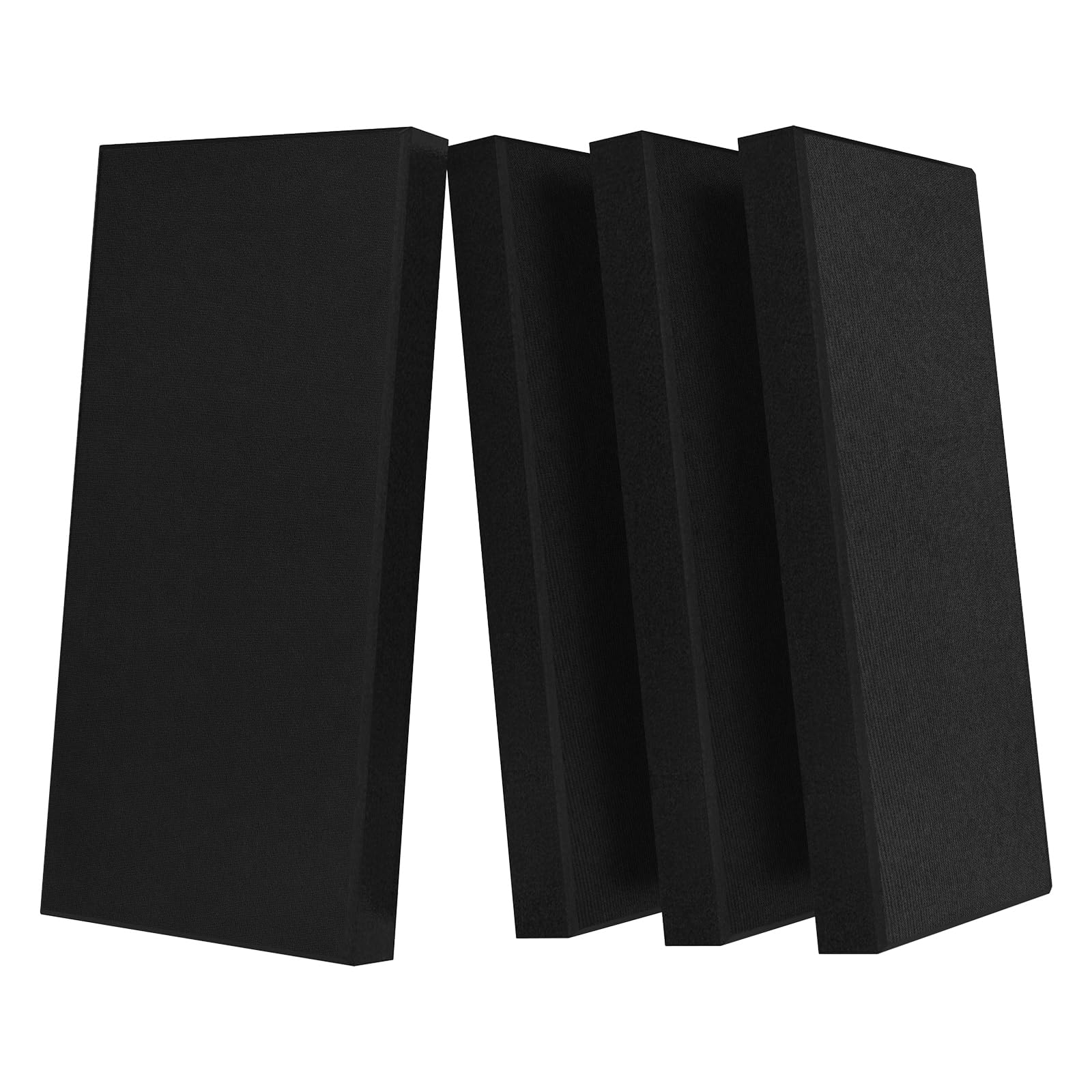
You get 2-inch thick fiberglass panels with a bracket system you can remove cleanly — no scraping glue off your wall when you move.
Each panel uses a 100% white fiberglass inner core and carries the E0 environmental rating (the highest for low emissions). This set of four is built for people who want professional-grade sound absorption without a permanent adhesive commitment. The included metal bracket and nail system lets you hang these on a wall or ceiling securely, and because it is bracket-mounted, you can take them down without scraping foam off the paint. Fiberglass absorbs a wider range of frequencies than standard polyester foam, so you get better bass control too.
Owners mention that these panels effectively tamed reverb in an 11’x22′ room, calling them good value for the performance. One owner noted that the included drywall anchors and screws are too small and push through, recommending you buy your own heavy-duty anchors. Unlike the ATS panel above which uses mineral wool, this one uses fiberglass — both are dense materials, but fiberglass is lighter on the wallet. The 2-inch thickness puts it head-to-head with the ATS on thickness (both are 2 inches), but the UMIACOUSTICS lacks a published NRC rating, so the ATS panel has the verifiable spec advantage.
The standout feature: The removable bracket system is rare at this price — you get true pro mounting without a permanent glue bond.
One catch buyers flag: The included wall anchors are weak; plan to use your own heavy-duty drywall anchors for a secure mount.
Ideal for: Home studio owners and gamers who want serious 2-inch thick absorption but may move or rearrange rooms later.
Not ideal for: Renters who cannot drill into walls at all — you need at least a nail or screw for the bracket.
3. Soon Global Acoustical Wall Panels, 6-Piece 23.62 x 23.62 Inches, Arcadian Vortex
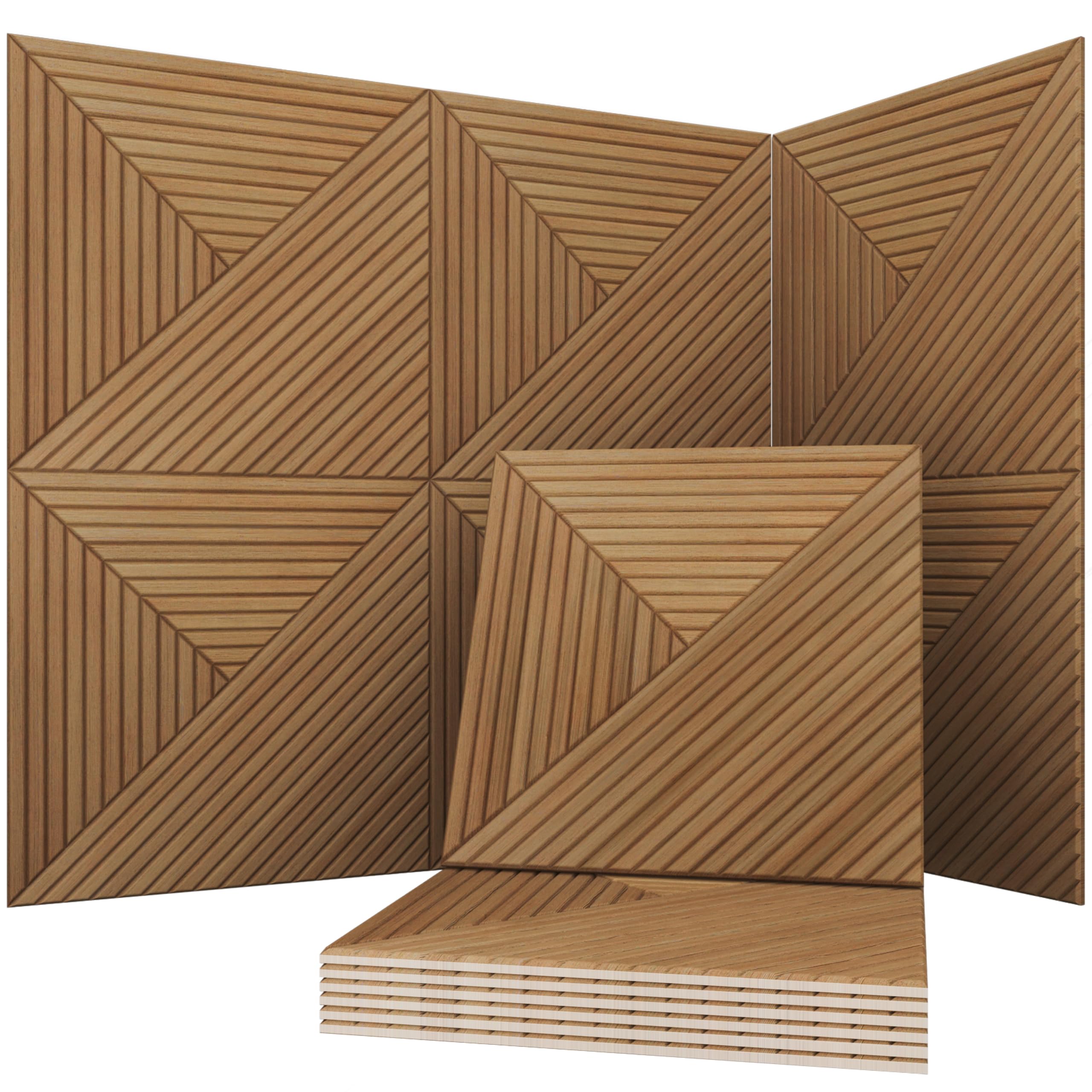
Six decorative panels use high-density polyester fiber to dampen echo, hidden inside realistic wood-texture grooves.
Each panel measures about 23.6 inches square, and the set of six covers 3348 square inches total. The high-density polyester fiber material absorbs sound the same way as plain acoustic foam, but the surface has realistic wood-texture grooves that flow across adjoining panels for a smooth look. Installation is tool-free — the pack includes 30 transparent double-sided adhesive squares so you can mount them in any pattern without nails or a drill.
Customers note these panels look so realistic that a carpenter approved the wood-texture print, and they significantly dampened laundry machine noise when mounted on a ceiling. However, a clear pattern emerged in reviews: the included adhesive squares fail on ceilings over time, with one buyer noting all six panels fell down after months. For wall mounting the adhesive holds firmly according to multiple owners, but ceiling installation needs screws or nails. Unlike the TONOR wood slat panels below that are primarily decorative with only light echo reduction, these Soon Global panels are built from sound-absorbing fiber all the way through, so they actually perform as acoustic treatment.
Why Buyers Like It
- The realistic wood texture fools even carpenters — no cheap foam look here
- Tool-free adhesive mounting is fast and clean on flat walls
- Odor-free material, safe for bedrooms and offices
The Recurring Complaints
- The adhesive squares do not hold on ceilings — panels fall after months
- You have to plan your pattern carefully or the grooves look repetitive
Perfect for: A living-room feature wall where you want style plus real echo dampening — on walls only.
Skip it for: Ceiling treatment unless you are prepared to add screws; also not for heavy soundproofing against low bass.
4. Art3d 2-Pack 108″ x 12″ Acoustic Wood Slat Panels, Smoky Oak

You get 108-inch long slat panels that cover a full accent wall in just two pieces — one continuous run with no seam at 8 feet.
Each panel measures 108 inches long by 12 inches wide — that is a full 9 feet of coverage per panel, so two panels side by side cover 18 square feet with a continuous, professional-looking slat pattern. The core is high-density polyester fiber designed to absorb sound waves, and the Smoky Oak wood veneer finish gives it an elegant, contemporary look. Installation is straightforward: you secure it with glue or screws directly into the wall or ceiling, and the felt backing helps dampen vibration.
Reviewers point out a big difference in echo right away, saying the room sounds much cleaner and less hollow after installation. One owner noted the panels are lightweight at 11.5 pounds for the pair and easy to work with, though shipping damage was reported in one case where panels arrived broken. The 108-inch length means you get a tall uninterrupted run — perfect for a ceiling-to-floor accent wall. Compared to the NeatiEase panels below that are 96 inches long, the Art3d panels give you a full extra foot per panel (108 inches vs 96 inches), so you need fewer pieces for tall walls and get fewer visible seams.
What makes it worth buying: The 108-inch length is rare — most slat panels max out at 96 inches, so you avoid a horizontal seam on most standard-height walls.
Worth noting: The pack is only two panels covering 18 square feet, so a large room needs multiple packs; buy a sample first to confirm the color matches your room.
Best for: A tall accent wall or ceiling run where you want a smooth slat look with genuine sound absorption.
Consider something else if: You need to cover a large area on a budget — the coverage per dollar is lower than the TONOR or NeatiEase multi-packs.
5. TONOR Wood Slatwall Panels, 4 Pack 47.2″ x 23.6″ (31ft²), Walnut
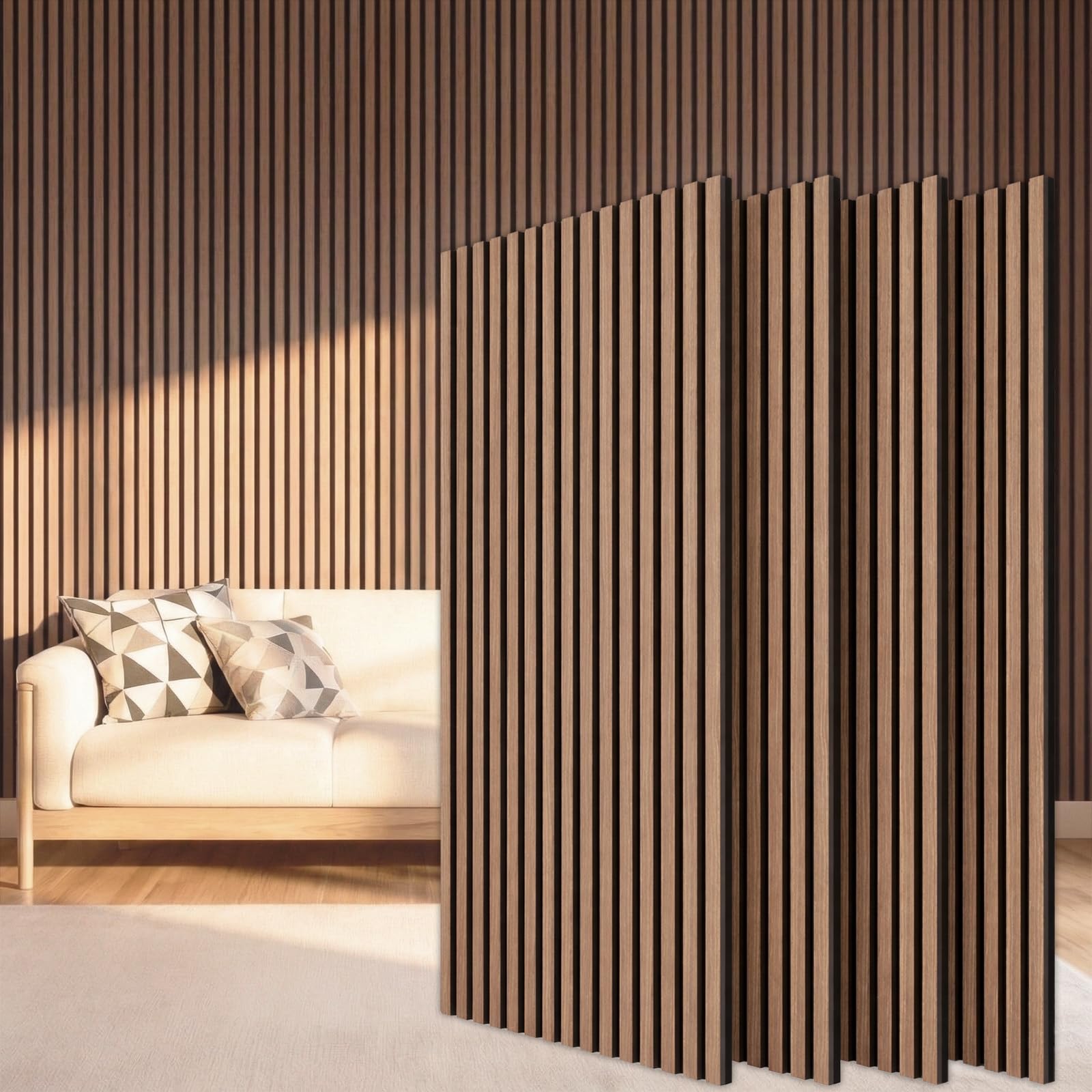
At 0.39 inches thick, these are decorative slat panels that cut voice echo but leave bass alone — ideal for a living room, not a studio.
These wood slat panels from TONOR combine a high-density polyester fiber base with a medium-density fiberboard top layer and a solid walnut wood veneer. The walnut finish gives a high-end custom-built appearance at a low cost — one buyer called it the best price they found. Each panel is 47.2 inches long by 23.6 inches wide, and the 4-pack covers 31 square feet total, which is enough for a substantial accent wall. The slat design echoes modern interior trends, and the felt backing helps dampen sound reflection.
Shoppers say the panels significantly reduce echo but note they are primarily decorative — one owner explicitly said they are not for heavy soundproofing. At only 0.39 inches thick, they are 0.39 inches thick versus 2 inches for the ATS and UMIACOUSTICS panels above, so they handle voice echo and room bounce but do little for bass. The panels weigh 6.17 pounds for the set, while the ATS panel is listed at 8.25 pounds for a single panel — easier to install but less mass for absorbing low frequencies. You can cut them with a jigsaw, and the kit includes screws (105 for the 6-panel kit, though the 4-pack hardware count is not specified).
What Buyers Celebrate
- Walnut color matched perfectly across two different batches
- Easy to cut with a jigsaw — one buyer built a full accent wall in a weekend
- Gives a custom-built, expensive look for a budget price
What Buyers Criticize
- Wood strips are only adhered at the ends — they loosen if you cut near outlets
- At 0.39 inches thick, this is a decorative panel first and an acoustic panel second
Go for this if: You want a stylish accent wall that also cuts down voice echo — and you are on a tighter budget.
skip it if: You need serious soundproofing for a home theater or recording studio — the thin build cannot handle low frequencies.
6. NeatiEase Wood Panels for Wall, 4-Piece 96″ x 12.6″ Soundproof Wood Slat Panel, Teak

Four teak panels covering 33 square feet give you the most surface area in one purchase — and buyers confirm they kill gym echo.
Each of these four panels is 96 inches tall by 12.6 inches wide, covering a combined 33 square feet when installed side by side. The teak color has warm red and orange tones that buyers report looks like a much more expensive wood veneer. The construction uses MDF (medium-density fiberboard) combined with a high-density polyester fiber base for sound absorption, and a thick synthetic felt backing that also helps with echo reduction. You can install these horizontally or vertically and cut them to any shape without ruining the appearance.
Owners mention the panels significantly reduced noise and echo in a home gym, and one owner called the quality fantastic — easy to cut and producing a high-end look. The total weight is 19.96 kilograms (about 44 pounds for all four), so these are the heaviest panels in this roundup, which generally means better sound dampening. Reviewers recommend using an oscillating tool with painter’s tape to avoid chipping the laminate, and mounting with black drywall screws through the felt backing rather than glue. The 96-inch length is slightly shorter than the Art3d panels (108 inches), but the 4-pack coverage of 33 square feet beats the Art3d 2-pack’s 18 square feet.
The big advantage: Four tall panels cover 33 square feet in one purchase — fewer seams and a more cohesive wall than piecing together smaller panels.
What to watch for: Cutting produces significant dust, and a circular saw can chip the laminate if you skip painter’s tape. Also no warranty is included.
Choose this for: A large accent wall (like behind a couch, bed, or home-gym mirror) where you want continuous coverage and real echo reduction.
Not for: A quick weekend project without power tools — adhesive-only mounting is possible but screws are strongly recommended for a lasting installation.
7. 22 Pack Self-Adhesive Sound Proof Foam Panels for Walls 12″x12″x0.4″ Fabric

These 0.4-inch thick peel-and-stick panels kill a 3D printer’s high-pitched whine — but one buyer says they are good, not excellent, for room echo.
This entry-level fix includes 22 panels, each 12″x12″ and 0.4″ thick, covering 21.27 square feet total. The material is eco-friendly polyester fiber with a pre-applied adhesive backing, so you just peel and stick to any smooth surface — walls, doors, windows, or even directly on an appliance. The maker recommends covering 20-30% of your wall surface area for best acoustic results.
Customers note a very specific win: one owner installed 7 panels on a Bambu P1S 3D printer and it eliminated all high-pitched whine, making the printer inaudible from the next room. Another buyer placed panels behind a loud refrigerator and killed compressor vibration noise. But at only 0.4 inches thick, the foam is thin — one reviewer honestly called it a good job for the thickness but not excellent sound absorption. Compared to the 2-inch thick UMIACOUSTICS panels, these are 0.4 inches thick versus 2 inches and are best for spot-fixing a single loud device or adding extra absorption on top of thicker panels.
Where It Shines
- Strong adhesive works on smooth surfaces — holds well on refrigerators and 3D printers
- Easy to cut with a ruler and box cutter for custom shapes
- No odor and a sleek low-profile look
Where It Falls Short
- The adhesive is extremely sticky — it will pull off paint if you remove the panels
- Too thin for serious room reverb; reviewers point out it is good but not excellent for echo
Reach for this if: You need a cheap, fast fix for a single noisy appliance — a refrigerator compressor, 3D printer, or loud server fan.
Look elsewhere if: You want to treat a whole room for music, movies, or podcasts — the 0.4-inch thickness will not touch low frequencies or major echo.
Understanding the Specs
NRC — Noise Reduction Coefficient
This is the single most important number for acoustic panels. It is measured from 0 to 1, where 1 means the panel absorbs all the sound that hits it. A panel with an NRC of 1.0, like the ATS Acoustics panel, is the top of the line — perfect for recording studios and home theaters. Panels without a published NRC rating may still work, but you are guessing at performance. For a typical living room or office, an NRC above 0.75 makes a noticeable difference in echo.
Thickness vs. Frequency Absorption
Thinner panels (0.4 inches or less) absorb high-frequency sounds well — think voices, printer whines, and refrigerator buzz. But they do almost nothing for low frequencies like subwoofer rumble or heavy footsteps. Panels that are 2 inches thick or more absorb a much wider range of frequencies, including the low end that thin foam simply passes through. If you are treating a home theater or music room, 2-inch panels are the floor — anything thinner will leave your bass uncontrolled.
FAQ
Will acoustic panels soundproof a room completely?
How many panels do I need for a typical room?
Can I place acoustic panels on the ceiling?
What is the difference between sound absorption and soundproofing?
How thick should acoustic panels be for a home studio?
Do wood slat panels actually absorb sound?
Will adhesive panels damage my walls when removed?
Can I cut acoustic panels to fit around outlets or vents?
Do thicker panels always perform better?
Is there a difference between acoustic foam and acoustic fiberglass panels?
How do I clean acoustic wall panels without damaging them?
Final Thoughts: The Verdict
For most buyers, the acoustic insulation for walls winner is the ATS Acoustics 24″x48″ panel because the NRC 1.0 rating and 2-inch mineral wool core deliver the highest measurable sound absorption in this roundup, and buyers confirm it dramatically changes room tone. If you want thick panels with a removable bracket system that works for both walls and ceilings, grab the UMIACOUSTICS 4-pack. And for a stylish accent wall that also cuts down voice echo, the TONOR wood slat panels give you the best blend of decor and function at a budget-friendly price.
How We Picked
We do not accept paid placement, and we did not hands-on test every unit. Instead, we match each pick to a real buyer and use-case by comparing the manufacturers’ published specifications against the patterns in verified customer reviews — so you get each pick’s real strengths and trade-offs instead of marketing copy.
Sources & Methodology
Specifications: manufacturer listings and product documentation. Review insights: verified customer reviews, as of July 2026. Pricing: not shown on this page (it changes often); check the current price via the retailer link.
As an Amazon Associate, Gadgets Feed earns from qualifying purchases. This does not affect which products we feature.
Product prices and availability are accurate as of the date/time indicated and are subject to change. Any price and availability information displayed on Amazon at the time of purchase will apply to the purchase of this product. As an Amazon Associate I earn from qualifying purchases.
CERTAIN CONTENT THAT APPEARS ON THIS SITE COMES FROM AMAZON. THIS CONTENT IS PROVIDED "AS IS" AND IS SUBJECT TO CHANGE OR REMOVAL AT ANY TIME.
Amazon and the Amazon logo are trademarks of Amazon.com, Inc. or its affiliates.