
Our readers keep the lights on and my morning glass full of iced black tea. As an Amazon Associate, I earn from qualifying purchases.
Specs are compiled from manufacturer listings and verified buyer reviews and can change over time — please confirm the key details on the product page before buying.
Every room has a sound personality — and too often it is a bad one. A hollow echo, a muddy voice on a conference call, or a slap of reverb that ruins your playback mix. The fix is not complicated: you just need the right acoustic panel that actually soaks up the noise instead of bouncing it around. This guide cuts through the marketing buzz to give you the straight facts on the best acoustic insulation sound board options, comparing real specs like thickness, density, and NRC ratings so you can pick the one that actually fits your space and budget.
I’m Min — the founder and writer behind Gadgets Feed. This guide is built by comparing the manufacturers’ published specifications and the patterns across verified customer reviews, so you get each pick’s real strengths and trade-offs instead of marketing spin.
Whether you are treating a home recording studio, a noisy home office, or a gaming room that echoes like a gymnasium, the right panel changes everything — and this guide zeros in on the seven most effective models to help you find the best acoustic insulation sound board for your exact situation.
Our Picks at a Glance

How To Choose The Best Acoustic Insulation Sound Board
Picking the right panel is really about matching three things: the thickness of the board, its density, and the material it is made from. Thicker panels with higher NRC numbers absorb more low-end rumble (like bass), while thinner panels are better for cleaning up mid and high frequencies (like voices and footsteps).
NRC Rating — The One Number That Matters
The Noise Reduction Coefficient (NRC) tells you how much sound a panel absorbs on a scale from 0 to 1. An NRC of 1.0 means it absorbs all sound that hits it — essentially perfect absorption. Budget panels may sit around 0.7 or 0.8, which is fine for taming echo in a home office. But if you are treating a recording studio, you want NRC 0.9 or higher.
Thickness vs. Density — What Each Does
Thicker panels (like the 2-inch model from ATS Acoustics) do a much better job absorbing low-frequency sound waves, which is why you see them in serious home theaters. Denser panels, measured in pounds per cubic foot, are better at stopping sound from passing through the board itself. A high-density polyester panel at 0.4 or 0.5 inches can be surprisingly effective for voice echo and mid-range frequencies, while being much lighter on the wall.
Quick Comparison
| Model | Best For | Thickness | NRC Rating | Dimensions (L x W) | Amazon |
|---|---|---|---|---|---|
| ATS Acoustics 24x48x2″ Beveled★ Best Overall | Studio / Home Theater | 2 Inches | 1.0 | 48″ x 24″ | $79.95Amazon |
| 12in BSHEAD Panels (8-Pack)Budget Champion | Budget Rooms / Gaming | 0.47 Inches | — | 12″ x 12″ | $23.99Amazon |
| AudioSilk Acoustic Panel Large | Home Studio / Rented Spaces | 0.4 Inches | 0.91 | 45.7″ x 22.8″ | from $35.00Amazon |
| Dailycooper 12-Pack 12×10″ | Small Offices / Podcasts | 0.4 Inches | — | 12″ x 10″ | $35.99$38.99Amazon |
| 12-Pack 12×12″ Self-Adhesive | Home Office / TV Rooms | 0.4 Inches | — | 12″ x 12″ | $36.71Amazon |
| 100-Pack Acoustic Foam 12x12x1″ | Full Room Coverage | 1 Inch | — | 12″ x 12″ | $55.09$58.29Amazon |
| TONOR 8-Pack Large 47×23″ | Large Walls / Ceilings | 0.35 Inches | 0.9 | 47.2″ x 23.6″ | $113.39$125.99Limited time dealAmazon |
In‑Depth Reviews
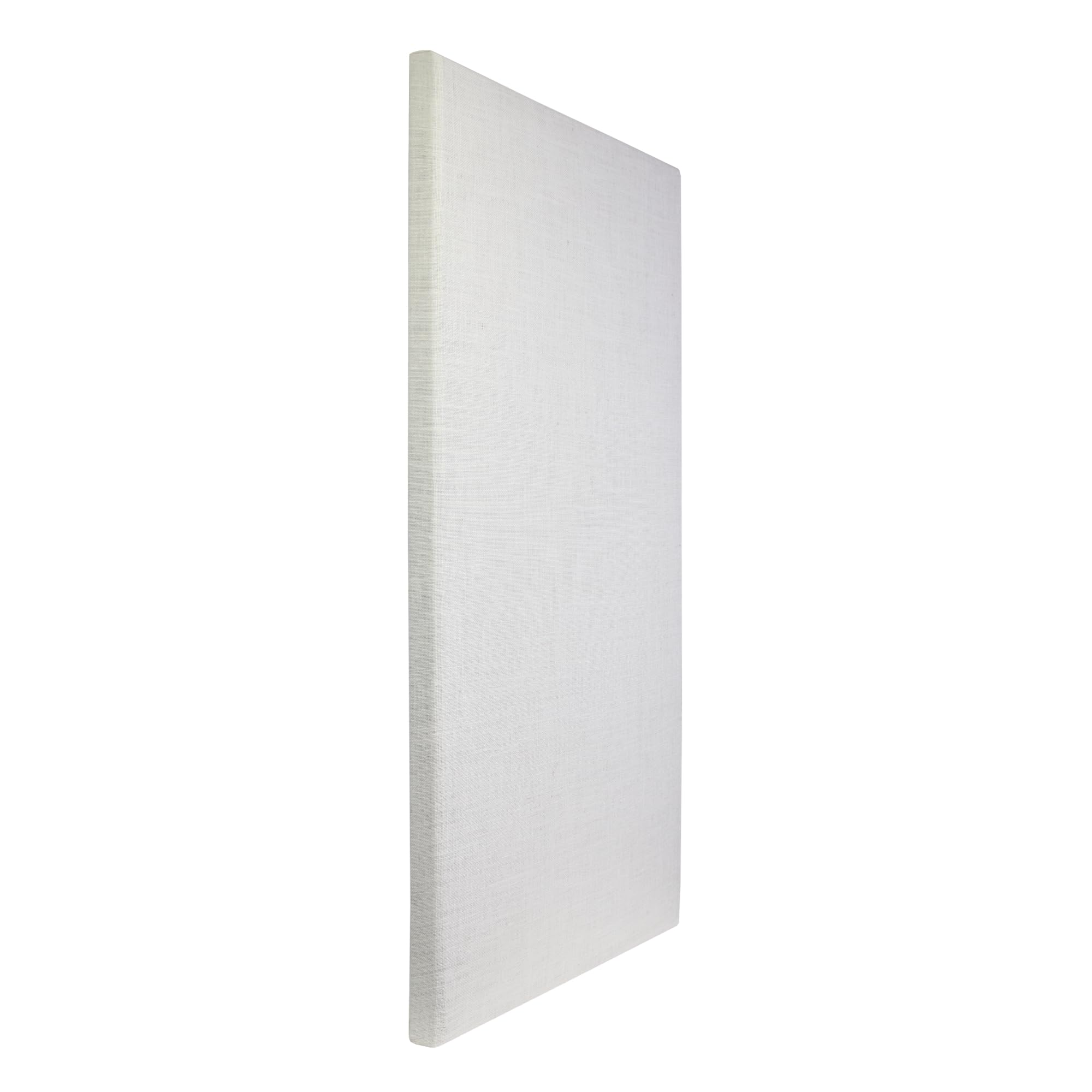
1. ATS Acoustics Sound Absorbing Acoustic Panel 24″ x 48″ x 2″ Beveled Edge (Ivory)
Our pick — over 4.5★ from 650+ verified ratings; the strongest balance of quality and price.
The 2-inch-thick heavyweight that kills echo better than anything else here.
This is the panel you reach for when you want the maximum sound absorption possible. It has a Noise Reduction Coefficient of 1.0 — that is a perfect score, meaning it absorbs every sound wave that hits it rather than reflecting it. Inside, a mineral wool core sits inside a solid wood frame with a full wood back, so installation feels solid and you get real low-frequency control (the kind that tames bass build-up in a home theater or recording studio). Compared to the thin 0.47-inch BSHEAD panels below, this one is 2 inches thick, which explains why it handles deeper frequencies so much better.
Buyers report they mounted these as clouds in a recording studio control room and noticed a dramatic improvement in neutralizing early reflections. One reviewer noted they “only installed two of these so far and noticed a 50% echo dampening.” That is a lot of performance from just two panels. The trade-off is the weight — at 8.25 pounds per panel, compared to the AudioSilk panel’s 2.59 pounds, so you need to be confident in your wall anchors. The included Z-clip hardware and mounting template make the job easier, but expect a solid afternoon if you are doing a full room.
The jute burlap fabric wrap gives it a professional, tailored look, though the same reviewer noted the cloth “seems a bit cheap” up close. ATS makes these in the USA and backs them with a one-year warranty against defects.
Studio-Grade Strength
- Perfect NRC 1.0 rating — absorbs all sound that hits it
- 2-inch mineral wool core handles low frequencies that thin panels miss
- Comes with mounting hardware and template for easy install
Real-World Weight
- Heavy at 8.25 pounds — requires solid wall anchors
- Burlap fabric may not suit every decor taste
Best for: Anyone needing serious acoustic treatment — recording studios, home theaters, auditoriums — where echo and bass must be controlled.
Look elsewhere if: You want lightweight peel-and-stick panels for a rented apartment; this needs permanent mounting and is heavy.
2. 12in Acoustic Panels for Walls, High Density Soundproof Wall Panels (8-Pack)
Thin but dense polyester squares that punch above their price.
If you are on a budget but still want real echo reduction, these 12×12-inch panels are a smart starting point. They are made from 100% polyester (no fiberglass, no smell) and measure 0.47 inches thick — noticeably thicker than the 0.4-inch options from Dailycooper and the standard 12-pack. One buyer mentioned that “the panels are 0.47 inches thick, which provides impressive sound absorption, especially given their compact size.” The self-adhesive backing means you simply peel and stick; no tools, no extra glue.
Compared side-by-side to the ATS panel above, these are a completely different approach. The ATS is 2 inches thick versus 0.47 inches, and covers 48 x 24 inches versus 12 x 12 inches, so it absorbs far more low-end energy. But for voice echo, gaming chatter, and mid-range frequencies, these little BSHEAD tiles hold their own at a fraction of the weight and cost. The 45-degree chamfered edges let you arrange them in patterns on the wall, which helps them blend into a room instead of looking like a science project.
A small catch: although the adhesive is strong, a reviewer warned it can pull paint off the wall if you ever remove them. And at 0.47 inches, they will not do much for deep bass — that is just physics.
Why It Works
- Self-adhesive backing installs in minutes — no tools needed
- Odorless and flame-retardant polyester is safe for bedrooms
- Chamfered edges let you create custom wall patterns
Known Limits
- Too thin for low-frequency absorption (bass)
- Sticky backing may damage paint on removal
Reach for these: If you want an affordable, easy-to-install fix for a small room, gaming space, or home office where voice echo is the main problem.
Skip them: If you need serious bass control or are treating a professional recording studio — the ATS or AudioSilk panels will perform much better.
3. AudioSilk Acoustic Panel, Large, 46″ x 23″, Natural

A wide, thin panel that outperforms foam at half the thickness.
This panel is a great middle-ground option — it gives you professional-grade sound absorption (NRC of up to 0.91) in a large 45.7 x 22.8-inch format that is only 0.4 inches thick. The secret is the high-density recycled PET fiber, which is much more efficient at absorbing sound than open-cell foam at the same thickness. Owners mention that “four panels tamed slap echo and first reflections in home theater; before/after proves effectiveness.” It weighs just 2.59 pounds, so while a single ATS panel weighs 8.25 pounds, making it much easier to mount with Command strips in a rented space.
The eco-friendly angle is real — it is made from post-consumer recycled plastic bottles, has no chemical smell, and does not sag or peel over time like some foam panels. The “Natural” color is a warm, neutral beige that actually looks like a design accent rather than a piece of audio gear. A reviewer mentioned that they “outperform foam at half thickness,” meaning you get more absorption per inch of wall space.
The one thing to plan for: the panels do not come with adhesive included. The maker recommends large 3M Command strips (four per panel) or spray contact adhesive for a permanent mount. Also, at 0.4 inches, it will not tame deep bass the way a 2-inch mineral wool panel can — but for voice, mid-range, and high frequencies, it is superb.
Smart trade-off: You get high NRC performance and a clean, modern look in a lightweight package that is easy to move — but you lose the deep low-end absorption of thicker panels.
Who it fits: Home studio owners, podcasters, and renters who want real acoustic improvement without damaging walls or spending a fortune.
Who should pass: Gamers or office workers who just want quick stick-and-forget panels — you will need to buy Command strips separately.
4. Dailycooper 12 Pack Self-Adhesive Acoustic Panels, 12″ x 10″ x 0.4″

Incredibly dense polyester squares that swallow noise in small spaces.
These panels pack a density of 9.4 lb/ft³, which is unusually high for a 0.4-inch-thick panel. That density means each tile is quite firm and heavy for its size, doing a better job at absorbing mid-range frequencies than a standard foam panel of the same thickness. The 12 x 10-inch size is slightly smaller than the 12×12-inch standard, but the 12-pack covers about 7.5 square feet — enough for a small conference room or a podcast booth. A reviewer said they “fixed echoey rooms if you use enough,” which is honest — you want to cover 20-30% of the wall surface for best results.
The self-adhesive backing is one of the strongest among the budget panels. One buyer warned that the adhesive is “crazy strong” and will take paint off if you try to reposition. So get your layout right the first time. The Y-lined surface pattern gives it a textured, modern look that avoids the flat boring tile appearance. If you are a musician or podcaster working in a small room, these dense tiles will clean up the flutter echo without needing thick, expensive panels.
A note on the specs: the data lists a “manufacturer warranty description” about monthly vacuum cleaning — that is care advice, not a warranty. The product itself is sturdy polyester fiber, flame-retardant and odorless.
Dense Advantage
- High 9.4 lb/ft³ density absorbs more mid-range sound than similar thin panels
- Self-adhesive sticks firmly to smooth walls
- Y-lined pattern looks stylish and modern
Small Panel, Strong Grip
- Each tile is only 12×10 inches — you may need multiple packs for a full room
- Adhesive is permanent once placed; repositioning damages paint
Best for: Small home studios, vocal booths, and conference rooms where mid-range clarity matters most.
Not for: Large rooms needing deep bass absorption — the density helps, but the 0.4-inch thickness can only do so much.
5. 12 Pack Self-Adhesive Acoustic Panels, 12″ x 12″ x 0.4″ High-Density (Black)
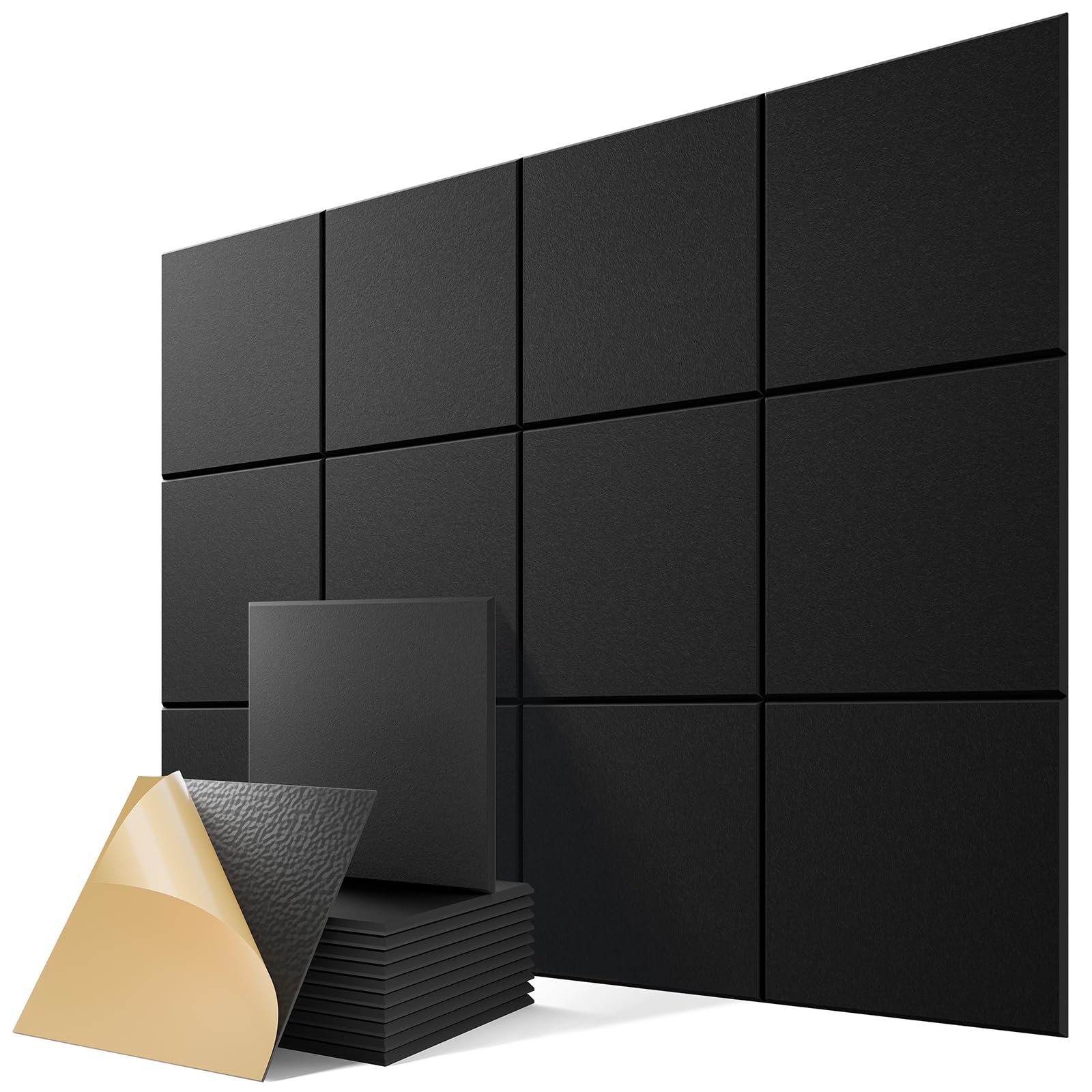
A reliable square tile that handles echo quietly without fuss.
If you want a straightforward, no-surprises acoustic tile, this 12-pack is a solid pick. Each panel is 12 x 12 x 0.4 inches and made from eco-friendly polyester fiber. The makers recommend covering 20-30% of your wall surface for best results, which is good advice for any thin panel. One practical review showed a surprisingly creative use — a buyer placed these behind a loud refrigerator and “stopped compressor vibration noise through shared bedroom wall.” That speaks to the adhesive strength and the material’s ability to absorb vibration, not just airborne echo.
Compared to the Dailycooper 12-pack above, this one has the same 0.4-inch thickness but uses a standard 12×12-inch tile size, which feels slightly easier to arrange symmetrically. The black color is a deep matte that works well in media rooms and home theaters. However, the same strong adhesive warning applies: “adhesive is extremely sticky; will remove paint if repositioned,” so measure twice and stick once. One owner reported that at only 0.4 inches, it “did a good job” for the thickness but would not call it excellent — so set your expectations: this is great for voice echo, not for bass.
Overall, this is a good value pack that fills a wall quickly and looks clean.
Solid Performer
- Standard 12×12 size covers evenly
- Peel-and-stick install takes minutes per tile
- Eco-friendly polyester with no odor
Watch For
- 0.4-inch thickness limits low-frequency absorption
- Adhesive is near-permanent — careful placement required
Reach for this if: You need a fast, affordable fix for a home office, gaming room, or media room where voice echo and mid-range noise are the issues.
Look elsewhere if: You need deep bass control; the 2-inch ATS panel is the proper tool for that job.
6. 100 Pack Acoustic Foam Panels, 12″ x 12″ x 1″, High Density Fire Resistant

One hundred tiles at 1-inch thick for truly covering a whole room on a budget.
This is the bulk solution — 100 panels at 12 x 12 x 1 inch each. The 1-inch thickness puts it between the 0.4-inch thin panels and the 2-inch ATS professional panels. It ships compressed in plastic, so you need to let them sit out for about 48 hours to fully expand to their 1-inch thickness. A buyer using three boxes (300 tiles) in a furnace room said it “made the main room much quieter.” That is the kind of real-world result you get when you can cover an entire wall without spending thousands.
The adhesive backing is strong — so strong that one customer observed “it was actually really hard to take off the wall” when trying to adjust panels. That is a double-edged sword: great hold, but plan your layout carefully. Also, customers note that some tiles arrived with crimped edges even after expanding, and installation on ceilings may produce some dust flaking, so wear eye protection. The package includes 250 double-sided tape strips, but some users found they needed extra if using 5 stickers per panel.
For the price per tile, this is the most cost-effective way to treat a whole room if you have the patience to mount 100 squares. It is not a premium sound solution — it is a volume play that works.
Room-Sized Value
- 100 tiles cover a massive area for the price
- 1-inch thickness offers better low-end absorption than 0.4-inch tiles
- Compressed shipping saves on packaging waste
Bulk Trade-Offs
- Some tiles may arrive with crimped edges
- Adhesive is very strong — mistakes are hard to undo
- Dust can flake during ceiling installation
Best for: Large basements, home gyms, or workshop spaces where you need to cover hundreds of square feet without a huge budget.
Not for: Professional recording studios needing precise acoustics — the inconsistent edges and dust flaking are not studio-grade.
7. TONOR 8 Pack Large Acoustic Panels, 47.2″ x 23.6″ x 0.35″, Black
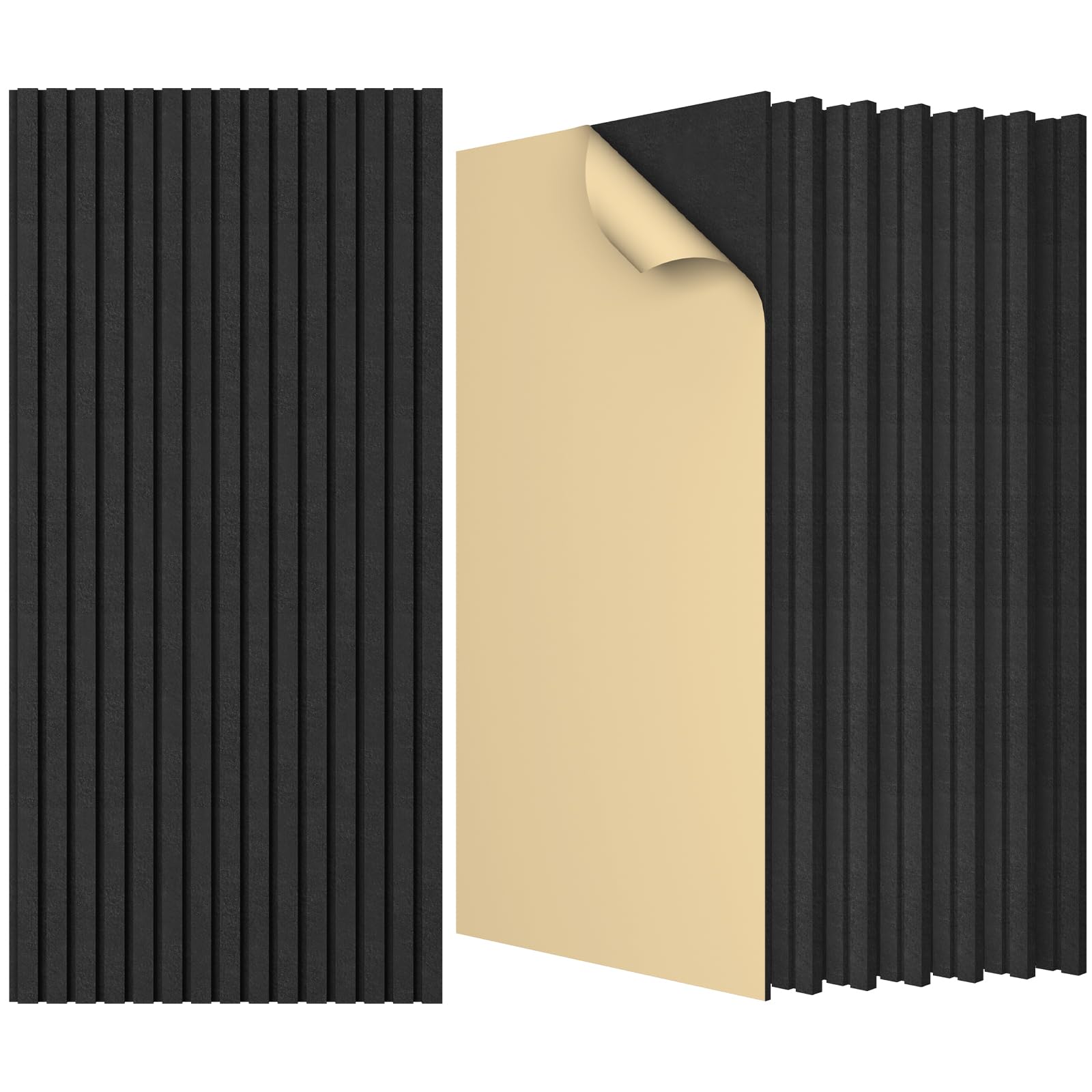
Huge slabs with a noise-blocking NRC of 0.9 and a stripe pattern that looks like wall art.
Each panel in this 8-pack is a massive 47.2 x 23.6 inches — that is basically the size of a small door. Together, they cover 61.1 square feet, which is enough to treat a large accent wall or a ceiling. The NRC rating of 0.9 is excellent for a panel that is only 0.35 inches thick, thanks to a very high density of 212.2 kg/m³. A reviewer said it was “lightweight, easy adhesive install, trims with box cutter” and that it looked “nice, surprisingly effective.” The classic stripe pattern gives it a modern, paneled look that works as a design piece, not just a sound absorber.
Compared to the ATS 2-inch beveled panels, the TONOR slabs are much thinner (0.35 vs. 2 inches) but cover a similar per-panel area. They are far easier to install — peel and stick onto smooth surfaces — but they will not absorb deep bass the way the ATS mineral wool panels do. One user highlighted the adhesive “doesn’t stick too well” on certain surfaces and had to supplement with glue, so test adhesion on your wall before committing. If you are looking for a stylish way to reduce echo in a living room or open-plan office, these slabs look great and work well.
Overall, the TONOR 8-pack is a strong contender for anyone who wants large-area coverage with a decorative finish. Just be prepared to use extra adhesive if your walls are textured or porous.
Decorative & Functional
- Covers a huge 61.1 square feet with just 8 panels
- NRC 0.9 provides near-professional sound absorption
- Stripe pattern doubles as wall decoration
Install Gotchas
- Adhesive may be weak on textured or rough walls
- Only 0.35 inches thick — limited low-frequency absorption
Reach for this if: You want big, attractive panels that clean up mid and high frequencies in a living room, home theater, or open office without the industrial look.
skip it if: You need serious bass trapping or are mounting on a rough ceiling — you may need extra glue and a thicker panel.
Understanding the Specs
NRC (Noise Reduction Coefficient)
This is the single most important spec. NRC is measured on a scale from 0 to 1, where 1.0 means the panel absorbs all sound that hits it. A panel rated NRC 0.9 absorbs 90% of the sound energy. For a home office or gaming room, an NRC of 0.7-0.8 is fine. For a recording studio or home theater, look for 0.9 or higher. The ATS Acoustics panel scores a perfect 1.0, which is rare and excellent.
Thickness vs. Density
Thicker panels (1-2 inches) are needed to absorb low-frequency sound waves (bass). Thinner panels (0.35-0.5 inches) are best for mid and high frequencies (voices, footsteps, clicks). Density, measured in pounds per cubic foot (lb/ft³) or kg/m³, affects how much sound a panel blocks from passing through. A high-density thin panel (like the Dailycooper at 9.4 lb/ft³) can outperform a low-density thick foam panel at the same frequency range.
FAQ
Do acoustic panels completely soundproof a room?
How many acoustic panels do I need for my room?
Which is better for a home theater: 0.4-inch or 2-inch panels?
Can these panels be installed on a ceiling?
Will the self-adhesive panels damage my wall paint?
What material is best: polyester fiber or mineral wool?
What does NRC 1.0 mean in real life?
Do these panels produce any smell or off-gassing?
Can I cut these panels to fit odd spaces?
How long do acoustic panels last before needing replacement?
Final Thoughts: The Verdict
For most people, the best acoustic insulation sound board winner is the ATS Acoustics 24x48x2″ Beveled Panel because its perfect NRC 1.0 rating and 2-inch mineral wool core deliver class-leading absorption for both voice and bass frequencies. If you want a lightweight, eco-friendly alternative that still hits an excellent NRC 0.91 with a clean modern look, grab the AudioSilk Large Panel. And for covering a large wall on a budget with a decorative finish, the standout is the TONOR 8-Pack Large Panels with their 61.1 square feet of coverage and stripe-pattern style.
How We Picked
We do not accept paid placement. Every pick is matched to a real buyer and a real use-case; we do not hands-on test units.
Sources & Methodology
Specifications: manufacturer listings and product documentation. Review insights: verified customer reviews, as of July 2026. Pricing: not shown on this page (it changes often); check the current price via the retailer link.
As an Amazon Associate, Gadgets Feed earns from qualifying purchases. This does not affect which products we feature.
Related Guides
Product prices and availability are accurate as of the date/time indicated and are subject to change. Any price and availability information displayed on Amazon at the time of purchase will apply to the purchase of this product. As an Amazon Associate I earn from qualifying purchases.
CERTAIN CONTENT THAT APPEARS ON THIS SITE COMES FROM AMAZON. THIS CONTENT IS PROVIDED "AS IS" AND IS SUBJECT TO CHANGE OR REMOVAL AT ANY TIME.
Amazon and the Amazon logo are trademarks of Amazon.com, Inc. or its affiliates.