
That hollow, ringing sound in your room isn’t a creative choice—it’s a measurable acoustic problem caused by sound waves bouncing off hard, parallel surfaces. Acoustic panels solve this by absorbing those reflections, cleaning up the audio for clearer recording, better focus, or simply a quieter environment without the echo chamber effect.
I’m Min — the co-founder and writer behind Gadgets Feed. I’ve spent countless hours sifting through material density charts, Noise Reduction Coefficient data, and real user reports to separate the panels that actually perform from those that just look the part.
Whether you’re taming slap echo in a home studio or cutting down on refrigerator hum in a kitchen, this guide to the best acoustic panels for soundproofing breaks down which panels deliver measurable results for your specific noise problem.
How To Choose The Best Acoustic Panels For Soundproofing
Picking the right acoustic panel comes down to matching the material density, thickness, and coverage area to your specific noise source. A thin foam wedge works for taming high-frequency sibilance, but it won’t stop a bass guitar from bleeding through a wall. Here’s what to check before you click buy.
Material Density is the Real Spec
Forget the marketing fluff about “professional grade.” The key measurable property in an acoustic panel is its density, typically expressed in pounds per cubic yard (lbs/yd³) or the material itself. Standard polyurethane foam panels (around 1″ thick) absorb high frequencies decently but do almost nothing for low-end rumble. High-density polyester fiber panels or mineral-wool cores (like those with an NRC of 0.90 or higher) absorb a much broader frequency range, making them the right choice for music production or home theater setups. Panels thinner than 0.4 inches are for cosmetic echo reduction in offices, not serious sound treatment.
Adhesive vs. Permanent Mounting
Self-adhesive peel-and-stick panels are convenient for renters or quick fixes on flat, smooth walls. However, the adhesive tape included with budget foam panels is notoriously weak—many fail within weeks, especially with humidity or textured walls. For permanent installations, professionally-framed panels with Z-clips or construction adhesive provide a secure hold that won’t sag. If you must use adhesive, budget for a separate roll of heavy-duty double-sided tape or spray adhesive.
Coverage Math: 20-30% Rule
Don’t expect a single 12×12 panel to silence a large room. To effectively reduce flutter echo and reverberation, you need to cover roughly 20-30% of the wall surface area. Place panels at first reflection points (the spots on the wall where you see the speaker reflected) and on the wall behind your listening position. A 4-pack of large 24×48 panels is often a better starting point than 50 tiny foam wedges that leave huge bare gaps.
Quick Comparison
On smaller screens, swipe sideways to see the full table.
| Model | Category | Best For | Key Spec | Amazon |
|---|---|---|---|---|
| ATS Acoustics 24x48x2 | Professional Panel | Studio & Theater | NRC 1.0 / Mineral Wool Core | Amazon |
| AudioSilk ROOM KIT 4x Large | PET Fiber Panel | Eco Treatment | NRC 0.91 / Post-Consumer PET | Amazon |
| TONOR Dual-Layer 47×24 | Large Area Panel | Wall Coverage | 0.72″ Thick / Polyester Fiber | Amazon |
| Self-Adhesive Hexagon 14×12 | High-Density Foam | Quick Install | 390 lbs/yd³ Density / Polyester | Amazon |
| Lebenforce 22 Pack | Slim Fabric Panel | Appliance Noise | 0.4″ Thin / Polyester Fiber | Amazon |
| Saiqiang 56 Pack 12×12 | Budget Foam | Echo Control | 1″ Thick / Polyurethane Foam | Amazon |
| 100 Pack High Density Foam | Budget Bulk Foam | Bulk Echo Reduction | 1″ Thick / Acoustic Foam | Amazon |
In‑Depth Reviews
1. ATS Acoustics Sound Absorbing Panel 24x48x2
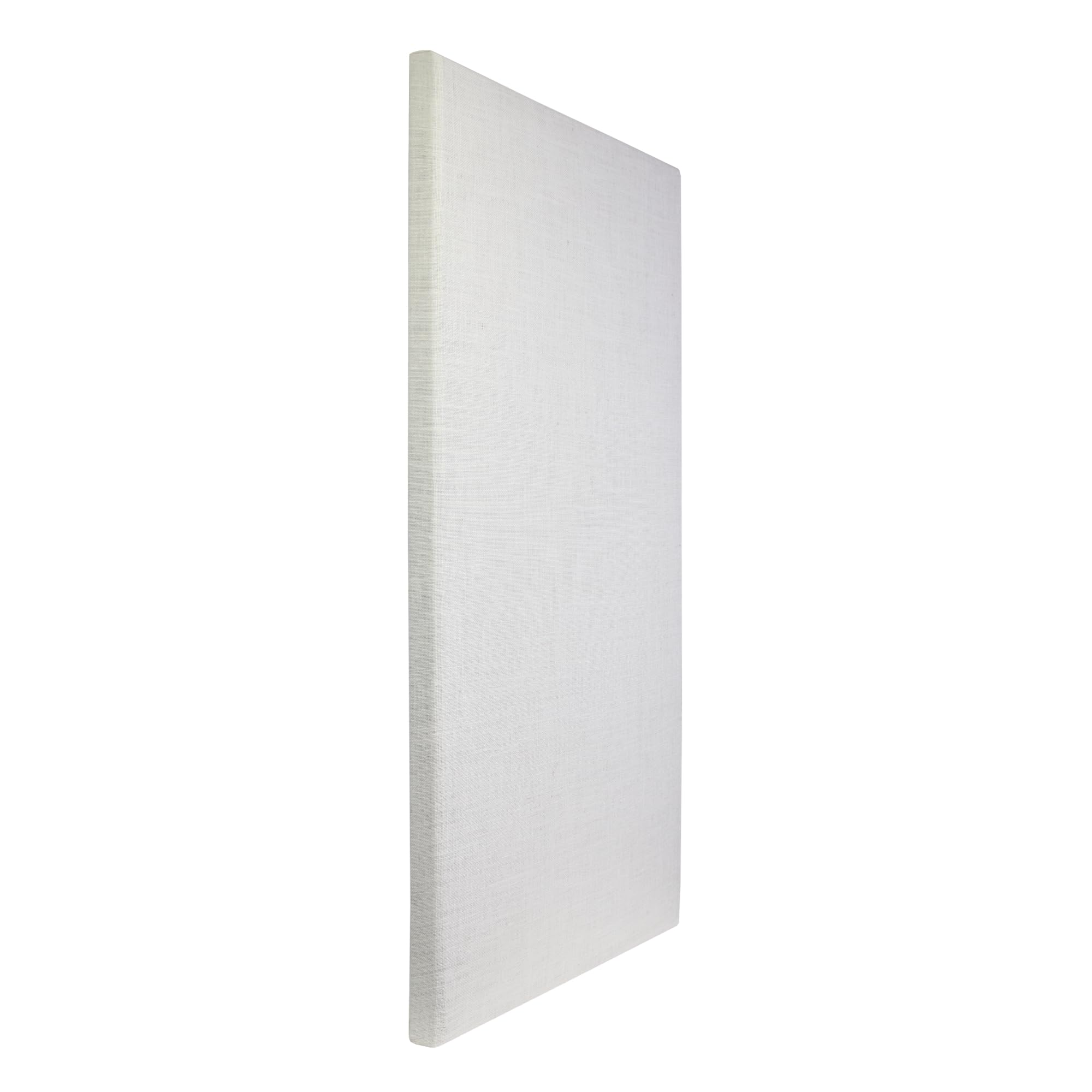
This is the benchmark for serious acoustic treatment. The ATS panel achieves a Noise Reduction Coefficient of 1.0—the theoretical maximum—with a 2-inch-thick mineral wool core wrapped in a jute burlap fabric. A solid wood internal frame and full wood backer provide structural rigidity that foam panels simply cannot match, making this suitable for wall or ceiling cloud mounting in recording studios and home theaters.
Installation is done via included Z-clips and a mounting template, which secures the panel flush against the surface. Users report dramatic reductions in flutter echo and early reflections, noting that a pair of these large 24×48 panels can cut reverb by roughly half in a medium-sized room. The beveled edge design also gives a clean, finished look that minimizes visible gaps.
The mineral wool core is significantly heavier than polyester foam, so ensure your wall anchors can support the 8.25-pound weight per panel. The burlap fabric can appear fuzzy from very close range, but from a normal listening position it looks clean and professional. This is the correct choice when you need verified absorption performance, not just visual noise reduction.
Why it’s great
- Maximum NRC 1.0 rating provides verified broad-frequency absorption
- Solid wood frame and full backer for secure permanent mounting
- Made in USA with quality mineral wool core
Good to know
- Heavier than foam panels; needs proper wall anchors for ceiling install
- Burlap fabric texture may look fuzzy up close
- Requires more planning and hardware for installation
2. AudioSilk Acoustic Panels ROOM KIT (4 Pack)

The AudioSilk kit strikes a rare balance between high acoustic performance and environmental responsibility. Each 45.7 x 22.8 x 0.4-inch panel is made from post-consumer recycled PET fibers, achieving an NRC of 0.91 with zero chemical odor—a stark contrast to traditional foam that often off-gasses. The stiff felt-like material resists sagging and peeling over time, a common complaint with budget foam.
Installation relies on 3M Command strips or nano tape, making these panels genuinely removable without wall damage—ideal for renters or project studios. Users report a noticeable tightening of low-mid reflections and shorter reverb tails in home studios and offices, taming flutter echo without deadening the room completely. The natural color and modern aesthetic look far cleaner than wedge foam.
The panels are relatively thin at 0.4 inches, so they excel at high and mid-frequency absorption but won’t trap deep bass as effectively as 2-inch mineral wool. They also do not include any mounting hardware in the box, so budget extra for the adhesive strips. For a clean, odor-free, and effective acoustic solution that you can take with you, this kit is a top-tier value.
Why it’s great
- Made from recycled PET with no chemical smell
- NRC 0.91 for effective broad-range absorption
- Removable with Command strips; ideal for renters
Good to know
- Thin profile limits deep bass absorption
- No adhesive or mounting hardware included
- Not suitable for ceiling cloud mounting without extra hardware
3. TONOR Dual-Layer Thickened Acoustic Panels (4 Pack)

The TONOR panels use a dual-layer construction—a dense polyester fiber core with a reinforced felt backing—that provides greater absorption per inch than standard single-layer foam. Each panel measures 47.2 x 23.6 x 0.72 inches, giving you substantial coverage with only four panels. Users report significant noise reduction from washer/dryer units and neighbor noise, even in thin-walled apartment settings.
The self-adhesive backing is genuinely strong, but many users still opted for additional construction adhesive or tacks for absolute security, especially on textured walls. The classic stripe pattern elevates the look beyond plain black foam, making these suitable for living rooms and offices where visual appeal matters. The reinforced corner packaging ensures panels arrive without crushed edges.
These panels are not true acoustic tiles—they are a decorative acoustic treatment that works well for everyday echo reduction and general noise dampening. For critical studio mixing, the 0.72-inch thickness may not provide the deep bass trapping required. However, for the price per square foot and the dual-layer density, they deliver a noticeable improvement in room clarity with minimal visual intrusion.
Why it’s great
- Dual-layer construction for better density and absorption
- Large 47-inch panels cover more wall area quickly
- Stylish stripe pattern works as wall decor
Good to know
- Adhesive backing may need reinforcement for long-term hold
- Not thick enough for professional bass trapping
- Heavy at 7.5 kg per pack; shipping damage possible
4. Self-Adhesive Acoustic Panels Hexagon (Orange & Moon Grey)

These hexagon panels differentiate themselves with a measured density of 390 lbs/yd³, which is roughly 30% denser than typical acoustic foam on the market. The material is a 6D polyester fiber that passes SGS certification, meaning it contains no recycled waste, no formaldehyde, and no odor. The higher density translates directly to better sound absorption at mid-to-high frequencies compared to standard 1-inch wedge foam.
The self-adhesive backing passed an 88.2-ounce ultimate tensile test, but real-world user experience reveals a split—some report strong initial hold, while others found the adhesive failed on textured or painted drywall, requiring finishing nails or extra tape. The large 14×12-inch hexagon shape covers more wall per panel and comes with a free installation gap tool for consistent spacing.
The color options (Orange & Moon Grey) provide a design-forward look that many users appreciated for gaming rooms and studios. However, the panels are only 0.4 inches thick, which limits their ability to absorb low frequencies. They are best used for taming slap echo and reverb in live spaces for instruments like clarinet or voice, not for blocking structural noise transmission.
Why it’s great
- Ultra-high 390 lbs/yd³ density outperforms standard foam
- SGS certified with no odor or toxins
- Unique hexagon shape with gap tool for design flexibility
Good to know
- Self-adhesive can fail on textured walls
- Only 0.4 inches thick; minimal bass absorption
- Not a soundproofing barrier for neighbor noise
5. Lebenforce 22 Pack Self-Adhesive Fabric Panels

The Lebenforce panels are specifically designed for close-proximity noise problems like appliance hum, printer chatter, or high-frequency whine from 3D printers. At just 0.4 inches thick and made from high-density polyester fiber, they are easy to cut with scissors and fit into tight spaces behind electronics or refrigerators. Users report that a single panel placed behind a Bambu P1S printer eliminated the high-pitched whine completely.
The self-adhesive backing is exceptionally strong—multiple reviews note that removing the panels will likely pull paint off the wall, so placement must be deliberate. The fabric finish looks clean and modern, and the panels have zero odor. With 22 panels in the box covering approximately 21 square feet, this kit provides enough coverage for targeted spot treatment in an office or media room.
Because of the thin profile, these are not a solution for large-room reverb or studio-grade reflection control. The primary use case is localized noise dampening: sticking them to the back of a refrigerator, behind a desk printer, or on a wall adjacent to a noisy appliance. For that specific job, the strong adhesive and dense fiber construction make them highly effective.
Why it’s great
- Very strong adhesive ideal for permanent appliance mounting
- Easy to cut with scissors for custom shapes
- Excellent at dampening high-frequency mechanical noise
Good to know
- Adhesive will damage paint if removed
- Too thin for broad-spectrum room treatment
- Limited coverage area per pack
6. Saiqiang 56 Pack Acoustic Foam Panels
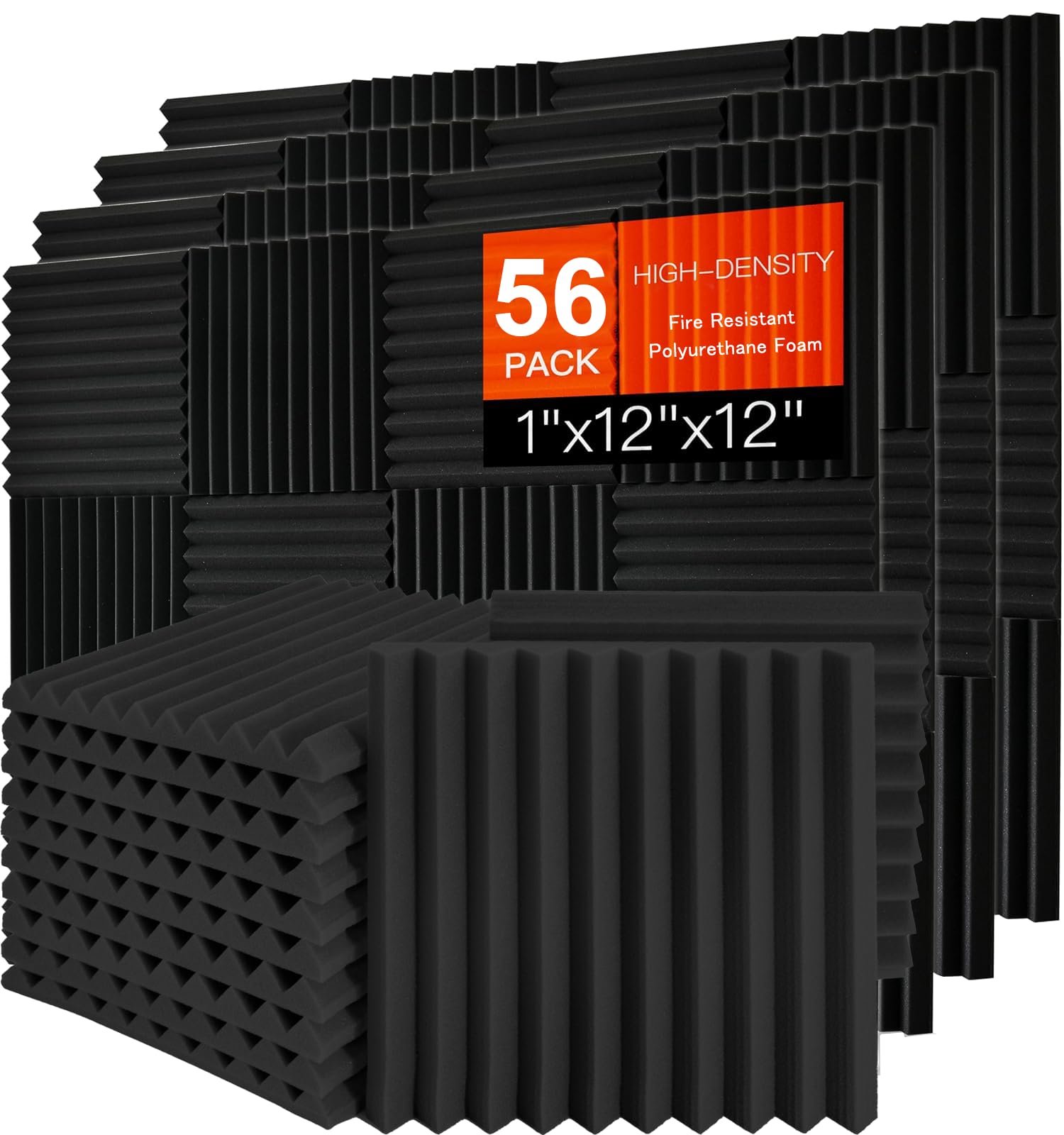
This 56-pack from Saiqiang offers the classic wedge foam design at a price point that makes it easy to cover a large area without breaking the budget. Each panel is 12x12x1 inch, providing a standard 1-inch thickness that targets mid-to-high frequency reflections effectively. Users report noticeable improvements in echo reduction for work-from-home call clarity and podcast recording environments.
The polyurethane foam is fire-resistant and has no strong chemical smell, a common issue with cheaper foam. The panels are vacuum-packed and require 24-48 hours to fully expand after opening. The adhesive tape provided is widely reported as inadequate—many users recommend buying a standalone roll of double-sided tape or using construction adhesive to ensure the panels stay mounted.
These panels are not soundproofing; they are echo reduction tiles. They will not block conversation noise through a wall or stop bass from a subwoofer. But for the price, covering 56 square feet with functional wedge foam makes this a solid entry-level choice for a home office, vocal booth, or gaming room where echo is the primary complaint.
Why it’s great
- Generous 56-pack covers 56 square feet at low cost
- Fire-resistant polyurethane with no harsh odor
- Effective at reducing high-frequency echo in small rooms
Good to know
- Included adhesive tape is weak and unreliable
- Foam only; no bass absorption capability
- Needs 24-48 hours to fully expand after unpacking
7. 100 Pack High Density Acoustic Foam Panels

For the absolute lowest cost per panel, the 100-pack delivers sheer quantity. Each standard 12x12x1 inch foam tile is designed for bulk coverage of walls and ceilings, making it possible to treat an entire room for a minimal investment. Users who bought multiple boxes to cover an entire furnace room or gaming space reported a noticeable reduction in overall room noise.
The included adhesive tape pack is generous (250 pieces), but the adhesive quality is inconsistent—some tiles fell off after initial installation, while others held securely. The foam itself expands from its vacuum-sealed state and may exhibit slightly crimped edges at the corners after full expansion. There is also a reported odor that dissipates after roughly one week of airing out.
This is not professional acoustic treatment. The foam is standard density, likely around 1.5-2 lbs/ft³, and will not absorb low frequencies or stop sound transmission. The adhesive is strong enough to damage the foam on removal. This pack is best for budget-conscious users who need to knock down slap echo in a large, non-critical space like a basement workshop or garage.
Why it’s great
- Extremely low cost per panel for large-area coverage
- Generous 250-piece adhesive tape included
- Works for basic echo reduction in large spaces
Good to know
- Foam has a temporary odor that takes a week to fade
- Inconsistent adhesive hold; some tiles may fall
- Not effective for sound blocking or bass absorption
FAQ
Can acoustic panels stop noise from traveling through a wall?
How many panels do I need for a typical room?
Is expensive acoustic foam worth the extra cost?
Will thin 0.4-inch panels work for recording vocals?
Final Thoughts: The Verdict
For most users, the best acoustic panels for soundproofing winner is the ATS Acoustics 24x48x2 because its NRC 1.0 mineral-wool core provides verified, professional-grade absorption for studios and home theaters. If you want a removable, eco-friendly panel that won’t damage walls, grab the AudioSilk ROOM KIT. And for budget-conscious bulk echo reduction, nothing beats the value of the Saiqiang 56 Pack.