
If your home studio, office, or gaming room has that hollow, cavernous echo that makes your voice sound distant and your audio messy, the fix isn’t more gear—it’s proper acoustic treatment. Acoustic panels are the only tool that directly tackle reverberation by absorbing sound waves at the point of reflection, cleaning up your room’s frequency response without expensive construction.
I’m Min — the co-founder and writer behind Gadgets Feed. I’ve spent hundreds of hours reading real user reviews and cross-referencing the specifications of dozens of acoustic panel models to pinpoint exactly which density, thickness, and material type actually tames flutter echo versus which ones just look good on Instagram.
Whether you are a podcaster, a remote worker, or a home theater builder, understanding the difference between foam and PET fiber or the impact of NRC ratings transforms the way you treat a space. That is the real purpose of any guide to best acoustic panels.
How To Choose The Best Acoustic Panels
The market is flooded with foam wedges claiming to “soundproof” a room, but real buyers need to separate marketing from measurable acoustic performance. The three factors that actually determine whether a panel will clean up your room or just sit on the wall looking pretty are material composition, density in pounds per cubic foot (lb/ft³), and the panel’s surface area coverage strategy.
Material Type: Foam vs. Polyester Fiber vs. Wood Veneer
Open-cell polyurethane foam is the most common entry-level material. It is lightweight and cheap, but its acoustic performance is limited by its porous structure that primarily absorbs high frequencies, often leaving mids and lows untouched. Polyester fiber panels, often made from recycled PET, are denser and provide a more balanced absorption curve across a wider frequency band. Wood veneer slat panels combine a decorative hard surface with a foam or felt backing, offering a mixed absorption and diffusion pattern that reduces echo without making the room sound dead. For professional results, move past foam.
NRC and Thickness: The Real Performance Metric
The Noise Reduction Coefficient (NRC) is a single-number rating between 0 and 1 that indicates the average sound absorption across four common frequencies (250, 500, 1000, and 2000 Hz). A panel with an NRC of 0.80 absorbs 80% of the sound energy hitting it. Thickness directly affects low-frequency absorption: a 1-inch panel will handle high-mid reflections well, but to tame sub-250 Hz bass buildup, you need panels at least 2 inches thick or specialized bass traps. Do not buy purely on thickness—check the NRC spec first and match it to the problem frequencies in your room.
Installation Method and Surface Compatibility
Self-adhesive peel-and-stick panels are the most convenient for renters and quick jobs, but the adhesive must match your wall surface. Smooth, clean painted drywall works. Textured walls, wallpaper, or unpainted concrete will cause the adhesive to fail within hours. Heavy wood slat panels require either high-strength adhesive strips (like 3M Command) or mechanical fasteners such as screws and wall anchors. Dry-fitting a test panel before committing to a full wall install saves significant cleanup time.
Quick Comparison
On smaller screens, swipe sideways to see the full table.
| Model | Category | Best For | Key Spec | Amazon |
|---|---|---|---|---|
| AudioSilk Panel | PET Fiber | Balanced broadband absorption | NRC up to 0.91 | Amazon |
| TONOR Wood Slat (4-Pack) | Wood/Felt | Decorative home theater treatment | 31 sq.ft. coverage | Amazon |
| TONOR Acoustic Wood (4-Pack) | Wood Veneer | Echo reduction with aesthetic appeal | 1.9 in. depth | Amazon |
| Lebenforce 22-Pack | Polyester Fiber | Slim profile self-adhesive installation | 0.4 in. thickness | Amazon |
| Knightsacoustic 96-Pack | Polyurethane Foam | Maximum budget coverage per dollar | 96 sq.ft. total coverage | Amazon |
| 54 Pack Wedge Foam | Polyurethane Foam | Large quantity for small rooms | 1 in. wedge profile | Amazon |
| Amantech 12-Pack Hex | Polyester Fiber | Stylish entry-level echo damping | 0.4 in. slim panel | Amazon |
In‑Depth Reviews
1. AudioSilk Acoustic Panel, Large, 46″ x 23″

The AudioSilk panel is the standout performer in this lineup because it uses high-density recycled PET fiber rather than standard acoustic foam, achieving a Noise Reduction Coefficient (NRC) of up to 0.91 at a remarkably thin 0.4 inches. Real buyers report that it outperforms common 1-inch foam wedges at half the depth, with no chemical smell, no sagging, and a clean modern look that fits a professional studio.
Each panel measures 45.7 x 22.8 inches, offering wide surface coverage per unit that makes it ideal for placing behind studio monitors on a desk or mounting on a first-reflection point on a side wall. It does not include adhesive hardware, so budget for 3M Command strips or spray contact adhesive for permanent install. The PET material is more rigid than foam, which prevents peeling or warping in humid conditions.
Users consistently note that the AudioSilk tames flutter echo and reduces reverb tails without sucking the life out of the room. It is not a bass trap, nor is it soundproofing, but for cleaning up mid- and high-frequency reflections in a home studio or office, it delivers professional-grade performance per panel that justifies its single-unit format.
Why it’s great
- NRC 0.91 provides near-professional absorption in a slim 0.4-inch PET fiber construction
- Eco-friendly recycled material with zero odor, no off-gassing, and no shrinkage over time
Good to know
- Sold as a single panel only—covering a full wall requires multiple packs
- No adhesive or hardware included in the box; must buy mounting strips separately
2. TONOR Wood Slatwall Panels, 4 Pack (47.2″ x 23.6″)
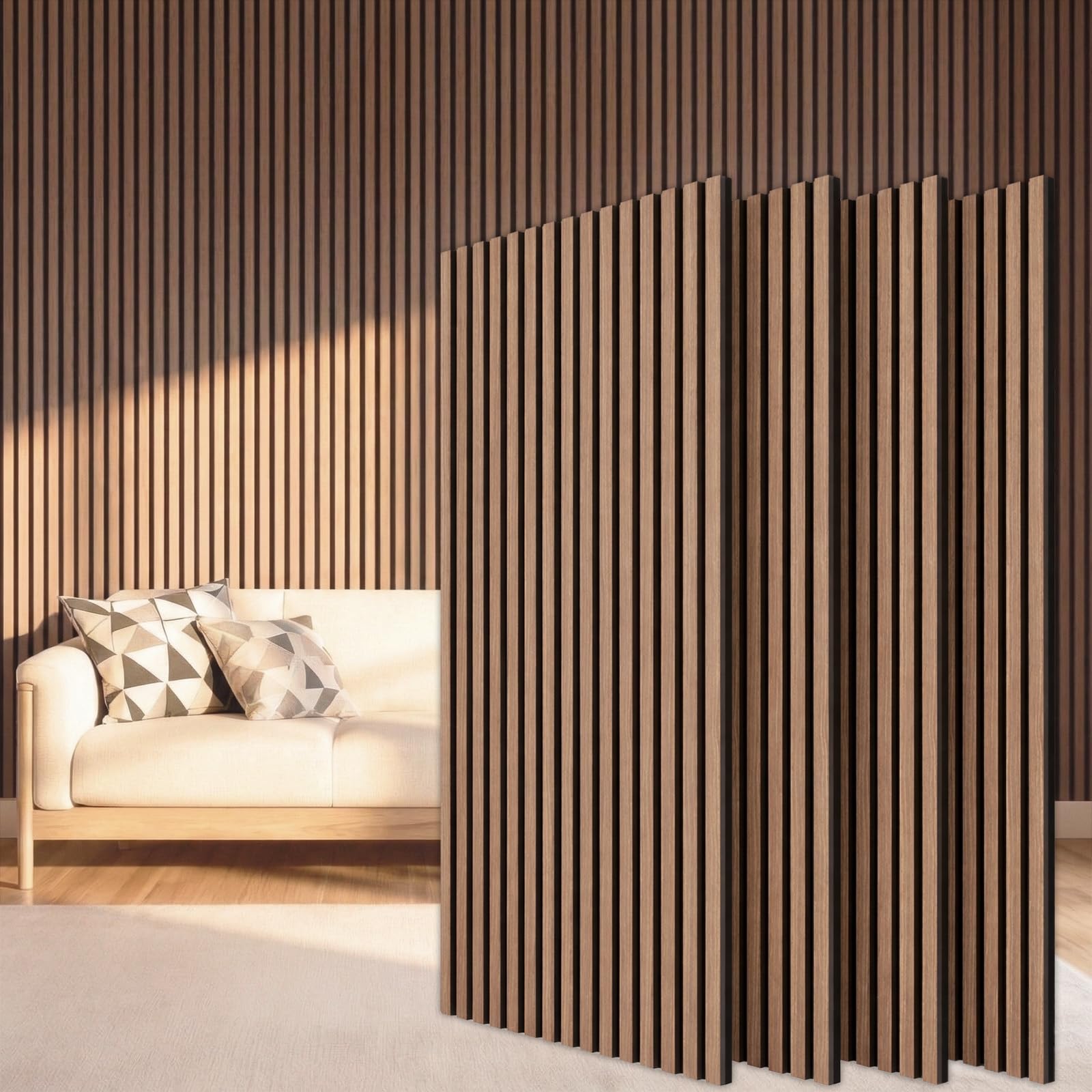
These TONOR slatwall panels combine a walnut wood veneer surface with a high-density polyester felt backing, creating a diffusion-and-absorption hybrid that both reduces echo and adds visual warmth. Each panel is nearly four feet wide, so a 4-pack covers 31 square feet of wall area in a single continuous-looking installation.
The wood slats are mounted on a perforated felt base that absorbs mid- to high-frequency reflections, while the slotted wood surface scatters remaining energy to break up standing waves. Real users report that four panels placed on the back wall of an office desk setup noticeably reduced hollow reverberation during calls without making the room feel acoustically dead.
Installation requires cutting with a jigsaw or table saw for custom fits around outlets and corners, but the kit includes screws and wall anchors for permanent mounting. Some users noted that wood strips are glued at the ends only, which can cause slight loose edges if you cut small sections—a staple gun handles that fix quickly. This is the right choice for anyone who wants acoustic treatment that doubles as premium wall decoration.
Why it’s great
- Large-format panels (47.2 x 23.6 inches) deliver 31 sq.ft. of coverage with a clean slat-wall appearance
- Wood veneer with PET felt backing provides both sound absorption and aesthetic integration into a living space
Good to know
- Wood slats are only glued at the ends; cutting small sections can produce loose strips that need stapling
- Limited low-frequency absorption due to the 0.39-inch panel thickness and slat design
3. TONOR 4-Pack Acoustic Wood Wall Panels (23.6″ x 11.8″)
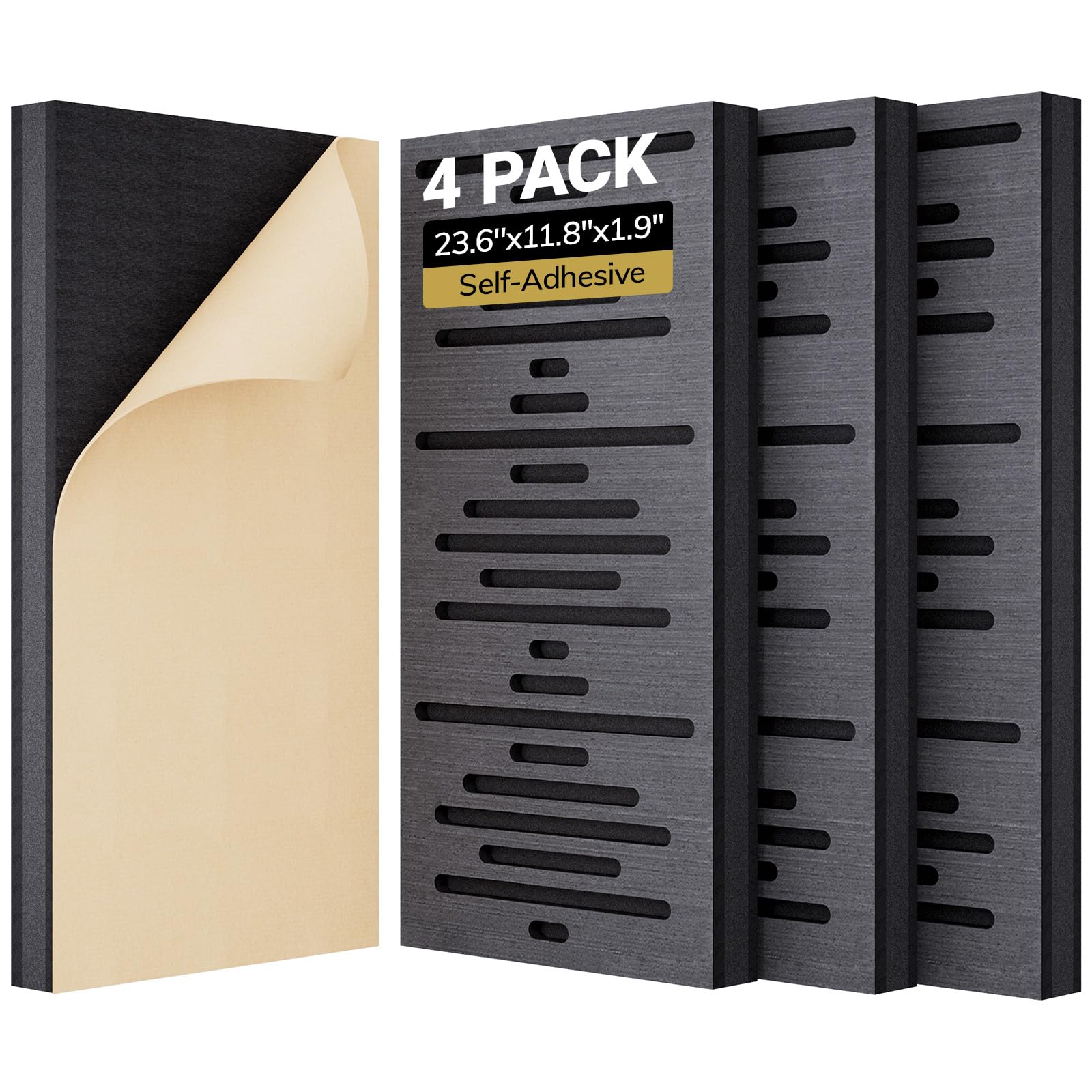
This TONOR pack offers a three-layer construction of wood veneer, polyester fiber, and acoustic foam bonded into a 1.9-inch-thick panel that delivers significant low-end absorption compared to flat slat panels. The 1.9-inch depth is designed to tackle mid-bass frequencies around 200–400 Hz, which are common culprits for muddy room sound in untreated home theaters and DJ rooms.
Each panel measures 23.6 x 11.8 inches, and real users report that installing eight units at first-reflection points on side walls eliminated wall echo and made monitor mixes sound punchier and clearer. The peel-and-stick adhesive backing requires clean, smooth surfaces—users who mounted on painted drywall with no texture have experienced strong long-term hold.
The wood veneer finish has a natural color matching with minimal color variation between units. A few reviewers noted that the outer wood layer is a thin technological veneer over foam, so heavy impacts can dent the surface. It is not a replacement for dedicated bass traps, but for a combined acoustical and decorative upgrade in a living room or studio space, this offers premium depth at a competitive price.
Why it’s great
- 1.9-inch total panel depth provides meaningful mid-bass absorption that flat foam panels cannot match
- Three-layer construction (veneer, PET, foam) balances acoustic function with home decor appeal
Good to know
- Thin wood veneer surface can dent or scratch with direct impact; not a rugged material
- Adhesive backing may fail on textured or unpainted walls; permanent mounting may be safer
4. Lebenforce 22-Pack Self-Adhesive Fabric Panels (12″x12″x0.4″)

These Lebenforce panels are made from polyester fiber with a fabric-facing surface, giving them a more upscale look than standard exposed foam while maintaining a low 0.4-inch profile that fits flush behind furniture or on the back of equipment racks. The self-adhesive backing is aggressive enough that some users caution it will peel paint on removal—so position carefully the first time.
At 0.4 inches, these are not going to absorb deep bass, but they excel at killing high-frequency reflections like vocal sibilance, computer fan whine, and room reverb for Zoom calls and podcast recording. Real-world reviews highlight that seven tiles placed on the side of a 3D printer cabinet completely eliminated its high-pitched whirring noise, making it inaudible from across the room.
The 22-pack covers roughly 21 square feet—enough to treat first-reflection points in a small home office or cover a standard apartment bedroom wall behind a desk. The panels are easy to cut with a utility knife and steel ruler for custom shapes, with no dust or crumbling. This is the go-to pack for renters seeking a clean, low-profile install with no tools.
Why it’s great
- Fabric-surface polyester fiber construction looks clean and professional without the dated “foam wedge” aesthetic
- Strong peel-and-stick backing stays secure on smooth walls without additional tape
Good to know
- Adhesive is extremely aggressive; removal will likely damage painted drywall or remove paint
- 0.4-inch thinness limits effectiveness below 500 Hz; not a solution for low-frequency buildup
5. Knightsacoustic 96 Pack Foam Panels (12″x12″x2″)
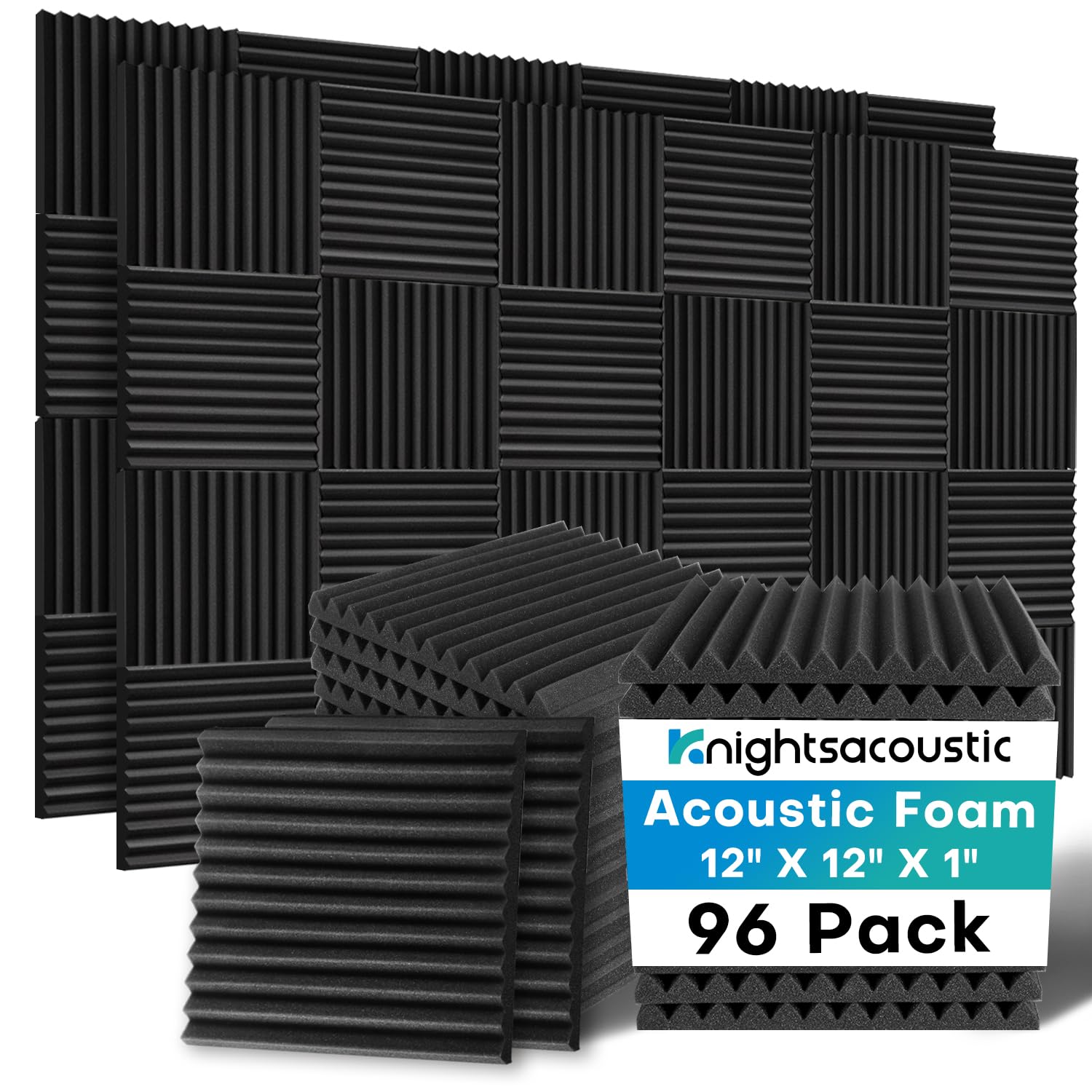
This Knightsacoustic 96-pack covers 96 square feet of wall area, enough to treat an entire 12×12-foot room’s first-reflection zones for a fraction of the cost of PET alternatives. The panels are 2 inches thick and made from high-density polyurethane foam that returns to shape within hours after being compressed in the packaging—some users sped up recovery by lightly soaking and drying the panels.
The 2-inch thickness gives them a measurable advantage for low-mid absorption over thinner foam panels. Real buyers confirm that these panels noticeably reduced cabinet echo in a small home theater and tightened up vocal clarity in a voice-over booth. The foam has zero odor after unpacking, which is a common problem with budget foam panels from other sellers.
Critical to know: these panels do not come with adhesive backing or adhesive dots. You must purchase mounting adhesive separately (the manufacturer recommends their own adhesive squares via ASIN B0CFV11LVN). The foam density is good for the price point but not as rigid as PET fiber, meaning it may show compression indentations over time if panels are stacked or stored under weight. This is purely a performance-per-dollar proposition, not a decorative one.
Why it’s great
- 96 panels provide the highest square-foot coverage in this roundup at a budget-friendly rate per tile
- 2-inch foam thickness improves low-mid frequency absorption compared to typical 1-inch budget panels
Good to know
- No adhesive included—you must buy mounting strips or spray adhesive separately
- Foam material is less durable than PET fiber; compression damage possible under heavy weight
6. 54 Pack Sound Proof Foam Panels (12″x12″x1″)
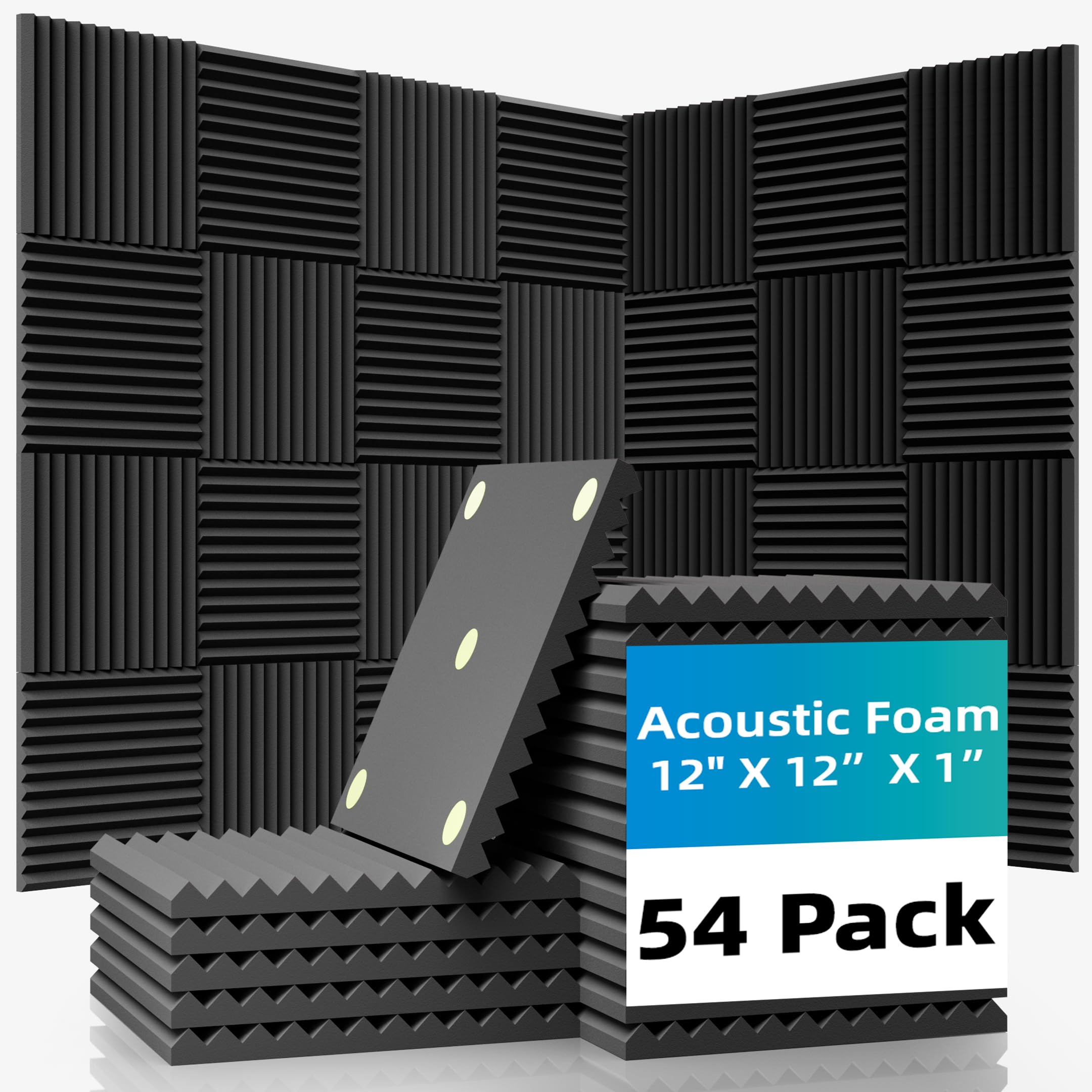
This 54-pack uses a wedge-cut surface profile that increases its effective surface area for trapping sound waves compared to flat foam panels. Each tile is 1 inch thick, striking a balance between absorption depth and coverage quantity for small to medium rooms. The high-density polyurethane foam is designed for quick recovery after unpacking.
Real user feedback is mixed but instructive: the panels reduce echo and improve audio clarity for conversations, gaming, and TV viewing in a 10×10-foot room. However, the included adhesive pads work best on perfectly smooth, clean walls—dusty or uneven drywall causes the pads to lose grip over time. Several users recommend doubling up or using separate stronger adhesive strips for long-term installations.
Consistency between packs is a noted concern in the review pool. One pack arrived with panels that were visibly thinner and a slightly different color than a second pack ordered from the same listing. For this reason, buyers who need uniform appearance across a large install wall should order all panels in a single transaction. At this price, it works well as a starting point to test acoustic treatment before investing in premium PET or wood panels.
Why it’s great
- 54 panels deliver generous coverage for a small studio or gaming room at an entry-level price point
- Wedge-cut surface profile increases sound-trapping surface area versus flat tiles
Good to know
- Adhesive pads may not hold on textured, dusty, or porous walls without supplemental mounting
- Inconsistent panel dimensions and color reported when ordering multiple separate packs
7. Amantech 12-Pack Hexagonal Panels (12″x12″x0.4″)

These Amantech panels stand out for their hexagonal honeycomb shape and polyester fiber material, which is a step up from basic foam in terms of density and environmental safety—no formaldehyde, no odor, and 100% PET fiber. The self-adhesive backing makes install a simple peel-and-stick job on smooth walls, and the modular hex design allows you to create patterns like repeating honeycomb clusters or random scatter arrangements.
At 0.4 inches, these are thin panels that prioritize aesthetic flexibility over deep absorption. They effectively reduce high-frequency reflections like vocal slap echo and tinny room noise, but a single 12-pack will not produce a dramatic change in a large echo-filled room. Real buyers who used multiple packs to cover a sizable wall area reported noticeable improvements in echo reduction and overall room clarity.
The hex tiles weigh only 3.4 pounds total for the entire 12-pack, so they are safe on drywall without anchors. The Snow White color option blends into light-painted walls seamlessly, making them a near-invisible acoustic fix for offices where visual clutter is not welcome. For anyone who needs a clean, non-intrusive first acoustic treatment on a tight budget, this pack is a solid starting block.
Why it’s great
- Hexagonal design allows creative installation patterns not possible with square panels
- Odorless, non-toxic polyester fiber construction with no formaldehyde concerns
Good to know
- 0.4-inch thinness limits sound absorption to high frequencies; not a solution for mids or lows
- One 12-pack covers only about 12 square feet; full-room treatment requires multiple purchases
FAQ
How many acoustic panels do I need for a typical home office?
Will acoustic panels block sound from traveling to my neighbor’s apartment?
Can I install acoustic panels on textured walls or wallpaper?
Final Thoughts: The Verdict
For most users, the best acoustic panels winner is the AudioSilk Large Panel because it delivers professional-grade NRC 0.91 performance in a slim, odor-free PET fiber format that outperforms twice-as-thick foam options. If you want decorative wood slat panels that double as wall art, grab the TONOR Wood Slatwall 4-Pack for its 31 sq.ft. coverage and warm walnut finish. And for entry-level treatment on a tight budget, nothing beats the coverage-per-dollar of the Knightsacoustic 96-Pack.