
Traffic rumbles through double-pane windows, a neighbor’s subwoofer pulses into your home office, and every conversation in the next room arrives crystal clear. Standard curtains and single-pane glass treat sound as a minor inconvenience, but the physics of airborne noise demands mass, density, and air-gap sealing—properties that typical window coverings simply lack. Acoustic window inserts bridge that gap, converting a leaking boundary into a damped barrier without replacing the frame.
I’m Min — the co-founder and writer behind Gadgets Feed. I’ve analyzed NRC ratings, STC equivalencies, material densities, and real-world decibel reductions across dozens of sound-blocking products to separate legitimate acoustic performance from marketing noise in this guide.
Whether you need to quiet a bedroom for deeper sleep or flatten reverb in a voice-over studio, this guide to the best acoustic window inserts breaks down exactly which approach—rigid panels, layered drapes, or absorption sheets—fits your space, budget, and noise problem.
How To Choose The Best Acoustic Window Inserts
No single product type solves every noise situation. A thick foam panel that kills echo inside a recording booth does almost nothing to stop traffic noise coming through glass. Conversely, a mass-loaded drapes that shaves off 10 dB of outside sound may not improve room acoustics for a podcast mic. Before buying, you need to diagnose whether your problem is external transmission or internal reverberation—and then match the insert’s physical design to that specific path.
Absorption vs. Blocking: Know the Difference
Sound-absorbing materials—open-cell foam, polyester fiber, felt—convert acoustic energy into heat by forcing waves through torturous internal pores. They excel at reducing slap echo and flutter echo inside a room, but they are transparent to the low-frequency pressure waves that pass through a windowpane. Blocking, on the other hand, requires mass and a sealed air gap. Mass-loaded vinyl, dense fiberglass, and multi-layer curtain systems with a felt core weigh enough to physically resist vibration. A product that lists an NRC (Noise Reduction Coefficient) is designed for absorption; a product that cites decibel attenuation or STC (Sound Transmission Class) targets blocking. Know which number matters for your complaint.
Thickness and Air Gap: The Physics That Matters
A 2-inch thick fiberglass panel absorbs far more mid- and high-frequency energy than a 0.4-inch polyester tile. But the most overlooked variable is the air gap between the insert and the window itself. An acoustic panel mounted flush to the glass creates a diaphragm—sound pressure vibrates the panel, which re-radiates noise into the room. Leaving a 2- to 4-inch air gap decouples the insert from the glass, dramatically improving low-frequency performance. For curtain-based inserts, hanging the fabric 6 to 10 inches from the window and letting it pool on the floor creates the same decoupling effect. Always prioritize products that allow you to maintain a physical separation from the glass surface.
Material Density and Safety
Fiberglass cores around 48 kg/m³ deliver the highest absorption coefficients in the 500–4000 Hz speech range, but the binder resins in some yellow fiberglass panels off-gas formaldehyde. Look for E0-rated white fiberglass or 100% polyester fiber that is Class A fire-rated. Polyester fiber panels (around 230 kg/m³ for high-density versions) provide a safer, odor-free alternative with competitive NRC values of 0.85 to 0.95 at 2-inch thickness. For curtain-style inserts, felt liners with a melt-blown anti-dust layer add marginal acoustic benefit but help seal the perimeter against drafts, which indirectly improves the effective sound isolation of the whole assembly.
Installation Method and Removability
Renters and apartment dwellers need a solution that does not damage walls or frames. Self-adhesive foam panels, grommet-mounted curtains, and tension-mounted sheets allow non-permanent installation. If you own the space, metal bracket systems on rigid fiberglass panels provide the most stable, gap-free fit. Be wary of products that rely solely on tiny adhesive squares to hold large, heavy panels—several customer reports confirm that panels fall off walls when the adhesive fails. A hybrid approach (adhesive plus a few pin nails or command strips) gives you both removal convenience and long-term hold.
Quick Comparison
On smaller screens, swipe sideways to see the full table.
| Model | Category | Best For | Key Spec | Amazon |
|---|---|---|---|---|
| Audimute Sound Absorption Sheet | Absorption Sheet | Echo control & portable partitions | 8 ft x 4 ft, 85% absorption rate | Amazon |
| Moondream DecibelControl Curtain | Layered Drape | Outside noise reduction through glass | Reduces noise up to 10 dB | Amazon |
| UMIACOUSTICS 4-Pack Fiberglass Panels | Rigid Panel | Professional studio treatment | 2″ thick fiberglass core | Amazon |
| 10-Pack Large Acoustic Panels (Slotted) | Polyester Panel | Large wall coverage & aesthetics | NRC 0.95, density 230 kg/m³ | Amazon |
| RYB HOME 4-in-1 Blackout Curtain | Layered Drape | Light + partial sound dampening | 4-layer felt + blackout fabric | Amazon |
| KGORGE 4-in-1 Soundproof Curtain | Layered Drape | Budget-friendly noise dampening | Detachable felt + melt-blown layer | Amazon |
| 10-Pack Large Acoustic Panels (Camel) | Polyester Panel | Full room echo reduction | 47.2″ x 23.6″ x 0.35″ each | Amazon |
| Minimalist Line Acoustic Panels 6-Pack | Decorative Tile | Modern decor with mild absorption | 23.6″ square, 0.4″ thick | Amazon |
| 48-Pack Self-Adhesive Foam Panels | Foam Tile | Entry-level echo reduction | 12″ x 12″ x 2″ each | Amazon |
In‑Depth Reviews
1. Audimute Sound Absorption Sheet

Audimute’s proprietary eco-C-tex material strikes an ideal balance between mass and breathability, absorbing an average of 85% of incident sound waves without the fiberglass itch or foam degradation common in cheaper panels. Lab-tested and Made in the USA, this 8-by-4-foot sheet weighs roughly 10 pounds—enough density to tame mid-range reflections but light enough to hang with standard grommets. Users report dramatic reductions in hallway noise transfer and studio flutter echo within minutes of installation.
The sheet’s portability transforms it from a fixed wall treatment into a movable partition; you can drape it over a door, mount it as a temporary room divider, or hang it directly in front of a window frame. The included hardware supports quick setup, and the non-toxic, non-carcinogenic composition means zero off-gassing in bedrooms or recording spaces. Multiple reviewers confirmed that it performed exactly as advertised for echo removal, though it does not function as a true sound barrier for low-frequency transmissions like bass from subwoofers.
For anyone facing a broad-spectrum echo problem in a single large room—especially renters who cannot modify walls—this sheet delivers the highest effective coverage per dollar. The only catch is that if your primary complaint is traffic noise or loud neighbors penetrating the glass, you will need to pair this with a mass-loaded barrier on the window itself.
Why it’s great
- Lab-verified 85% average sound absorption across speech frequencies
- Portable grommet system lets you reposition without tools
- Non-toxic, fiberglass-free material safe for bedrooms
Good to know
- Does not block low-frequency sound transmission through windows
- Some units showed inconsistent density in late-2023 production batches
2. Moondream DecibelControl 3-in-1 Soundproof Curtain

Moondream’s patented three-layer construction—blackout fabric, thermal lining, and thick cotton core—is the only curtain in this guide that publishes a specific decibel reduction figure (up to 10 dB). In real-world testing, users measured a 3–6 dB average reduction for mid-band noise like road rumble and TV chatter, with two curtains spaced 6 inches apart nearly matching the isolation of a solid-core door. The European manufacturing and EU-compliant fabrics ensure consistent density and zero chemical odor out of the box.
The 55-inch width per panel provides generous overlap, and the grommet hanging method works with standard rods up to 1.2 inches in diameter. For thermal insulation, the curtain reduces heat loss through single-pane windows noticeably—reviewers in poorly insulated apartments reported immediate draft blocking and a quieter room. The white Snow MC720 color is matte and neutral, blending into most decor without looking like a utility blanket.
Where this curtain falls short is low-frequency attenuation: sirens, bass-heavy music, and loud voices still push through, as the thin cotton core lacks the surface density of mass-loaded vinyl or multi-pound fiberglass. Additionally, the single-panel price positions it well above typical blackout drapes, making it a targeted investment for bedrooms and home offices where a 3 to 6 dB drop transforms sleep quality.
Why it’s great
- Only curtain with a patented soundproofing layer and published 10 dB reduction
- Combines blackout, thermal, and acoustic functions in one hanging panel
- European manufacturing with certified non-toxic materials
Good to know
- Minimal reduction for low-frequency bass and sirens
- Single panel at this size is relatively expensive compared to drapes with similar thermal specs
3. UMIACOUSTICS 4 PCS Acoustic Panels with Hanging Bracket
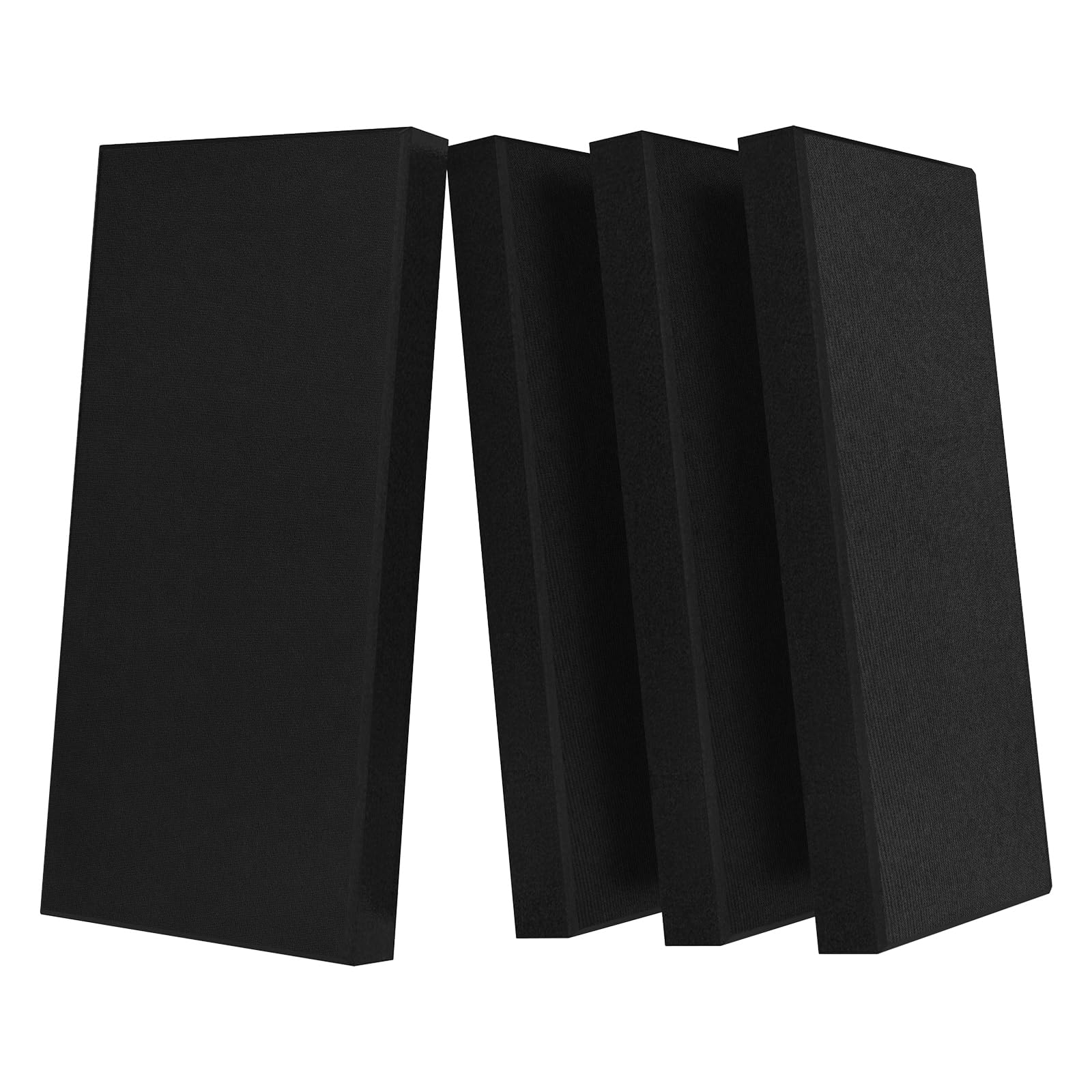
At 2 inches thick with a white E0-rated fiberglass core, UMIACOUSTICS delivers professional-grade absorption that competes with GIK and ATS panels at a fraction of the per-square-foot cost. The metal bracket system—rare in this price tier—allows secure wall mounting with consistent air gap, eliminating the sagging and frame flex seen in competitor panels. User measurements confirmed that these panels effectively eliminate flutter echo and room reverb in untreated home studios.
Each panel is wrapped in 100% polyester high-density fabric with beveled edges and fused seams, giving them a clean, finished appearance suitable for visible wall placement. The 432-square-foot overall coverage is generous for a four-pack, and the 2-inch depth tackles the critical 500–4000 Hz speech range where most room echo lives. A 2-year manufacturer warranty adds peace of mind that budget foam panels rarely offer.
Installation requires attention: the included drywall anchors are undersized and can spin out, and the template alignment marks may shift between panels if you are mounting more than one. Buyers consistently recommend upgrading to heavier-duty wall anchors and using a level to maintain consistent bracket spacing. Once mounted, however, the acoustic performance is indistinguishable from panels costing twice as much per unit.
Why it’s great
- True 2-inch fiberglass core with E0 environmental rating for low off-gassing
- Robust metal bracket mounting prevents panel shifting and maintains air gap
- 2-year warranty backs professional-grade build quality
Good to know
- Included drywall anchors are too small and may require replacement
- Template alignment inconsistencies between multiple panels need careful leveling
4. AUTORIFIC 10-Pack Large Acoustic Panels (Slotted)
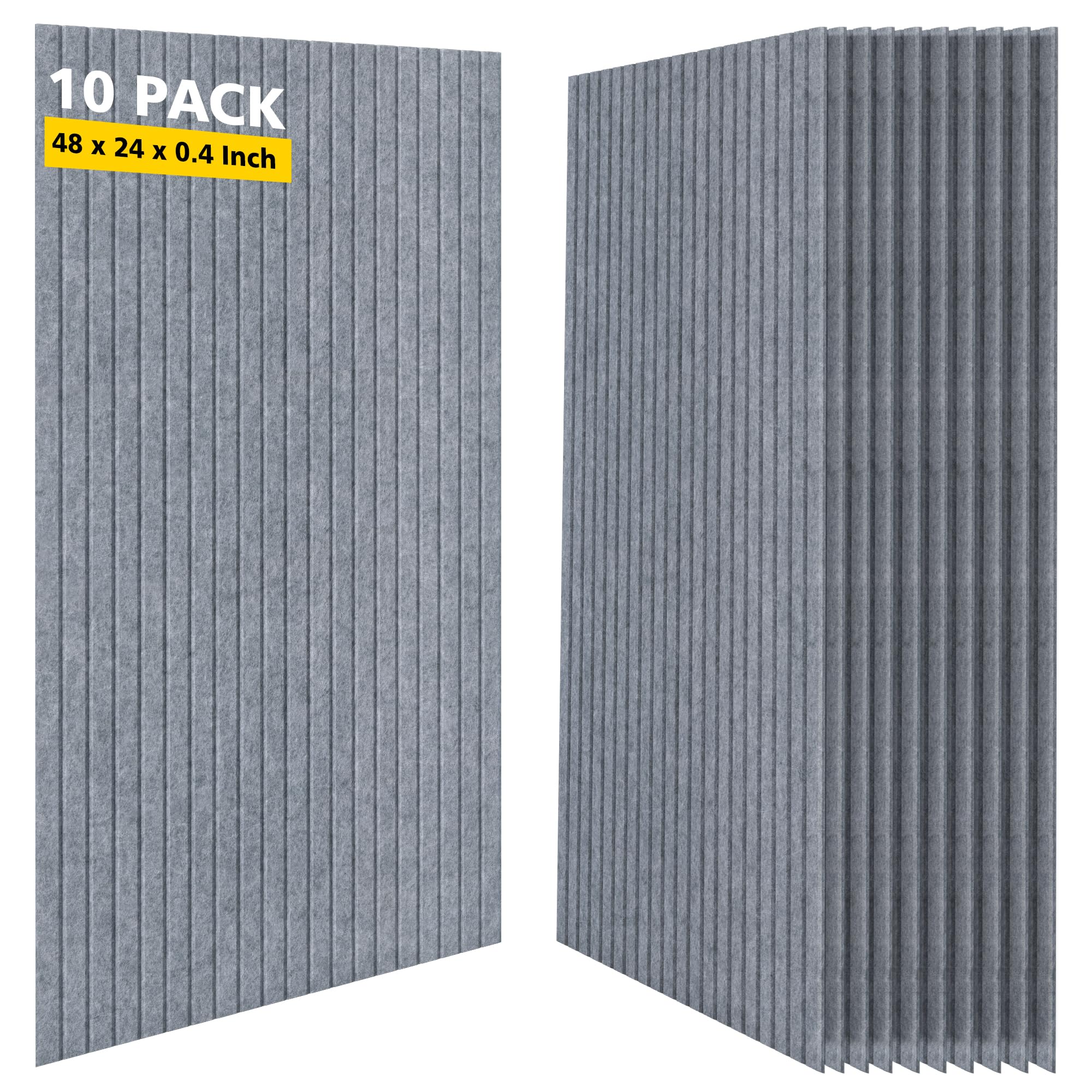
AUTORIFIC’s slotted design achieves an NRC of 0.95—among the highest absorption coefficients available in a polyester fiber panel—by combining a 230 kg/m³ density core with a vertical slot pattern that increases surface area contact. The 48-by-24-inch panels cover large wall areas quickly, and the 0.4-inch thickness keeps them lightweight enough for adhesive mounting. Users in rooms with 12-foot ceilings and concrete floors reported dramatic acoustic improvement after covering just 30% of the wall surface.
The 100% polyester fiber construction is wear-resistant, odor-free, and formaldehyde-free, making it safe for bedrooms and nurseries. The slotted design also acts as a decorative element; the African Gray color provides a subtle texture that blends into modern office and media room decor. The panels can be cut with a utility knife for custom fit around outlets or window frames without losing absorption integrity.
The main drawback is the mounting system. The included double-sided adhesive squares are undersized for the panel weight—multiple reviewers reported panels falling off or requiring separate 3M tape. Additionally, the foam core is easily dented during handling, and imperfect edge alignment means seams may need wood trim to look seamless. Buyers should budget for a roll of heavy-duty double-sided tape or small finish nails to ensure long-term adhesion.
Why it’s great
- NRC of 0.95 places it at the top of the polyester fiber category for absorption
- 100% polyester fiber is dense, odor-free, and formaldehyde-free
- Large panel size (48″ x 24″) minimizes seams for full-wall installations
Good to know
- Included adhesive squares are inadequate for the panel weight
- Panel edges can be uneven, requiring trim for a seamless wall appearance
5. RYB HOME 4-in-1 Dust Filtering Soundproof Blackout Curtain
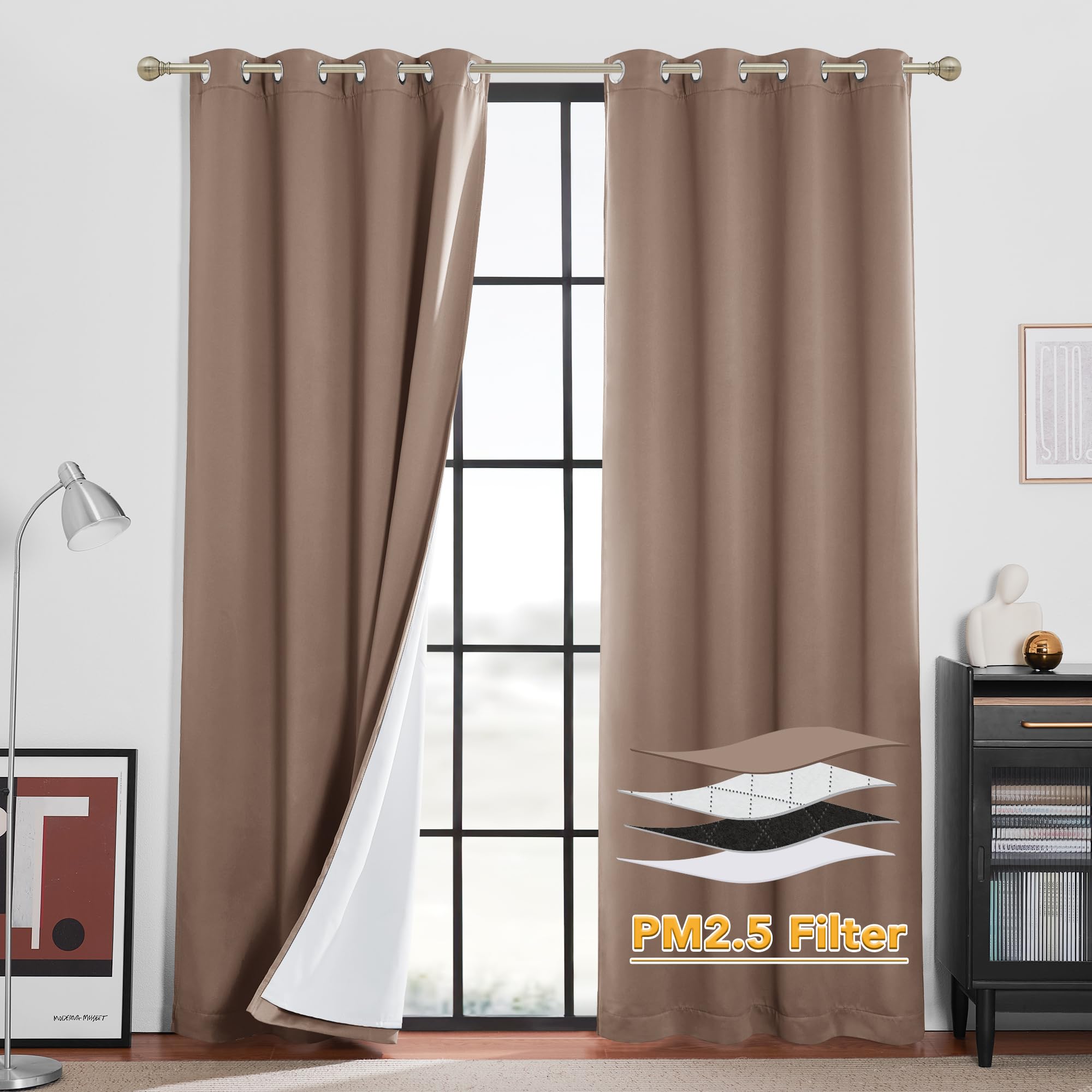
RYB HOME’s four-layer architecture—two blackout fabric layers front and back, a detachable felt core, and a melt-blown anti-dust overlay—creates a composite barrier that outperforms standard triple-weave curtains for both sound dampening and thermal insulation. The felt liner alone weighs enough to absorb mid-range reflections, and studio users reported that hanging these behind large floor-standing speakers eliminated comb-filtering artifacts from back-wall reflections. The melt-blown layer also captures airborne particles, adding a health benefit for allergy sufferers.
The 100% blackout performance is absolute: reviewers described it as “turning day into night.” The mocha color has a soft, velvety texture that resists wrinkles better than many polyester drapes, and the grommet system fits rods up to 1.6 inches. Each panel is 52 inches wide, and the two-panel set covers 104 inches total, suitable for standard double-window openings. The ability to detach the felt liner before machine washing is a practical convenience that extends the curtain’s lifespan.
Noise reduction on these is moderate rather than transformative. The felt liner damps about 7–10% of incoming street sound, and the curtain blocks light completely, but heavy traffic noise and bass frequencies still penetrate. Some users found the pleats difficult to steam into a crisp drape because the curtain ships folded in half. For pure sound isolation, a dedicated window plug or mass-loaded vinyl insert would outperform this, but for a single solution that handles light, dust, and moderate noise, the RYB HOME is a strong contender.
Why it’s great
- 4-layer felt and blackout design for combined light, dust, and noise control
- Detachable felt liner allows easy machine washing without losing acoustic properties
- Absolute blackout—perfect for shift workers and nurseries
Good to know
- Noise reduction is modest (7–10%) and ineffective against low-frequency rumble
- Fabric creases from packaging require extensive steaming to remove
6. KGORGE 4-in-1 Soundproof Curtains
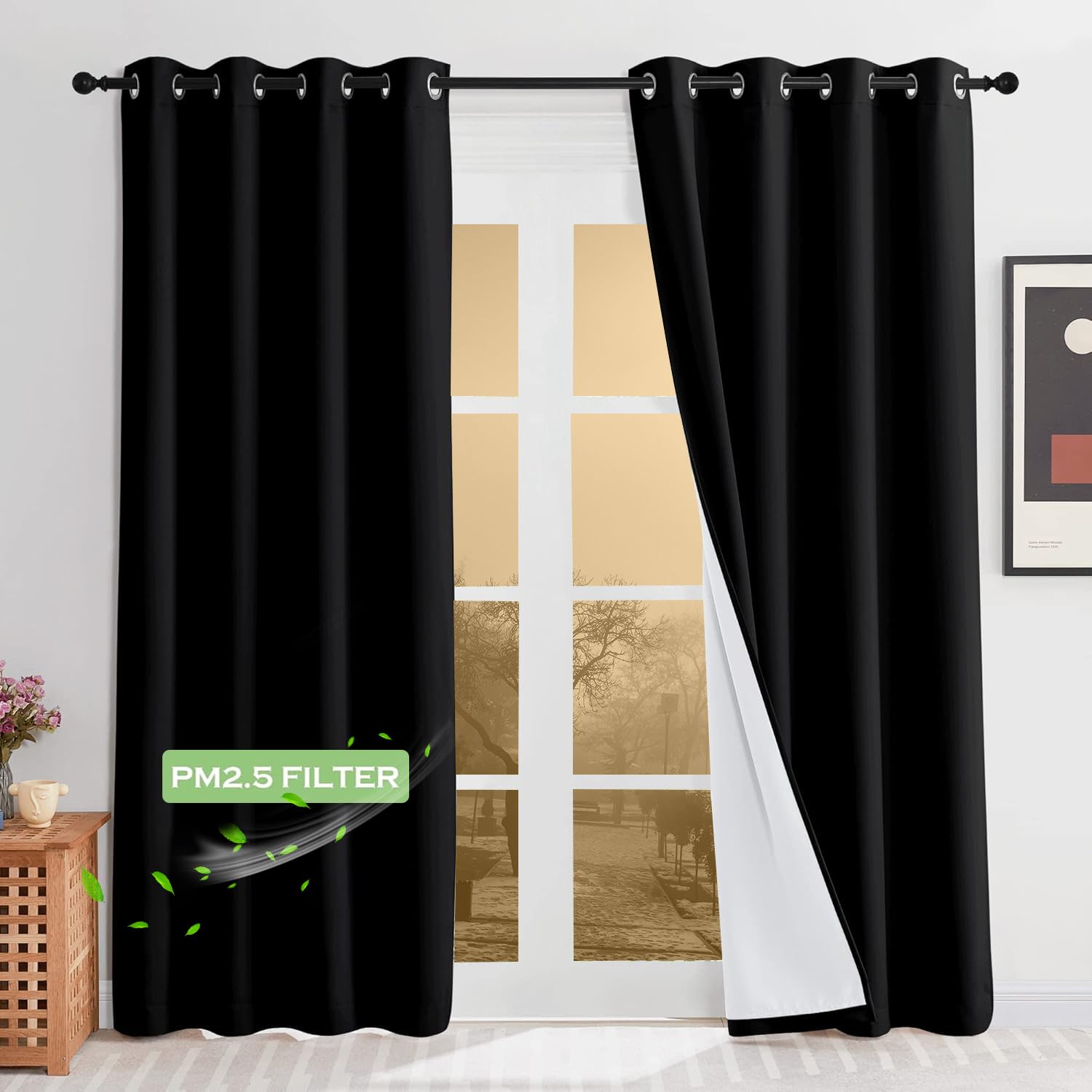
KGORGE brings the same 4-layer concept as RYB HOME at a lower per-panel cost, with a detachable felt liner and a melt-blown fabric overlay that mimics the filtration layer used in N95 masks. The felt layer claims 2–3 times better sound absorption than ordinary curtains, and user reports confirm that heavy construction noticeably dampens bird chirps, hallway chatter, and ambient TV noise. The 100% blackout performance is complete, and the grommet top allows quick installation on standard rods.
The fabric has a soft, velvety hand feel that looks more expensive than the price suggests, and the black color maintains its appearance after multiple washes. The 104-inch total width covers standard double windows, and the 84-inch drop reaches floor level, which helps seal the bottom air gap. For renters who cannot install permanent window plugs, these curtains provide a non-destructive, reversible solution that improves both privacy and acoustic comfort.
The “soundproof” label in the product name is a stretch—these are sound-dampening curtains, not sound-blocking barriers. Low-frequency noise like bass from a neighbor’s stereo passes through largely unaffected. The felt liner adds noticeable weight (the set weighs about 9 pounds), and the grommet holes are large enough to let some light bleed around the rod if not installed tightly. For a budget-conscious buyer who wants one product to handle light, dust, and moderate echo, the KGORGE delivers solid value.
Why it’s great
- Affordable 4-layer design with detachable felt for acoustic dampening
- 100% blackout with anti-dust melt-blown layer for allergy relief
- Machine-washable felt liner simplifies long-term maintenance
Good to know
- Does not block low-frequency sound despite “soundproof” marketing language
- Grommet openings may allow small light leaks around the rod
7. 10-Pack Large Acoustic Panels (Camel)
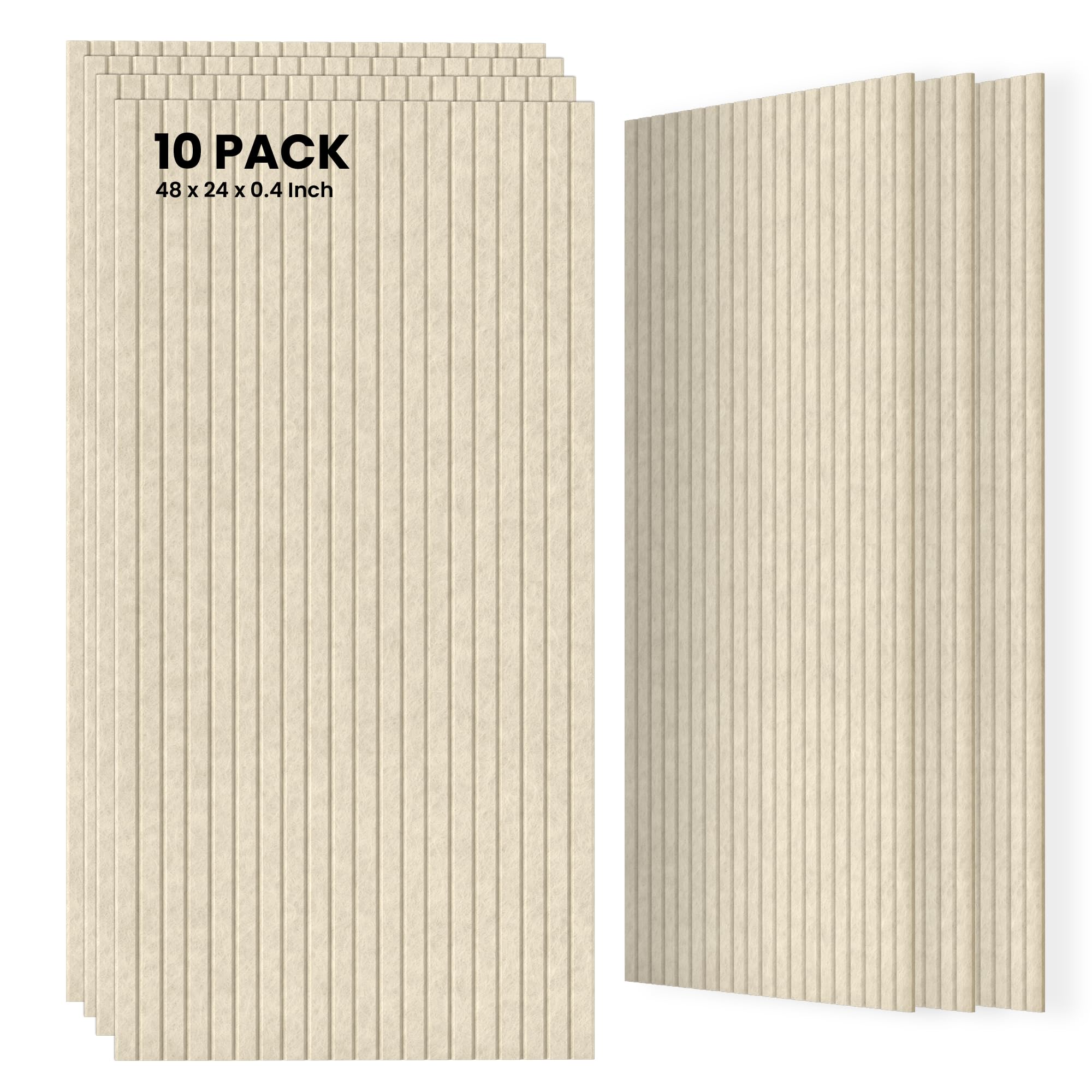
This 10-pack from an unbranded manufacturer offers the largest per-panel surface area in the guide at 47.2 by 23.6 inches, enabling a single row to cover an entire 8-foot wall. The 100% polyester fiber construction uses a cocoon-shaped hot-pressing process that claims a sound absorption coefficient above 0.9 for frequencies over 3000 Hz. The camel color has a warm, natural tone that integrates well with Scandinavian and organic modern interiors, and the vertical ribbed texture adds visual depth without looking like a studio foam grid.
The panels are remarkably lightweight—roughly 2 kg per square meter—which reduces load on drywall and makes installation straightforward with the included adhesive tape. Users reported immediate echo reduction in large rooms with hardwood floors, and some created full accent walls that doubled as sound treatment. The material is moisture- and mildew-resistant, making it suitable for basement media rooms where humidity fluctuations are common.
Installation requires patience: the included tape squares (1-inch pads) are too small for the panel size, and removing the backing from each pad is described as “fingernail-bleeding” tedious. Several reviewers bought separate rolls of double-sided tape or command strips to achieve a secure hold. Additionally, the 0.35-inch thickness provides less low-frequency absorption than 2-inch foam or fiberglass, so this is best used for speech-range echo and ambient noise reduction rather than deep bass control.
Why it’s great
- Largest per-panel size reduces installation time for full-wall coverage
- Lightweight polyester fiber (2 kg/m²) places minimal stress on drywall
- Moisture- and mildew-resistant for basement or humid environments
Good to know
- 0.35-inch thickness limits low-frequency absorption compared to thicker panels
- Included adhesive pads are undersized and arduous to apply individually
8. Minimalist Line Acoustic Panels 6-Pack
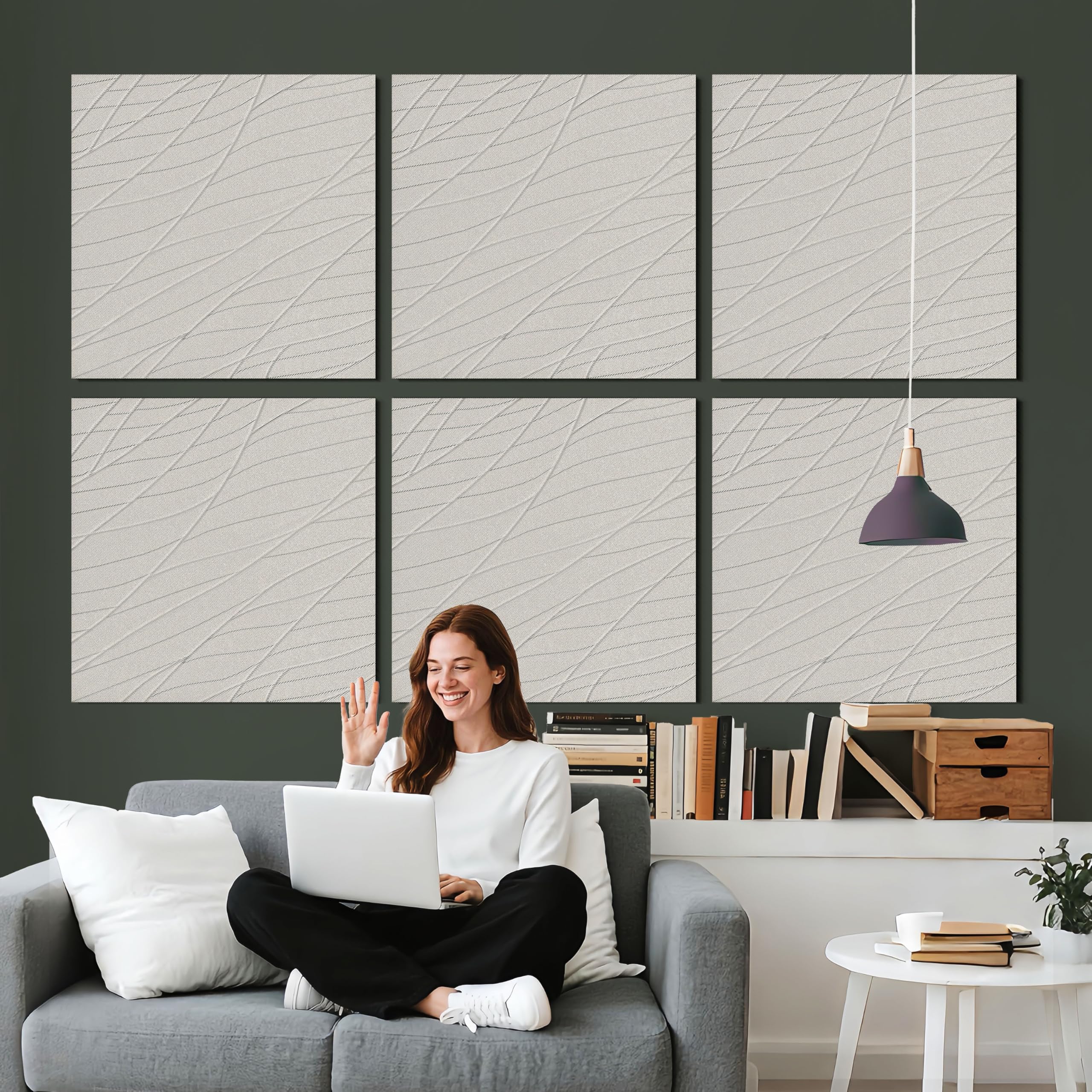
These panels prioritize aesthetics without abandoning acoustic function, featuring a subtle flowing-line pattern and a Light Greige color that blends into minimalist, Scandinavian, and contemporary spaces. Each 23.6-inch square tile is 0.4 inches thick with a high-density polyester fiber core that reduces echo and softens sound reflections in living rooms and home offices. The included 30 nano adhesive mounting tabs enable zero-drill installation on smooth walls, making this a low-commitment option for renters.
The 6-pack covers roughly 23.2 square feet, enough for a TV back wall or a reading nook accent surface. The pattern adds visual depth without screaming “acoustic treatment,” and the edges are clean enough for flush arrangement. Users reported immediate improvement in room echo for podcasting and Zoom calls, though the thin profile means it absorbs primarily high-frequency sibilance rather than deeper room modes. The nano tabs hold firmly on painted drywall and remove without leaving residue.
The acoustic impact is subtle rather than dramatic—several users noted that the panels did not transform the sound of their living room the way thicker foam or fiberglass would. The adhesive tabs are also controversial: some reviewers found them inadequate, with panels falling off after a few weeks. For serious home studio use, these are underpowered. But for a decor-conscious buyer who wants a noticeable reduction in slap echo without sacrificing visual harmony, the Minimalist Line panels strike a rare balance.
Why it’s great
- Modern flowing-line pattern blends with minimalist and Scandinavian interiors
- Zero-drill nano adhesive tabs allow damage-free installation and removal
- Reduces high-frequency echo noticeably in small to medium rooms
Good to know
- 0.4-inch thickness provides minimal low-frequency absorption
- Adhesive tabs may fail over time; some panels may need supplemental mounting
9. 48-Pack Self-Adhesive Sound Proof Foam Panels

This 48-pack of 12×12-inch foam tiles offers the lowest per-panel cost in the guide, making it an accessible entry point for anyone wanting to experiment with room treatment. The 2-inch thickness is the sweet spot for absorbing mid-range frequencies, and the high-elasticity polyester foam rebounds to full shape within 2–5 seconds after unpacking from compressed shipping. The black-and-gray color scheme provides a classic studio look that pairs well with darker decor.
The self-adhesive backing eliminates the need for spray glue or separate mounting tape—just peel and stick. Users reported successful installation on smooth walls and ceilings, with the panels staying firmly in place in climate-controlled rooms. The set covers about 48 square feet, enough for a small home studio booth or a single accent wall. The foam is easily cut with scissors or a utility knife for custom fit around outlets or window edges.
Quality consistency is the main concern. Some panels arrived with manufacturing defects—crooked cuts, rips, or compression damage that prevented full expansion. The adhesive is strong but not foolproof; some users resorted to push pins to secure panels that started peeling. Additionally, the foam does not provide meaningful sound blocking—it absorbs echo within the room but will not stop noise from traveling through the window. For the price, these work well as a starter set for vocal booths or gaming rooms where echo reduction is the goal.
Why it’s great
- 48 panels for extensive coverage at the lowest cost per tile in the guide
- Peel-and-stick backing simplifies installation with no tools required
- 2-inch depth effectively absorbs mid-range echo for small rooms
Good to know
- Inconsistent quality control—some panels arrive damaged or misshapen
- Adhesive may not hold long-term on textured or humid walls
FAQ
Can acoustic window inserts completely block outside noise?
What is the best thickness of acoustic panel for a home office?
Do soundproof curtains really work for street noise?
How do I measure the NRC of a product I already own?
Can I install acoustic panels over windows?
Final Thoughts: The Verdict
For most users, the best acoustic window inserts winner is the Audimute Sound Absorption Sheet because it delivers lab-verified 85% absorption across a massive 8×4-foot footprint, installs without permanent modification, and works as both a wall treatment and a portable partition. If you want a dedicated curtain that reduces outside noise while providing total blackout, grab the Moondream DecibelControl Curtain. And for professional-grade absorption at a value price, nothing beats the UMIACOUSTICS 4-Pack Fiberglass Panels with their sturdy metal bracket system and 2-inch depth.