
Acrylic windows, motorcycle windshields, and tanning beds share one frustrating problem: the wrong cleaner leaves a permanent-looking haze or a fine network of micro-scratches that ruins clarity. Standard glass cleaners with ammonia or abrasive cloths attack the surface, turning a clear panel into a cloudy mess. That is why a dedicated acrylic cleaner isn’t an upgrade — it is a requirement.
I’m Min — the co-founder and writer behind Gadgets Feed. I have spent countless hours analyzing the chemical formulations, surface-compatibility charts, and real-world user feedback on dozens of cleaners to separate the formulas that protect acrylic from those that damage it.
Whether you are restoring a vintage motorcycle shield or maintaining the pristine surfaces in a salon, the right formula makes all the difference. My goal is to help you find the absolute best acrylic cleaner for your specific surfaces and usage habits.
How To Choose The Best Acrylic Cleaner
Not every bottle labeled “cleaner” is safe for acrylic. The wrong pH or solvent can cause crazing (fine cracks) or cloudiness within seconds. Before you buy, check these three factors.
Avoid Ammonia and Alcohol
Household glass cleaners rely on ammonia. On acrylic, ammonia causes stress cracking and fogging. Alcohol-based wipes strip the surface of its natural finish and leave a dull residue. A proper acrylic cleaner is water-based, ammonia-free, and alcohol-free. This is the single most important spec to verify on the label.
Spray vs. Aerosol vs. Multi-Step Kits
A trigger spray gives you control over where the liquid goes, ideal for large flat panels. An aerosol delivers foam that clings to vertical surfaces like windshields, reducing runoff. Multi-step kits include a scratch remover (often a fine abrasive polish) and a protective shine. If you are only cleaning, a single-step spray or aerosol is sufficient. If you are restoring a scratched piece, look for a kit with a dedicated remover.
Specialty Use Cases
Acrylic in a tanning bed faces UV exposure and lotion residue, requiring a formula that cuts oils without leaving a film. A motorcycle windscreen needs anti-static properties to repel dust and a foam that sticks to the curve. An aquarium or display case needs a non-toxic, streak-free formula. Matching the product to your specific environment is as important as checking the chemical composition.
Quick Comparison
On smaller screens, swipe sideways to see the full table.
| Model | Category | Best For | Key Spec | Amazon |
|---|---|---|---|---|
| NOVUS PK2-8 Kit | Kit | Scratch removal & shine | 8 oz #1 + 8 oz #2 polish | Amazon |
| Lucasol 32 oz Spray | Spray | Tanning beds & delicate surfaces | Alcohol-free & ammonia-free | Amazon |
| Camco 40934 Aerosol | Aerosol | Motorcycle windshields & isinglass | Antistatic & antifog formula | Amazon |
| Rolite RPAC16z | Spray | Multi-surface nonporous cleaning | 16 oz water-based spray | Amazon |
| Prist Aerosol | Aerosol | Aircraft & marine windscreens | 13 oz nonabrasive foam | Amazon |
| Tillbrook 32 oz | Spray | Large surface area & value | 32 oz covers 500 sq ft | Amazon |
| Lucasol 1 Gallon | Bulk | High-volume refills | 1 gallon ready-to-use | Amazon |
In‑Depth Reviews
1. NOVUS PK2-8 Plastic Clean & Shine Kit

This two-bottle system includes NOVUS #1 Plastic Clean and Shine and NOVUS #2 Fine Scratch Remover, plus a pack of Polish Mates towels. The #2 formula uses a mild abrasive to level out fine scratches, and the #1 formula then applies an anti-static, dust-repelling finish. Users report restoring 25-year-old acrylic tanks to near-new condition on the reachable areas, which demonstrates the effectiveness of the two-step process.
The kit covers autos, boats, planes, and motorcycles, but it is not recommended for coated plastics, UV-protected surfaces, or eyeglass lenses. The #2 formula can leave a milky haze on uncoated Lexan if you dwell on one spot with a power buffer, so hand application with a gentle circular motion is safer for camera lens covers or clear shields.
The 8-ounce bottles fit inside a glove compartment or saddlebag, making it a portable restoration kit. For anyone who needs both scratch removal and a protective finish, this kit delivers the most value per ounce of any product on this list.
Why it’s great
- Includes both a scratch remover and a protective polish
- Compact kit fits in a glove box or saddlebag
- #1 formula has anti-fog and dust-repellent properties
Good to know
- #2 scratch remover can haze uncoated Lexan if overworked
- Not safe for coated plastics or eyeglass lenses
2. Lucasol Acrylic & Plastic Cleaner Spray 32 oz
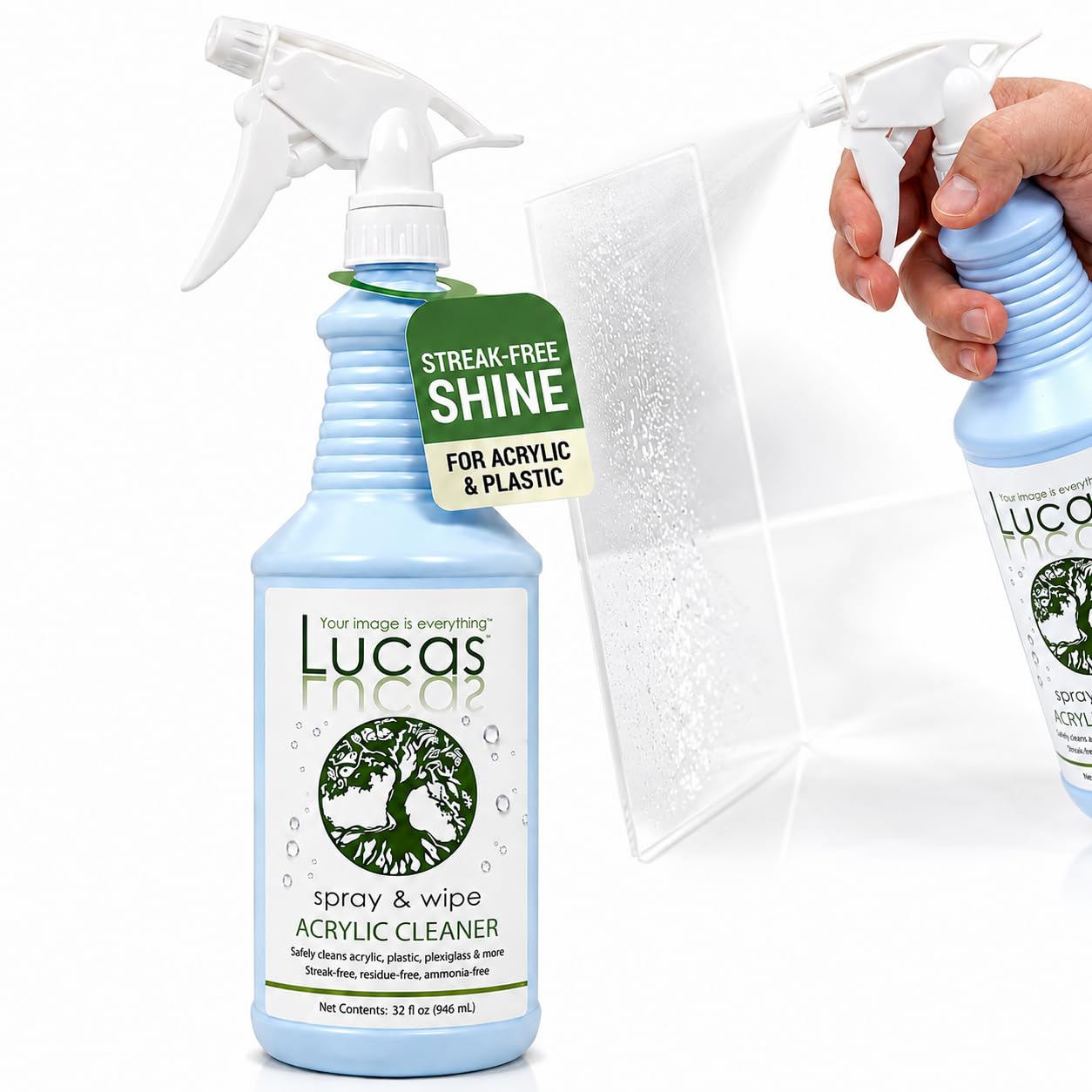
This 32-ounce trigger spray from Lucasol is formulated with water as the primary solvent and zero ammonia, alcohol, or harsh chemicals. It meets EPA List N disinfectant guidelines and FDA eyeshield safety standards, which is important for salon barriers and medical-grade shields. The formula is gentle enough to use on computer monitors, mirrors, and plexiglass without degrading the surface over time.
Users highlight the streak-free finish on tanning beds and the complete absence of strong chemical odor. A few reviews note that the cleaner requires a bit more rubbing than an aerosol to remove heavy lotion residue, but the trade-off is no propellant and a fully non-toxic composition. The spray pattern is wide enough to cover a full shield in three to four passes.
At 32 ounces, this is a long-lasting solution for a home salon or a workshop with multiple acrylic windows. It is also available in a 1-gallon refill (listed later) for high-volume use, making it a flexible system for professionals.
Why it’s great
- Completely ammonia and alcohol free
- Meets FDA and EPA safety standards
- Streak-free on tanning beds and mirrors
Good to know
- Requires more rubbing than an aerosol for heavy residue
- No added scent for those who prefer a fragrance
3. Camco Plastic Cleaner and Polish 14oz Aerosol

Camco’s aerosol delivers a foam that clings to vertical surfaces, making it ideal for motorcycle windshields, SxS windshields, and marine isinglass. The foam does not run off, so you can spray the entire face of a windshield and wipe it down without puddles. The formula seals pores in the plastic to resist browning and hardening, which extends the life of the material.
Users consistently report that a single can lasts two to three seasons on a Harley windshield or a batwing fairing. The anti-static and anti-fog properties reduce dust attraction between washes. The aerosol format is also easy to store in a saddlebag or a boat glove box.
The price per ounce is higher than a spray trigger, but the efficiency of the foam delivery means you use less product per cleaning. For riders and boaters who need a compact, non-streaking solution that works on the go, this is the top choice.
Why it’s great
- Foam clings to vertical surfaces without runoff
- Seals pores to prevent browning and hardening
- Small can fits in a saddlebag or glove box
Good to know
- Higher cost per ounce than a spray trigger
- Aerosol propellant may not be allowed in checked luggage
4. Rolite RPAC16z Plastic & Acrylic Cleaner Spray
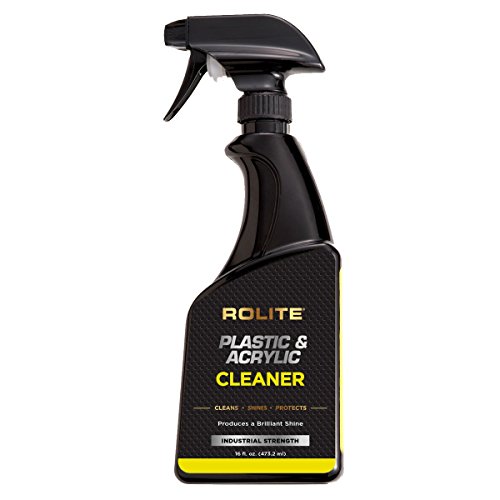
The Rolite formula is water-based, streak-free, and contains zero ammonia or alcohol, making it safe for a broad range of nonporous surfaces: plexiglass, Lexan, Lucite, polycarbonate, carbon fiber, and stainless steel. It is designed to repel dust, keeping fingerprints and smudges away longer. Users have successfully used it on motorcycle windshields, 3D printer surfaces, and retail displays.
A recurring complaint involves the spray nozzle — several units arrived with a defective trigger that leaked instead of spraying. This appears to be a packaging issue, and users who switched to a different spray bottle report excellent results. The formula itself lifts micro-dirt and residue that standard glass cleaners leave behind, as confirmed by a user who cleaned an acrylic frame that had previously hazed over after using Windex.
The 16-ounce bottle is compact but still offers a reasonable volume for light to medium use. If the nozzle holds up, this is one of the most versatile single-step formulas available at an attractive price point.
Why it’s great
- Works on a very wide range of nonporous surfaces
- Water-based, ammonia-free, and alcohol-free
- Creates a dust-repellent layer after cleaning
Good to know
- Spray nozzle is prone to failure
- Not recommended for plexiglass surfaces under direct light
5. Prist Acrylic & Plastic Windscreen Cleaner Aerosol
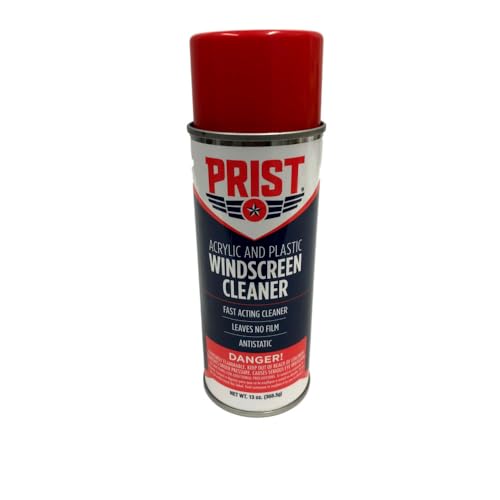
Prist is a well-known name in aviation maintenance, and this 13-ounce aerosol exceeds federal test standards for windscreen cleaning. It is a nonabrasive formula safe on acrylic, stretched-acrylic, polycarbonate, glass, and coated-glass panels. The foam is eco-friendly, with zero artificial colors and a mild bamboo scent that fades quickly. This is the choice for pilots, marine operators, and anyone who demands industrial-grade safety on expensive transparent panels.
User feedback is uniformly positive across aircraft windows and motorcycle shields. The foam lifts bug splatter and road grime without needing to scrub, and it does not leave fine scratches on the surface. The can is smaller than a typical trigger spray, but the aerosol delivers better coverage per gram because the foam expands and clings.
The price is higher than general-purpose automotive cleaners, but the formulation is specifically tested to avoid crazing on acrylic aircraft windshields, where a failure is critical. For high-stakes applications, this is the safest option.
Why it’s great
- Exceeds federal test standards for aviation windscreens
- Nonabrasive, safe on coated and uncoated plastics
- Eco-friendly formula with no artificial colors
Good to know
- Small 13 oz can may require frequent repurchase
- Premium pricing compared to basic spray triggers
6. Tillbrook 32 oz Tanning Bed Cleaner
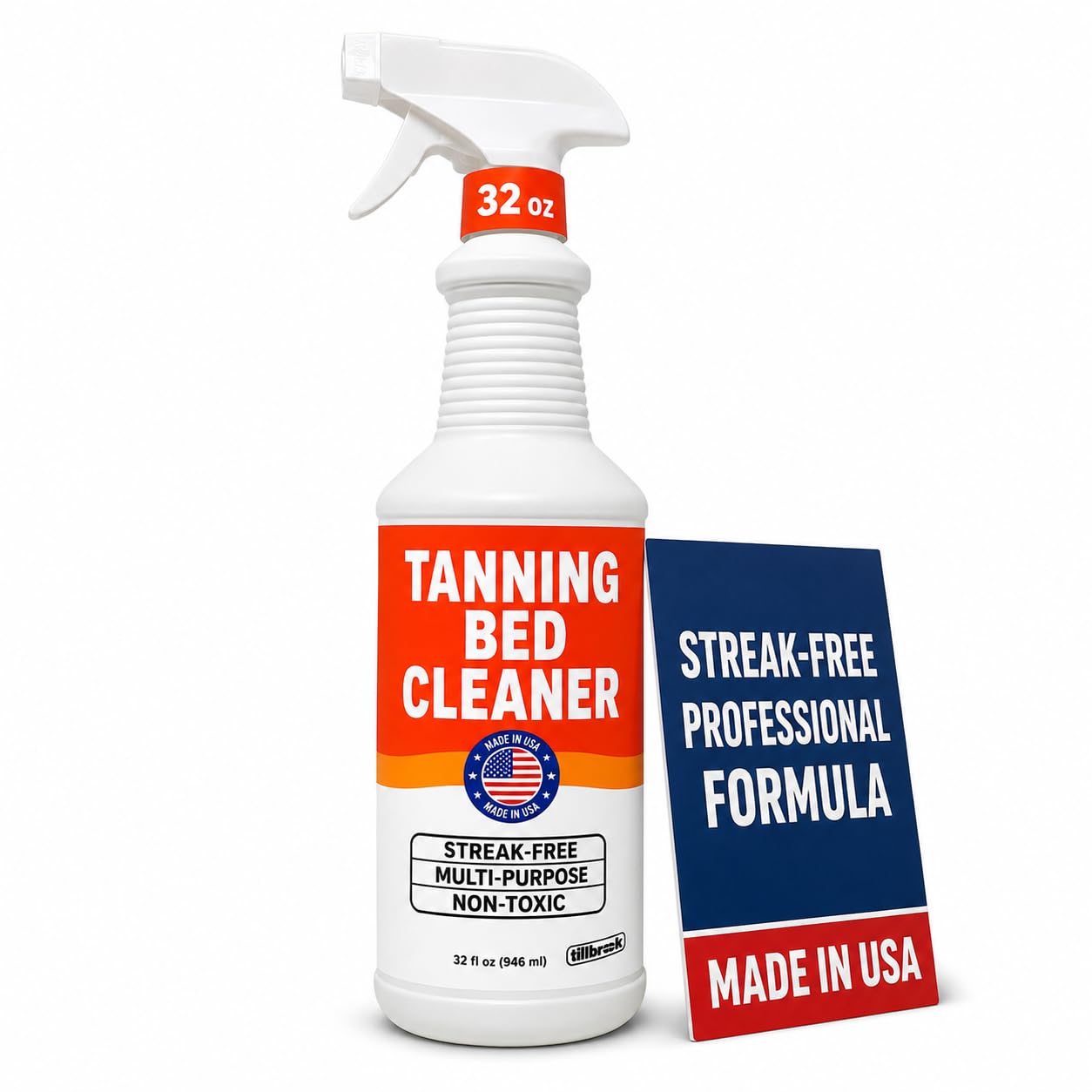
Tillbrook delivers a generous 32-ounce bottle of non-toxic, scent-free, dye-free cleaner that covers up to 500 square feet. The proprietary formula is designed for tanning beds but is effective on glass, metal, plastic, acrylic, fiberglass, and ceramics. It leaves a brilliant streak-free finish with minimal polishing effort, making it a fast solution for large jobs in salons or home studios.
Users report that the cleaner has no chemical smell at all, which is a significant advantage over many conventional degreasers. The absence of dye means no staining on light-colored surfaces. Proudly made in the USA, this is a strong choice for those who prioritize both value and environmental standards.
The bottle is large, so it will not fit in a small glove compartment, but that is a non-issue for stationary use in a salon or garage. If you are covering a lot of acrylic windows or polishing a fleet of tanning beds, the cost per square foot is excellent.
Why it’s great
- Large 32 oz bottle covers 500 sq ft
- Completely non-toxic, scent-free, and dye-free
- Proudly made in the USA
Good to know
- Bottle size is inconvenient for portable use
- Designed primarily for tanning bed surfaces
7. Lucas Acrylic Cleaner 1 Gallon Refill
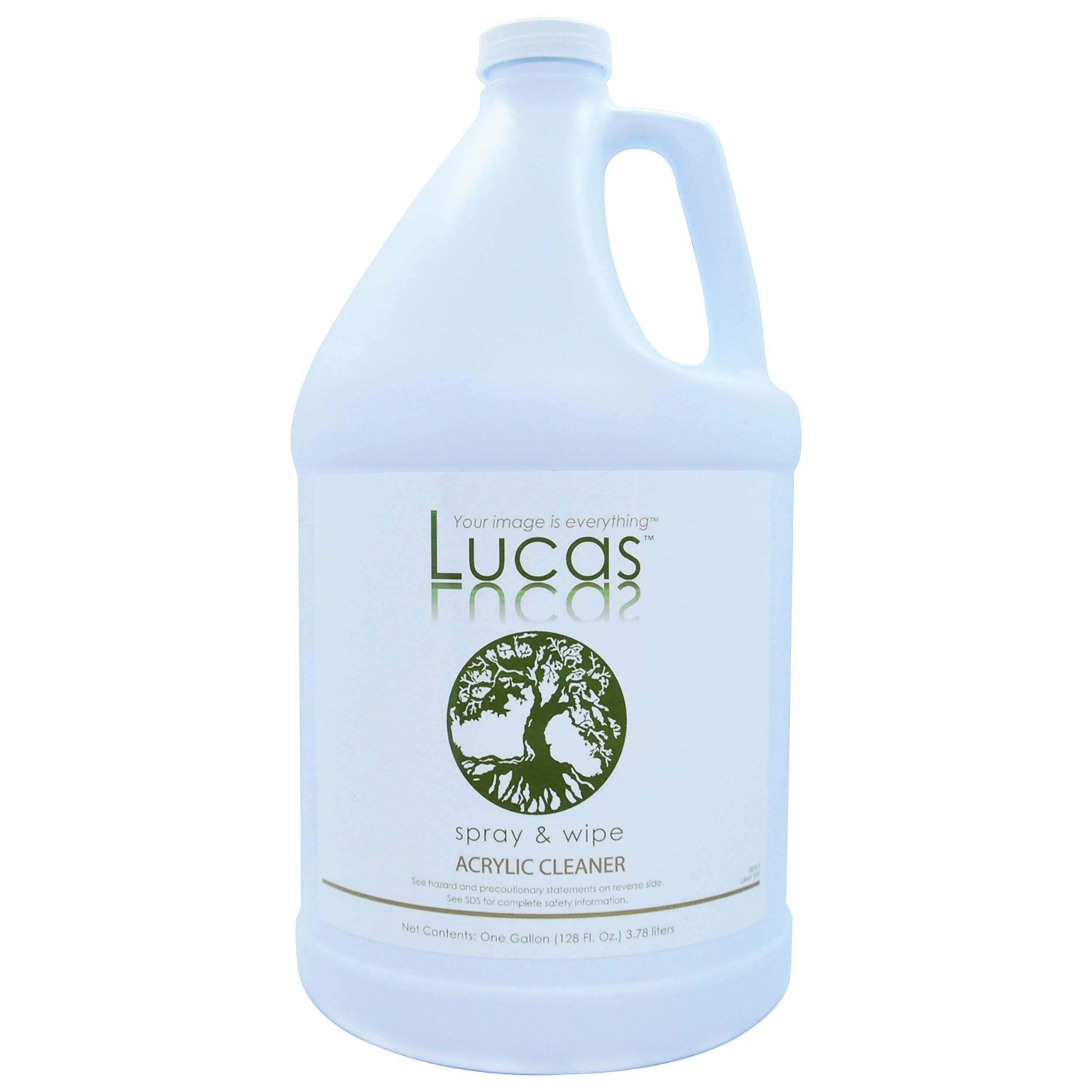
The 1-gallon jug from Lucasol is the same alcohol-free, ammonia-free formula as the 32-ounce spray, but in a bulk container designed for refilling smaller bottles. It is intended for high-volume users — salons with multiple tanning beds, gyms with acrylic barriers, or offices with large plexiglass dividers. The concentrated gallons cuts out the plastic waste of repeated small bottles.
Users praise the formula for removing tingle lotions and tanning residues without harming the acrylic shields. The lack of strong scent is a plus in an enclosed salon environment. A few users note that the gallon jug is heavy (8 pounds) and can be messy to pour into a spray bottle, so you will want a funnel.
This is the most cost-effective option for professionals who already have a trigger sprayer. It delivers the same streak-free finish and non-toxic safety as the smaller spray, at a fraction of the per-ounce cost.
Why it’s great
- Most cost-effective per ounce for high-volume use
- Same gentle, non-toxic formula as the smaller spray
- Great for refilling multiple spray bottles
Good to know
- Heavy jug requires a funnel to pour
- No spray trigger included
FAQ
Can I use Windex or glass cleaner on acrylic?
How do I remove fine scratches from an acrylic window?
What should I use to clean a motorcycle windscreen?
Is it safe to use acrylic cleaner on a tanning bed every day?
Can I use the same cleaner on glass and acrylic?
Final Thoughts: The Verdict
For most users, the best acrylic cleaner winner is the NOVUS PK2-8 kit because it covers both daily cleaning and scratch restoration in one package, giving you the most versatility for the cost. If you want a dedicated non-toxic spray for a tanning bed or delicate barriers, grab the Lucasol 32-ounce spray. And for motorcycle or marine windscreens where foam cling matters, nothing beats the Camco Plastic Cleaner and Polish.